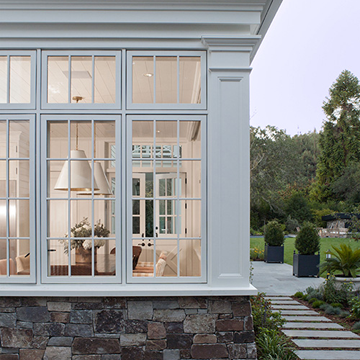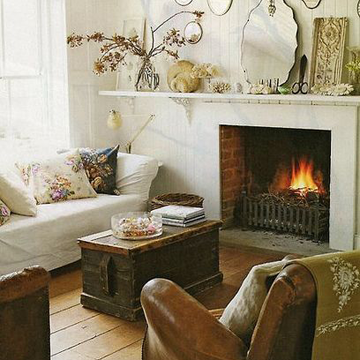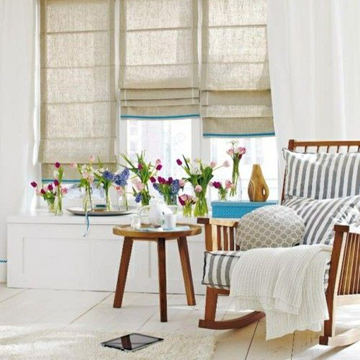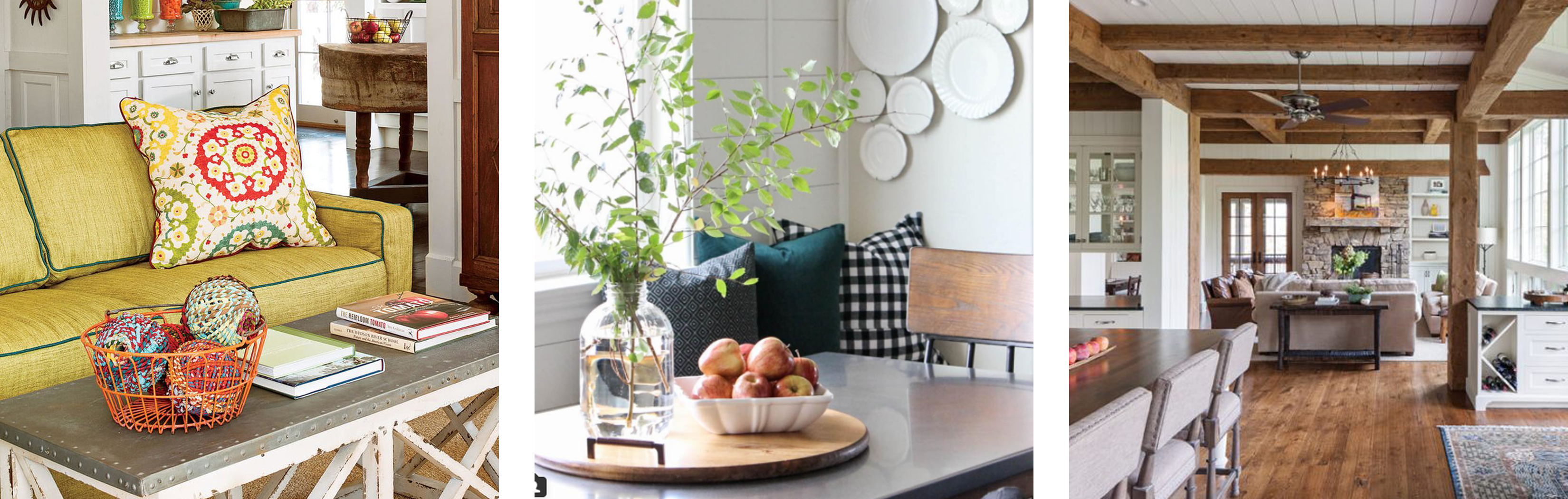
CREATE A PAINTED WOOD SIGN IN 6 EASY STEPS

Painted wood signs are very popular right now. They are classic, and their neutral colors look great with a variety of home decor styles. They can be purchased at craft fairs or on Etsy. Many retail stores now sell mass produced varieties; but if you create a DIY version – a whole new world of possibilities opens up!

The great news is that creating a painted wood sign is easier than you might think. It can be accomplished in six simple steps!

SUPPLIES YOU WILL NEED

Wood ‘canvas’: A single slab of wood will work great, as will wood strips connected together. The wood can be newly purchased from a home improvement store or salvaged from an old building! Be sure to inspect it for knots or splintered pieces.

Paper/Printer: You can use computer design software to create and print your design or make a hand-drawn ‘rough draft’ on plain paper.

Transfer Paper: There is the standard carbon paper, or the colored version – which I prefer.

Pencil/Pen: Used to trace the design.

Acrylic Paint: I prefer to use Apple Barrel Paints. They are available in a wide variety of colors!

Paintbrushes: Start with a diverse selection of brushes to find your preferred size.

Sandpaper: The grit of sandpaper needed will depend on how thickly the paint is applied. Opt for a multi-pack and you will have plenty of options.

Rag: For the final cleaning.

Once you’ve gathered all the supplies listed above, you are ready to begin! Take a deep breath and let’s have fun!


STEP 1: PREPARE THE CANVAS

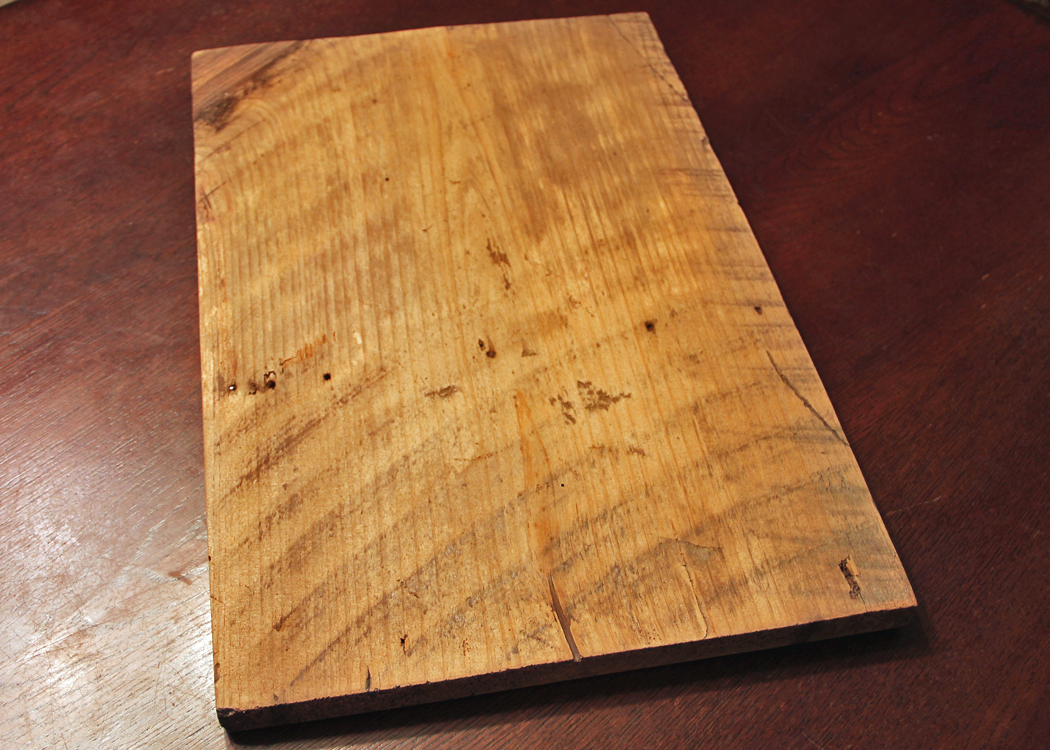
Sand rough edges and clean off any dirt and grime in preparation. This large piece of barn-wood I used is full of character – including holes, knots and sawed off nails!

When choosing your wood canvas, be sure to think ahead to what size your design will be.


STEP 2: PRINT OUT A DESIGN

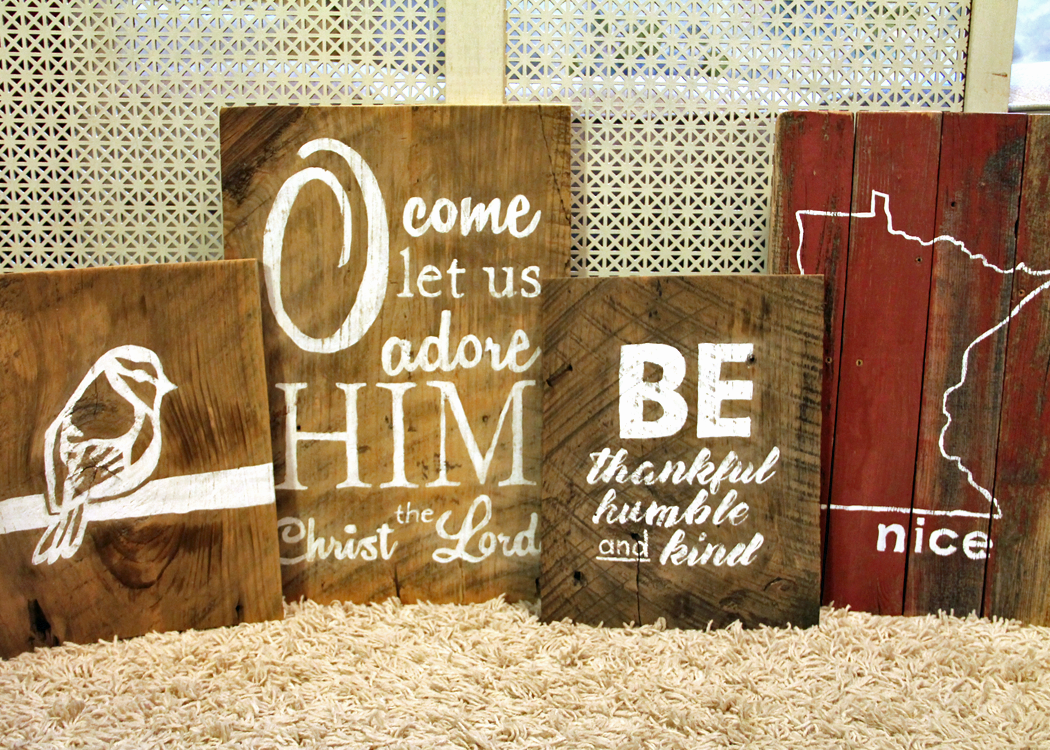
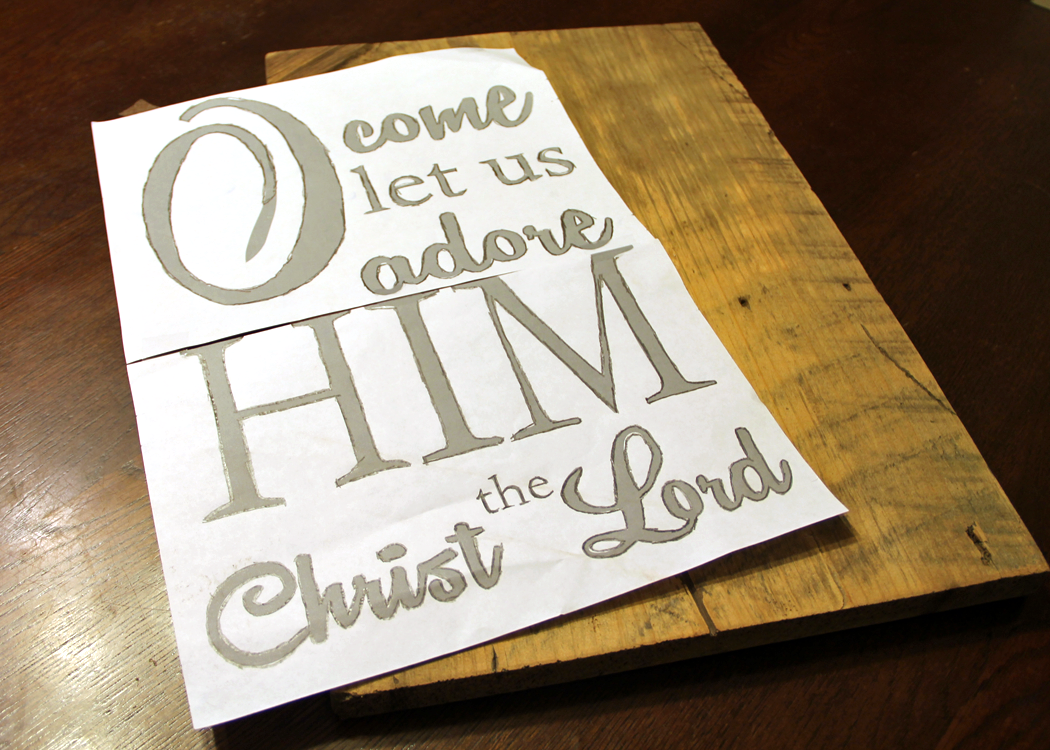
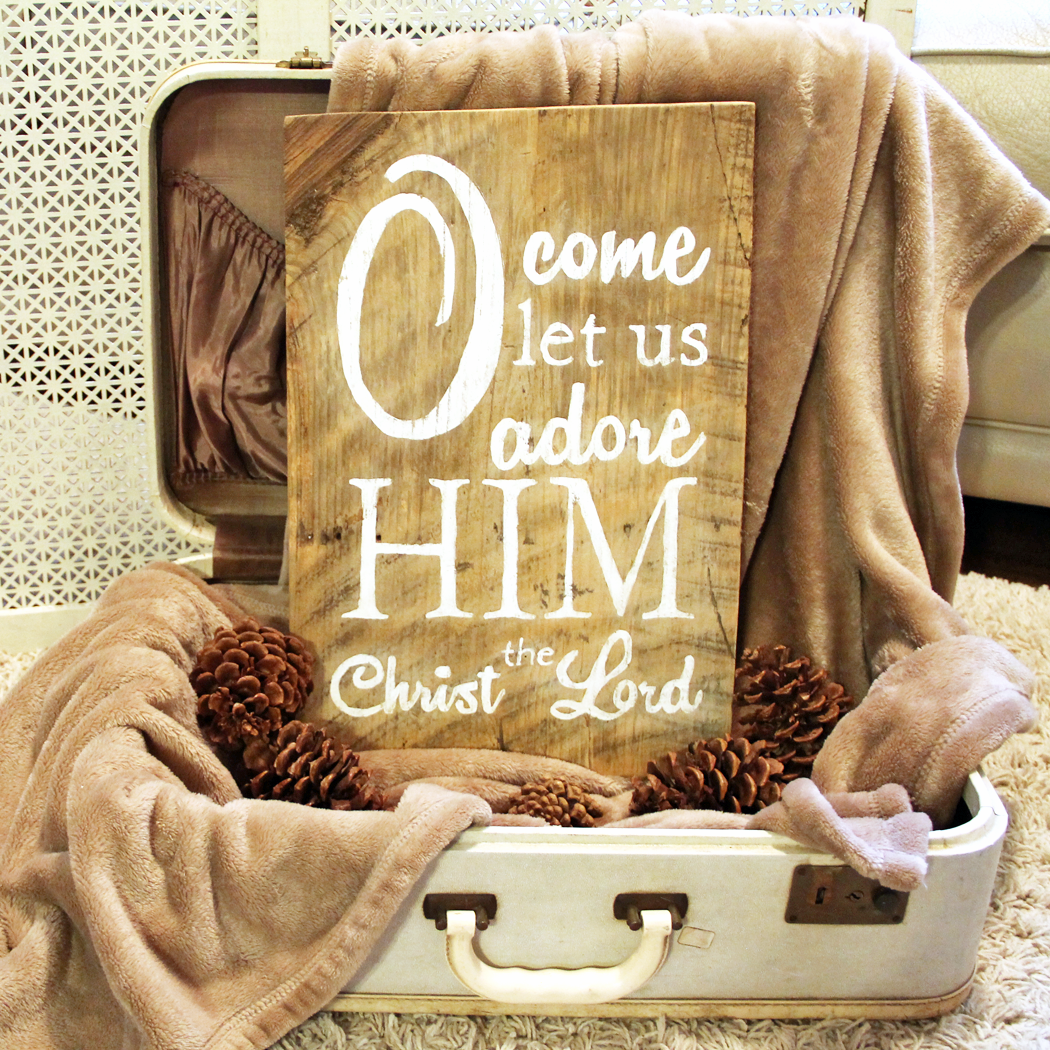
Decide what you would like to create! This is where the DIY route comes in very handy. You can create a sign full of words or one that includes graphics. The sky is the limit, so get creative! I have been in the Holiday spirit lately and decided on a Christmas themed design. Because I had a larger wood board to paint on, I enlarged the pattern in Photoshop Elements and printed it on two pieces of standard 8.5 x 11 paper.

If you like the design I created, check out the RESOURCE TAB for a letter sized printable PDF that you can use for this project!


STEP 3: TRACE THE PATTERN

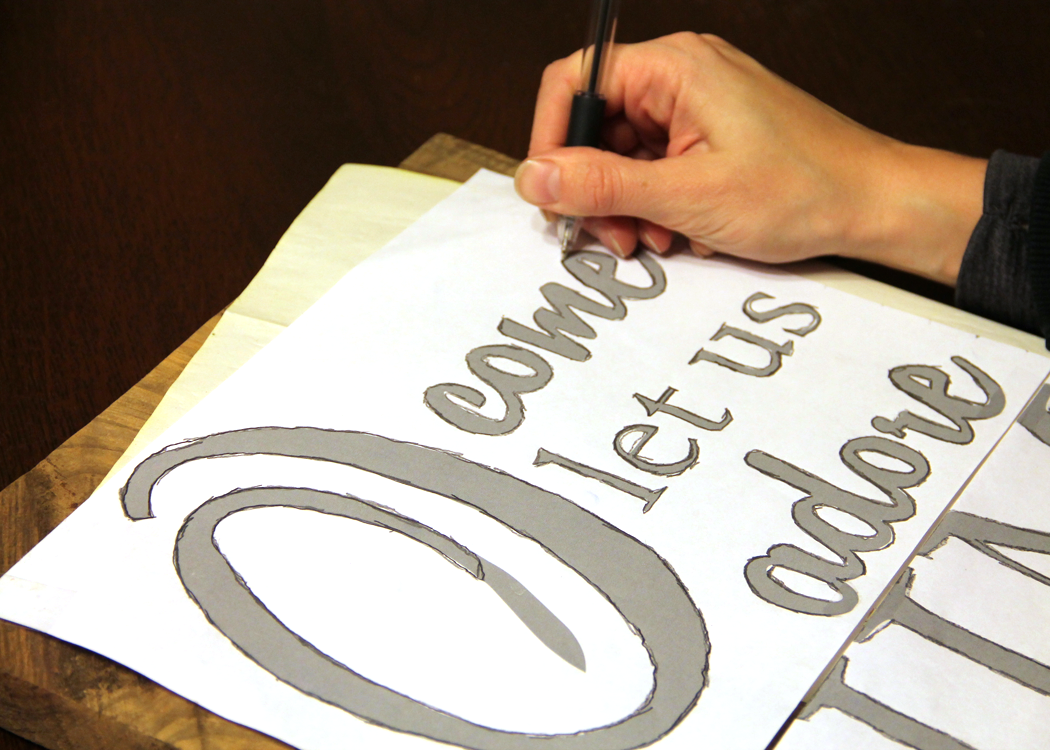
Lay the trace paper carbon/color side down onto your wood canvas. Place your printed design on top and position it to your liking. Tape the printed design onto the wood so that it stays in place. Beginning in the upper left corner of the design, trace over the pattern with a pen or pencil – applying a medium amount of pressure. You can see from the photo above that I have used this particular pattern multiple times.

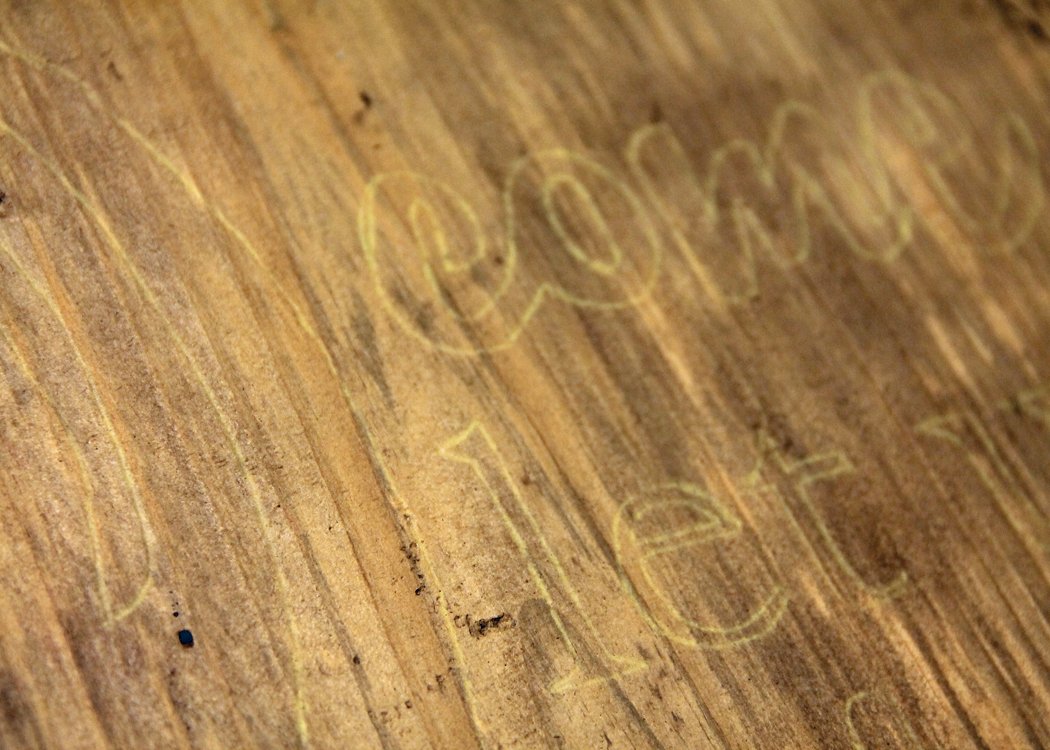
When the trace paper and printed design are removed you will be left with a light outline of the pattern. This is erasable and sand-able – making it easy to revise parts that aren’t to your liking.


STEP 4: PAINT THE PATTERN

Using acrylic paint in your color of choice, fill in the pattern. If you are worried about the steadiness of your hand you can opt for an acrylic paint pen.

Allow the painted design to dry for a minimum of 12 hours.


STEP 5: SAND

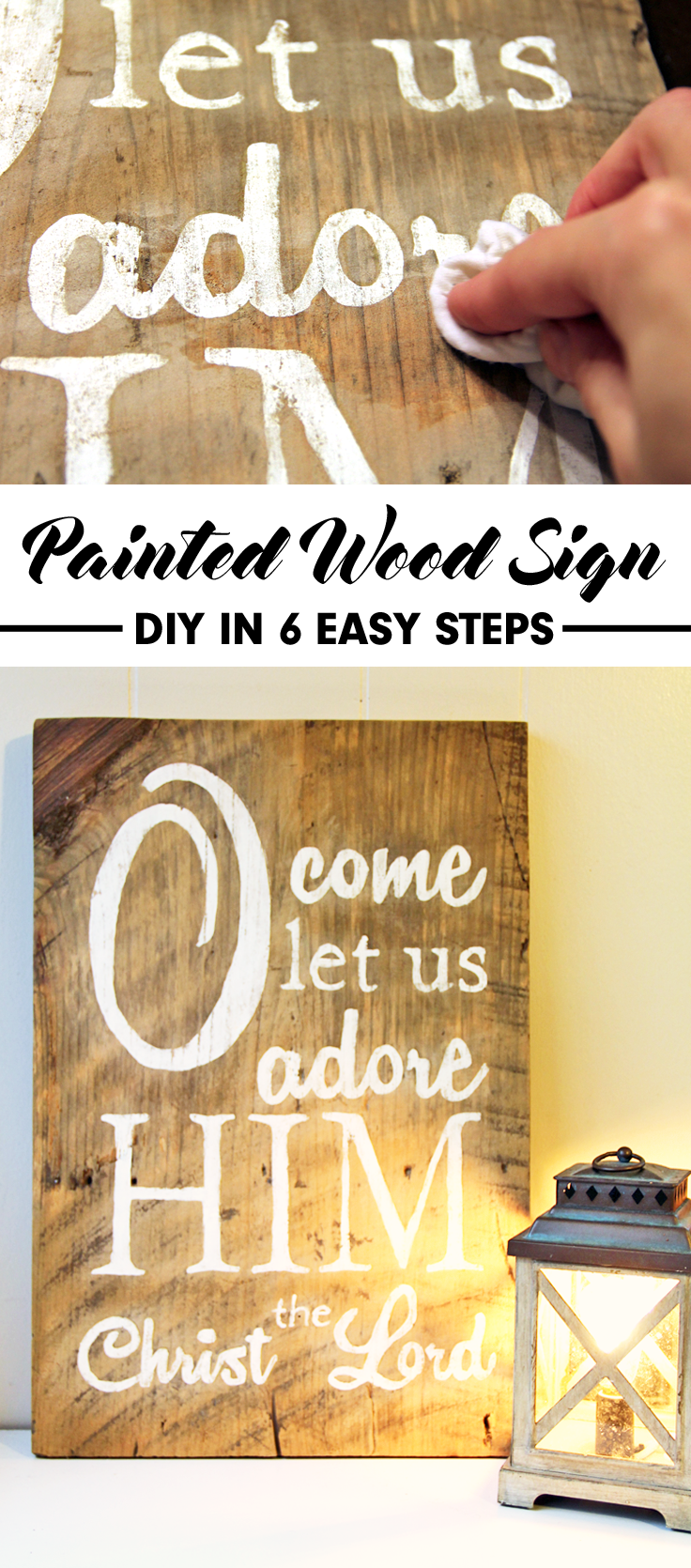
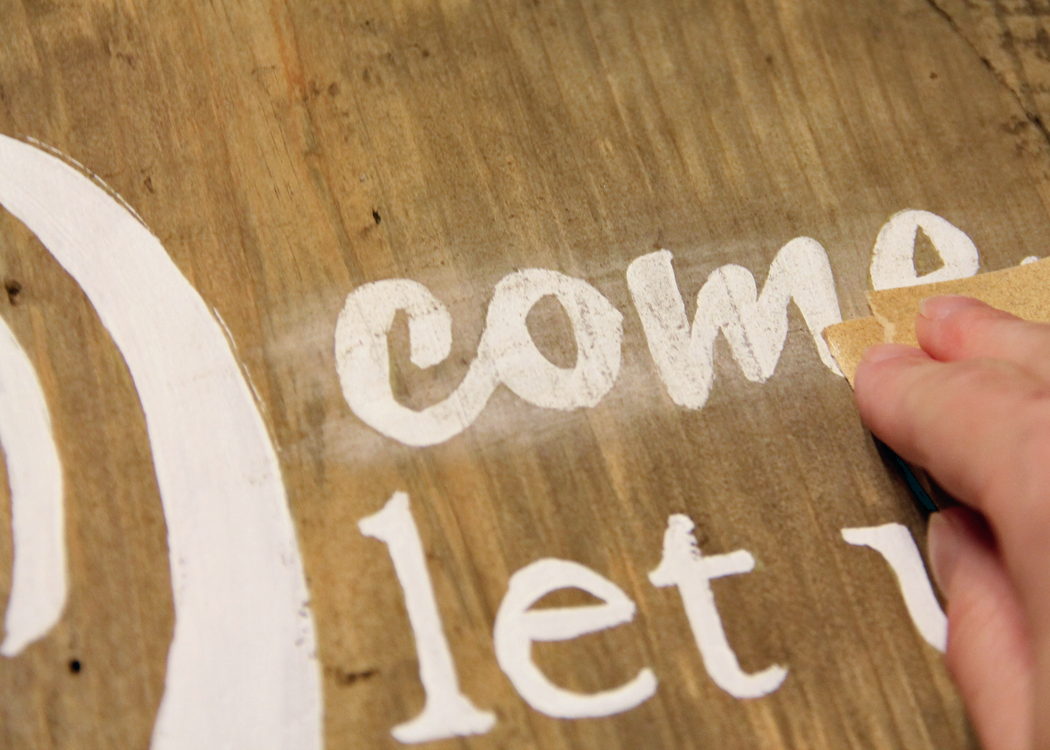
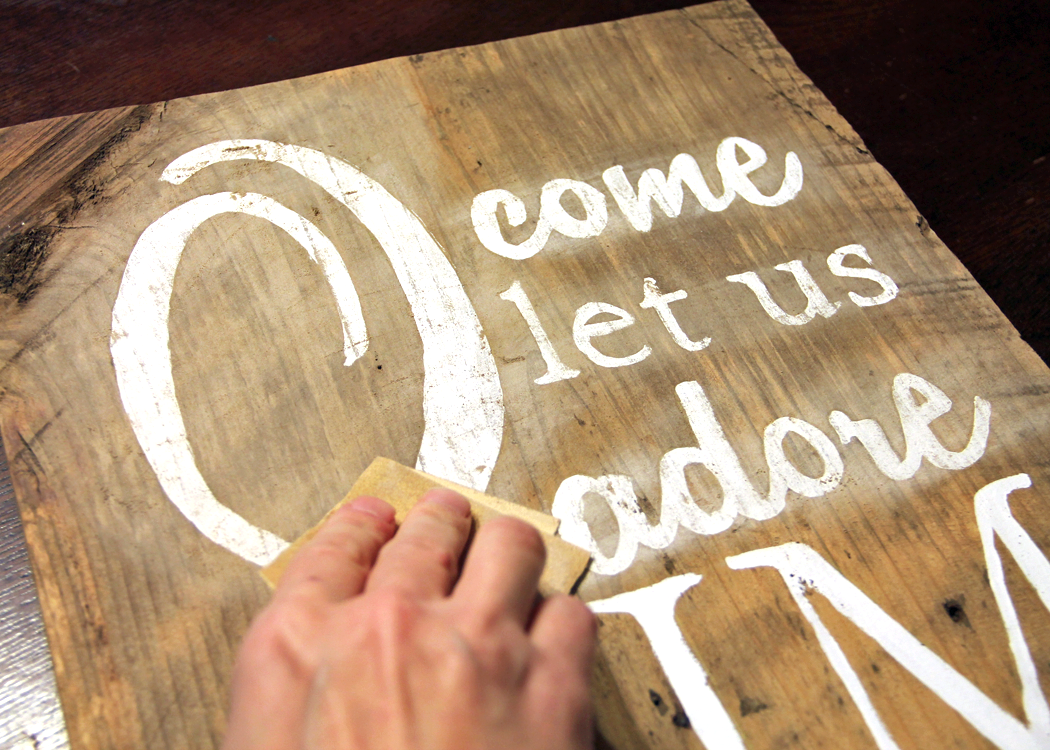
Gently rub sandpaper over the painted design. This will remove some of the paint and will give the piece a softer, more vintage look. To me it seems that the sanding really helps the paint  to become ‘one’ with the wood. I love being able to see the wood grain through the paint.

I recommend you begin sanding with a finer grit of sandpaper and increase the grit depending on the amount of paint you would like to remove.


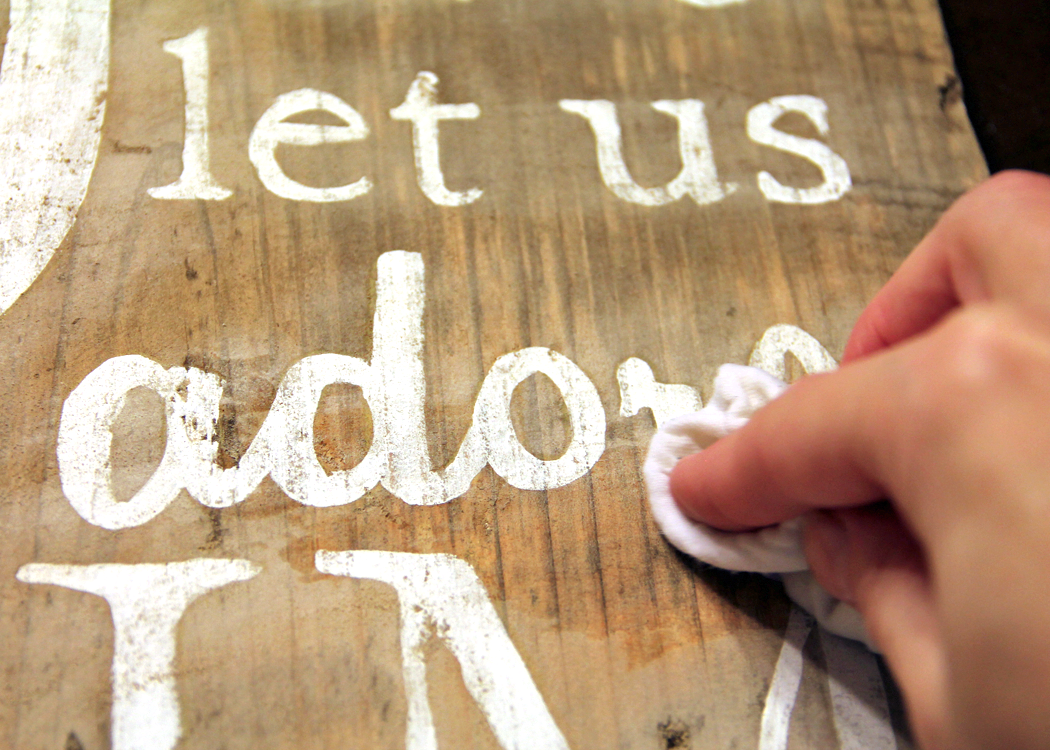
STEP 6: CLEAN

Use a damp cloth to clean the paint that has been removed by the sandpaper.

Once the water dries you can choose, as an additional step, to seal your piece with a clear poly spray. Personally, since most of my art pieces are kept indoors, I typically skip the poly.


ENJOY YOUR ART PIECE

These look great on a mantle, hanging on a gallery wall, or in a variety of different places. I am willing to bet that plenty of people on your Christmas gift list would love a painted wood sign!

And now, you can make them one!

After you try the techniques in this tutorial, please share your creations in the comments below. I would love to see them!


This post contains affiliate links. You can learn more about my policies here.

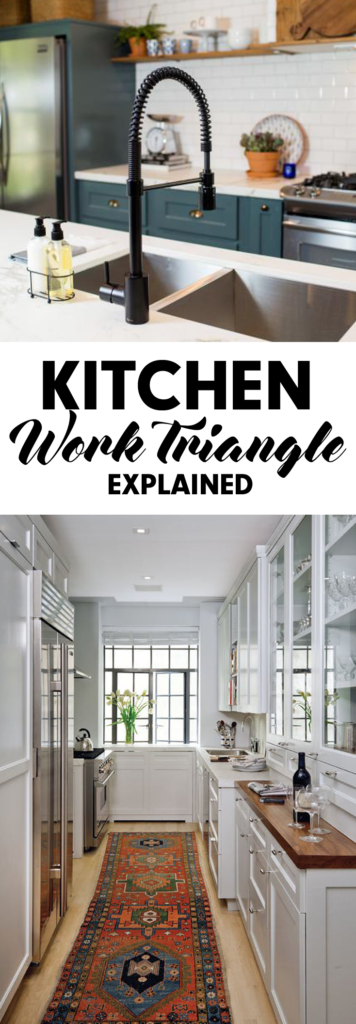
THE KITCHEN WORK TRIANGLE EXPLAINED

Have you ever spent time in a kitchen, maybe at a friend or relative’s house, that just seemed really awkward / difficult to work in? Something didn’t seem ‘quite right’ but you couldn’t put your finger on what it was? I have a guess about what caused the problem….

THE LACK OF A WORK TRIANGLE

What the what?! Has Angela lost her marbles? No. Well, not all of them anyway!

When it comes to functional kitchen design, the triangle is KEY. And I’m about to tell you why.

The quest for efficient kitchen design is not a new one. In fact, the idea of optimizing the layout of the kitchen in an educated way dates back to the 1920’s with a woman named Lillian Moeller Gilbreth.

As an engineer, psychologist and mother to twelve (TWELVE!), she had a very unique perspective to offer on the function and efficiency of the home.  In 1929 her ideas were introduced at a Women’s Exposition.

These ideas on motion and efficiency were groundbreaking and she was hailed as ‘a genius in the art of living’. It is Lillian who is credited with developing the basic work triangle.

Fun fact: She can also be thanked for other modern kitchen conveniences such as the foot pedal trash can, shelves on inside of fridge doors (including the butter tray), and wall light switches!

In the 1940’s, the University of Illinois continued to research kitchen efficiency and developed the fundamental kitchen design principles that are still in use today.


SO… WHAT EXACTLY IS THE WORK TRIANGLE?

The kitchen is an absolute workhorse in the typical American home. Imagine yourself in your own kitchen. Of all the things that go on in that space, can you agree that the primary tasks are carried out between the cook-top/oven, sink and refrigerator?

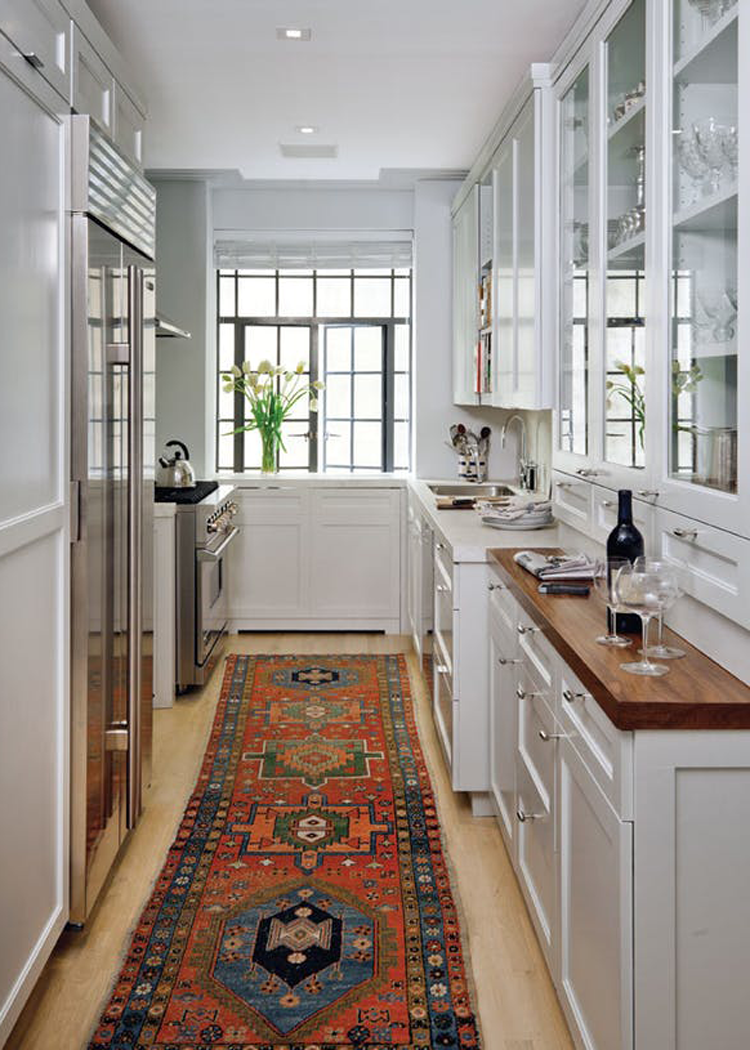
Three major stations – the sink, the fridge and the oven. THREE. The idea behind the work triangle is this: You are going to be walking between these stations repeatedly during your time in the kitchen. In order to produce efficiency, there should be no obstructions that could make it difficult to get from one station to the next. Likewise, the distance between the stations should not be so great that you tire of walking, or too close that if two people are working in the room together they are constantly bumping into one another.

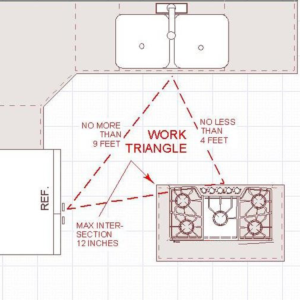
Consider the center face of each of these stations as one ‘point’ on a triangle.  Those points and the space between them make up the work triangle.


image source

BASICS OF THE KITCHEN WORK TRIANGLE

The principles of the work triangle are used by architects and interior designers when creating residential kitchens. There are some basic rules that need to be followed for the triangle to work properly.

LENGTH OF SIDES: No leg of the triangle should be less than 4′ in length, or greater than 9′. The sum of all three sides combined should be between 13 and 26 feet.

SPACING: There needs to be adequate space between stations to eliminate congestion. The average distance of separation is as follows:

Between the fridge and sink stations: 4 to 7 feet of separation

Between the sink and oven stations: 4 to 6 feet of separation

Between the oven and fridge stations: 4 to 9 feet of separation

image source

OBSTACLES: Cabinets, counters, or other obstacles should not intersect any leg of the triangle by more than 12 inches. In addition, there should be no major traffic flow going through the triangle.

image source

WORKERS: The work triangle is best optimized for one person working in the kitchen at a time. Some of the efficiency will be lost if the triangle is shared by two or more people.


It should also be noted that a kitchen with a work triangle isn’t the ONLY option. If your space dictates that all three work stations be positioned along one wall, for example, it is not the end of the world. There are plenty of high functioning kitchens that do not employ these principles.

EXAMPLES OF KITCHENS WITH WORK TRIANGLES

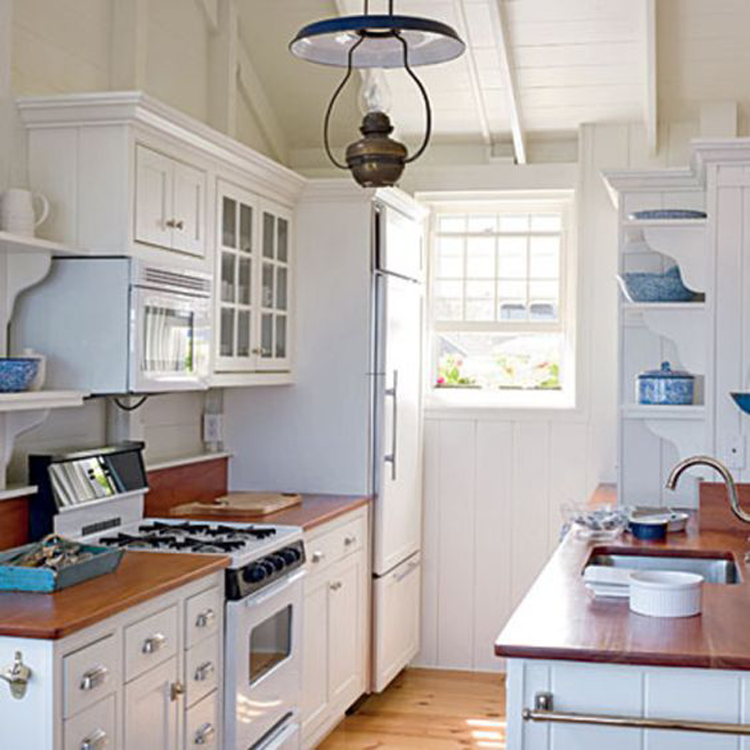
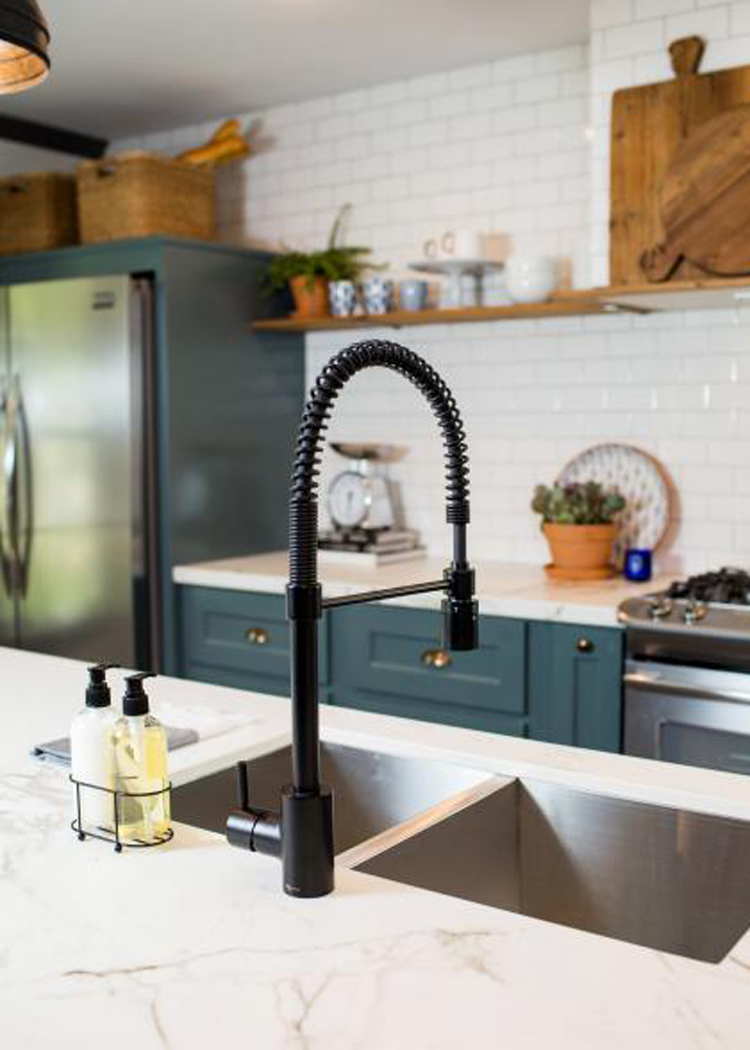
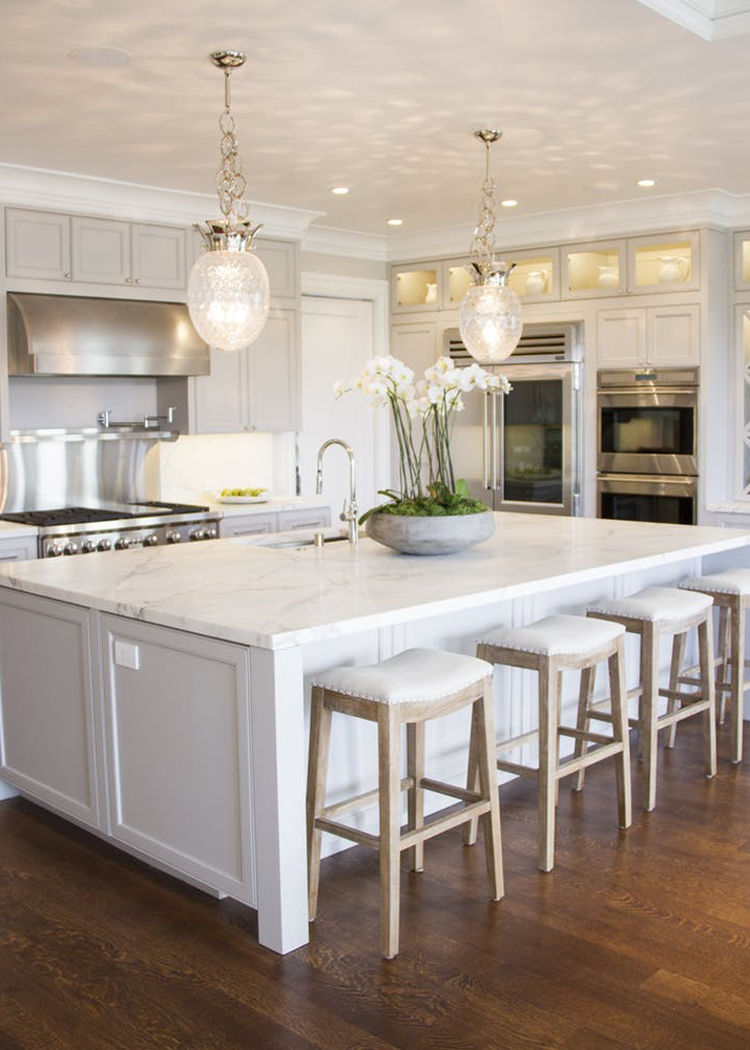
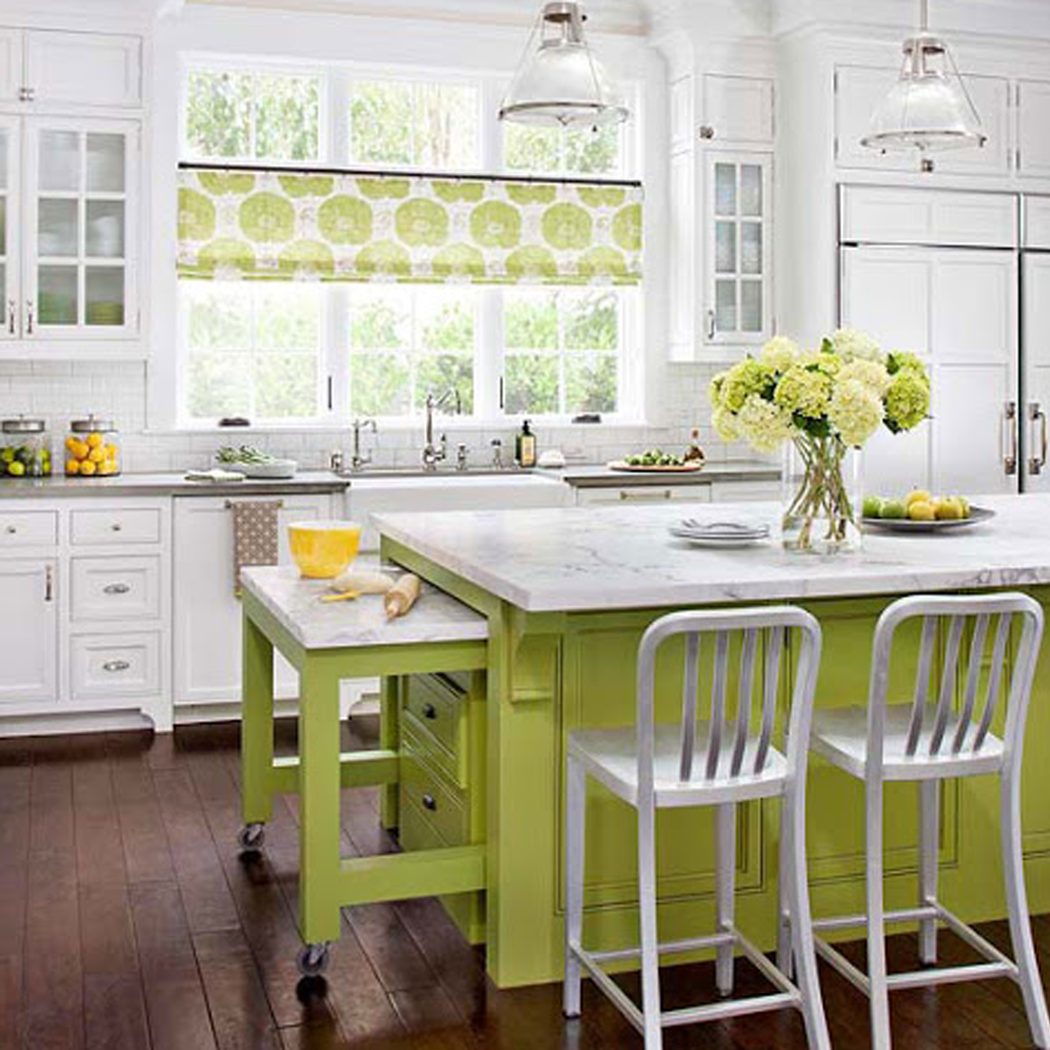
I mentioned in a previous post that our new kitchen at Arrow Hill Cottage will utilize these principles – but since it isn’t built yet, I thought I would share a few images of kitchens that are rocking the triangle.

image source


image source


image source

So now you know! Next time you hear someone complain about their awkward kitchen, ask them if they know about the work triangle – or better yet, share this post!

21 HOLIDAY CARD DISPLAY IDEAS

Have the holiday cards from friends and family started to arrive? Give them a place of importance with one of these 21 creative holiday card display ideas.

It is the most wonderful mail season of the year! Soon the holiday cards are going to come pouring in. Seeing the beautiful smiling faces of friends and family and reading about how things are going in their lives is one of the highlights of Christmas for me. I love it so much that I give these cards a prominent place in the home – right in the front entry!

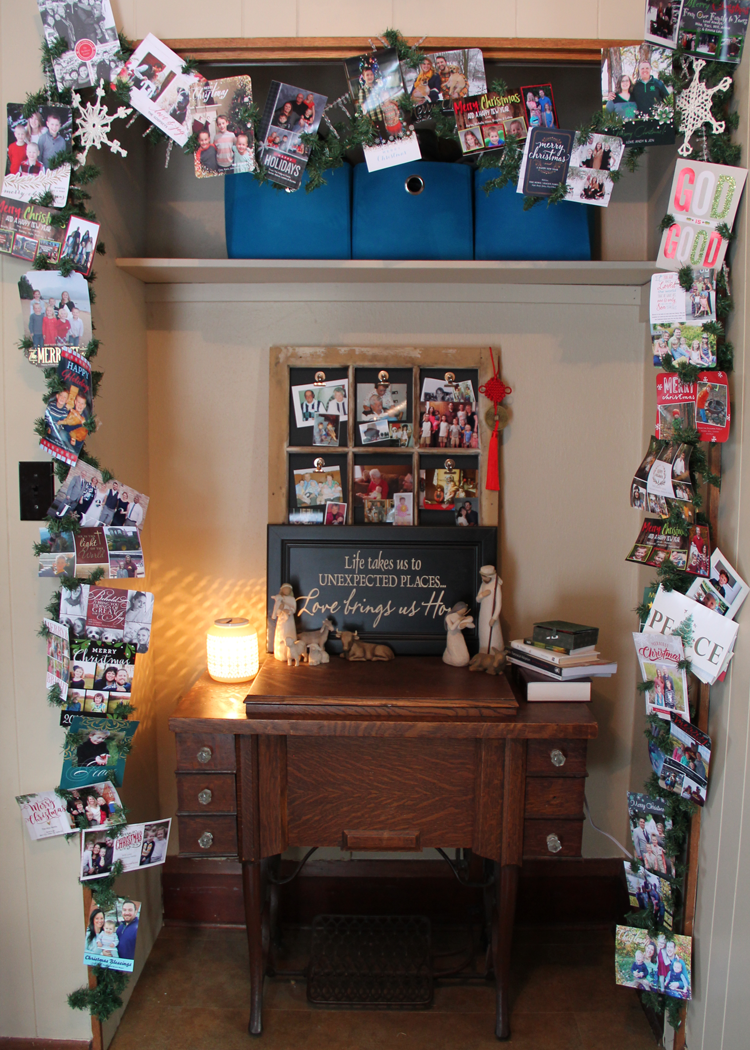
Christmas card garland display

This is the set-up we have used to display our Holiday cards for the past few years. It consists of a simple artificial garland with wire branches. The cards are held in place by pinching the branches around them. The beauty of this system is that any size or shape of card is easy to display.

When your holiday cards arrive, I encourage you to resist the urge to stack them in a pile and instead display them. They will bring you joy throughout the entire holiday season! Not sure how to display them? I’ve got you covered! I have collected a variety of creative ideas that are both functional and beautiful. Enjoy!


DIY HOLIDAY CARD DISPLAY IDEAS

With a few supplies and a little elbow grease you can create a beautiful and unique holder/ display for your holiday cards. Each photo below comes with a detailed step by step tutorial, just a click away!

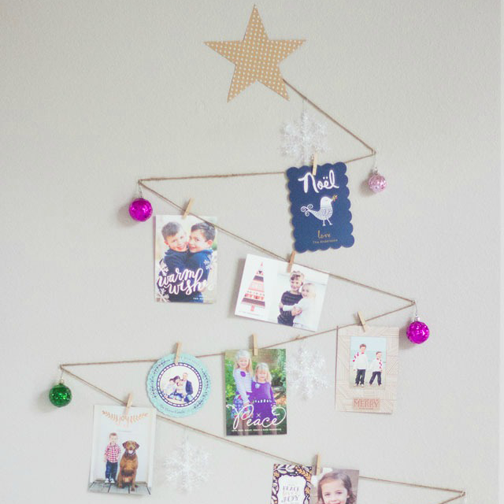
TWINE TREE | via Design Improvised

holiday card display clothes pins


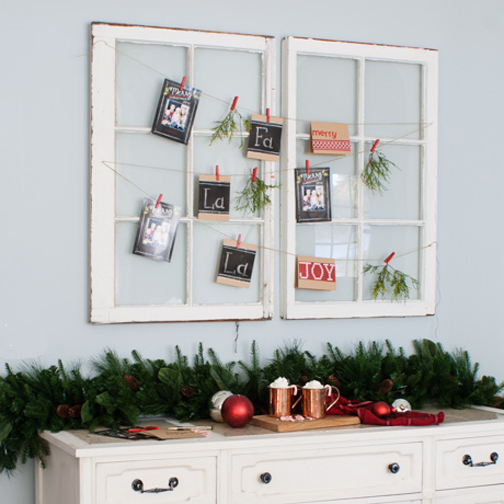
VINTAGE WINDOW DISPLAY | via The Lily Pad Cottage

holiday cards displayed on old windows


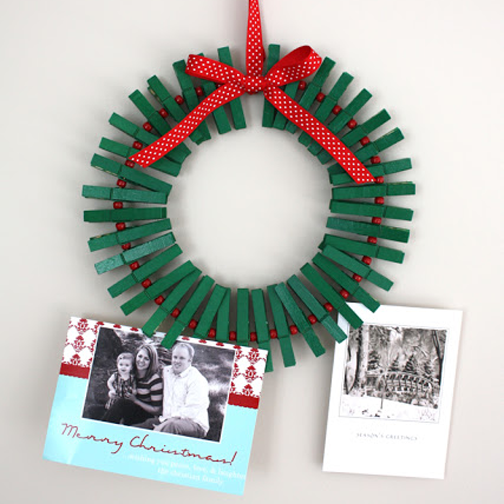
CLOTHES PIN WREATH | via Gwenny Penny

clothes pin wreath holiday card display


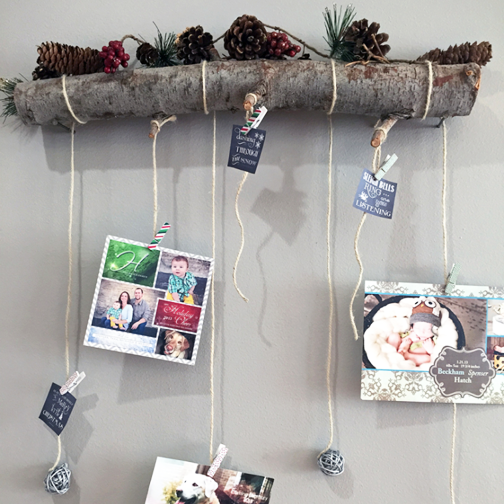
RUSTIC LOG | via Anything & Everything

diy holiday card display


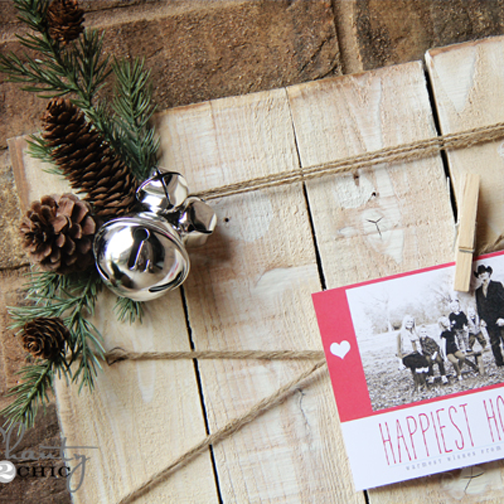
WOOD BOARD DISPLAY | via Shanty 2 Chic

holiday card display diy project


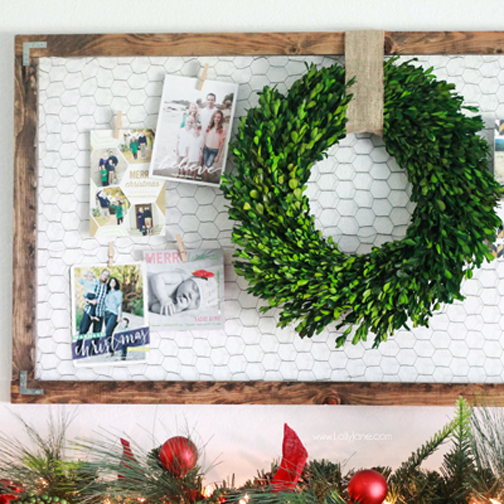
CHICKEN WIRE | via Lolly Jane

christmas card display diy project


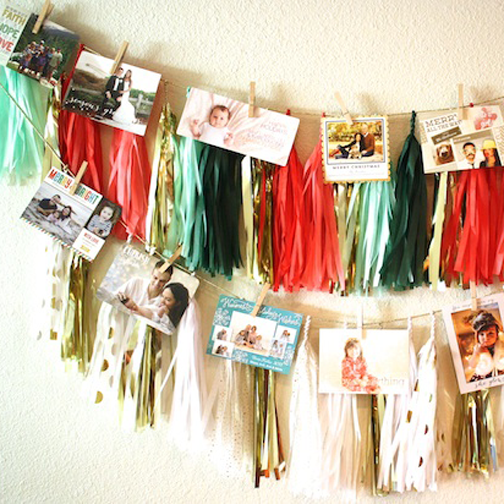
TASSEL GARLAND | via The Glitter Guide

unique christmas card display ideas


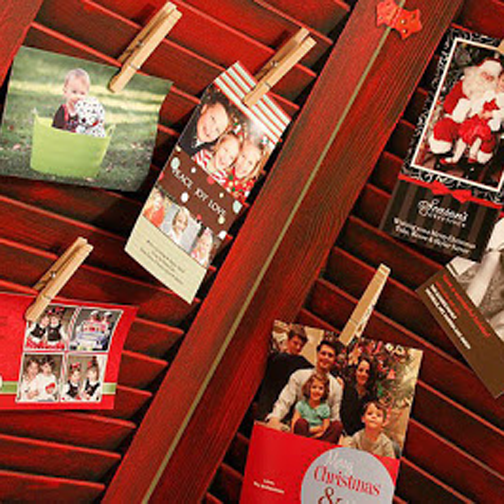
WINDOW SHUTTER DISPLAY | via Pretty Handy Girl

holiday card display craft


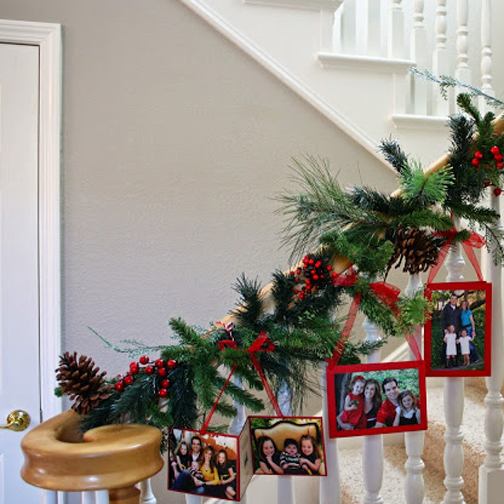
BANNISTER GARLAND | via The Sunny Side Up Blog

garland christmas card display idea


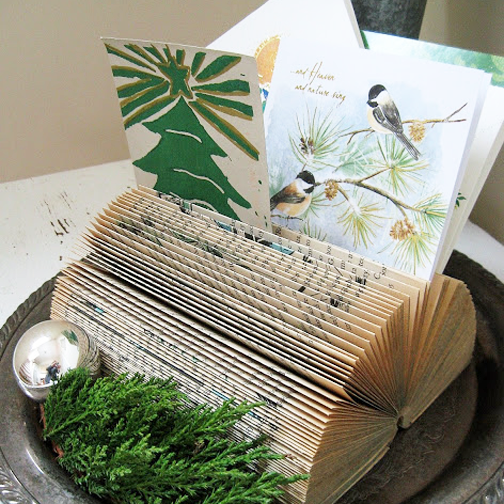
VINTAGE BOOK DISPLAY | via Four Corners Design

book used as Christmas card display

Those are all pretty amazing, right? Most of them look to be pretty simple and created with readily available items!


STORE BOUGHT HOLIDAY CARD DISPLAY IDEAS

Maybe you aren’t a super crafty person, or maybe.. just maybe… the holiday season is busy enough without another DIY project added to the mix. A store bought display might be more your speed. There are many fun (and affordable) options that you can purchase!

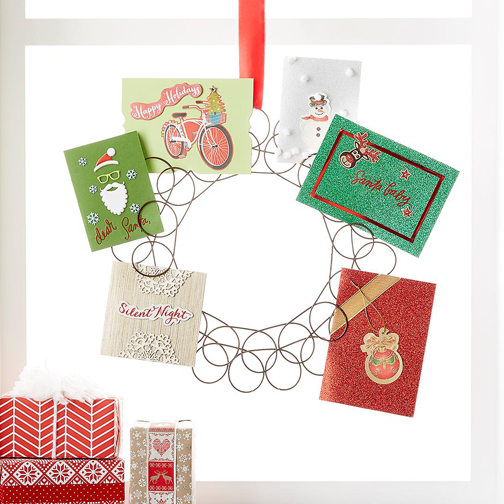
SPIRAL WREATH HOLDER | via The Container Store

holiday card display hooks


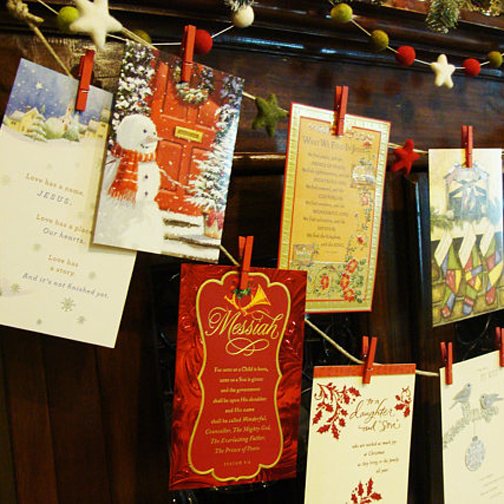
GARLAND DISPLAY | via Etsy

Christmas card display ideas


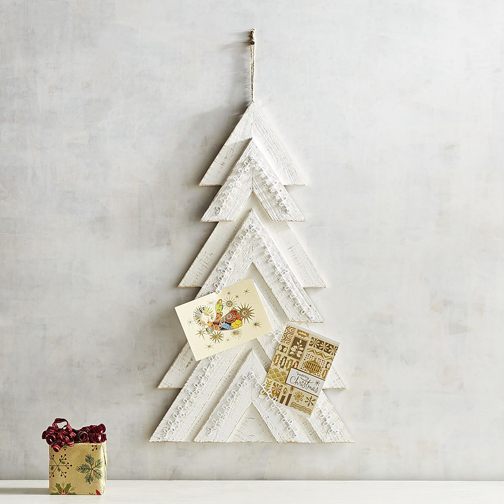
WHITE WASHED TREE | via Pier 1 Imports

Holiday card display


SHABBY STAR | via Birch Lane

Christmas card holder


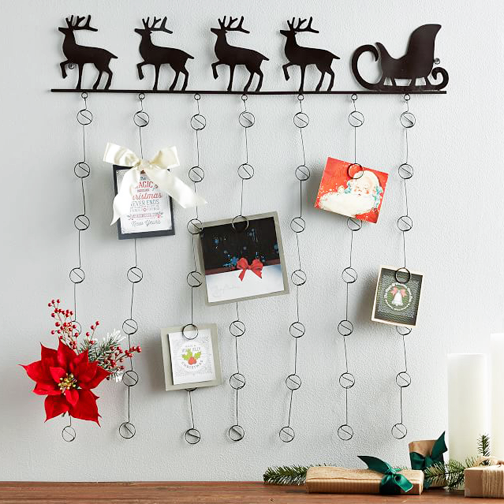
REINDEER HOLDER | via Pottery Barn

Christmas card holder


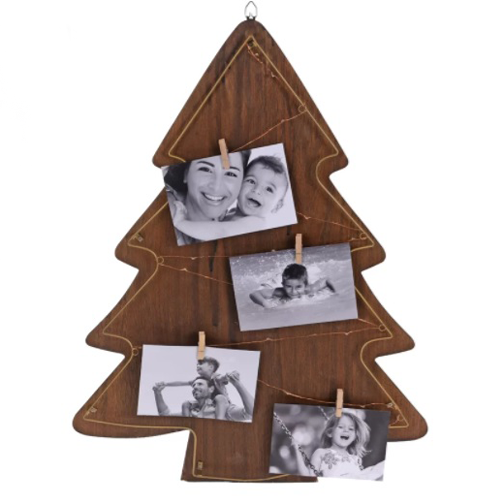
PAINTED WOOD DISPLAY | via Etsy

Christmas card display


SIMPLE NEUTRAL HOLDER | via Bed Bath and Beyond

neutral Christmas card holder


LED TREE | via Wayfair

small Christmas card holiday card holder


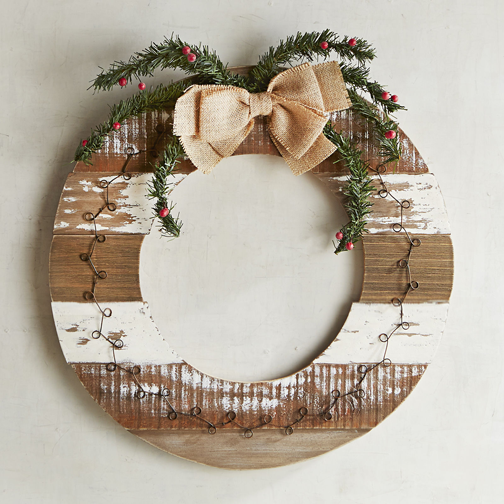
PLANKED WREATH | via Pier 1 Imports

wreath holiday card holder


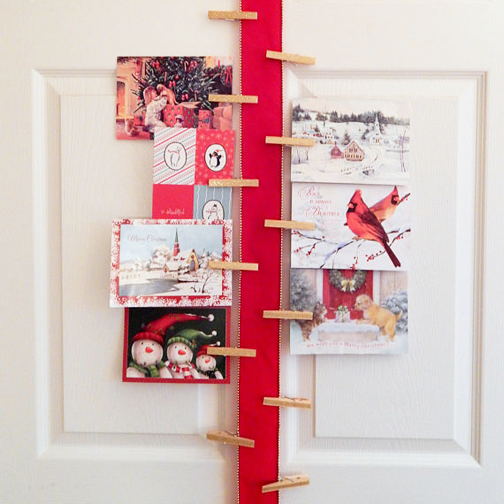
RIBBON DISPLAY | via Etsy

ribbon Christmas card holder

So many choices, so many Holiday cards to display! Yay!


PIN THESE CREATIVE HOLIDAY CARD DISPLAY IDEAS!

Pin the image below for easy access to these options!

holiday card display ideas


10 SIMPLE DIY CHRISTMAS WREATHS

It’s the weekend after Thanksgiving. The turkey and mashed potatoes have been consumed and the last crumb of pumpkin pie is now gone. We had a fabulous time visiting with family and friends. This is always such a special time of year as we reflect on all we have to be thankful for.

Those of us (myself included) who have not yet put up the Christmas tree and decorations are trying to ease into the next holiday. I personally have found that if I decorate a little bit at a time I don’t feel as intimidated by all that needs to be done to get the house looking festive.

One simple way to get in the Christmas spirit is to hang a wreath on the front door. You could purchase one, sure – but making a wreath yourself is also a great option; And lucky for us, there are tutorials for so many amazing styles.

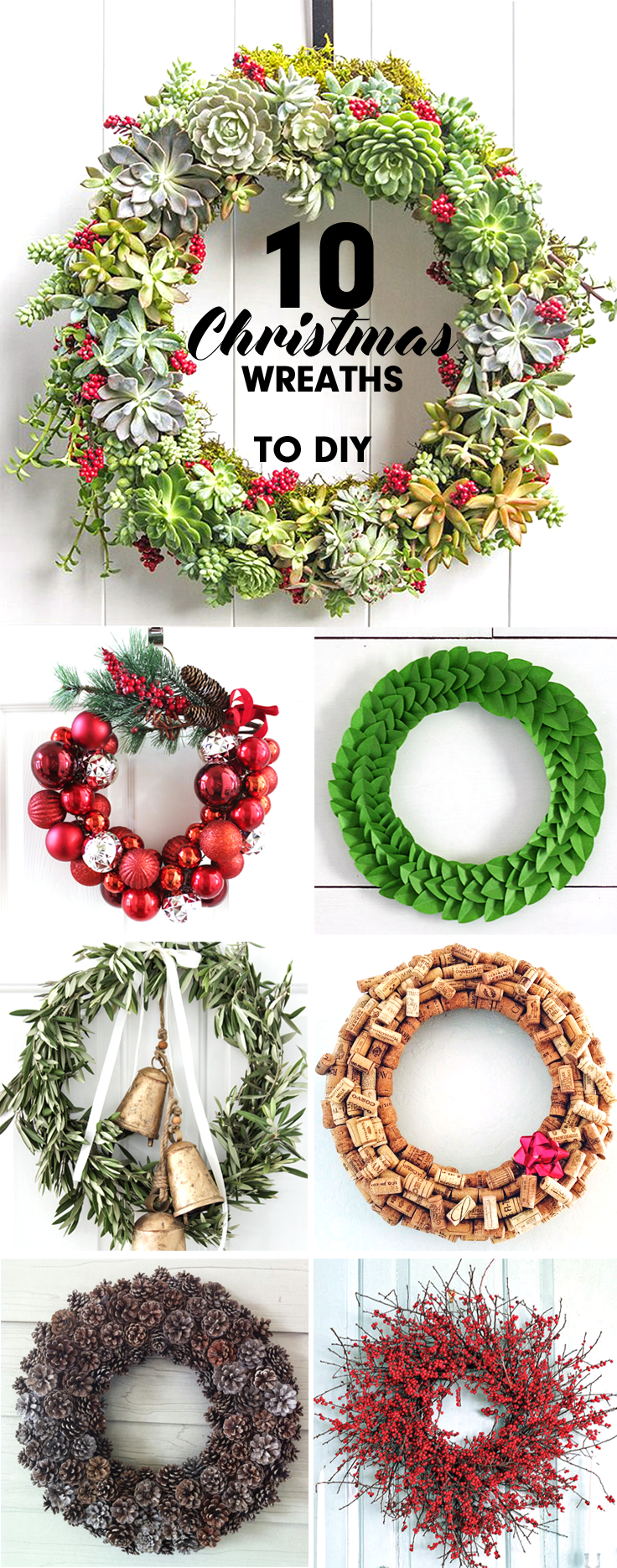
I have gathered 10 Christmas wreaths from around the web that are not only simple to DIY, but also look great!


10 SIMPLE DIY CHRISTMAS WREATHS

via Nordstrom

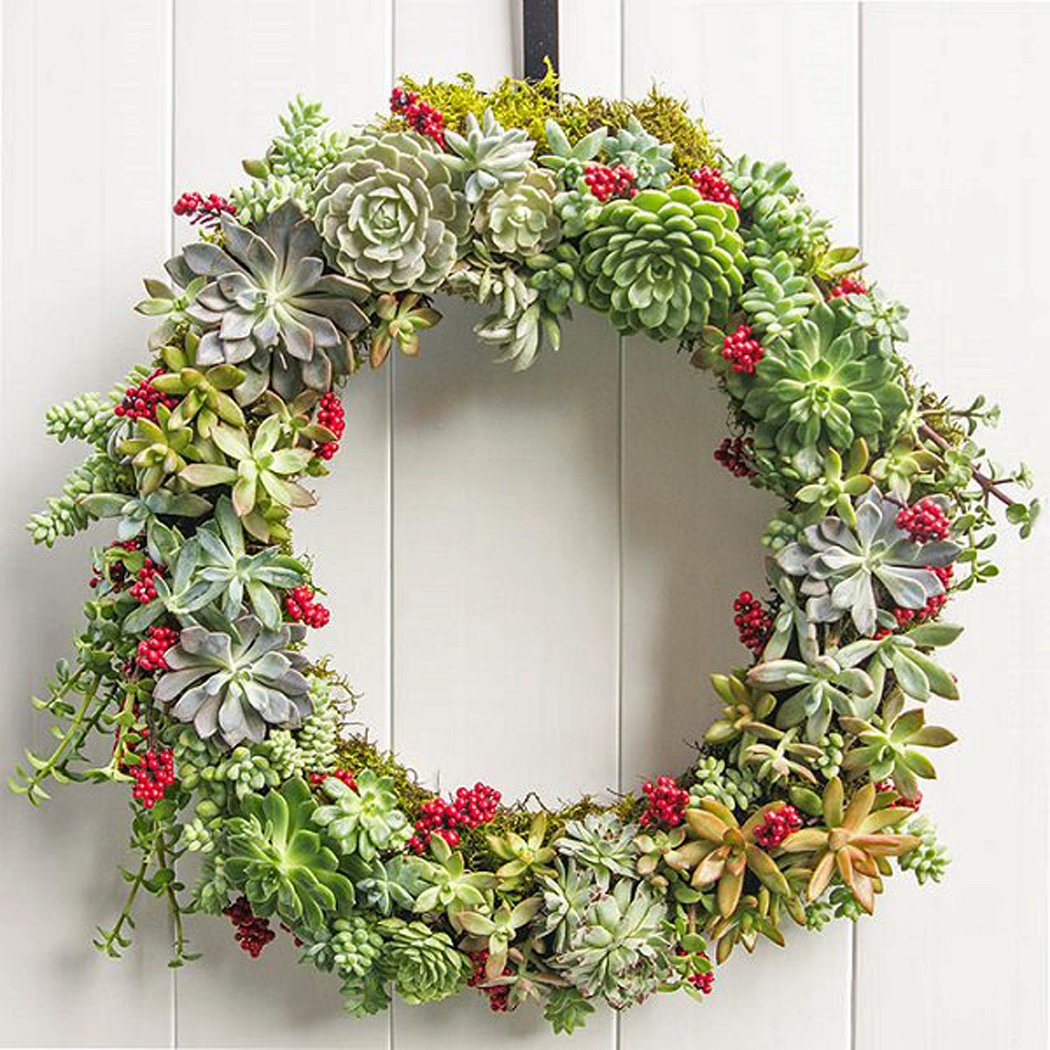
This succulent wreath is absolutely stunning and surprisingly simple to create! The link above will redirect you to a page that lays out step by step how to make this beauty.


via Delightfully Noted

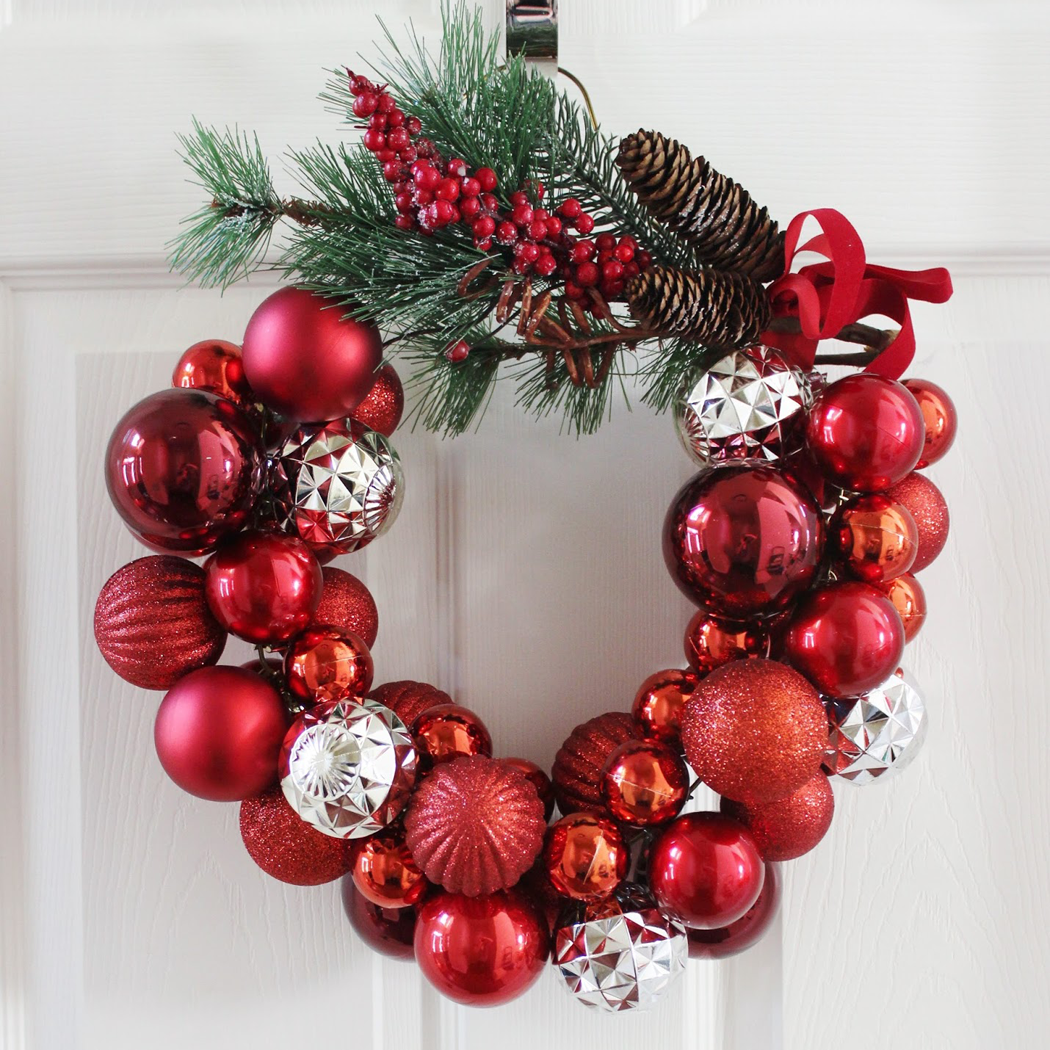
Have a few mismatched ornaments laying around? Give them a purpose by creating this fun wreath.


via Shades of Blue Interior

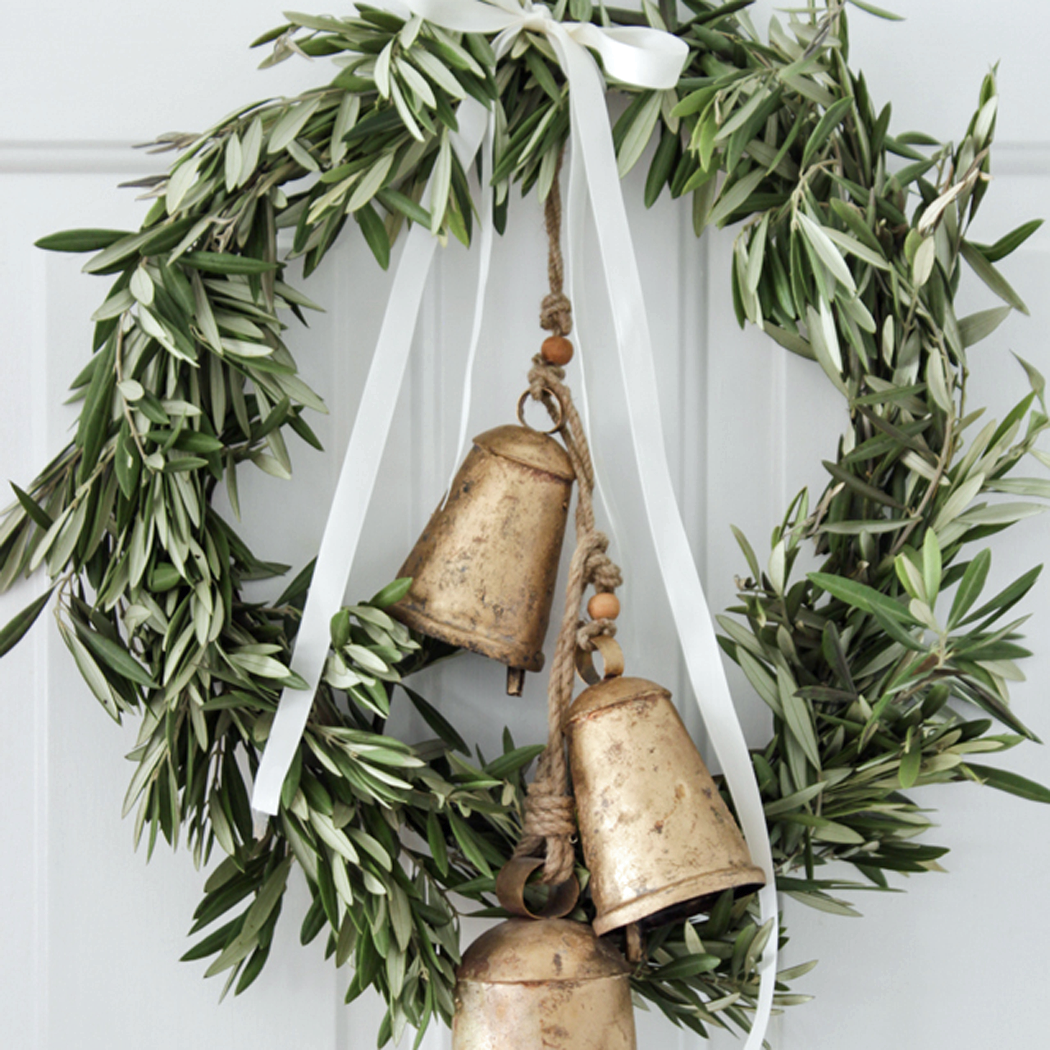
Made from olive branches tied together and a few bell ornaments, this wreath makes a simple statement.


via An American In Rome

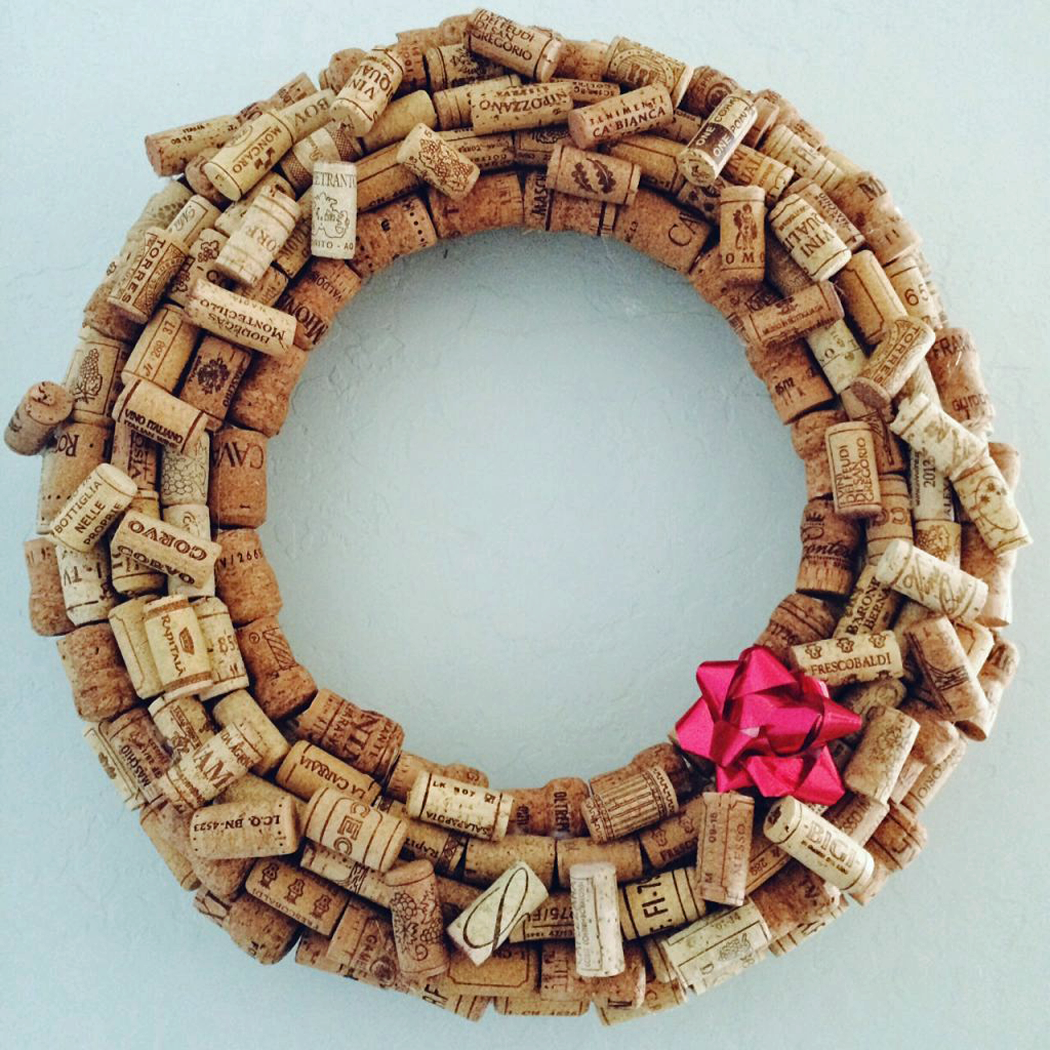
This wreath might take a while to create, but there are only a few simple steps (which need to be repeated many, many times!) The good news is that you don’t have to collect all of those wine corks yourself – you can buy them in bulk!


via Up To Date Interiors

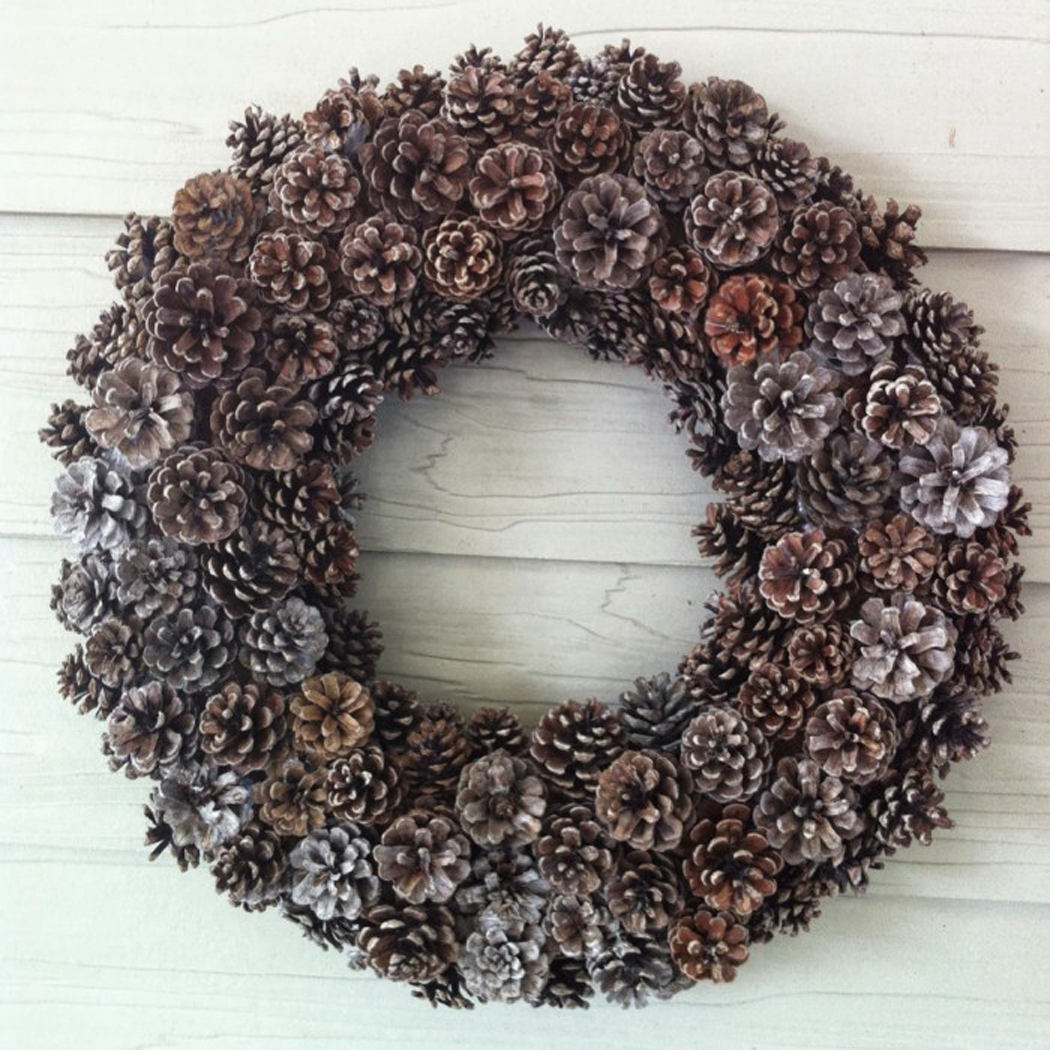
You can’t really go wrong with a simple pine cone wreath. It will easily bridge the gap between Fall and Winter, Thanksgiving and Christmas.


via The Shabby Creek Cottage

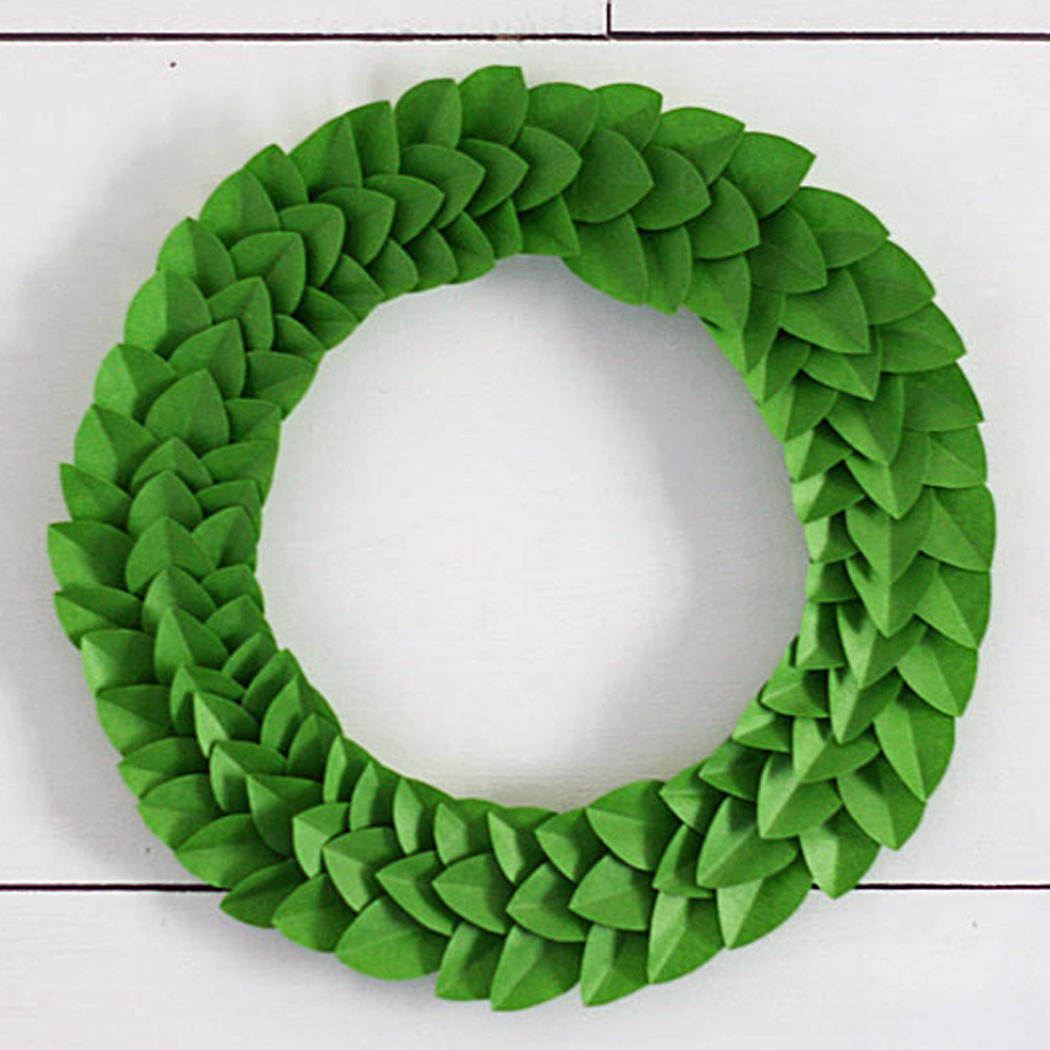
Can you believe this gorgeous wreath was created using only Frog Tape and a pair of scissors? It looks great!


via Recaptured Charm

This wreath gives off some cozy vibes and also has a bit of a shabby chic look! The bonus is that yarn is super inexpensive!


via This Old House

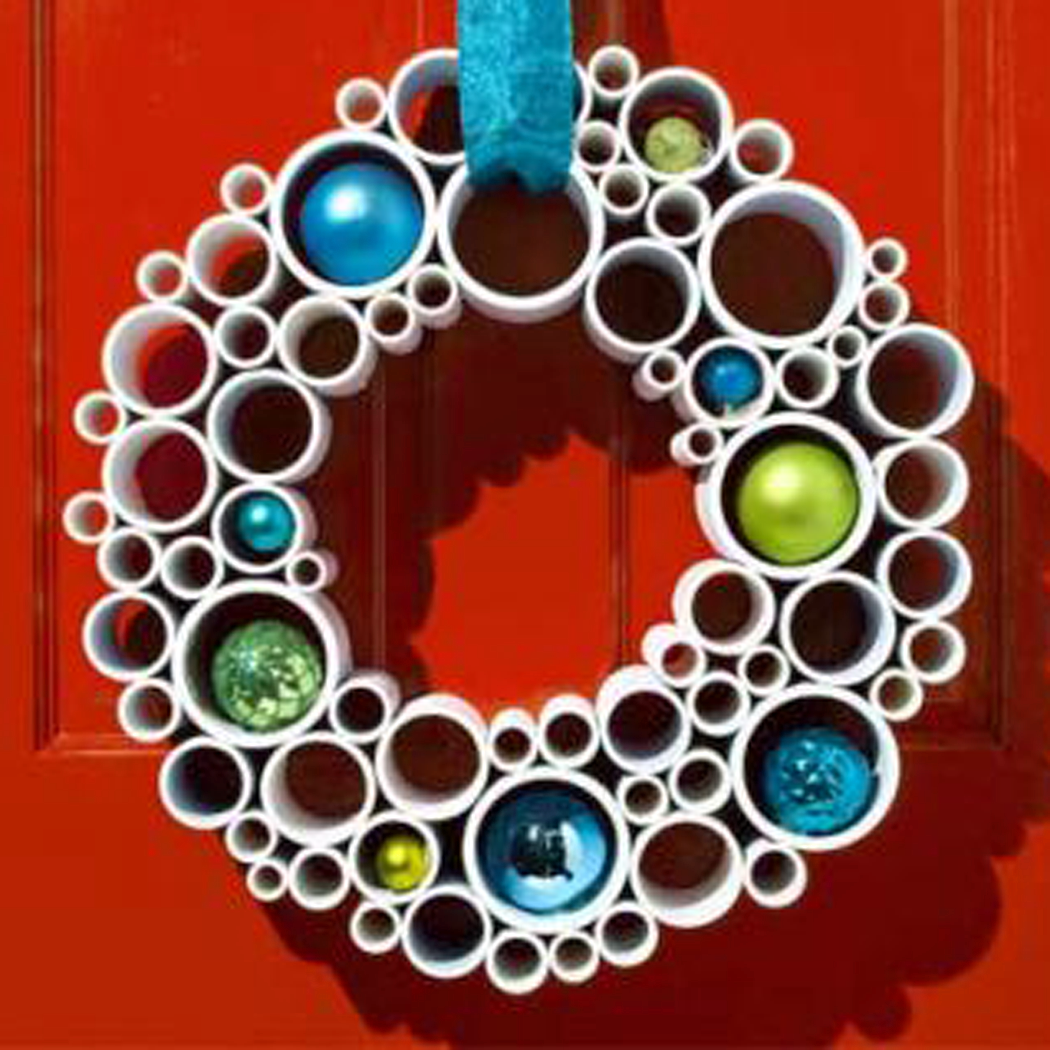
This is just too creative not to share. Cuts of PVC pipe combine with small colorful ornaments to create this quirky wreath.


via Lil Luna

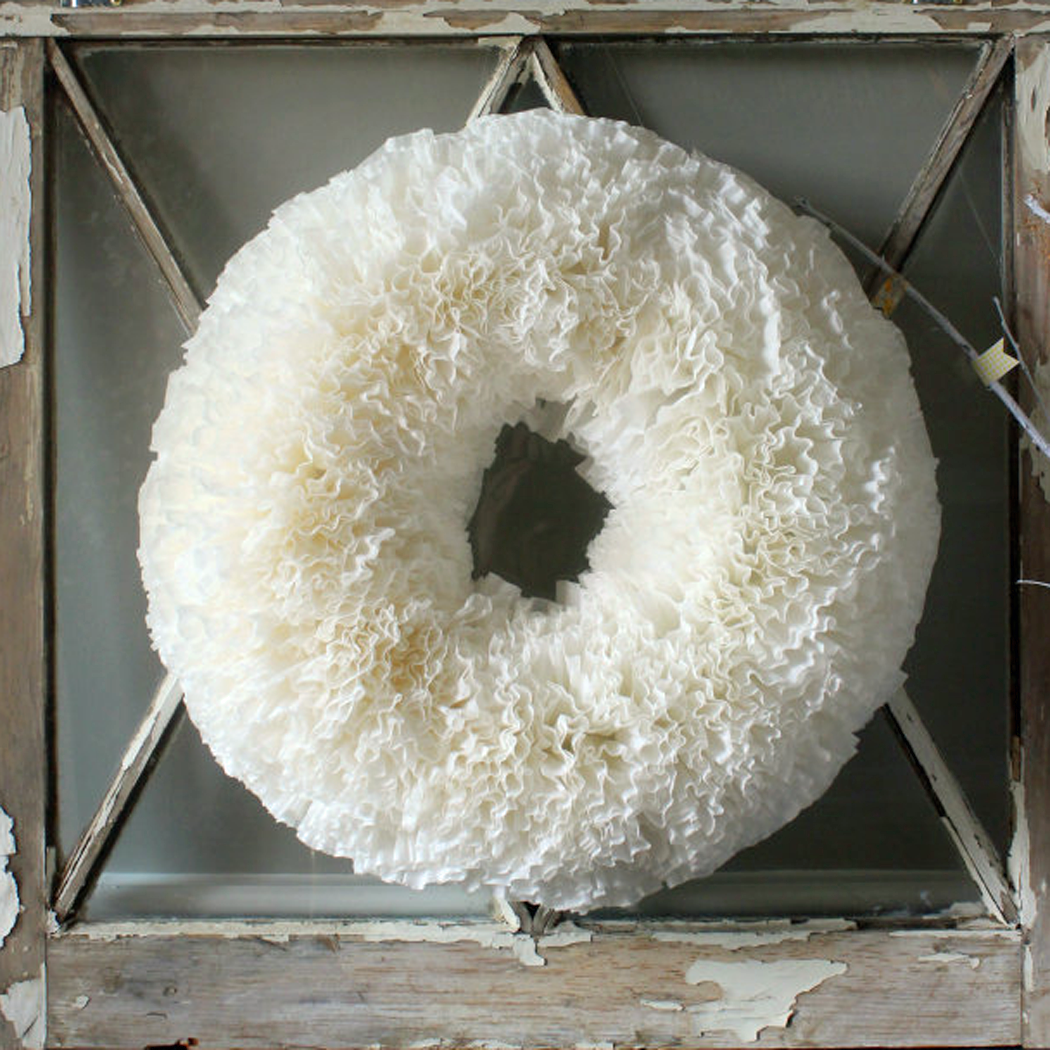
I love the puffy look to this wreath! The secret is coffee filters.. Lots and lots of coffee filters! It reminds me of a gentle snowfall.


via Good Housekeeping

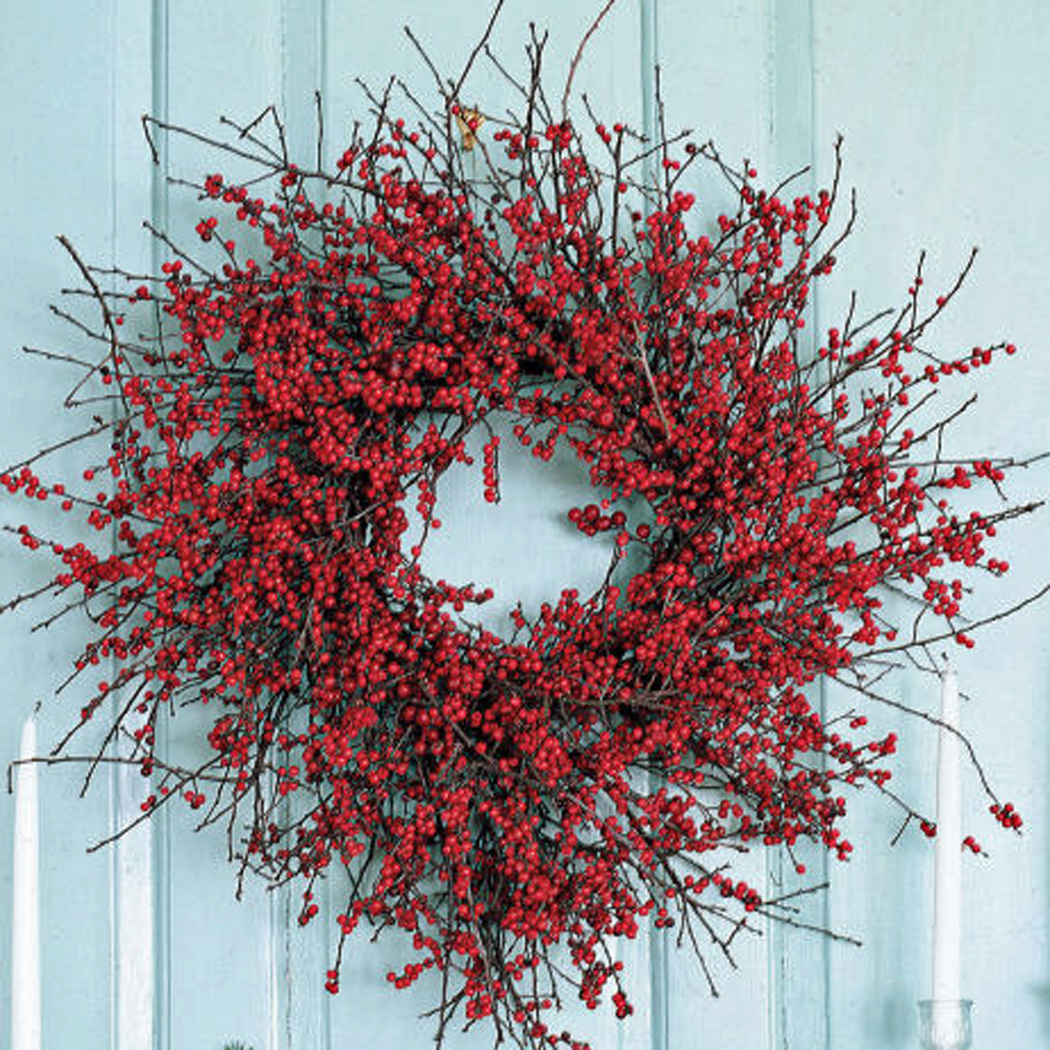
Those red berries really add a pop of color! You can purchase winter-berry branches here.


I hope you enjoyed this roundup of festive wreaths! In a few days I will get started on the Christmas decorating around here – be looking for a Holiday Home Decor tour coming soon!


BUILD A HOUSE ON A BUDGET USING THESE 9 TIPS

The cost of building materials and labor has gone up considerably through the years, making it even more difficult to build a brand new house. Many people have taken to buying a fixer upper and slowly repairing and updating it to meet their personal needs. This can be a wonderful option for those who don’t mind living in a bit of a construction zone; But for some people, a new house sounds much more appealing, for a variety of reasons.

In this article I lay out nine simple tips that can help you build a house without breaking the bank.


TIP #1: DETERMINE WHAT YOU CAN AFFORD, ESTIMATE EARLY, AND STICK TO A BUDGET

You need to determine early on how much money you have to work with.

Set up a meeting with a loan officer, who can help you get a general idea; and remember that just because you qualify for a certain loan dollar amount or have ‘x’ amount of available cash, you don’t need to spend to the max. Be sure to include the cost of your site in the budget, if you do not already own property.

Spend time working on your first floor plan layout. Though it varies, the average cost to build a basic home, using fairly standard materials, is around $125/sf. After determining the square footage of your floor plan, multiply it by 125 to get a basic idea of how much your house might cost to build. Does this number seem to line up with what you have determined you can afford? If not, it’s time to go back to the drawing board!

Once you determine your budget, you will need to be checking back with it continuously – not only during the design process, but also once the building begins. All decisions you make will need to be filtered through the lens of the budget. When picking finishes, for example, if you decide you really want to add granite counters in your kitchen but your budget only allows for laminate, you are going to have to make a decision and likely a compromise.


TIP #2: KNOW HOW MUCH SPACE  YOU NEED

The size of your home is going to be an important deciding factor on how expensive your build is. As mentioned in this post, you should consider what size of home you actually need to live comfortably. You might be surprised to learn that you don’t need as much space as you thought you did!


TIP #3: FIND A SUITABLE SITE

The costs associated with the building site, both in purchase and preparation can account for a large portion of the budget. Although there are exceptions, it is generally recommended that you spend no more than 20% of the total cost of a home construction project on a building site. For example, if you have $120,000 to invest in a home project, you should spend no more than about $24,000 for the land.

This image, from Pixabay, features a site that was probably VERY expensive to build on!

It is important to find a suitable building site near the beginning of the design process, to ensure that the site and home complement one another. The most cost effective lots are those that are flat or slightly sloped with few trees, and have access to public utilities. Be aware though that sometimes the more ‘difficult’ sites have the potential to be purchased for a deep discount; and, with some creative design, could become a perfect spot for your new home.


TIP #4: DESIGN SMALL & TALL

The two most expensive elements of a home to construct are the foundation and the roof. For this reason, compact two story homes are generally more affordable than one level, sprawling residences.

If you are looking for ways to reduce the footprint size of your house during the design phase, consider these techniques:

ELIMINATE HALLWAYS
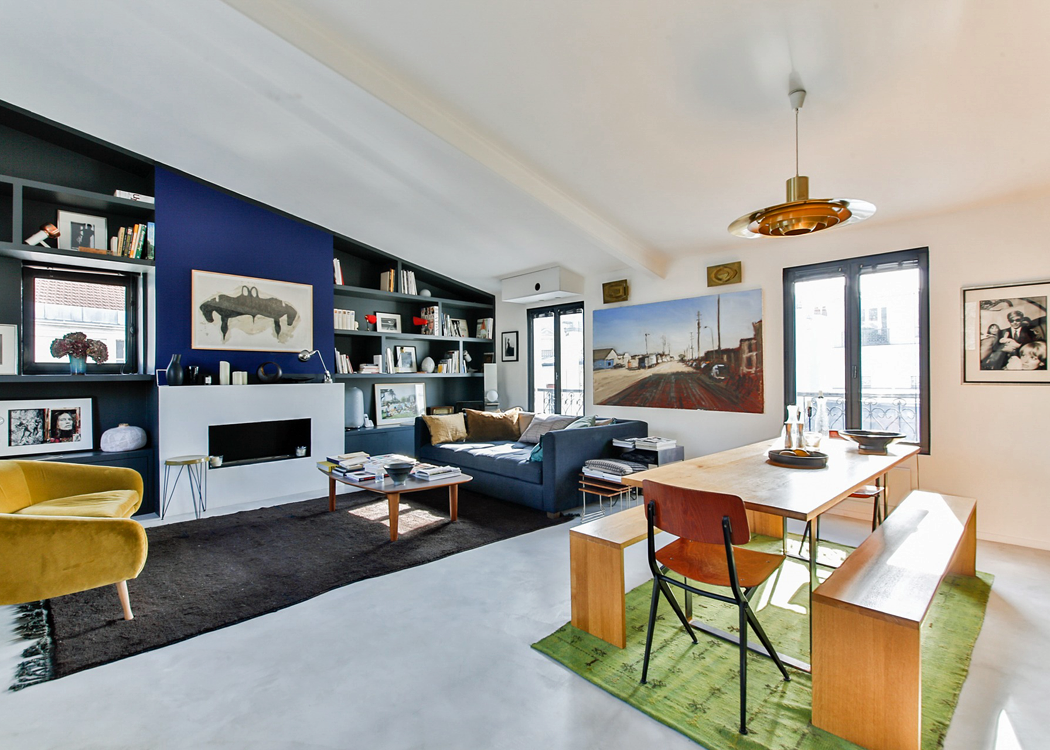
Hallways are space hogs. Eliminate them by using the rooms themselves as circulation. If hallways are impossible to avoid, try to reduce them as much as possible.


CREATE MULTI-USE ROOMS
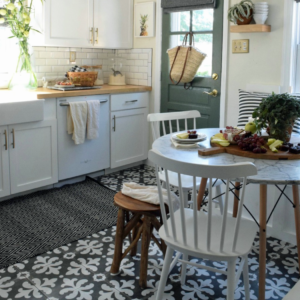

image source

By designing rooms that can serve more than one purpose you can shave quite a bit of square footage from the floor plan. Consider an eat in kitchen, or an office that doubles as a guest room, for example.


REDUCE BELONGINGS


The fewer items you have, the less space you need to house them. Creating an entire room for the storage of seasonal decor may not be the best use of limited square footage. Consider smaller scale furniture instead of large/ bulky pieces. For example, a sectional sofa will take up less space than two couches in a living room.

SHARE
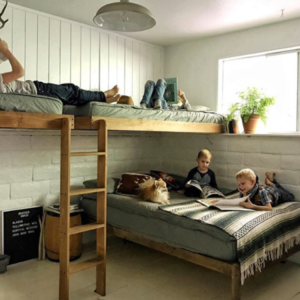

image source

If you have children – consider having them share a bedroom. Even if they aren’t fans of the idea, you can rest assured that sharing won’t hurt them, and may actually be good for bonding. Check out these bonus tips on how to accomplish a shared space for the kids.


TIP #5: CONSIDER BASIC / SIMPLE SHAPES

A rectangle or square shaped home, with four corners only, is the most simple and cost effective to build. For each corner that is added, the price increases. Extra corners affect the complexity of the foundation and the roof, which as previously mentioned, are the most expensive aspects of a new build.


TIP #6: UTILIZE STANDARD MATERIALS

By designing with materials that are readily available, you can save a bundle. Simple cinder blocks and pine planks can be arranged in creative and aesthetically pleasing ways that won’t break the bank.
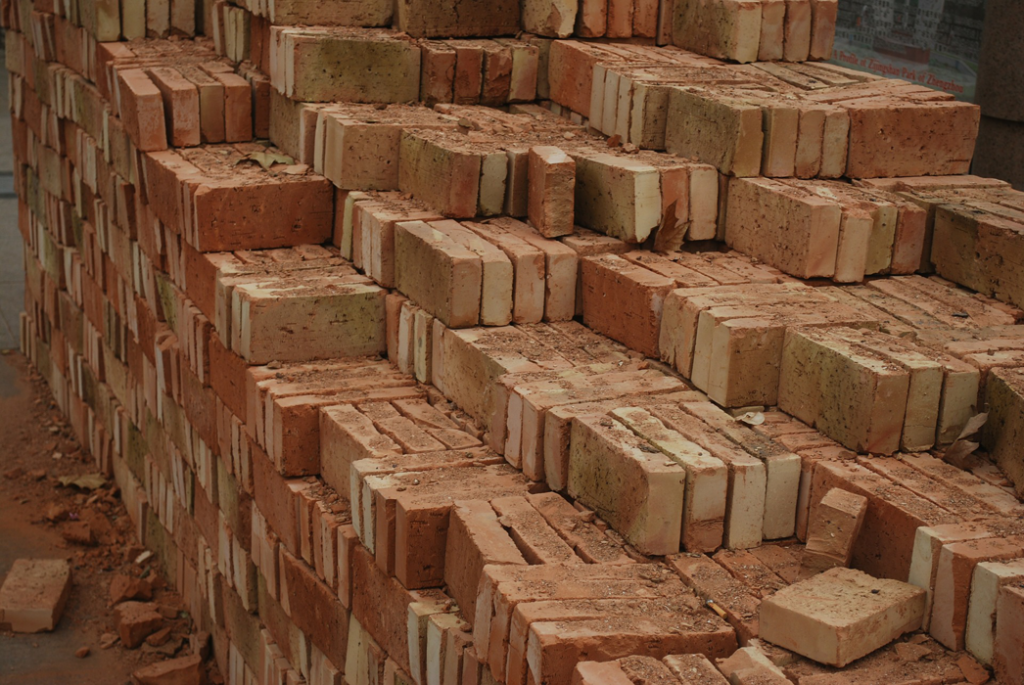
This house is an example of how standard materials can be combined in a beautiful way.

Consider checking out the discounted stock at your local home centers. As the quantities of their inventory get low, the stores will begin to offer them at bargain prices. This could be a perfect solution for those small spaces, such as powder rooms or entryways.

You can also find reclaimed materials inexpensively. Check  the local Habitat ReStore, Craigslist, or even the trash yard. If you know of a house that is about to be torn down, inquire about purchasing the useful bits that are salvageable (doors, trim, or hardwood floors, for example).

Purchasing stock cabinets is another way to save big. You can create a layout using typical pre-built sizes and arrange them to get the look of custom cabinetry.
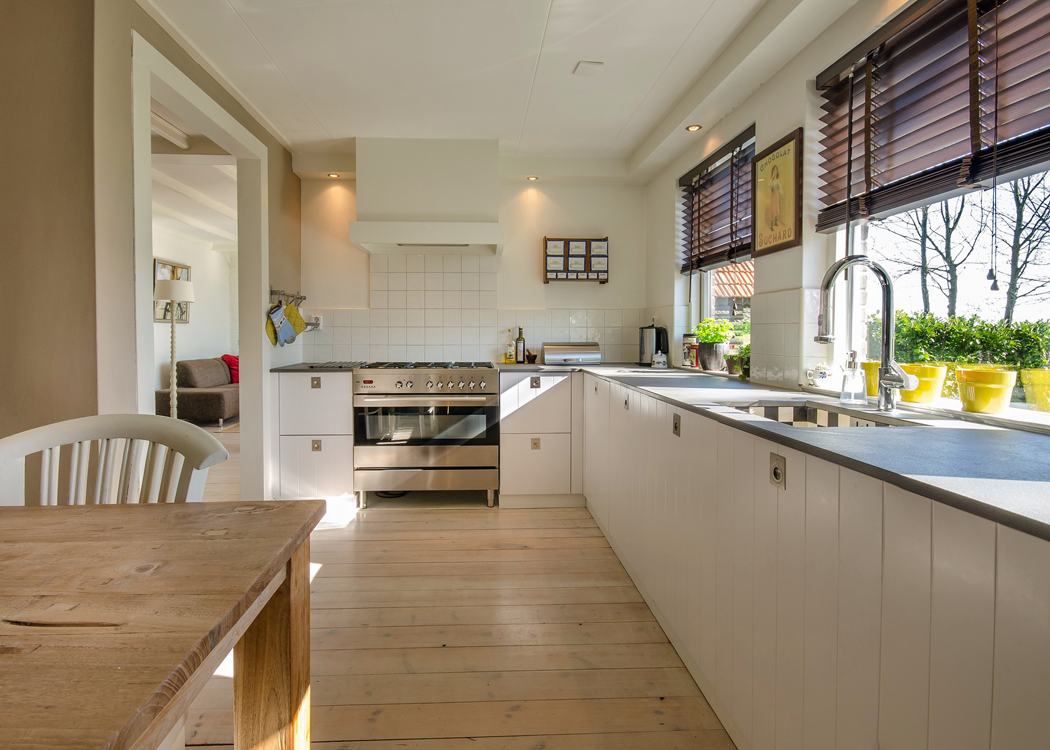
This article, written by Apartment Therapy, provides ideas on how to use stock cabinetry throughout the home.

Please note that it doesn’t always make good financial sense to use extremely cheap ‘builder grade’ materials, especially on the exterior of your home. Though the upfront costs of these materials may be lower, there is an increased possibility that they will need to be replaced more quickly, negating your initial savings.

TIP #7: BUILD IN PHASES

There is a chance that while you are in the process of designing your home you will come to the realization that your family needs more space than the budget will allow. Look at the design closely to determine if there is a way you can split the construction into phases. One common technique is to build the house first, and add on the garage at a later date.

This house is a great example of one that was designed to be built in phases

Another option is to build the house shell, and finish the main floor living space only. The basement or second level / attic can be left unfinished until the money becomes available.


TIP #8: ADD SWEAT EQUITY
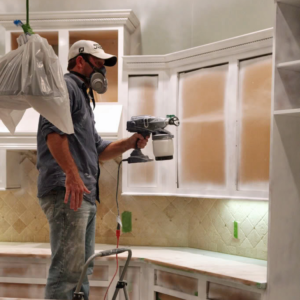

image source

Though not everyone is cut out to be the general contractor of their build project, there are plenty of smaller and more simple tasks you could tackle to save some serious cash. You could paint interior walls, install flooring, or even shingle a low pitched roof. The time you spend tackling these projects will allow the construction crew to focus on the more difficult tasks. Be prepared though, that these odd jobs will likely take you more time than a crew to finish. You should communicate and coordinate with your contractor to be sure you aren’t holding up any future steps by taking on the work yourself.


Be mindful that unless you are very familiar with construction, there are a few jobs that are probably best to steer clear of:

FOUNDATION: The foundation is just so important. It needs to be level and square. If you are using a poured foundation, it is vital that the consistency of concrete is correct. This is more than a DIY endeavor and should be passed to the pros.

ELECTRICAL: For safety reasons, the electrical work is something the typical homeowner shouldn’t tackle. Not only will your home need to pass an electrical inspection, it will also give you peace of mind to know that this specialized job was done right.

ROOF FRAMING / TRUSS WORK: The framing of the roof will likely involve the use of a crane to bring in trusses. Working in close proximity to heavy machinery can be unsafe; and if the house is two stories, a fall from that height can cause major injury.


TIP #9: DELAY BUILDING

If you aren’t quite ready to make the above compromises – your best option is to wait to build. If you start a home building project before you are ready, you risk making foolish and expensive decisions during construction that could give you a financial headache. There is something to be said about waiting. It may even make you appreciate your new home even more. In the end, you want your home to be a blessing and not a curse!

Personally speaking, my husband and I have waited a LONG time to get to the point where we felt ready to build. Designing and building a house for our family is a dream that has literally been YEARS in the making. I know that once Arrow Hill Cottage is complete we will be so thankful we took the extra time to make sure we were financially ready.

I hope you enjoyed these nine simple tips and have learned that building a house can be affordable, even on a budget, if you are careful in the design/planning stage and mindful throughout the construction.

Pin this image to save these tips for later!

READER SHOWCASE: CILICIA + JUSTIN’S HOME

Today I am introducing a brand new feature to the blog – THE READER SHOWCASE – where I share photos and information about projects that YOU, my lovely readers, have tackled! I know there is a ton of amazing talent out there, and am excited to show everyone in blog-land what you have been working on.

For the first installment, I asked my friend and fellow creative soul Cilicia to share all of the changes she and her husband Justin have done to their cute house. I think you will all be inspired!

Cilicia, please tell me a little bit about your home.

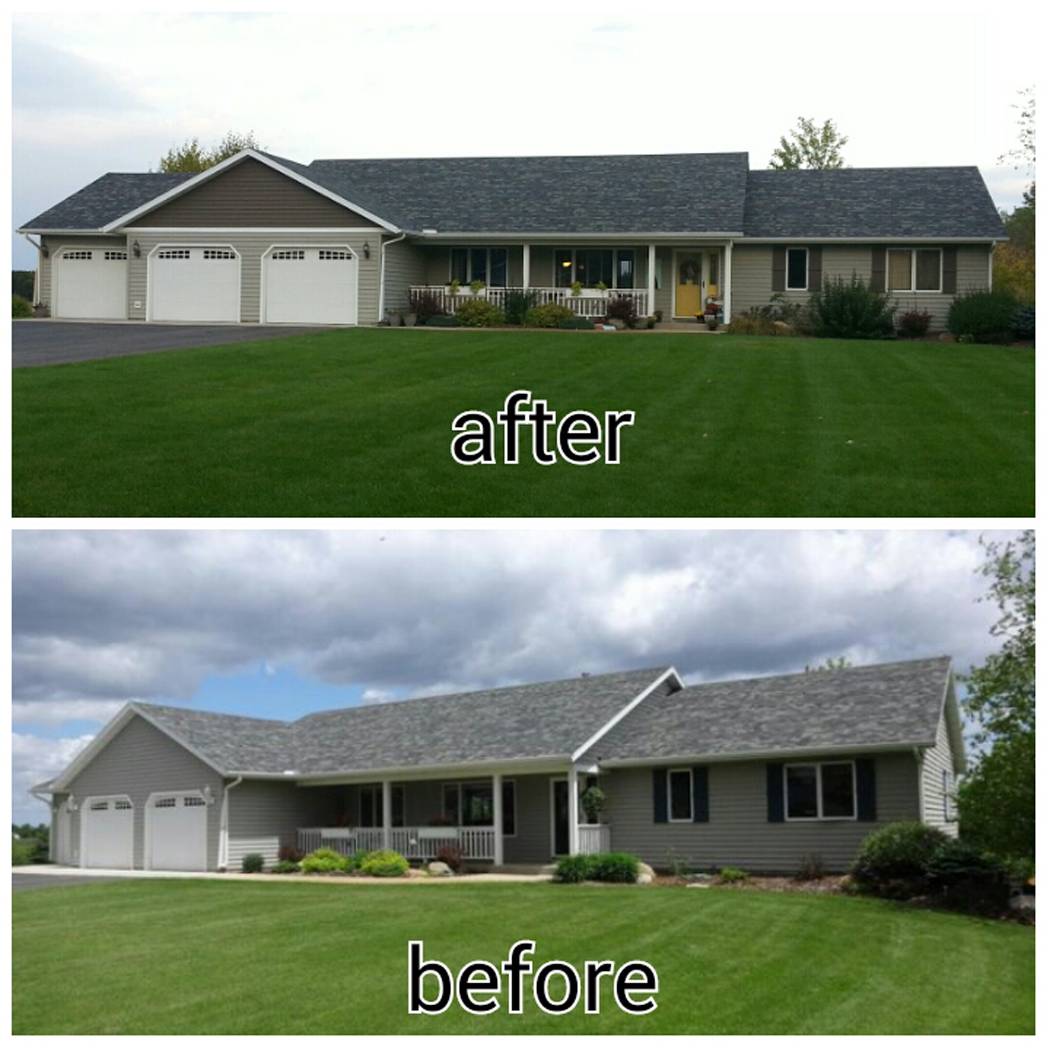
We live in a 2000 walkout rambler, nestled at the end of a cul de sac. It’s on the outskirts of town and feels like the best of both worlds (city and country). We have a happy view out our back windows and can enjoy both the sunrise and the sunset from our dining room table.

I love the detail they added on the garage. And that yellow door is a stunner!


What is your personal design style?

This is such a loaded question! My style has evolved so much over the last 20 years. I tried to figure this out myself early on in our home transformations, but found it rather hard to pick just one style to adhere to. I decided that I would start buying pieces that I loved, rather than pieces that fit an expected style. In doing this, you will find a mix of shabby chic, modern, contemporary, mid century and items that don’t have a place in any of those categories, in our home. To me this mixed style feels warm and inviting, while maintaining a clean look.

Please explain your favorite remodel projects. What was done to each space?

We have purchased 3 homes. Each of them have had our touch put on them. My husband and I tend to do a lot of the work ourselves, and hire out only the things we know need a professional touch. I tend to be the one who comes up with the design ideas, does the bulk of the painting, and helps with small projects. My husband is the man behind the scenes. He trusts the visions in my head and brings them to life.

These photos display some of the work we have done on our current house.

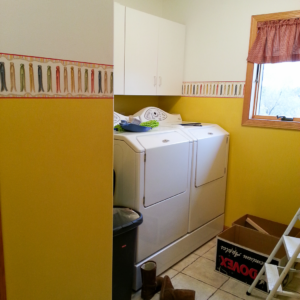
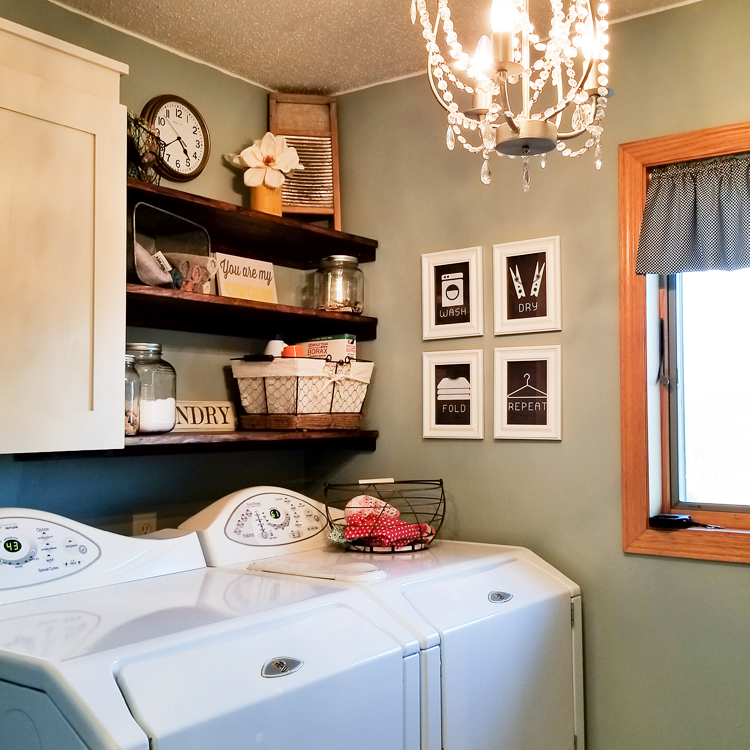
LAUNDRY


Laundry room before


Laundry room after – how amazing is that chandelier? Doing laundry in style!

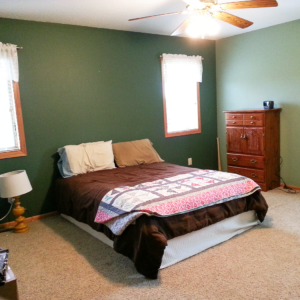
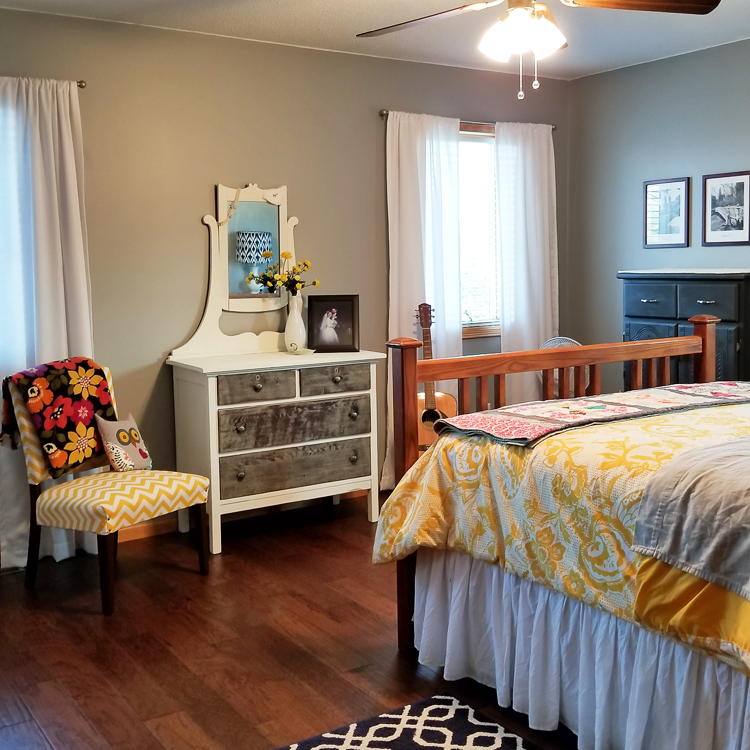
MASTER BEDROOM


Master bedroom before


Master bedroom after – so cheery and bright!

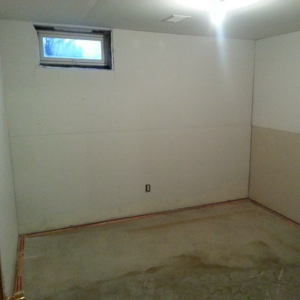
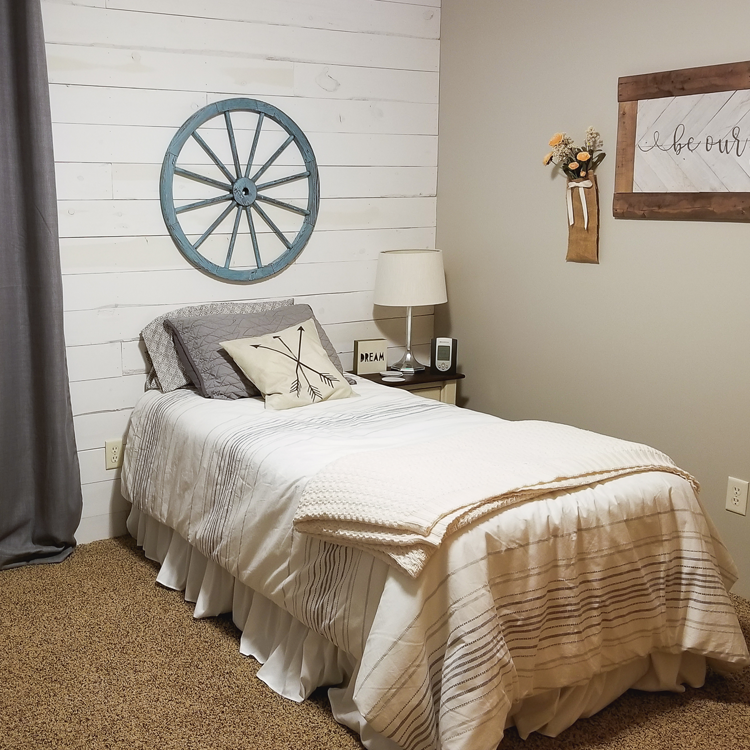
LOWER LEVEL GUEST ROOM


Guest room before – just a plain old storage room!


Guest room after – I think anyone could be comfortable here in this space!

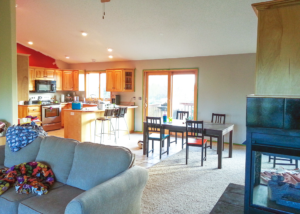
GREAT ROOM

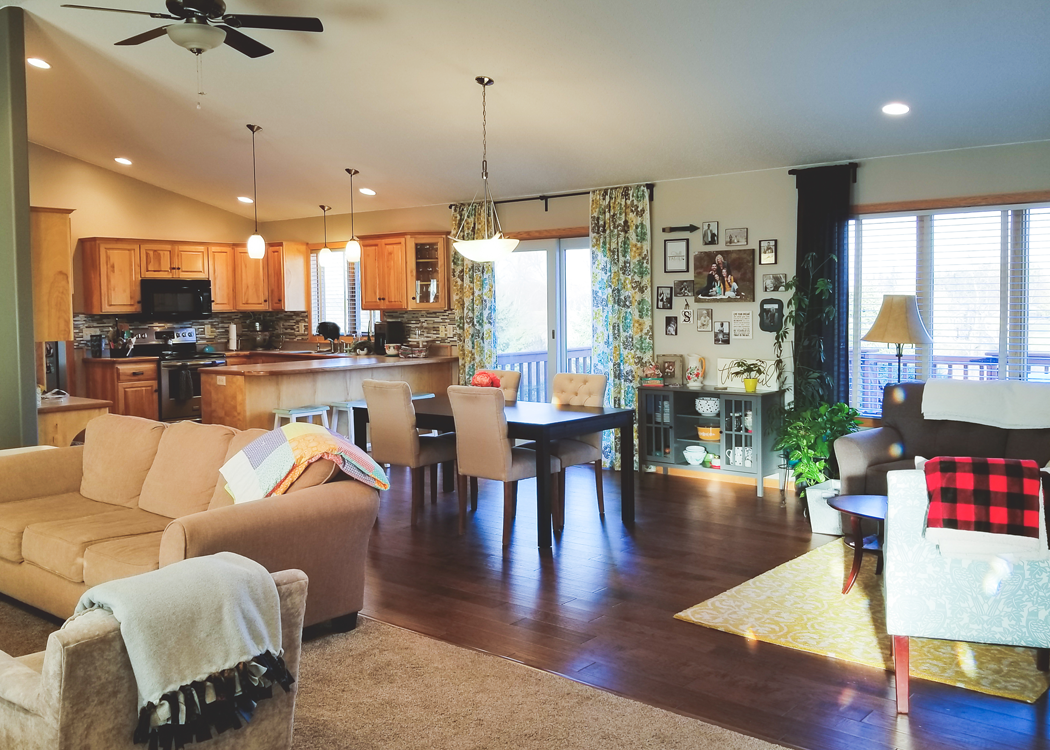
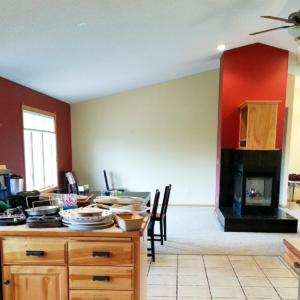
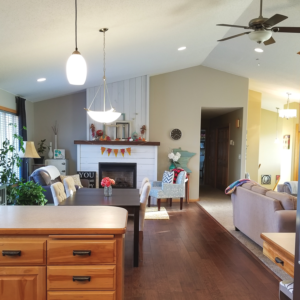
The house also has an open great room space, which is probably the largest project we have tackled. The entire space was remodeled (except for the kitchen cabinets and counter tops, which will happen sometime in the future.) Changes include all new flooring, walls painted a more neutral color, and updated lighting throughout.


living space before

View of the living space after. I love all of the different textures and colors they used! Doesn’t it look cheerful?

The fireplace was one of the biggest changes in the space. The previous fireplace was large, three sided, and was awkwardly placed in the center of the room. Removing it really opened up the space – as you can see in the pictures.

We decided that we still wanted to have a fireplace, and carved out a nook at the end of our long dining room where we built a new fireplace. It has been an amazing feature in our home and is where we read and relax.

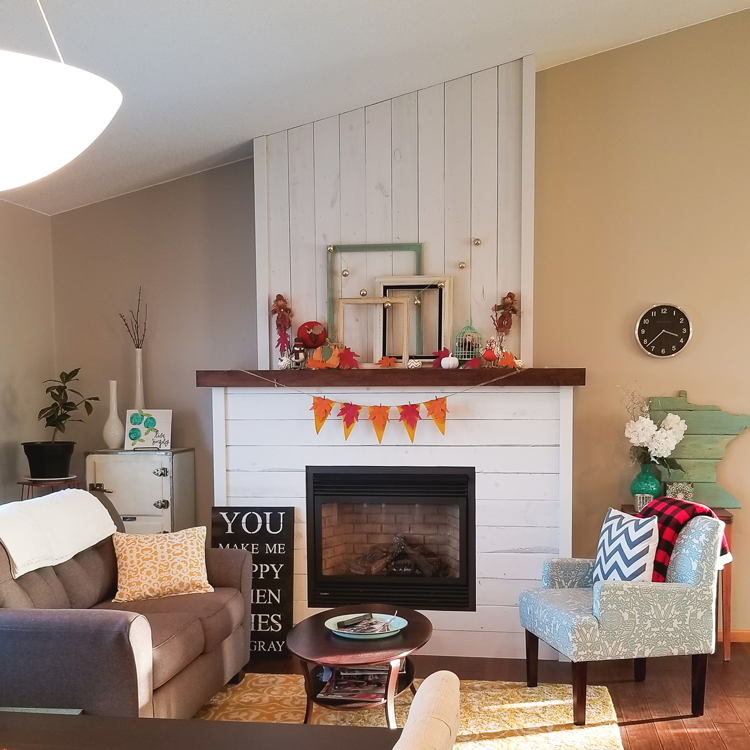
The decision on how to finish the fireplace took over a year to decide! At first we were set on putting rock on the outside, but I never really loved any that I saw. As time went on I realized that I actually liked the wood that we had up there, but it just needed to be lighter. Ultimately, we used a fake ship lap finish, created with very cheap wood boards that were white washed. We think it finishes the space perfectly!


Fireplace before – three sided and awkwardly positioned


Fireplace after – centered on an adorable reading nook


Close up of the fireplace and reading nook. Isn’t that refrigerator box ‘cabinet’ everything?! And… I happen to know that she reupholstered that chair on her own!


What would you like readers to know about designing and styling a home? Do you have any tips to share?

I am not a professional by any means; But after remodeling and decorating three homes, I do have some thoughts:

#1. ALWAYS remember that paint is an easy fix. Walls, floors, cupboards, and furniture are all only a paint brush away from getting a completely new feel.

She’s right! Just look at the difference that painting the walls made in the lower level bathroom of their house!

#2. Don’t be afraid to try something new. Most of what we have learned has come from trial and error.

#3. Patience!! This plays a huge role in a remodel of any kind. Whether it be with your husband, wife, children, contractors, or even yourself. Try and breathe. Trust me, you need to remember this tip!

#4. Put up the pictures. So often I hear people say that they wish that they could put pictures on the wall in a nice way. The fact is that they can! There are so many different outlets to find ideas on a wall layout. Just go to Pinterest or Google to learn how to arrange pictures on a wall. No matter how you do it, just give it a try. Family pictures add such an important personal dimension to a home!

#5. My last piece of advice is to enjoy the process. If you need to take a step back every once in awhile, do it. Each space needs its own time and generally we can’t do it all at once. Find a house you love and make a dream about all the things you want to do to make it home – then just pick one thing at a time and go for it!

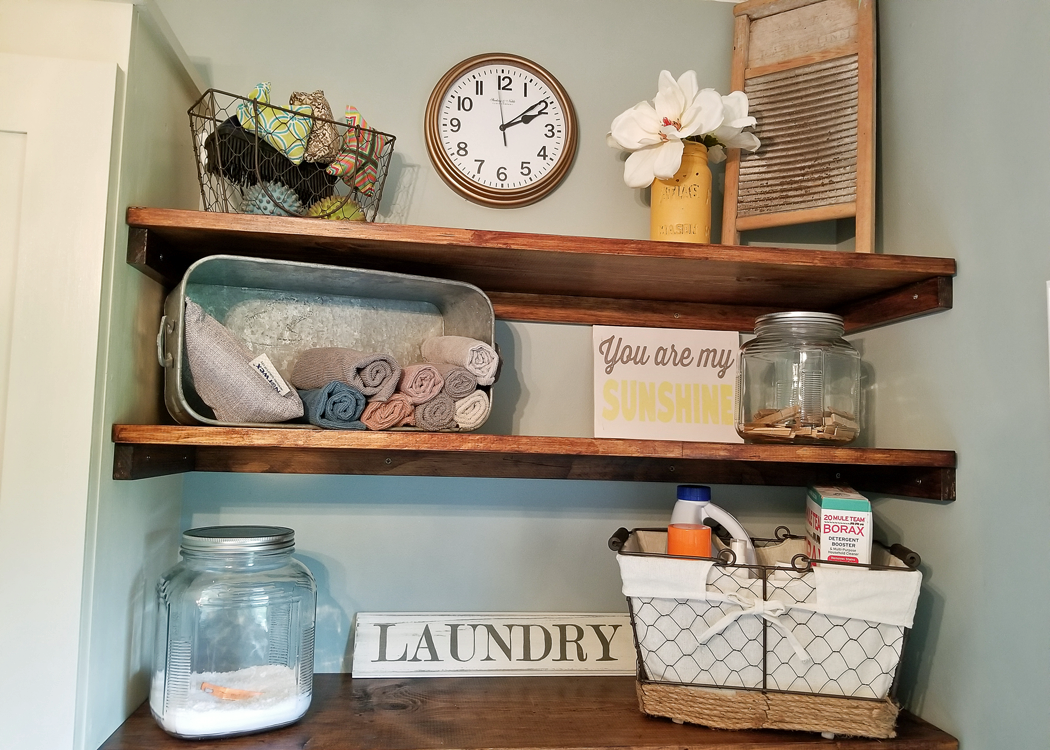
A cute display in the laundry room. I love how she mixed in vintage finds!

Do you have any remodeling / decorating plans for the future? 

 We still have projects and I think we always will. I love to dream of ways to make our home feel more like “us.”  Some of the projects that I hope happen sooner than later include:

  • The addition of a three season porch to the upper level connected to our dining room. We entertain a lot, and I have already envisioned the parties, laughing, and conversations happening in that space!
  • New paint for our kitchen cabinets, to brighten them up and help update them a bit. We also would like to install new counter tops, probably in marble or granite.
  • New flooring for the entire basement, and an update to the basement bathroom.

Thank you so much Cilicia and Justin for sharing your wonderful home with all of us!

Now it’s your turn! Have you been putting your personal touches on your home? Maybe the entire house isn’t finished, but you are particularly proud of one room – I would love to see, and share with my readers!

If you are a blog subscriber, you are eligible! Simply email photos and a brief description to angela@arrowhillcottage.com for your chance to be featured!

HOME ORGANIZATION IDEAS

Keeping your home organized is one of the best ways to add simplicity to your life. Check out these home organization ideas to get a kick start on your simplifying journey.

home organization tips

The cold is setting in, which in the Midwest means plenty of time will be spent indoors over the next few months. I’m not sure about you, but cabin fever causes me to re-evaluate my belongings and sets me into full out organization mode sometime around mid-January.

In an attempt to get a jump start on the de-cluttering and organizing this year, I scoured Amazon for organization gear that can help me reach my goals. I found a TON of handy (and totally affordable) items that I would love to purchase. I thought you might find them useful as well. Click on the images below to be taken to the product page.

This post contains affiliate links to products for your convenience.  If you purchase via my links, I may receive a small commission at no additional cost to you.  Thanks for supporting Arrow Hill Cottage!

_________________

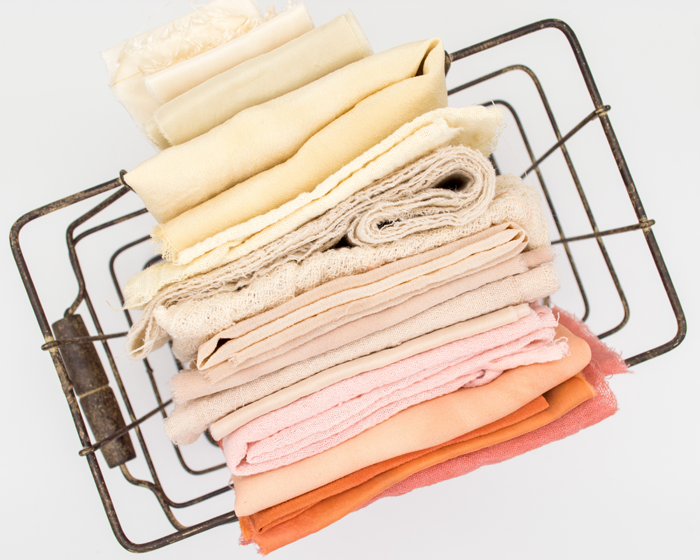
BASKETS

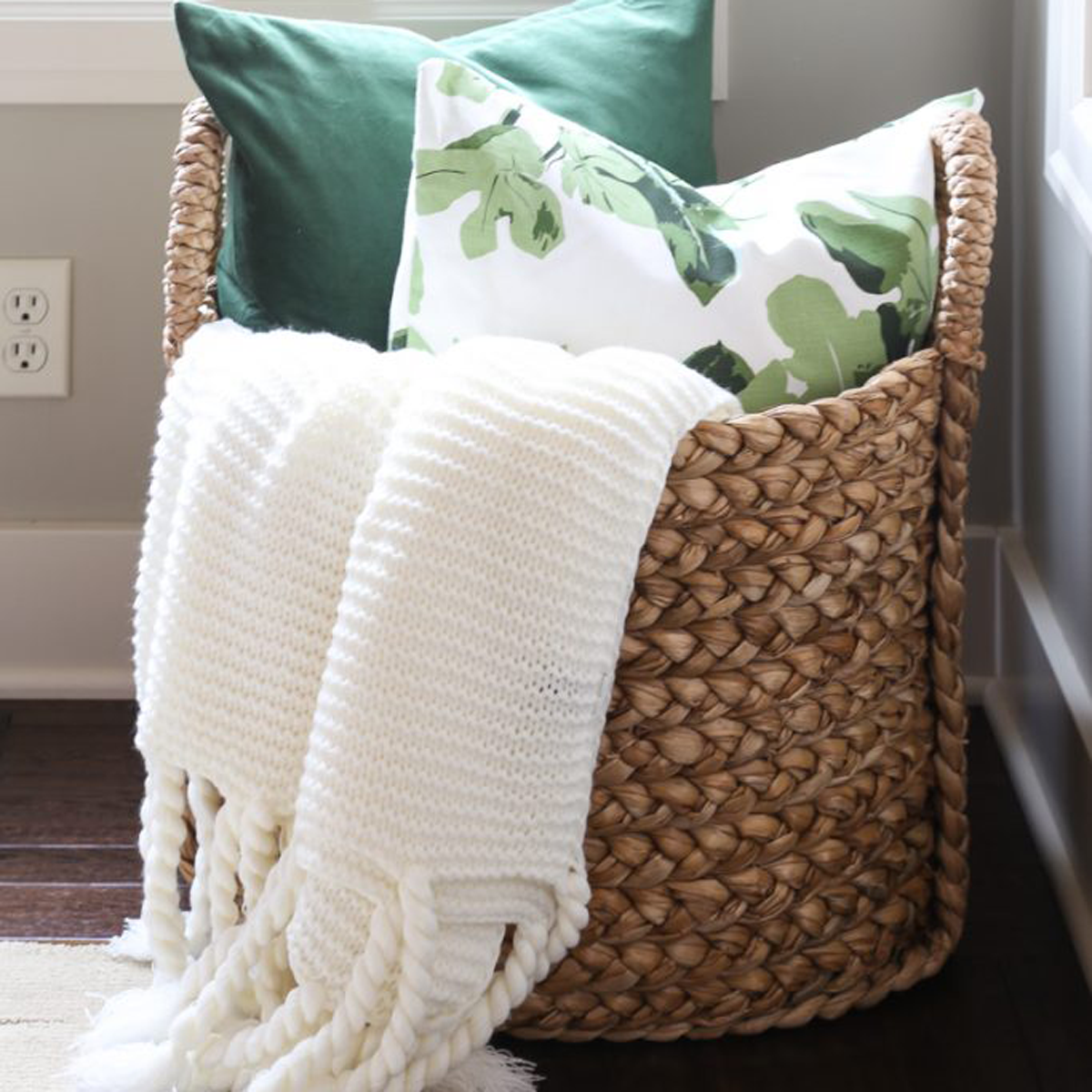
You really can’t go wrong with a basket. My husband is pretty sure that I have an addiction to them, and he might be right. There is a perfect basket size and shape for just about any occasion. They can hold blankets, toys, books, you name it.

home organization tips

image source

[ess_grid alias=”grid-1″]


Uh oh… the basket addiction is rearing it’s head again. My first choice? The large sea-grass basket. I can totally envision it filled with cozy blankets, sitting next to a fire place.


_________________

BINS / BOXES

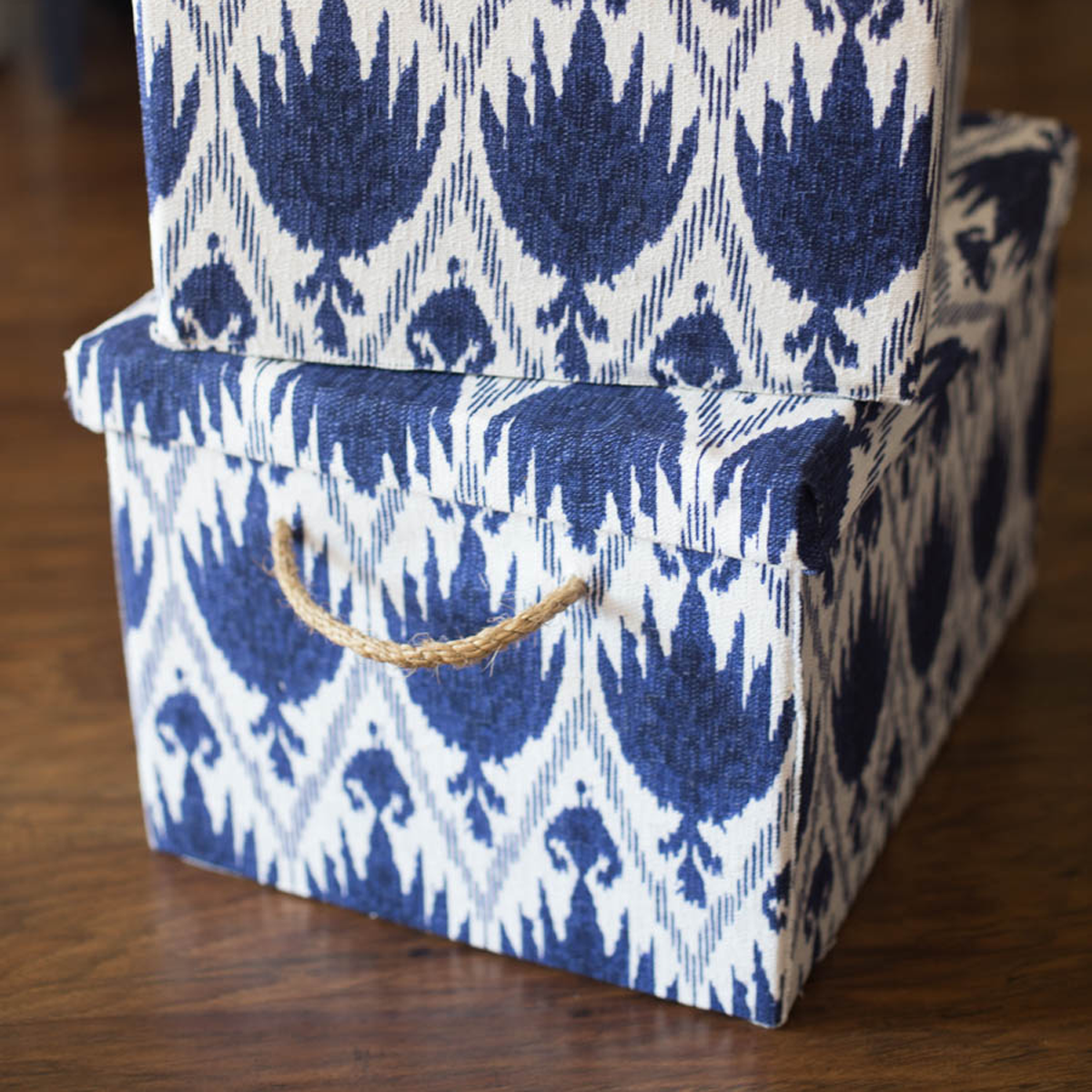
Similar to baskets, bins and boxes are highly useful in home organization. The awesome thing about them is that they are typically rectangle or square in shape, meaning that they can be easily stacked. Many also have a lid or cover. Those visually cluttering items can be stored neatly and out of sight. Legos anyone?

home organization tips

image source

[ess_grid alias=”grid-2″]


The grey boxes are fold-able, and come with lids! I think I may need to buy some to organize all of the building sets my boys have.

_________________

CLOSET SYSTEMS

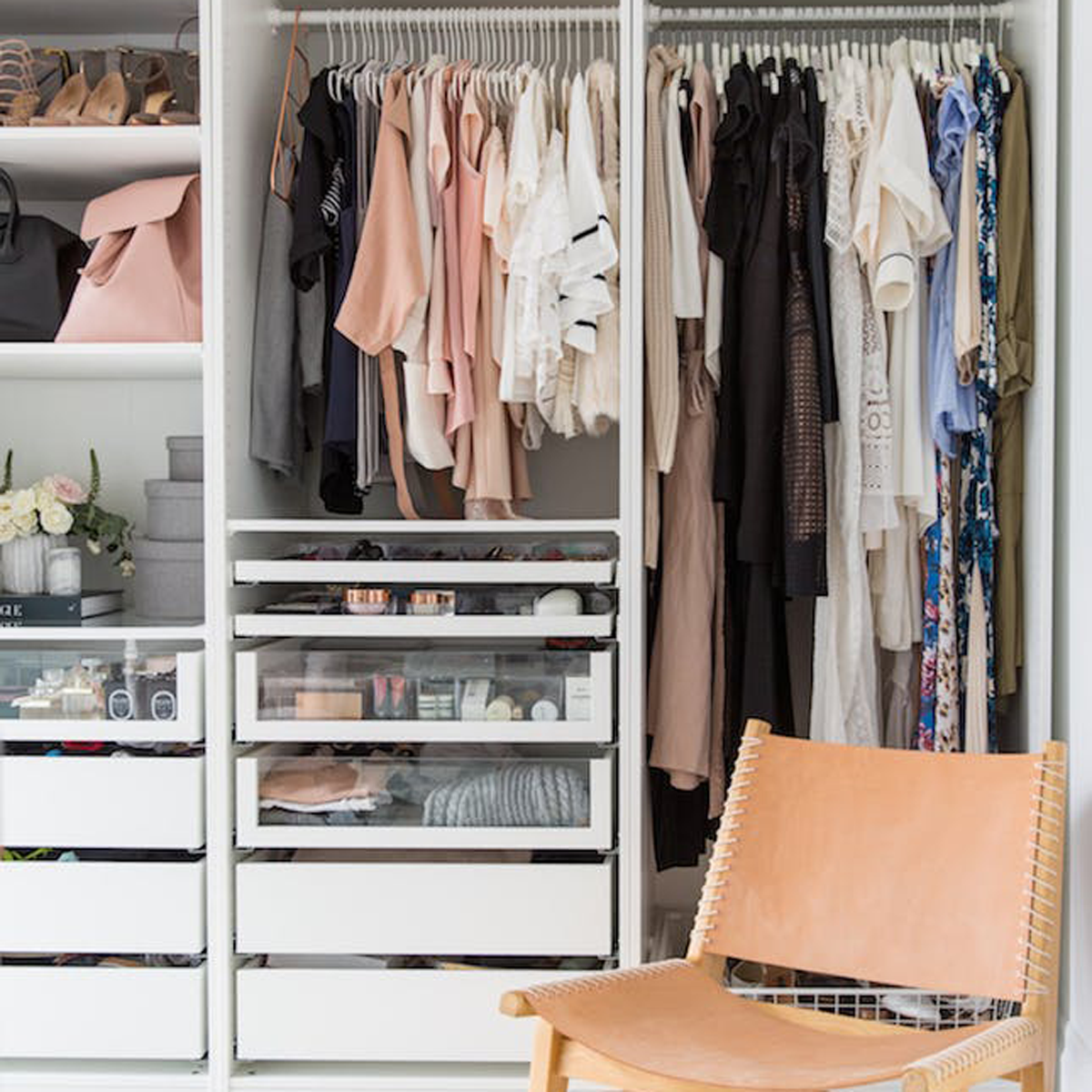
A closet is probably the most likely space in any house to become cluttered. What happens behind closed doors stays there, right? Wrong! You will need to open that door at some point, and wouldn’t you rather see a well organized space than a war zone of items falling on top of you?

Closet organization tips

image source

[ess_grid alias=”grid-3″]


How genius is that rack for pants? No more annoying crease marks from folding and stuffing the khaki’s in the drawers!


_________________

SHELVING

Shelving units are an absolute staple in home organization. There are so many stylish options for shelving these days –  from bookcases to display shelves. Take a look at the goodies I found!

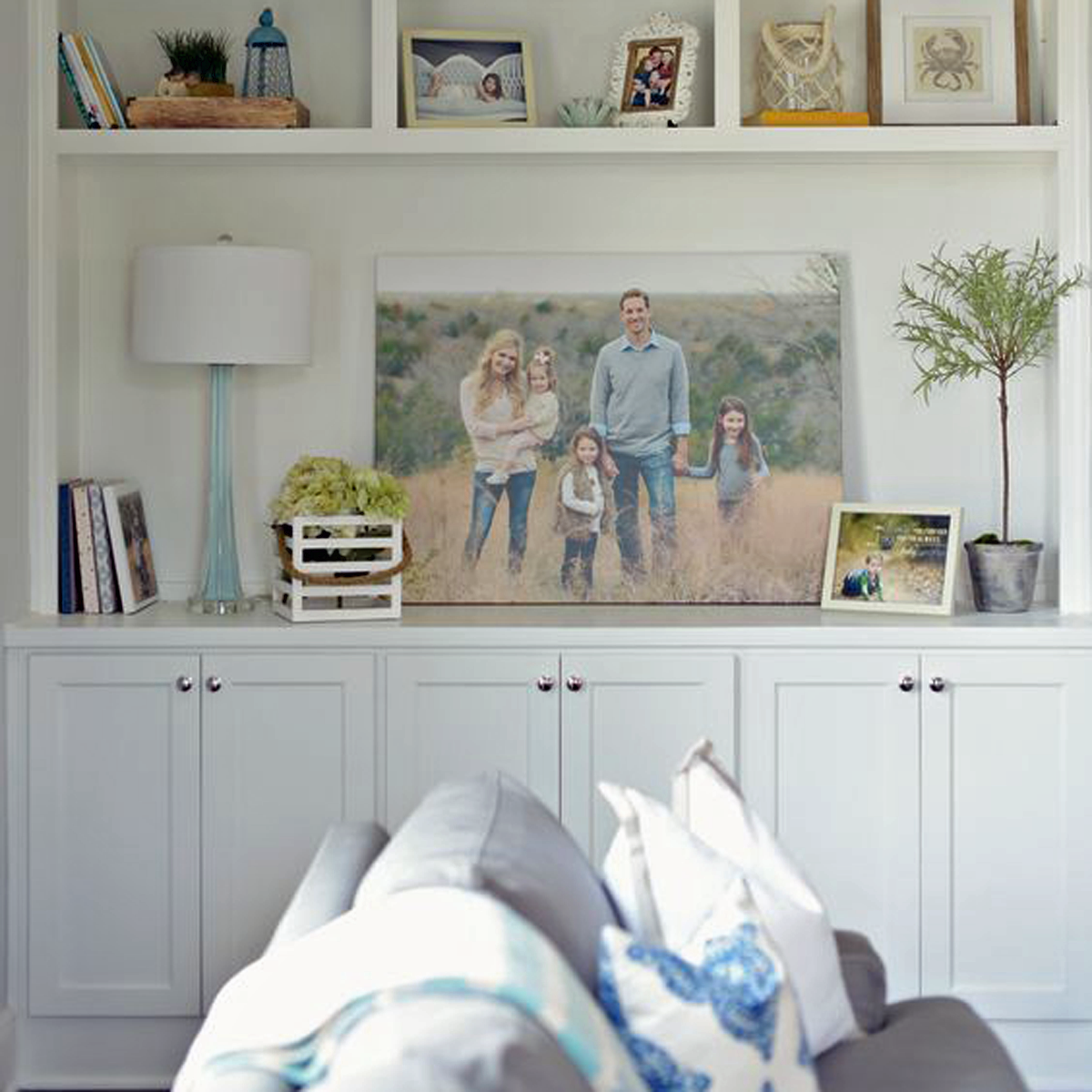
home organization built in cabinets

image source

[ess_grid alias=”grid-4″]


Pretty sure that little red number is calling my name. It has glass doors, which means it is the perfect place to store keepsakes and books, protecting them from little hands… and dust!

_________________

CONSOLES

I would venture to say that just about every home in the United States has at least one television. And with that television comes all of the ‘extra’s’. The dvr, the blue ray player, the video streaming device, and video games for the kids. All of these items need a home, and a console / entertainment center is the perfect place to put them.

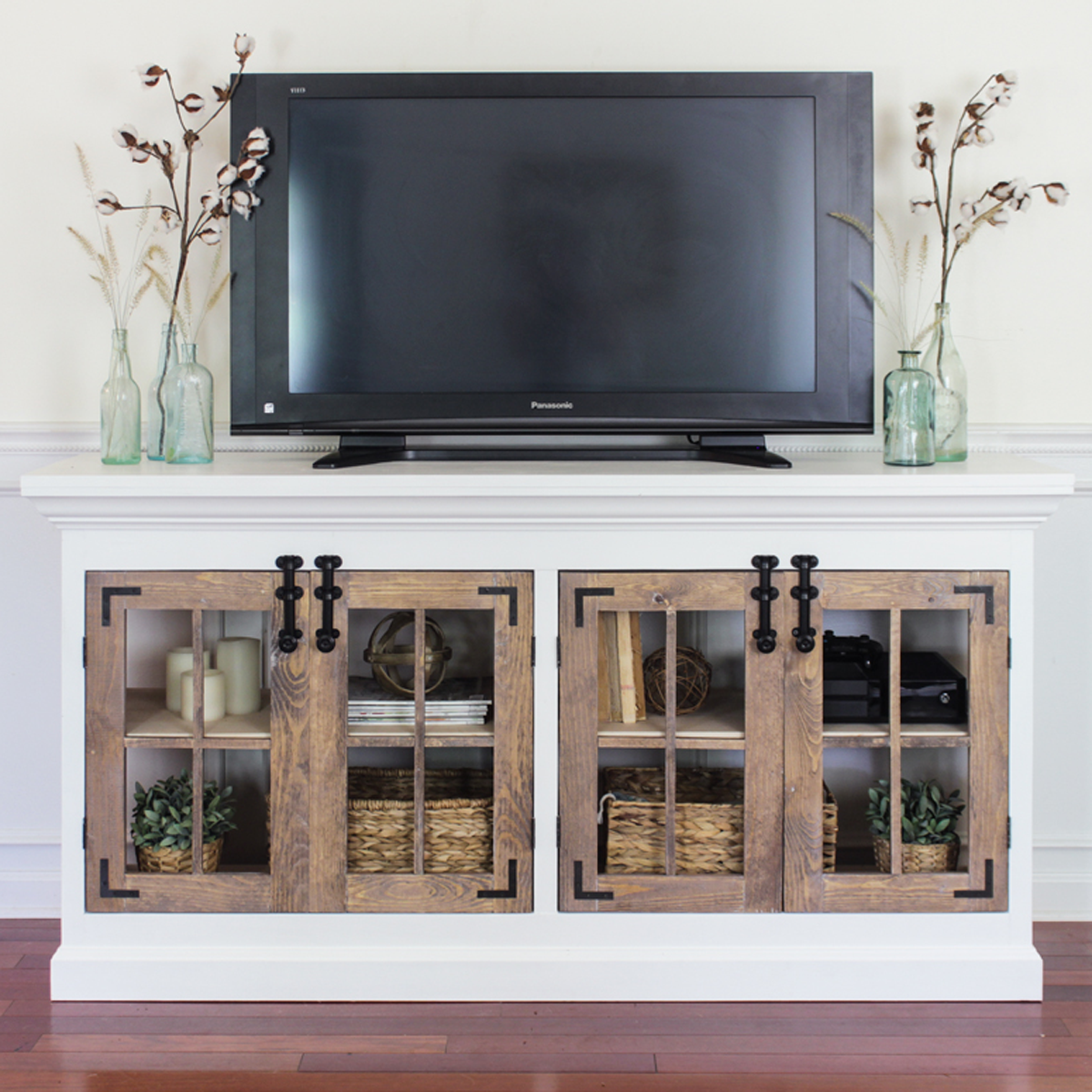
home storage organization ideas

image source

[ess_grid alias=”grid-5″]


I love the style of the aqua fretwork cabinet. I could see it being useful for a variety of items beyond the living room. Linens in the bathroom. Hat and glove storage in the entry. The possibilities are endless!


___________________________

KITCHEN ORGANIZATION

The kitchen is notorious for being a room that needs a lot of organizing attention. Forget about it for a short amount of time, and the space can easily be over-run with pots and pans and mix matched Tupperware. Thankfully the market is huge for kitchen organization items, such as these awesome finds.

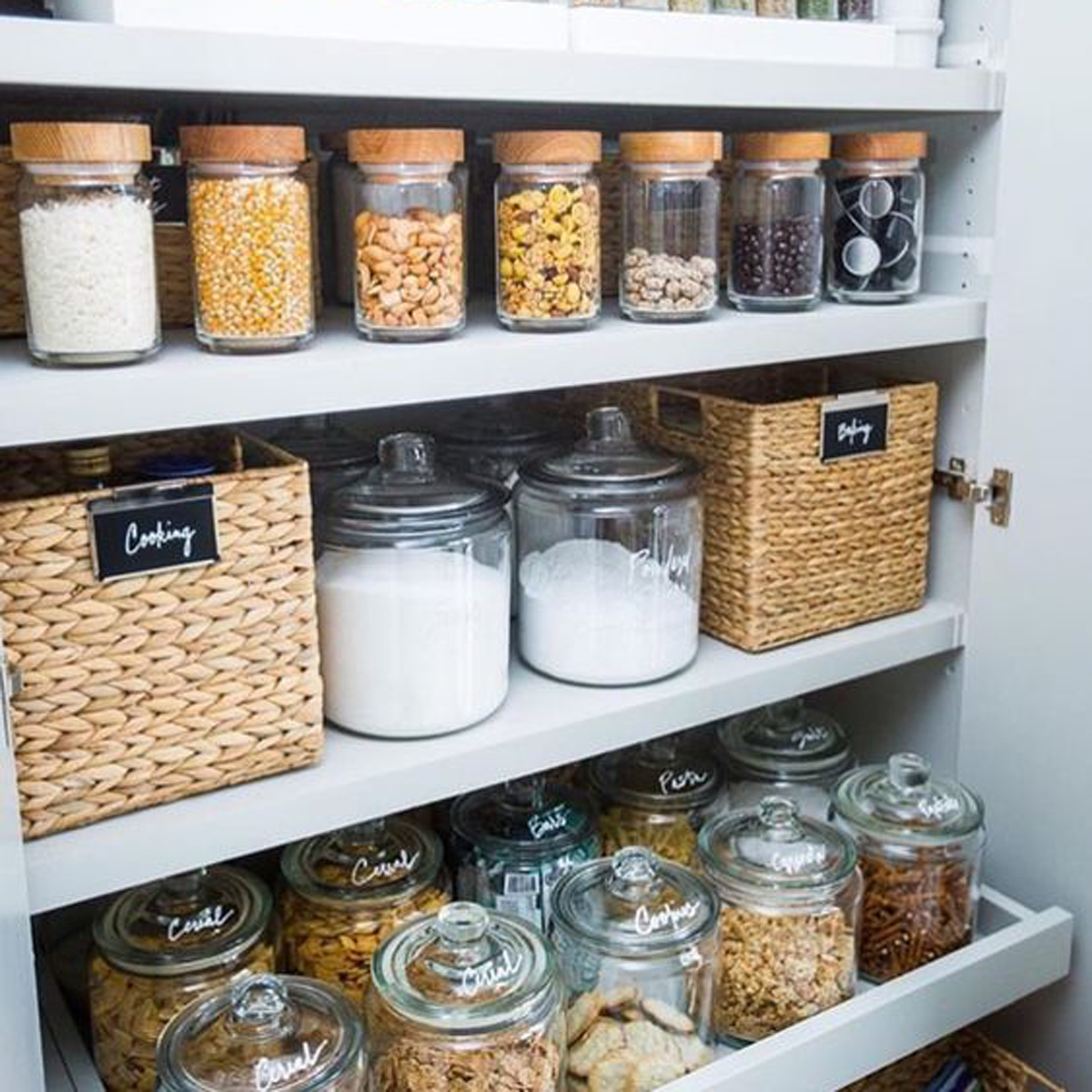
Pantry organization ideas

image source

[ess_grid alias=”grid-6″]


That spice rack. Come on. I mean, I’m not sure I would have the patience to fill all those little jars – but this may just tempt me to try! It is almost a work of art. You guys also have to check out the rolling kitchen cart/ island. It FOLDS!

_________________

MISC. STORAGE/ ORGANIZING

 I had to throw in one more grid including random storage items. The truth is, from the bathroom counter to under the bed, just about any space in the house can benefit from organizing!

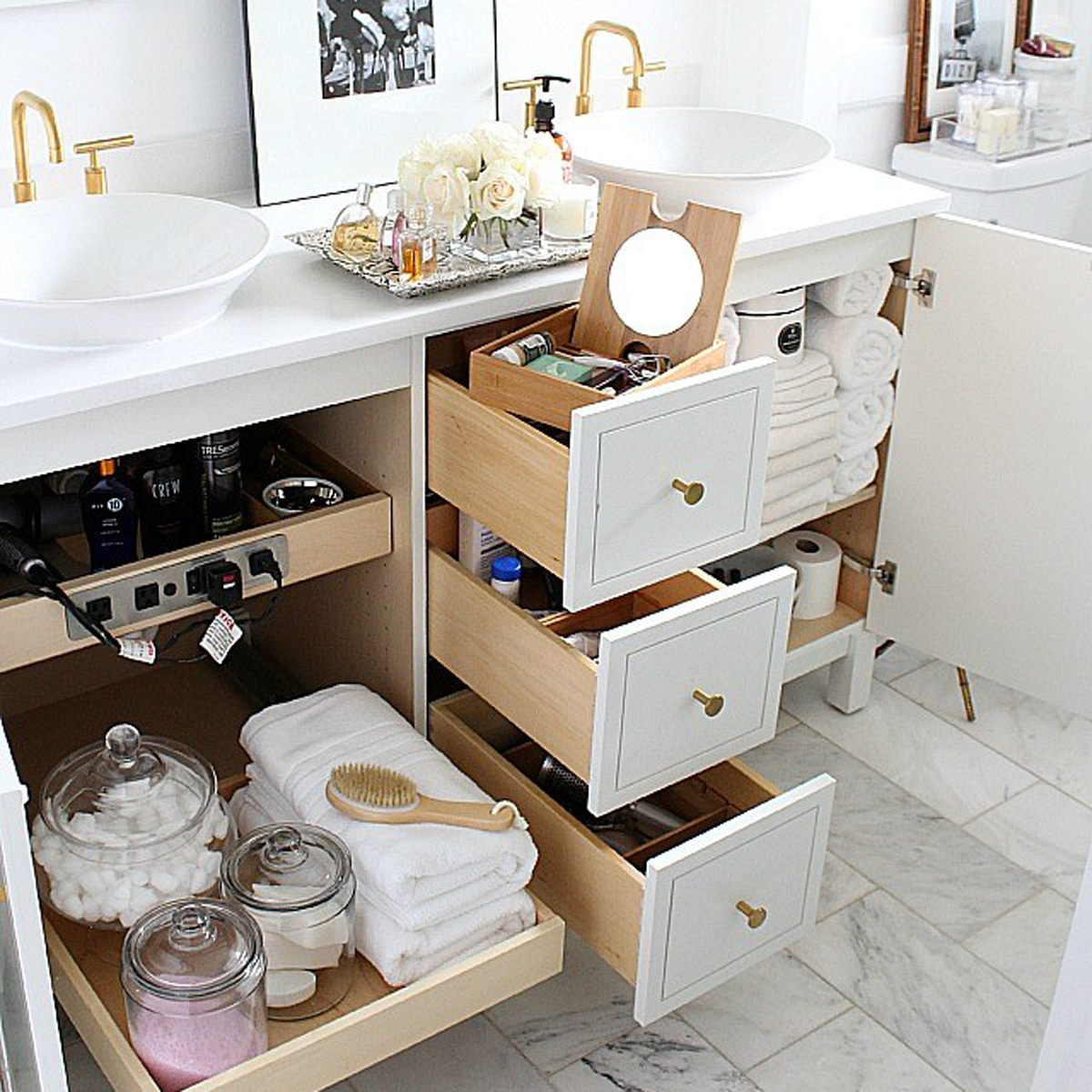
Bathroom organization ideas

image source

[ess_grid alias=”grid-7″]


The wire wall hanger could be so useful for keeping all the paper items in line! No more piles of bills on the counter!

 

Let’s do this organizing thing! I’m thinking that if I tackle the clutter before the Christmas tree goes up, I won’t be as overwhelmed when it comes down.
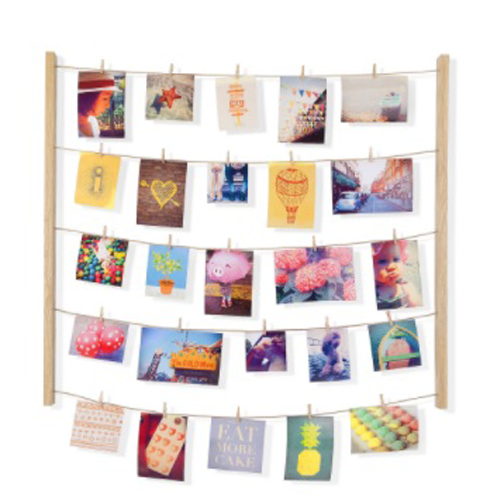
What are your favorites from this list? I would love you to leave a comment and let me know!
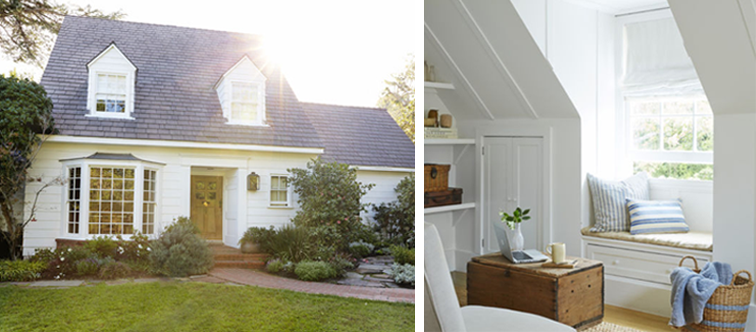
 

MORE HOME ORGANIZATION IDEAS

For more inspiration on how to keep your home organized, check out my post titled 7 daily habits for a tidy house


PIN THESE HOME ORGANIZATION IDEAS FOR LATER

home organization ideas and products


COTTAGE HOME STYLE ELEMENTS

Welcome to the first installment of the ELEMENTS OF HOME series. Each month I plan to showcase a different residential style here on the blog. It is my hope that by laying out the basics of each home style, you will be able to determine which suits your lifestyle and preferences the most. When designing a new house, or searching for one to buy, this information can come in very handy!

I am going to start by over viewing the main elements of the cottage style home. Our own home, as you might have guessed by the name of this blog, is being designed with the cottage style in mind.

image source

Be prepared for plenty of cottage style home inspiration images!

HISTORY OF THE COTTAGE STYLE

The term ‘cottage’ comes from England architecture. It referred to a home with ground floor living spaces and sleeping spaces in the upper level, nestled into the roof eaves. In the Middle Ages, cottages housed agricultural workers and their friends and families. The term ‘cottage’ denoted the dwelling of a cotter (a worker of the land). The cottage house was modest, with a typical arrangement of two rooms on the main level and two rooms on the upper level. Typically these cottages were situated on a small plot of land, between 2 and 5 acres.

Today, when people think of cottages they have a vision of these small houses of days gone by. The term is used in many cultures to refer to a vacation property, usually situated near water or on a secluded and peaceful piece of land.


MAIN ELEMENTS OF THE COTTAGE STYLE HOME

LOCATION

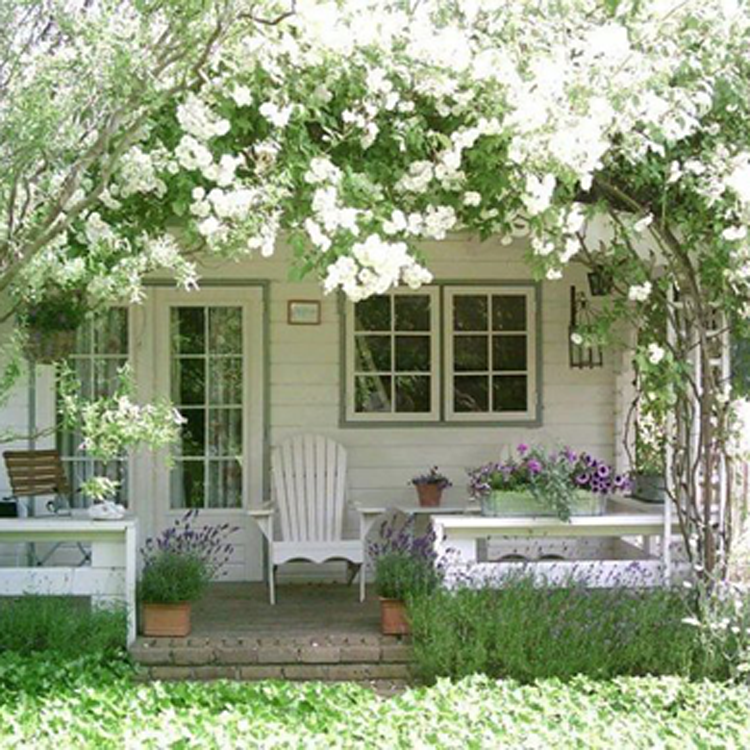
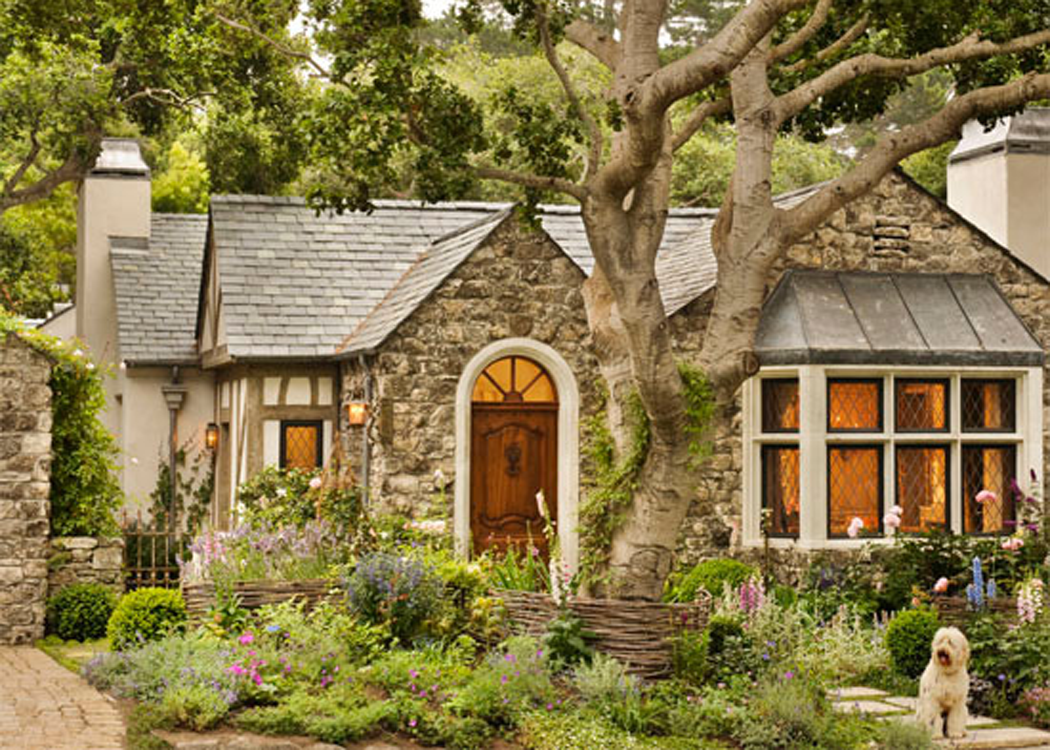
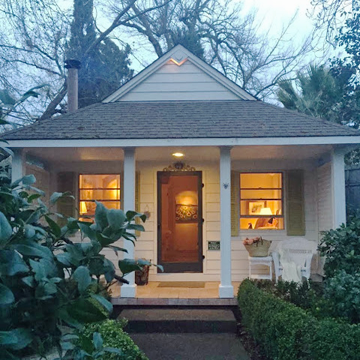
Generally a cottage home is situated in a rural or natural setting, perhaps on a small plot of land near water or in the country. Though less common, there are also urban cottages – which, at the very least, feature a small garden or ornate flower beds.


image source


image source

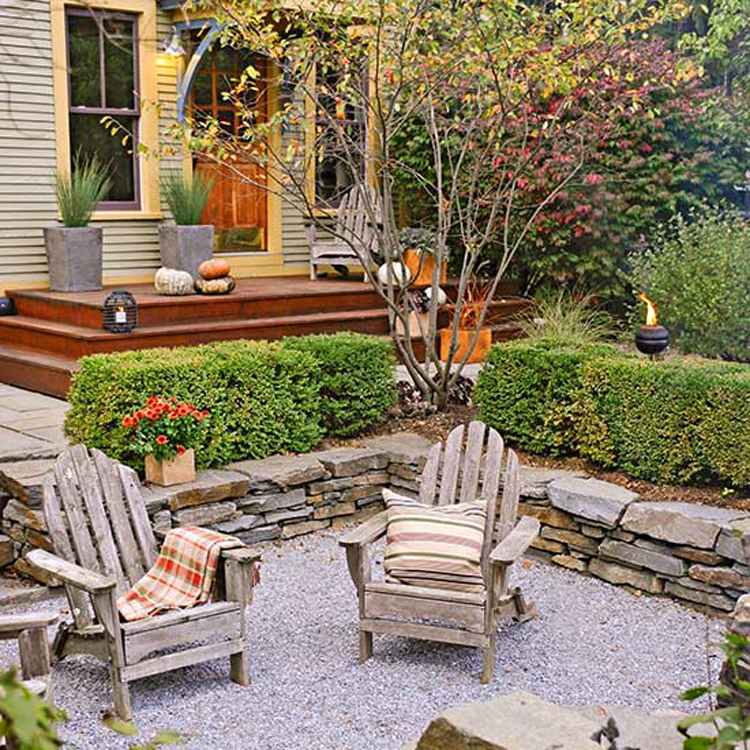
Cottages boast a wonderful connection to nature; and most that are built (or remodeled) today are careful to respect the flow from indoors to outdoors. They include a variety of indoor/outdoor rooms and spaces – such as porches, patios or wood clearings, allowing the home’s owners to enjoy the serenity of nature.


image source


image source

SIZE

Most cottages are modest in scale. They are built to the needs of the people who will live in them, and not as a way to showcase wealth or prestige. Each square inch in a cottage is useful and serves a purpose.


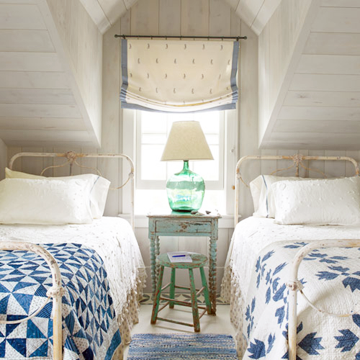
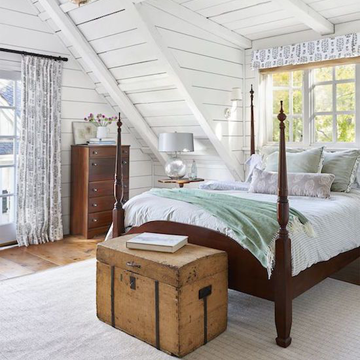
Generally a cottage will be either one story or a story and a half. One and one half storied versions have upper levels that feature sloping ceilings and either short walls (4′ high or less) or no walls at all – where the ceiling slope extends to the floor.


image source

EXTERIOR TRADEMARKS

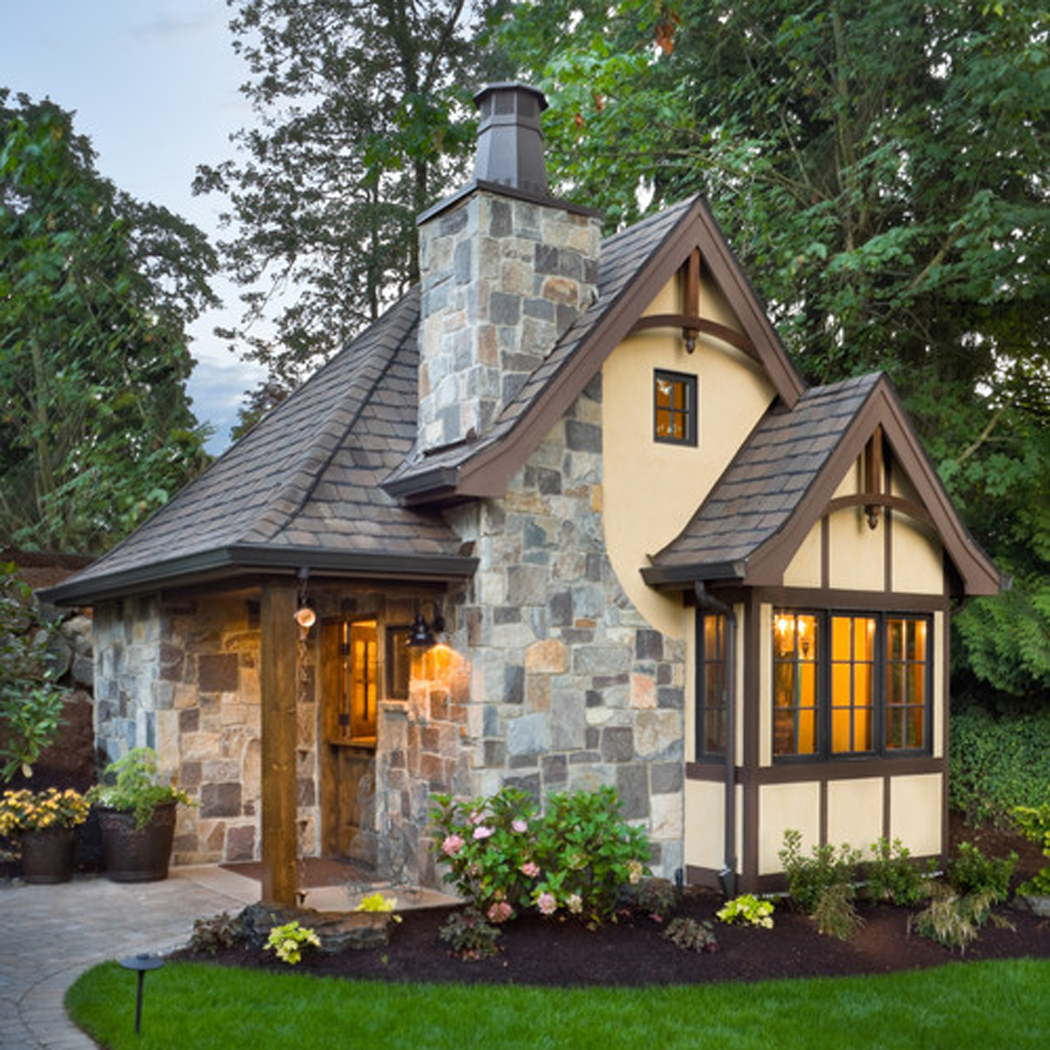
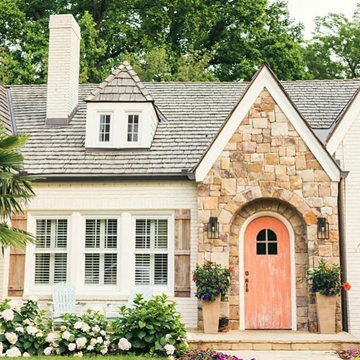
From the curb, a cottage appears small in scale. Typically they feature a steeply pitched roof and asymmetrical balance, with focus being placed on the front door.


image source

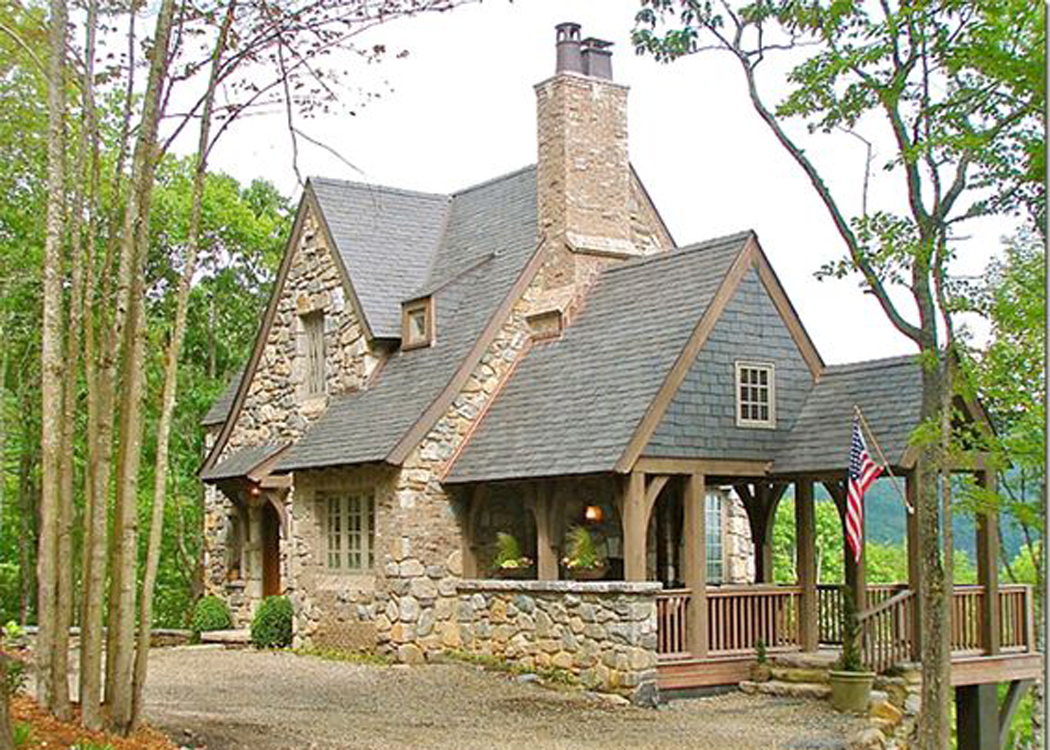
Local materials such as stone and wood are commonly used. Shutters may be added as a simple accent to windows.

image source


INTERIOR SPACES

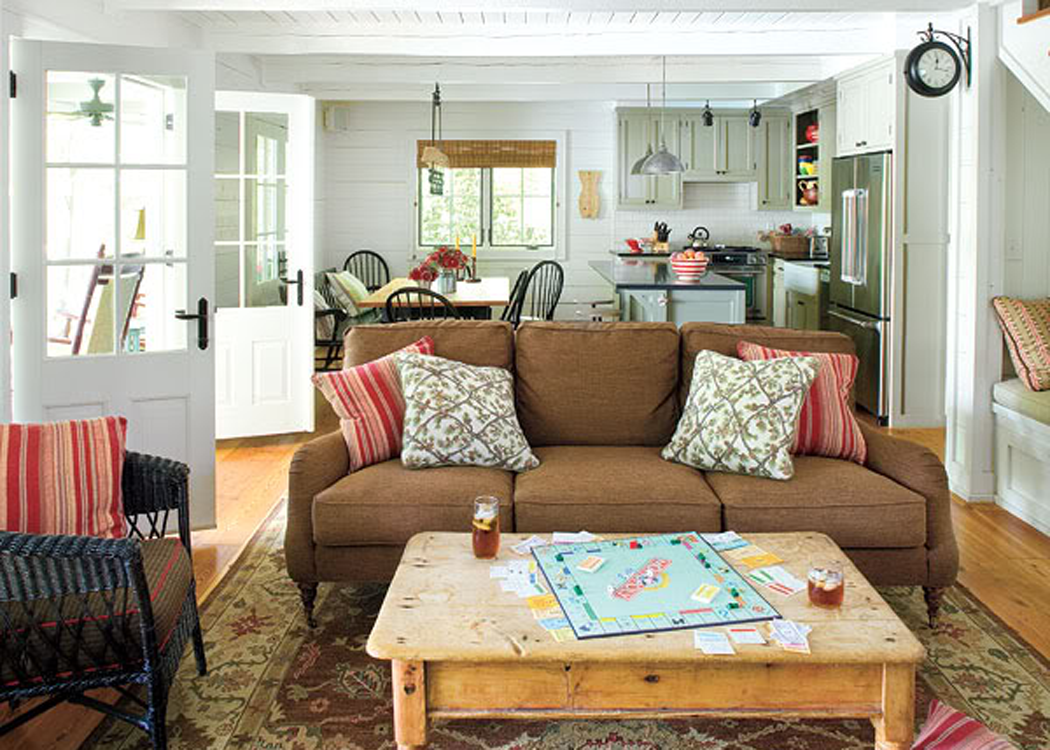
Inside, cottage spaces are informal, encouraging flow from one room to the next. Their relaxed nature invites visitors and full time occupants to feel at home. To maximize useful square footage, hallways are often eliminated.

image source

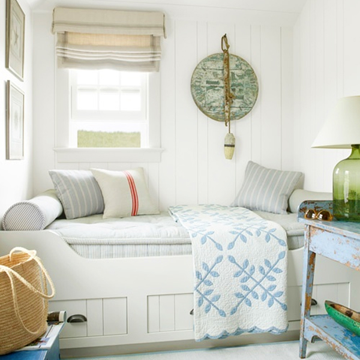
These homes are often full of charming nooks and crannies.


image source


image source

COLOR SCHEME

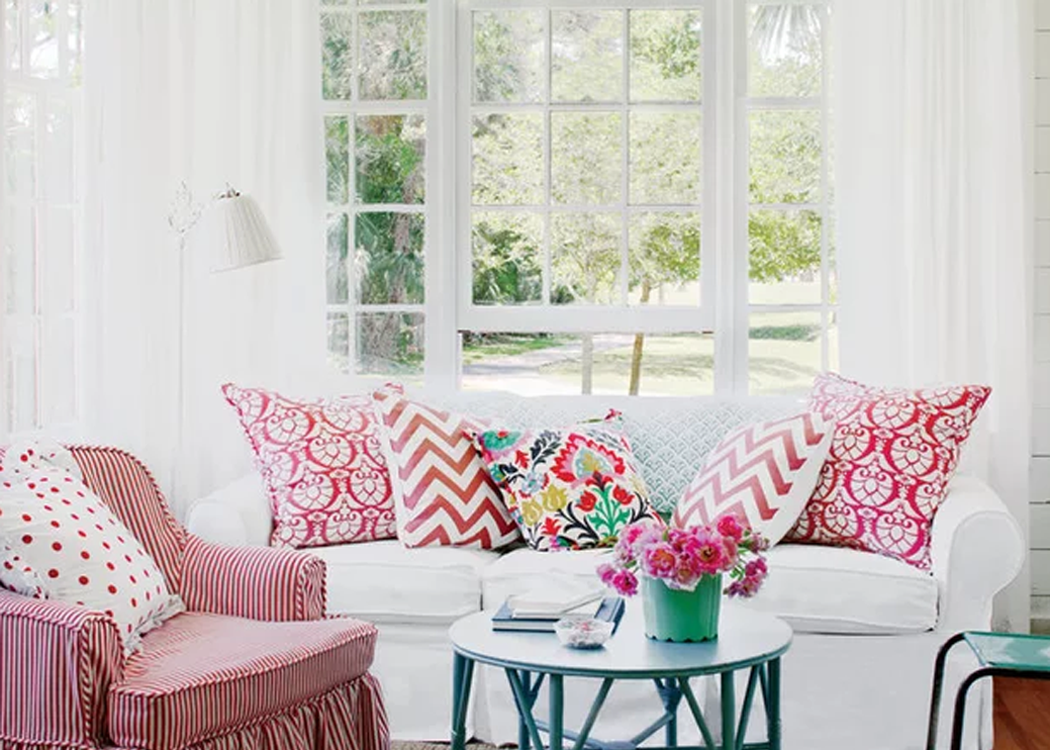
Cottages tend to utilize a refined and simple color palette, both inside and out. The softer more neutral colors are common; But bright white is the most popular color used.


image source


image source

The use of neutral colors on the walls, ceilings, and floors leaves room for statement pieces to shine. You can often find a playful splash of color on a furniture piece or fabric embellishments.


image source


image source


FEATURES

Though the style is unrefined and personal, there are statement features that many cottage homes possess.

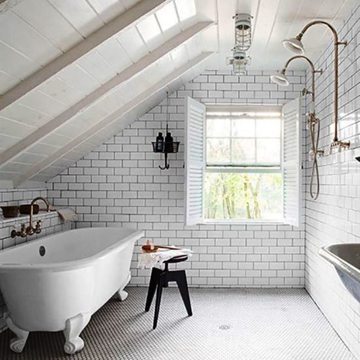
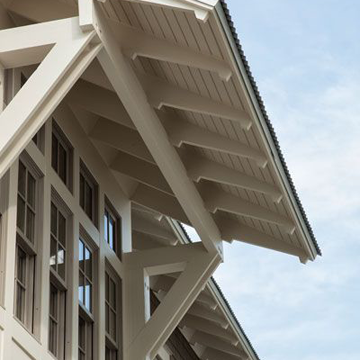
EXPOSED STRUCTURE: By exposing the structure of the cottage, not only is construction simplified, but a level of charm is added.


image source


image source


image source

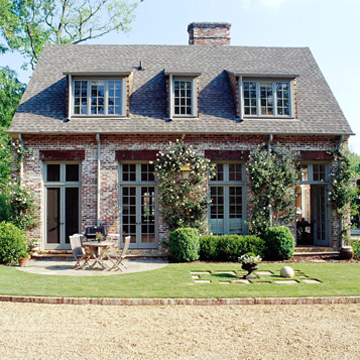
DORMERS: Primarily used to create extra space on the upper level of these homes, dormers also add a touch of whimsy.


source of images

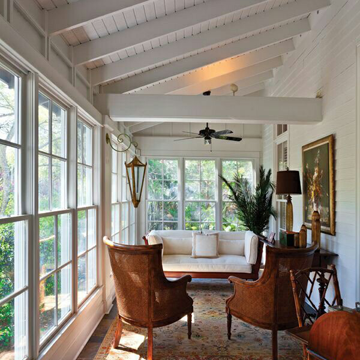
TALL WINDOWS: They do a wonderful job of letting in natural daylight. The light then bounces off of the light colored walls, adding to the overall cheeriness of the space. Manufacturers such as Marvin have recognized the charm and appeal of these tall windows and have created the ‘cottage style’ window, which is essentially a double hung with a smaller upper sash.


image source


image source

INTERIOR DECOR

The cottage decorating style is personal and forgiving. There is room for a mix of old and new, expensive and thrifted finds, hand made and store bought. It is an eclectic technique that is all about finding what you love and bringing it into your home to surround yourself with inspiration.


source of images

Linen, burlap and wool are common textures used in cottage decorating. Painted and distressed wood furniture pieces are often present, as are vases of fresh cut flowers in each room.


image source


INSPIRING COTTAGE STYLE HOMES FROM AROUND THE WEB

These homes showcase the cottage style well. Take a closer look!

Left to Right: 12 | 3

I hope you enjoyed learning a bit more about the Cottages. Stay tuned for another home style next month!

THANKSGIVING DECORATING IDEAS + FREE PRINTABLE ART

Happy November everyone!

I still can’t believe how quickly October flew by. With the start of a new month, I am finding myself trying to get in front of all the holiday busyness that happens this time of year.

Our family will be traveling for Thanksgiving, which means that the bulk of the preparations and decorations won’t fall on my shoulders. Though I’ll admit that it is a relief to not be hosting, I still want our home to look festive. As I mentioned in THIS post, I have been having a lot of fun creating fall centerpieces.

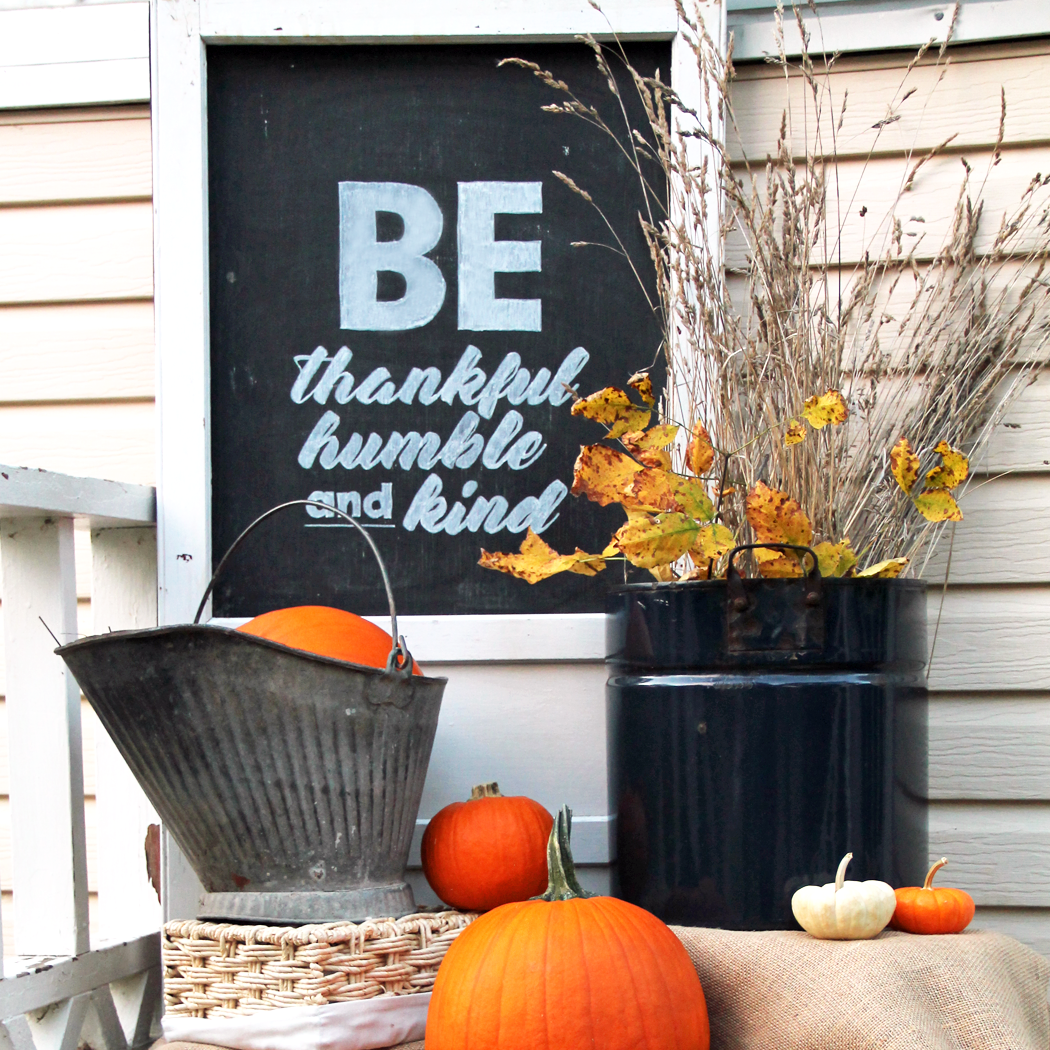
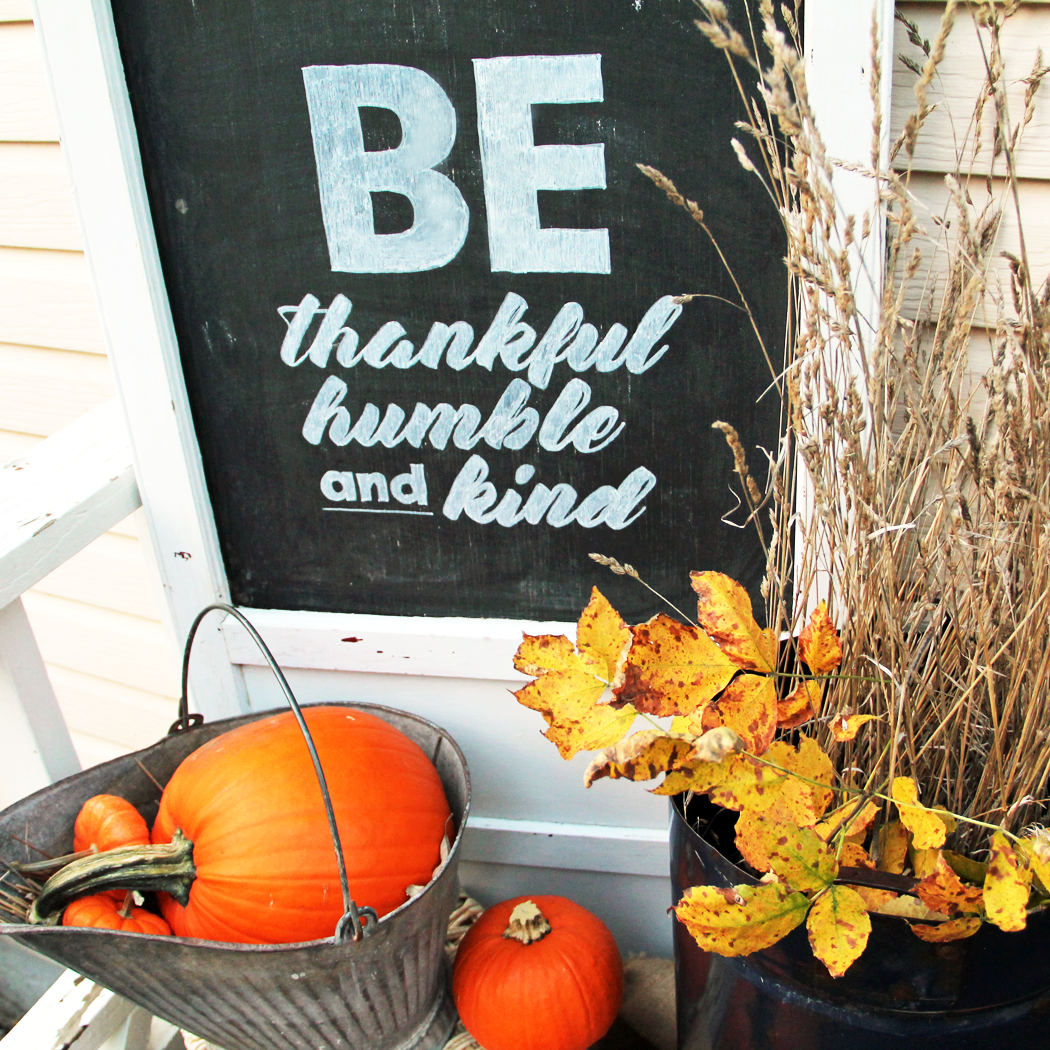
I also made this cute chalkboard sign out of a small door. I simply removed the glass and painted the frame white, then cut a piece of plywood the size to fit in the opening and painted it with black chalkboard paint. I hand lettered the words using a white paint pen, which means that the sign can be used both indoors and out!


The phrase is simple, but to the point. It is what I want my family, including myself, to remember this Thanksgiving.

BE THANKFUL for everything that you have. For your family, your possessions, and for the special talents and gifts that make each of you special and unique. Be thankful for the opportunities you have been given, and for the memories you have made.

BE HUMBLE in your life. You can be grateful and proud without being boastful. There is no need to shine a spotlight on yourself, just allow your INNER light to shine into the world.

BE KIND to others, and to yourself. As the saying goes – ‘Do onto others as you would like to have done to you.‘ This world can use a little more kindness.

The pumpkins I purchased for our Fall decor are still going strong. I used the pumpkins, some burlap, and various containers, along with the new sign – to form a vignette on our front porch.

We live out in the country, and so typically it is only our family that sees the porch decorations; But the other day a service person stopped by to do some work. He rang the doorbell and I could see him standing on the porch, reading the sign. I came to the door and he immediately said to me “These words really challenged me just now. I was having a tough morning. Things haven’t been going my way today. But this sign made me stop and think about how thankful I truly am. It was a great reminder!”

It just goes to show that you never know when something simple could make an impact on someone’s life!

I love the sentiment of these words so much that I wanted to make them available to you. I have created a printable art PDF, which is available for free in the resource library.

The print is so simple and looks great with a few decorative accessories. Pumpkins anyone?


ADDITIONAL THANKSGIVING DECORATING IDEAS

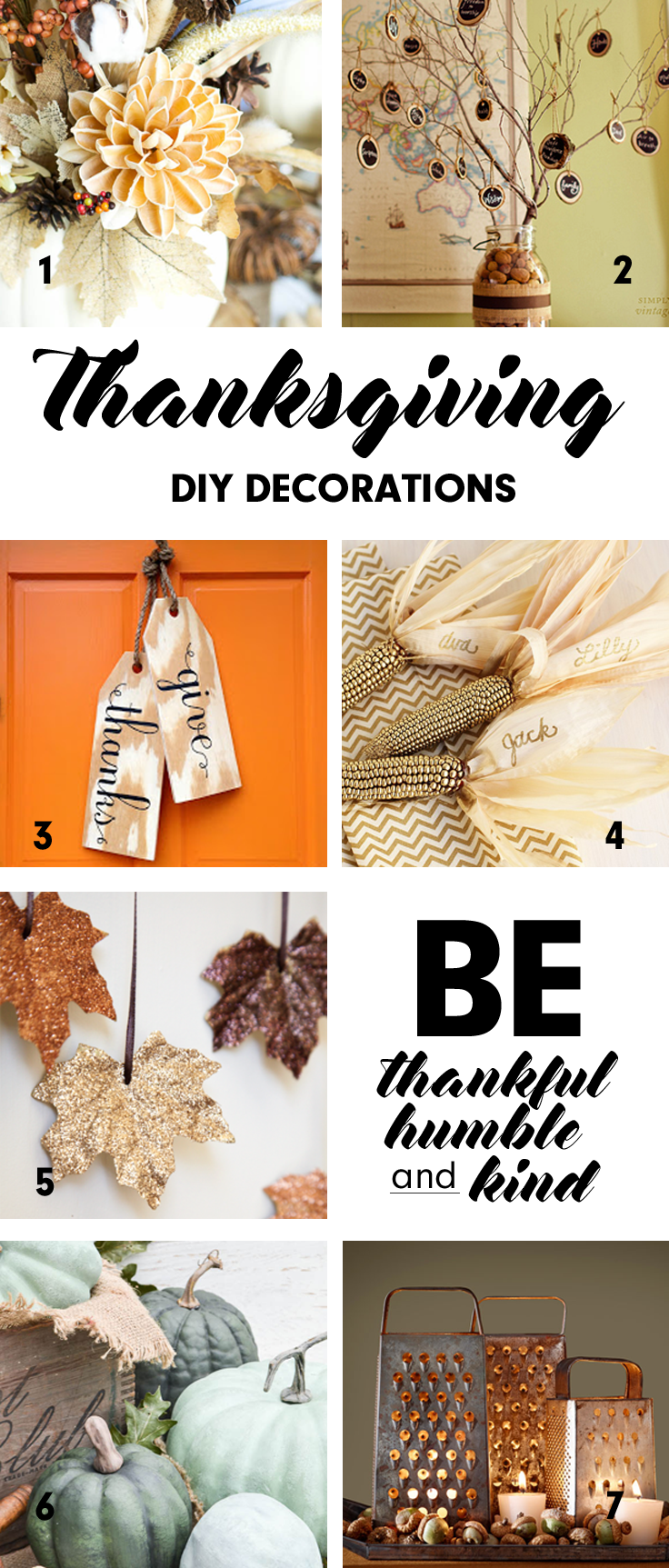
If you are hosting the Thanksgiving celebration this year and want some additional ideas of how to decorate your home, check out these other creative DIY ideas from fellow bloggers!

1. PUMPKIN CENTERPIECE: This stunning centerpiece was created on the blog A Pumpkin & A Princess. She really loves her pumpkins, and it shows!

2. THANKFUL TREE: Simply Vintage Girl created this festive tree. It is the perfect idea for Thanksgiving. Give it a try!

3. GIANT DOOR TAGS:Welcome your guests with these classy wooden tags. Jaime shows you step by step how to make them on her blog.

4. GOLDEN CORN PLACE HOLDERS: These place holders will steal the show on your table. Learn how to make them at the website Freutcake.

5. FALLING LEAVES GARLAND:Erin and Kirstin share how to create a delightful cluster of glitter leaves. They look festive on a fireplace!

6. CHALK PAINTED PUMPKINS: These colorful pumpkins are so beautiful and easy to make. Find out how on the blog Anderson + Grant.

7. CHEESE GRATER LUMINARIES: Aren’t these so clever? I saw this image in a round up Etsy had done for Fall decorating. They seem very simple to make and would look gorgeous as a centerpiece!

Happy decorating!


This post contains affiliate links.  To learn more about my website disclosures, click here.

HOW TO MAKE A PLAY KITCHEN USING AN OLD DRESSER

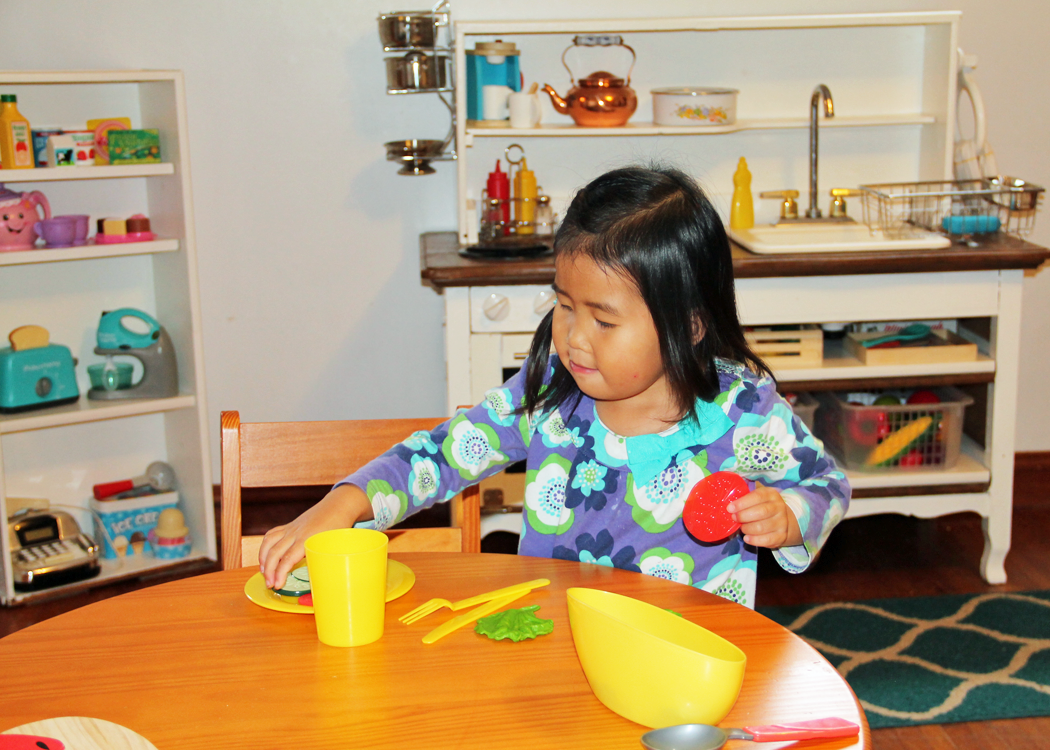
For over 4 years, my husband and I were ‘boy only’ parents. With 3 young boys, we had plenty of trucks and action figures, and a giant stash of Legos. We knew all about Thomas the Train and how to allow the boys to rough house without getting injured. So when we prepared to adopt our daughter {M} in 2015, we realized we were lacking a bit in the ‘girl’ department. We added a few dolls, a tea set, sparkly dress up clothes, and other fun girl toys – not sure what her preference would be. Once home, it became clear pretty quickly that her favorite thing to do was spend time in the kitchen with me, pretending to cook.


THE IDEA

A couple of years later, in the spring of 2017, while in the adoption process for {K}, I had the idea that pretending to cook might be something the girls could do together – and that maybe the imaginative play would be a good bonding experience for them. I went on a hunt for toy play kitchens, but sadly found that the store varieties I liked were either out of our price range or constructed with flimsy materials. I then turned to Pinterest, where I was faced with an absolute treasure trove of DIY ideas!

Seriously, check THIS out! So many creative people!

I made the decision that I would go the DIY route for the play kitchen project. Not only would it allow me to create a unique piece, it would cost much less! A few weeks later, my father in law asked if we wanted an old dresser that was his as a child. He offered it with the thought that we might need more space to store clothes with a new little person joining our family; But when I saw it I knew. It was meant to be a kitchen!

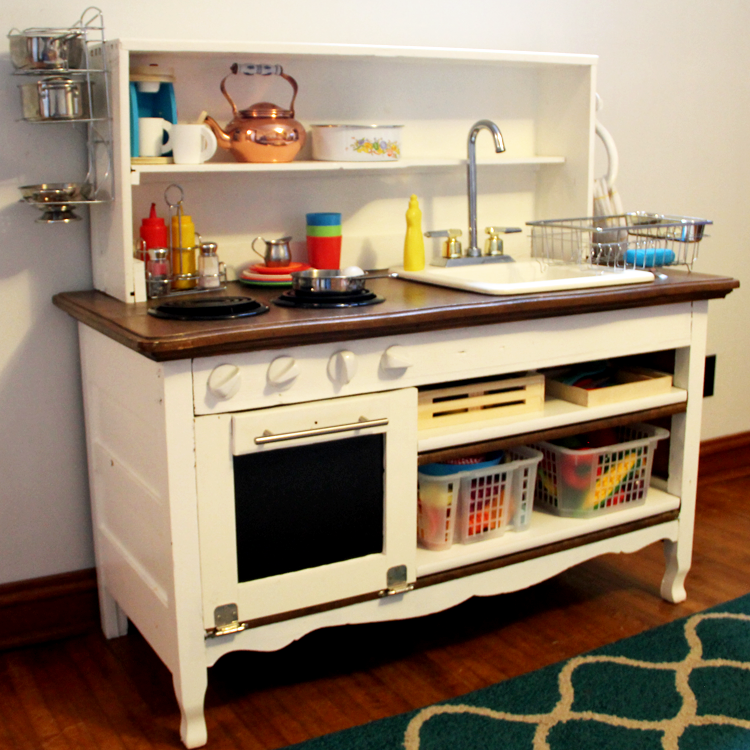
This is the story of how I turned an old dresser into a beautiful farmhouse style DIY play kitchen.


THE INSPIRATION PIECE

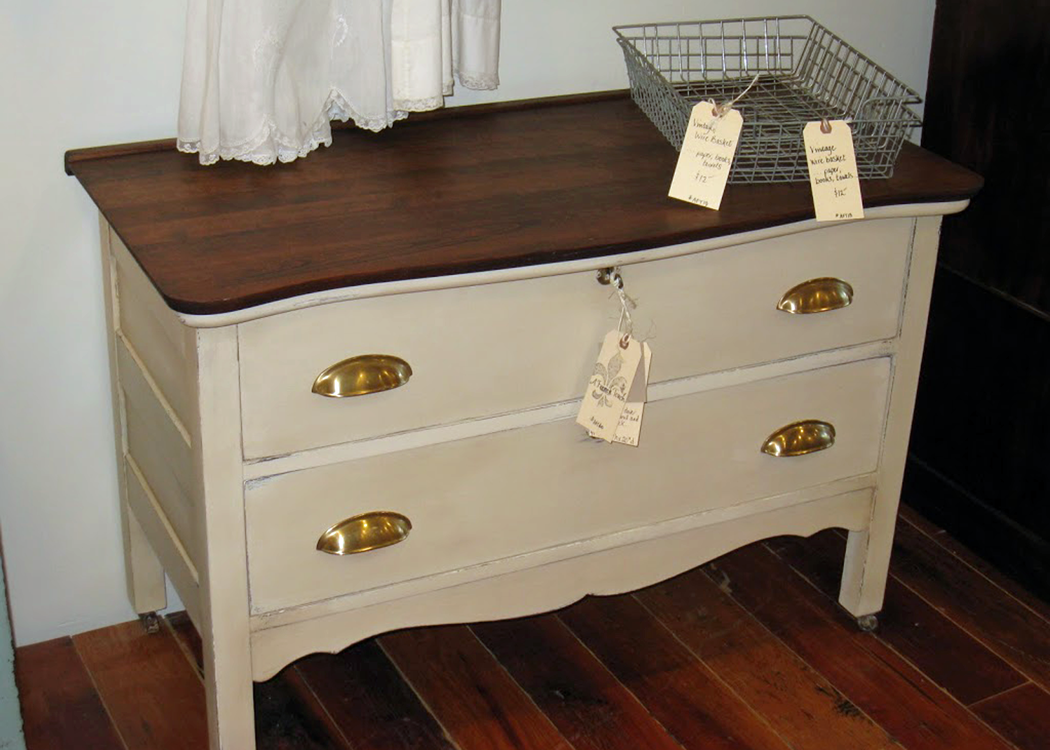
The dresser was low – 2′-1″ high to be exact, and had two large drawers. It had simple sculpted feet, a bit of a decorative top, and really good bones. It was a sturdy little thing! I really wish that I would have taken a photo of the dresser before I started to modify it, but at the time, I had no idea I would be starting a blog!

I searched online and found a photo of a similar dresser. Minus the paint, the dresser I transformed looked a lot like this one. The listing says it is from the 1890’s. I’m not sure the age of ours, but it had a musty smell that makes me think it had been around for quite a while.


(image source) 

Again, I wasn’t really thinking about documenting the process so much at the time – But here is one photo of the kitchen ‘in progress’.


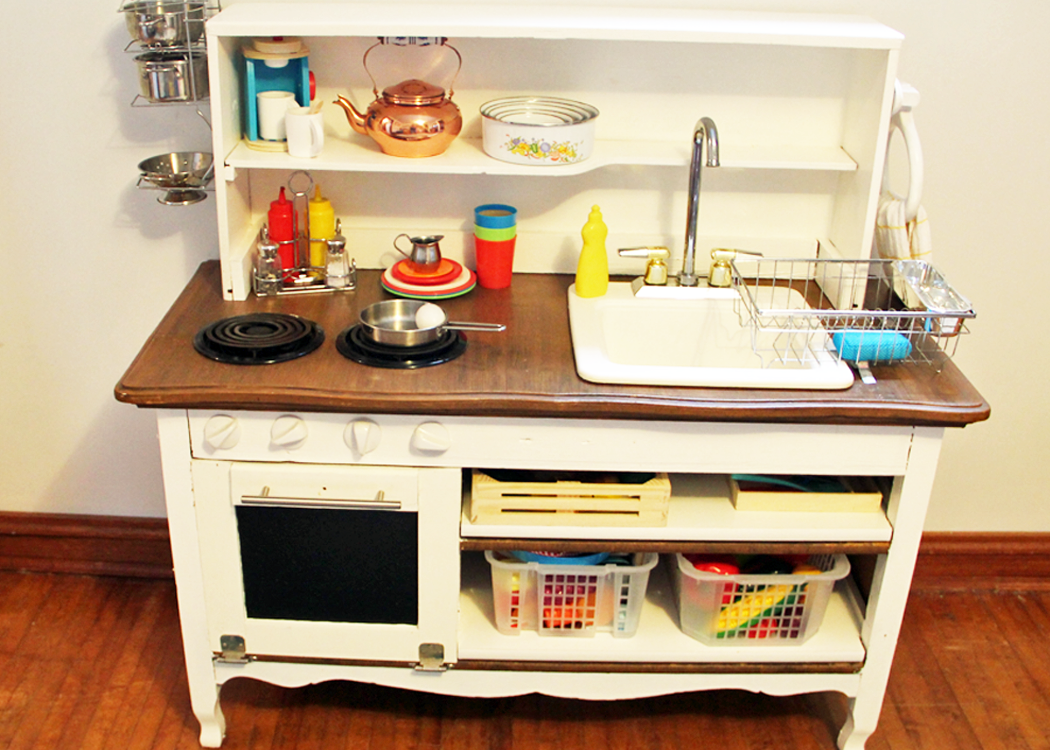
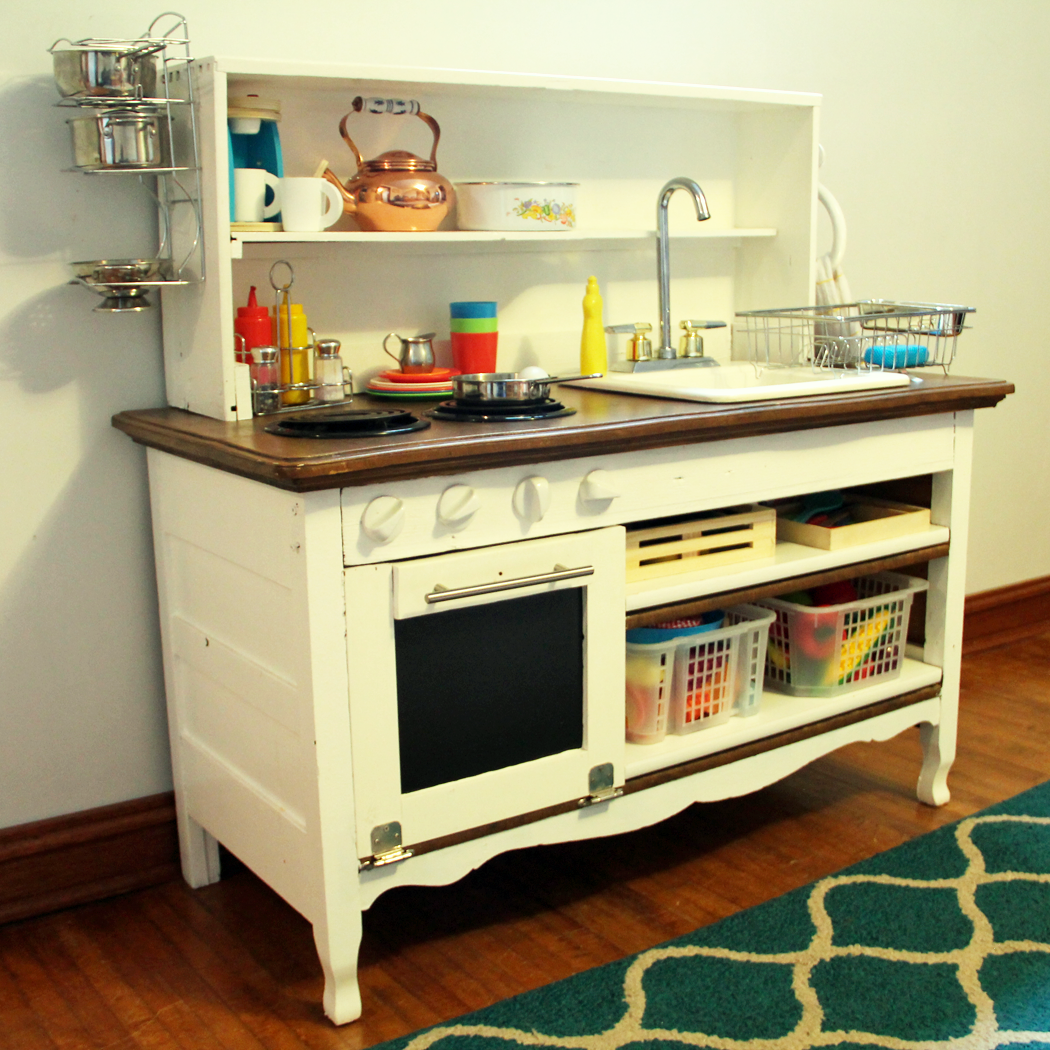
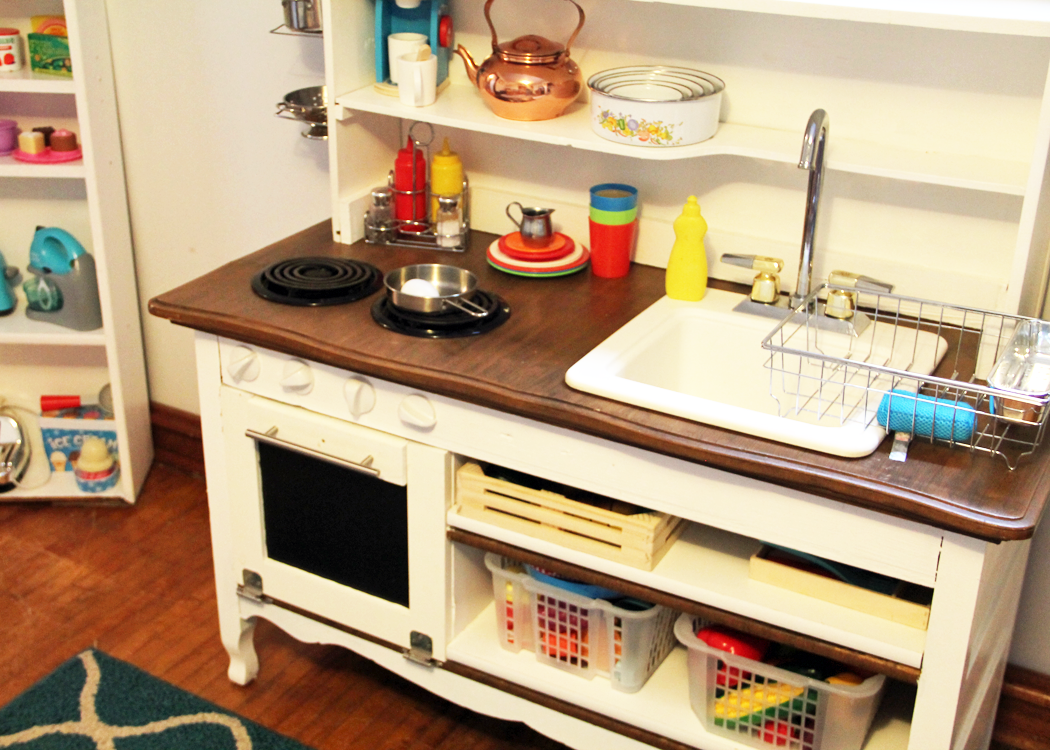
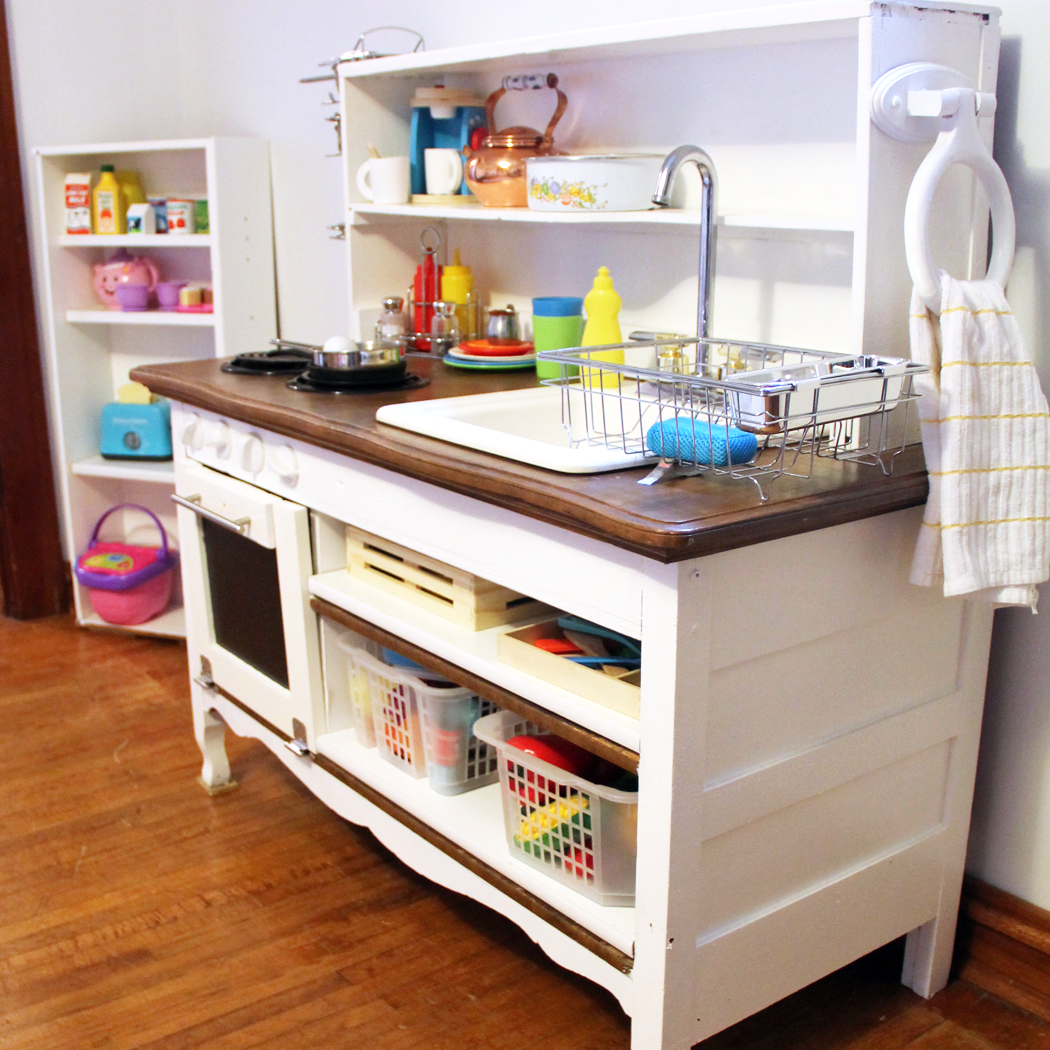
And after a bunch of work, this is the finished product!


WHAT I DID

Step 1: The first thing I did was make a trip to our local Habitat for Humanity Restore to find some bits that I could use. The Restore is my go to place for DIY projects. I can usually find unique items at a low cost, and the bonus is that the sales go back to support the building of houses for people in our community. Double win!

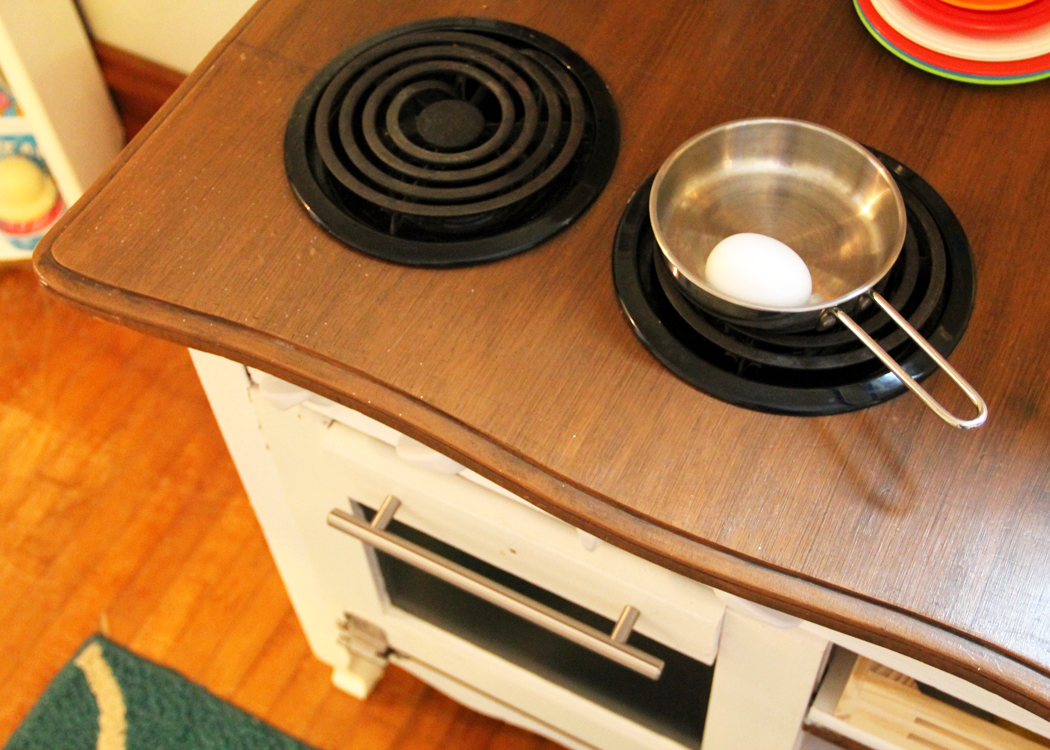
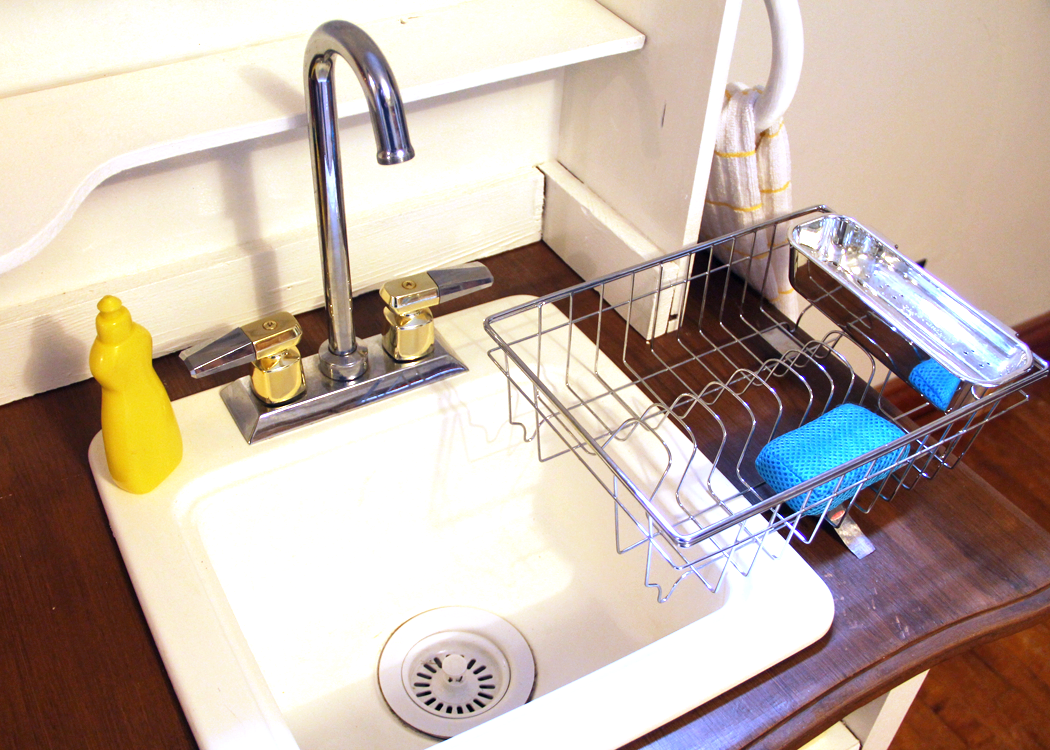
At the Restore I scored the sink basin for $10, a small cabinet door for $3, a towel bar for $1, and a couple of hinges for 50 cents each. When I told them what I was working on, they generously gave me some old burners, oven knobs, and a sink faucet (which apparently they are not allowed to sell). I totally felt like I hit the jackpot!

For the items I couldn’t find at Restore, I searched the home improvement store in our town. There I purchased a large metal handle for $8, a sink strainer for $4, and 10 feet of white particle board shelving at a cost of $20.

I had the rest of supplies I needed on hand – black and white paint, miscellaneous lumber, nails and screws. My grand total project budget was $47!


Step 2: Next, I removed the dresser drawers. I decided to use one as a hutch/upper shelves for the kitchen, and the other as a side ‘pantry’.  For the hutch, I removed the back of one of the drawers – then moved it up so that it would serve a as a shelf. I cut it with a bit of a curve,  to add some visual interest. The second drawer was turned on it’s side and fitted with inexpensive white particle board shelves.

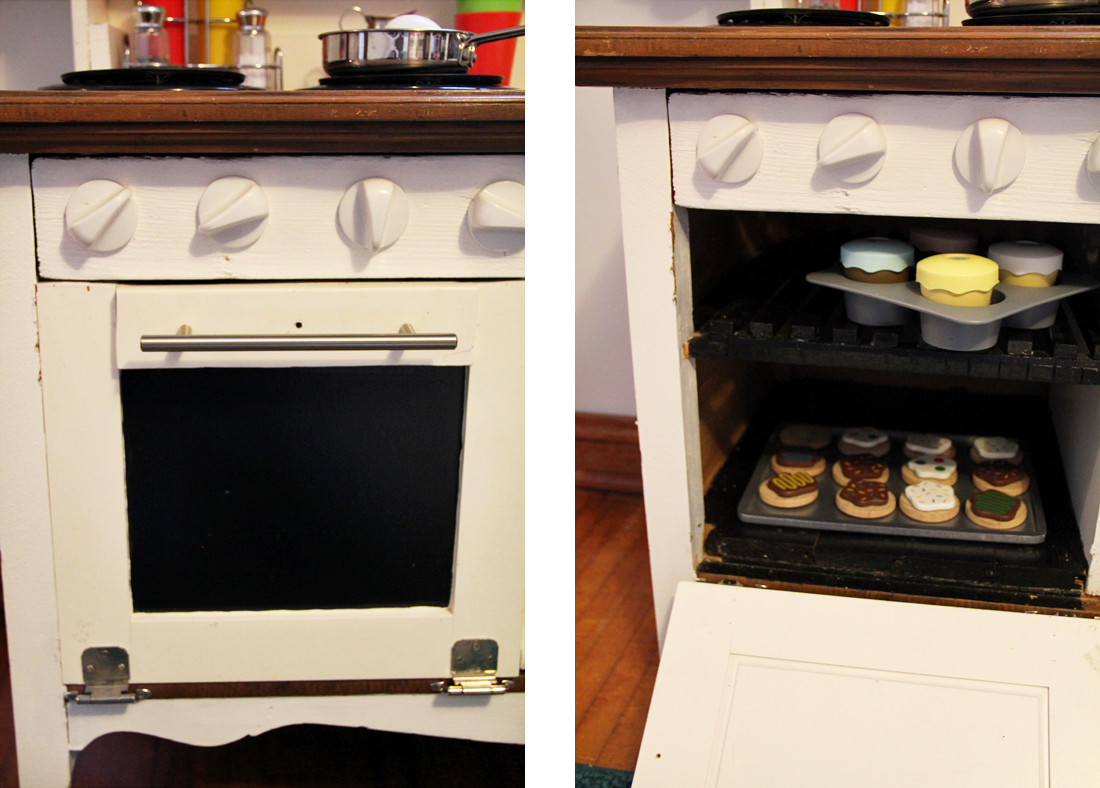
Step 3: Using the ReStore cabinet door as a guide, I closed off a portion on the left of the dresser to create an oven space. A 2×4 was secured along the front of the dresser, and is where I attached the oven knobs with screws. The oven interior was fitted with 1/2″ square trim pieces, spaced apart to simulate an oven rack. The entire interior was painted black. I also painted the center portion of the cabinet door black, to give the appearance that you were looking through to the inside. The cabinet door was hinged on the bottom, allowing it to swing down. The finishing touch for the oven was the metal handle. It was the single most expensive piece of the project, but the added charm and realism was worth it I think.

Step 4: I then turned my attention to the dresser top. I traced the outline of the burners and sink in the locations that seemed visually balanced, and used a reciprocating saw to cut out the holes. I placed the burners and the sink into the holes and used lock tite to secure them in place. The addition of the faucet and sink strainer really dressed up the piece.


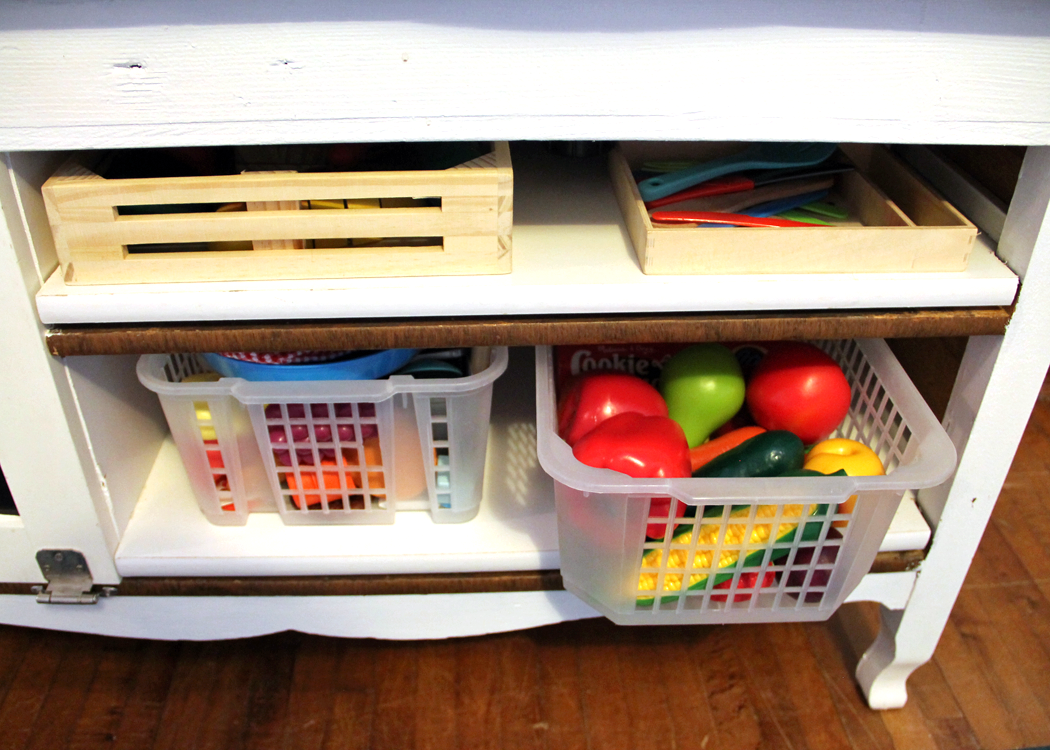
Step 5: Next I added in the remaining shelving material that I had purchased, to make two open shelves under the sink. This space is absolutely perfect for baskets of pretend food, plastic dishes, and pots and pans.

Step 6: For the final step, I grabbed a paintbrush and gave the dresser a nice coat of bright white! I chose to leave the dresser top in a wood tone, to add interest and dimension. I think it looks a bit like a butcher block counter top – very farmhouse friendly!


ACCESSORIZE!

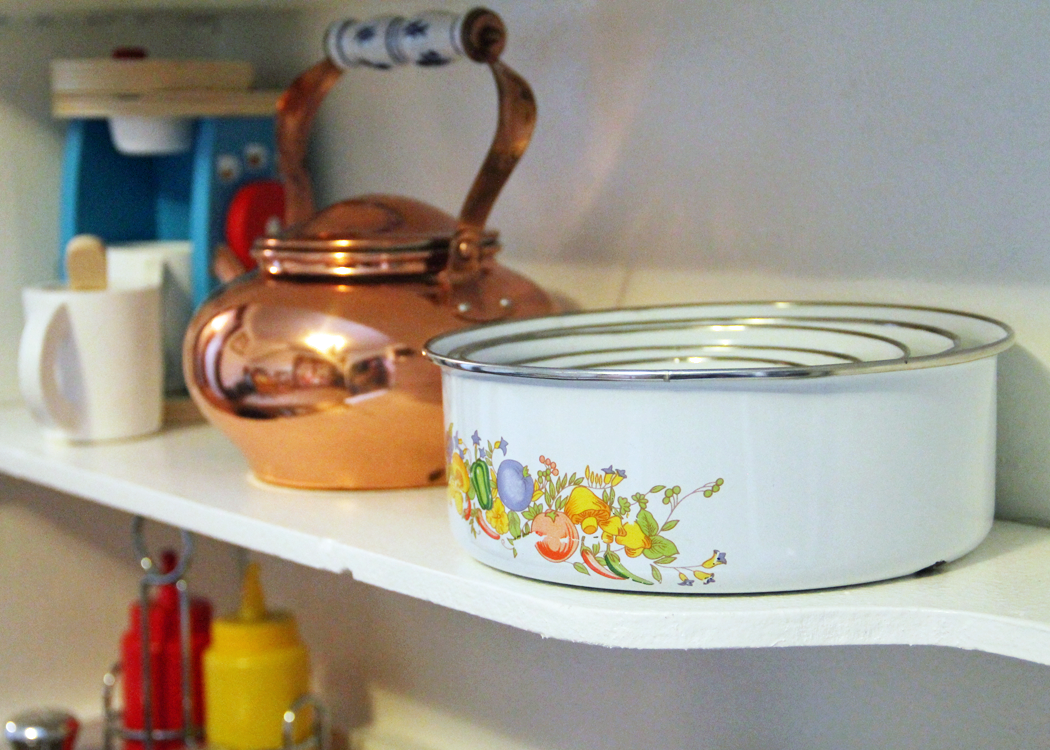
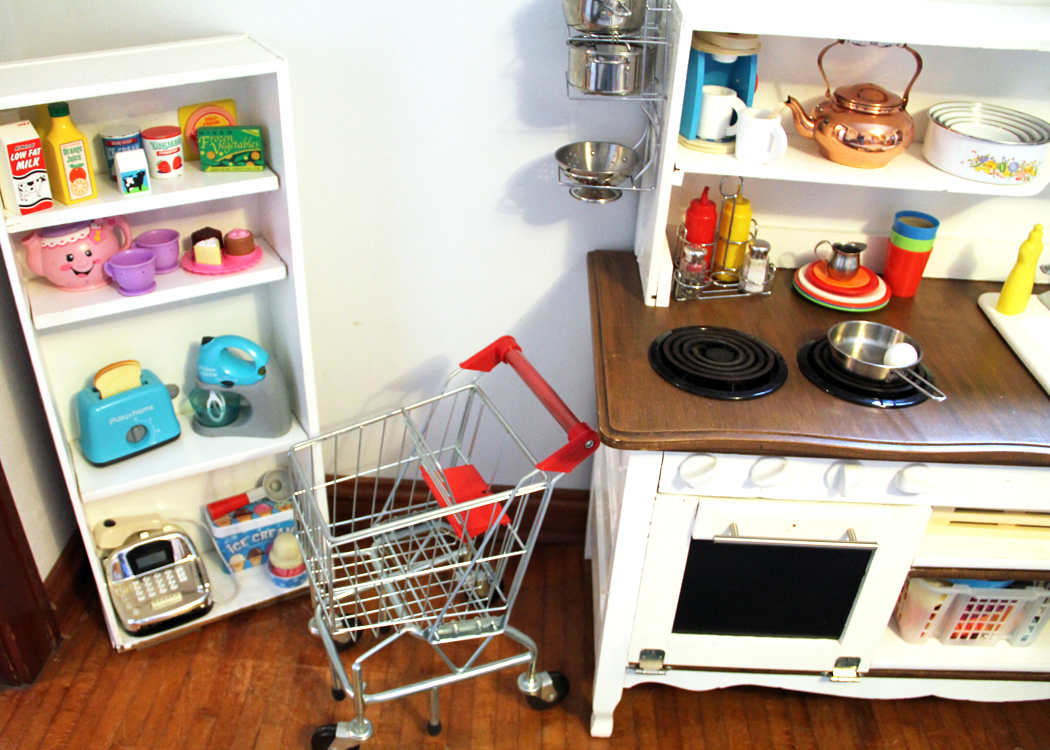
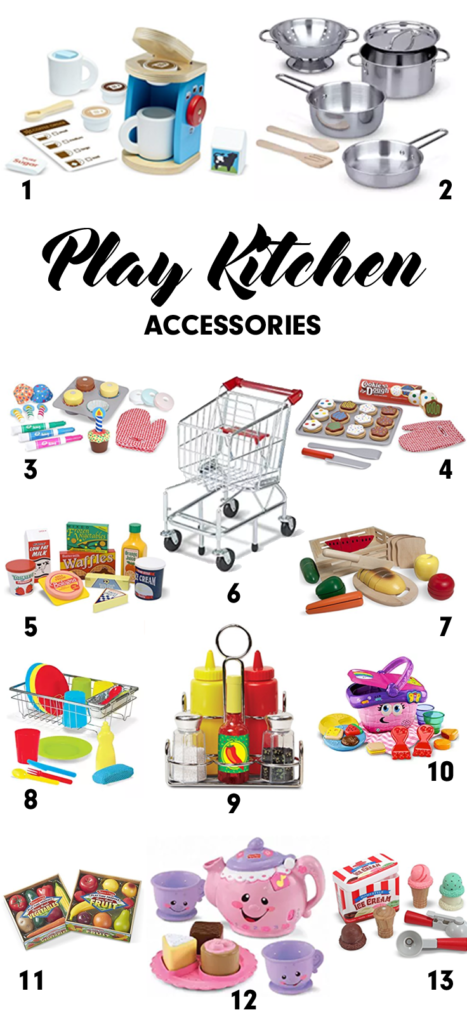
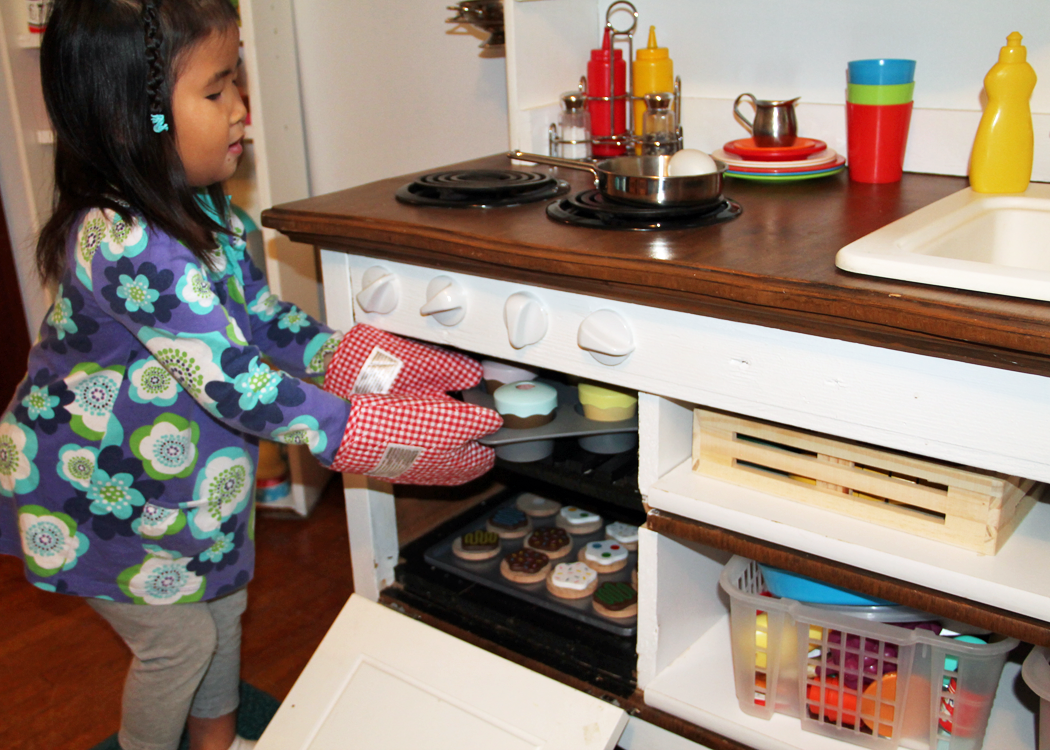
As you can see from the pictures above, after the project was complete I had a blast purchasing accessories! I love the quality of Melissa & Doug items, and our girls have hours of imaginative play with these fun toys. We also have a couple of other brand toys that the girls like to use when playing with the kitchen. If you are interested in purchasing any of the items from the above photos for your own children, I have linked them below.


1|2|3|4|5|6|7|8|9|10|11|12|13

PLAY AND ENJOY!

I have been so happy with how the play kitchen turned out , and the girls love it just as much as I imagined they might. It is so special that it is a new piece, created from something that has family history. I believe it is built well enough to last for a long time. Maybe in the future we will be watching our grand kids playing with this creation!

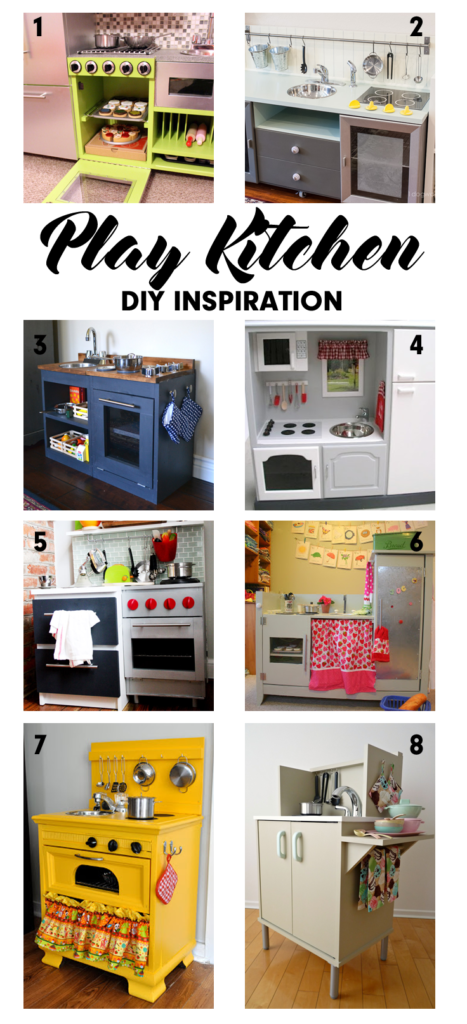
Does the idea of creating a play kitchen for your kids or grand-kids have you intrigued? Take a look at these cute DIY ideas for even more inspiration to get you motivated! I love how they are each so unique, and made with all sorts of different materials!


1|2|3|4|5|6|7|8


Cute, right? Go ahead… give it a try! The beauty of DIY is that your creation will be unlike any other, and there is no right or wrong way to approach it. Just have fun, and make it your own!

This post contains affiliate links.  To learn more about my website disclosures, click here.