
HOW TO CREATE A COMFORTABLE OUTDOOR ROOM

With Summer right around the corner, you may be anticipating enjoying the outdoors – listening to the birds sing, sipping lemonade on the porch or grilling steaks on the patio. You may be wondering what steps to take to make the perfect summer outdoor space of your own.

The truth is that not all rooms in nature are created equal. There are six key elements that will help you make an outdoor room as pulled together and comfortable as possible – one that you, and your potential party guests, will want to linger in all summer long.


1. DEFINE A SPACE, AND MAKE IT PRIVATE

How to Create a Comfortable Outdoor Room

Intimate spaces are inviting spaces. Instead of trying to figure out a way to make your entire yard an oasis, start small. Begin by locating a portion of your yard that is relatively convenient in relation to your home. A spot directly outside a dining room or kitchen, for example, might be a good choice.

Defining a space could be as simple as building a fence around the area, or changing the ground cover. Patios made of bricks or slabs of stone are popular, as are wooden decks. This defined space will be even more enjoyable if it is hidden from public view. Potted plants of varied heights could make a natural ‘green wall’ or a privacy screen might be created with chicken wire and vines.

Fun privacy ideas for your outdoor room:  1 | 2 | 3


2. BRING THE INDOORS OUT

You’ve heard of bringing the outdoors in – now think about that concept in reverse. Make it feel like an extension of the home you love, by drawing elements from the inside – outdoors. Perhaps there is a certain color or theme that your interior is decorated with. Using those same elements outdoors will create a unified look.


3. ADD CONVENIENCE

For an outdoor room to be comfortable, it also needs to be functional – so that once you are in the space, you won’t need to leave it to grab a convenience item.

If you have a grill in your space, make sure that all the grilling tools are handy. If it is a place you plan to nap in, have pillows and blankets nearby. A cart to hold beverages and snacks would be welcome in just about any outdoor room!

These conveniences are clever and useful! 1 | 2 |


4. PROVIDE VARIED SEATING

Think about your outdoor room being used by various group sizes. You may want enough seating to accommodate small group conversation, a place to dine, or even a one person seat – such as a hammock.  You can include multiple seating options, which can be rearranged as needed.

Various seating options for outdoor rooms: 1 | 2 | 3


5. KEEP IT SHADY AND PROTECTED
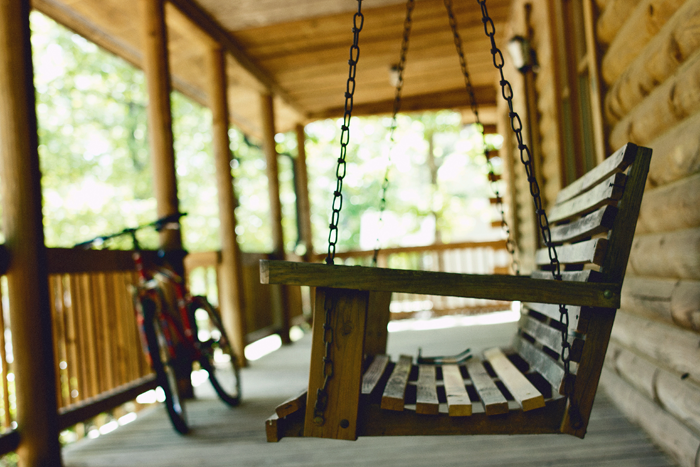
A shady and protected outdoor room is essential for use in the warm summer months. Shade options can range from a simple draped canvas overhead, to a detailed pergola. A full roof will offer a more protected feel, and possibly a longer season of use for your outdoor room.

If you want to extend the use of your space into the cooler months, you may consider adding operable screens/ windows and a heating source such as an outdoor gas fireplace or wood burning fire pit.


6. LAYER THE AMBIANCE 

Your outdoor room will come to life if you consider all five senses, and how they can be connected to nature, when pulling it together.

Sight: What will you see when you are in your outdoor room? A pleasant view will allow you to relax and let your other senses to be engaged. At night, solar lights or strands of lights above create a magical feeling that will make you and your guests want to stay up past bedtime.

Smell: This sense can make or break an outdoor room. Take care to ensure that items which could produce unpleasant smells, such as a garbage can, aren’t close by. Using flowers and other sweet foliage can help you connect with nature. A fire feature can also create ambiance and a pleasant, familiar smell that is sure to be enjoyed.

Hearing: Often this sense is overlooked, yet it has a huge impact on the enjoyment of a space – especially outside. If your home is in a loud neighborhood, consider a white noise machine to cancel out some of the noise. Add in pleasant sounds, such as a water feature, for comfort and tranquility.

Taste: The pleasure of preparing food outdoors is multiplied when you can pick fresh food and spices. The installation of a raised-bed garden nearby, or pots with herbs, adds an interactive element to an outdoor room.

Touch: Tactile elements such as pillows, rugs, and even the furniture that is selected to fill your outdoor room can engage the user of the space in a way that no other sense can. Take care to ensure that these items are not only pleasant, but interesting to touch.


By following these six key elements of design, you can create an outdoor room that is not only comfortable – but also engaging and interesting. Put them to work for you, then sit back, relax, and enjoy the summer!


Pin this for later:



EVERYTHING YOU NEED TO KNOW ABOUT RAIN GUTTERS

It’s that time of year again. The leaves are turning beautiful shades of yellow, orange and red. Before you know it, the temps will drop; And sadly, so will the leaves. It is a beautiful, magical sight; But if you own a house that has rain gutters, you need to know that those small, colorful leaves could turn into big problems if left unattended too long.

Everything you need to know about rain gutters. This post discusses the reasons why rain gutters are important, the various styles that are available, how to install and maintain them, and what you can use as alternative if rain gutters just aren't your thing. Useful home maintenance tips are included.Though the topic can be a bit dull, the importance is well worth a talk. And so, to help you maintain your home, I give you this post – which includes everything you need to know about rain gutters.

I’m going to start off by saying that rain gutters are not an absolute must have. If your house has an appropriate amount of slope away from the foundation, and the level of rainfall in your region is minimal, your house will likely be just fine without them. Not every house has rain gutters or needs them, but many do. Let’s talk about why.


WHY DOES MY HOUSE NEED RAIN GUTTERS?

It is no secret that rain gutters are set in place to handle precipitation. Insurance adjusters have reported that approximately 10% of all home claims can be linked to damage from rainfall. You may also be interested to know that only 1 inch of rainfall equals 600 gallons of water flowing off of the roof of a typical residential home. That’s a whole lot of water that needs to find a place to go! There are 4 main reasons rain gutters are recommended:

  1. Prevent basement flooding.  This may be the most familiar homeowner complaint related to rainfall. Whether you’ve been woken from a deep sleep to the sound of a sump pump alarm, or your socks have been soaked by a standing water surprise, the feeling is the same. Headache. If you find water in your basement not only will the cleanup be a massive chore, you will also need to keep a close eye on the drying out process to ensure that mold doesn’t develop.
  2. Protect the foundation. The foundation holds up your house. It’s kind of a big deal. And while some settling of a foundation is natural, if it settles too quickly you may notice warped floors, and cracks in your walls and ceilings. Foundation reconstruction is arguably the most costly repair a homeowner can face, and finding a way to avoid expensive repairs is just plain common sense.
  3. Avoid erosion.  Though houses are supposed to be built on a slight slope that guides rainfall away from the foundation, sadly this isn’t always the case.  Without rain gutters, the water will drop from the roof edge in a forceful way, and wash a little more soil away each time there is rainfall. Eventually the ground will slope toward the foundation which, as we just covered, is a giant no no. Too much water can also wreak havoc on planting beds and landscaping, by flooding the flowers and shrubs.
  4. Slow the deterioration of the vertical elements of your home, such as siding and windows. When gutters aren’t used, the rainfall will drip onto the siding. The water can then easily pool at the tops of door and window frames and on window sills, which over time will cause deterioration and rot. Mildew and mold are likely to develop on wet siding, which means even more cleaning and maintenance.

As you can see, gutters can be mighty important.  But even the best tool won’t work well if it isn’t installed properly. That brings us to the next point.  Installation.


WHERE AND HOW ARE RAIN GUTTERS INSTALLED?

There is a wide variety of gutter styles, shapes and colors on the market today – which means you should be able to find a type that fits seamlessly with the design of your home.  Houselogic has an extensive article about the various looks and price points of gutters you have to choose from.

Once the choice is made, you will need to review the basics about where and how to install the rain gutters so that they function properly.

Simply speaking, the gutters should be positioned at the roofs lowest point, just below the eaves, as demonstrated in the photo below. This arrangement allows for gravity to do its job – with the collection happening just before the rainwater would leave the roof had the gutters not been in place.

Beautiful copper rain gutters. Installing rain gutters to fit the style of your home. Rain gutter maintenance. Rain gutters on a house. Gutter and downspout maintenance.

(photo credit)

A properly built rain gutter system includes the horizontal gutters, which are connected together with ‘joiner pieces’. The horizontal gutter pieces then connect, via a drop outlet, to a vertical downspout, which carries the rainfall safely toward the ground. The final portion of downspout should slope with the grade of the land, away from the foundation.  Many times a splash block will be placed where the water exits the downspout, to allow for an even more smooth distribution.

Each type of gutter will require slightly different installation techniques, so it is important that you read the manufacturer’s instructions if installing on your own, or hire a professional to get the job done.

So, great.  You’ve realized the importance of gutters and have had them installed properly.  Now you can just sit back and not worry at all when those downpours come, right? Wrong! One of the biggest complaints homeowners have about rain gutters is that they have a tendency to get clogged with leaves, and debris from the roof. The good news is that as long as you keep on top of inspecting and cleaning your rain gutters they should be able to provide you all the previously listed benefits for many years.

WHAT IS THE TECHNIQUE FOR INSPECTING & CLEANING RAIN GUTTERS?

At a bare minimum your rain gutters should get a thorough look over once per year. If your yard has many overhanging trees or if you live in an area that receives a higher level of rainfall, you should check them twice per year – once in the early Spring and once in late Fall. It is also a good idea to make sure the gutters are all clear after large storms.


(photo credit)

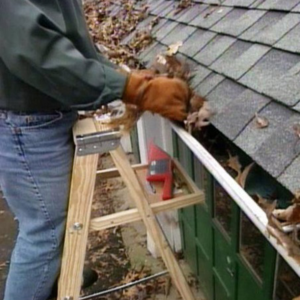
Put on a long sleeved shirt, work gloves and goggles, and a pair of non slip shoes.  Grab a good tall step ladder and place it on level ground. Remember to never stand on the top of the ladder, as you could easily lose your balance. Working in sections, use a plastic gutter scoop or garden trowel to remove the gunk and leaves. Place the debris in a bucket or allow it to fall on a drop cloth you previously positioned on the ground below.

Once the bulk of the debris and leaves have been removed, use a pressure washer or a garden hose with a high pressure hose nozzle , and spray the gutter – working toward the downspout. Use a stiff brush to remove any debris that has hardened, then spray again. At this point the water should be flowing freely out of the downspout.  If not, it is likely that a clog still exists in the vertical portion of the downspout.  You may need to use a plumbing auger to dislodge the material.

If you would like more detailed instructions on how to clean your rain gutters, check out this in depth article from HomeTips.com

Nice work! Now that your gutters are cleaned out, you can check that off of your seasonal To-Do list! Are you now looking at your house wondering what other chores you should tackle before winter?  I have that list already prepared, as a free resource in the library.  Click HERE for access.

HOW CAN I GET OUT OF CLEANING MY RAIN GUTTERS?

Ok. I get it.  Time is precious and those moments spent on the ladder could be allocated in a variety of other ways. Marketers realize this and have come up with quite a few solutions to help you out. Click below for more detailed information on each product.


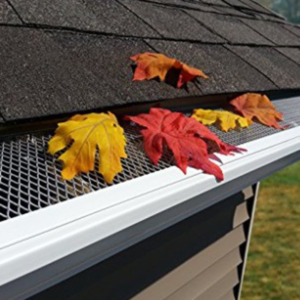
Gutter Covers


Foam Gutter Filter Inserts


Gutter Strainers

If these tools don’t do the trick, you can always hire a professional. Yes, there are people out there who have the desire and expertise to tackle this chore for you. Check your local Angie’s List to get quotes from professionals in your area.  The average expense will be between $50 and $200, depending on the size of your house.

It’s important to note that even with these additional measures, sediment will still develop in your gutters over time – albeit much more slowly.


IS THERE A  RAIN GUTTER ALTERNATIVE?

If you really don’t want to deal with rain gutter maintenance or if you are concerned that the look of gutters will distract from the overall style and curb appeal of your house, there is a way you can avoid them all-together. Fine Homebuilding has written an interesting article on in-ground gutters that is worth a read.


I hope this post has given you insight into the usefulness of rain gutters, how to properly maintain and clean them, and what you can use as an alternative if they are not an option for your house. With this information, you are taking a big step in protecting your largest asset – your home.


This post contains affiliate links.  To learn more about my website disclosures, click here.