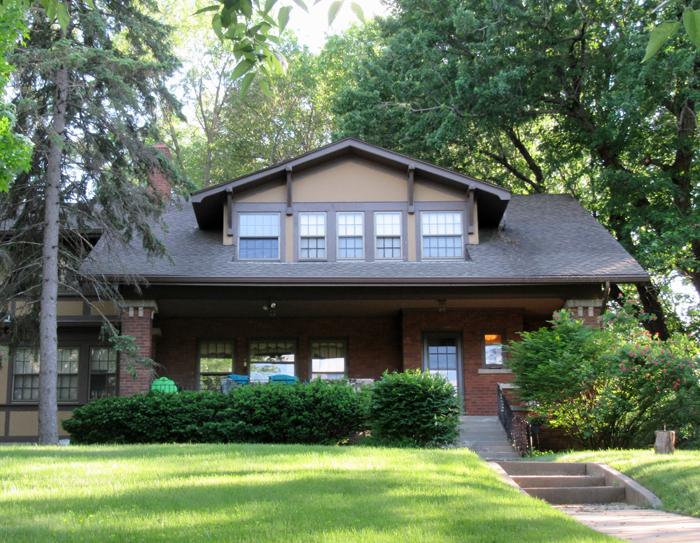
THE MAIN ELEMENTS OF THE BUNGALOW HOME STYLE

Welcome to another installment in the ELEMENTS OF HOME series. Each month, I showcase a different residential style here on the blog. It is my hope that this information will not only teach you a little something about the various styles; but also equip you if are designing or searching for a new house – by allowing you to determine which style(s) suit your lifestyle and preferences the most.

Today I will be over-viewing the bungalow home – including the history of the style and what makes it unique.


HISTORY OF THE BUNGALOW STYLE

The very term ‘bungalow’ has roots from the Indian/ Hindi word ‘bangala’ – which describes a one story house with a low, extended roof. During the British occupation in India, troops created bangalas in higher elevation ‘hill stations’. The home’s wide, covered verandas, provided shade in the hot climate as well as a comfortable cross ventilation in the hot stuffy months.

Bangalas were later built in the UK, presumably by the British colonials who had finished their tour of duty in India. Coined as ‘bungalows’, they were adapted once again for America in the early 1900’s, popping up first in the temperate climate of California. From that time until the early 1930’s, the bungalow style’s popularity reached nearly every state in the union.
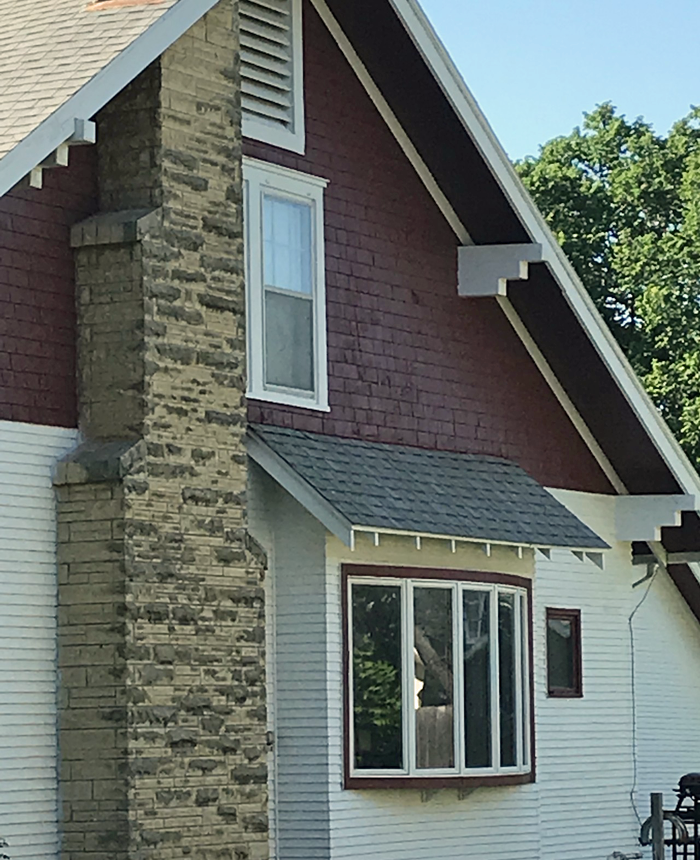
 

When Bungalows were introduced in America, they were seen as a progressive ideal – and in many ways an opposite way of life to that of the Victorian era. The straight-forward use of materials, informal plan layout and accessibility to the outdoors that bungalow homes provided were attractive to middle-class families in particular – those who felt secure enough about their social standing that they didn’t need their home to be a status symbol or showcase their worth.

Similar to the American Foursquare home, the Bungalow style were widely available through mail-order catalogs. For those with limited means – the bungalow provided more than just the need for shelter, they provided fulfillment of the American dream.

There are also examples of architecturally designed bungalow homes. The most notable architects of this style were the Greene brothers, who practiced in California in the early 1900’s – focusing their work on the Arts & Crafts movement.


MAIN ELEMENTS OF THE BUNGALOW STYLE

LOCATION

Bungalows first began to make their U.S appearance in Southern California – that is where the most iconic examples still stand today. However, there are bungalow examples scattered throughout North America.

This housing style fills neighborhoods that are near the city center, which is an attractive asset to homeowners looking for close proximity to schools, work, and shopping districts. Generally these neighborhoods are pedestrian friendly. It is not uncommon to see multiple Bungalows situated next to one another long the street – something that creates a strong sense of community for the people who call the neighborhoods home.


SIZE

These homes are often small, with efficient, yet flexible, floor plans. Their economical use of space is especially appealing to first time homeowners and young families.

Though relatively compact, Bungalows make efficient use of every available square foot – with built in cabinets and cupboards for organization.


EXTERIOR TRADEMARKS


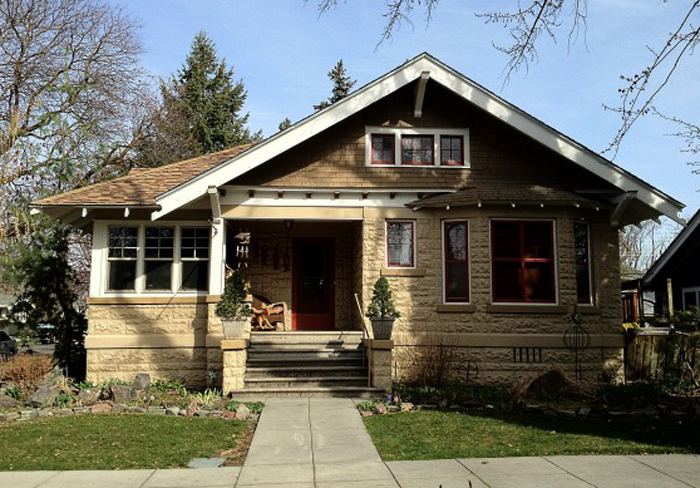
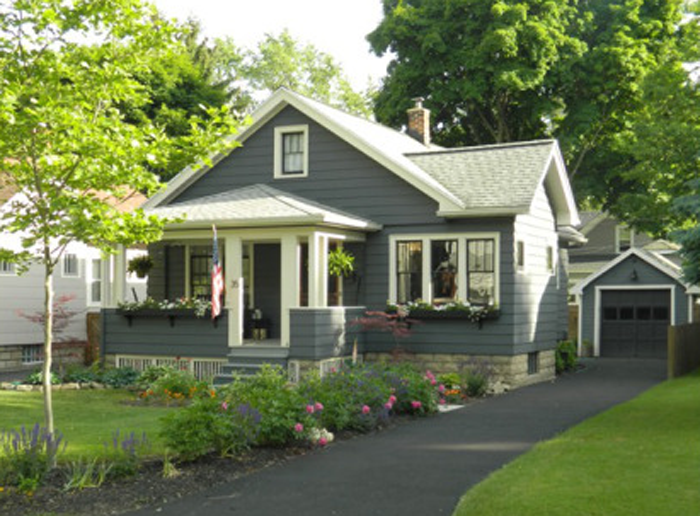
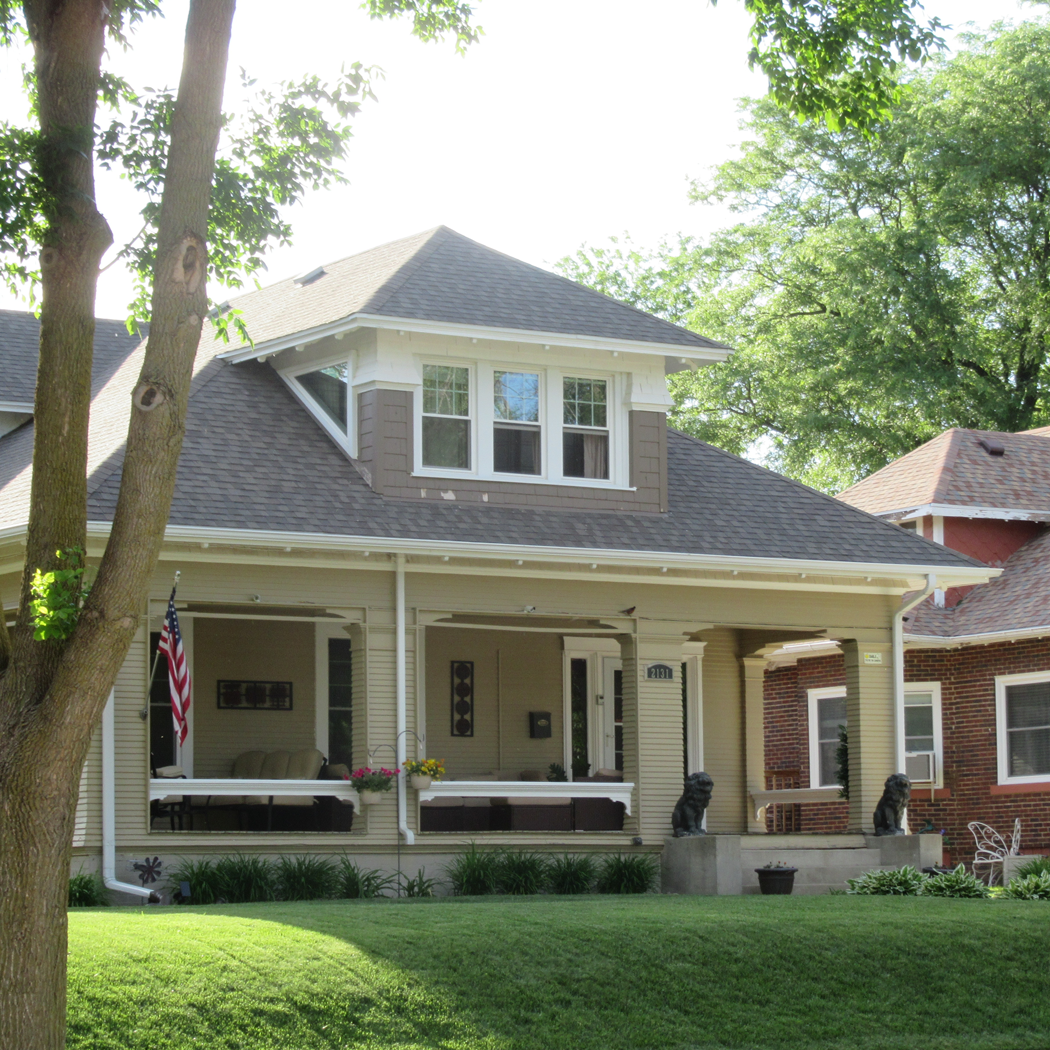
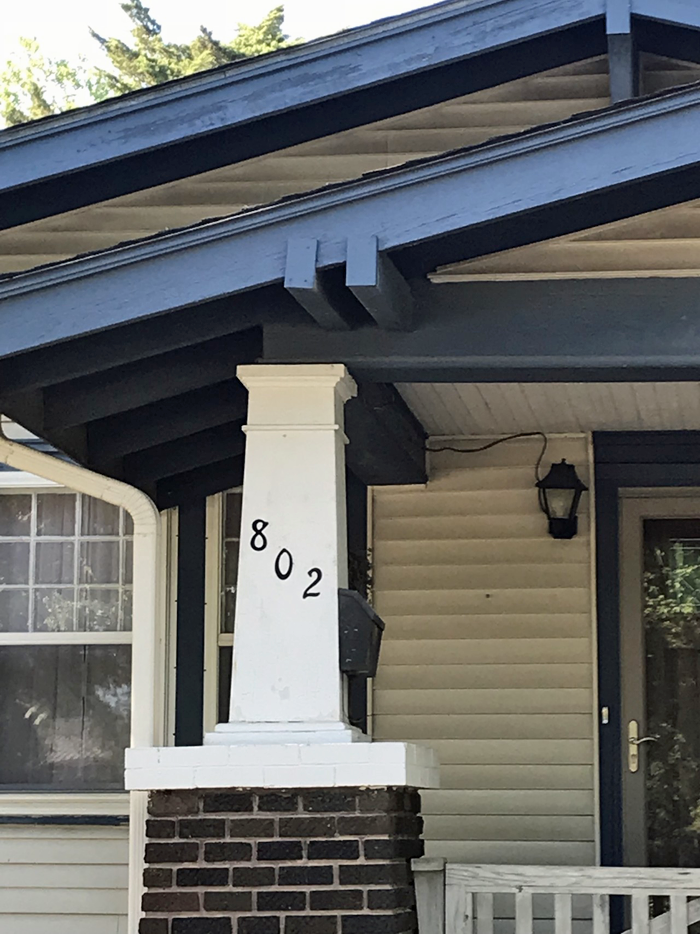
  • LOW PROFILE: Because they are meant to be unassuming, bungalows keep a low profile to the street. Generally they are one story in height. If a second floor is included, the living space is typically built into the roof structure. Exterior detailing of bungalows accentuate the horizontal lines, further grounding their facades.
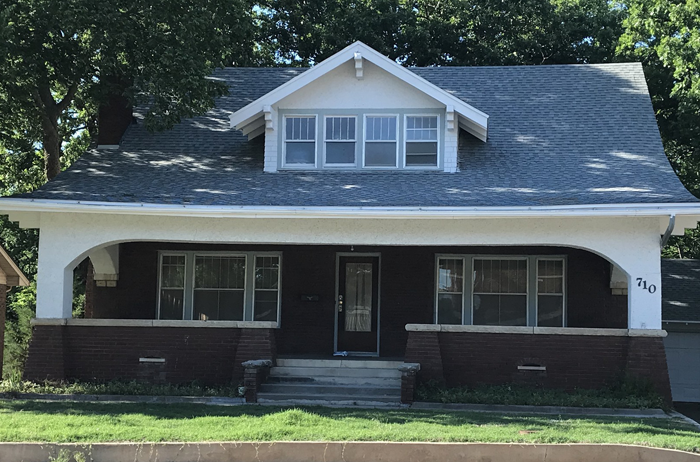
 

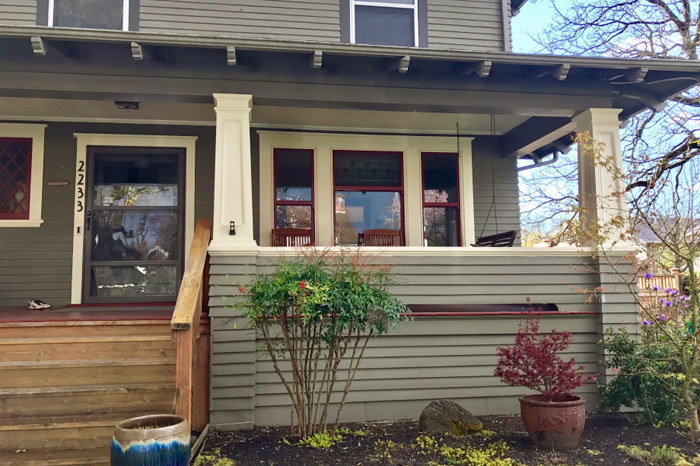
  • PORCH: most Bungalow homes feature large front porches. Not only do porches give the homeowners a direct connection to the outdoors, they also promote neighborhood interaction – both important Bungalow ideals.
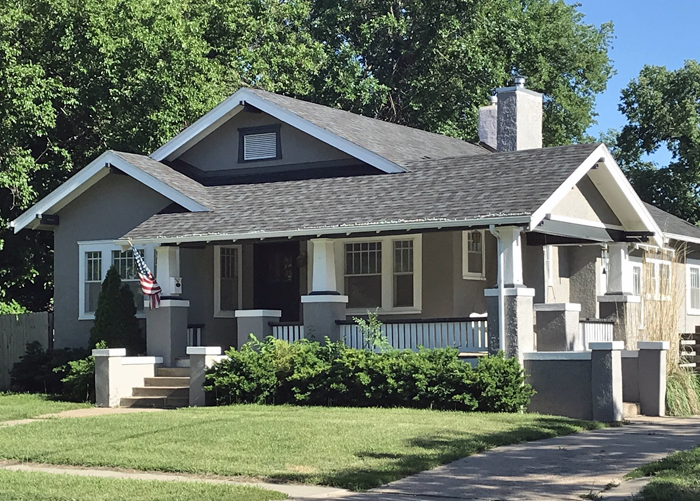
 

  • DOMINATING ROOF WITH DORMERS: Bungalow generally have roofs that slope toward the street – aiding in their one story appearance. Those with second floor living space may have dormers that accentuate the roof line.
  • USE OF REGIONAL MATERIALS: Builders of the original bungalows favored the use of regional materials for their lower cost and reduced maintenance. Those built on the west coast tend to employ stucco as a primary exterior material, where those in the Midwest – such as Chicago and Milwaukee – feature brick. Northeast bungalows were, at least partially, clad in shingles.
 

INTERIOR SPACES

Interior layouts lack redundant walls and useless space. Hallways are not common. Compared to their Victorian ancestors, the Bungalow features an open first floor plan – with rooms that have overlapping functions.

Continuing the function of space, many Bungalows feature built in cabinetry as room dividers – as opposed to full height walls. These built ins allowed rooms to flow into one another, while at the same time maintaining some separation of space.
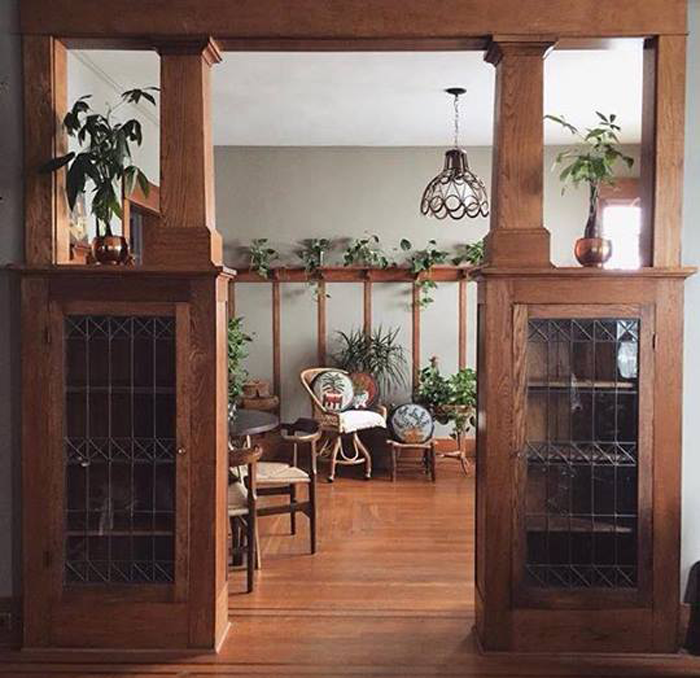
image source

COLOR SCHEME

The original bungalow owners would often strive to use warm colors and textures that would make their homes feel welcoming and cozy. Earth tones such as tan, brown and harvest gold were, and still are common both on the exterior detailing and interior finishes and furnishings
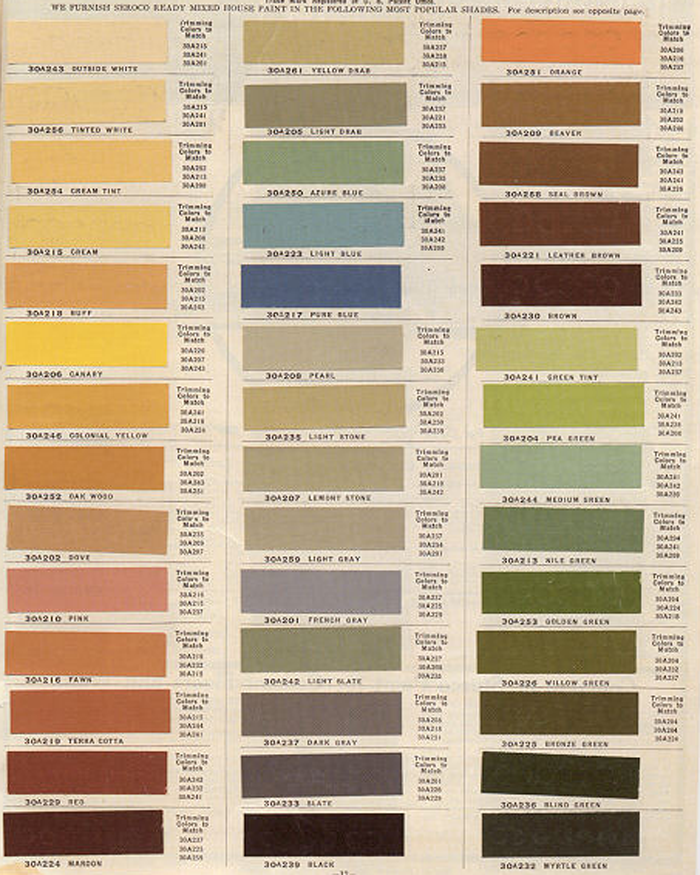
traditional bungalow colors 

from the book Bungalow Colors: Exterior, by Robert Schweitzer


NOTABLE BUNGALOW HOUSES
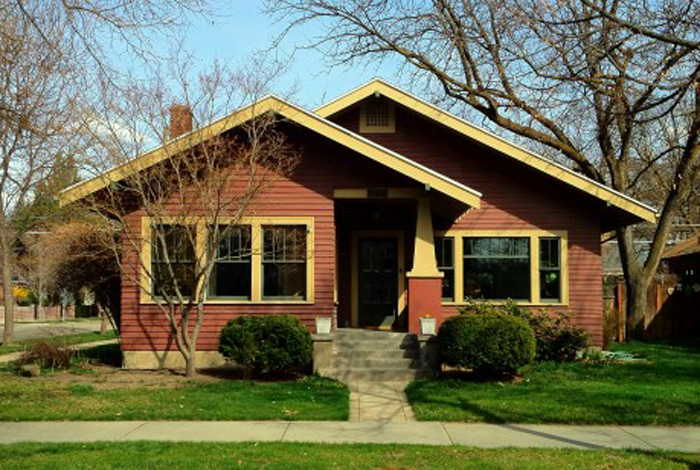
 

‘Bungalow City’ | Boise, Idaho | Houses built between 1910-1930

This neighborhood was nicknamed ‘Bungalow City’ because of the vast amount of Bungalows that were built there in the early 1900’s. There are many prime examples of the style that are well maintained.


INSPIRING BUNGALOWS FROM AROUND THE WEB

These classic homes showcase the Bungalow style well. Take a closer look!
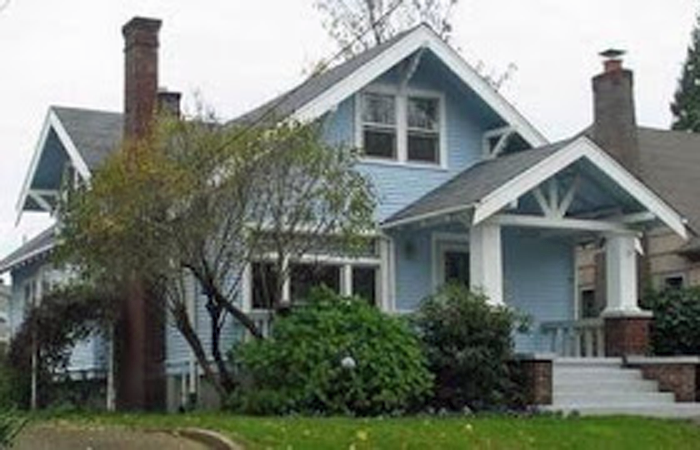
 

1916 Bungalow


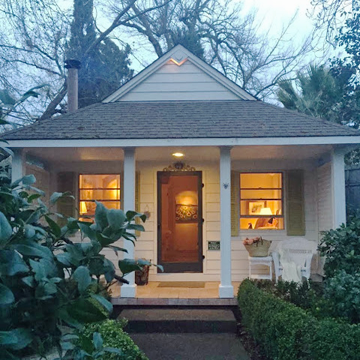
Itty Bitty Bungalow


I hope you have enjoyed learning a bit more about the Bungalow style. Curious which residential style will be featured next month? Stay tuned!

And be sure to check out the previously showcased styles HERE.
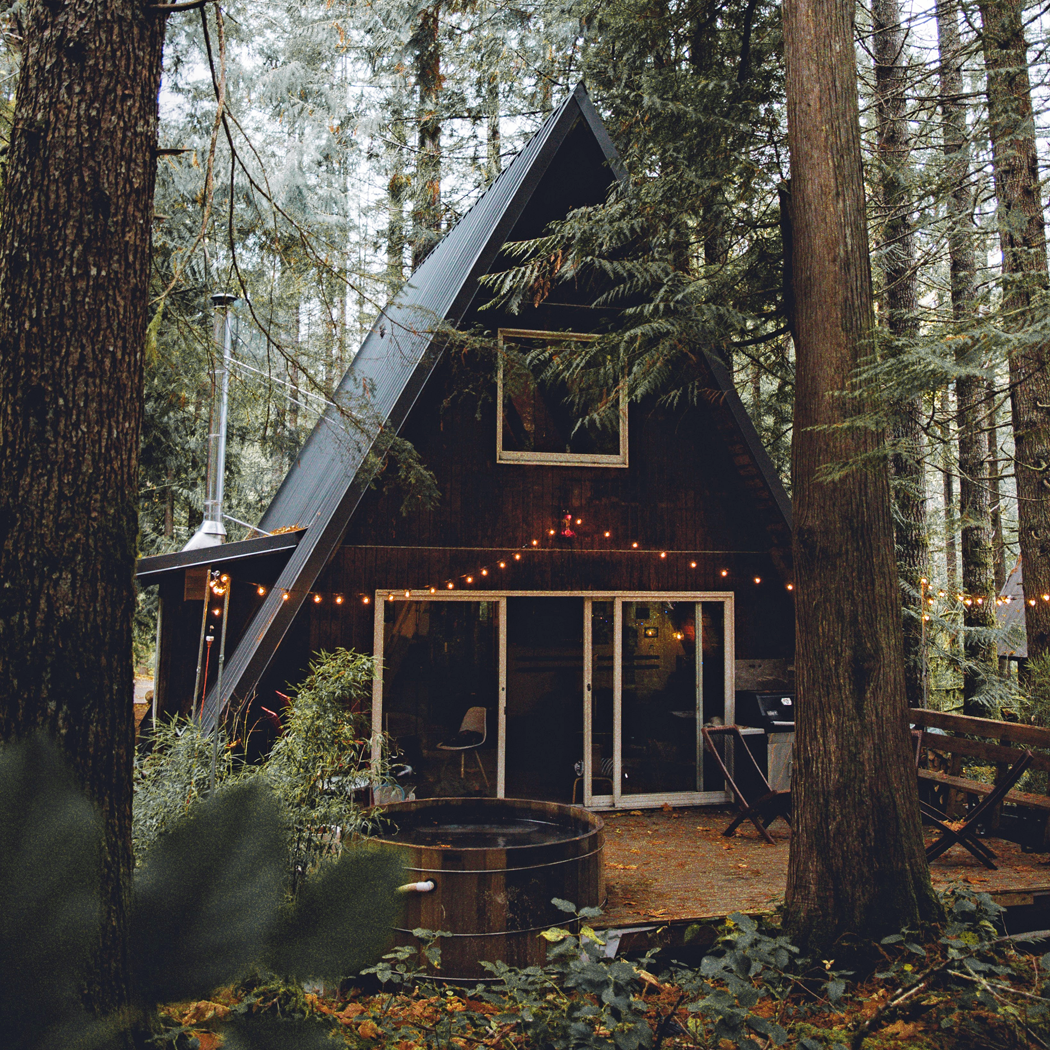


THE MAIN ELEMENTS OF THE A-FRAME HOME STYLE

image source

Welcome to another installment in the ELEMENTS OF HOME series. Each month, I showcase a different residential style here on the blog. It is my hope that this information will not only teach you a little something about the various styles; but also equip you if are designing or searching for a new house – by allowing you to determine which style(s) suit your lifestyle and preferences the most.
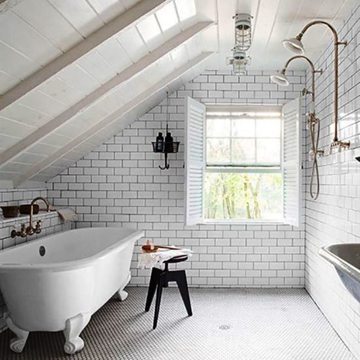
Today I will be over-viewing the A-frame home – including the history of the style and what makes it unique.


HISTORY OF THE A-FRAME STYLE

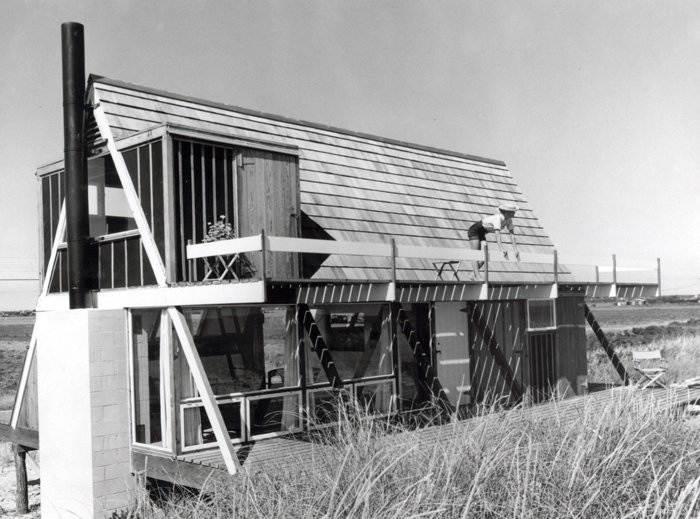
The ‘hut like’ dwelling shape of what we now know as the A-frame style has been in existence for many years, and in many countries – Europe, China, and the South Pacific Islands – primarily as accessory buildings. In 1934, Austrian-born architect Rudolph Schindler built a simple A-frame vacation house in a California resort community, overlooking Lake Arrowhead – bringing the design style to the United States.  It had an open floor plan with exposed rafters and glass-walled gables.

Americans took note, and with the rise in disposable income after WWII, families were able to afford vacation homes. Because the A-frame style was relatively simple and inexpensive to build, they became a popular choice. Eventually, as the style’s popularity increased, companies started offering kit houses. In fact, the popularity of the style rose, not from the architecturally designed examples that were built, but instead by the grass roots movement formed by DIY homeowners.

The peak of A-frame building was between the years 1950 and 1965, coinciding with the Mid-Century Modern movement; Both design styles have been making a resurgence in recent years. There are even modern day kit houses available in this style!


MAIN ELEMENTS OF THE A-FRAME STYLE

LOCATION

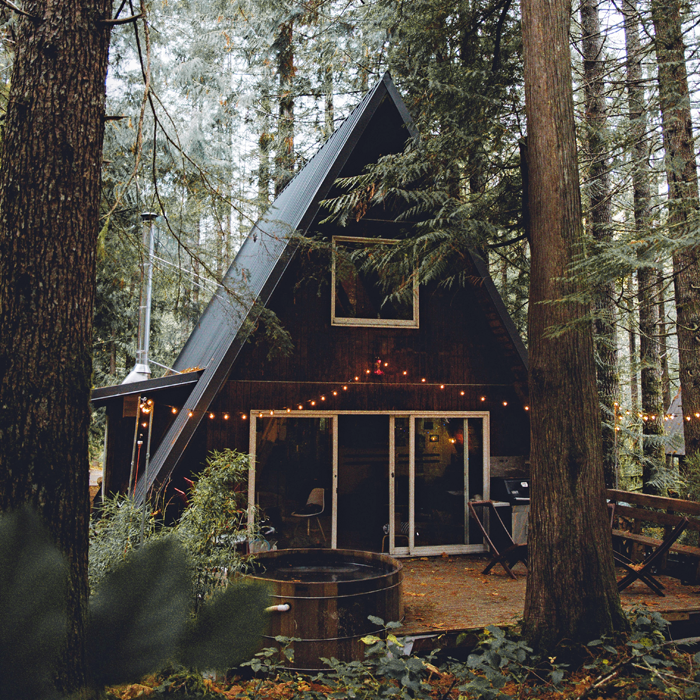
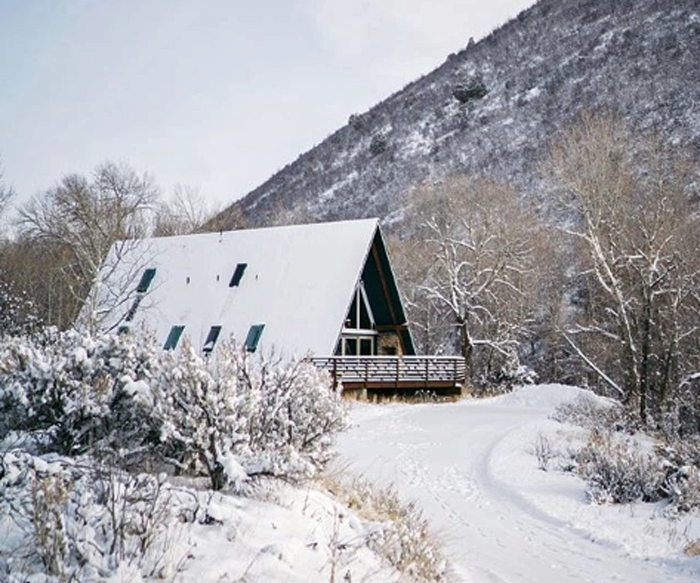
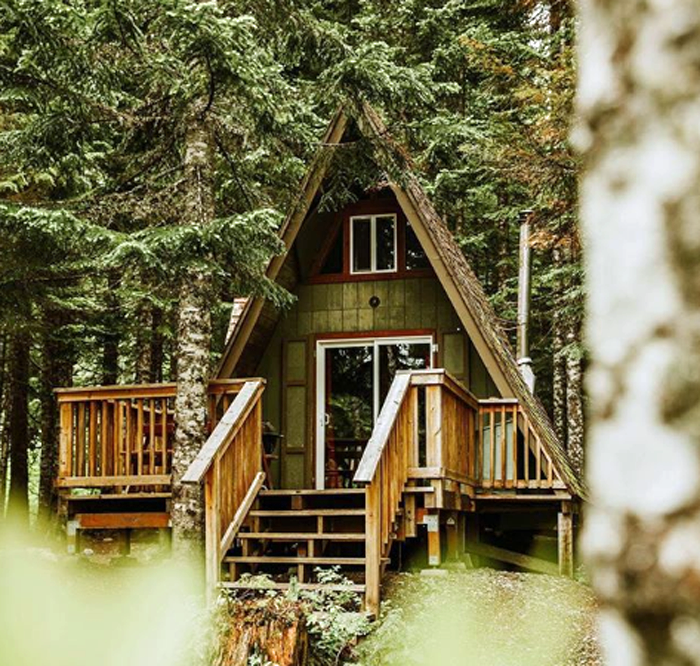
A-frames are in their element when positioned in the midst of nature – the forest, the mountains, and lakeside. Very rarely is this style found in neighborhoods, or lining city streets.

The A-frame’s tent like form blends perfectly in nature. Image Source: A-FrameHaus 

SIZE

The majority of A-frame homes are used as vacation properties and, as such, do not require all of the common day to day comforts/extras of a standard home. They are generally pared down to the most basic form, which means that they are quite a bit smaller than the average American home.

The tiny house movement has brought the A-frame to a whole new level of simplicity, offering a model as small as 300 sf!


EXTERIOR TRADEMARKS


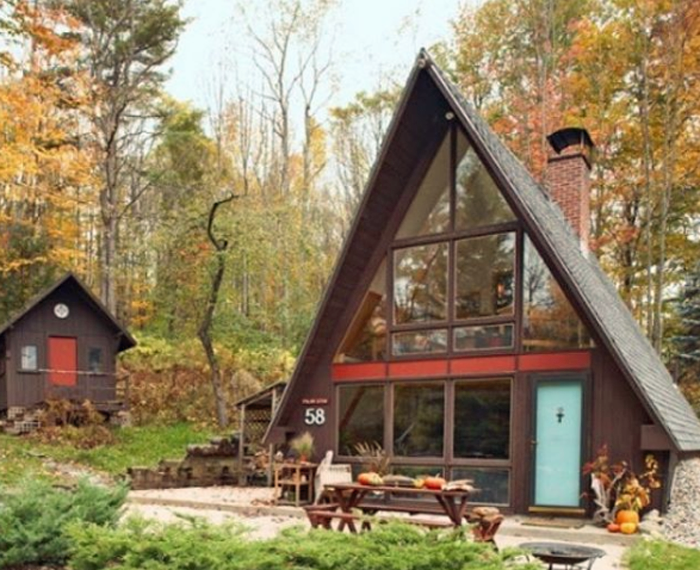
  • STEEP ROOF THAT FORMS THE WALLS: The roof of an A-frame extends to the ground on both sides, leaving two gabled ends.
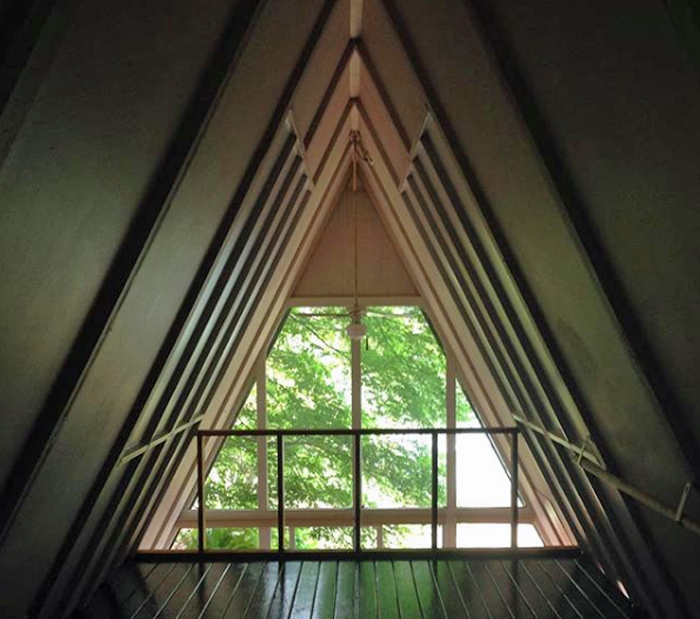
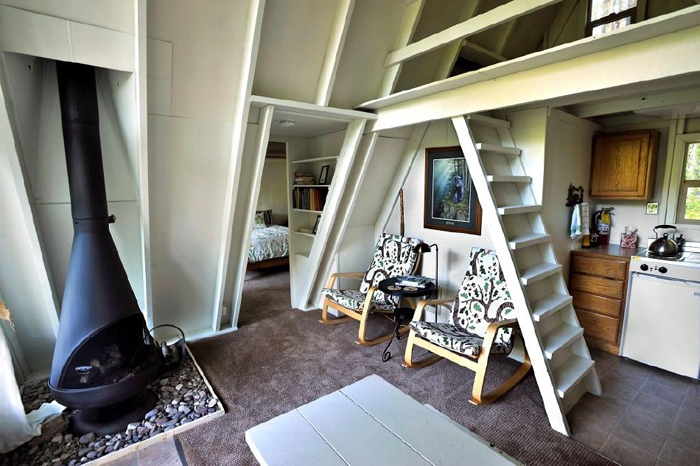
  • TRIANGULAR SHAPE: These homes shaped like an equilateral triangle. Its distinctive peak is formed by rafters or trusses that are joined at the top and bolted to plates or floor joists down below. The cross-piece of the ‘A’ is created by horizontal collar beams. These beams are used to stabilize the structure and many times are used as the floor support for a sleeping loft.

image source

  • MANY WINDOWS: The gabled ends of these homes are typically filled with windows, in various sizes and shapes – flooding the interior with natural light and spectacular views to the outdoors.
  • DEEP SET EAVES: Many of these homes have deep eaves – which allow protection of the gabled ends, and provide shading to the windows.

image source


INTERIOR SPACES

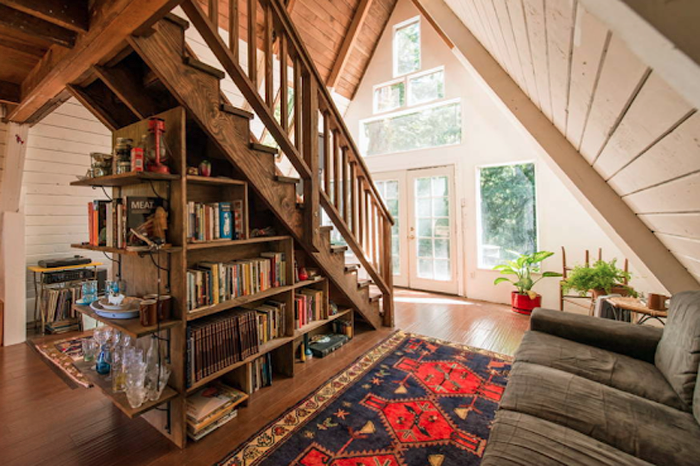
Many interiors feature exposed ceiling beams and structure. Coupled with the natural light that is filtered in from the gabled ends, a ‘cabin’ like atmosphere is created.  The floor space is typically left open, with a combined living/dining/ kitchen space, and only the more private bedrooms and bathrooms positioned behind walls.

Due to the shape of the structure, dead space is created on the outside corners of the floor plan – making it a somewhat difficult layout to furnish and decorate.

image source

COLOR SCHEME

Following along with their ‘one with nature’ feeling – the exterior coloring of A-frames are typically composed of materials that will blend well with their surroundings – natural wood shakes, green wood siding, dark roofing materials, etc.


NOTABLE A-FRAME HOUSES

image source

Reese House | Andrew Geller | 1957


Photo credit: Russ Carmack, courtesy Metro Parks Tacoma

Hellyer House | David Hellyer |1957


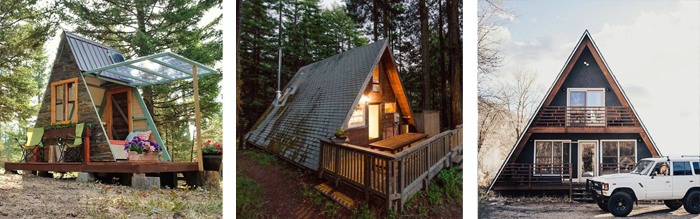
INSPIRING A-FRAME HOMES FROM AROUND THE WEB

These classic homes showcase the A-Frame style well. Take a closer look!


1 | 2 | 3


I hope you have enjoyed learning a bit more about the A-frame style. Curious which residential style will be featured next month? Stay tuned!

And be sure to check out the previously showcased styles here.


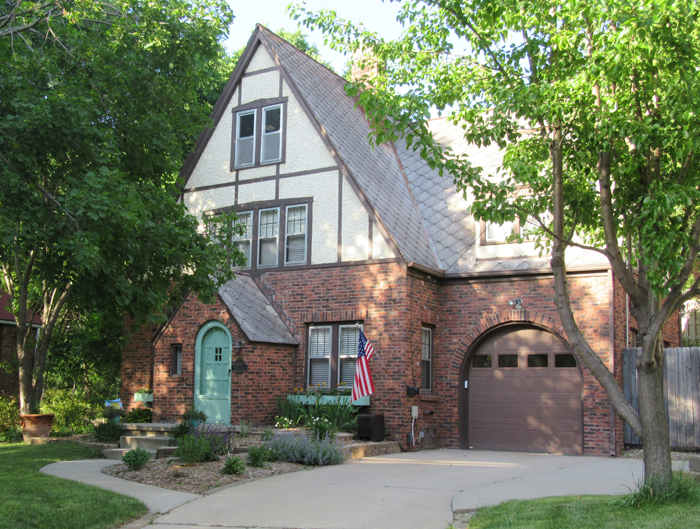
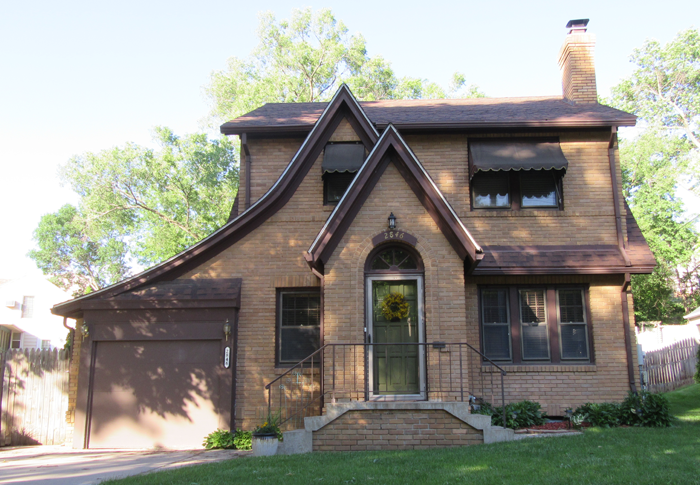
THE MAIN ELEMENTS OF THE TUDOR HOME STYLE

Welcome to another installment in the ELEMENTS OF HOME series. Each month, I showcase a different residential style here on the blog. It is my hope that this information will not only teach you a little something about the various styles; but also equip you if are designing or searching for a new house – by allowing you to determine which style(s) suit your lifestyle and preferences the most.

Today I will be over-viewing the Tudor home – including the history of the style and what makes it unique.


HISTORY OF THE TUDOR STYLE

The style was born in American after the height of the Queen Anne Victorian home reign. The fancy, elaborate Queen Anne’s, with all of their mass produced detailing, was falling out of favor – And, in turn, homeowners were beginning to search for handmade, craftsman touches. An interest in Medieval and early Renaissance architecture, common in early 1600’s England, brought the eclectic Tudor style to America in the early 1890s.

Many of the first homes built in this style were commissioned by European trained architects – for wealthy American families. As the popularity of Tudors grew, they became known as ‘Stockbroker Tudors’  – a nod to the many homeowners who had earned their wealth in the stock market boom of the 20’s. Eventually, the Tudor style became popular with middle class American families as well, and in the 1920’s and 30’s it was one of the most frequently built home types.


During World War II, with a resurgence of patriotism, a majority of the country’s homeowners preferred to build using the more ‘American’ architecture of the Colonial Style. That notion, partnered with the fact that Tudor style homes tended to be expensive to build and maintain, saw the style falling out of favor.  The height of it’s popularity ended in 1940.


MAIN ELEMENTS OF THE TUDOR STYLE

LOCATION

Though examples of the classic Tudor style can be found across the country, there are quite a few prime examples that exist in the Eastern states, especially in the Washington D.C. area.

Most commonly, this home style can be found in residential city neighborhoods and not in country settings, save a handful of large country estate mansions.


SIZE

The size varies widely for this home style. The first examples were built as very large homes and even mansions; But through time, as the style became more popular, modest Tudors began dotting neighborhoods. These smaller Tudor homes now make up the great majority of examples that exist in America.


EXTERIOR TRADEMARKS


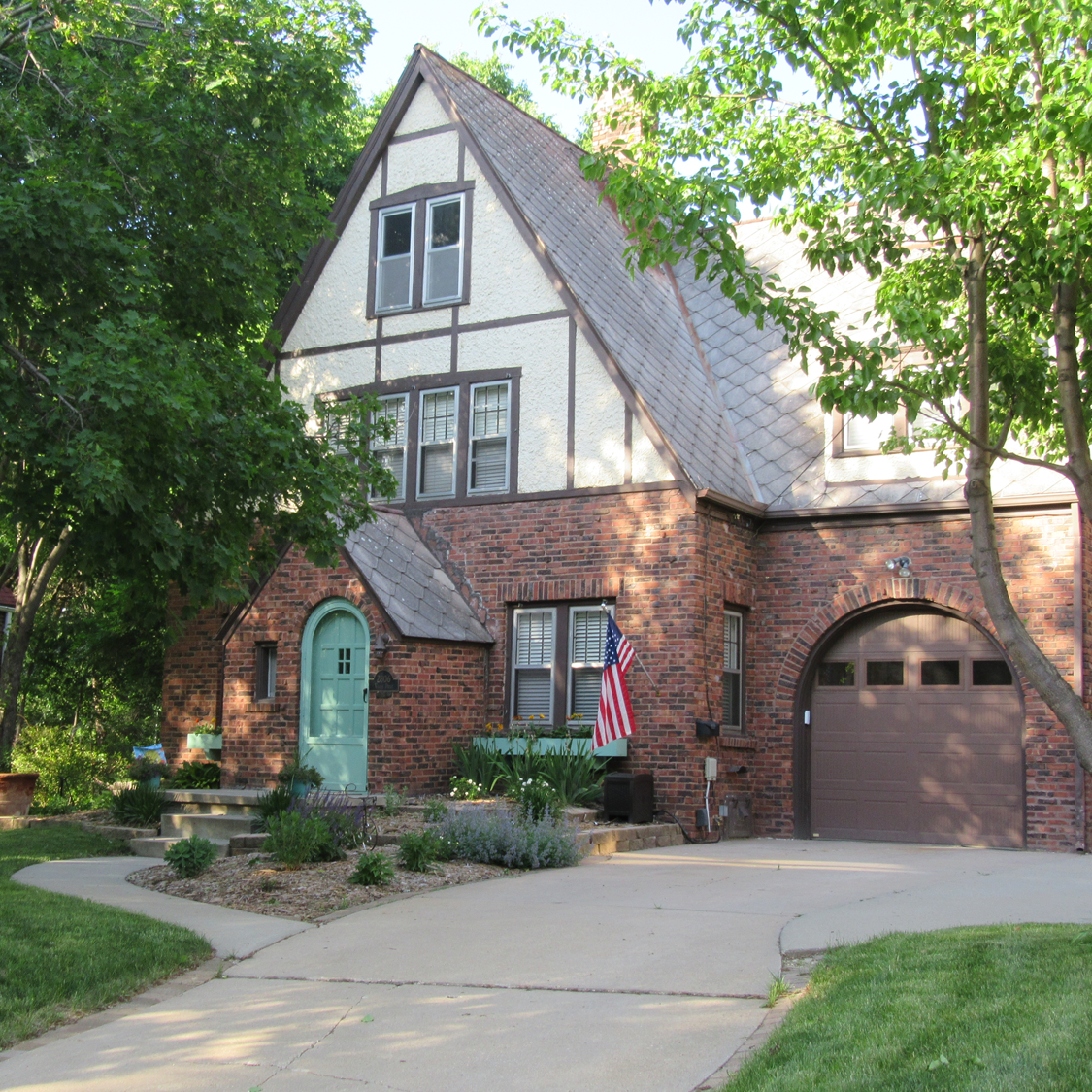
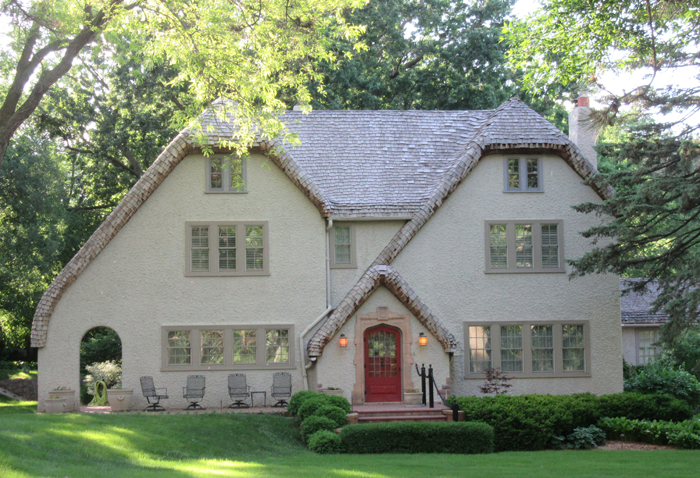
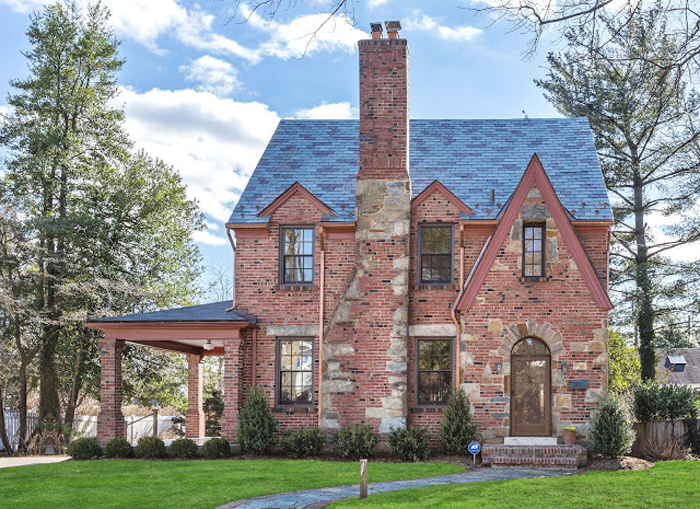
  • STEEPLY PITCHED ROOF: Usually in a gable configuration, the roofs generally display little to no overhang. Though rare, some roofs are covered in a false thatching, in an attempt to mimic the picturesque thatched roofs of rural England.

an example of a false thatched roof


  • DECORATIVE HALF-TIMBERING: This non-structural technique is employed on approximately half of all Tudor style homes. This again is a nod to medieval infilled timber framing. The infill material is most commonly stucco, though brick and stone can also be found.


  • TALL, NARROW WINDOWS: Traditionally constructed of either wood or metal, in the casement style. They are frequently seen in groupings of three or more, the most prominent grouping centered below the main gable. Leaded glass paneled windows, set in a diamond pattern, are also common.


  • MASSIVE CHIMNEYS: One of the most popular detail of the Tudor style is a large, elaborate chimney. They are commonly placed in prominent locations on either the front or side of the house.

image source


INTERIOR SPACES

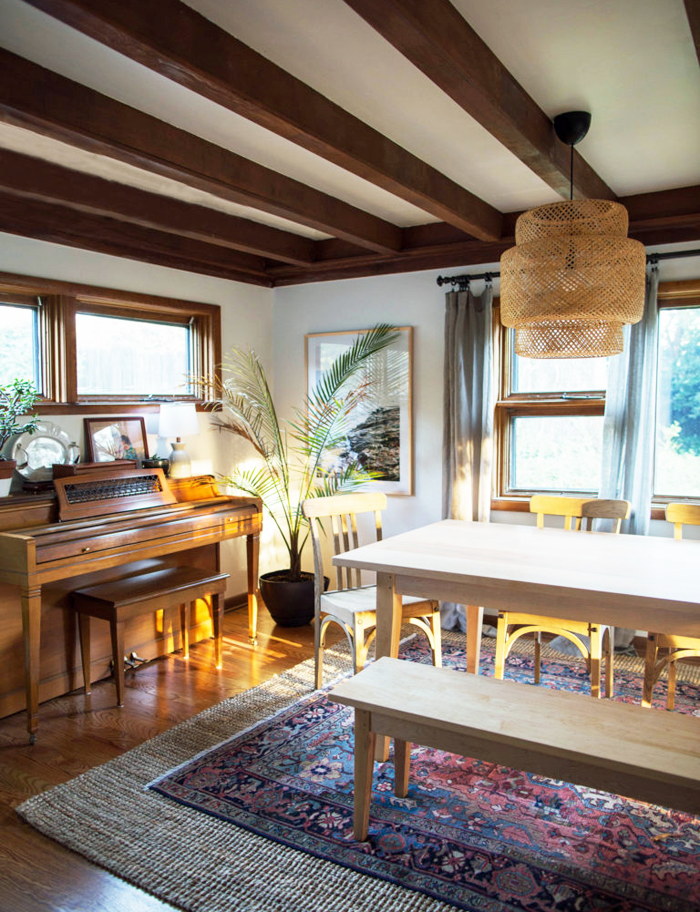
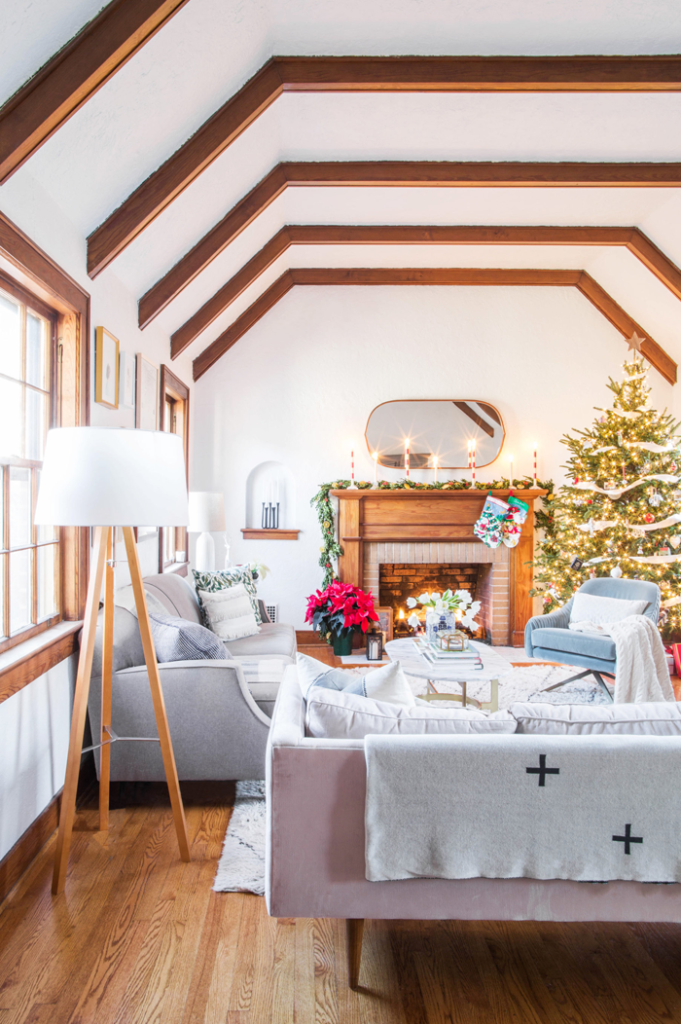
The interiors of Tudor homes are rich with detail and interest. The living rooms almost always feature a large focal fireplace. Heavy wood timber beams, similar to those used on the exterior detailing, commonly accent interior spaces. Arched openings between rooms is also a popular detail.

image source


The website traditionalhome.com has a wonderful slideshow featuring the Tudor style and how a home can be detailed- on both the interior and exterior – to reflect the historic nature of the home, while at the same time remaining relevant in the 21st century.


COLOR SCHEME

The exterior of classic Tudor homes are nearly all composed with a combination of four basic materials: stucco, brick, stone and wood half-timbering. Because of the use of these natural materials, the homes have a very ‘earthy’ exterior appearance. Most feature a darker base of stone or brick, and a lighter upper half with a cream or white stucco accented with dark wood beams.


NOTABLE TUDOR HOUSES


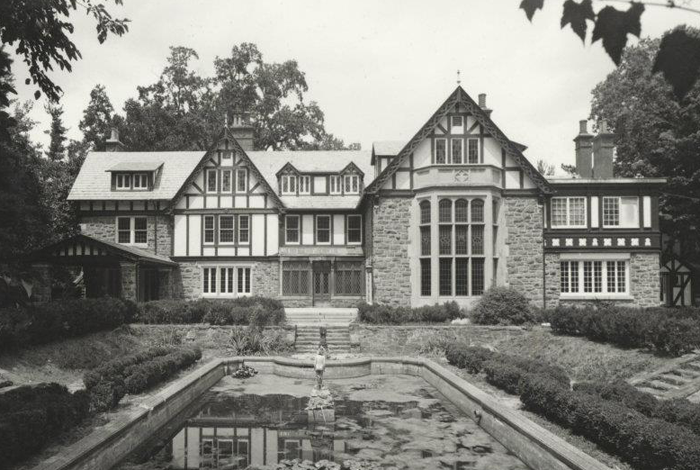
Ishpiming Mansion | Lindley Johnson & Leon Dessez | completed 1894


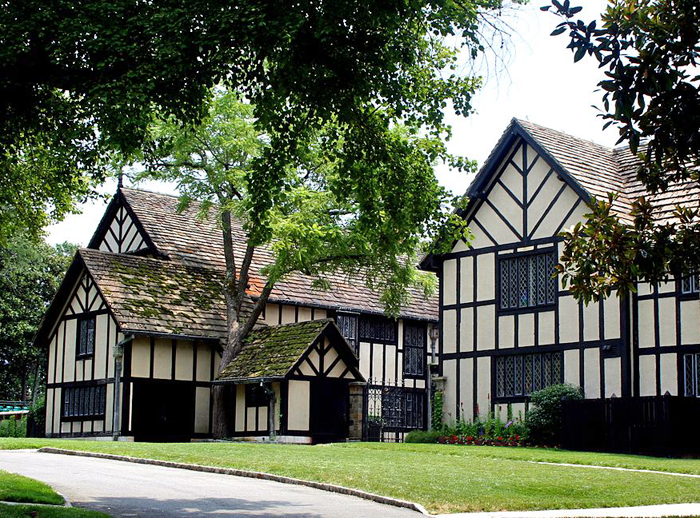
Agecroft Hall | Henry G. Morse | built in England in the late 1500’s and transported to America


INSPIRING TUDOR STYLE HOMES FROM AROUND THE WEB

These classic homes showcase the Tudor style well. Take a closer look!


The Happy Tudor


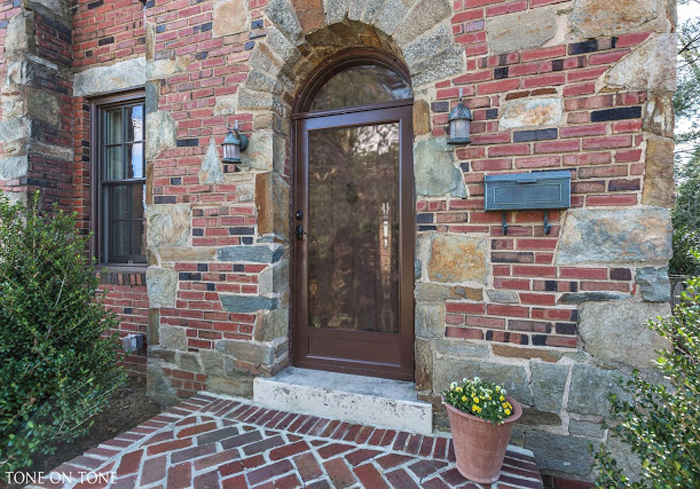
Tone on Tone


I hope you have enjoyed learning a bit more about the Tudor style. Curious which residential style will be featured next month? Stay tuned!

And be sure to check out the previously showcased styles here.


THE MAIN ELEMENTS OF THE AMERICAN FOURSQUARE HOME STYLE

image source

Welcome to another installment in the ELEMENTS OF HOME series. Each month I showcase a different residential style here on the blog. It is my hope that this information will not only teach you a little something about the various styles; but also equip you if are designing or searching for a new house – by allowing you to determine which style(s) suit your lifestyle and preferences the most.

Today I will be over-viewing the American Foursquare home – including the history of the style and what makes it unique.


HISTORY OF THE AMERICAN FOURSQUARE STYLE

The American Foursquare style first came into recognition in the late 1890’s and was popular until the 1920’s. It is considered a ‘true American style’ and though it begins during the era when elaborate Victorian homes were popular, it tends to resonate more with elements of the Craftsman/Prairie movement – with more simple detailing and solid craftsmanship.

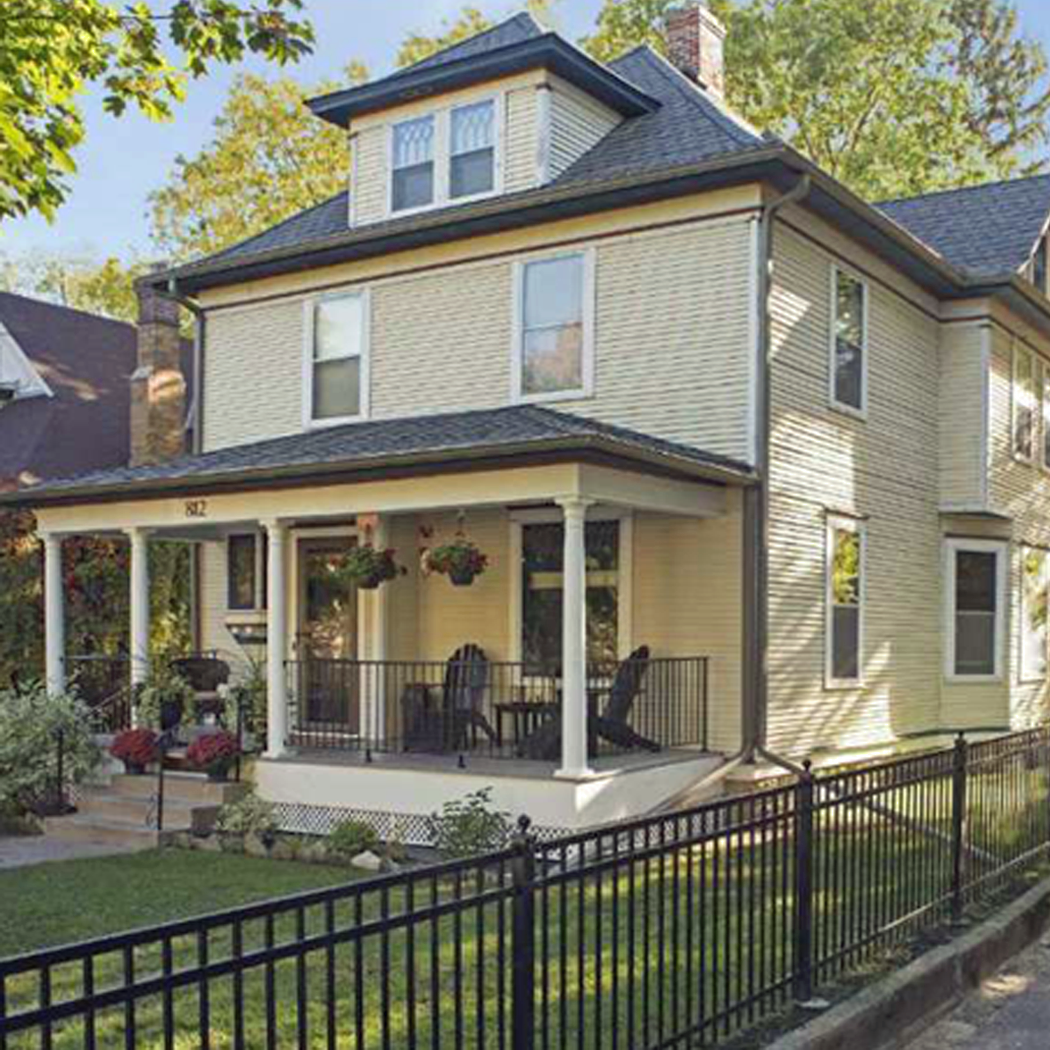
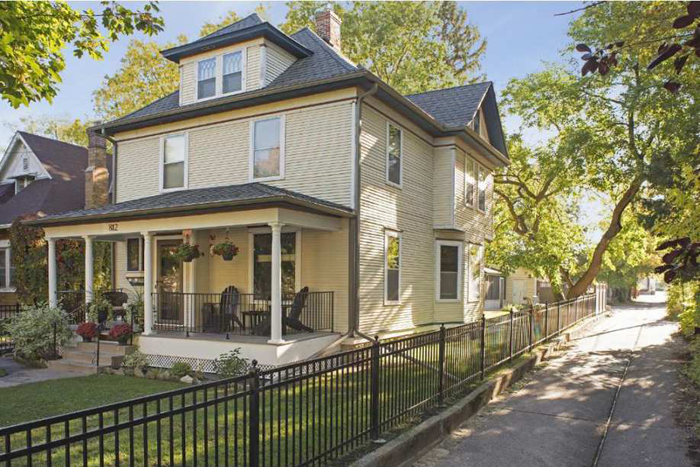
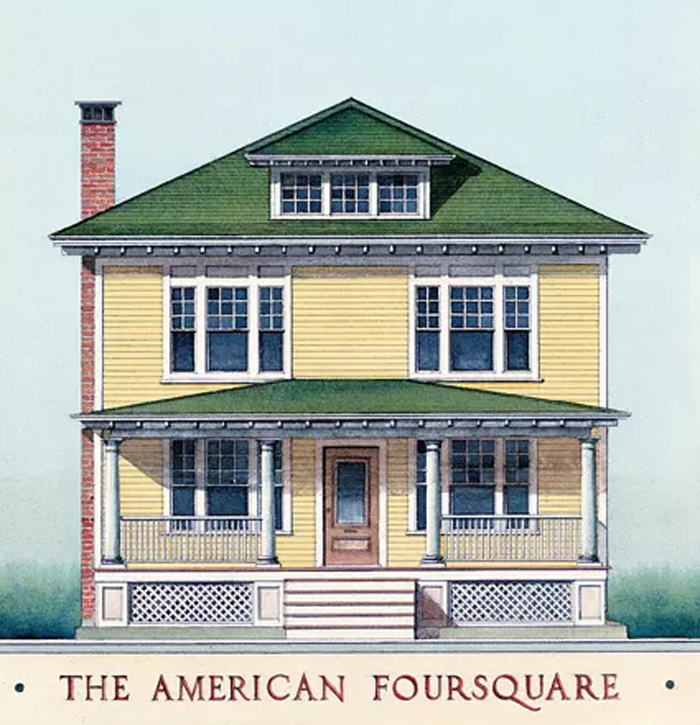
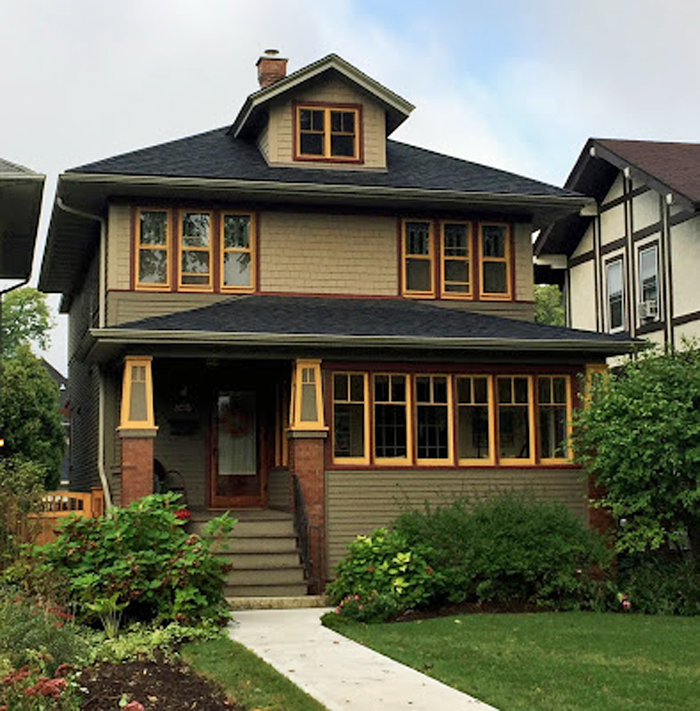
The essence of the design intent was to create the greatest amount of square footage possible on a standard city lot. This was achieved by utilizing a box like form, which typically included four rooms on the main level plus 4 rooms on a second story. A pyramidal roof, covering a half-story attic space, was a common feature, as was a large front porch.

Though ‘American Foursquare’ is the proper name for this house style, it is also widely known as ‘box house’ , ‘cube house’, or ‘Prairie cube.’

image source


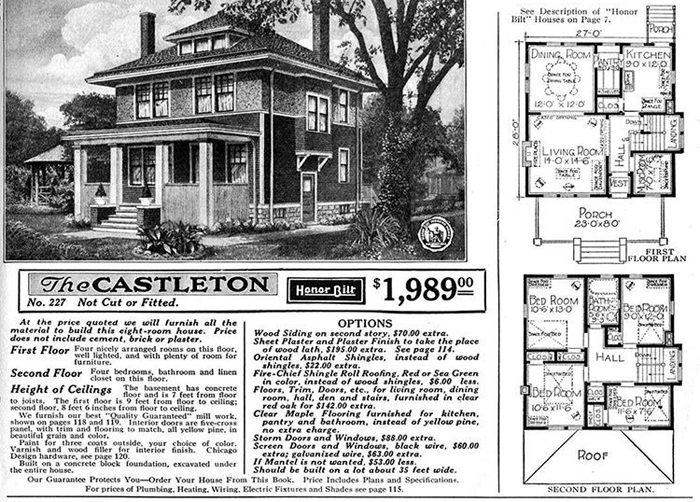
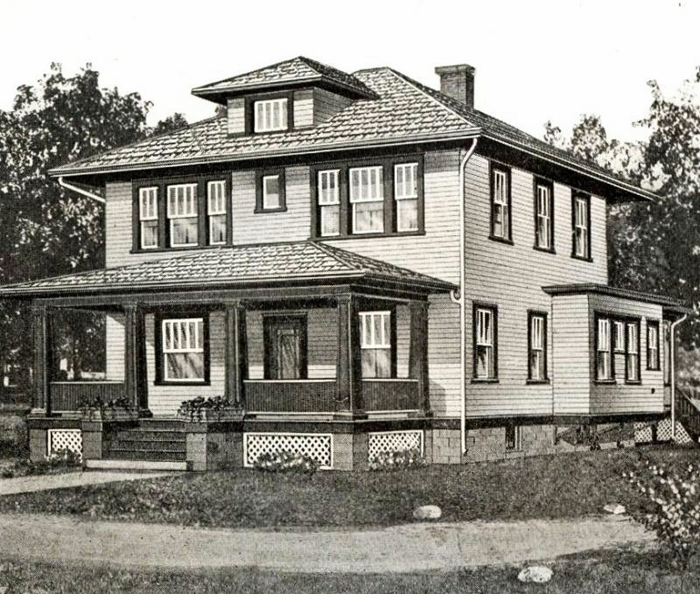
Because of the simplicity in lines and design, the American Foursquare was also a very popular kit home. In fact, at one point Sears & Roebuck offered some 15 different styles in their catalog. Check out the book  The Houses that Sears Built  for more information on kit houses. (this is an affiliate link)


MAIN ELEMENTS OF THE AMERICAN FOURSQUARE STYLE

LOCATION

Though popular throughout the country, the American Foursquare style is most notably concentrated in the Midwest. They were primarily settled in urban areas, on standard city lots, but were also popular in a country setting.

image source


SIZE

The American Foursquare home is considered to be of ‘medium’ size. Though the original built homes were finished only on the main and second level, most also featured a full unfinished basement and a half-story attic above – which, if finished, could almost double the livable square footage. The homes are typically set a few feet above grade, making them look tall and large.


The Castleton was one of the many popular kit houses that were offered in the American Foursquare style.


EXTERIOR TRADEMARKS

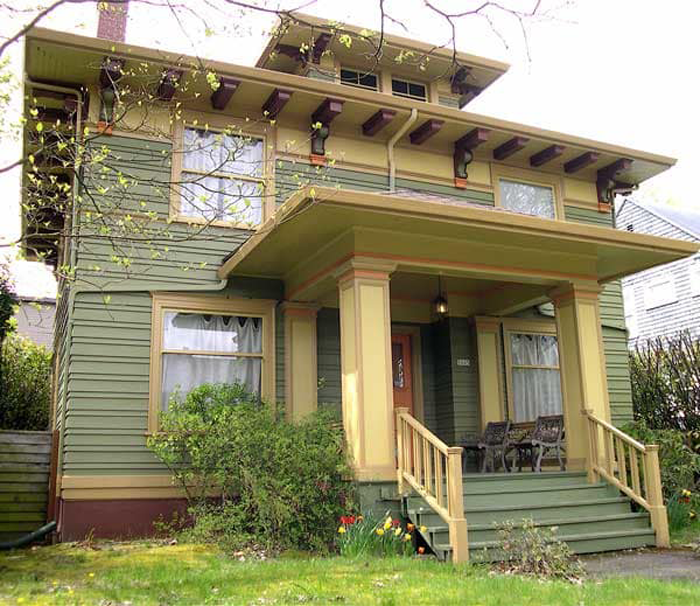
  • BOXY SHAPE: The square footprint/ floor plan of this house style is further accentuated by the flat appearance of the elevations. Large double hung windows, grouped together, is commonly noted.
  • LARGE FRONT PORCH: The front porch is a hallmark that nearly ever home of this style exhibits. It extends the entire face of the front facade, providing shade and an element of ornamentation.
  • PYRAMIDAL ROOF WITH DORMER: Though exceptions exist, most American Foursquare homes feature a pyramidal or hipped roof, with a dormer on the front facade – allowing light into the attic space.

image source


INTERIOR SPACES

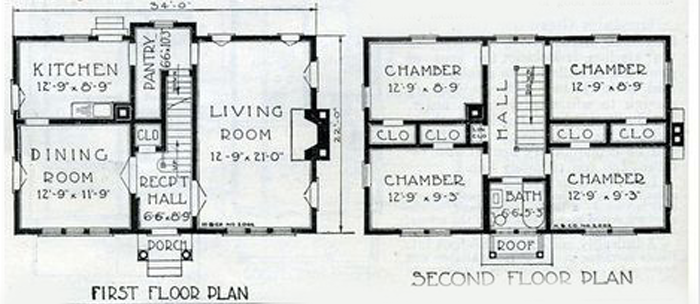
The first floor of a traditionally built American Foursquare home usually contains an entry foyer (often with the stairs to the second floor), a living room, dining room, and kitchen. The second floor in the larger models has four bedrooms and a bath.  Some smaller sized homes have 3 bedrooms and a bath. These interiors were so efficiently planned that minimal space was used as hallways or accessory spaces. Even today, the original Foursquare’s maintain the intent of their original floor plans – with perhaps a rear one story addition to accommodate a larger kitchen, and/or the finishing of the attic or basement space.

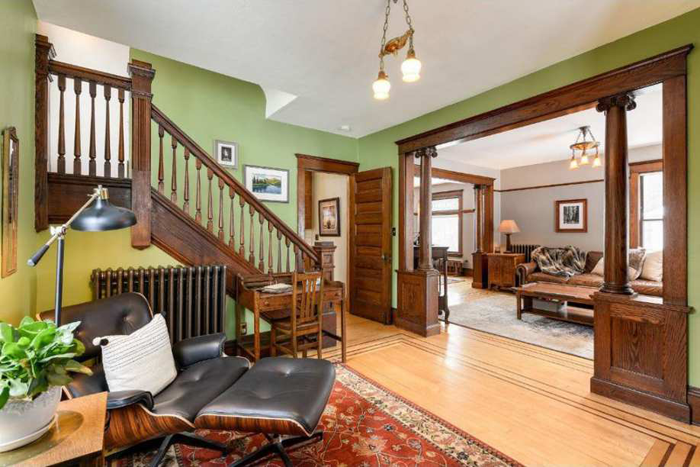
The interior styling is simple and handcrafted – with a focus on natural light, and finely crafted woodwork. Because every room in the home is essentially a ‘corner room’ – they receive light from two directions. Built-ins such as bookcases and window seats were popular enhancements; those building planbook or kit houses could order room-dividing colonnades and kitchen cabinets to accentuate the interior rooms.


image source


COLOR SCHEME

Because the popularity of the American Foursquare spanned many years, it is hard to summarize the paint colors most commonly used – as the taste shifted tremendously during this time frame. The one thing that is consistent throughout is the basic nature of coloring utilized. Foursquare’s are meant to be simple and classic, not showy. Where Queen Anne Victorian homes of built in the same timeframe were adorned with multiple colors to accentuate each and every detail, the American Foursquare featured a refined look – utilizing only two to three main colors. Generally, more muted, ‘earthy’ and grayed colors were the most popular.

A typical two color scheme included the body of the home is painted one color, with the trim and other details painted another, possibly contrasting shade. For a Foursquare home, the trim is most commonly lighter than the body paint choice. When the roof was composed of a colorful asphalt product, it was sometimes used as a cue for the color scheme – oftentimes homeowners would match the roof with their trim color, for example.

For a more comprehensive look at the colors of an American Foursquare home, consider reading the book Bungalow Colors by Robert Schweitzer. (this is an affiliate link)


image source


NOTABLE AMERICAN FOURSQUARE HOUSES

Hillrose | winner of the 1916 Sears Competition| popular kit house that costed $2,000 to build in 1916. A reproduction was $1 million to build in 2016!


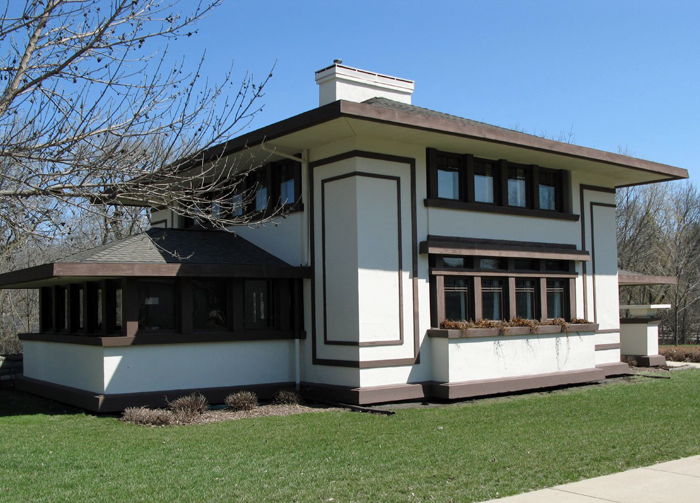
G.C. Stockman House| 1907 Ladies Home Journal article | Designed by Frank Lloyd Wright


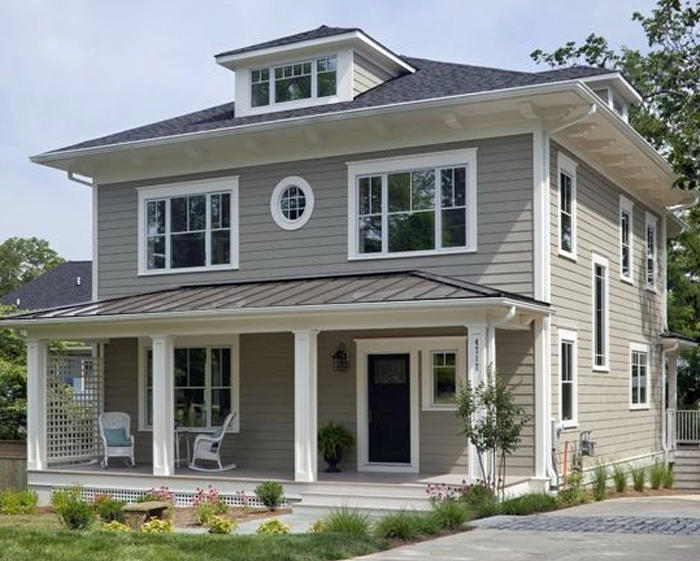
D.C Passive House | 2011 | New construction designed to look like a classic American Foursquare, with energy saving techniques


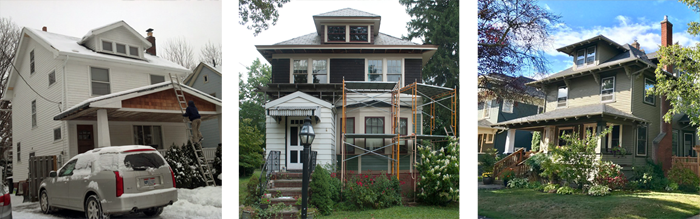
INSPIRING AMERICAN FOURSQUARE STYLE HOMES FROM AROUND THE WEB

These classic homes showcase the American Foursquare style well. Take a closer look!


Left to Right: 1 | 2 | 3

*** side note: My husband and I were fortunate enough to own and live in a 1904 American Foursquare, and absolutely loved it’s simplicity and practicality. They truly are classic homes.***

I hope you have enjoyed learning a bit more about the American Foursquare style. Curious which residential style will be featured next month? Stay tuned!

And be sure to check out the previously showcased styles here.


COLONIAL HOME STYLE ELEMENTS

Learn about the main elements of the Colonial home style in this article. The history of the Colonial Home is important to the fabric of America.


Colonial Home exterior

image source

Welcome to another installment in the ELEMENTS OF HOME series. Each month I showcase a different residential home style here on the blog.

It is my hope that this information teaches you a little something about each style. In addition, I believe that these guides can be useful if you are designing or searching for a new home.

Today I overview the Colonial home style. I include the history of the style and what makes it unique.


HISTORY OF THE COLONIAL HOME STYLE

The Colonial home style is traced back to England, where most of the U.S colonists emigrated from. A large portion of London burned in the year 1666. After the disaster, several architects influenced the city’s reconstruction.

British architects Christopher Wren, James Gibbs and Robert Adam were at the forefront. Their combined architecture was based partly on Roman and Greek ruins. Therefore, influences such as geometric proportions and large columns are seen in Colonial home design.


Colonial Home Style

image source

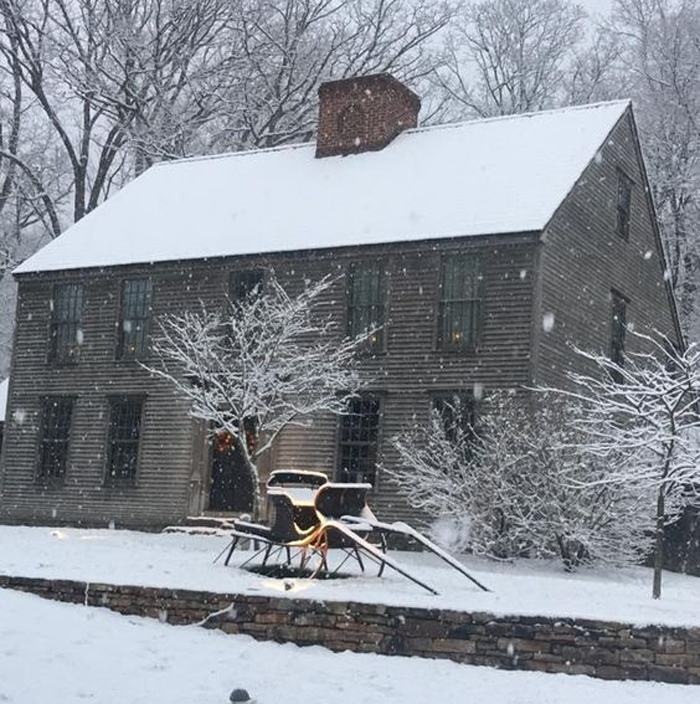
Most of the original Colonial homes built in the early years have been remodeled. Others are used as historic examples, as museums for example.

It is far more likely that the Colonial homes you see today are Colonial Revival. In other words, they were made to resemble their ancestral counterparts.

Between the late 1800’s and 1950, there was an increased interest in the architecture of early colonists. Because of this, many Colonial Revival homes were built – using more modern materials and amenities.

In this article, I discuss the elements of both the original Colonial homes and their more newly constructed counterparts.

White Colonial Home with black door

image source

LOCATION OF COLONIAL HOMES

There are examples of the Colonial style dotted throughout the country.  Slight variations were developed to withstand environmental elements. These variations were each given their own names.

Most Colonial homes are concentrated in two main regions, the Northeast and the South.  For the purposes of this installment, I focus on the New England Colonial style found in the Northeast region.

Historic Colonial Home

image source


SIZE OF A COLONIAL HOME

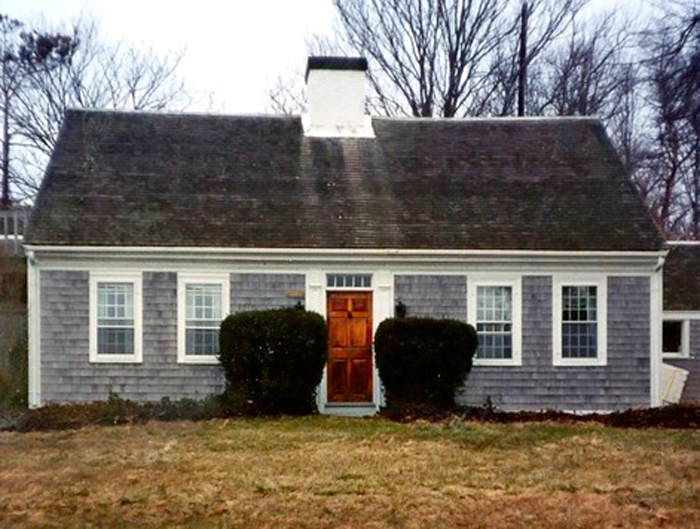
The original New England Colonial homes were built primarily during the years 1630 to 1700. They were modest in size and began as one story structures.

As more family members immigrated to the area, a second story was typically added. The two rooms on the main level (kitchen and living space) were then complemented by two upstairs bedrooms. A central stairway and large fireplace divide the rooms on each level.

One story Colonial home

image source

Although the size of the Colonial home increased as construction techniques improved, they continued to retain a compact rectangular form.

Colonial Home floor plans

image source

EXTERIOR TRADEMARKS OF A COLONIAL HOME

TWO STORY DESIGN: Typically, the living spaces are located on the main level and the second level is reserved for bedrooms.

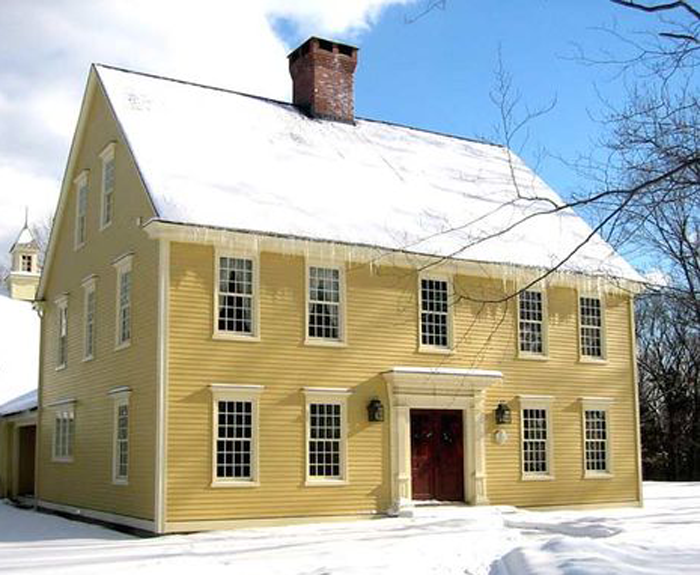
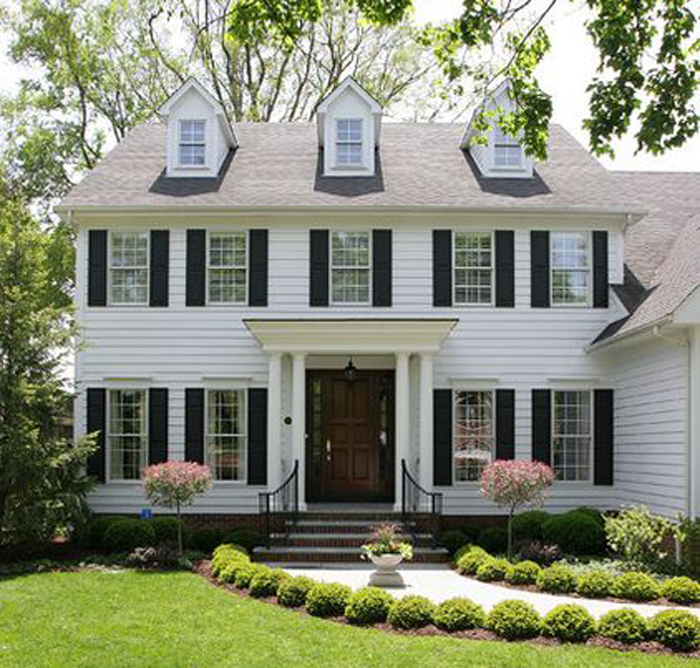
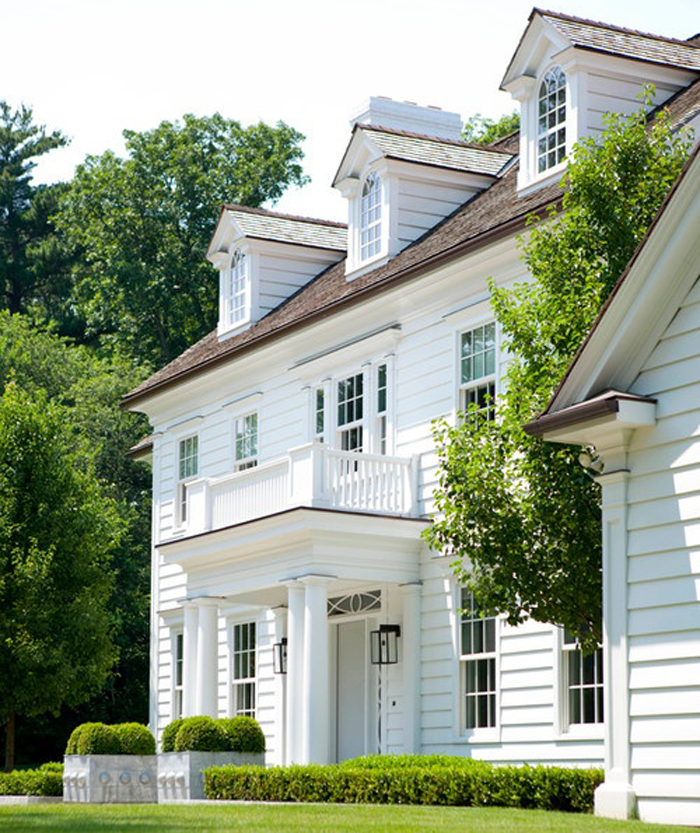
Colonial homes feature steeply pitched roofs. The pitch is essential for shedding heavy snowfall. Dormers are  included in the more contemporary Colonial Revival homes.

Colonial Home with dormers

image source

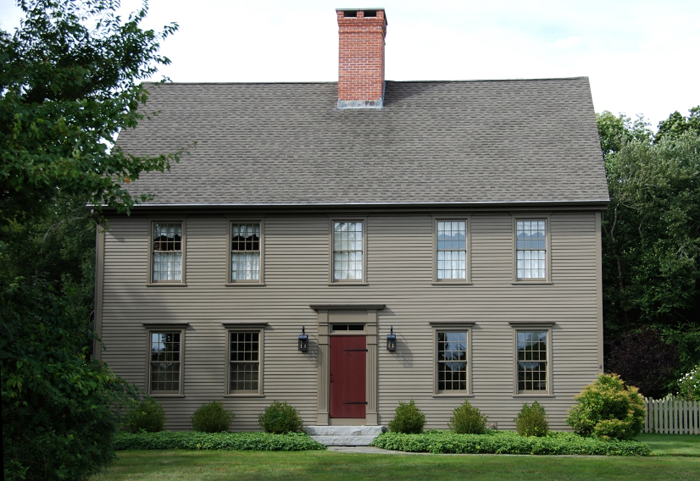
SYMMETRY: The facades of Colonial homes are almost exclusively symmetrical in nature. For example, if you were to draw a line down the center of the house, the left side would be a mirror image of the right side.

Typically the door of a Colonial Home is located in the center. Two windows are evenly placed on either side of the door on the main level.

The second level generally features five windows. Each window is positioned above it’s main floor counterpart. A central window is immediately above the door. In addition, the fireplace is also commonly found in the center, dividing line, of the house.

Colonial Home with simple front door

image source


WOOD CLAPBOARD SIDING: Wattle and daub cladding was the common practice in England at the time. The American colonists made use of readily available local timber. This meant that their homes were typically clad in white pine instead.

The clapboards offer the functional aspect of shedding rainwater.

Colonial Home front porch

image source


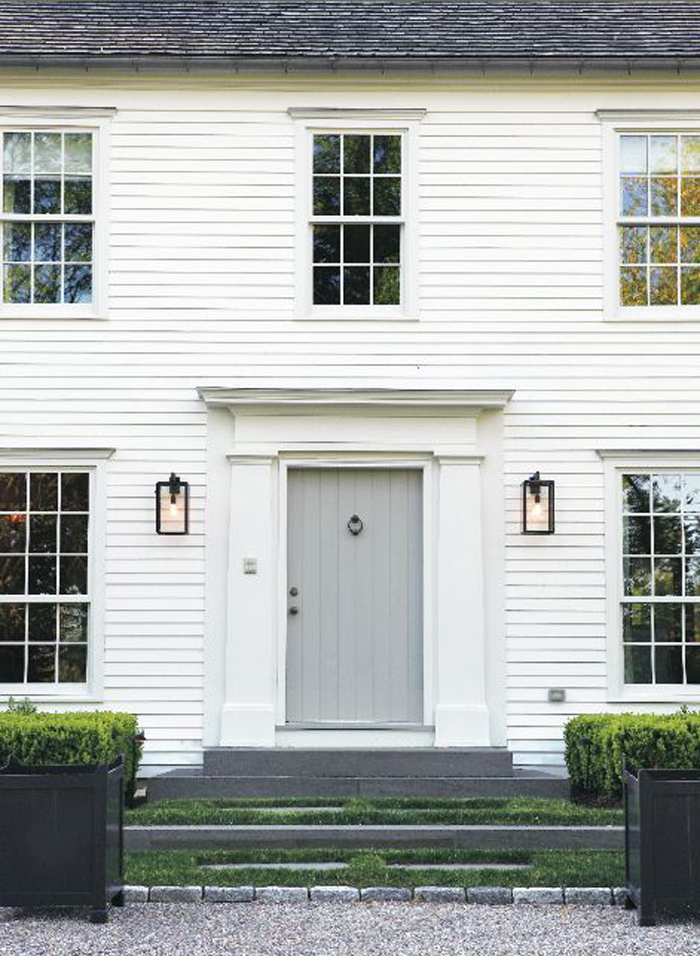
CENTRAL ENTRY DOOR: Colonial homes almost always feature a central entrance point.

The door is generally flanked by a window on either side and/or a transom window above. The original Colonial style homes did not include a porch or portico. In contrast, both were commonly added for Colonial Revival homes.

Colonial Home front door

image source


INTERIOR SPACES OF A COLONIAL HOME

The interiors of a traditional Colonial home had small windows and low ceiling heights. Because of this, most of the interiors were rather dark.

In contrast, Colonial Revival homes many times feature bay windows or a larger window groups to allow more natural light.

Colonial Home living room interior

image source


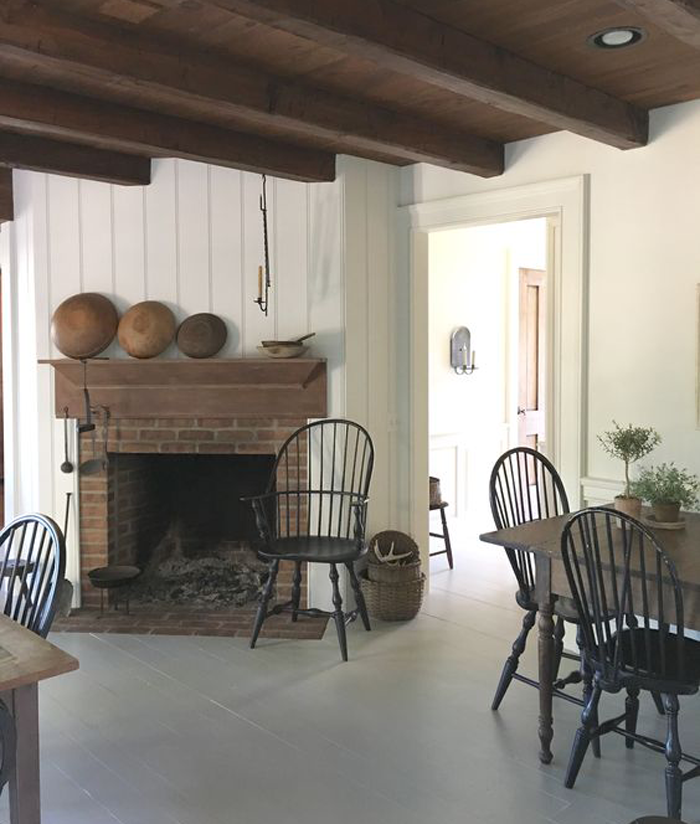
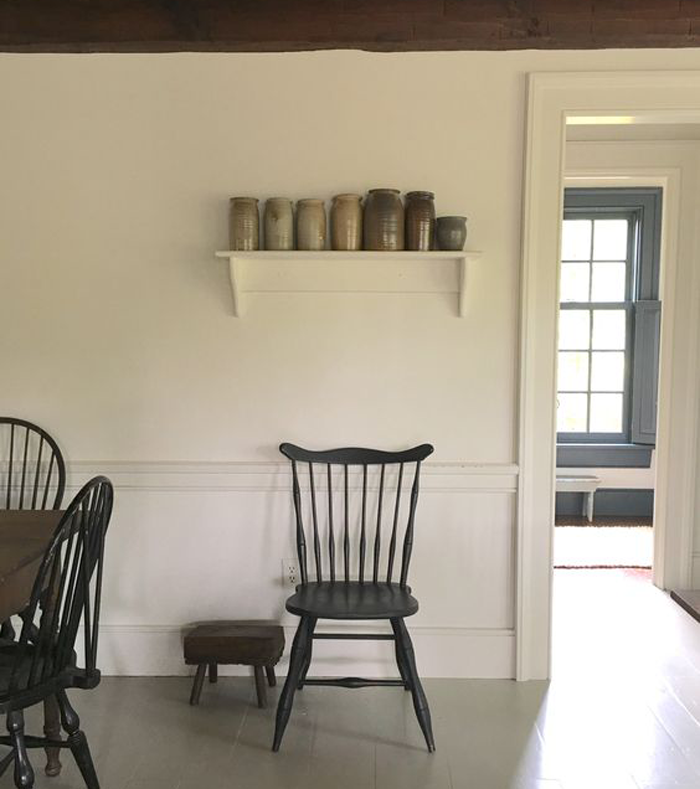
Colonial homes are often filled with simple furnishings in muted earthy colors. The Windsor chair is a common symbol of this home style. They can be found in more modernly renovated homes as well.

Colonial home dining room with fireplace

image source

COLOR SCHEMES FOR COLONIAL HOMES

Paint colors essential to early Americans were mostly those derived from iron oxide. Colors such as Yellow Ochre, Red Ochre, Raw Sienna, Black, Burnt Umber, and Terre Verde were common.

These earthy tones were somewhat bold, though faded rather quickly.

Colonial Home paint colors

image source


Colonial home entry foyer

image source


Colonial Revival exteriors are very commonly clothed in white. This crisp look is accented by contrasting black on many occasions.

Simple white colonial home style

image source


COMMON FEATURES OF A COLONIAL HOME

Of course, no two houses are exactly alike.  But there are design elements that are seen again and again in Colonial homes, such as these statement features:


LARGE FIREPLACES & CHIMNEYS: The most efficient way to heat the homes during the cold Northeastern winters was with a large, central fireplace.

In addition, fireplaces were also used for cooking purposes. These fireplaces were very important in the early days and remain useful and fashionable in Colonial homes of a later era.

Colonial home fireplace

image source


Colonial home exterior

image source


SMALL PANED GLASS WINDOWS: Glass was expensive and difficult to find. Because of this, and the primitive glass-working techniques, the glass was set in smaller panes.

As a result, windows were later flanked with operable shutters, which would be closed when bad weather arose.

Newly constructed Colonials today will many times include stationary shutters, which serve an exclusive decorative purpose.

Colonial home divided light windows

image source


INTERIOR DECOR FOR COLONIAL HOMES

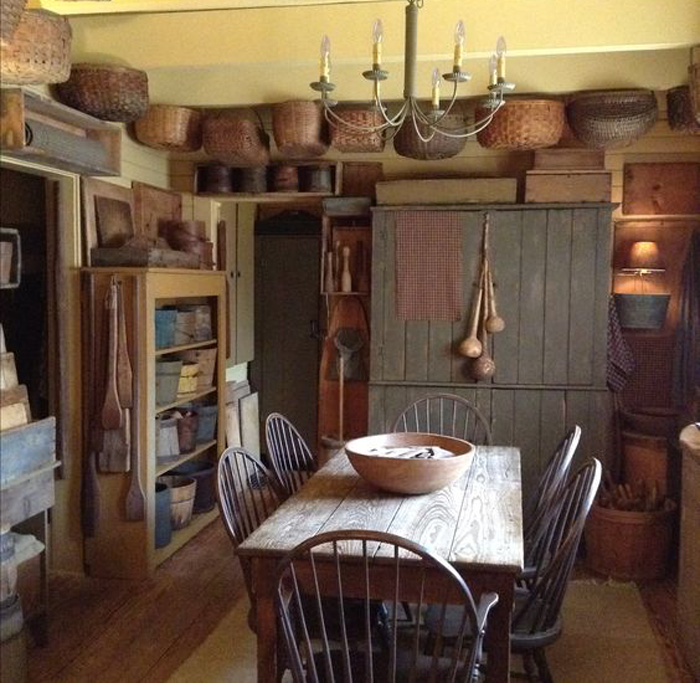
The early colonists believed in a simple lifestyle. Because of this, the pieces they did include inside their homes had a purpose for everyday living. They added little to nor adorning decorations to their interiors.

Colonial home interior

image source


Traditional colonial home dining room

image source


Traditional furnishings work well in Colonial Revival homes, as do items that are simple in nature. Interior wainscot paneling is used as a simple decorating technique, for example.

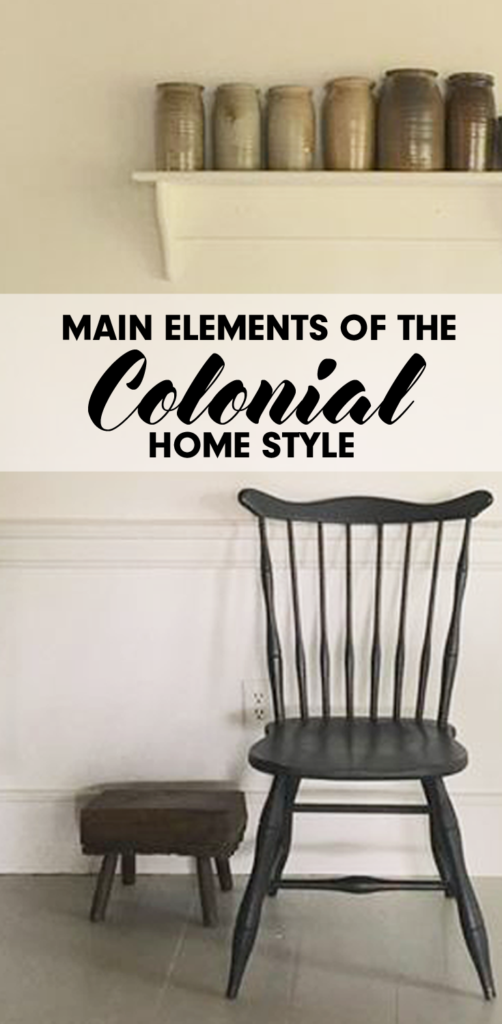
Colonial style chair

image source


FAMOUS COLONIAL HOMES

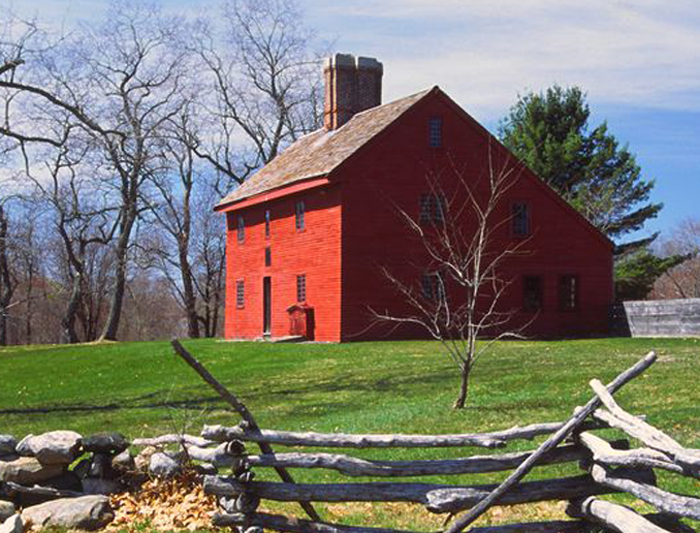
red Colonial home

The Home of Rebecca Nurse | 1678 | Salem Witch-trial accused


Colonial Home with central fireplace

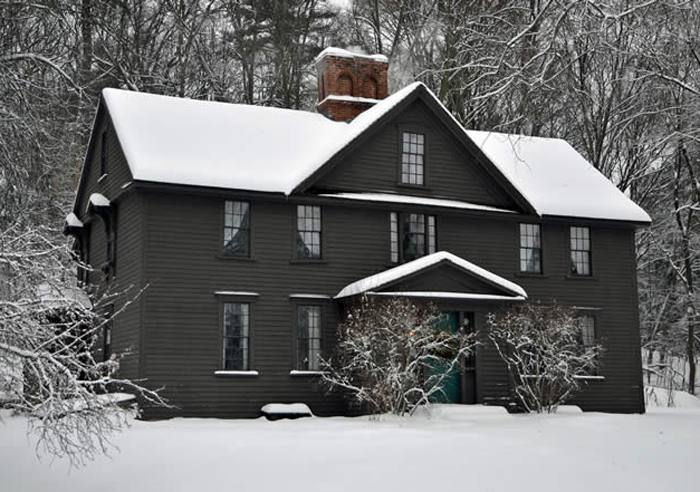
Orchard House | 1690 | Home of ‘Little Women’ author Louisa May Alcott


Original Colonial home

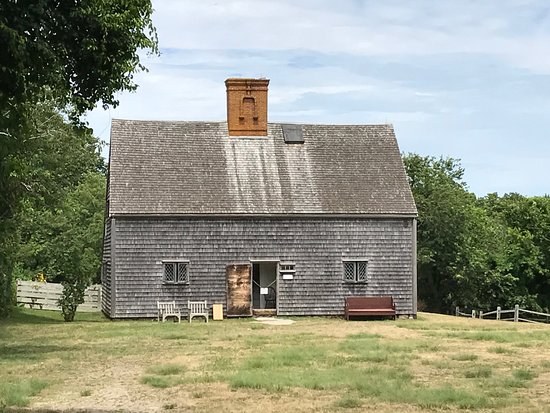
Jethro Coffin House | 1686 | Oldest surviving house on Nantucket


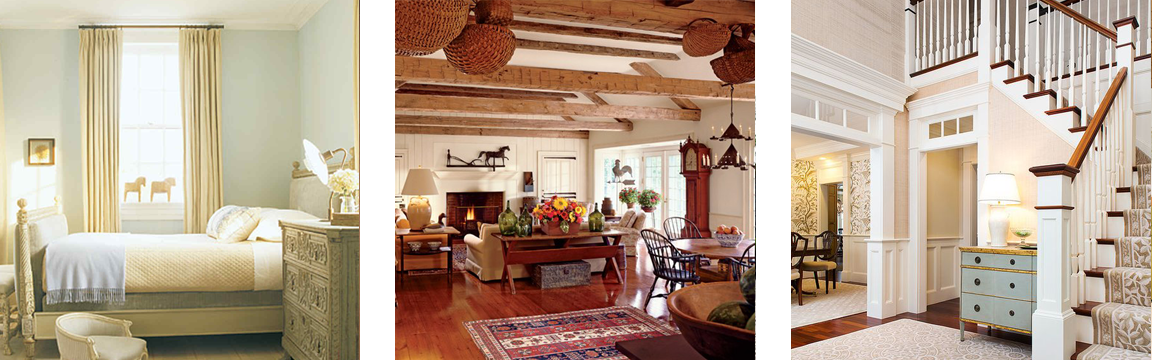
INSPIRING COLONIAL HOMES FROM AROUND THE WEB

These classic homes showcase the Colonial home style well. Take a closer look!

Colonial Home Interiors

Left to Right: 12 | 3

I hope you have enjoyed learning a bit more about the Colonial home style. If you are curious which residential style will be featured next month, stay tuned!

And be sure to check out the previously showcased styles here.


PIN THIS FOR LATER

Colonial Home Style

THE MAIN ELEMENTS OF THE MID CENTURY MODERN HOME STYLE

Welcome to another installment in the ELEMENTS OF HOME series. Each month I showcase a different residential style here on the blog. It is my hope that this information will not only teach you a little something about the various styles; but also equip you if are designing or searching for a new house – by allowing you to determine which style(s) suit your lifestyle and preferences the most.

Today I will be over-viewing the Mid-Century Modern home – including the history of the style and what makes it unique.


HISTORY OF THE MID-CENTURY MODERN STYLE

This style received it’s name partly because of the time period in which the homes were being built. Mid-Century. Mid 20th century to be exact. There is a bit of discrepancy on which years are included; But generally speaking, the Mid-Century Modern style comprises houses built from the years 1935 to 1965.

This was a tumultuous time in history. In the mid 1930’s, the threat of the second World War was looming and various architects, including the pioneers of the Bauhaus Movement – Walter Gropius, Marcel Breuer, and later Meis van der Rohe, fled Germany for America. These men were aiming to unite art and industrial design.

At the same time, American designers were highly influenced by the simplicity and integration with nature that was prevalent in Brazilian and Scandinavian architecture.

image source

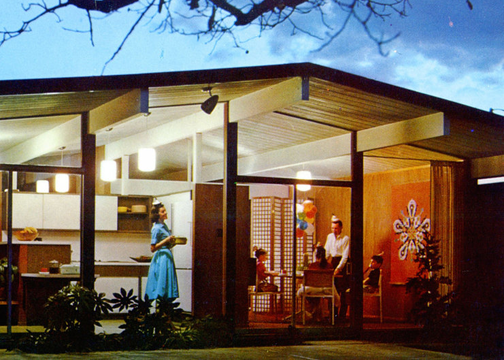
At the end of the war, as Veterans were returning to America, the need for affordable and quickly constructed houses arouse. These soldiers were looking to settle down and start their families. While architects designed stunning homes in the Mid-Century Modern style, it was real estate developer Joseph Eichler who is credited with bringing it to the masses – through his tract home development.

image source

MAIN ELEMENTS OF THE MID-CENTURY MODERN STYLE

LOCATION

Typically, these homes were constructed in suburban settings. The first Mid-Century Modern homes started to take root on the West Coast. They became popular in California and then on the East coast. Slowly, the style began to spread sporadically throughout the country.

image source

SIZE

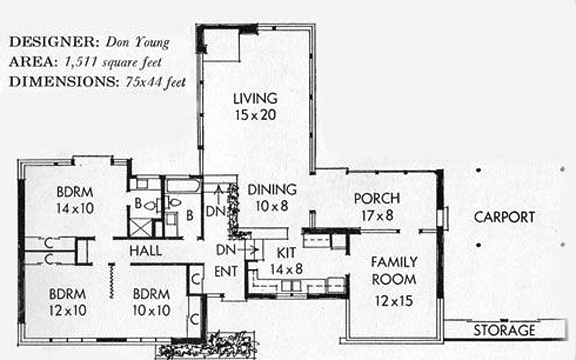
During the Baby Boom, Americans were looking for spacious, open homes that they could entertain in. The Mid-Century style lent itself well to the desires of suburban families. Homes were designed to be between 1,500 and 2,500 square feet – only slightly smaller than 2017’s home average square footage (2,687).

image source

EXTERIOR TRADEMARKS

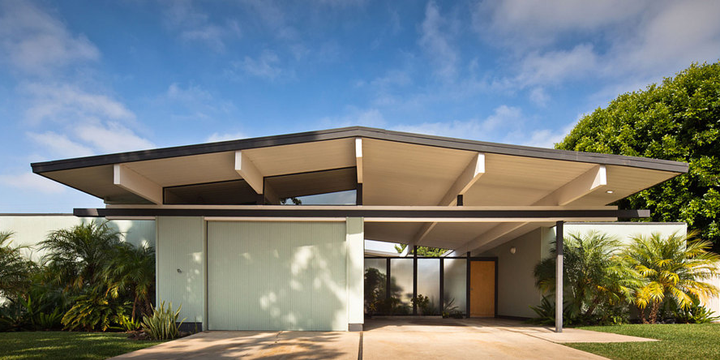
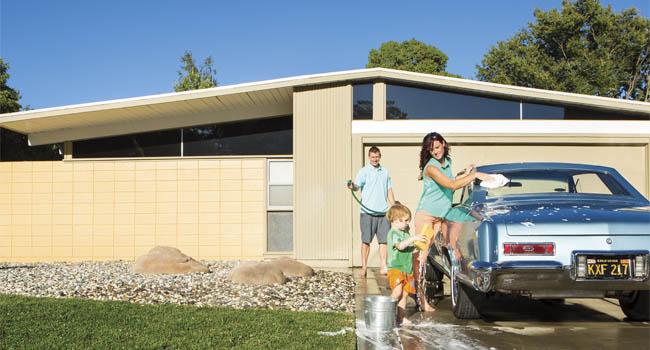
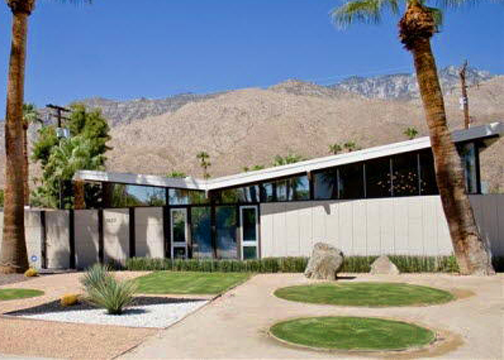
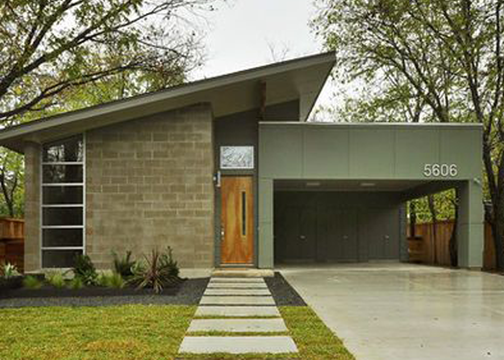
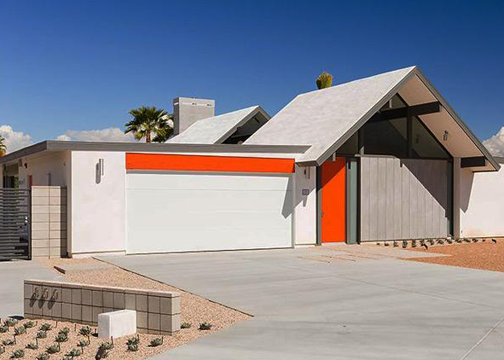
  • VARYING ROOF LINES: Creative roofs were popular at mid-century. Among those utilized most frequently were flat roofs with deep overhangs, saw tooth roofs, and the most beloved ‘butterfly roof’ – which got it’s name from the shape the gables take on as they connect at midpoint and extend upward.

image source

image source

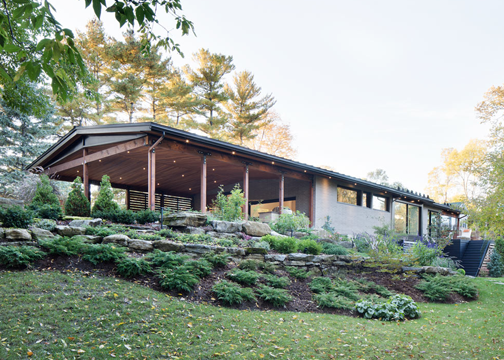
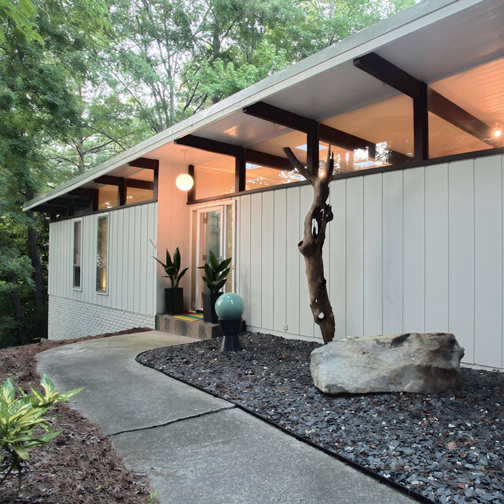
  • ONE LEVEL DESIGN: Generally, Mid-Century Modern homes are one story structures.

image source

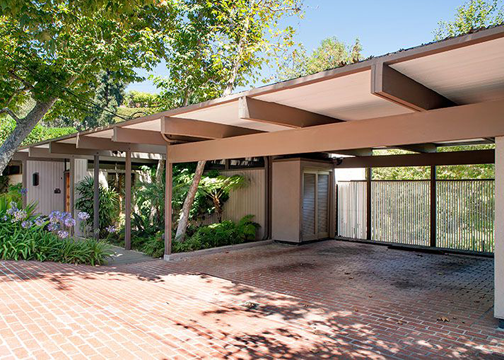
  • SPACE FOR AUTOS: This era of design was the first to begin offering shelter for automobiles. Many homes include attached garages or carports.

image source


image source

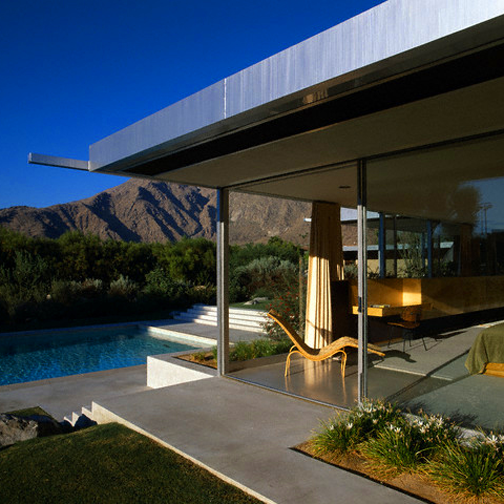
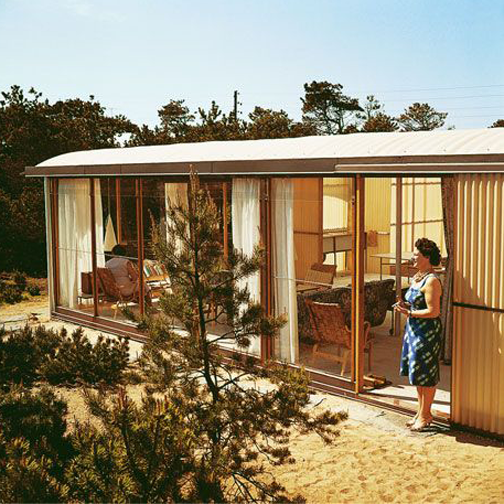
  • CONNECTION: Connection to nature was of utmost importance to the designers of the Mid-Century Modern style. As such, these homes feature a wonderful collection of indoor/outdoor spaces – such as large covered patios, enclosed courtyards, and entire walls that open up to allow access to the yard.

image source


INTERIOR SPACES

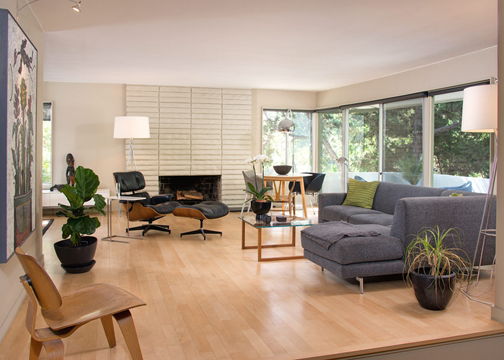
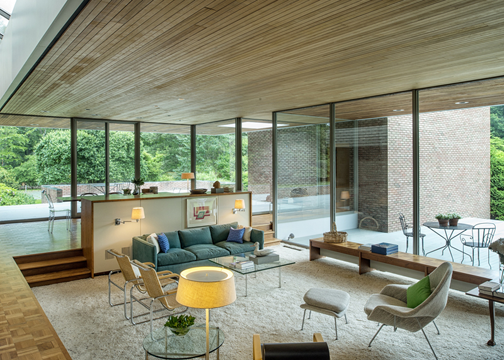
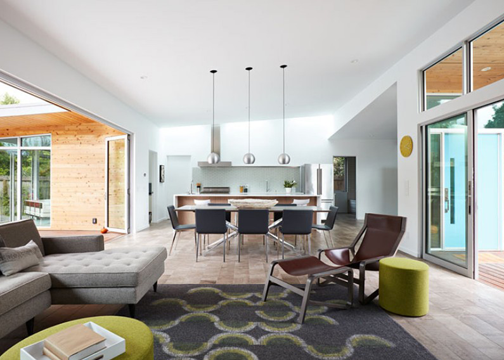
Whereas homes built before this time period were composed of smaller compartmentalized rooms, the Mid-Century modern home employed the ‘open floor plan’ approach. This was accomplished, for the first time, partly because of improved construction techniques. Heavy/solid bearing walls were replaced by posts and beams.

Typically these open spaces had a fireplace focal point.

image source

These homes were also the first to employ bi-level floor plans – including sunken living rooms, for example.

image source

COLOR SCHEME

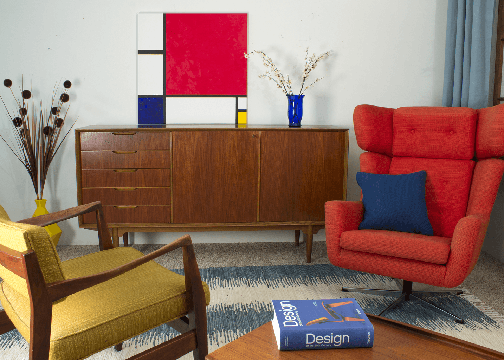
The colors used in the Mid-Century Modern style are warm and earthy. The tones are derived from the materials used, such as stone grey and rich auburn wood. There is also a generous use of graphic black and white that accompanies this style.

Other popular colors during the period when these homes were constructed include muted jewel tones – turquoise, emerald and mustard yellow, for example.

image source

image source

COMMON FEATURES

Of course, no two houses are exactly alike; But there are design elements that are seen again and again in Mid-Century Modern styled homes – such as these statement features:

  • PRIVATE FRONT FACADES: The entrance to a Mid-Century home is generally understated and private. These homes are typically oriented so that the backyard entertaining areas receive the mid-day sun.

image source

  • CLEAN LINES: One of the primary goals of this design style is honesty of materials – where the sole ornamentation comes from the materials themselves. The creative and streamlined use of stone, block, glass and wood is prevalent.

image source


image source


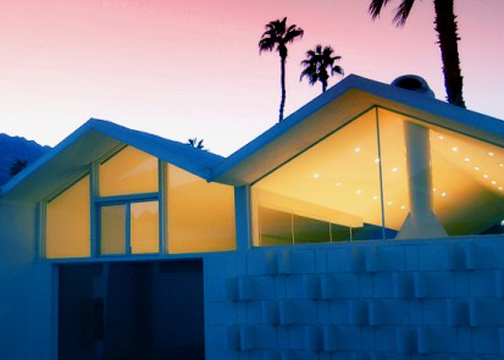
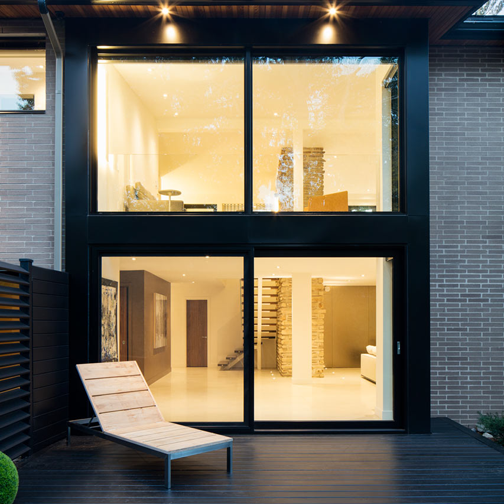
  • FLOOR TO CEILING PANES OF GLASS: Continuing with the desire to create a connection with the outdoors, many Mid-Century Modern homes employ large panes of glass – offering stunning views and an abundance of daylight.

image source


INTERIOR DECOR

Generally, the Mid-Century Modern decorating style could be considered sparse. The simple lines of the architecture are mirrored in the furniture pieces; and the furniture market during the Mid-Century era had a life all it’s own. The new materials of the day including plastics, resins, composites, laminate and fiberglass opened up an entire new range of possibilities.

image source

The furnishings best suited in these homes are clean and sleek, with minimal ornamentation.

Walls, ceilings and floors also showcase simple materials. The juxtaposition of different, and sometimes contrasting, materials is common.


image source

image source

FAMOUS MID-CENTURY MODERN HOUSES

You may already be familiar with these stunning examples of residential Mid-Century Architecture. They are classic,  and adored by many.

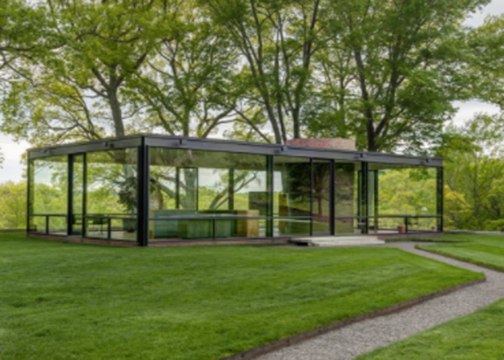
The Philip Johnson Glass House | Architect: Mies van der Rohe | 1949


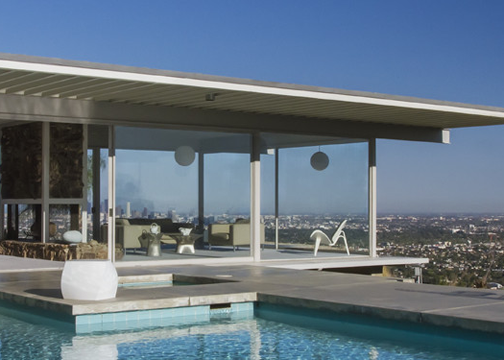
The Stahl House |Architect: Pierre Koenig | 1960


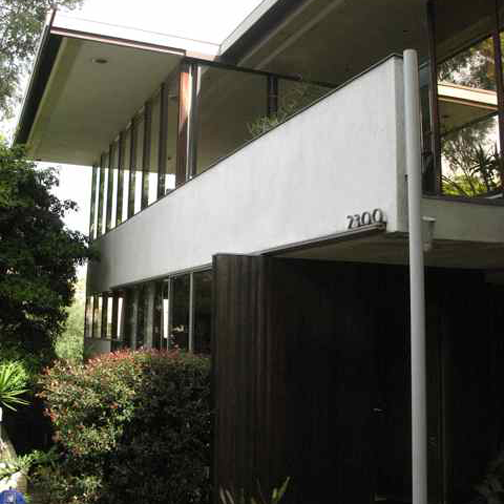
Neutra VDL Studio + Residence | Architect: Richard Neutra|1932/ rebuilt 1964


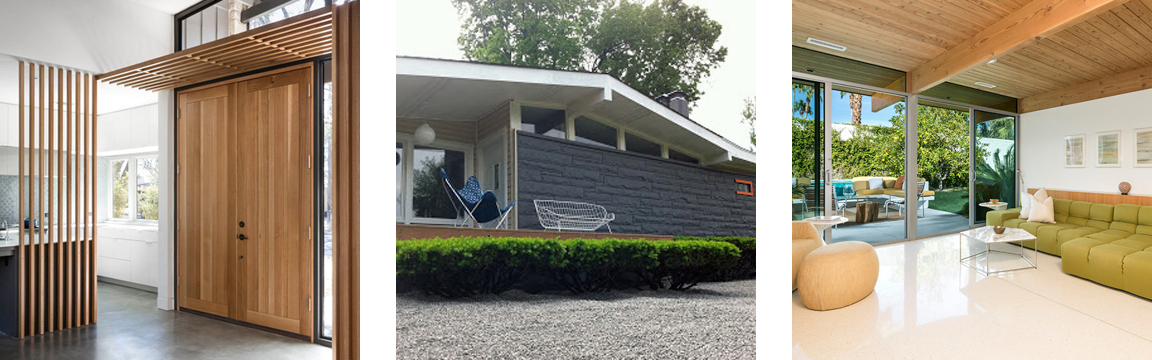
INSPIRING MID-CENTURY MODERN STYLE HOMES FROM AROUND THE WEB

These homes showcase the Mid-Century Modern style well. Take a closer look!

Left to Right: 12 | 3

I hope you enjoyed learning a bit more about the Mid-Century Modern style. Curious which residential style will be featured next month? Stay tuned!

And be sure to check out the previously showcased styles here.

COTTAGE HOME STYLE ELEMENTS

Welcome to the first installment of the ELEMENTS OF HOME series. Each month I plan to showcase a different residential style here on the blog. It is my hope that by laying out the basics of each home style, you will be able to determine which suits your lifestyle and preferences the most. When designing a new house, or searching for one to buy, this information can come in very handy!

I am going to start by over viewing the main elements of the cottage style home. Our own home, as you might have guessed by the name of this blog, is being designed with the cottage style in mind.

image source

Be prepared for plenty of cottage style home inspiration images!

HISTORY OF THE COTTAGE STYLE

The term ‘cottage’ comes from England architecture. It referred to a home with ground floor living spaces and sleeping spaces in the upper level, nestled into the roof eaves. In the Middle Ages, cottages housed agricultural workers and their friends and families. The term ‘cottage’ denoted the dwelling of a cotter (a worker of the land). The cottage house was modest, with a typical arrangement of two rooms on the main level and two rooms on the upper level. Typically these cottages were situated on a small plot of land, between 2 and 5 acres.

Today, when people think of cottages they have a vision of these small houses of days gone by. The term is used in many cultures to refer to a vacation property, usually situated near water or on a secluded and peaceful piece of land.


MAIN ELEMENTS OF THE COTTAGE STYLE HOME

LOCATION

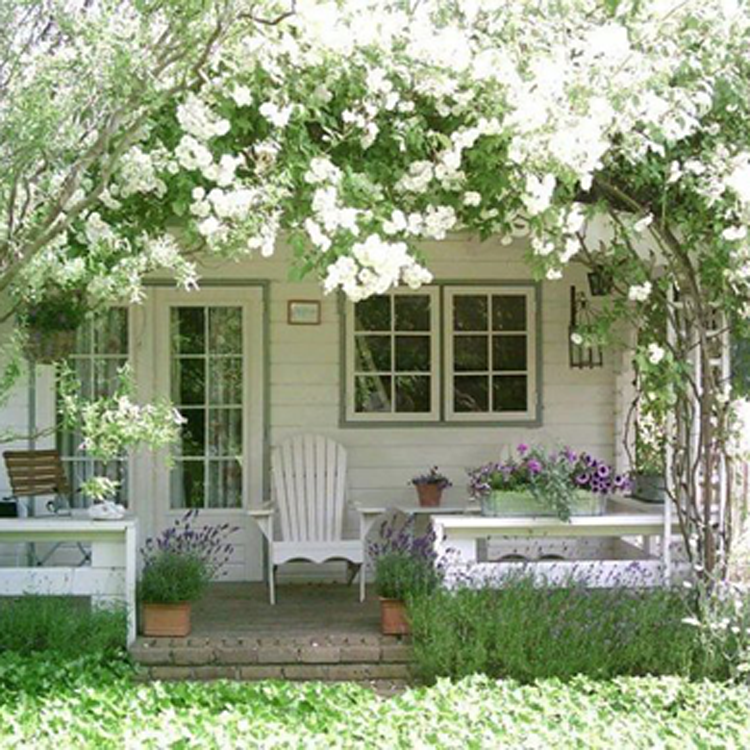
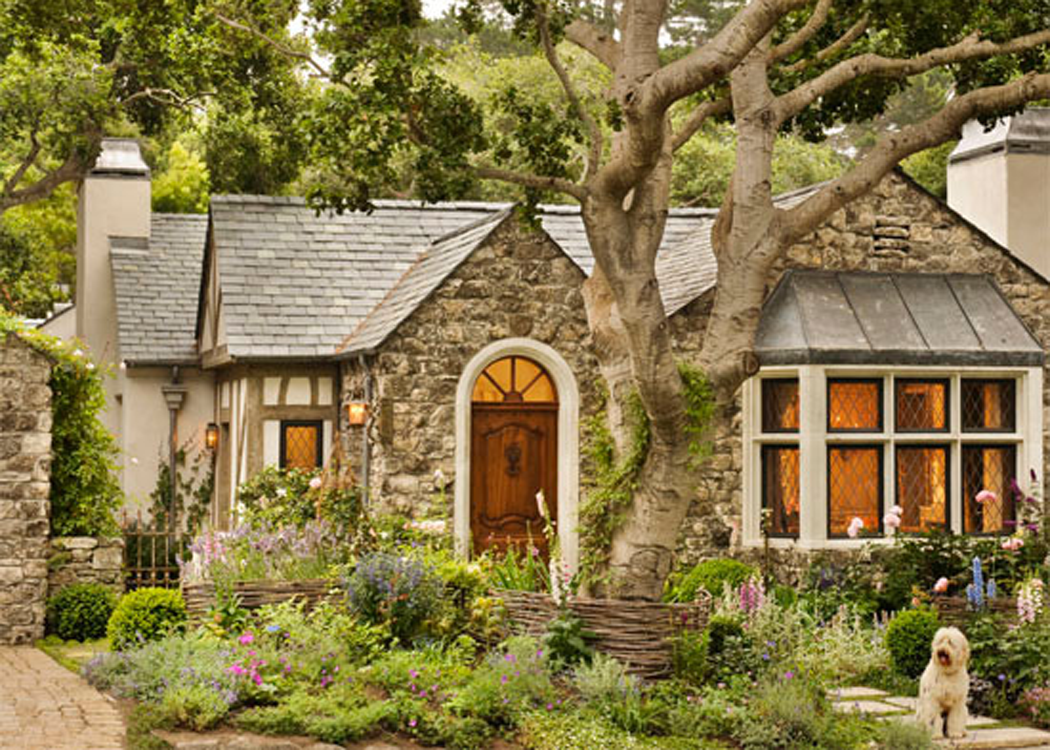
Generally a cottage home is situated in a rural or natural setting, perhaps on a small plot of land near water or in the country. Though less common, there are also urban cottages – which, at the very least, feature a small garden or ornate flower beds.


image source


image source

Cottages boast a wonderful connection to nature; and most that are built (or remodeled) today are careful to respect the flow from indoors to outdoors. They include a variety of indoor/outdoor rooms and spaces – such as porches, patios or wood clearings, allowing the home’s owners to enjoy the serenity of nature.


image source


image source

SIZE

Most cottages are modest in scale. They are built to the needs of the people who will live in them, and not as a way to showcase wealth or prestige. Each square inch in a cottage is useful and serves a purpose.


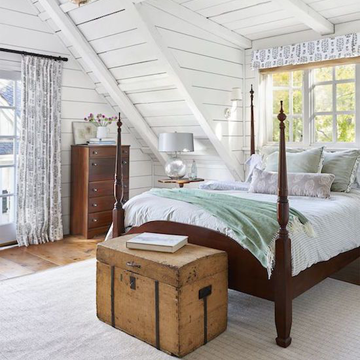
Generally a cottage will be either one story or a story and a half. One and one half storied versions have upper levels that feature sloping ceilings and either short walls (4′ high or less) or no walls at all – where the ceiling slope extends to the floor.


image source

EXTERIOR TRADEMARKS

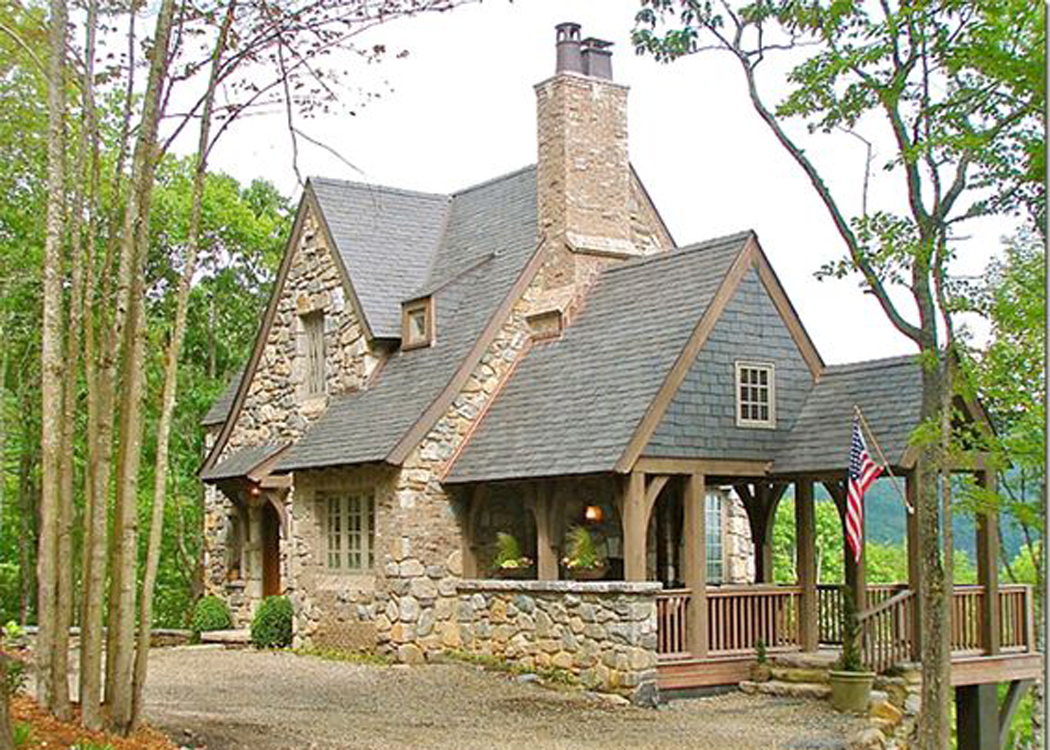
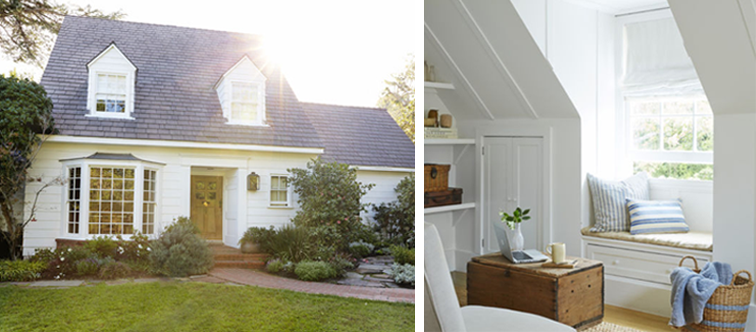
From the curb, a cottage appears small in scale. Typically they feature a steeply pitched roof and asymmetrical balance, with focus being placed on the front door.


image source

Local materials such as stone and wood are commonly used. Shutters may be added as a simple accent to windows.

image source


INTERIOR SPACES

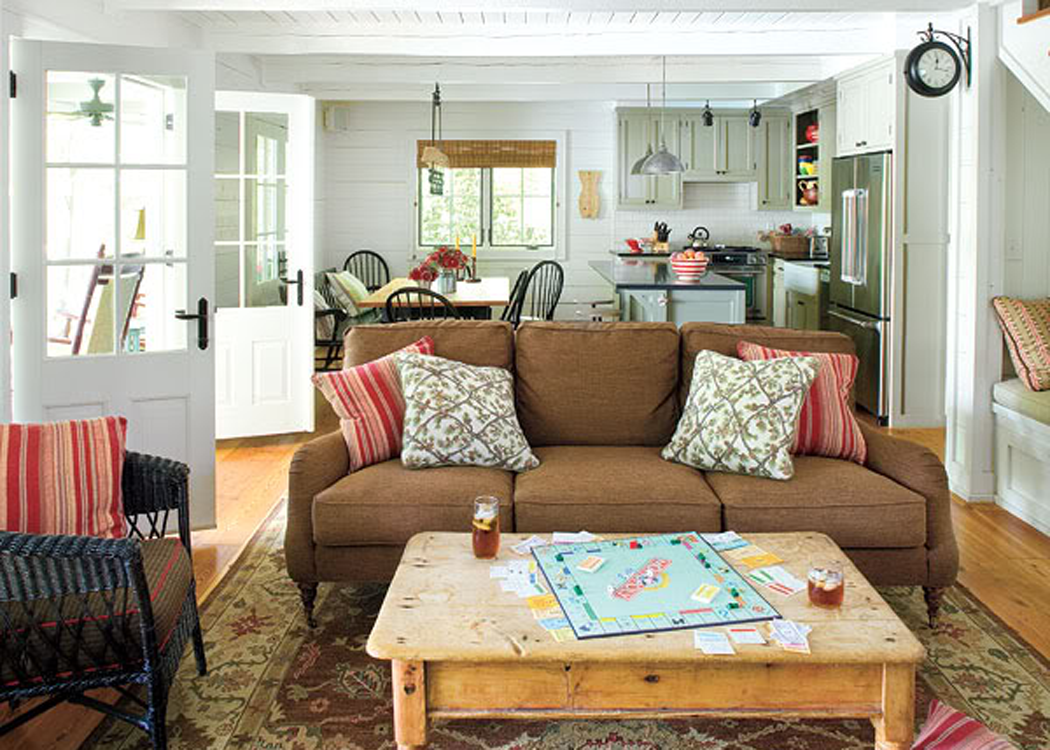
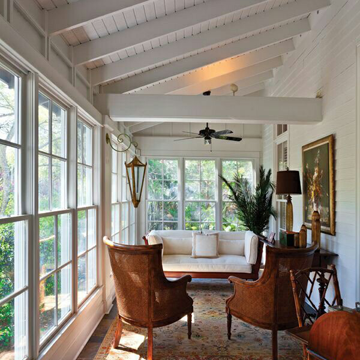
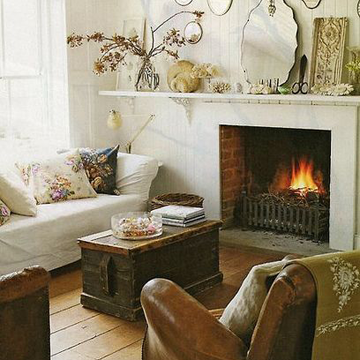
Inside, cottage spaces are informal, encouraging flow from one room to the next. Their relaxed nature invites visitors and full time occupants to feel at home. To maximize useful square footage, hallways are often eliminated.

image source

These homes are often full of charming nooks and crannies.


image source


image source

COLOR SCHEME

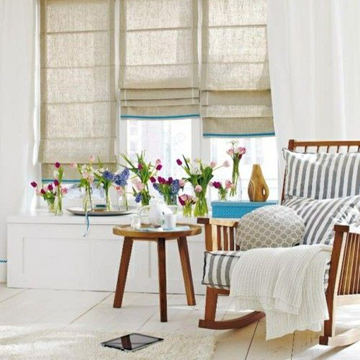
Cottages tend to utilize a refined and simple color palette, both inside and out. The softer more neutral colors are common; But bright white is the most popular color used.


image source


image source

The use of neutral colors on the walls, ceilings, and floors leaves room for statement pieces to shine. You can often find a playful splash of color on a furniture piece or fabric embellishments.


image source


image source


FEATURES

Though the style is unrefined and personal, there are statement features that many cottage homes possess.

EXPOSED STRUCTURE: By exposing the structure of the cottage, not only is construction simplified, but a level of charm is added.


image source


image source


image source

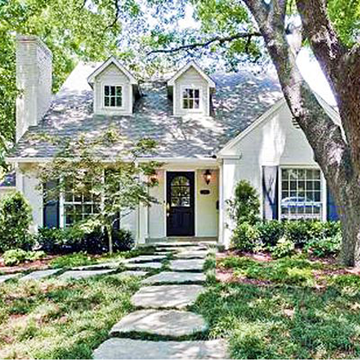
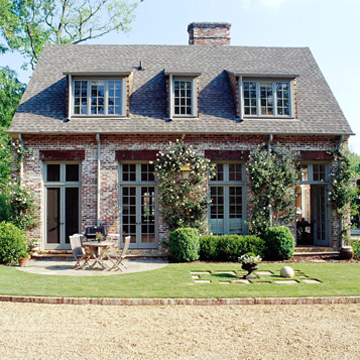
DORMERS: Primarily used to create extra space on the upper level of these homes, dormers also add a touch of whimsy.


source of images

TALL WINDOWS: They do a wonderful job of letting in natural daylight. The light then bounces off of the light colored walls, adding to the overall cheeriness of the space. Manufacturers such as Marvin have recognized the charm and appeal of these tall windows and have created the ‘cottage style’ window, which is essentially a double hung with a smaller upper sash.


image source


image source

INTERIOR DECOR

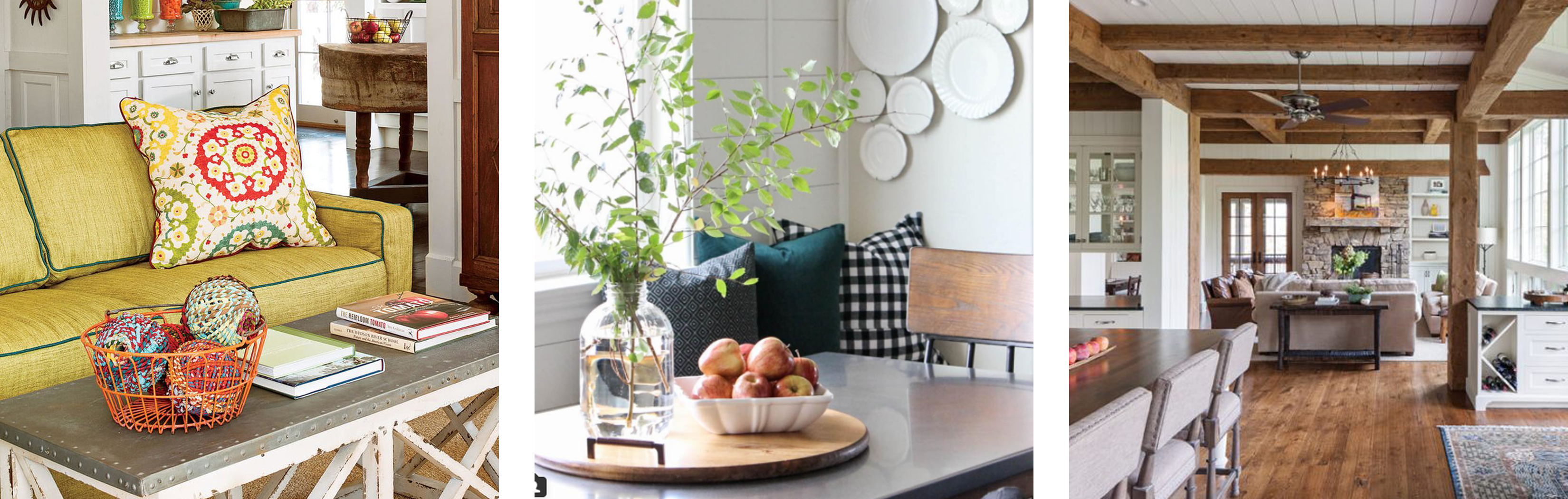
The cottage decorating style is personal and forgiving. There is room for a mix of old and new, expensive and thrifted finds, hand made and store bought. It is an eclectic technique that is all about finding what you love and bringing it into your home to surround yourself with inspiration.


source of images

Linen, burlap and wool are common textures used in cottage decorating. Painted and distressed wood furniture pieces are often present, as are vases of fresh cut flowers in each room.


image source


INSPIRING COTTAGE STYLE HOMES FROM AROUND THE WEB

These homes showcase the cottage style well. Take a closer look!

Left to Right: 12 | 3

I hope you enjoyed learning a bit more about the Cottages. Stay tuned for another home style next month!