AROUND HERE | AUGUST 2019

Around here, we have been…

ENJOYING the last part of summer. It is really hard for me to believe that summer is really almost over. Only one more long weekend and school will be starting up again! This gives me all the emotions.

It has been a good summer. One that has gone much too fast. The kids are just at that perfect age where they are mostly independent, and at the same time enjoy each other’s company. They have all played together very well over the past few months.


EXPLORING a new park in the area. Our city has developed a large piece of land just outside of the city limits. It borders a lake and many rolling hills – which are used for mountain biking in the summer and sledding in the winter.

The park itself is full of structures suitable for all ages. Small slides and a mini playhouse for the toddlers, and a zipline for the pre-teens. All of our kids, ranging in age from five to twelve, had so much fun exploring! Even Craig got into the action!


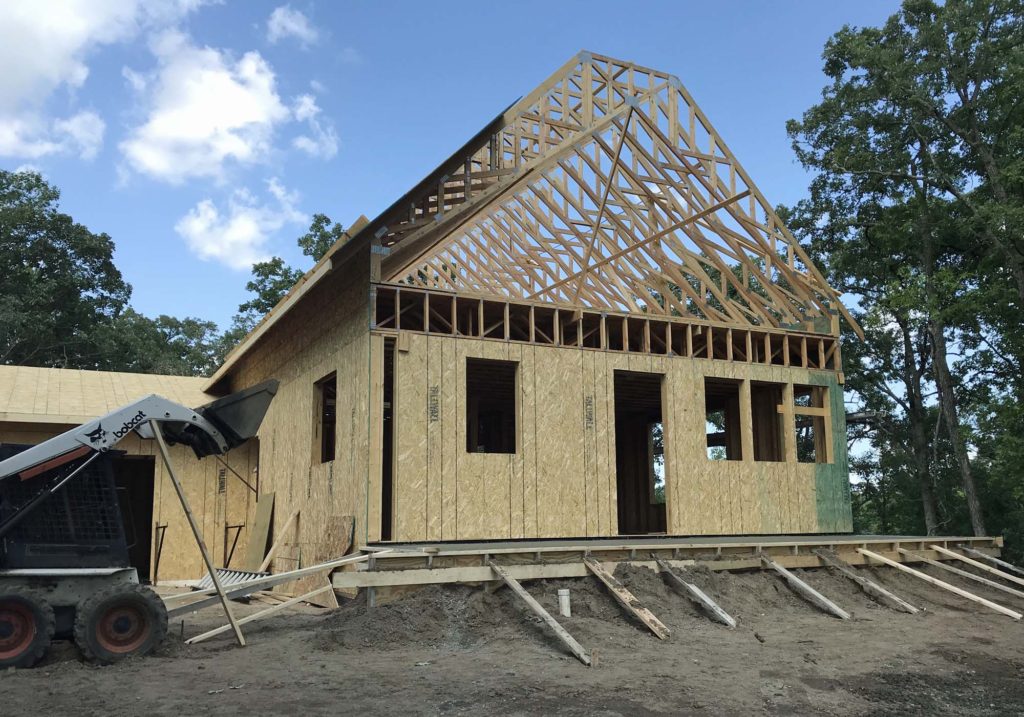
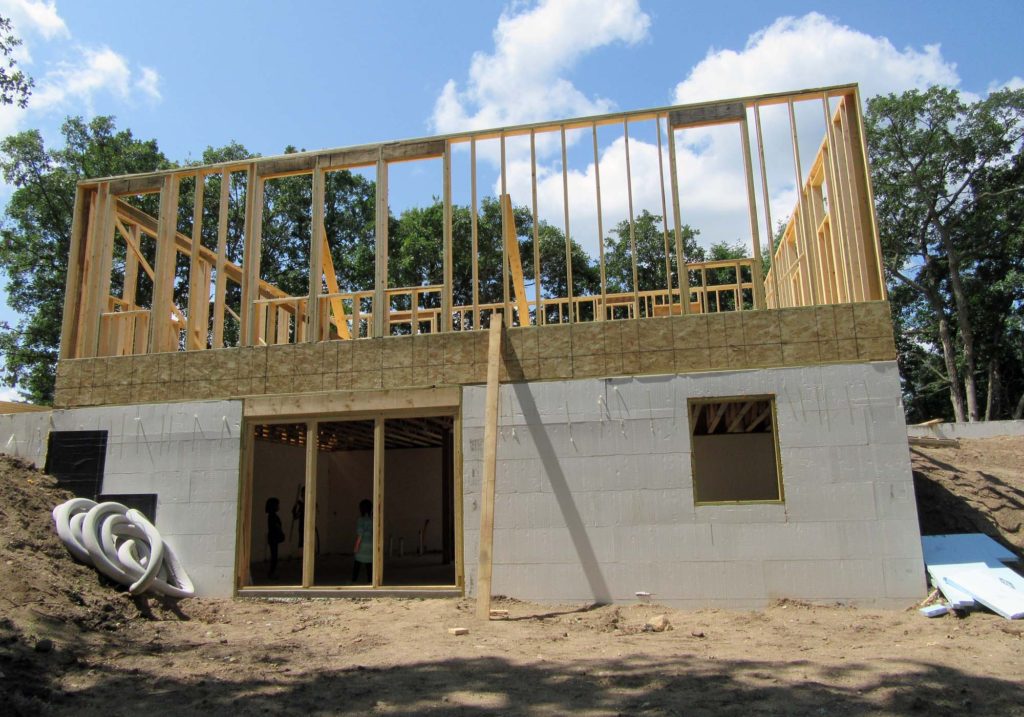
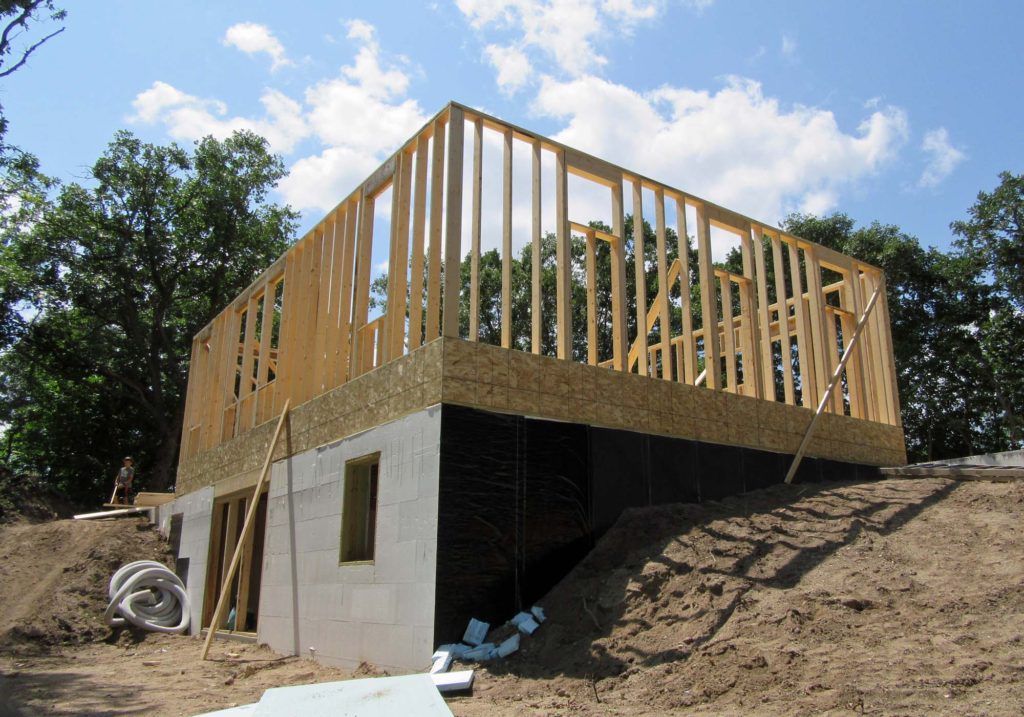
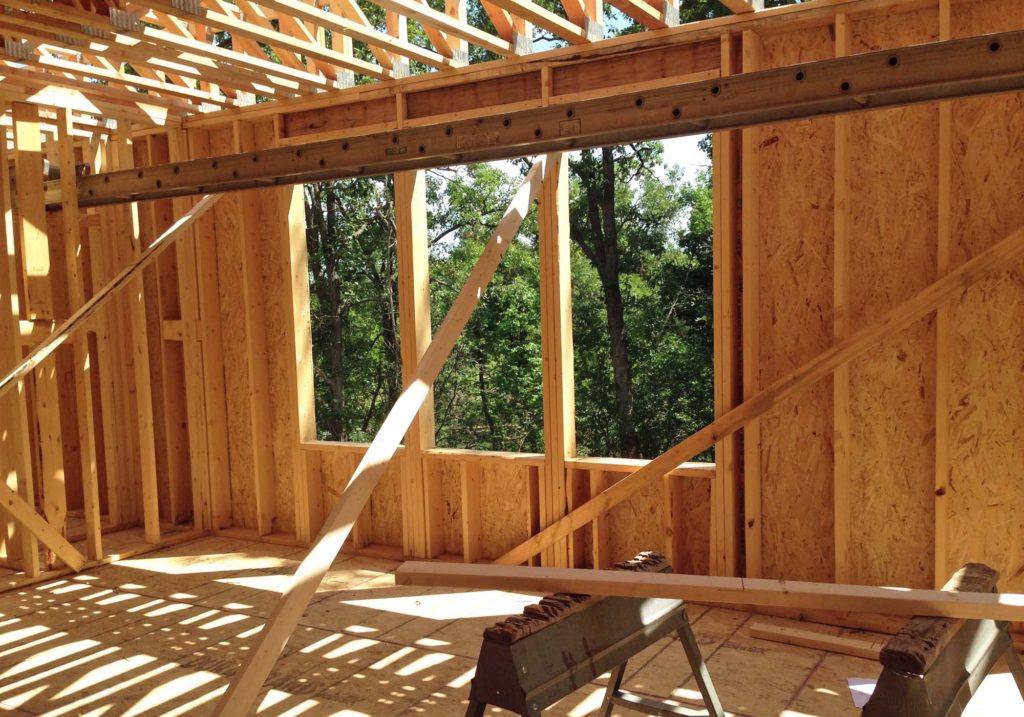
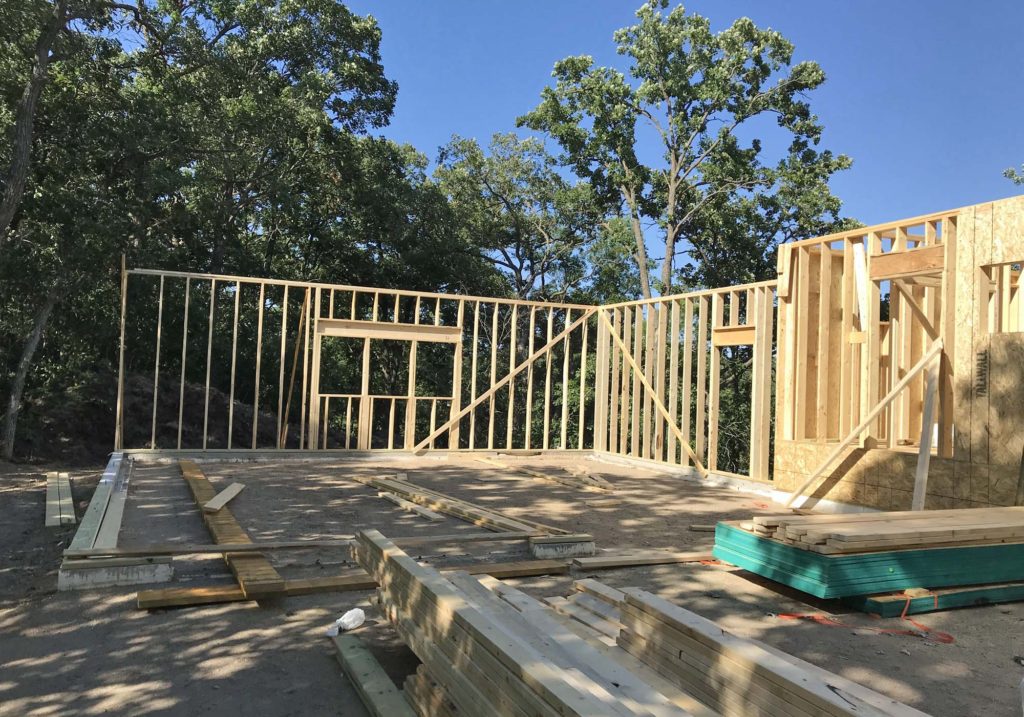
GETTING anxious for the house to get weather tight. With Fall fast approaching, we have seen quite a bit of rain and increasingly colder weather. Each time it rains, we need to go to the site and sweep all the water off of the sub-floor. It makes us so sad to see our largest asset take on damage.

However, the shingles are starting to go on the roof now. And hopefully in the next week or so the windows will be put in and the entire house wrapped for protection. We continue to pray for the snow to hold off until we move in!


PREPARING for a large garage sale. Angela has been busy going through the entire house – decluttering anything we don’t plan to move with us. We have been shocked by the amount of items that we realize we can live without.

With the proceeds from the sale, we hope to buy a sectional sofa for our new family room. Something large enough that we can all snuggle together and watch a movie.


This is just a glimpse at what our family has been up to. If you’d like a closer look, be sure to check out our weekly ‘mini vlogs’ on our family YouTube channel ARROW HILL FAMILY. Be well everyone!


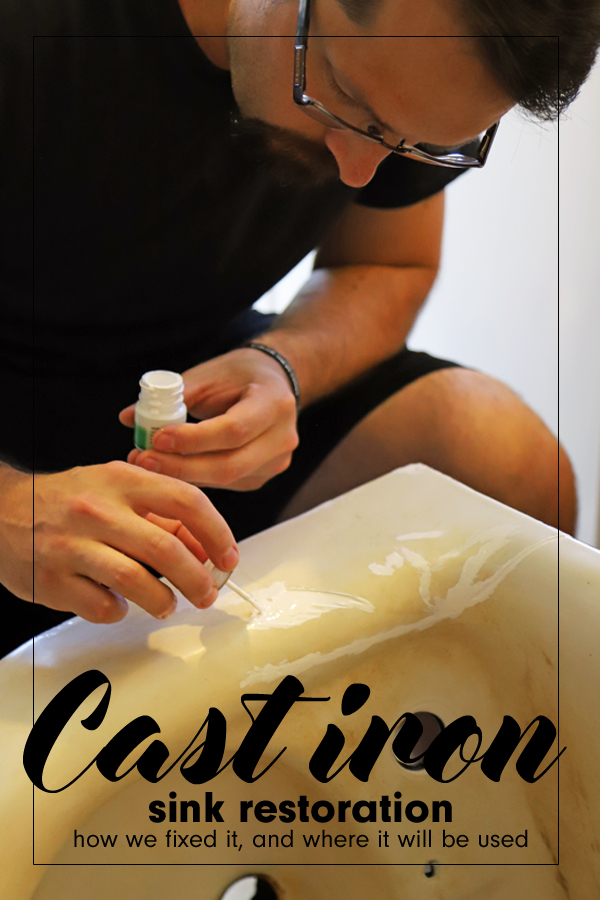
CAST IRON SINK RESTORATION | POWDER ROOM

While the crews are hard at work on our house construction, my husband has been busy with a cast iron sink restoration. Read all about his progress and see how the sink looks now!

vintage cast iron sink


It’s been a super busy summer for the construction crews out at our house build site. They are currently finishing up the framing and sealing the exterior. Hopefully, all of that can be finished before the cold Fall weather starts up! In the meantime, We have been cleaning and preparing items that will be used in the new house. Bathroom vanities are getting painted, chairs are being refinished, and the cast iron sinks are getting restored!

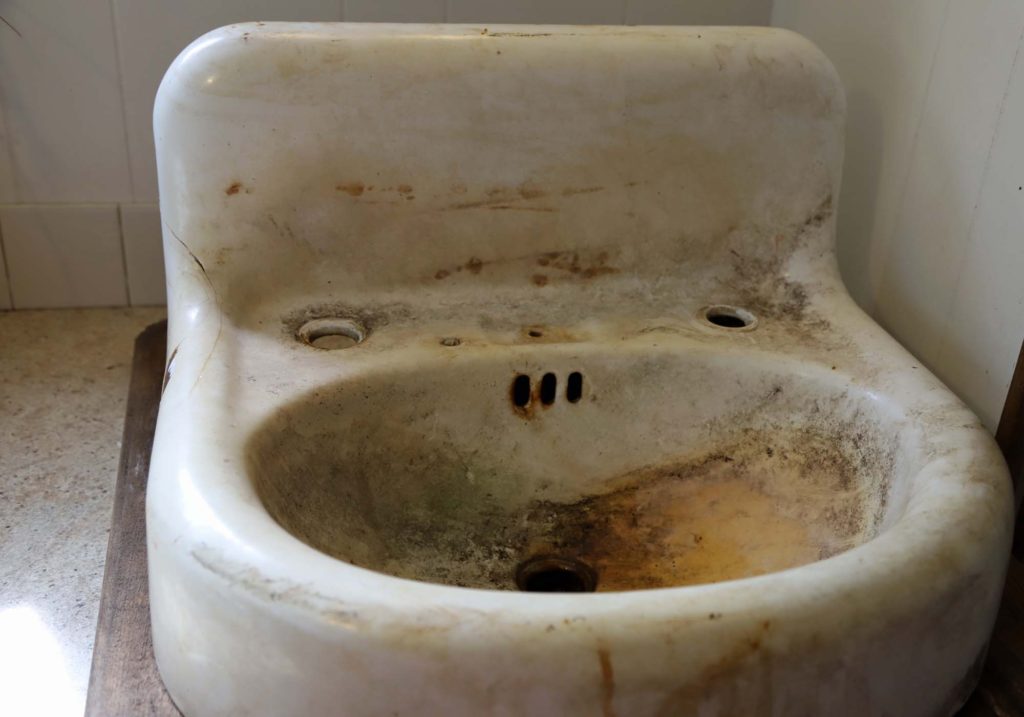
We have two vintage cast iron sinks that will be installed in the new house. One is a large, single basin farmhouse sink which will be used in the kitchen. The other is this smaller model 1930’s Kohler wall hung unit, which will be the perfect compliment to our main level powder room.

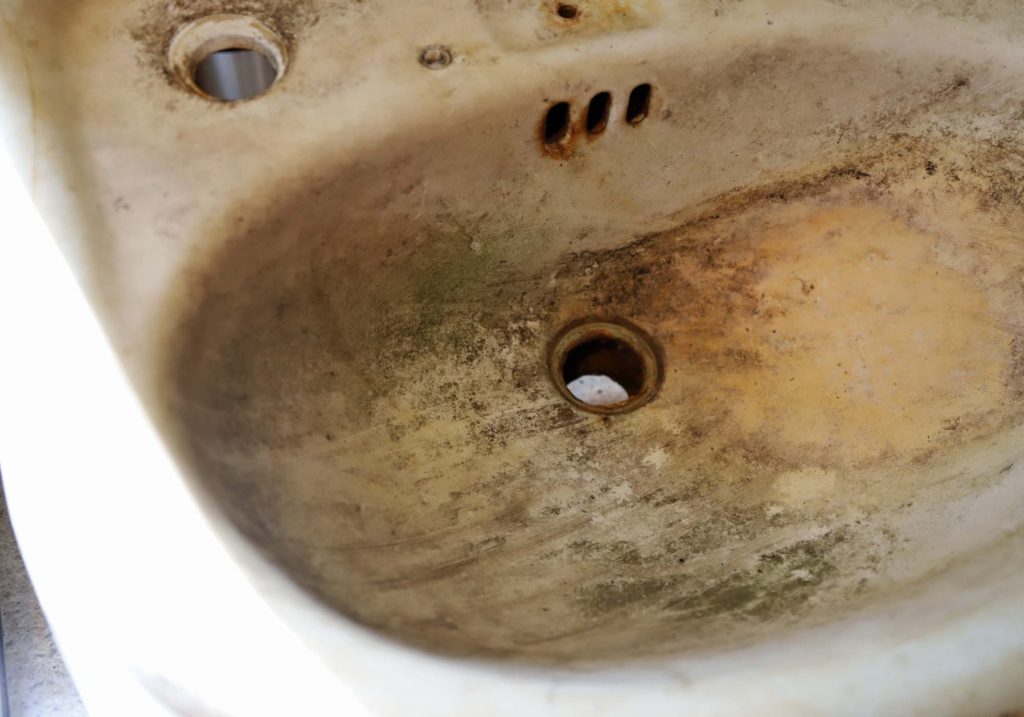
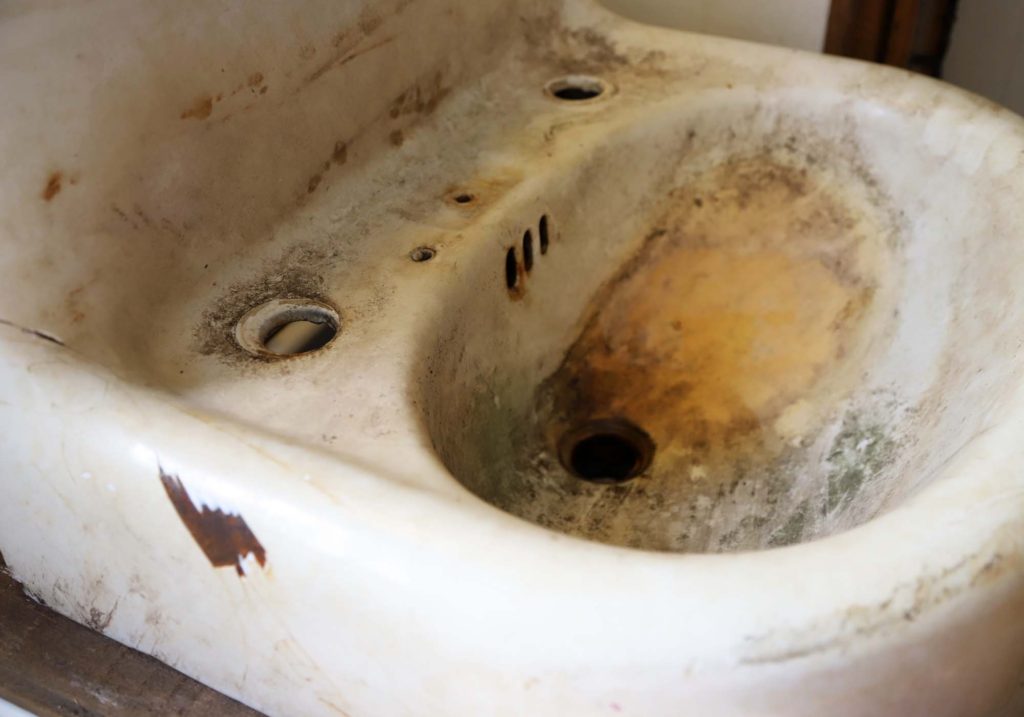
dirty cast iron sink


HISTORY OF THE CAST IRON SINKS

Both sinks were recovered from the property we are currently renting, my husband’s grandparents farmstead. They remodeled their house sometime in the 1960’s, and at that time put the sinks outside. They sat for 50+ years in the woods, covered with leaves and debris. Because of this, the sinks definitely needed some TLC.

We talked about hiring a company to do a complete restore, but decided to test out a DIY version on the smaller sink. Once we knew the results, we figured we would be able to make an informed decision about what to do with the larger one.


CAST IRON SINK CLEANING

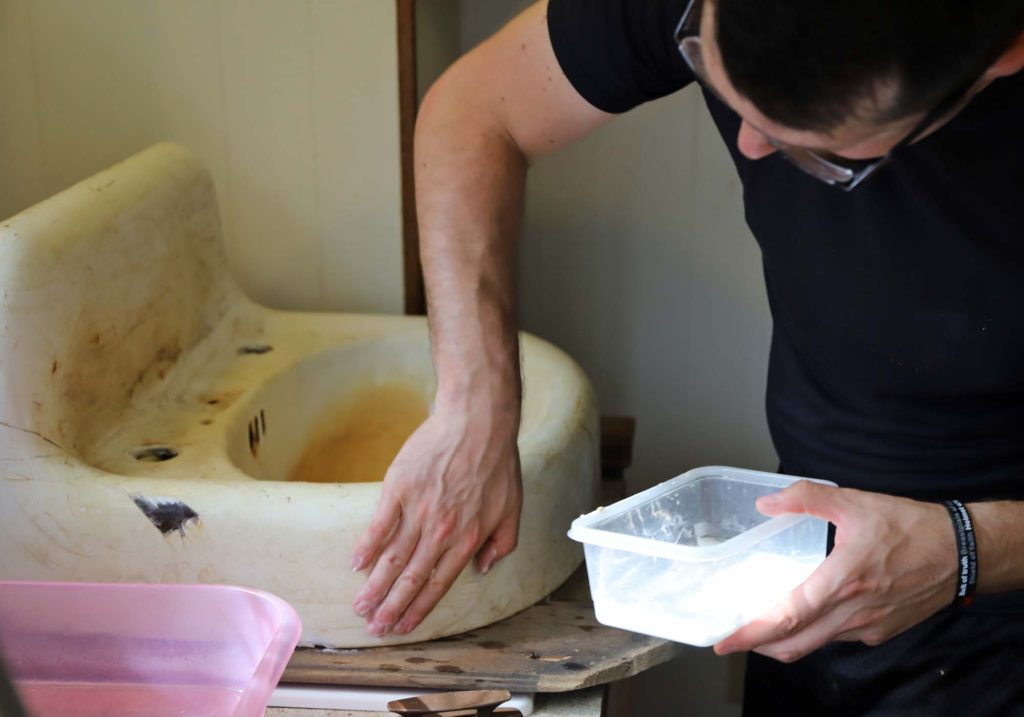
First, the sink needed some good old elbow grease. Craig started with very mild cleansers – such as a baking soda/water mixture. Eventually, he moved to harsher chemical cleaners, including ‘Iron Out’ and ‘Bar Keepers Friend.’ While they did clean the sink somewhat, none of the products were completely removing the rust stains.

cleaning the sink

Craig really wanted to remove the rust, as it could affect the sink’s future integrity if not addressed properly. He ultimately needed to use a wire wheel brush to remove the rust spots.


FIXING THE CHIP

Besides the rust, the biggest issue with this sink was a large chip in the enamel, as well as a hairline crack that ran along the side and up the back splash. They were both cosmetic issues, as they did not cause any problems with the sink being able to hold water.

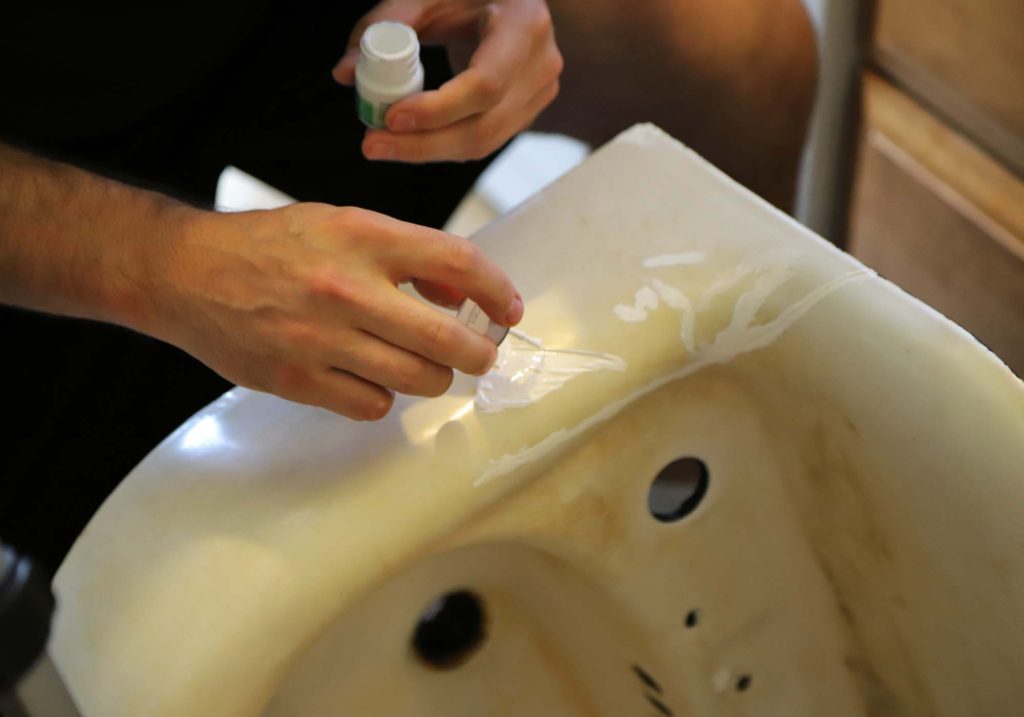
fixing a chip in enamel of cast iron sink

We found an epoxy material that could help fill in the imperfections. Over the course of a day, Craig applied layer after layer, allowing the epoxy to dry between coats. Once the material was above the height of the original enamel, it was left to dry for a few days before sanding.

epoxy material

filling the sink chip with epoxy

This product requires a ‘wet sanding’ technique – to help keep the dust down, and to eliminate scratches on the sink’s surface.


PAINTING THE CAST IRON SINK

We had determined, while cleaning, that the original enamel would need to be covered to get a uniform look. We were in no way looking for perfection, as we understand that this is an old sink. However, the discoloration was pretty bad from the years the sink had sat outdoors.

Once the epoxy had been sanded down smooth, it was time for paint! Craig started by painting the back of the sink with a black ‘rust inhibitor’ paint.

Rustoleum makes a specialty paint product that can be used for bathroom fixtures such as sinks and bathtubs. We decided to give it a try for the front!It goes on about the same as a standard can of spray paint, but the drying time is much longer. This allows the paint to harden.

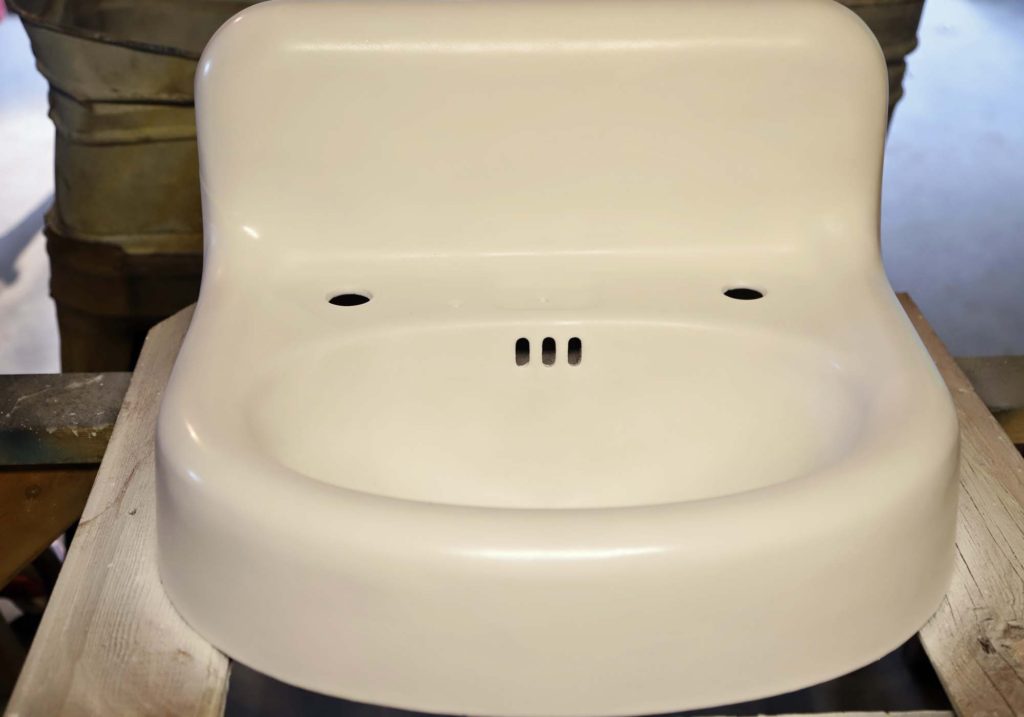
painted cast iron

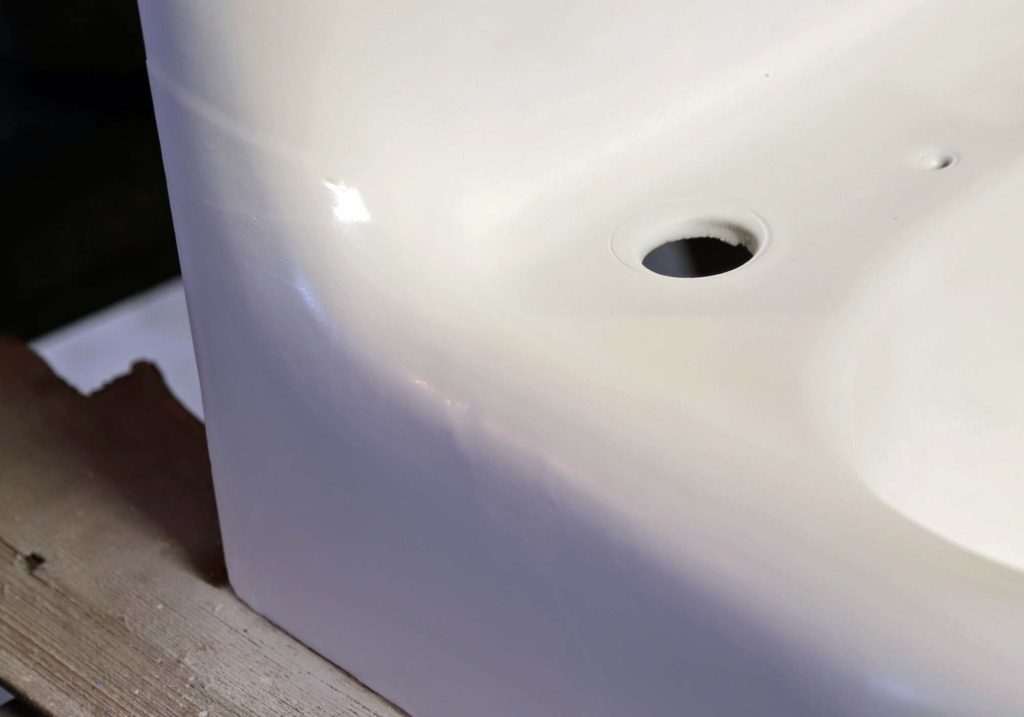
After three coats, the sink is looking great! The finish isn’t quite as shiny as the original enamel, but it is pure white and uniform. All of the rust spots are covered, and you would need to look extremely close to see any sign of the large chip or crack.

vintage sink repair

We are quite pleased with the outcome – especially considering the money we saved by doing it DIY style! Of course, until the sink is in use, we won’t know how this paint will hold up over time. I will try to remember to write an update after we have used the sink for several months.


WATCH THE CAST IRON SINK RESTORATION

For an even closer look at the steps involved in this restoration process, check out the THREE PART SERIES of videos that my husband created for his new YouTube channel, Weirdy Beardy Workshop. He has been busy filming a lot of projects, actually. So, if you want to see some behind the scenes footage, go check out his channel!


PIN THIS POST

how to restore a cast iron sink


Kids Clothing Declutter | How much to keep

We are just weeks away from our mega garage sale in preparation for our move. I have been finishing up going through the last bit of items in our house, and the focus this week was on decluttering kids clothing.

You know the saying about how socks seem to be eaten by the washing machine? I feel that they magically reappear in the form of extra pants and shirts, in the drawers of children. And for someone who is attempting to become more minimal, this multiplication can be extremely upsetting.

This past winter, I took the leap to create a capsule wardrobe for myself. I ended up paring my entire collection down to fifty total items, excluding a few items such as outerwear and jewelry. I found it so freeing, in fact, that I eventually convinced my husband to declutter his clothing as well. Neither of us have missed a single item and we both find it super easy to make our outfit selections.


WHY KIDS CLOTHING ACCUMULATES

For a variety of reasons, it seems that kids clothing accumulates faster than adults. By understanding the reasons it is easier for these items to enter our houses, we can be more mindful in the future to stop it from happening.

Kids clothing is cheap

For a small amount of money, you can build your child’s wardrobe. A dress here, a pair of pants there. And don’t forget all those cute shoes! There are also plenty of garage sales that feature extremely inexpensive kids clothing. At fifty cents per piece, it isn’t easy to pass up those closet filling bargains!


They take up little space

Unlike large toys or furniture pieces that might get in our way and remind us we need to pare down, clothing is relatively small. We know that we can usually fit ‘one more’ shirt in a dresser or one more coat in a closet. It’s when all of these little pieces are added together that we really start to notice a problem at all.


There are never ending hand-me-downs

If you have multiple children, or generous friends and family, the accumulation game becomes even more dynamic. You may be suddenly faced with multiple storage totes full of prospective outfits, whether your child is ready to fit into them or not.


STORING KIDS CLOTHING

It’s easy enough to get rid of the items that have been outgrown or those that are riddled with holes and stains. But, what if the seasons are shifting and your child has a number of perfectly good clothing items that still fit? Or older brother has grown out of a favorite sweatshirt, and there is another brother just a couple years younger?

decluttering kids clothes

I am definitely guilty of keeping clothes around with the thought that ‘someday’ one of the other kids might need it. Though, through my nearly thirteen years of parenting, there have been only a handful of times when that has truly been the case. Styles change, body shapes are different, kid’s preferences might be particular.

Because of the sheer amount of items that can accumulate, dealing with stored clothes can be downright overwhelming.


HOW MUCH DO THEY REALLY NEED?

In the end, I am left with this very question. How much clothing do the kids really need? Probably every family’s scenario is a bit different. I can only speak for our family. And I know that our kids have way more clothing than they actually need.

how many clothes do kids need

I will admit that this is probably going to take me a series of edits before we get to the magic amount. And yes, it will most likely be left up to me to decide, since not one of my kids care much at all about clothing.

There are a variety of guides online that discuss how to create a capsule wardrobe for kids. They even go so far to indicate the number of each type of item (shirts, pants, etc) that it should include. This blog post, for example, gives some great tips on how to pare down.

Generally speaking, the rule of thumb has to do with how many days you want to go without needing to do laundry. Ideally, for our family, the kids clothing supply would last, at a bare minimum, a week to week and a half.

Potentially, our kids clothing capsule might look a little something like this:

BOYS

16 short sleeved shirts (shared)

18 long sleeved shirts (our youngest would need 6 of his own, and his brothers could share the remaining 12)

4 sweatshirts/hoodies (each)

5 pairs of shorts (each)

5 pairs of comfortable pants (each)

2 pairs of dress pants/jeans (each)


GIRLS

8 dresses (shared)

16 short sleeved shirts (shared)

16 long sleeved shirts (shared)

2 sweatshirts/hoodies (each)

2 pairs of shorts/capris (each)

7 pairs of pants (each)


After the move, I will plan to go through my kids closets and dressers again. At that time, I think I will attempt this capsule scenario. Perhaps keeping a few additional ‘backup’ items, in case the inventory seems too low.

The great thing about having a minimal wardrobe is that if something becomes stained or worn you can replace it with something new, guilt free. Another benefit to a smaller wardrobe is being able to customize it for each child’s comfort and style preferences, without breaking the bank.

And dealing with an item or two, here or there, would definitely be favored over the four hour decluttering session I just went through in their closets! If I look exhausted at the end of the video, it’s because I was!

WATCH ME DECLUTTER


PIN THIS POST

kids clothing declutter

WOOD FRAMING | HOUSE BUILD UPDATE NO. 5

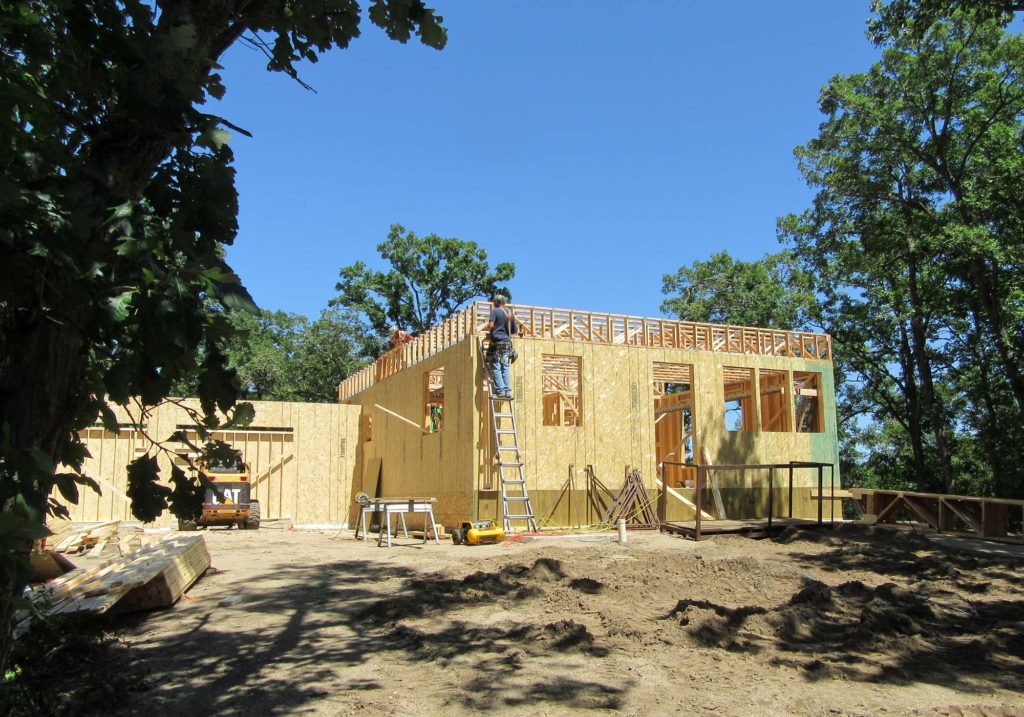
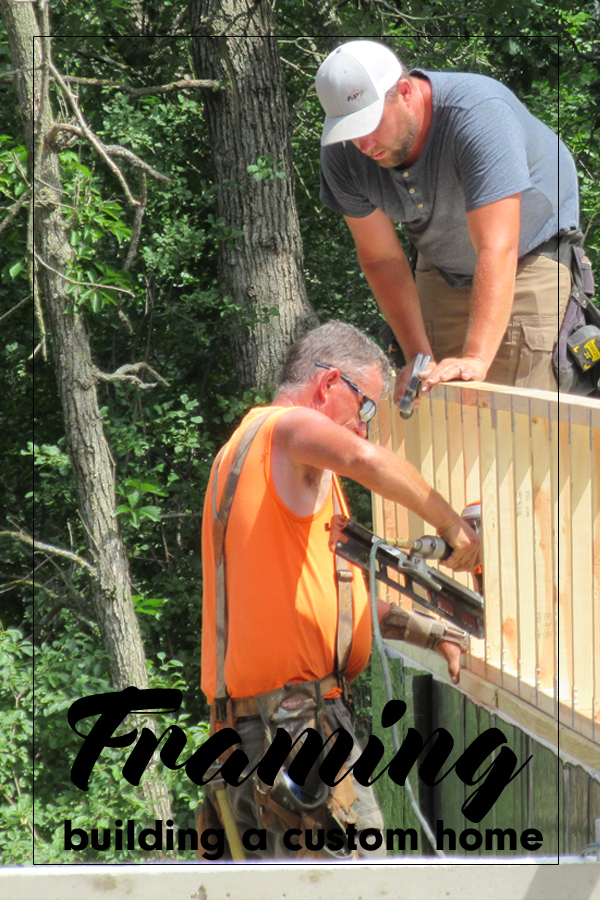
Time for another building update! In this week’s update I share all about the wood framing of our custom home build! Though I was hoping to share the entire framing process, things aren’t moving quite as quickly as we had hoped. This post will discuss the portion of framing that has been completed. And I will be sure to update again once the rest is finished.

finished foundation

At the end of Update No. 4 the foundation had just been completed. Essentially we had a very pretty looking hole in the ground, and were ready to begin the wood framing. I mentioned how excited we were for this step, when the building will start to take shape and begin to actually look like the house we had envisioned!


WOOD FRAMING STEP 1 | FLOOR TRUSSES

The first step in the wood framing process is to attach a wooden sill plate to the foundation. The sill plate is anchored to the concrete with large bolts and creates a base for the floor trusses to be tied to.

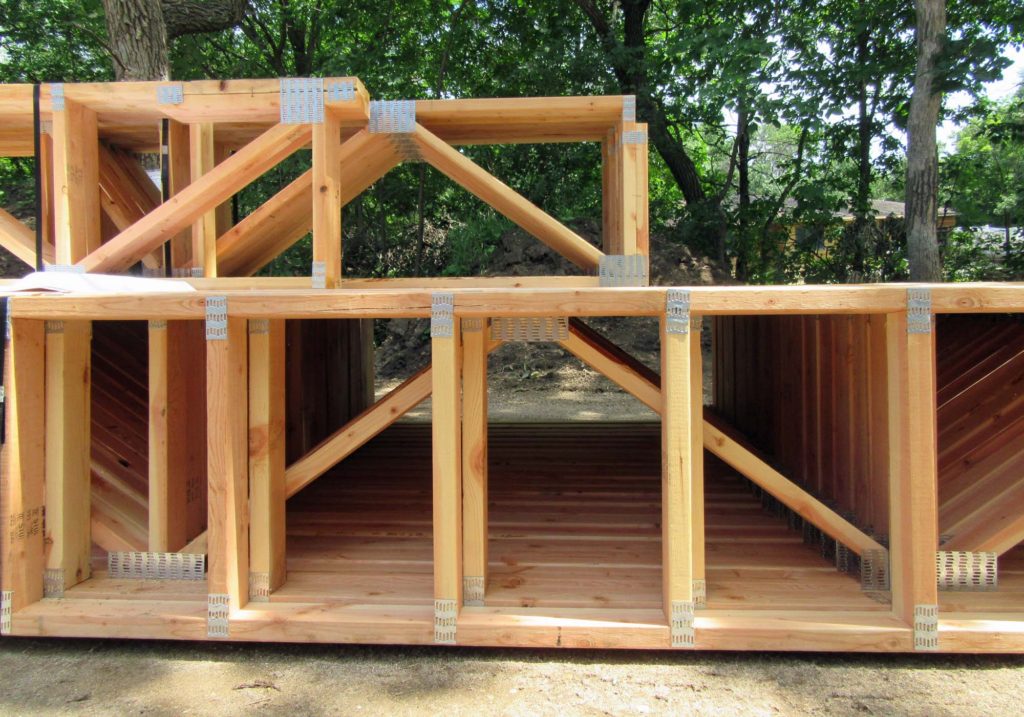
Floor trusses work essentially the same way as standard 1x member construction, with a few advantages. They allow for longer clear spans, as well as offering space for mechanical duct-work and plumbing. For these reasons, as well as the ease of installation, trusses are favored over traditional hand framing in residential construction today.

floor trusses

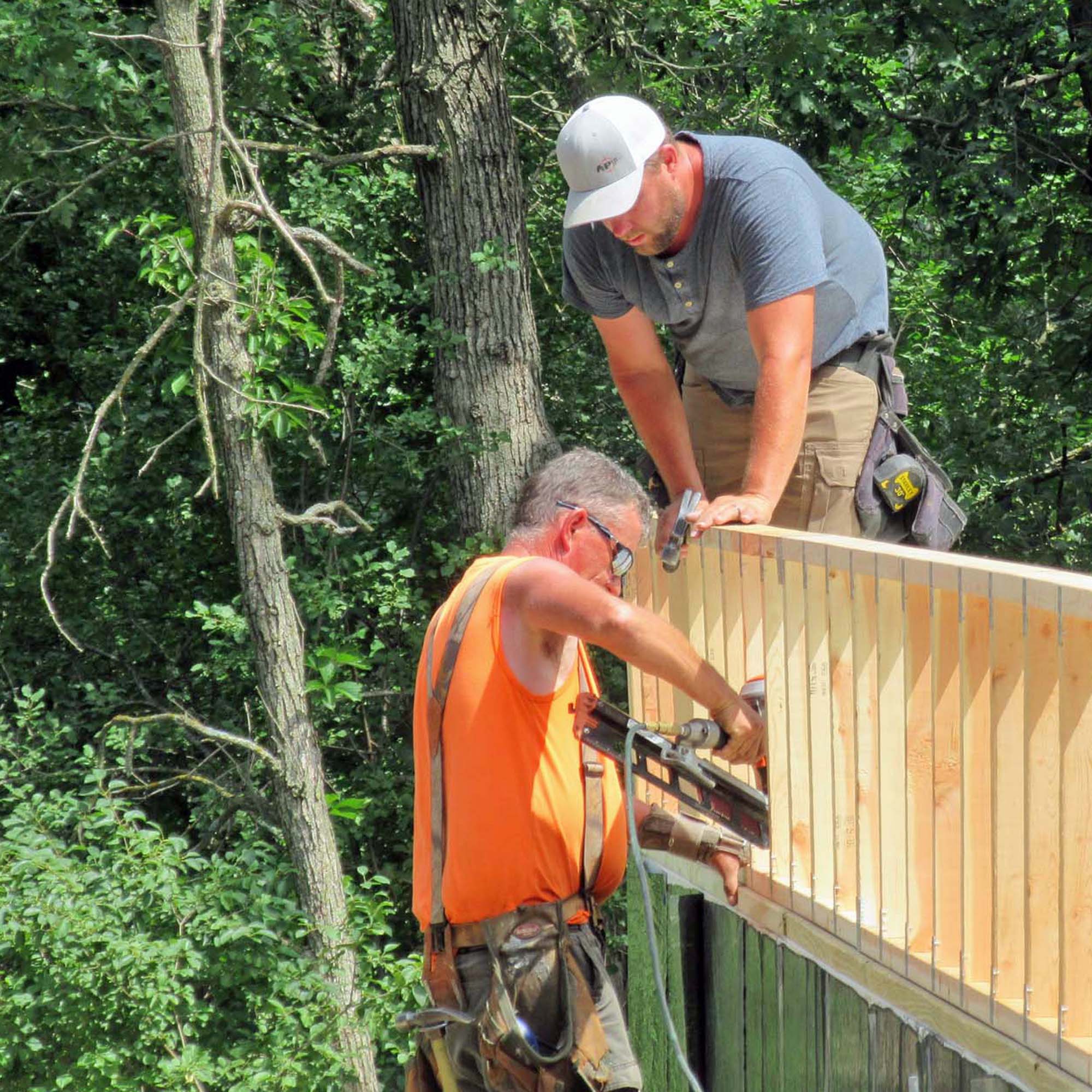
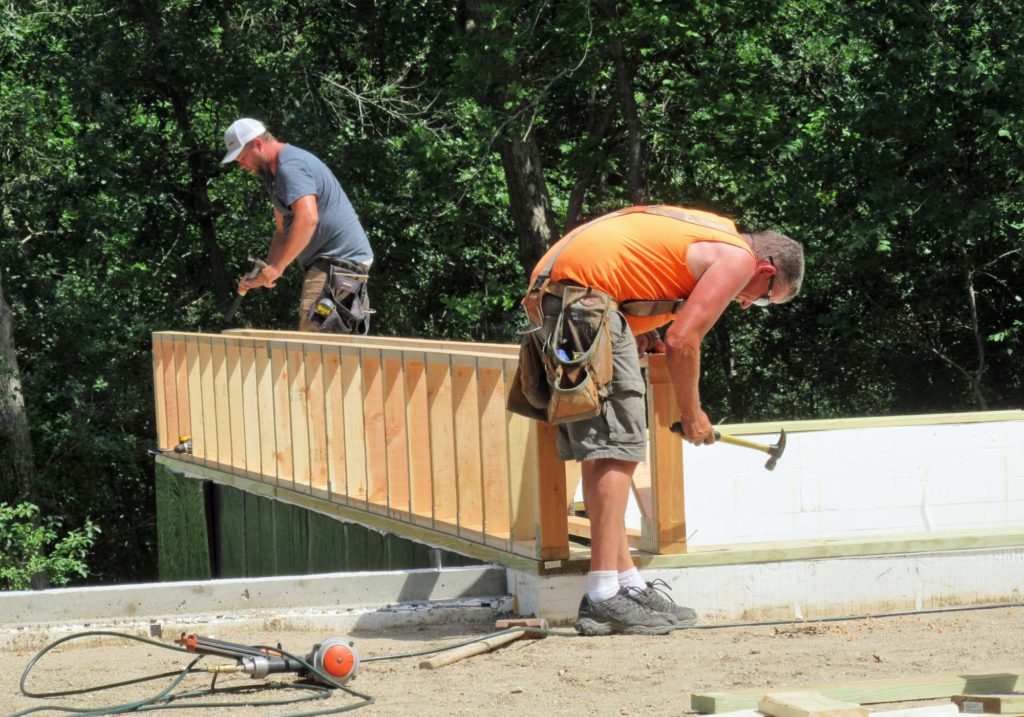
To install the floor trusses for our main level, the framers had to do some fancy footwork. The younger of the two was set with the task of almost ‘tightrope’ walking across the walk-out side wall. With a drop of over eight feet, it was a dangerous mission. He admitted to me later that it was a bit un-nerving! They did eventually get all the trusses in place.

wood framing floor trusses

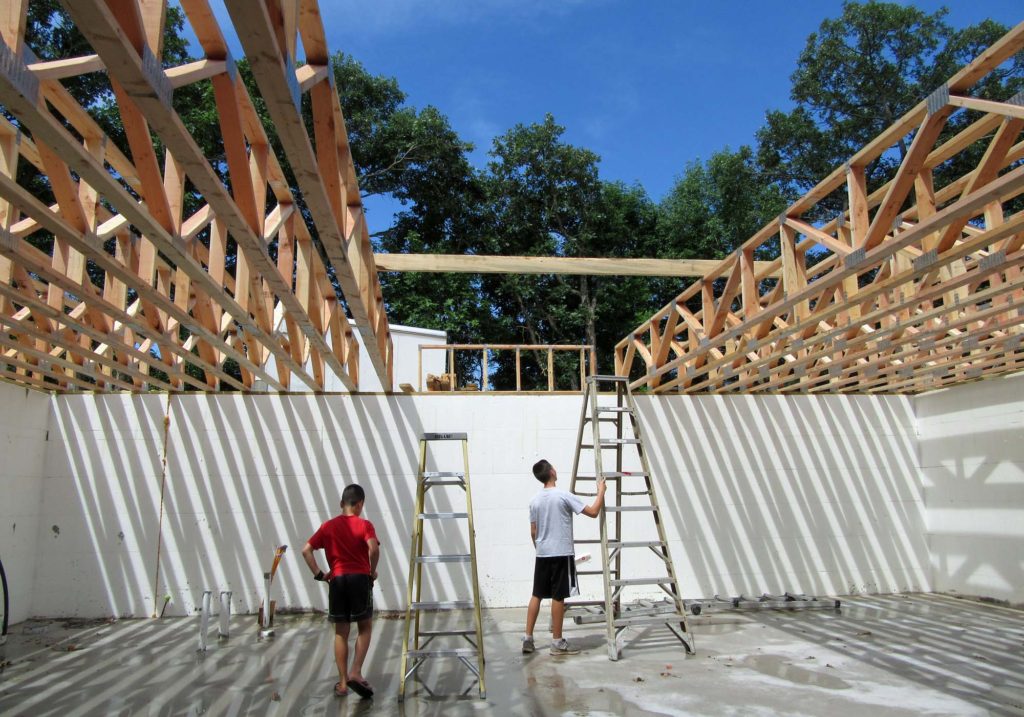
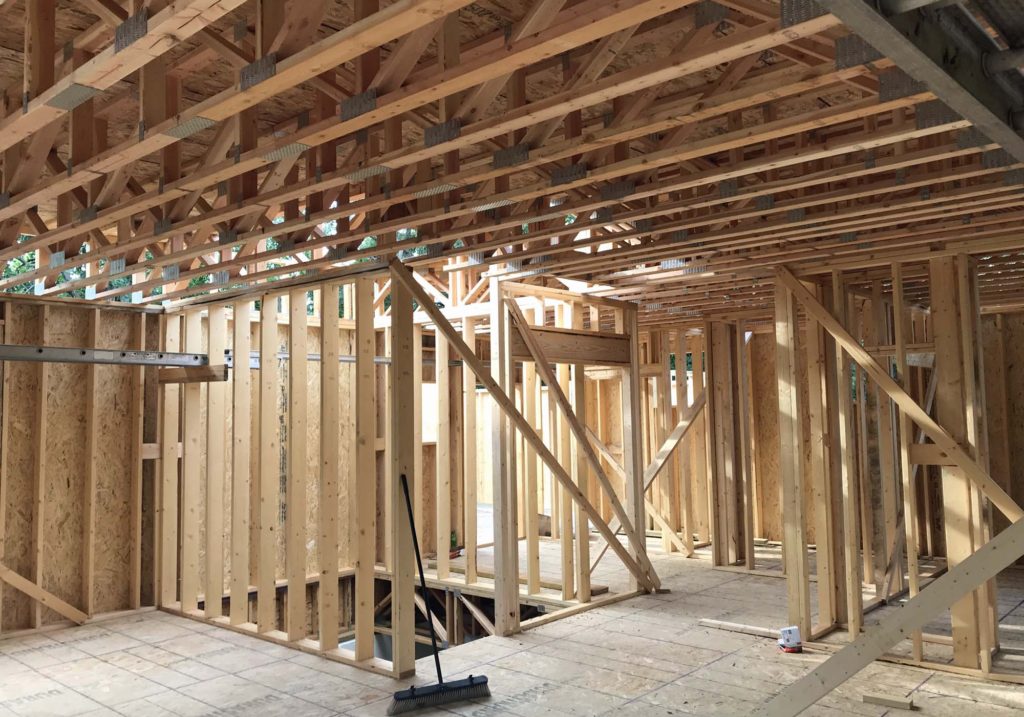
For our family, it was fun to go into the basement and look up at all of the installed trusses since this was the first time that we had a mostly enclosed space to go into. Sensing the personal/ human scale of the project is very important and was something that we hadn’t yet been able to experience, having the spaces open to the great outdoors.

floor trusses from basement


ADDING THE SHEATHING

The next step in the wood framing process was to add the sheathing on top of the installed trusses. Once installed, the sheathing plus trusses work as a monolithic system, providing superior stability.

wood framing supplies

We were sure to take advantage of walking on our main level for the very first time. In fact, we made an evening excursion of it by picking up food from Dairy Queen and having a picnic on the site of our future dining space. The night was ideal, and the first moments we spent at our house together is a memory I will cherish forever.

night at the house site


WOOD FRAMING THE WALLS

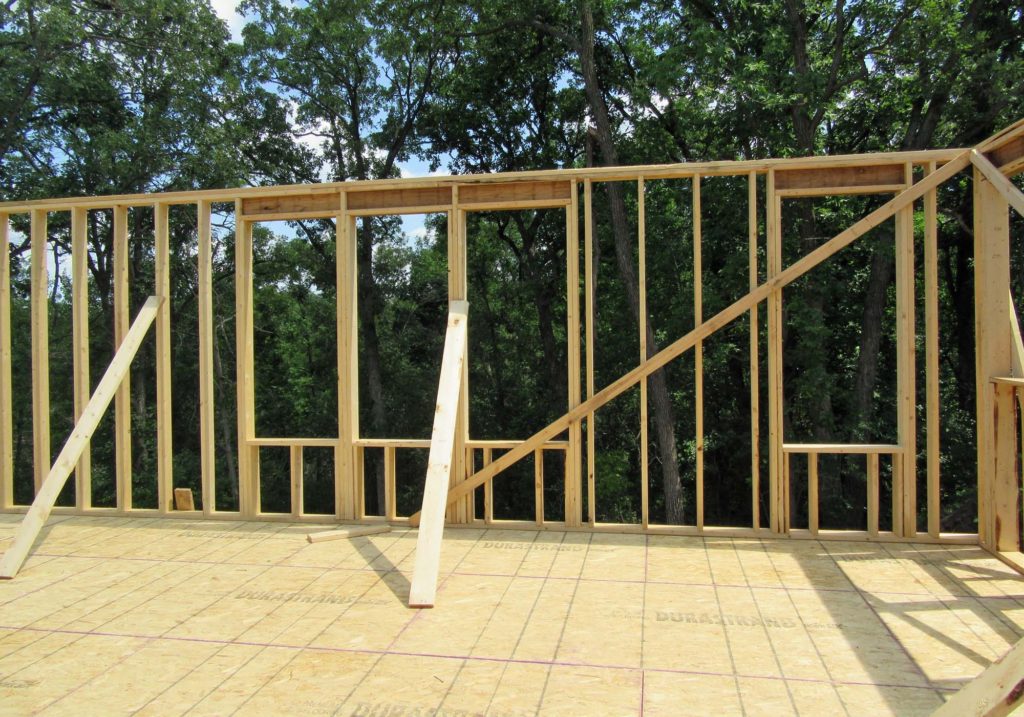
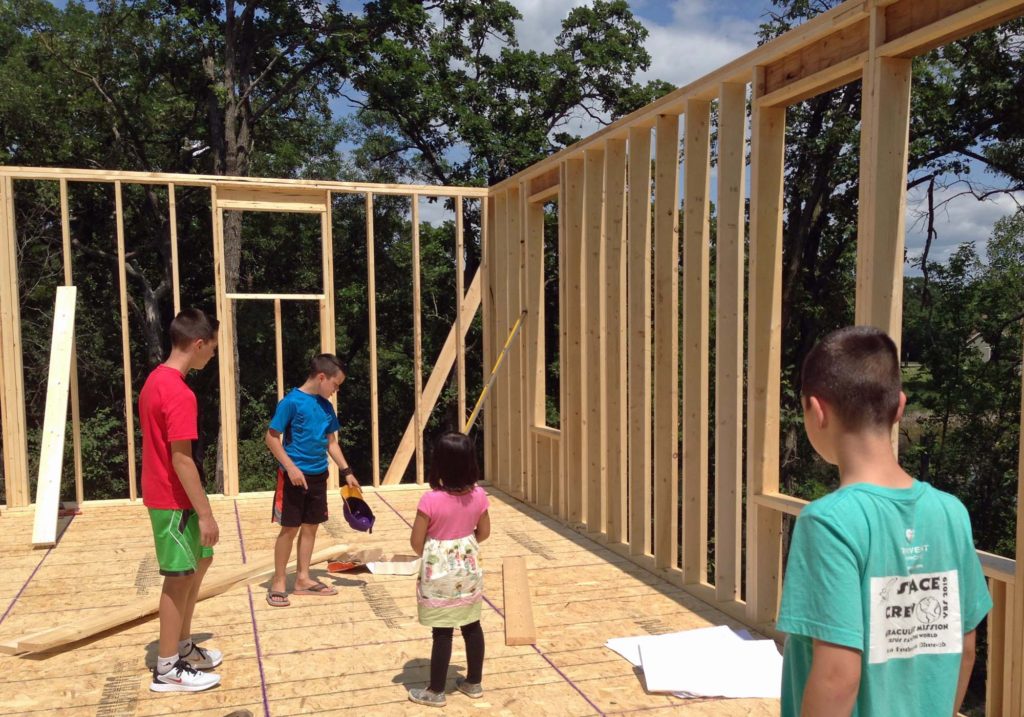
Up next came the main floor wall framing. With the window locations set up, it was exciting for us to finally be able to see what the views from each of the rooms will be.

view from living room

It came as no big surprise that the most awesome view of all is from the open living/dining space, overlooking the woods and pond. The western facing kitchen window though displays a great sunset view, which we weren’t expecting.

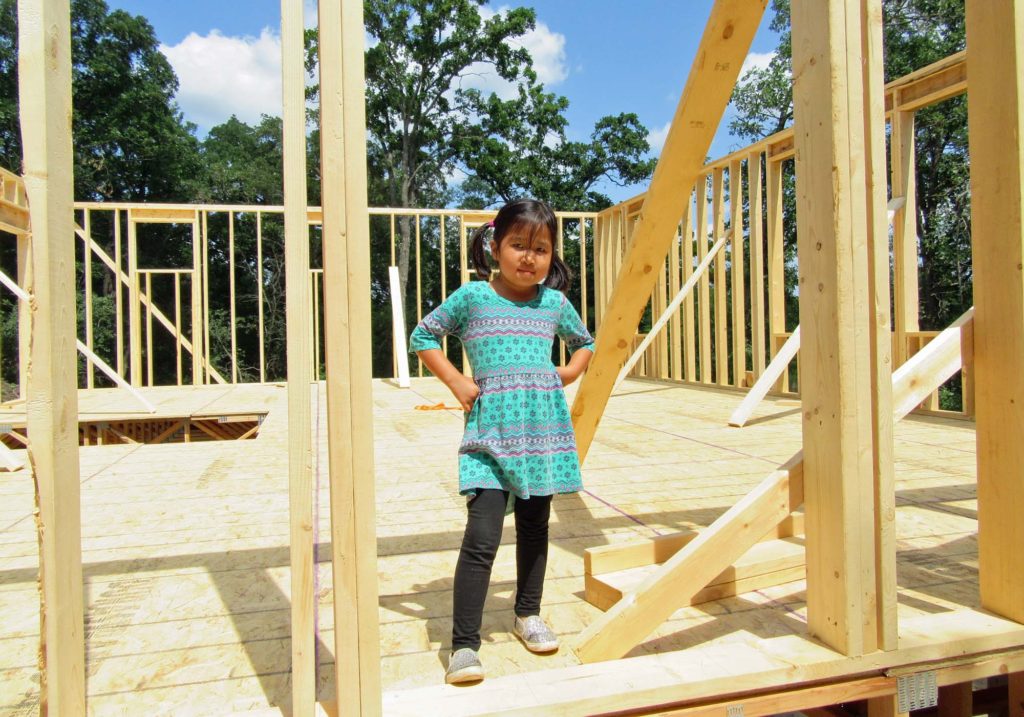
standing in doorway of wood framed house

How cute is she, standing in the location of our future front door!

Walking through the shells of each room on the main level, I couldn’t help but imagine all of the memories that are about to be made here. We feel so blessed that we will soon be calling this place home.

wood framing update

Though I have given a bit of a mini walk through over on Instagram, I do plan to also film an entire ‘under construction’ house tour – once the wood framing is complete. Be watching for it!

view inside the house


CONSTRUCTION SITE VISITS

During the wood framing portion of the construction process, my husband and I settled into a nice site visit routine. I will typically stop by in the early afternoon, while out and about with the kiddos running errands. This is a chance for me to touch base with the crew, and answer any questions they may have. Craig will also swing by after he is done with work for the day. Typically the crew has left the site by that time, which allows him to take in the progress a bit more slowly. He generally takes a bunch of photos, then shares them with me.

wood framing in progress

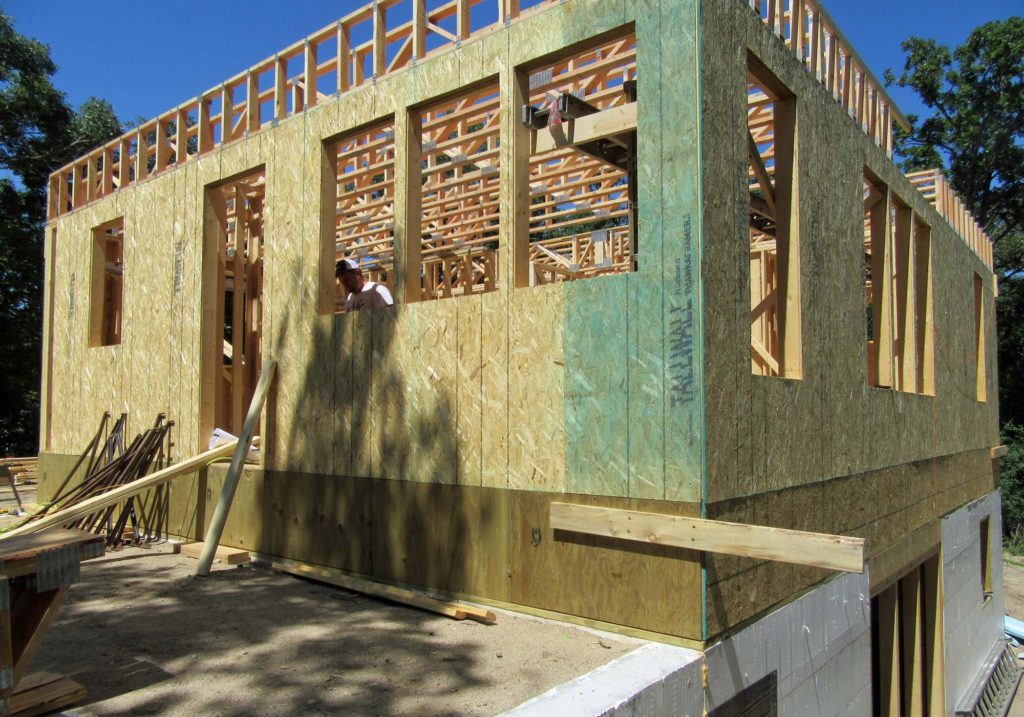
These site visits help us to take in the day-to-day changes, as well as quickly catch any mistakes in the framing. One day Craig texted me a series of images and I discovered that the back three square windows weren’t centered properly. It’s something I hadn’t noticed earlier in the day, but from his pictures it was very obvious! The middle window should line up with a centered second story window, and it would have looked very goofy if the windows weren’t in alignment.

construction site visit

The center window should be centered on the back wall

And, though we are non-confrontational people, I contacted the framers right away to inform them of the mistake. Thankfully they acknowledged the problem and corrected it right away.


WALL SHEATHING + GARAGE

Next came the exterior wall sheathing. Covering the skeleton of wood studs really made the house shape come to life!

view from living room

The garage framing was also put into place. During the construction of the garage we did make a couple of minor modifications. We raised the sidewall approximately six inches, which in turn created enough space for eight foot tall overhead garage doors. Previously we had seven foot tall doors, but figured the extra foot will come in handy if we ever decide to get a larger vehicle for our large family.

garage wood framing

I am over the moon excited for my husband to finally have a fully functional garage, complete with good lighting, plenty of open floor space, and a proper tool bench. He has waited a very long time for this!

We are also anticipating that we will love having an attached garage during the bitterly cold Minnesota winters! Our oldest daughter, who has mobility issues, will be especially appreciative. The icy winter morning walks to our current detached garage have been full of anxiety and frustration!

house exterior


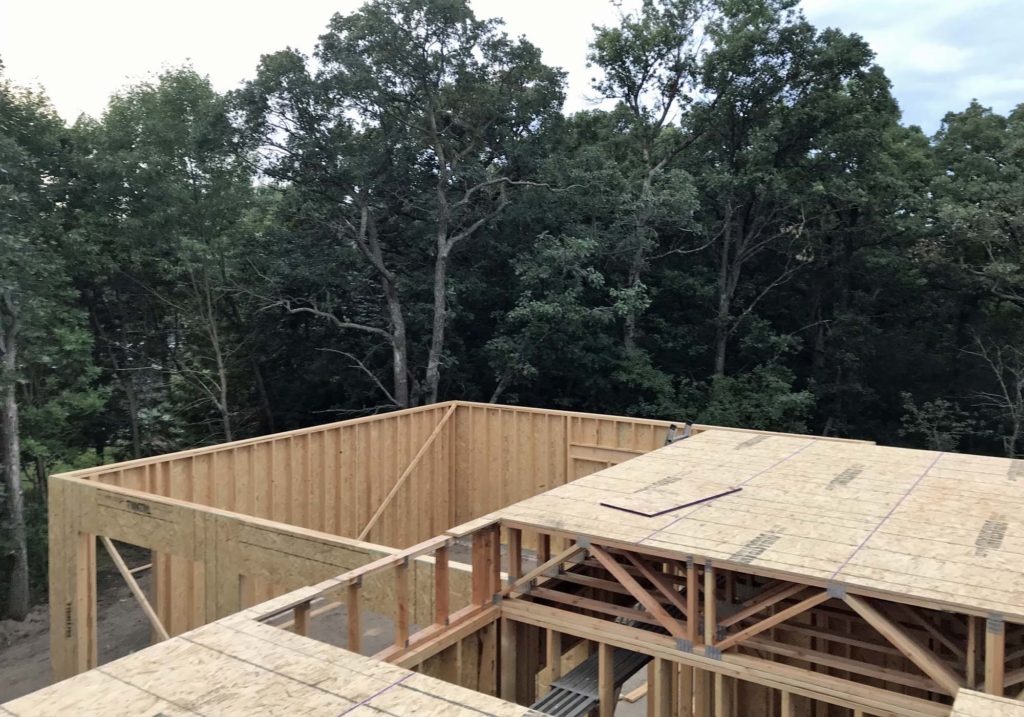
The wood framing continued with the setting of the second floor trusses plus sheathing. Because we were so anxious to see the view from upstairs, one night we took a ladder and climbed up. Without any walls for protection, it felt like we were standing on top of a mountain! It was a mighty sight!

view from second floor

Of course, the view won’t be quite as expansive once the walls are up. There are only two windows upstairs. One in the boys bedroom, which faces the street. And one for the girls, with a spectacular view of the woods.


WOOD FRAMING | NEXT STEPS

This week we had a bit of a standstill on the site. The concrete guy was supposed to be back to form up the porch stoop and have it poured – so that the roof trusses for the house and porch could be set at the same time. Unfortunately, the roof trusses were delivered a day too early. This meant that there wasn’t enough space on the site for a concrete mixer truck to come in and pour.

The new game plan is to install the roof trusses for the house and garage first, starting early next week, then come back to finish the porch and get the roof on that portion.

front porch pour

I am beyond giddy for the roof to go up, and to see the house shape in it’s completion! However, that will have to wait for the next update.

Be sure to stick around to see this little house of ours come to life! Thanks for checking in today!


HOUSE BUILD UPDATE NO. 5 VIDEO


PIN THE PROGRESS

framing our custom home


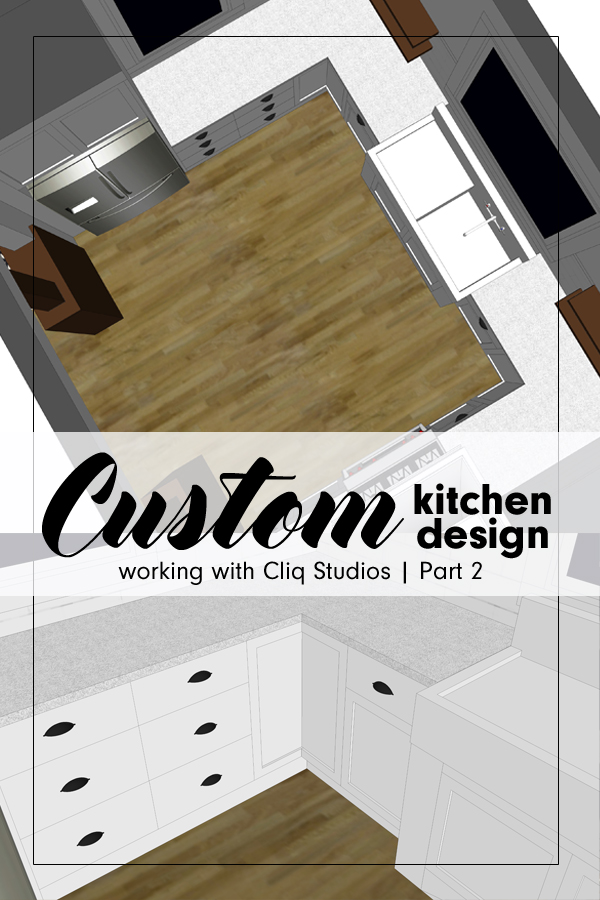
WORKING WITH CLIQ STUDIOS | PART 2

In this post, I review the process of working with the online cabinet company Cliq Studios. All opinions are my own and I was not compensated for my thoughts. I am in no way sponsored by or affiliated with the company.
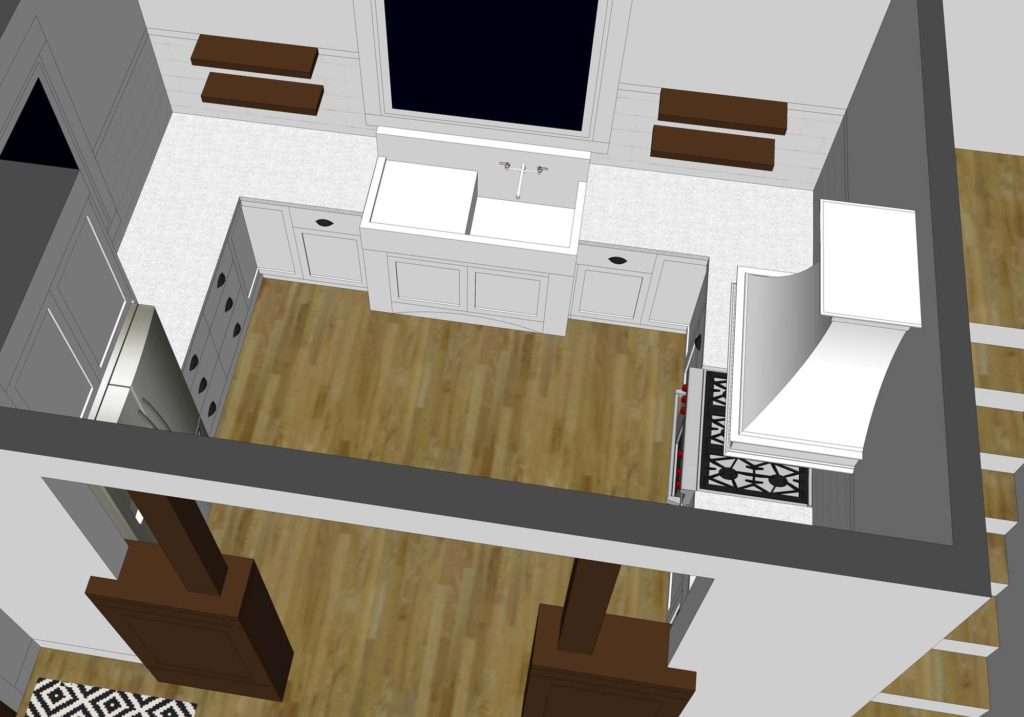
Cliq Studios kitchen


Construction of our minimalist cottage has been moving along at a steady pace. With framing well underway, we are beginning to hit crunch time. Finish selections need to be made and ordered soon. In fact, we have already begun ordering the items that require a longer lead time. The cabinetry included.

We began our kitchen design over a year ago, as documented in this post. At the writing of Part 1, we were fairly confident that we would be using Cliq Studios for our cabinetry. And now that we have placed our order, I can confirm that I was right!

Today I want to share with you how the process of working with Cliq has gone for us so far.


WHY CLIQ STUDIOS?

I encourage you to go back and read Part 1 of this series for the full run-down. Essentially though, our decision to work with Cliq was primarily done because of budget constraints. Simply put – it isn’t cheap to build a house, and if you’re on a budget, something’s got to give!

We were confident that we would be able to attain a custom looking kitchen, for a fraction of the cost.


DESIGNING THE KITCHEN

When I first started the kitchen layout process with Cliq Studios, I was assigned a designer from the company. She was wonderfully patient and held my hand through a lot of revisions. And when I say a lot, I mean, A LOT. If you remember – our kitchen was in a completely different corner of the house at one point! This designer was very responsive, answered all of my questions, and gladly made any changes that I asked of her.

A few months ago, my designer took a job elsewhere and I was transitioned to someone new. This made me a bit nervous, wondering if the new designer would truly understand the ‘vision’ I had for the space.

The great news is – he totally got it!


Our Kitchen

I made a major last minute floor plan revision right around the time that he came on board. He was happy to start fresh with the new kitchen layout, while keeping in mind the design decisions that had already been made.


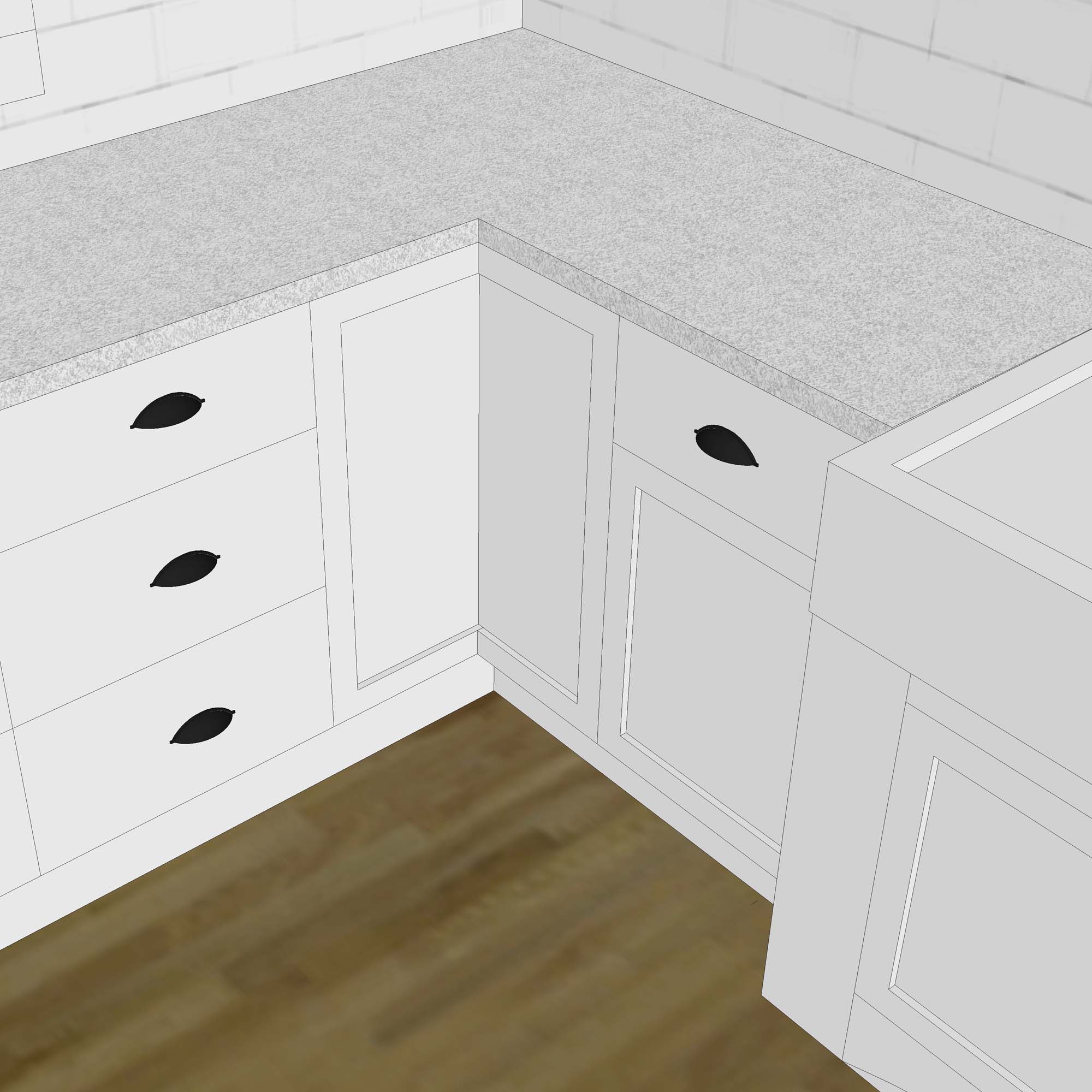
Our kitchen is roughly 10′-6″ x 13′-6″ and is a basic rectangular shape. It was always my intention to keep the design of the room extremely simple. The showcase of the space is the 1930’s era cast iron sink that we inherited. It will be centered on a large west facing window. Stainless steel appliances will complete the kitchen work triangle.
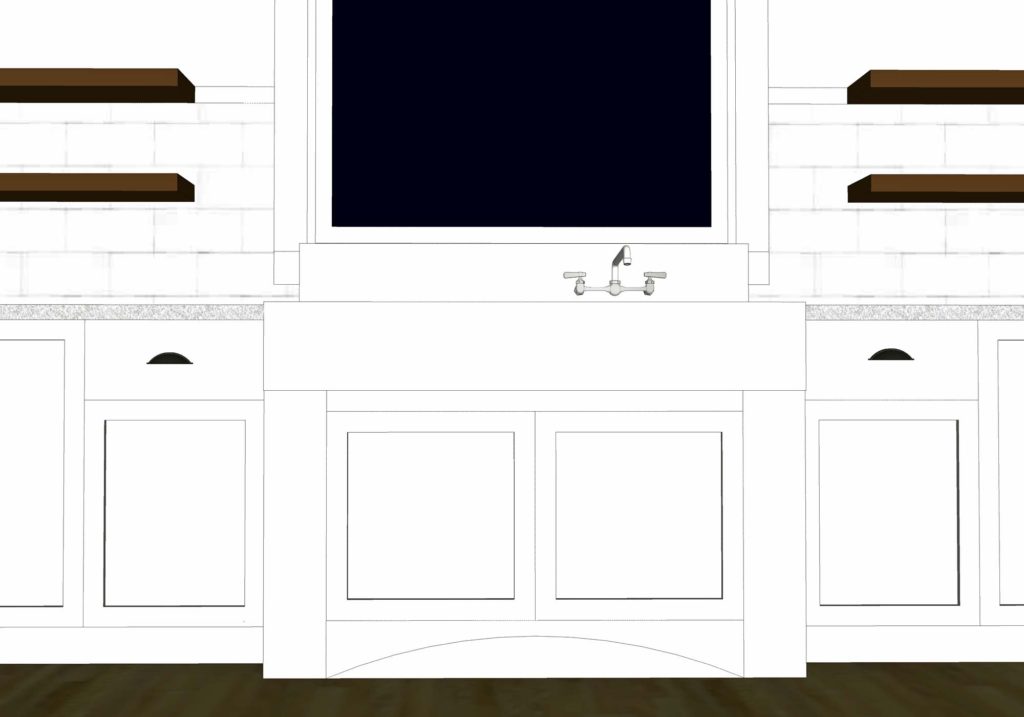
Because I personally don’t like the way upper cabinets tend to make a kitchen feel heavy and closed in, we opted for open shelving. These shelves will be custom made from trees harvested from our property, and hold the dishes we use on a daily basis. The one upper cabinet that is included in our kitchen design is located above the fridge. It’s depth will be perfect for large roasting pans and rarely used holiday platters.
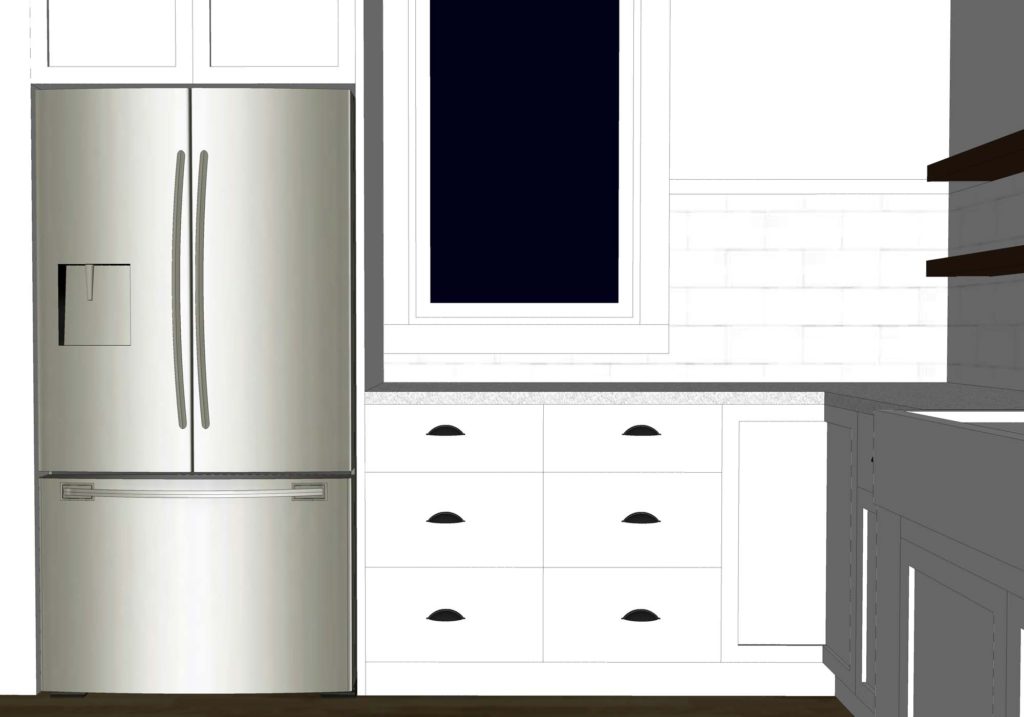
 

large cabinet above fridge


Other Features

Another favorite thing in our future kitchen is the curved ‘artisian’ range hood. Though Cliq does offer this style, I have found another brand online at a better price. I’m all about finding the best deal.
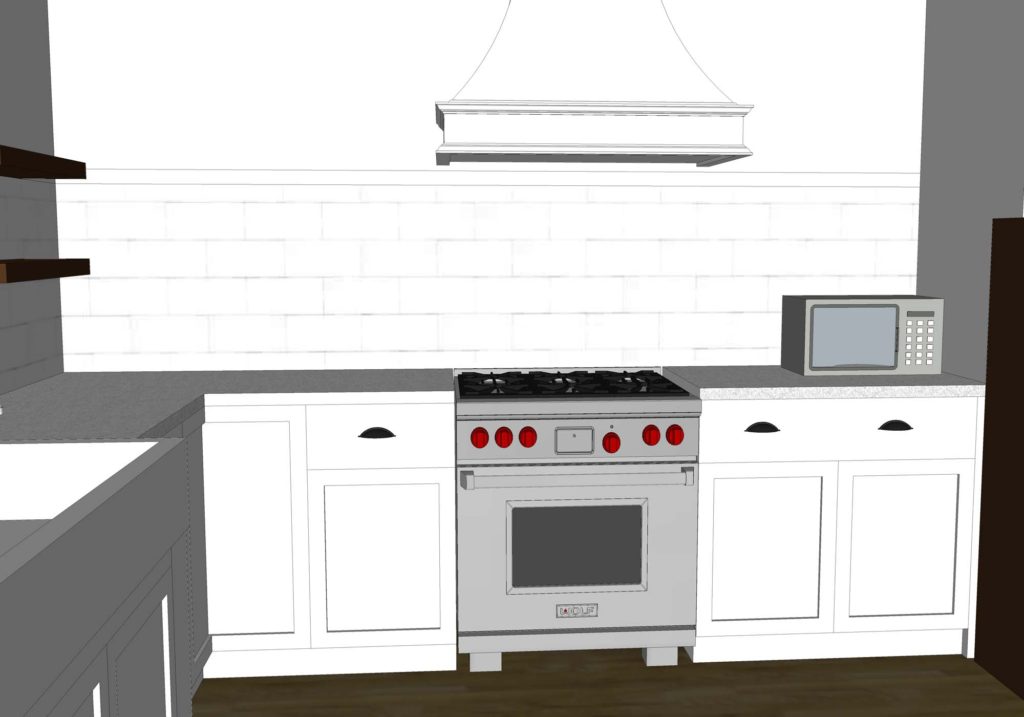
Our microwave will be a smaller counter style. I would love to get one small enough that we can stash it in the cabinet below when it isn’t in use and keep the counters clear. We actually rarely use a microwave, and I value the counter space more.

As far as where the dishwasher will go… we won’t have one! There are a lot of strange looks when we tell people this. Truthfully though, we have never owned a dishwasher. This is another instance where we value the cabinet space over the appliance. Should we ever change our mind or sell the house, we have cabinets on either side of the sink that would accommodate a smaller model.


TIPS FOR WORKING WITH CLIQ STUDIOS

There are a few difference I have found between working with a custom cabinet maker and Cliq Studios. Should you choose to go the semi-custom route, keep these tips in mind.

Finish choices are limited

Though they offer quite a variety of wood grain and painted finishes, Cliq Studios can’t compete with a custom shop when it comes to selection. Certainly this is, in part, one of the reasons they are able to keep the consumer expenses down. I wanted simple, shaker style white cabinets for our kitchen. The ‘Rockford’ cabinet style, painted in ‘Cloud White’ was the perfect fit for us!


Size matters

Be aware that the more simple you can make the design of your kitchen, the less expensive it will be. Avoid having too many ‘custom’ sized items, which will drive up the cost. For example: The standard base cabinet is 2′-0″ deep. Requesting a cabinet that is 2′-6″ deep OR 1′-6″ deep will cost you more money.

Width of cabinets is another factor to keep in mind. Measurements need to be kept to an even inch, 24″ versus 24 1/2″, for example.  I also found that there are max sizes on certain items, such as base drawer units, which don’t go over 3′-0″ wide.
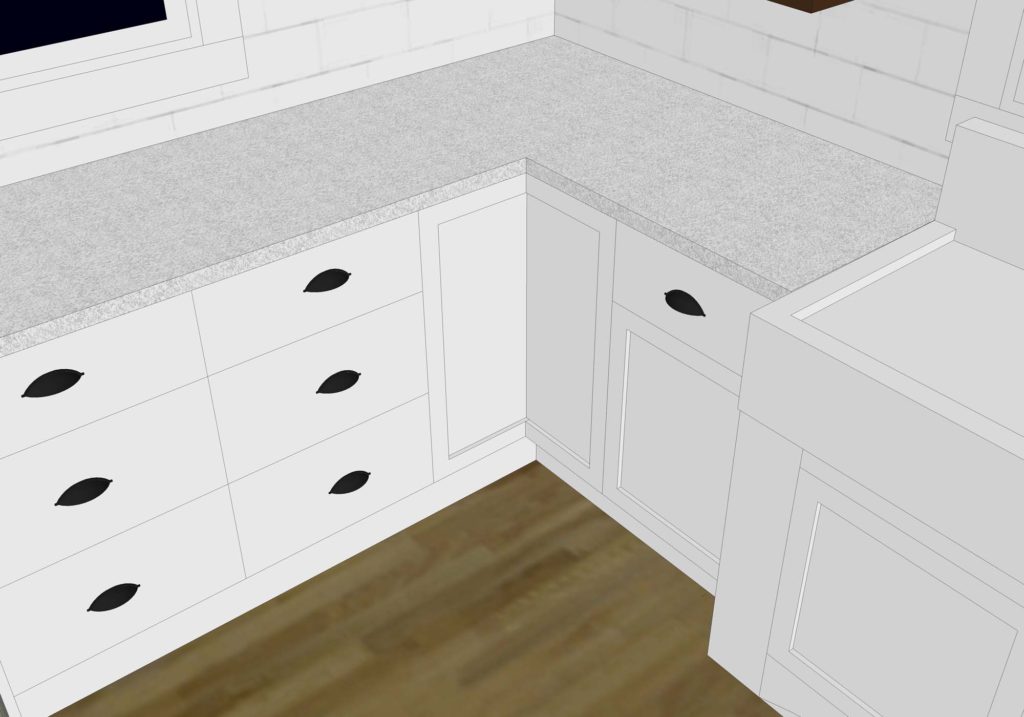
base drawer cabinets

Fillers are your friend

For those tricky spots where one of the standard sizes won’t fit, fillers are your friend. My designer was great about noting where fillers where going to be needed.

There is also the offer of larger side panels, such as those used to enclose a large fridge, for a more built-in look.


Add-on’s are extra

While Cliq studios does offer custom add-on’s such as garbage pull outs and drawer dividers, they are going to cost you extra. I did some research and found that the organization items I wanted could easily be added, after installation, for less. Another bonus of waiting is learning how the kitchen functions. After using it for a while, I may find that those upgraded features aren’t necessary.

Finally, your designer can assist you in selecting counter tops and hardware. Be advised though that the counters are only available through one company, Cambria, which sells a solid surface material. This limits your choices, and they may not have the look you are going for. Drawer pull selection is also limited, and a bit higher priced.

However, if you are fine with fewer options, and like the idea of a ‘one stop shop’ for the entire kitchen design, Cliq Studios can make it happen!


CABINETRY COSTS

After working through the redesign for a few weeks, I finally felt settled and ready to order. I had been given cost updates all along during the process, so the final numbers weren’t any huge surprise to me. Because I know that it might be helpful for someone reading this review to see the actual costs associated with ordering cabinets, I am sharing the break down of expenses.


Included in the  kitchen

(2) 3′-0″ x 3′-0″ corner lazy susan cabinets

(2) 1′-9″ x 2′-0″ drawer bases

(1) 3′-0″ x 2′-0″ standard base cabinet

(3) 1′-6″ x 2′-0″ standard base cabinets

(1) 3′-0″ x 2′-0″ upper cabinet

(1) tall side panel for fridge

(2) cabinet doors + pieces to make a custom cabinet for under the farmhouse sink

Various filler pieces

TOTAL COST: $5,242


As a result of this wonderful cost savings, we were able to add a few additional cabinets. Both for the mud/laundry room and a small snack station for the basement family room.
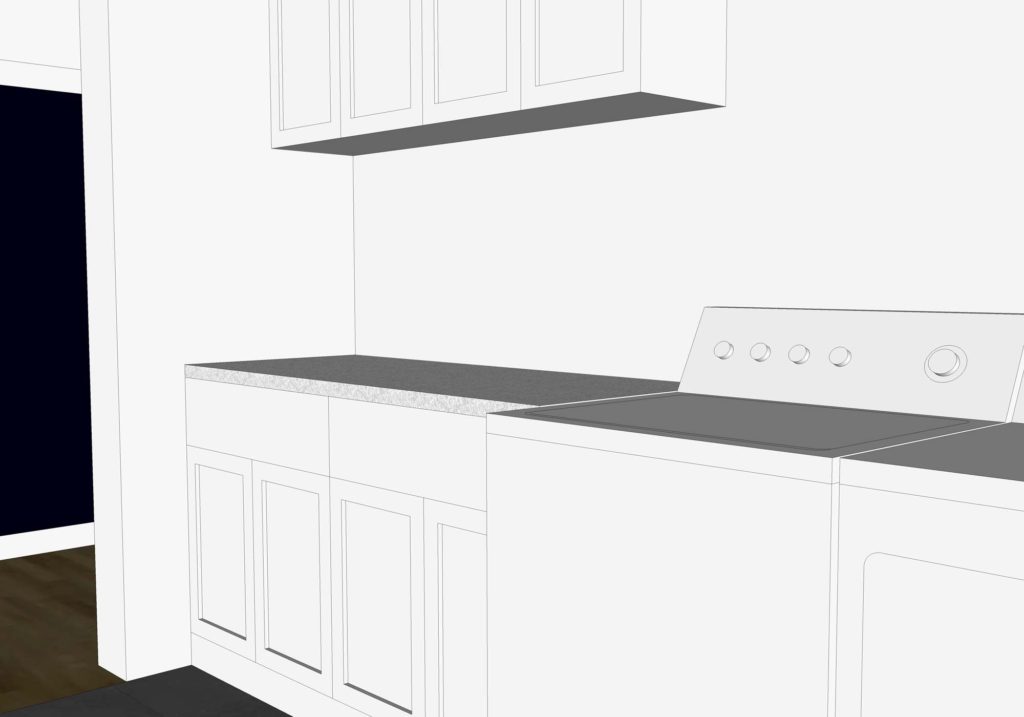
laundry room cabinets Cliq Studios

Included in the laundry room

(2) 2′-6″ x 2′-0″ standard base cabinets

(2) 2′-6″ x 3′-0″ upper cabinets

side panels for both

TOTAL COST: $1,555
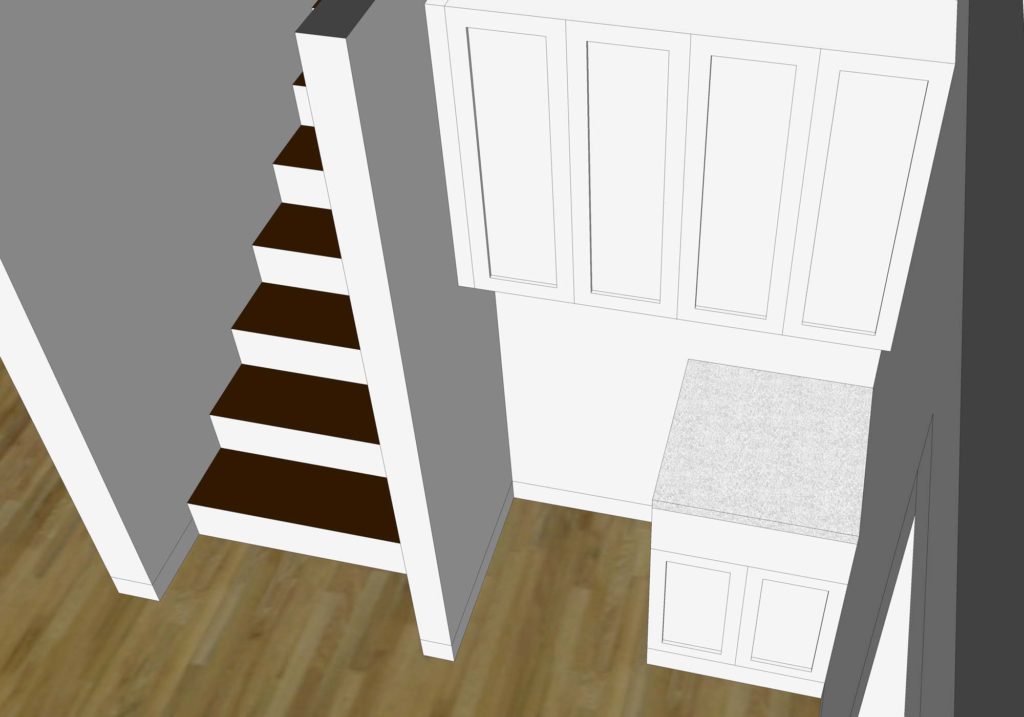
 

Included in the snack station

(1) 2′-0″ x 2′-0″ standard base cabinet

(2) 2′-0″ x 3′-6″ upper cabinets

side panels and filler piece

TOTAL COST: $913


OVERALL COST for our Cliq Studios cabinet order: $7,710. When ordering, the taxes for our zip code were calculated. This added an additional $500 to our cost. Being able to get such a large number of plywood construction cabinets, with soft close drawers, for that price was a steal!


NEXT STEPS

Because I wanted to make sure that we didn’t hold up the process at all, I ordered our cabinets well in advance. Notice came just the other day that the cabinets are in production and should be shipped mid August! Unfortunately we won’t be quite ready for them yet. They need to be delivered to a climate controlled house, and I can’t guarantee that at this point.

Worried that this could cause a problem, I contacted our designer and asked if there was any way to delay shipment. He asked around and was able to confirm that the shipping company can offer us a 30 day extension should we not be ready to receive the cabinets. After that point we would be charged a rate of $50 per month for them to store the shipment. Certainly, this gives us peace of mind!


Overall, so far we have been very pleased with Cliq Studios! Be sure to check back for Part 3 – when I discuss delivery, installation, and my thoughts about the overall quality of the cabinetry!


PIN THIS REVIEW
Working with Cliq Studios to design a custom kitchen