AROUND HERE: MARCH 2018

Around here we have been…

WISHING Spring weather would arrive!  We have had small warm ups; but after each warm up came a large temp drop or inches of snow a few days later. There are rumors going around that another storm is on it’s way, and that the first half of April is expected to be colder than average. It is frustrating, but we know that warmer days are on their way.

In the meantime, the kids have been making the best of things – creating snowmen and ice skating on puddles that had melted – and frozen again.

the kids with ‘Jeff’ the snowman


ice skating on a frozen puddle


GOOFING AROUND. This long, drawn out time indoors has given us a touch of cabin fever – and we aren’t afraid to let our true crazy shine!

Yes, we are weird sometimes… and we like it like that!


EXCITED about {L} turning seven years old!  He is our little athlete – one who is constantly on the go. {L} is always ready for an adventure, and can add humor to just about any situation. He loves hamburgers, super heroes, and Imaginext toys.

some of his birthday gifts


With his big smile, and handsome brown eyes – we know he will turn heads some day; But for now, he has his mommy’s heart – and is quick to proclaim that he is the ‘baby boy’ of the family. For always.

such a handsome 7 year old!


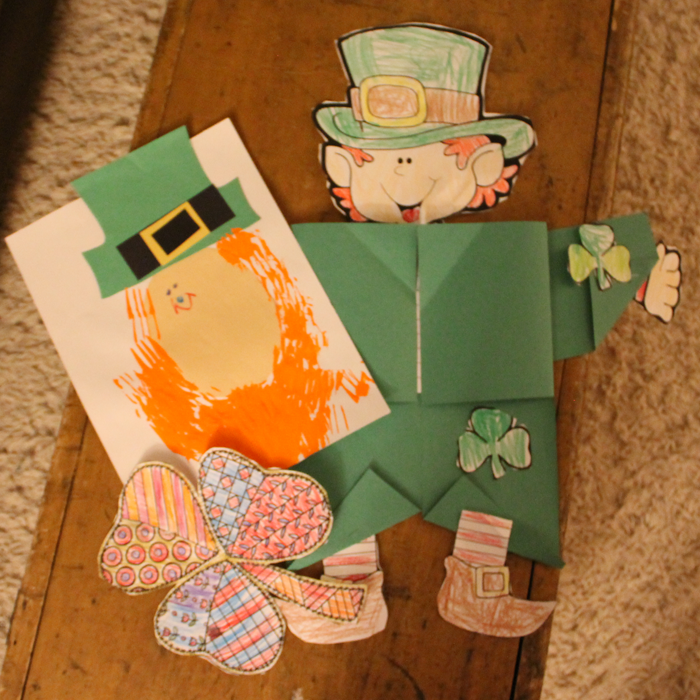
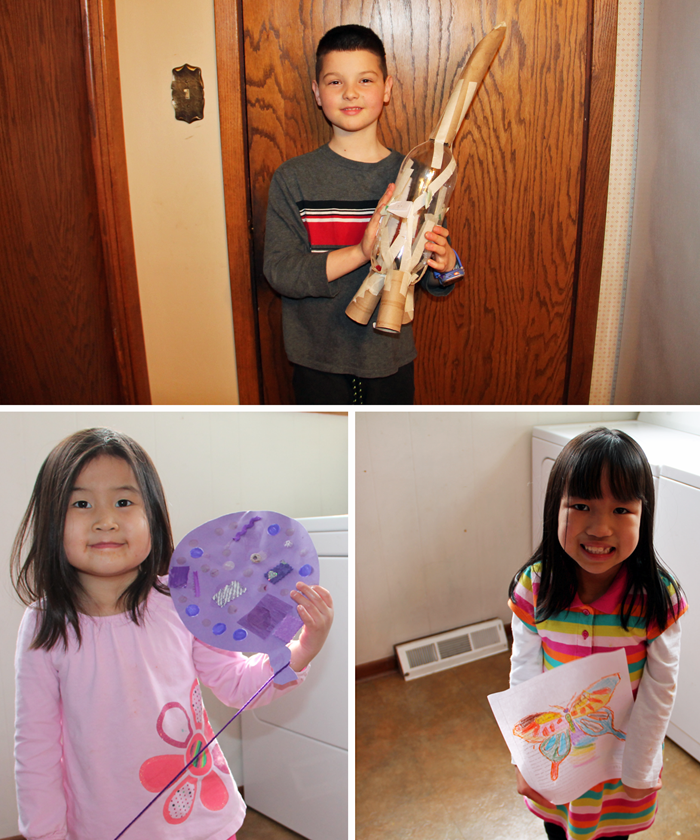
CREATING all sorts of projects at school. The kids seem to be coming home with a new project every other day. In an effort to keep the clutter down, I have been documenting these projects by taking photos of each child holding their work. At some point, I want to get all the pictures arranged in photo books – one for each kid.

It has been fun watching them pose with their creations. They are so proud!


PREPARING for Easter. As Christians, this is the most important holiday we celebrate each year. Without Jesus dying for our sins, and raising from the dead three days later – we would be lost and condemned. We are so thankful for the grace of our Lord and Savior.

the kids on Palm Sunday


Each year our church acts out a Passion Drama – with scenes including the crucifixion. It is sobering to experience, and difficult to watch at times; But we attend as a family, as we feel it is important for even our young children to understand the true meaning of Easter.


This is just a glimpse at what our family has been up to. If you’d like a closer look, be sure to check out our weekly ‘mini vlogs’ on our YouTube channel ARROW HILL FAMILY. Be well everyone!


READER SHOWCASE: HEATHER + JEREMY’S HOME

I am so excited about today’s Reader Showcase feature! This series is where I have the opportunity to share the homes and home projects that my readers have tackled. I am constantly amazed at the talent and varied styles that each person has to offer!

I follow Heather on Instagram and am so inspired by her lovely home and how polished, yet casual, her spaces seem to look. She really has a lovely aesthetic.


Heather, please tell me a little bit about your home:

We live in a traditional builder grade brick home that is about 20 years old. We purchased it a year and a half ago and have been slowly tackling projects ever since! The house is sited in a small, historic town in Louisiana – nestled in a subdivision. The half acre parcel of land is beautifully landscaped, with a peaceful creek nearby, plenty of trees, and wildlife.
 

What is your personal design style?

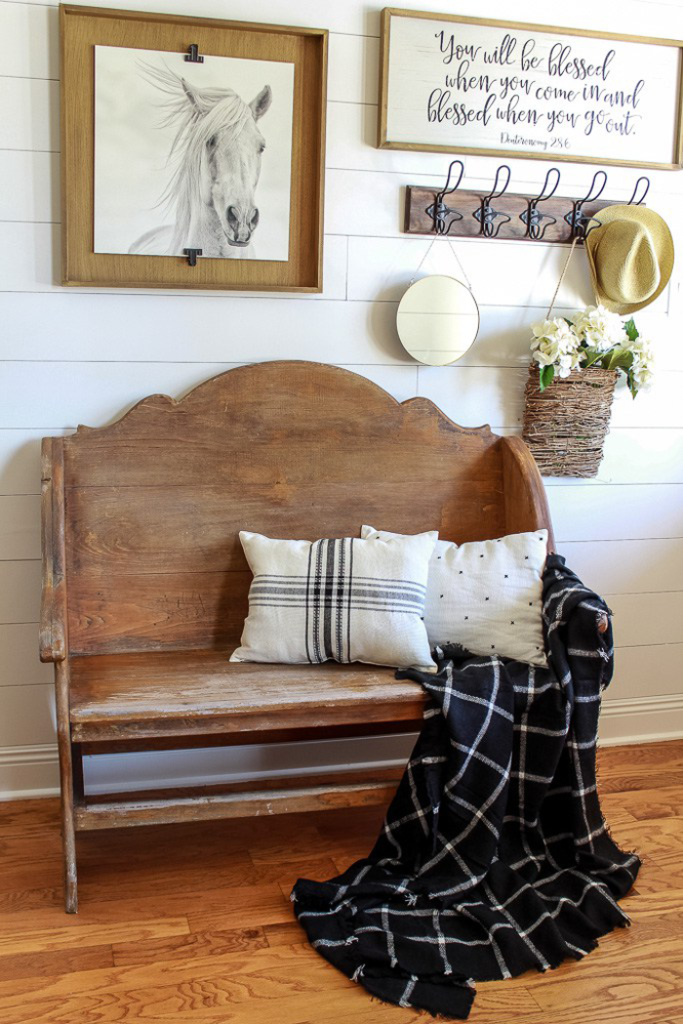
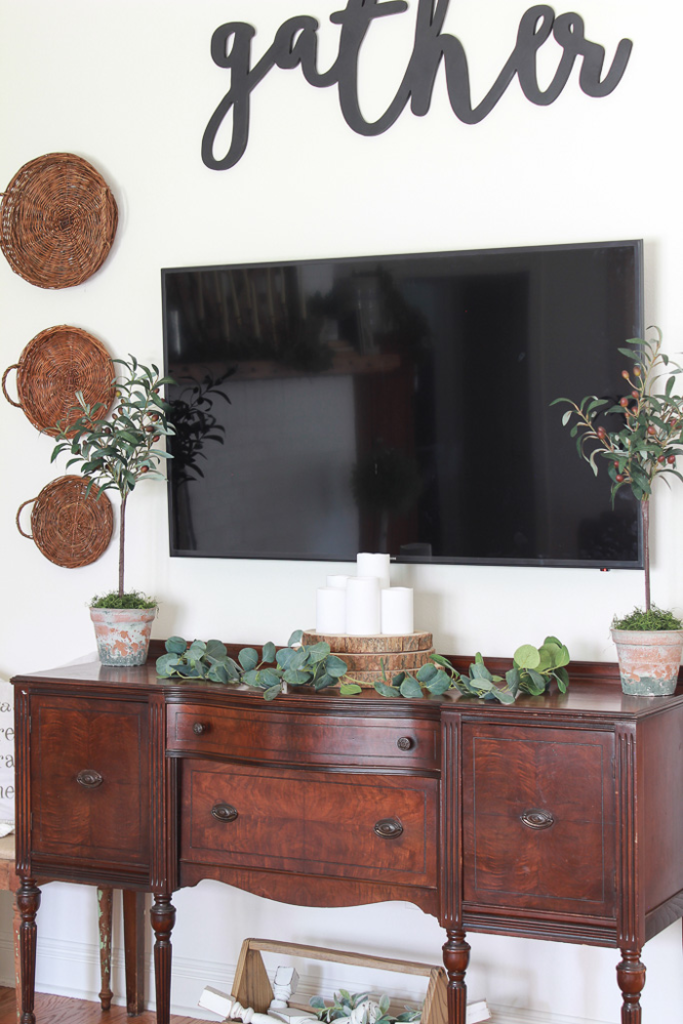
My personal design style is a combination of modern and traditional farmhouse. I love to mix the old with new. Joanna Gaines has definitely been a primary source of inspiration. In fact, my husband often calls me ‘Little JoJo’. We live on a pretty tight budget, so the majority of our home decor is thrift-ed or DIYed. My husband and I love going to flea markets, thrift stores, trade shows, and antique stores to look for vintage pieces to add to our home. I think what I love most about vintage decor is that it is ‘one of a kind’. Each piece is unique and has so much character. There may be another item very similar, but it won’t have the same nicks, cracks, patina and history behind it.


Explain your favorite remodel projects. What was done to each space?


LIVING ROOM

My favorite remodel project has been our living room transformation. My husband and I DIYed everything in this space. When we purchased the home, all of the details were very traditional and dated. The fireplace had black marble with a fluted mantel. There were built-ins on both sides of the fireplace. The walls were painted a tan color, and a ceiling fan hung above the sofa.
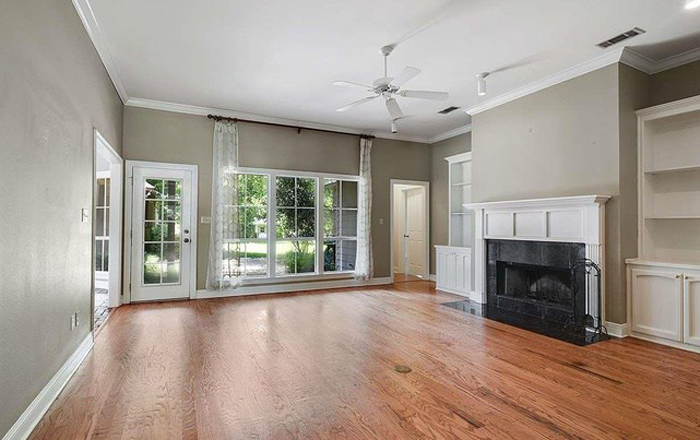
The first step in our living room renovation was to tear out the built-ins. Though the storage was good, the materials they were constructed of were very cheap. My original plan was to tear out the built-ins and replace them with furniture pieces; However, once we pulled them out, we realized there were no floors underneath! The oak floors in the room have a honey color stain. Having the floors completely refinished or replaced was not in the budget. I had to come up with something that would cover the areas without flooring, and so we decided to do a built in bench seat on one side of the fireplace and I found a perfectly sized piece of furniture for the other side.

We then installed faux shiplap on the fireplace wall. This was a good option for this wall because it covered all of the sheetrock blemishes where the built-ins were.
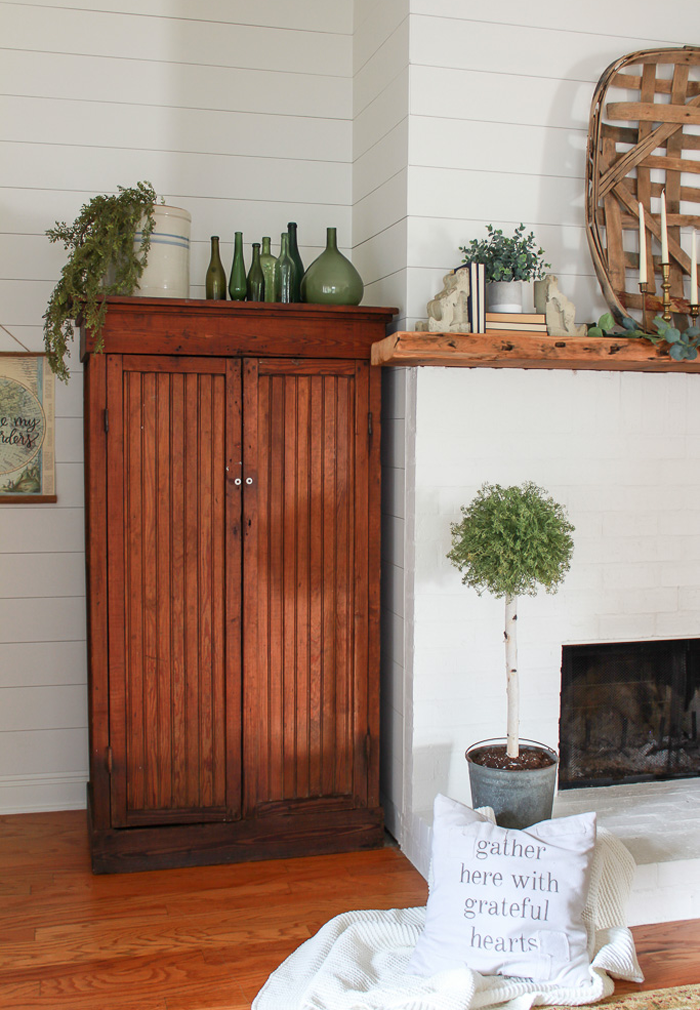
 

When we set to work on the fireplace itself, we started by replacing the black marble tiles. I really wanted to add a hearth, and since we had never laid brick before, we felt it was best to contract it out. We learned an important lesson during that process – always get more than one quote! Of the two quotes to lay the hearth, one was 4 times more expensive than the other!
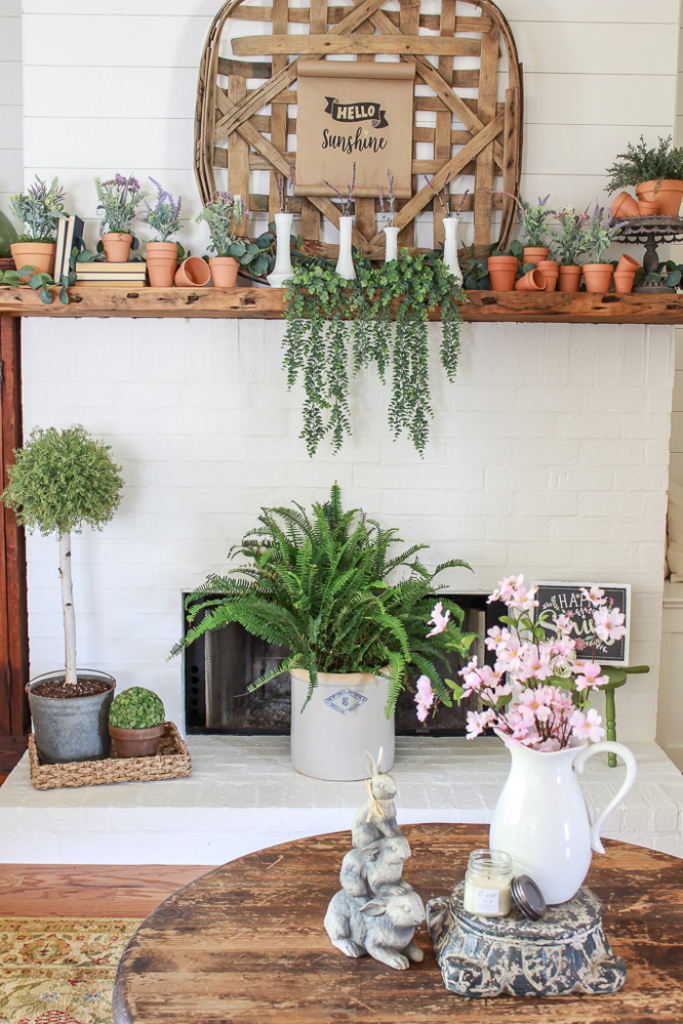
 

The mantel was very decorative with lots of moldings and fluted columns down the side. Again, this was not my style.
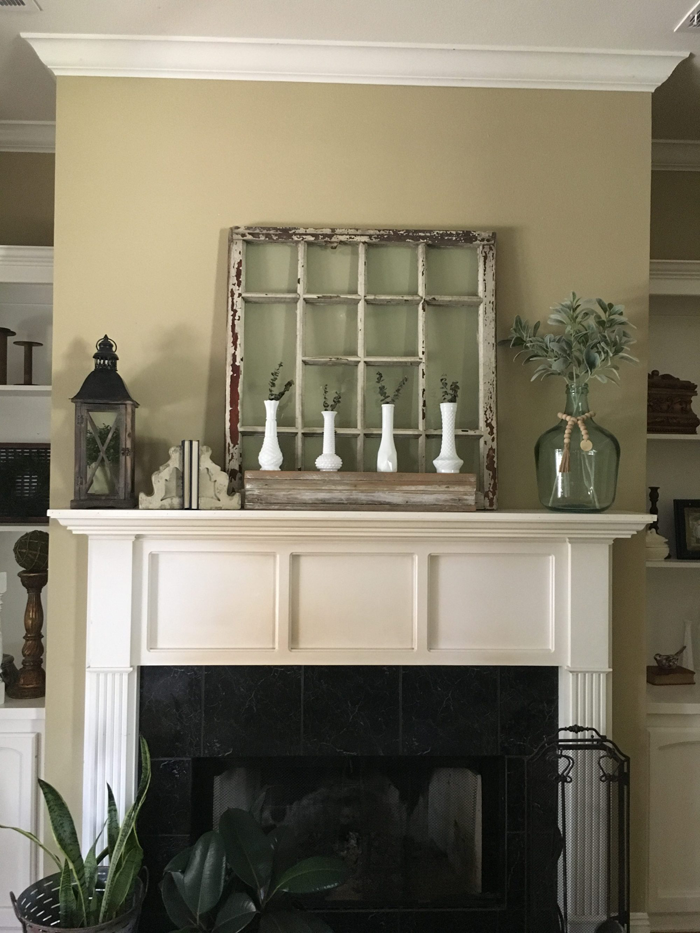
fireplace surround before


I wanted a simple, rustic look and found an old reclaimed pine board to use as a mantle instead. To finish off the living room space, we replaced the ceiling fan with the Edison Bulb chandelier from World Market. We also added drop cloths as window treatments to soften up the room – another in-expensive and easy DIY project!
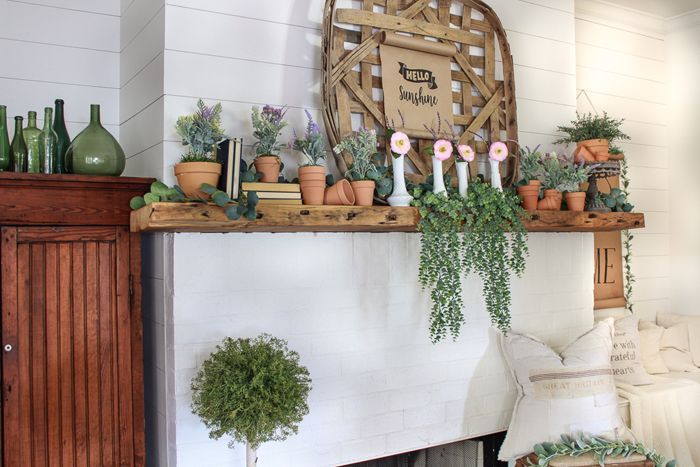
fireplace after

FOYER

The foyer was actually the very first project we ever tackled in our house. I think it was a great starter project for us, since it was a small space. It was still a design challenge though, as the room was originally painted with purple and metallic gold stripes!
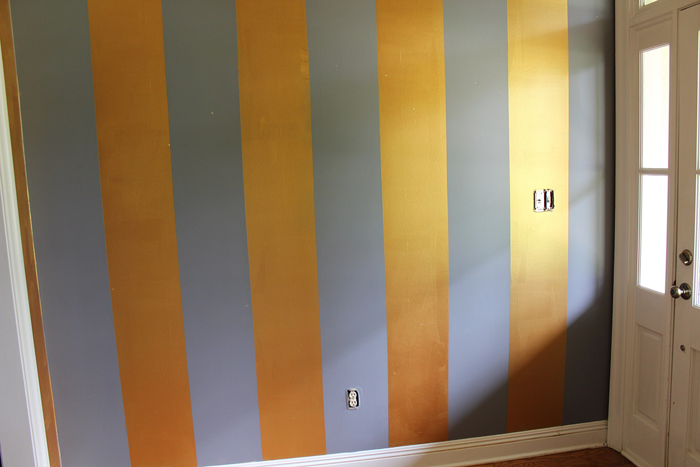
foyer before: a bold choice!


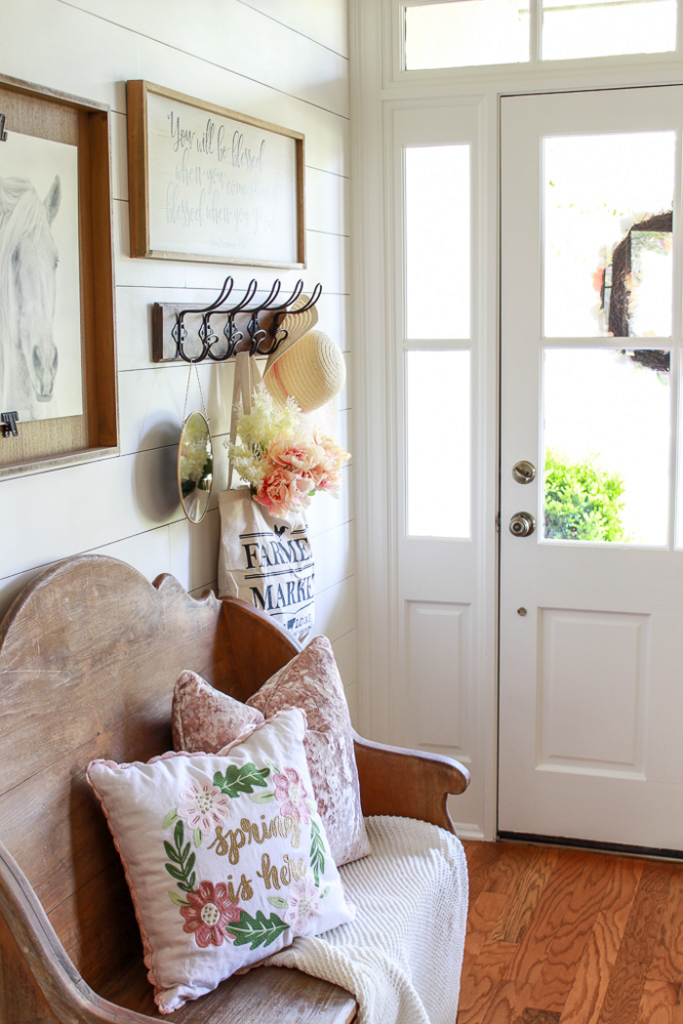
As you can imagine, it would have been incredibly difficult to paint over the bold pattern, and so we decided to cover the walls with something instead. After much research, we ultimately decided to use a faux shiplap in the space. It looks just like the real thing, but it is actually panel boards that are cut with lines every 6 inches.
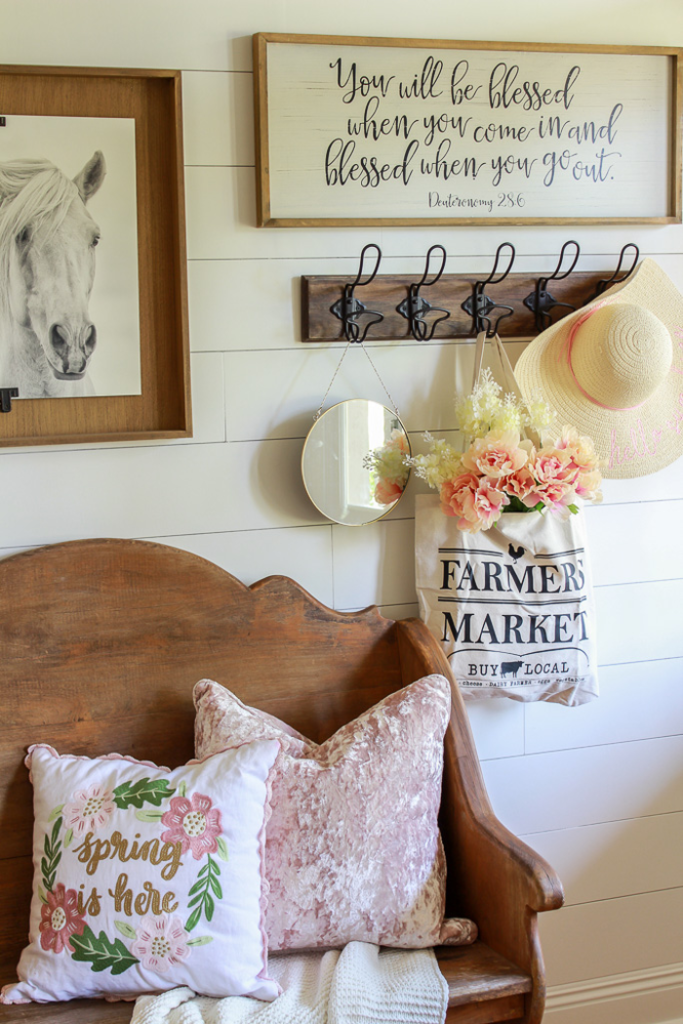
We painted both the walls and trim in White Dove by Benjamin Moore – which really gave it a fresh look, and even increased it’s perceived size! The space turned out better than we ever expected and completing it gave us the motivation to tackle other, larger home improvement projects.


What would you like readers to know about designing and styling a home? Do you have any tips to share?

Most importantly, have fun! Be creative and play around with different styles without being afraid to break the rules to create a style all your own!
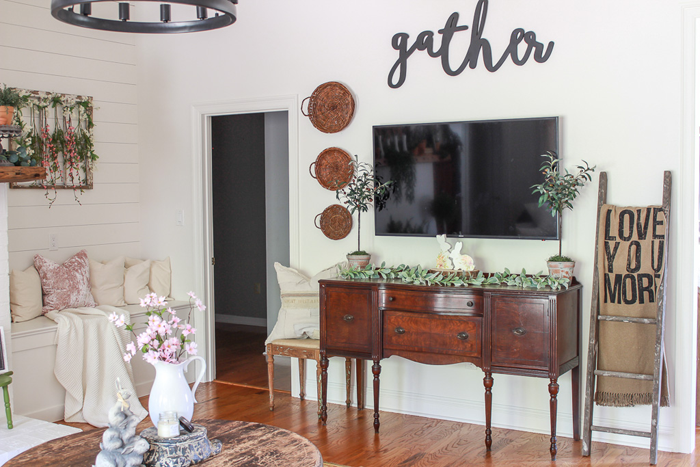
Another tip I have is that if you don’t have a ton of money to style your home, start with ‘shopping your space’. You don’t always need new decor – sometimes you just need new combinations in different rooms. Think of ways that you can re-purpose or up-cycle what you already have. If you use your imagination and think outside of the box, you can create some pretty amazing things. I’ve picked up many items from the Dollar Tree that I have transformed into beautiful decor just by getting a little creative.
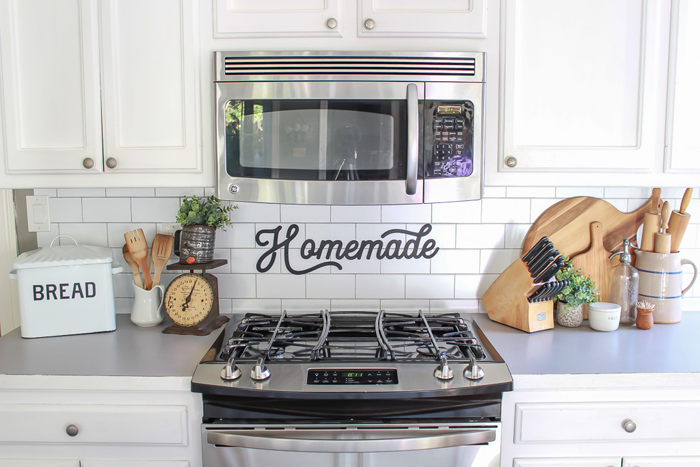
 

Do you have any remodeling / decorating plans for the future?

We are slowly going room by room making this house into our dream home. So far we’ve completed the foyer, living room, and our oldest son’s bedroom. It’s been a slow process, but my husband and I both enjoy doing it. It gives you such a sense of satisfaction and accomplishment when you are able to complete a project.

The room that I am most looking forward to renovating is my kitchen! While it’s not horrible, it just isn’t the kitchen of my dreams. I can’t wait to add a farmhouse sink, subway tile, quartz counter-tops and all of the other farmhouse elements.
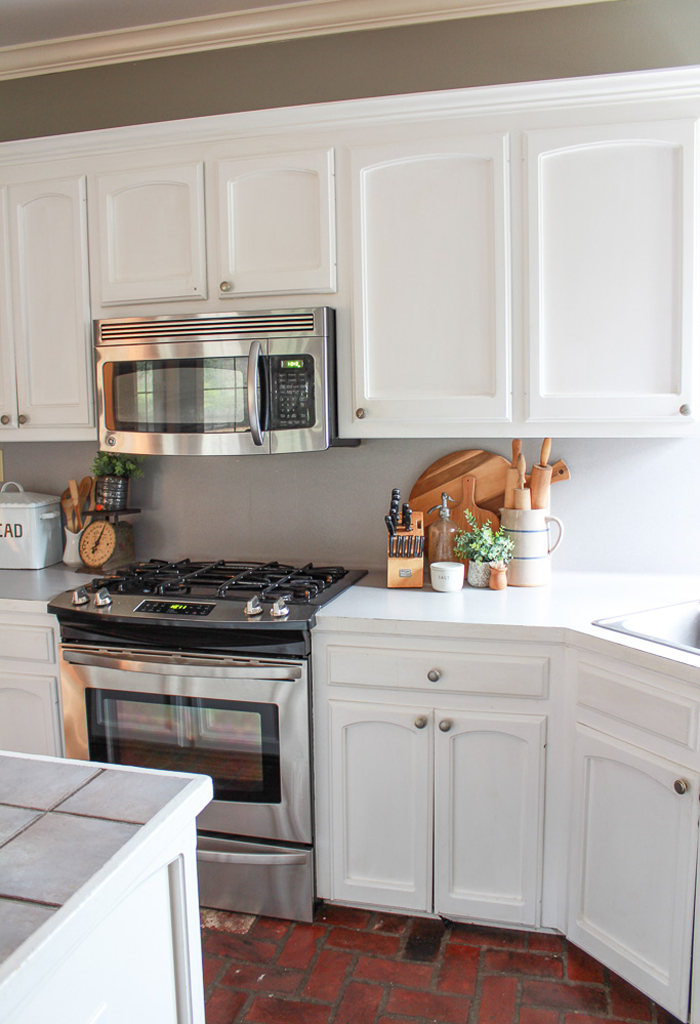
current kitchen: I hope they keep the paver floors!!! 

Other projects that we hope to complete soon include painting the dark red exterior brick of our house to white. I would also love to makeover our master bedroom, and freshen up the laundry room by stenciling the floor tiles, among other things. If only there were more hours in a day!


Thank you so much Heather and Jeremy for sharing your wonderful home with us! I encourage all of my readers to subscribe to Heather’s Instagram account HERE so that you can follow along while she and Jeremy continue to remodel and make their house into a home that reflects their personality and style. Heather also has an amazing blog, Beauty for Ashes, where you can find plenty of home design inspiration and instruction. Go check it out! 


Now it’s your turn! Have you been adding personal touches on your home? Maybe the entire house isn’t finished, but you are particularly proud of one room – I would love to see, and share with my readers!

If you are a blog subscriber, you are eligible! Simply email photos and a brief description to angela@arrowhillcottage.com for your chance to be featured!


SHARED BOY BEDROOM IDEAS

Read on for ideas on how we are designing our future home to incorporate a shared boy bedroom for our three sons. These ideas can be useful for anyone whose children share a bedroom.


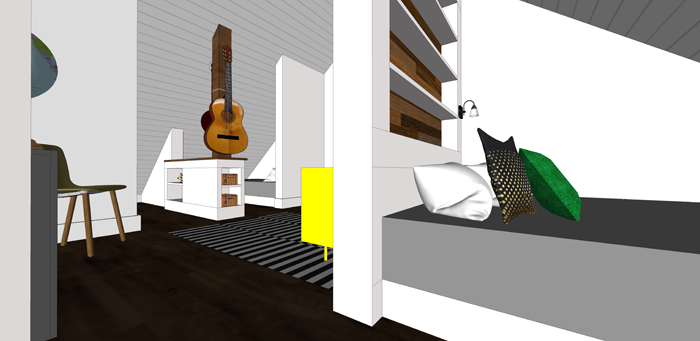
private sleeping nook in shared boy bedroom


As a family on the journey toward minimalism, it only makes sense that the design of our future house, Arrow Hill Cottage, would reflect our desires. Because of this, we have been striving to build the least amount of square footage necessary for our large family to feel comfortable. One minimalist technique we are implementing is shared bedrooms for our children.


I wrote about the design of the shared boy bedroom in a previous post, when things were still very conceptual. Since that time, I have worked on structural drawings, determined window sizes, and fine tuned the overall floor plan. At this point, I feel fairly confident about what will be built.

The upper floor of our cottage will have three total rooms. A shared bathroom off of the hallway, plus a bedroom for each gender. One for the girls and one for the boys.

Our three boys are currently 11, 9 and 7 years old. They share a room in our rental house and enjoy it. However, we know that as they age they will be looking for more privacy and personalized space. Because of this, I designed their room so that it can grow with them.


THE ROOM LAYOUT


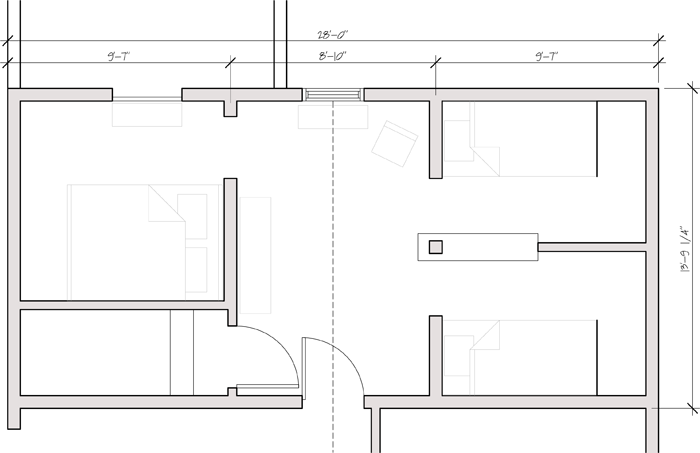
shared boy bedroom floor plan

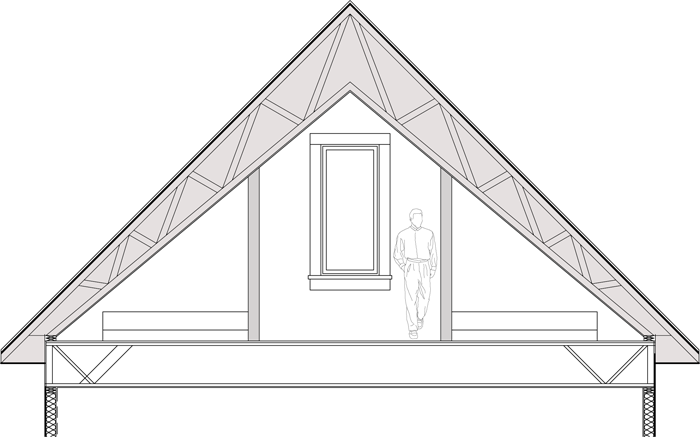
This is the floor plan of the room. Overall, from edge to edge it is 28’0 wide x 13’9″ deep. The room is vaulted at a high point of 11’5″. The ceiling slopes from the vault all the way down to the floor.


bedroom in eaves of second floor

Generally speaking, the room is divided into two different zones. The center core area will be common space, shared between all of the boys. In the image above it is the space with the large window and the grown man figure ‘for scale’.


In the lower sloping portion of the room, along the outer edge, will be private sleeping nooks. One for each boy. The nooks for our younger two boys will feature twin mattresses, while our oldest son will have space for a queen sized bed.


CENTRAL ‘COMMON’ SPACE

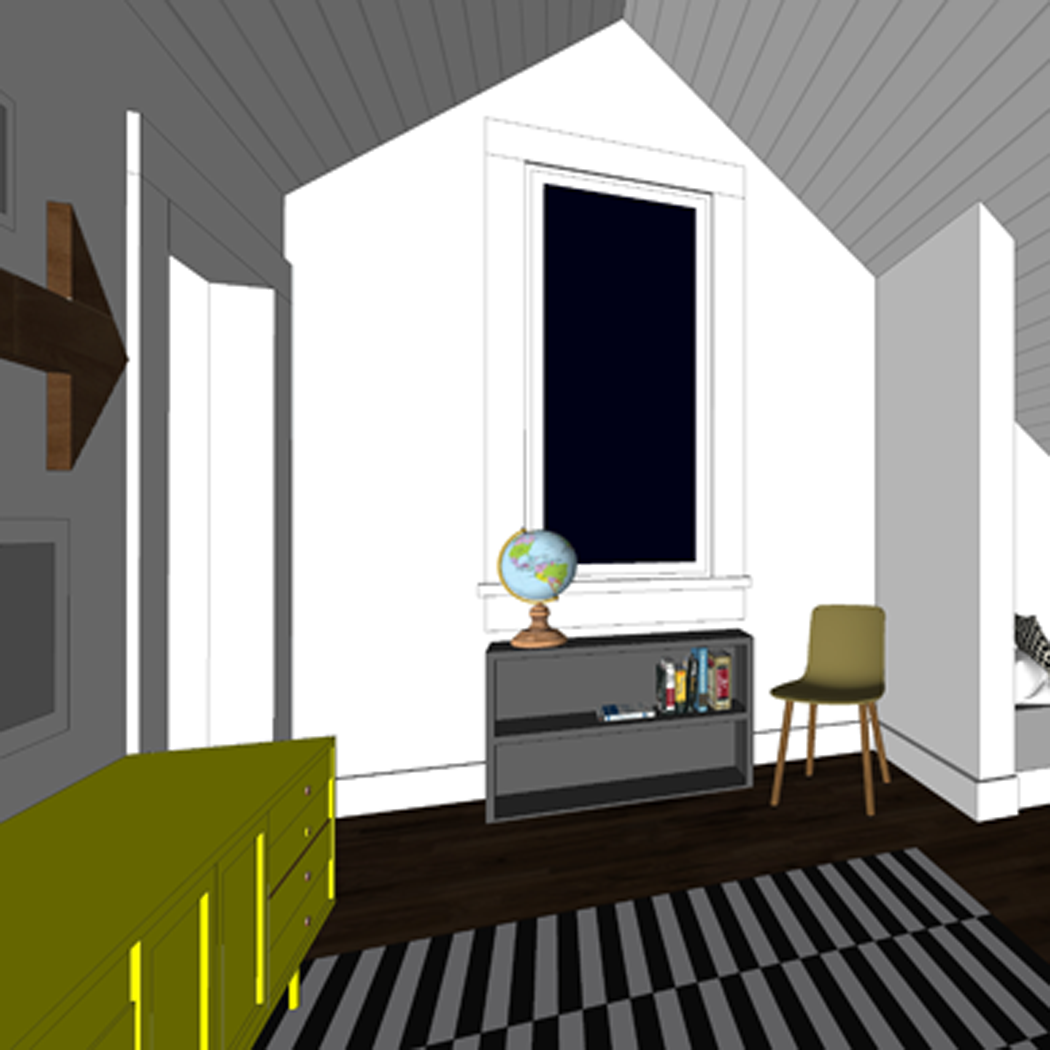
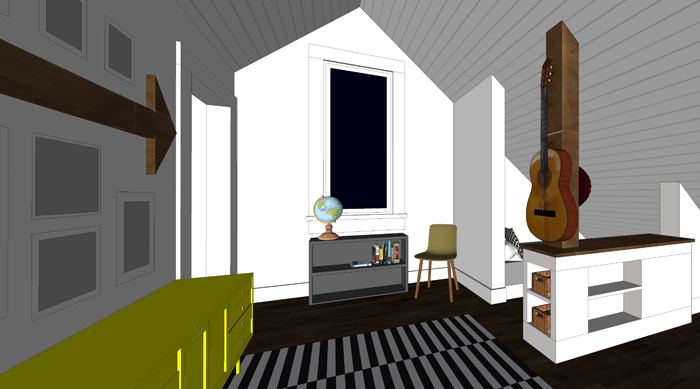
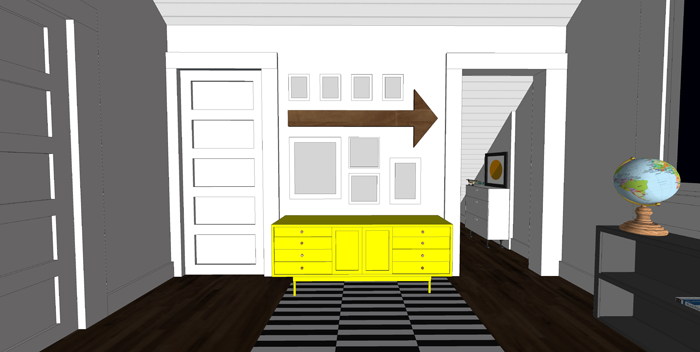
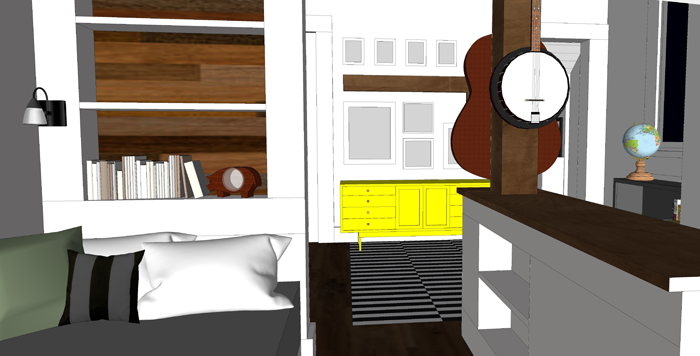
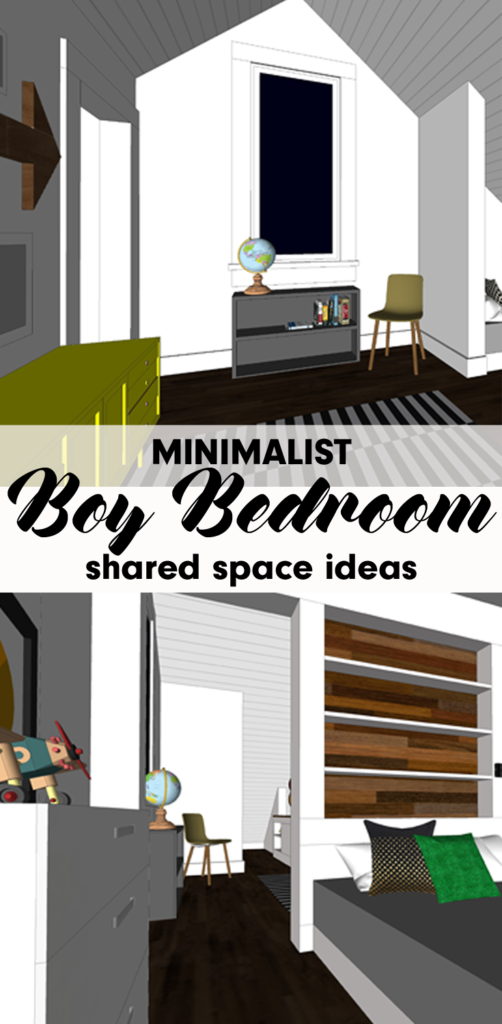
This is the view of the room as you walk into it from the hallway. The center space is about 8′ wide, but seems much more spacious because of the vaulted ceiling.  I plan to keep this portion of the room very simple and neutral style-wise, with furnishings that can grow with the boys.


clean and simple boys shared bedroom design

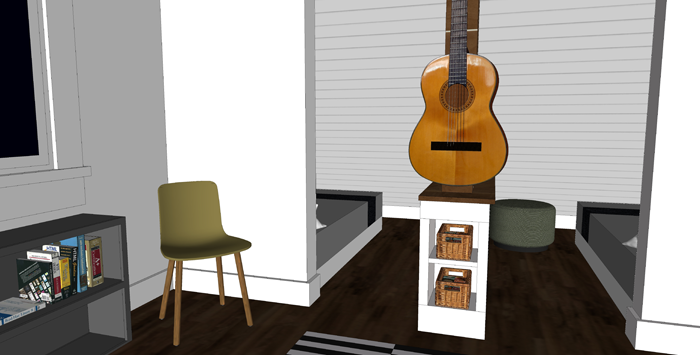
As you can see in the right of this image, the younger boys sleeping nooks are a bit more open to the center space. The larger nook is more private and is tucked behind the wall on the left.


boy bedroom design ideas. minimal home design

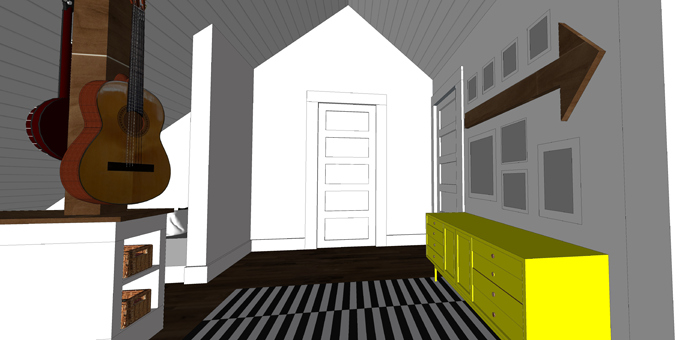
On one wall of the common space, I envision a large dresser painted in a bright color. Above it, I would like to add a gallery of photos of the boys and some fun art pieces – such as this, this and this.

Because the ceiling slopes all the way to the floor, I want it to be covered in a durable material. Perhaps whitewashed pine boards, for example. This application could add texture and visual interest as well as provide a durable surface.


shared bedroom for three boys

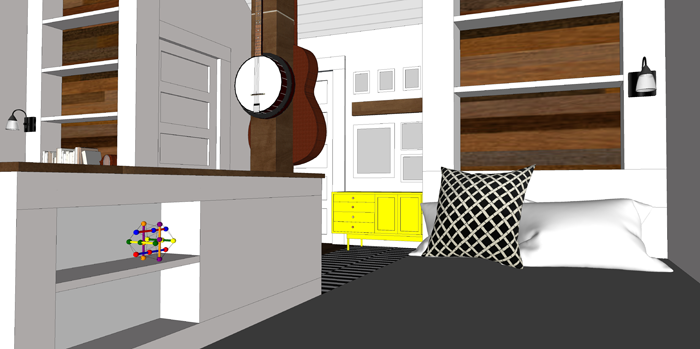
Looking back toward the bedroom entrance, you can see the closet door to the right. This one closet and the dresser will be shared by all the boys for their clothing. I imagine as they grow they will eventually be in generally the same size, at least for shirts and socks. This will help cut down on the amount of items they will need to store.


PRIVATE SLEEPING NOOKS

Although this is a shared boy bedroom, I wanted to be sure to incorporate a semi-private are for each boy to retreat to when he needs space from his brothers.


shared boy bedroom design

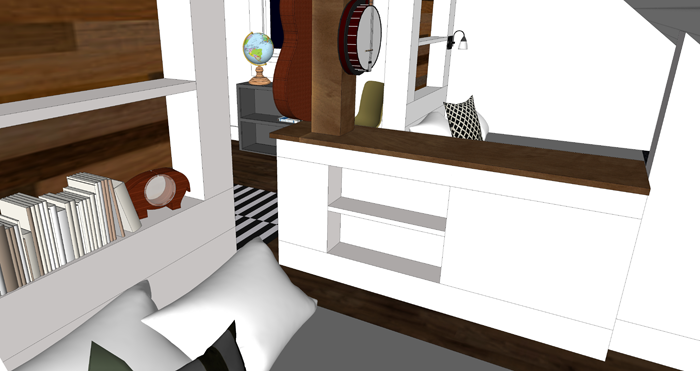
In their individual bed nooks, each boy has plenty of storage and places to display his personal belongings. The beds will be positioned not far from the floor, similar to platform beds – but I would like to at the very least allow for a 6 inch rolling drawer under each bed. Will perhaps try to tackle something similar to this DIY.

Each nook will have it’s own little lamp, as well as shallow shelving built into the wall studs. Barn-wood accents on the back of each of the shelves would add some warmth and extra character to the space. The partial height built in between the younger boy’s nooks will provide more storage, while the post will be the perfect spot to hang up their musical instruments. In this way, the instruments can also serve as room decor.


beds positioned in roof eaves of second floor


I imagine that each of the boys will put some personal touches in their own little nooks – with bedding, books, and accessories.

built in bed in boy shared bedroom

minimal shared boy bedroom


LARGER, PRIVATE NOOK

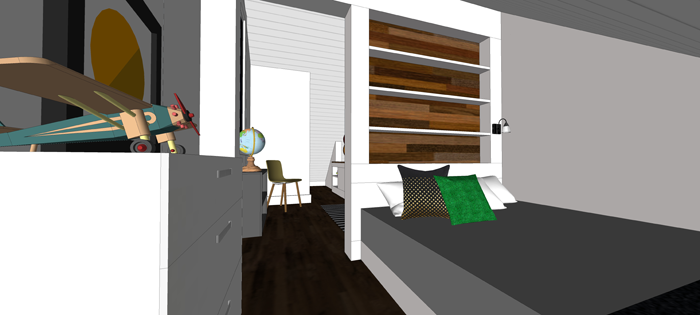
On the other side of the room is the larger sleeping nook. It will be given to our oldest son starting out. Once he moves out of the house, it will be passed down to the next in line – age wise.

As I mentioned before, this space is large enough for a queen sized bed. I appreciate this aspect while looking into the future, when our kids are all grown up with families of their own. We can see this room serving as a very nice family guest suite.

kid sleeping nook in shared bedroom space


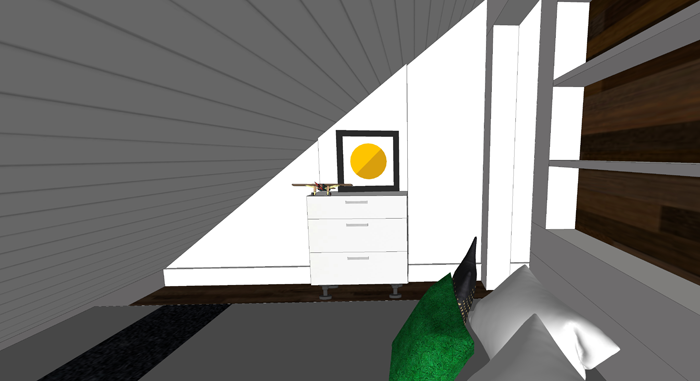
There is room for a small dresser and some art on the side wall.

bed in eave space of shared boy bedroom


SHARED BOY BEDROOM THOUGHTS

I know that some of you reading this will be skeptical about three teenage boys sharing a room. I totally understand that, and will admit that I am a tad nervous myself. However, each family uses their house so differently. For us, the bedrooms have always been used as a place to read and sleep.

In our home we allow the kids to have musical instruments, books, and perhaps a few toys in their rooms. We do not, however, allow electronic devices (computers, tvs, phones, etc). By doing so, we hope that the shared boy bedroom will serve it’s intended purpose as a relaxing space. And, if they need to get their energy out, they can always go shoot a few hoops in the basement rec room!


We are all super happy with how the room is coming together conceptually and the boys, of course, can’t wait to see it built!


PIN THIS SHARED BOY BEDROOM

shared boy bedroom ideas for the minimalist family home


100TH BLOG POST!

Ten months ago I started this blogging journey with my first post.  I was excited, and very very nervous.

It began as a way to document the design process of our family’s future home – Arrow Hill Cottage – and as time went along I realized that I loved educating my readers about all sorts of aspects of home design, decorating and upkeep. In October, I organized the website into three major post categories: DESIGN your home, LOVE your home, and IMPROVE your home.

I have had the joy of featuring reader’s homes – and helping with their design dilemmas through the Makeover Takeover series. The connection I have made with my audience has been one of the most amazing and unexpected benefits of this journey so far.

I’ve learned some tough lessons, and made some mistakes. I’m still learning how to be a blogger – but I’m excited to continue doing what I’m doing here, in my own little corner of the internet.

We will find out soon if we will be able to build our cottage this Spring/Summer – and in anticipation I have been doing a lot of work behind the scenes in preparation. I have a ton of content just ready to hit the blog!

To be sharing this journey with all of you is a privilege. Thank you for encouraging me through 100 posts!


SATURDAY SKETCHBOOK: POSITIONING THE COTTAGE

The building site where a new home will be constructed is so, so important. Generally, it is recommended that you don’t even begin designing your house until a potential building site has been selected – so that the house can be developed to utilize the best features of the land, and avoid the pitfalls.


We purchased our building site in 2009. You can read more details about how we found and fell in love with our 4.5 acres in this post. Through the years, as I have been sketching ideas for the cottage, I have been careful to keep the lay of the land in mind – at least conceptually. I am now far enough in the design that I need to look more closely at how the cottage will actually be positioned.

This week I spent quite a bit of time fine tuning design details – the garage placement, the driveway configuration, and where the walkout door from the basement will be. Each of these decisions were heavily based on the site.


Our site is super unique, and has some interesting challenges. These are some of the site related issues that have been guiding our design:


SLOPED LAND

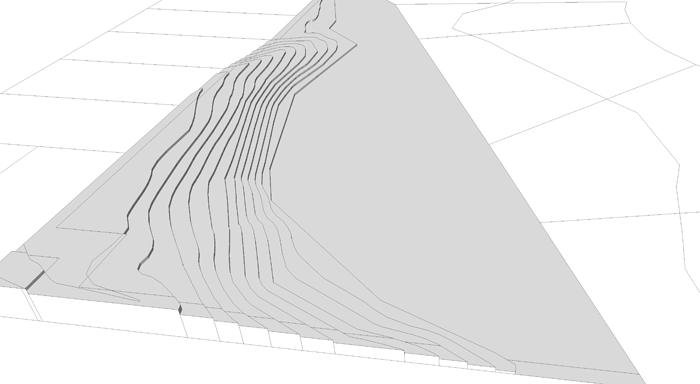
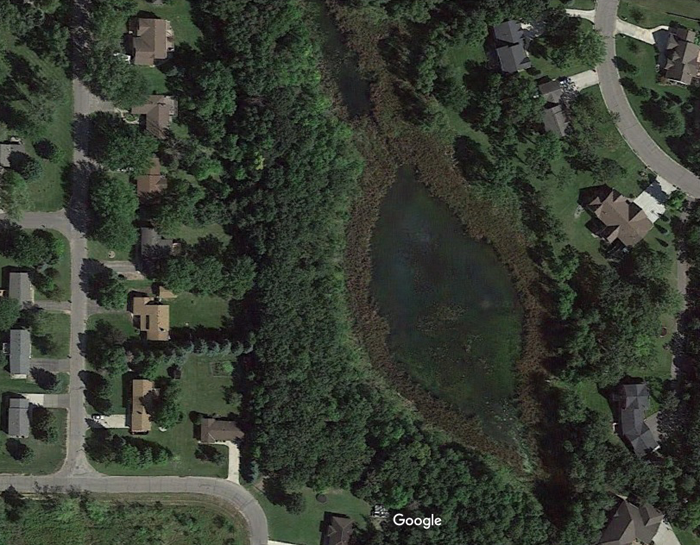
I’m sure that this particular parcel of land was passed over by multiple people solely because of its most dramatic natural feature – the slope. From the roadside there is a bit of flat land, but the slope down to the pond below is quite dramatic.


SETBACKS

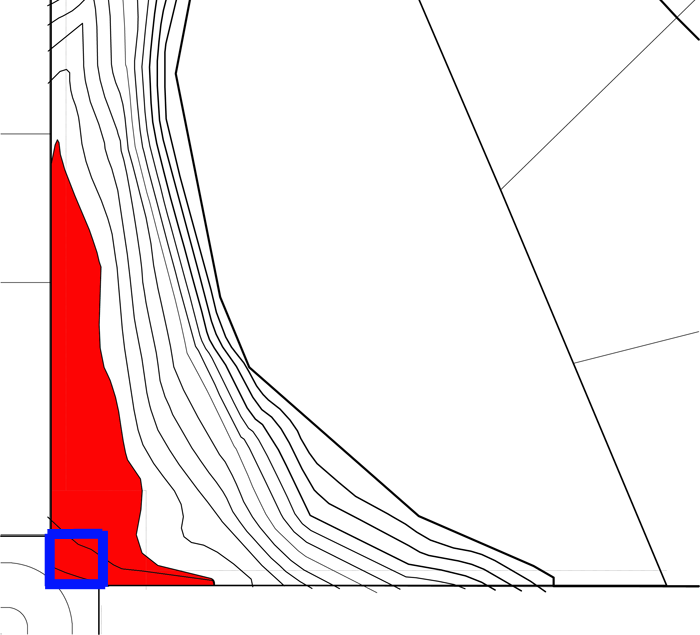
The red area shown in the above graphic is the ‘flat’ land. The portion of land closest to the road (shown outlined in blue) is not build-able, because of setbacks and easements. Right from the start, we knew that we would likely have a longer driveway than most because of these setbacks alone.


MANY NEIGHBORS

Our land borders quite a few properties – both on the south and west property lines and, visually, across the pond. 14 parcels border ours. While this could be seen as a major drawback, I have been working strategically on the design so that our privacy within the home is maintained.


DENSE TREES

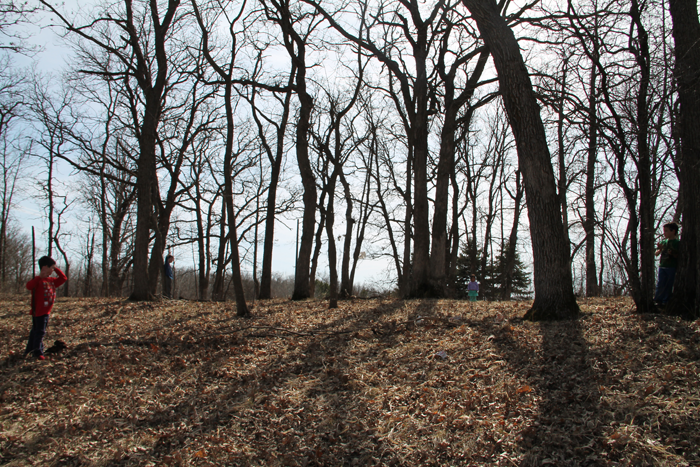
the kids standing by one of the many large trees that will need to be removed (2017)

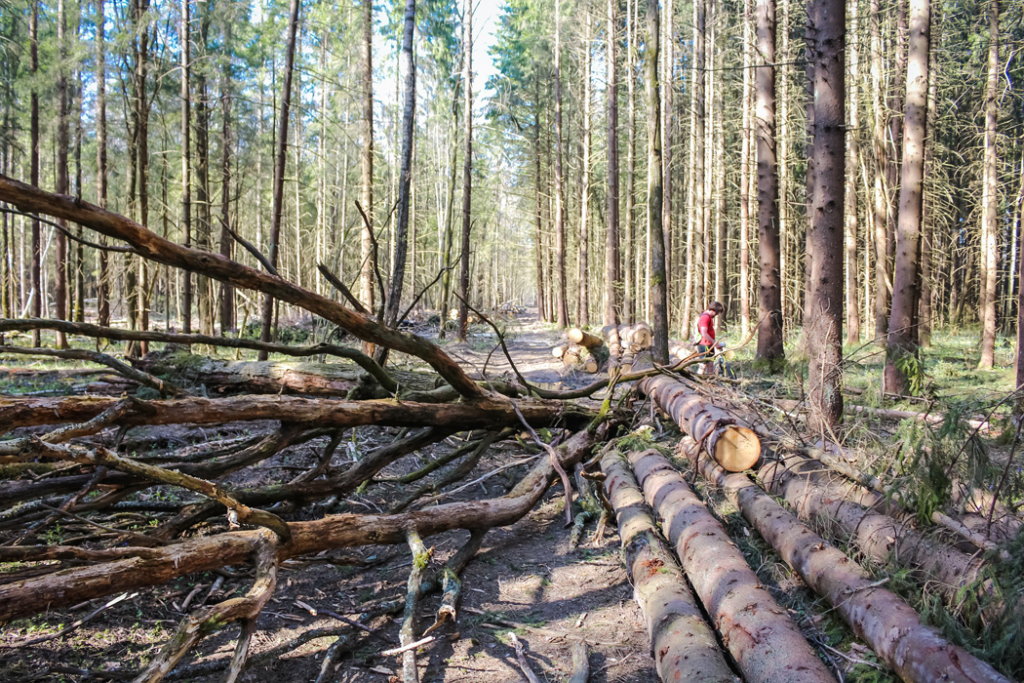
One of the reasons we fell in love with our building site was that it was absolutely FILLED with mature trees: oak, maple, and other varieties. Sadly, there will be tree removal when the time comes to build. There is absolutely no avoiding that fact. By minimizing the overall footprint of the cottage, we hope to remove as few trees as possible.


EXPOSURE TO THE ELEMENTS

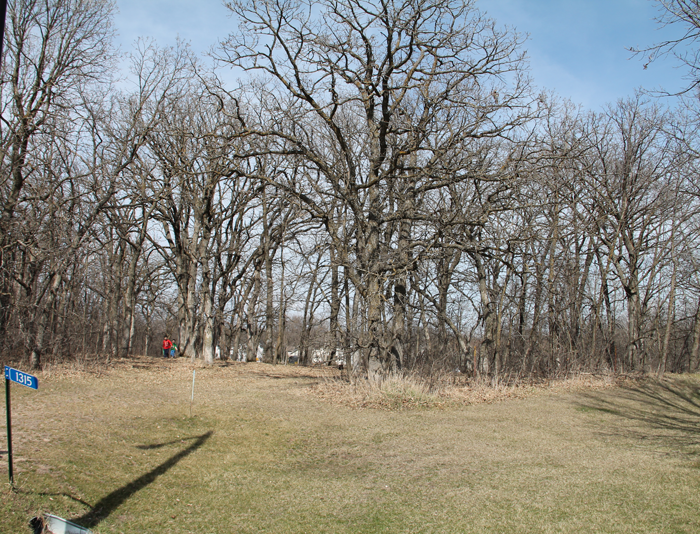
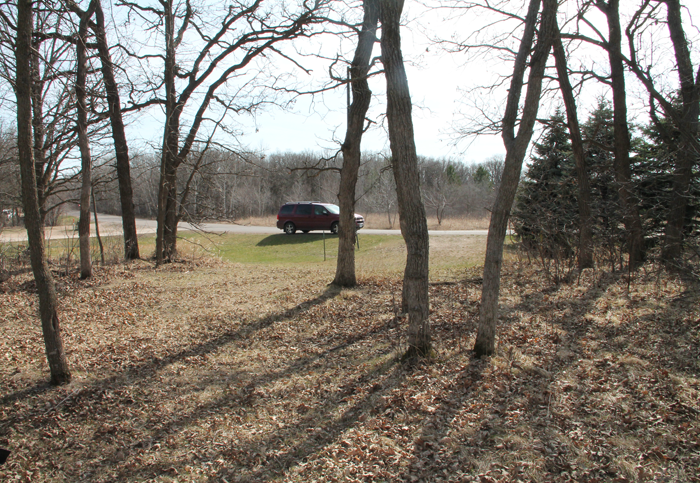
A view from our property, looking south. Our mini van is parked on the curved portion of the road.

An often overlooked, but important aspect of home design is the orientation it has in regard to the sun and wind. Because we live in a Northern climate, our strongest sunshine comes from the south. It is generally advised in this climate that you position your home with windows facing south (both for daylight, and for heating purposes in the winter). Thankfully, once a few trees are removed, we will have quite a bit of southern exposure.

It can get very cold in our state during the winter months – and the prevailing wind direction is from the northwest. I plan to rotate the cottage so that the garage can be used a bit for protection from those strong winds.


THE IDEAL POSITION FOR OUR COTTAGE

With all of these site issues in mind, I have narrowed down the placement of our cottage. I am working on finding the best angle of rotation and also determining how exactly the driveway will function – but we are getting close!


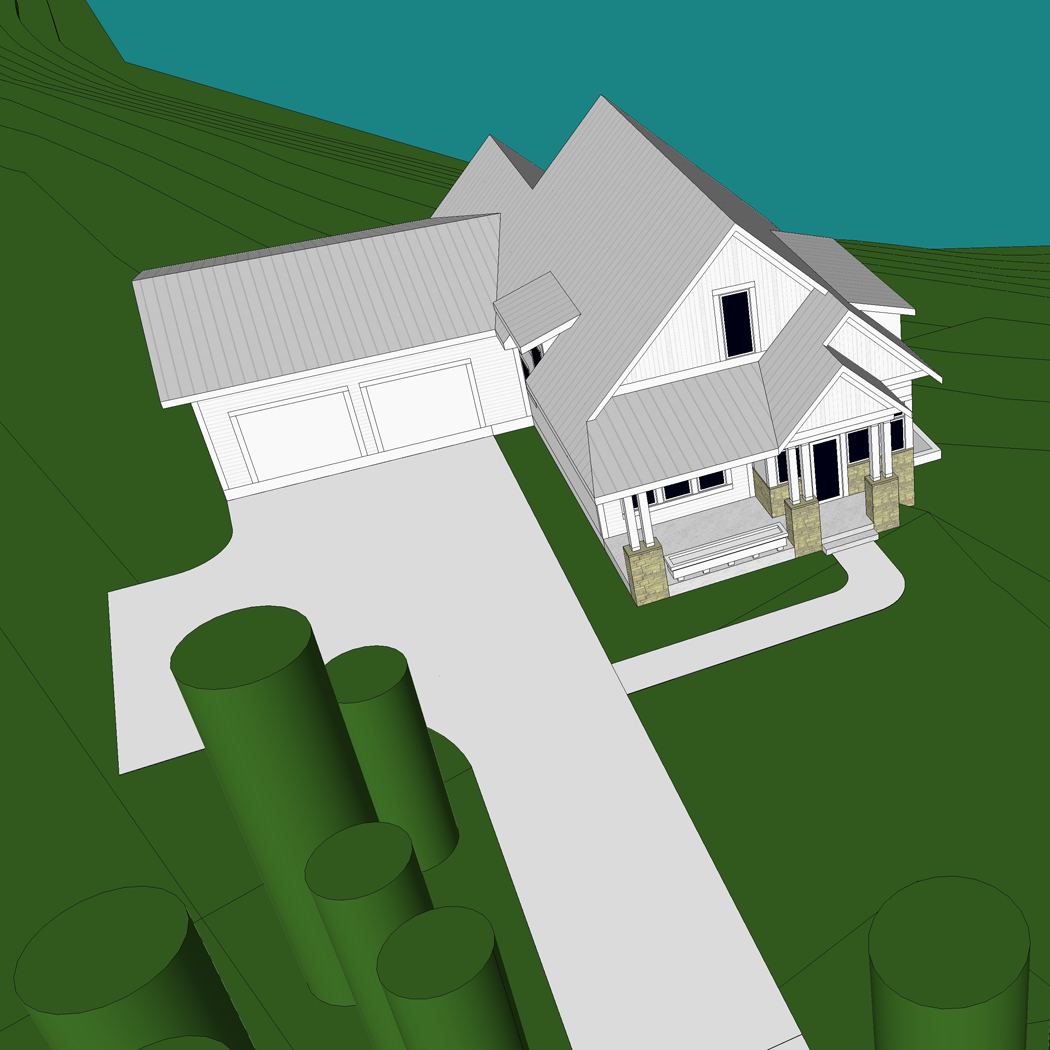
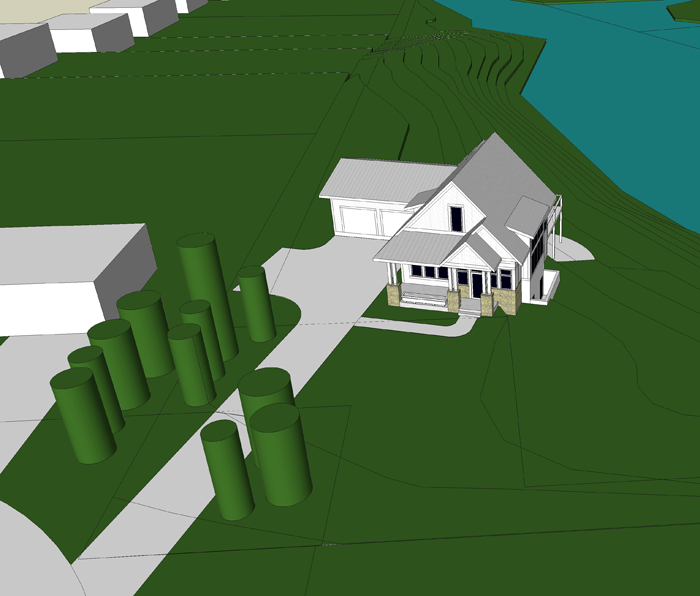
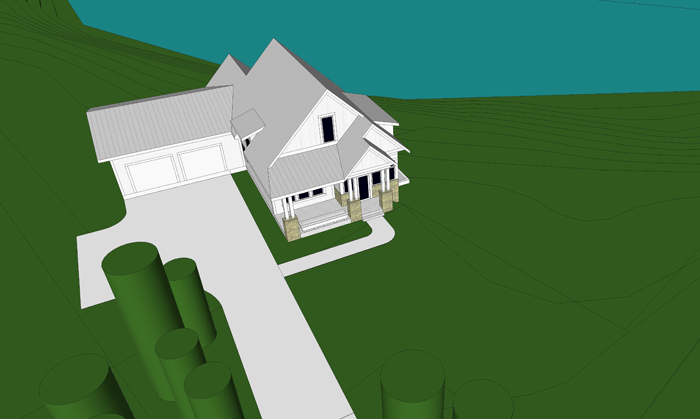
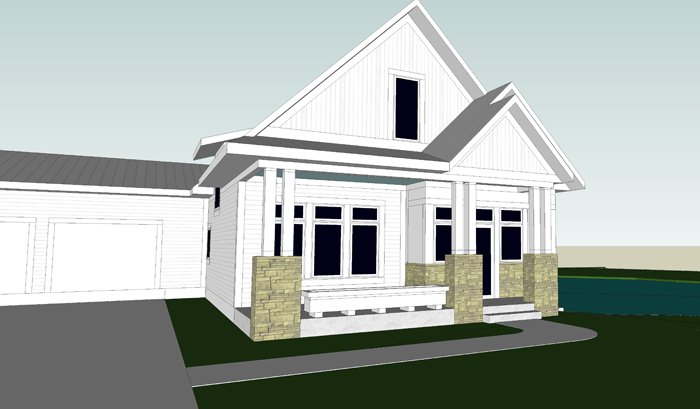
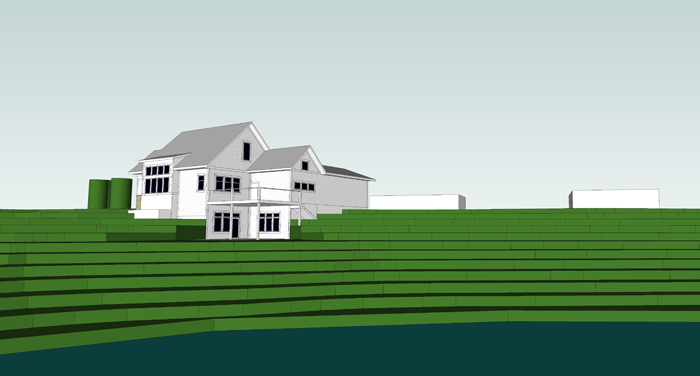
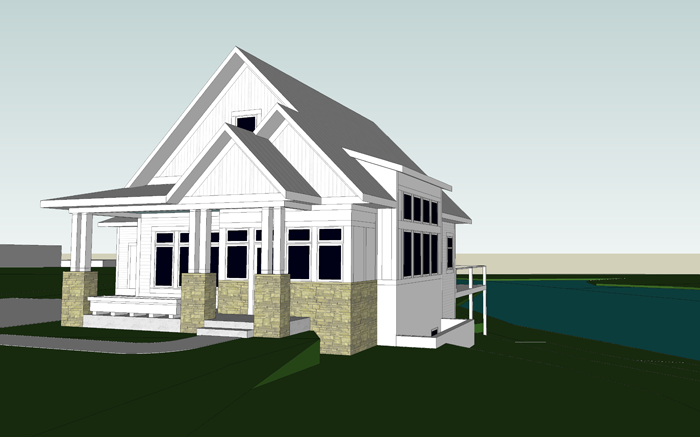
Just for fun, here are a few 3d images showing the cottage positioned on the land.

The cylinders are place holders for privacy trees (some of which are existing, and others that we hope to plant in the future. 


I worked a long time to find an appropriate position for the garage. I was sure that I wanted the garage doors to be set back from the front of the house/porch. For a while I had the garage rotated 90 degrees so that you accessed the doors from the side – but I eventually realized that this would not create ideal conditions for the driveway, making it both awkward and extremely long.  The garage is now accessed head on and set to the very back of the house so that it isn’t visually imposing.


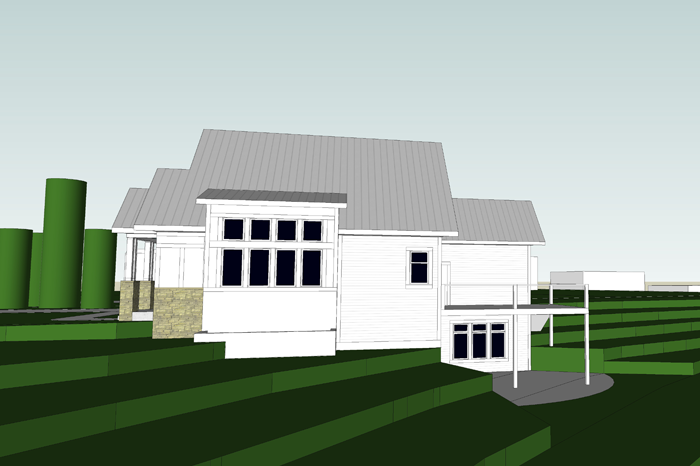
The wall of windows on the southeast elevation will let in a ton of wonderful natural daylight. It is one of my favorite features so far, and never would have happened if we hadn’t talked to our contractor about current building prices – which prompted us to make a major change to the design.


You can see from this image how the cottage interacts with the slope. There will be a bit of excavating and retaining involved in creating the lower level walkout patio.


As the weather warms up, I hope to make a trip to the land again – and maybe stake out the corners or use spray paint to get an even more visual perspective on what we will see out of each window of the cottage.

Exciting times ahead!
 

THOUGHTS ON BUILDING

Today is ‘National Walk Out Of School Day‘. It is an event that is part protest and part memorial – a way to acknowledge and mourn the loss of the 17 victims killed in the most recent, though sadly no longer uncommon, mass school shooting.

As you might imagine, this post is not at all about the building of our new house, but something altogether entirely different.

The building of our children

When I was a junior in high school, I remember filling out the job quality worksheet for the counselor. It was used as a way to direct the students who weren’t sure what path they would be taking after high school – College? Working in a trade? What industry? I’m sure there were plenty of my classmates who found the results of this worksheet useful, but I didn’t need any direction. I knew EXACTLY what I wanted to be. An architect.


I wanted to design buildings and watch them be built

And I did just that. I studied diligently for five years and received a Bachelor of Architecture degree and a final GPA of 3.99. I dare say that I was near the top of my graduating class. I loved everything about architecture and was ready to start putting my education to practice. I easily landed a job in my desired community and set to work.


Two years later, I got pregnant

Craig and I had agreed that when our first child arrived, I would become a stay at home mom. I remember how nervous I was to tell my boss. By all accounts, I was on track to reach my ultimate goal of becoming an architect – and suddenly, that plan was being derailed. Regret was filling my mind. Am I throwing away my career? What will my colleagues think about this decision? Is being a stay at home parent really important?

The months leading up to the birth of {D} were full of mixed emotions; And the day we left the hospital with him snuggled in the car-seat next to me – I sobbed. My life had done a literal 180.

Over the course of the next 11 years, we added 4 more bundles of love to our family – both through birth and the beauty of adoption. I found a good balance of being able to meet our children’s needs and to feed my passion for design – working from home for various architecture firms, on a very part time basis.


Here, 11 years later – I can reflect on that major decision

Was it worth it? I would say absolutely. I didn’t realize it then, but I was making a shift from the building of structures to the building of my children.

Children need parents to guide them, shape them, teach them right from wrong. They need someone there to pick them up if they fall, to catch the warning signs of depression or violent behavior. To provide them with a moral compass.

Sadly, I feel that too many children today are thrown into the waters of life and told to swim on their own – to find their own way in the dark. Parents are busy with their careers and in many cases are working hard to provide their children with every opportunity – Sport instruction, music lessons, the newest video game. In reality, what children need is time with their parents. Presence over presents.

What has been happening in schools is tragic. It’s political. It’s senseless. I don’t plan on getting into any sort of debate on the topic except for this one statement I think we can all agree on: It shouldn’t be this way.

Each time one of these heinous crimes is committed, we sit and wait for the media to report what we know will surely be the case – these are people, kids, whose warning signs were missed. They were troubled and ignored. Their emotional and mental needs were not met.


In response to today’s walk out – there is an additional movement.

WALK UP

Walk up to someone who is considered an outcast and let them know they have a friend. Walk up to the person sitting alone and start a conversation. Walk up to the person you have been arguing with and agree to resolve your differences. Walk up – and as a society we can wake up. We are all in this together.

Walk up to your children and hug them. Tell them you love them. Encourage your children. Speak life to them. Give them the building blocks to become a productive member of community. It all starts at home.


I understand that being a stay at home parent isn’t a path that is necessarily available (or desirable) for everyone; But personally, I will forever be grateful that it is the direction our family chose. And even though I may not be designing award winning structures, I feel that my contributions are equally important.

Long after the sky scrapers and monuments crumble and decay, humanity will continue on. It is built of stronger things.


A TOUGH LESSON LEARNED

I had an entirely different post prepared for today, but I need to take a moment and acknowledge something that happened this week, which will change the course of how I blog going forward.

I started this website in July 2017 without much knowledge at all of what I was getting myself into. Sure, I took a few free online courses and read a ton of material about best blogging practices, but nothing quite teaches you the ropes of blogging than a tough lesson learned.

On Thursday afternoon I had just laid our youngest daughter down for her afternoon nap when I heard the doorbell ring. The postal lady was standing there, certified mail in one hand and a digital scanner in the other. I immediately got the feeling that this was bad news. After signing for the package, I said “I’m nervous to open this!” then closed the door and walked over to my dining room table.

Inside, just as I suspected, was bad news – a letter from the legal counsel of an online presence with proof that I had infringed on their copyright with a graphic that I had used in one of my posts. They requested that I remove the graphic immediately and send them a large monetary damage settlement.


This felt like a punch to the throat.


Here I am, less than a full year into my blogging journey – being dealt what felt like a giant blow. It took me a second to really wrap my head around what I had just read. It was true. I HAD used their material in my post, there was absolutely no denying that. In fact, I hadn’t even tried to hide that the material wasn’t my own.  In the post I had included a link back to the original source of the graphic, which in my ‘baby blogger’ mind was what I was supposed to do in order to be sure that nobody reading my post thought that the graphic was my own.


That was naive reasoning, and it bit me back big time.


My next step was to get in touch with my blogging friends, and ask them if they had ever been through anything similar or if they had any advice. One friend pointed me to this blog post – which scared the living daylights out of me.

I immediately removed the graphic from my blog, then contacted the email address listed in the letter to beg for forgiveness. I’m thankful to report that they agreed to show me mercy and reduced my fine significantly. The check is in the mail.


So, what dos all this mean you might ask?

It means that I spent a good portion of Friday scouring through my past 93 blog posts and picking out the 14 that have material that could be considered questionable. It means that I will be spending the next couple of weeks contacting the owners of these images/graphics and asking them for permission to use them on my site.

It means that from this moment forward I will be strictly using my own photographs and graphics, or paid stock photos from reputable sites. Be expecting a lot of original content from this website from here on out!
It means that I have learned my lesson. And as tough of a lesson that it is to learn, I am actually very grateful that this wake up call came now – when my blog is still establishing itself – and not in the future when I have 993 blog posts to sort through instead of a mere 93. Goodness, I’m grateful for that.


I hope that my mistake can be a lesson to you as well. Do your research and know the rules.

Behind every image on the web, whether a photograph or informational graphic, is a person who worked to create it. They made the effort, and they have the right to choose where it is shown and how it is portrayed. And as I work to add more original content to my website, I will want the same protection and rights. Lesson learned.


A MINI GUIDE TO INTERIOR DOORS

Each home interior has it’s own personality. When it comes to decorating inside our homes – paint colors, furniture, and throw pillows are usually the first things that come to mind. During a more extensive decor remodel – the floors, walls and ceilings will typically get special attention. But many times an important element is overlooked.

Interior doors.

Choosing the interior doors for your home can be a challenge, but finding a type and style that flows with the rest of your interior can add an extra detail that will really make your home feel pulled together and unified. The great news is that there are many interior door choices available (both for purchase and as DIY endeavors) – and finding the right match for your home should not only be possible, but fun.

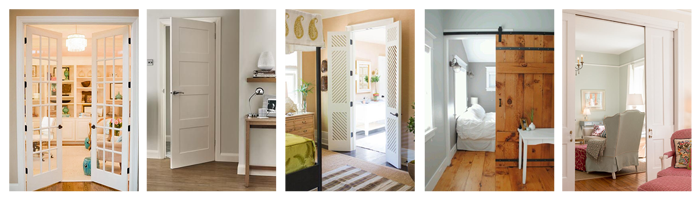
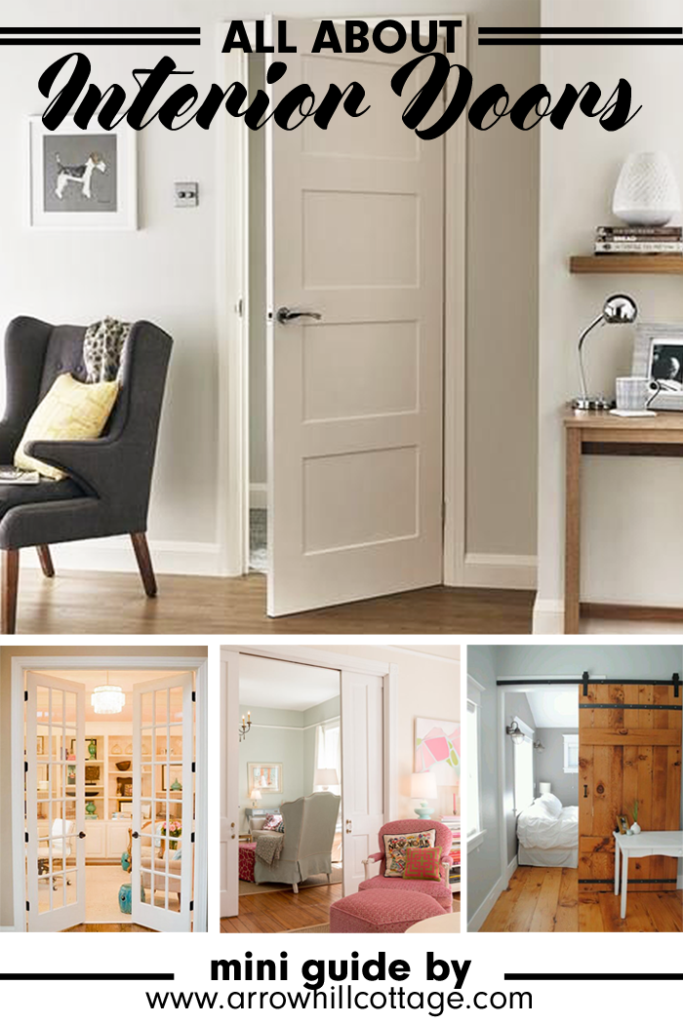
I have put together a little guide, complete with inspiring images, to help take the guess work out of your decision making.


DOOR OPERATION TYPES

Choose which will work best for the function and space you are trying to serve. Each has it’s own benefits. Listed below are the most popular types available in today’s market.


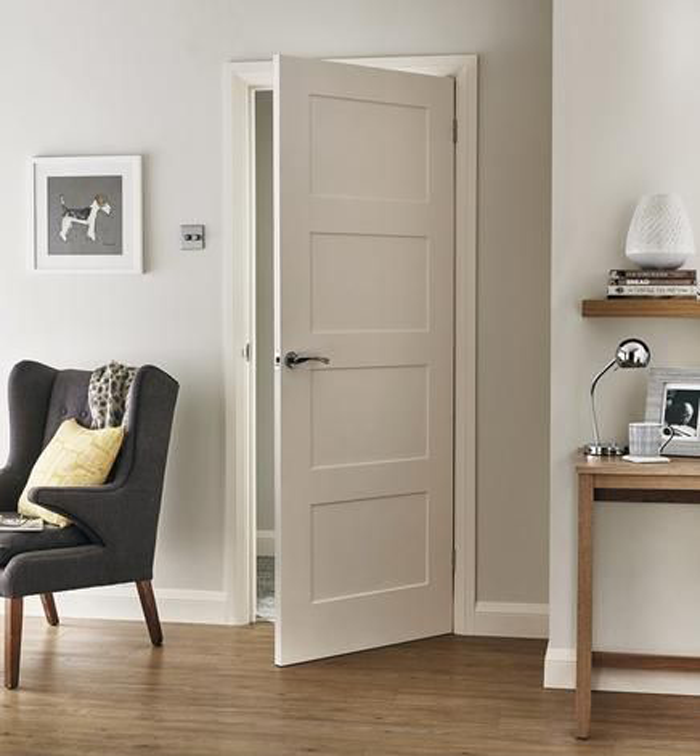
HINGED/CONVENTIONAL SWING

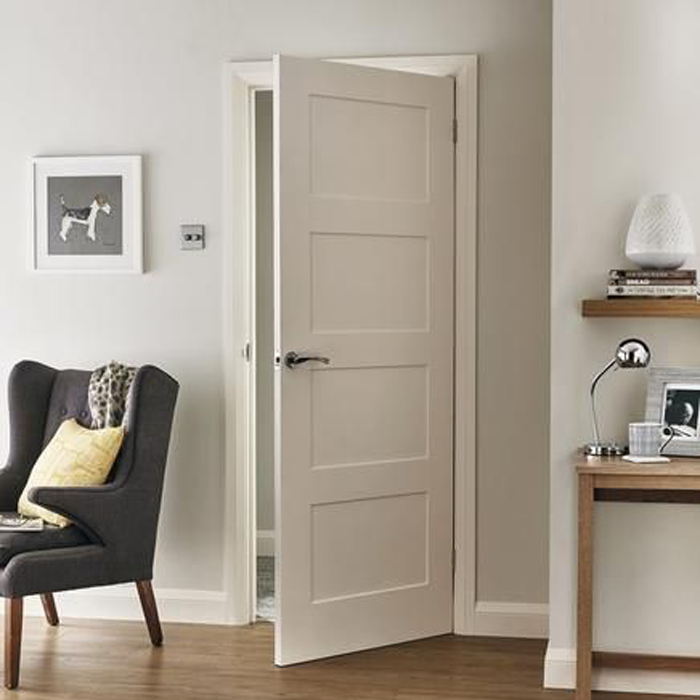
image source

This door type is the most common used for home interiors. They can be hinged on either the right or left side of the frame, and swing into or out of the room – depending on how you want them to function. These doors are readily available in a large variety of sizes. The most common residential size is a standard 2′-8″ wide by 6′-8″ high.


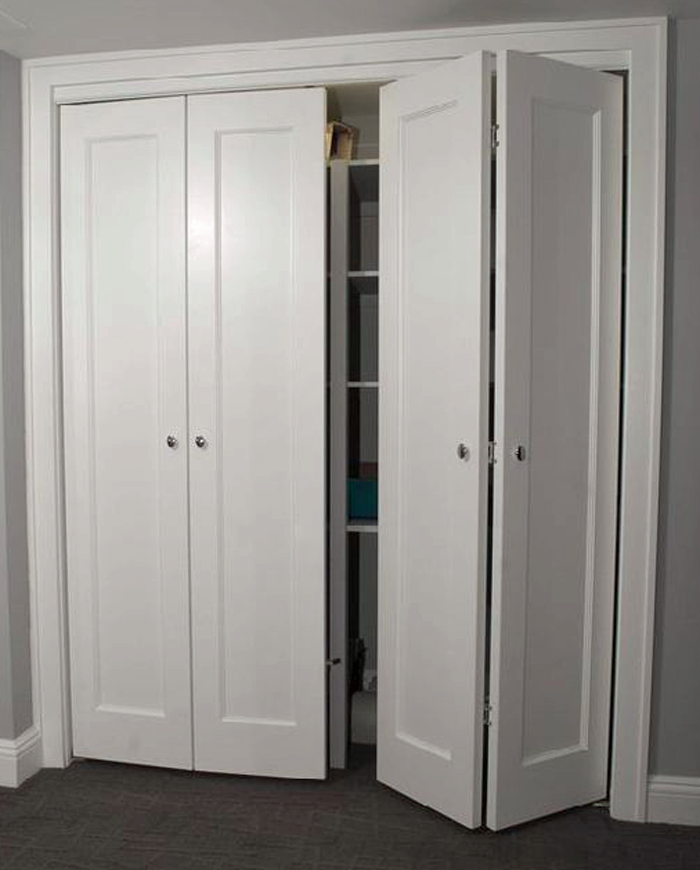
BI-FOLD

image source

Bi-fold doors are also called folding doors, and are most commonly used for closets in homes. The door, when closed, fills the entire cased opening – but, as the name would suggest, fold in half (outward) when opened. The benefit of the bi-fold door is that you do not need as much space in front of the door to be clear when opening.


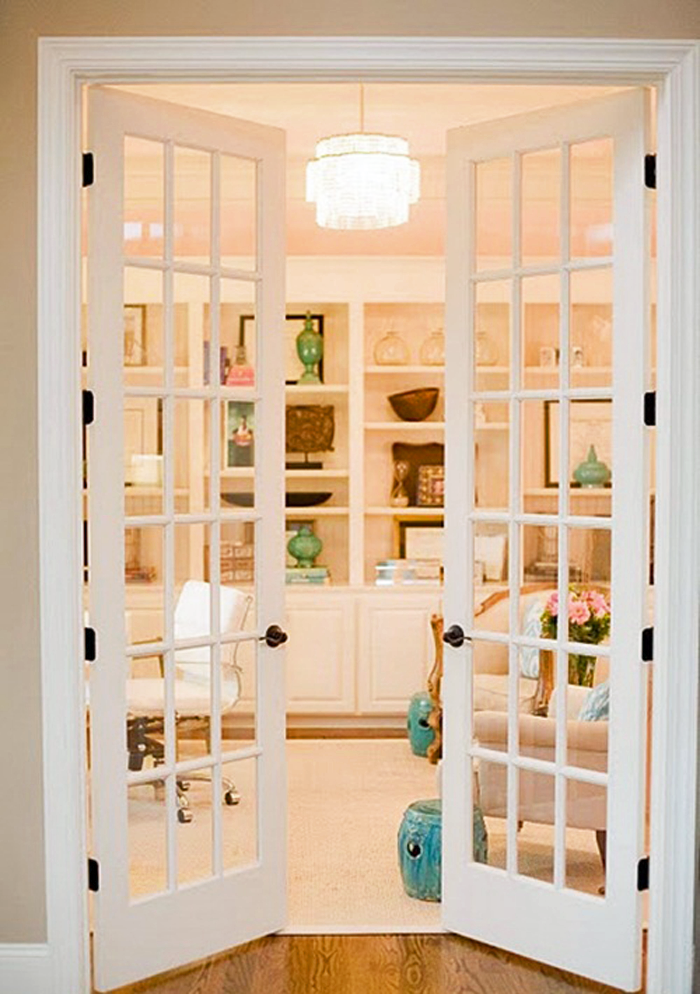
FRENCH

image source

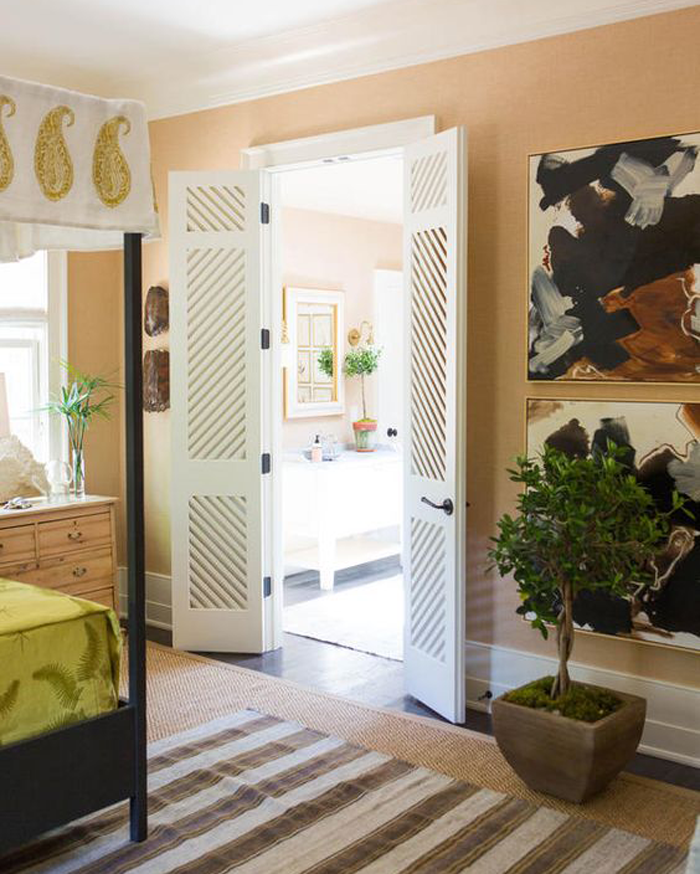
A pair of doors that swing either into our out of a room, hinged on the outer edge of the opening. When both doors are open a large opening is created. This door type is very popular to use between rooms – for privacy when needed, or the feeling of an open floor plan when privacy is not a concern. Generally french doors utilize some sort of glass panel configuration.


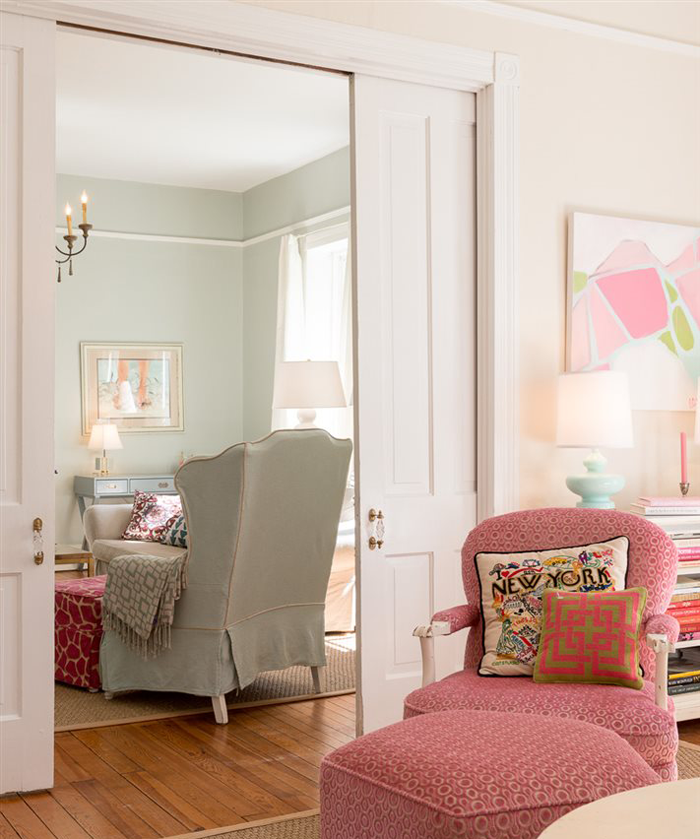
POCKET

image source

Pocket doors are considered the ultimate space savers. The door travels on rollers that are suspended in an overhead track. When fully open, the door is completely hidden in a cavity created in the adjacent wall. This type of door is becoming more common as the function has improved over the years. Pocket doors have the ability to lock, making them useful in a variety of applications – from closets to bathrooms.


BYPASS

image source

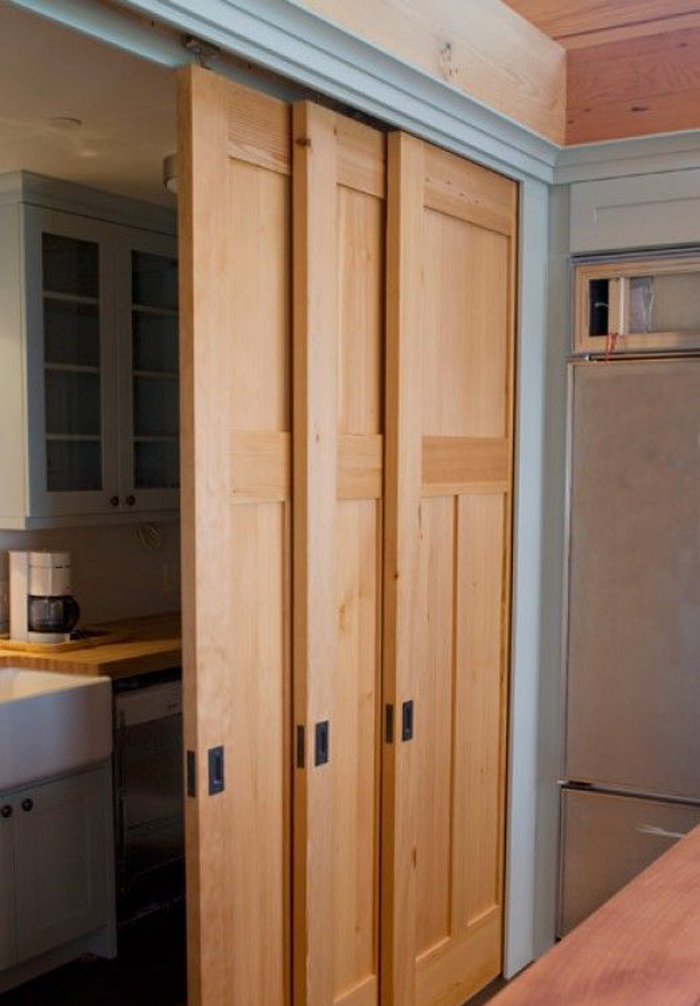
Bypass doors also come in pairs, or in a three door configuration (as shown). They are set on a track that fills the opening, with one door mounted slightly in front of the other – so that when they open they will slide past one another. These doors are almost exclusively used for closet applications. The benefit of this door type is that it does not take up extra floor space with a swing; But, you will only have access to those things behind the door that is open – making them a bit inconvenient.


SLIDING BARN

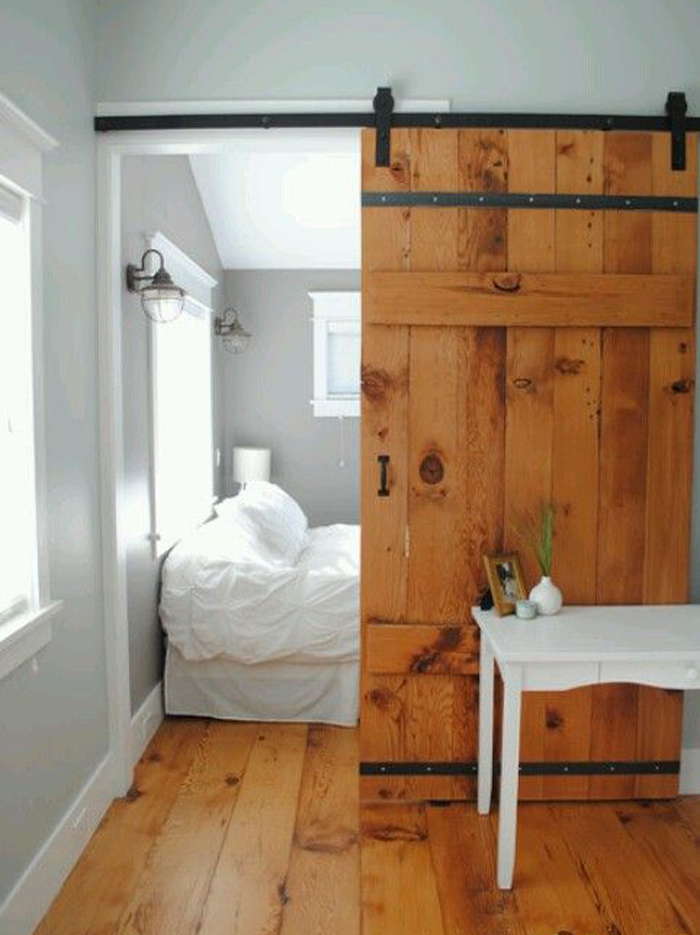
image source

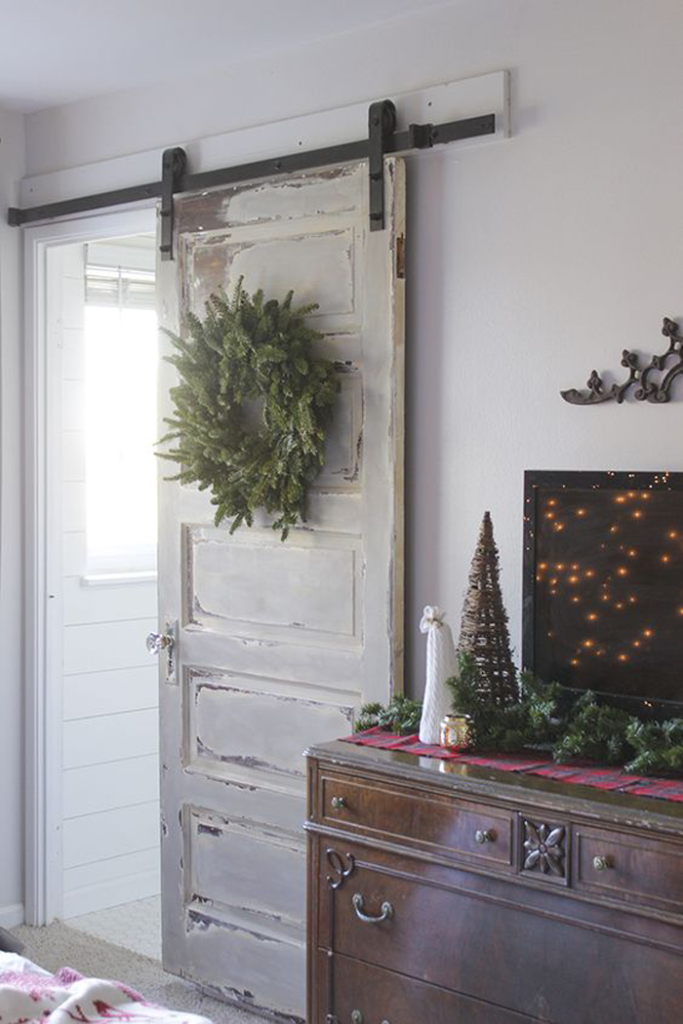
This type of door has been made very popular recently by the tv show ‘Fixer Upper’. Barn doors hang from a track outside the room/closet that will be accessed. Because of this, the doors themselves need to be wider than the opening – and the track needs to be long enough so that the door can slide completely out of the way. Essentially, the track needs to be at least double the width of the opening you want to access. Be sure that the hardware used to mount and operate the door is high quality – so that you don’t end up with clunky (or squeaky) operation.


INTERIOR DOOR STYLES

You can find the above door operation types in a variety of styles to match the preferences for your home design. Listed here are the most common styles.


FLAT

image source

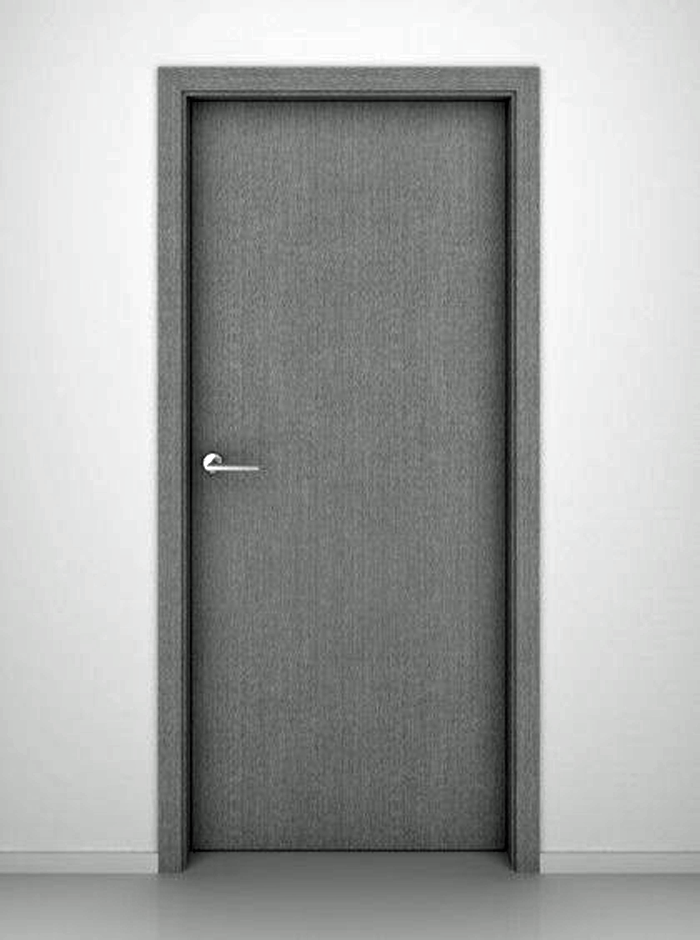
This style of door is also called ‘flush’. Essentially these are doors that have no extra ornamentation, and have a smooth simple finish. They are most commonly used in modern styled homes. They can be made of a solid piece of wood, but more commonly are composed of thinner veneer pieces of wood – which creates a door that is more lightweight.


SHAKER

image source

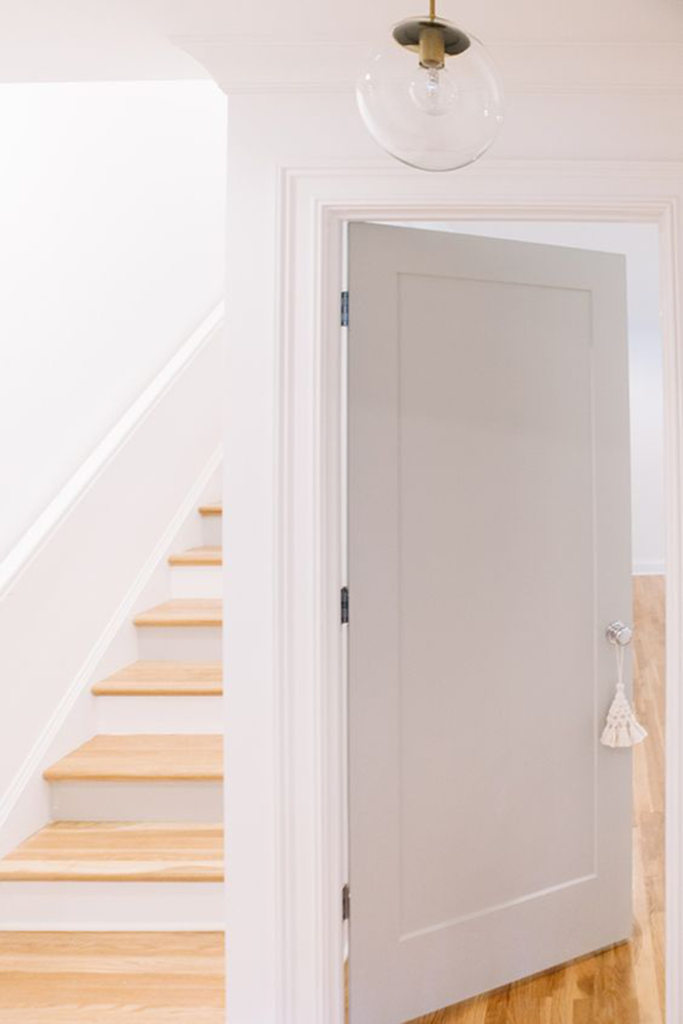
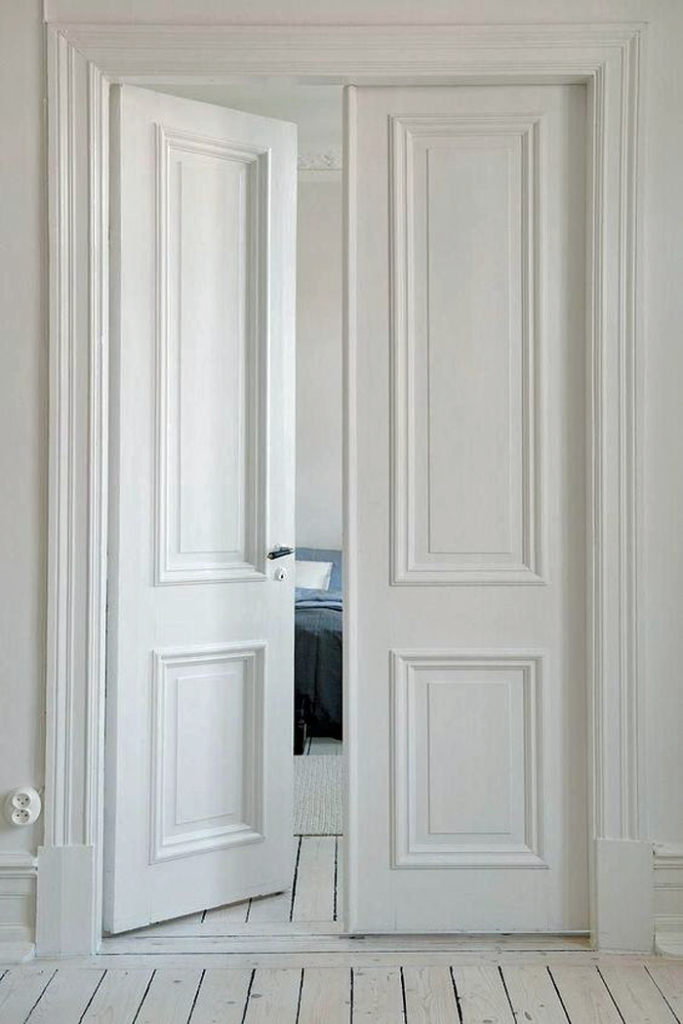
A shaker (or craftsman) style door is composed of a flat center panel and square edge raised panels. These doors have a clean, simple look and are one of the most popular varieties used today.


RAISED PANEL

image source

This type of door is a bit more ornamental in that the panels themselves are created with more detail – sometimes with arched top panels.


PLANK

image source

Plank doors are composed of a series of boards, or planks – either in a vertical or horizontal application. They are popular for homes with country styled decor.


CROSS BUCK

image source

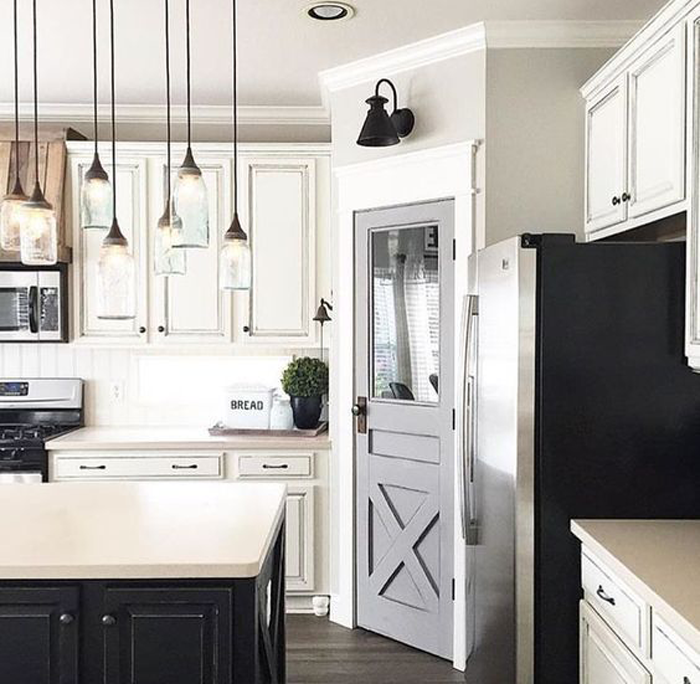
When you see this type of door, you will most likely have visions of barns going through your mind. That classic ‘x’ pattern is called a cross buck. These doors are also becoming very popular with homes designed in the ‘farmhouse style’.


LOUVERED

image source

This style features a door that has slats, or louvers. They are a perfect choice for areas that need ventilation but also require a bit of privacy or screening, such as a laundry space or electrical closet. The filtered light that the louvers allow can be a benefit for some design applications.


Again, there are so many choices when it comes to interior doors! I hope that this mini-guide can help you determine the differences between the doors, and allow you to choose the perfect version to accent your home!


THE FIVE PHASES OF NEW HOME DESIGN

In the course of designing your new home, you will walk through a variety of phases – each a bit different in nature. Though they tend to flow into each other slightly, there are five general categories of progression: analysis, preliminary design, development, documents, and construction review.

Understanding what to expect in each phase can be a helpful guide for your home design process. If you are considering designing your home solo – or working with an architect or designer – you can prepare early by knowing what is to come.


PROGRAM ANALYSIS

In this phase you will determine what your needs and wants are for your future home. You will be looking at potential building sites and thinking about the number of bedrooms, bathrooms and common spaces your home will have. You will also begin to think about your project budget. To help you answer these program analysis related questions, visit this blog post and complete a series of worksheets.


PRELIMINARY DESIGN

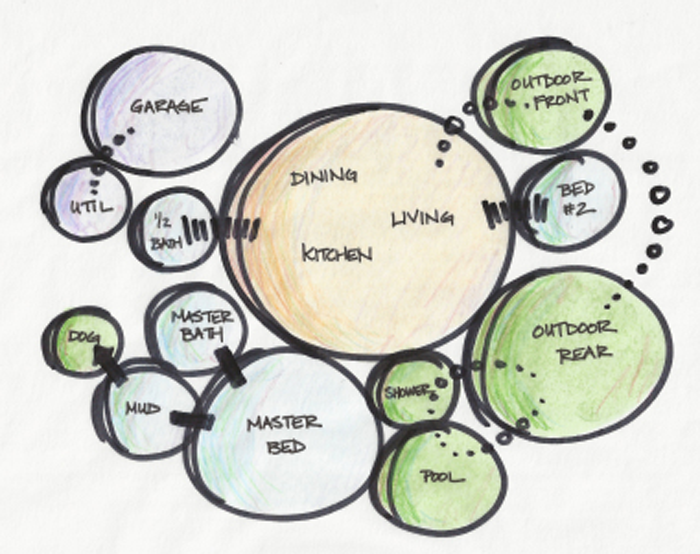
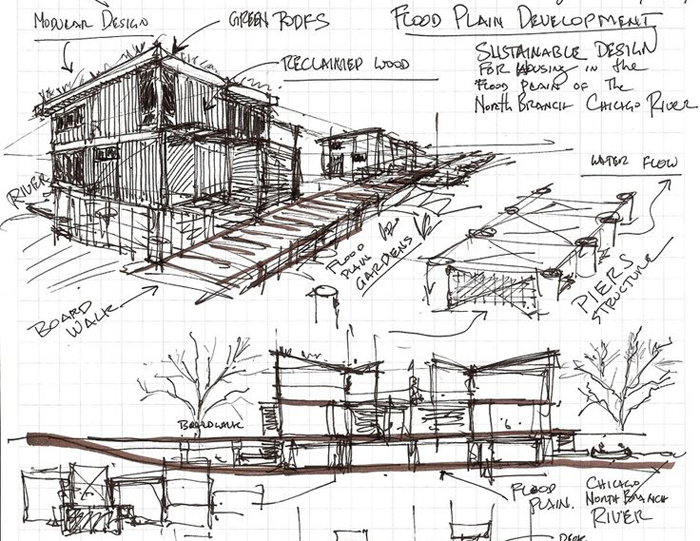
Through this phase you will be determining the desired spacial relationships within your home and also the connections that will be made from indoors to outdoors. The spaces will begin to resemble a floor plan in it’s very basic sense. Drawings will be created in the form of quick basic sketches.

You will also be thinking about the house styles that appeal to you most, and likely searching Pinterest for inspiration photos.


DESIGN DEVELOPMENT

Just as it’s name implies, this phase of home design refines the spaces and their relationships. You will begin thinking about your home in three dimensions – focusing not only on the floor plan but also how the home will feel on the inside and look from the outside.

Near the end of this phase, you will want to get a better idea of what it would cost to build your home project. By obtaining estimates at this point, you will still be in the position to make major changes to the design if needed for budgetary reasons.


CONSTRUCTION DOCUMENTS / BIDDING

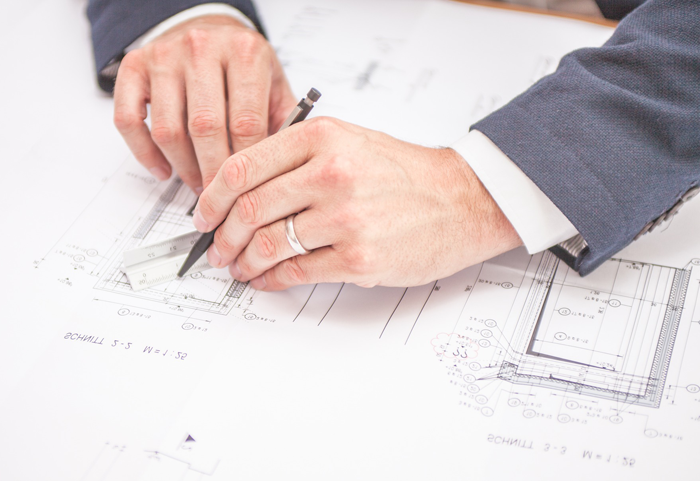
This is the phase when things begin to feel very real. Your drawings will include measurements and notes for the construction crew. Specifics on window and door sizes and styles will need to be made, as will finish material selections. Legal and technical information will be gathered and compiled to form the final ‘blueprints’ of your home.

During this step, you will be obtaining solid construction bids and determine who you will be hiring to build your home.


CONSTRUCTION ADMINISTRATION/ REVIEW

Homeowners vary greatly on the amount of involvement they have in this final phase of the process. While some choose to be on site every day to monitor progress, others pass the responsibilities onto their contractors (or architects) completely. I would advise that it is best to have at least some involvement – to build a great relationship with your contractor and design staff. The truth is that no matter how detailed you are able to get on your construction documents, there will inevitably be questions that will arise during construction; And if you put forth all the effort to be involved in the design of your home, you will want to follow through completely and ensure it is built the way you envisioned.


These five phases should work together seamlessly so that your ideas about home function and comfort can be brought to life. Each phase can be demanding, but the hard work will pay off in dividends when you are enjoying your brand new custom designed home.