Reupholstering a chair | DIY refresh

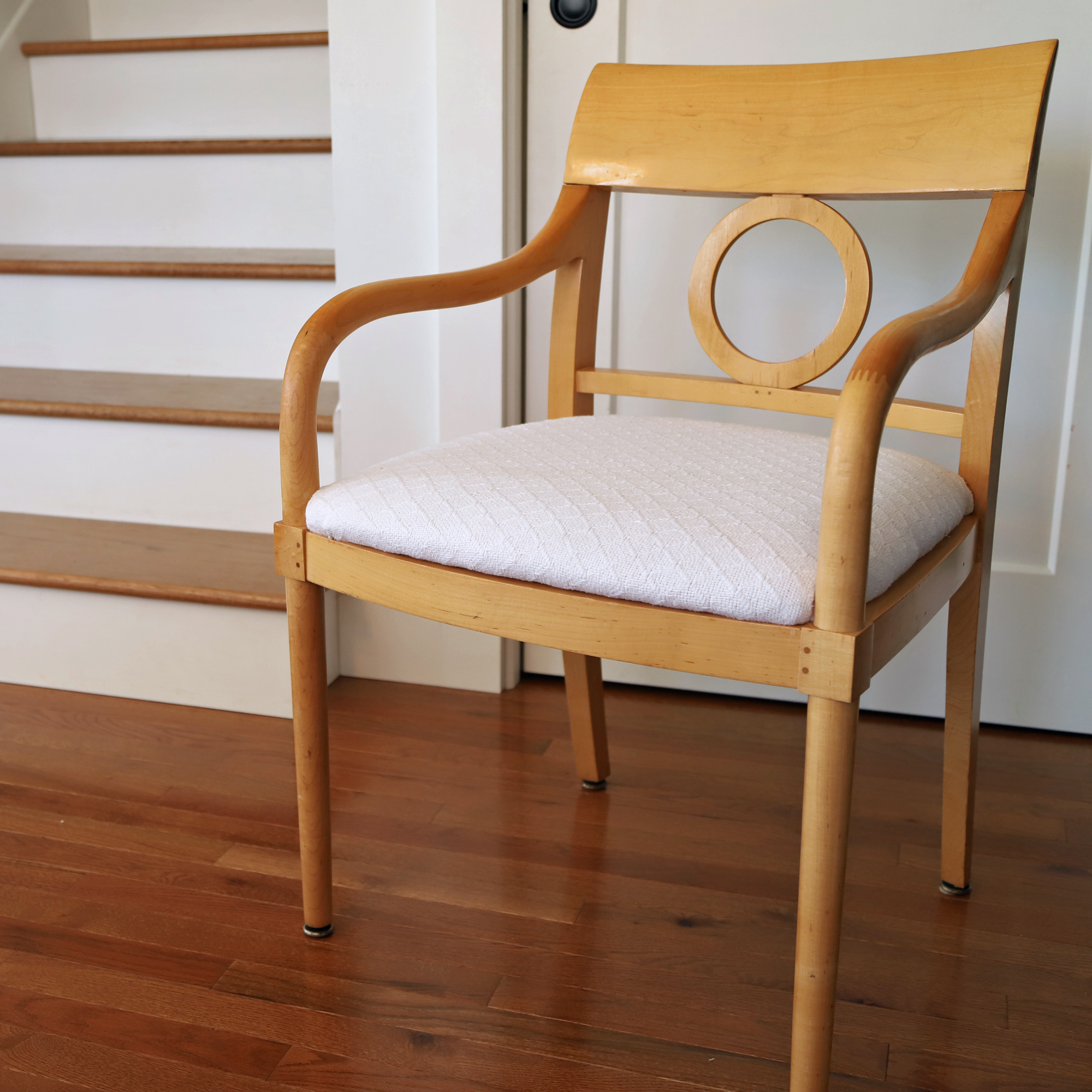
I recently completed a little DIY refresh by reupholstering a chair. Because people love a good before and after (I know I do!), today I am sharing the process here on the blog! Scroll down to the bottom of this post for a video as well.
neutral living room decor

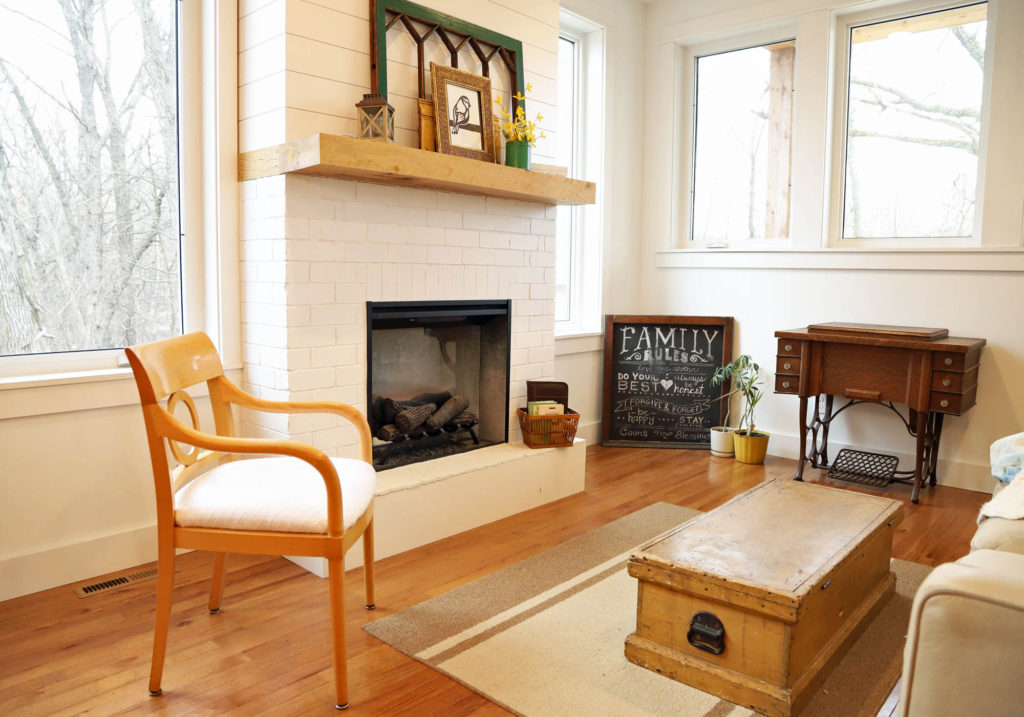
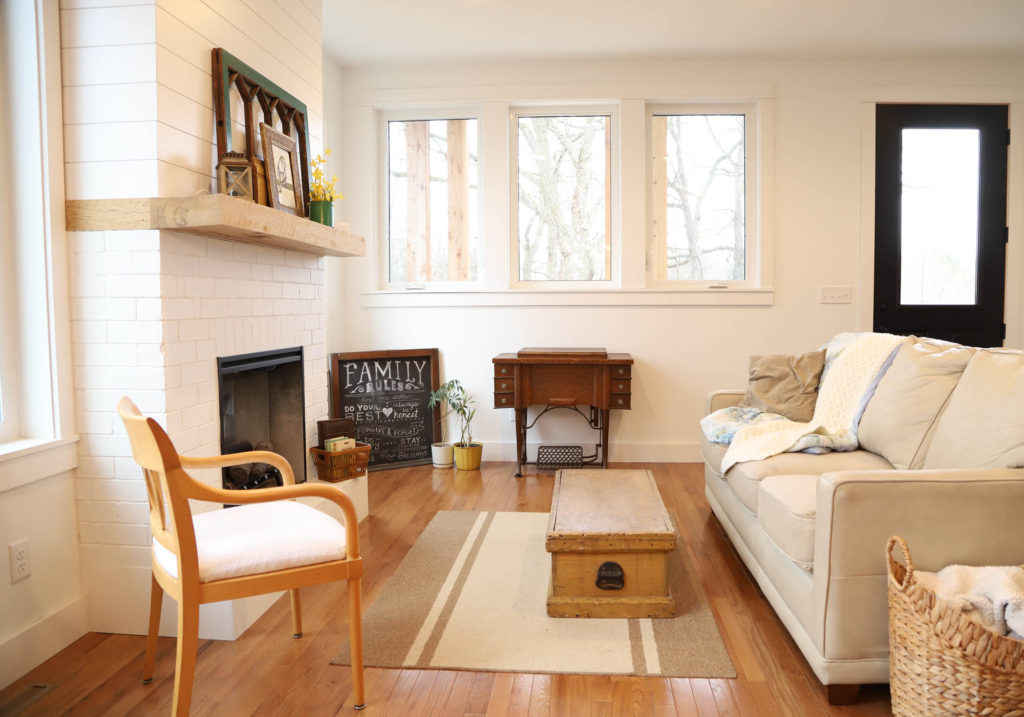
This is the chair, at home in our living room now. But, to totally appreciate how it looks today, it is important to understand how far it has come. Let me take you back to the very beginning.

The BEFORE

About six years ago, I saw an ad on Facebook marketplace advertising this chair. It’s unique shape and styling attracted my eye, and the $20 price tag sealed the deal.
chair reupholstery project

I’m not one who pays much attention to the era that different pieces are made. I am fine with including a wide variety of styles and period pieces throughout my home decor. What usually matters most to me is the uniqueness of the items I bring into our home, and this one had that special spark.
bernhardt chair details

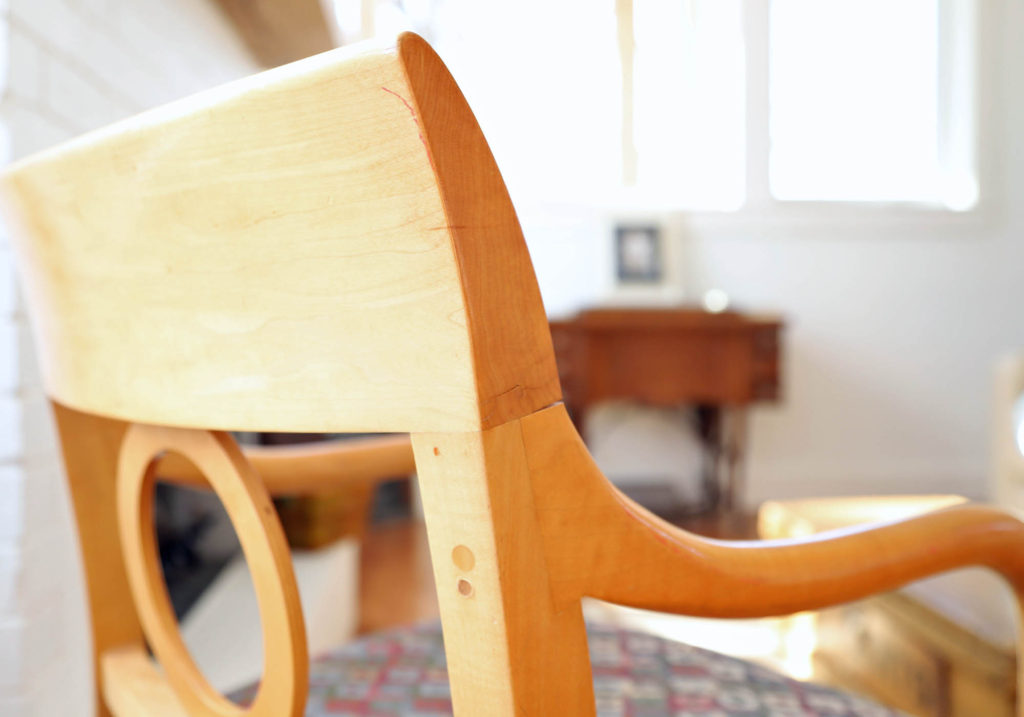
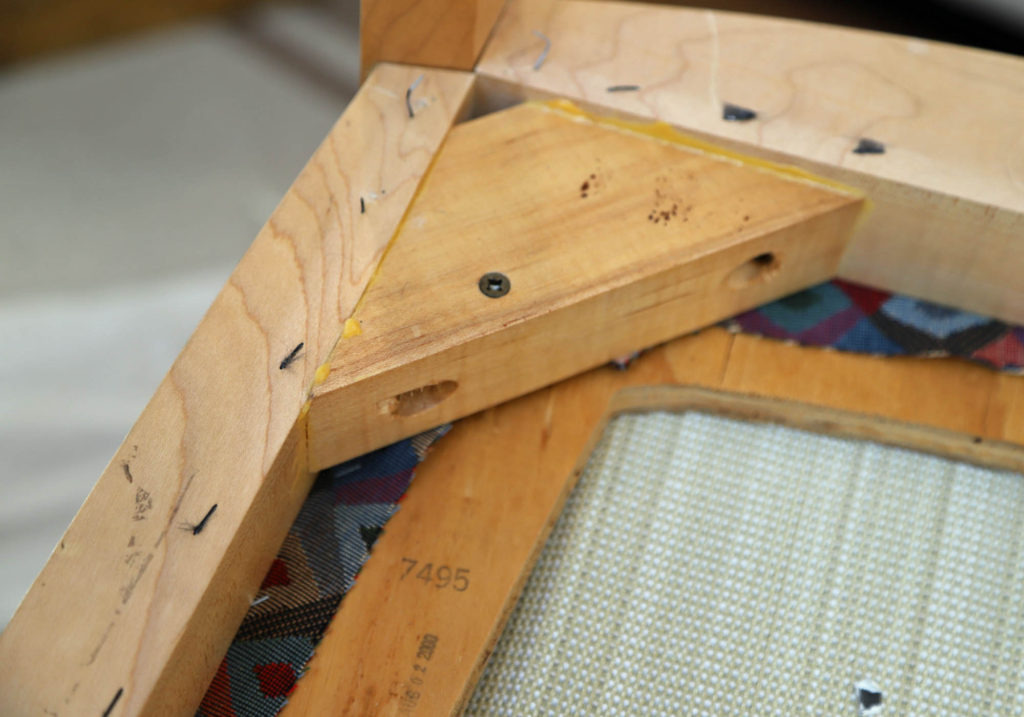
As you know, it is difficult to determine the quality of an item when purchasing online. Once I brought the chair home, I was pleasantly surprised at its sturdiness and overall craftsmanship. Turns out it was manufactured by the high end furniture company Bernhardt. They have been making furniture since 1889, and are still in operation today. It wasn’t until I started ripping into the chair and saw the marking of August 2000 that I was able to confirm this chair’s exact age. Twenty one years young.

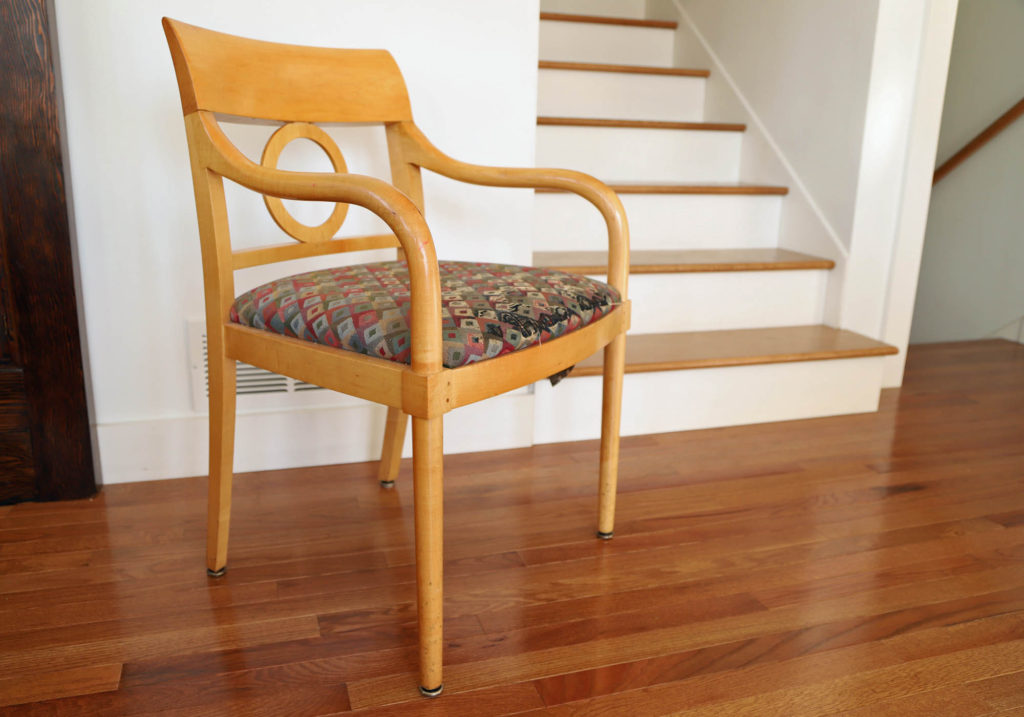
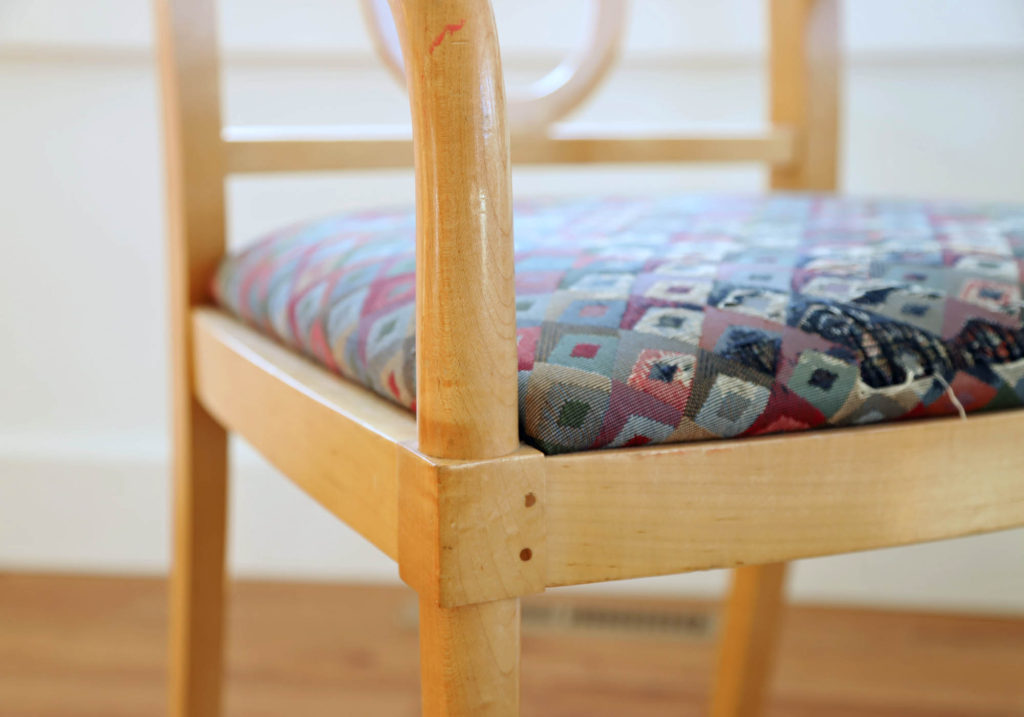
However, the reason for the low price tag was obvious. The fabric on the seat cushion was gaudy, and pretty torn up.
chair makeover

I knew from possession day one that I wanted to reupholster the cushion. Unfortunately, the project never became a priority. Mainly, I think, because the chair never held a prominent spot in our home. We had it in a bedroom, and office, and even a playroom in our previous homes. Here at the cottage though, it has taken up residence in our living room. It fits the space well, and I finally felt justified to give it a facelift.


When does DIY reupholstering a chair make sense?

Not every chair is a candidate for a DIY reupholstering project, in my opinion. If the shape of the chair is complex, or the fabric you wish to recover with has a pattern that needs to be perfectly lined up, I would recommend hiring a professional.

The only bit of upholstery on my chair was the seat cushion. This type of project is pretty straight forward and doesn’t require any specialized tools. I felt confident that, even with my limited knowledge of reupholstering, I would be able to finish the chair with good results.

Steps in reupholstering a chair

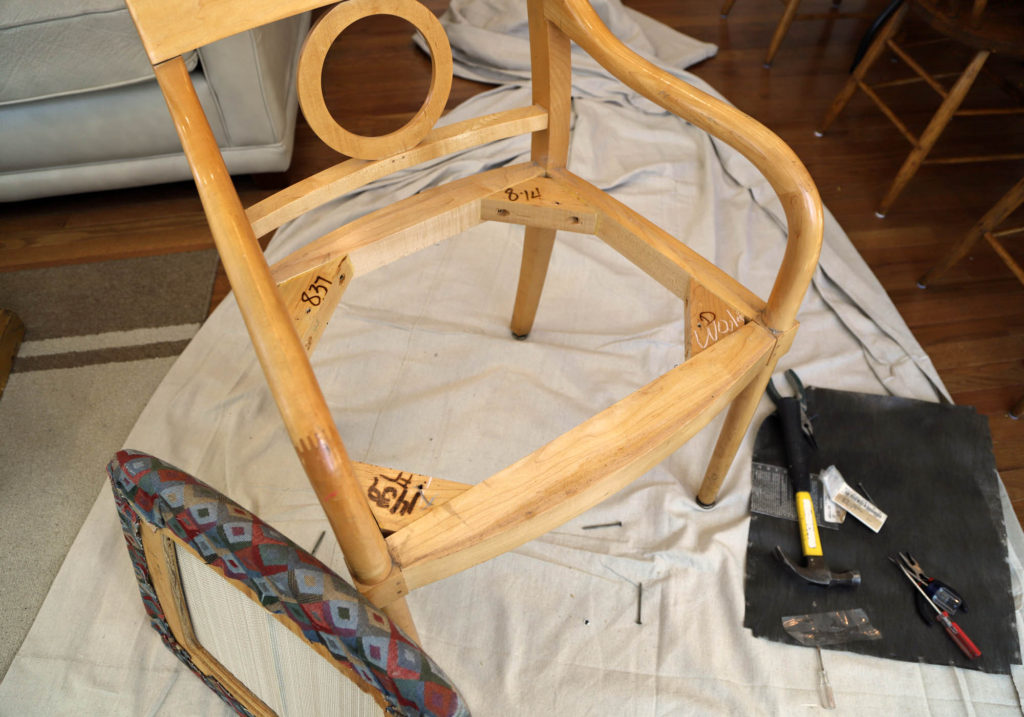
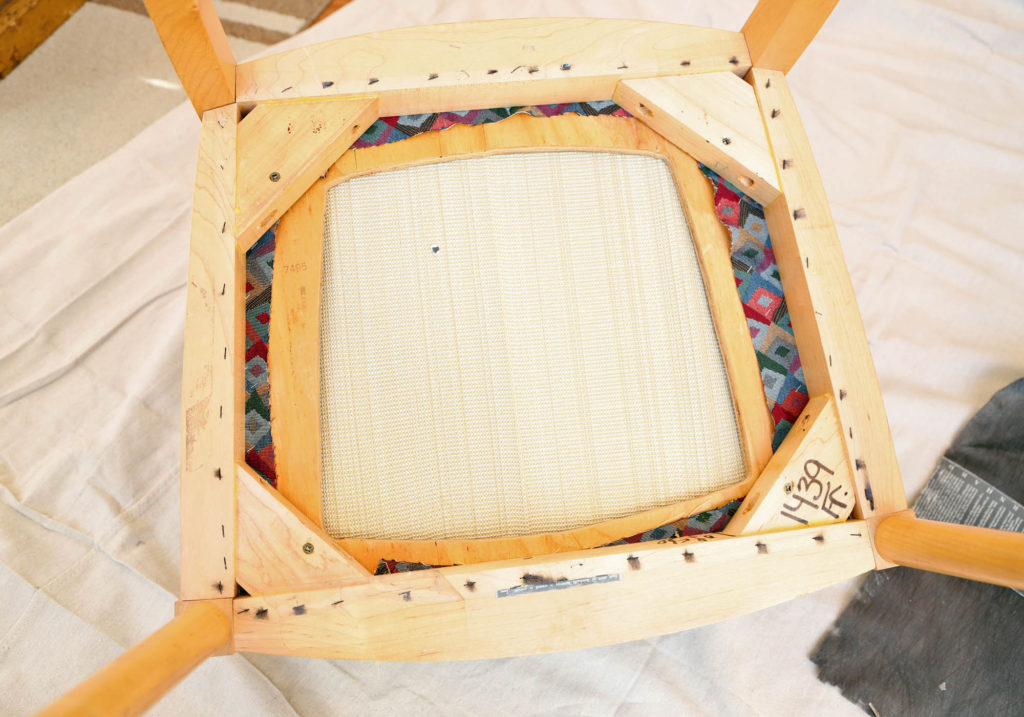
The first thing that needs to be done is removing the seat cushion from the frame. Many times, for chairs like this one, there will be screws holding the seat in place.
chair reupholstery how to

how to reupholster a chair

chair refresh

Next, you will need to remove the existing upholstery fabric from the seat cushion. This step proved to take me much longer than it should have, due to the lack of proper tools.

Ironically, our family recently did a major decluttering of our home and garage. As part of that process, I am quite certain my upholstery tools were donated. Oh well, I guess that’s what happens when you strive to have a minimalist lifestyle!

These tools listed below would have made this job easier. These are affiliate links. As an Amazon associate, I earn from qualifying purchases. See my full disclosure here

Staple Remover

Tack Lifter

Upholstery Staple Gun

I instead found myself using a mini flat head screwdriver and pliers to remove all the little staples. It took me probably twice as long as it should have, but this step was eventually finished nonetheless.
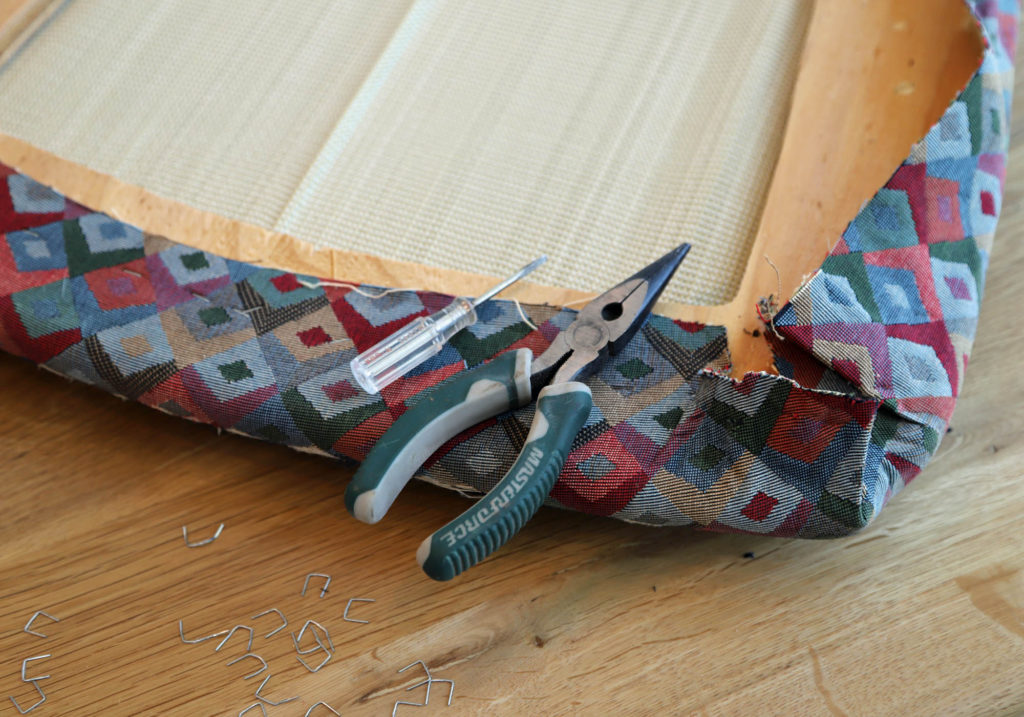
diy project reupholstery

Finally, you will be ready to add your new fabric. Look for a sturdy and easy to clean variety. This post has a good list of recommended fabrics for upholstery projects.

I was able to repurpose a bedspread as the new fabric for my chair. If it’s free, it’s for me!

Using the removed cover as a template, I cut the new fabric to the proper size. This helped me get the exact shape needed.
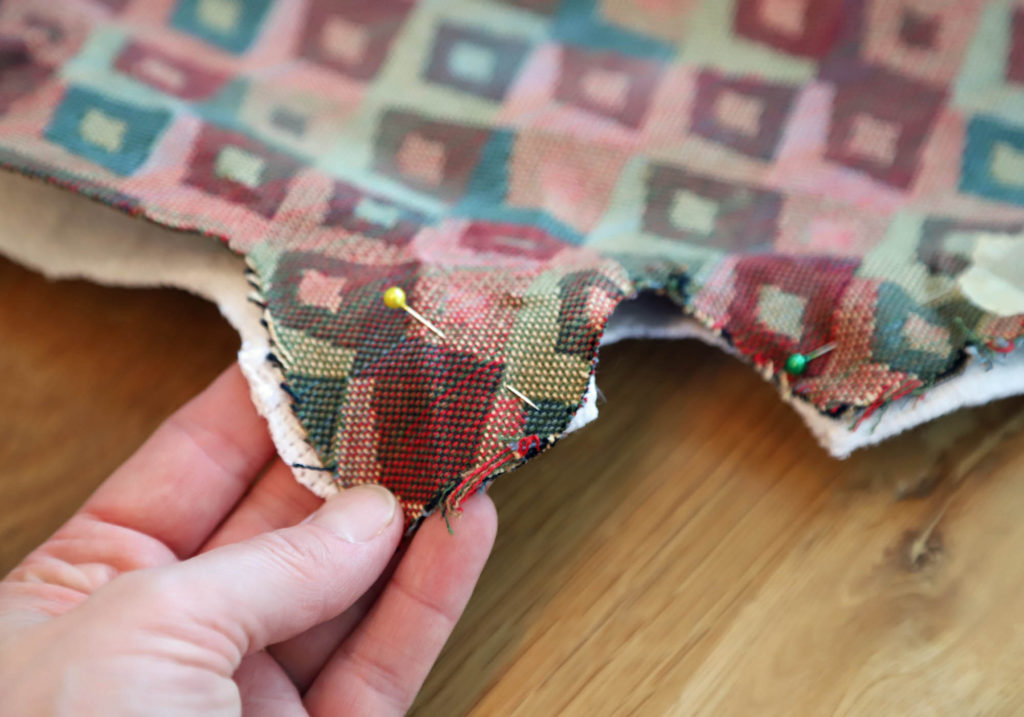
reupholstering

After stapling the new fabric onto the cushion, the final step is to attach the cushion back to the chair. For me, this last part of the process is the most rewarding.


The AFTER

I am so happy with the results of this simple project. I feel like the neutral seat cover allows for more of the chair’s details to be seen. Previously, the eye was drawn directly to the busy patterned fabric.
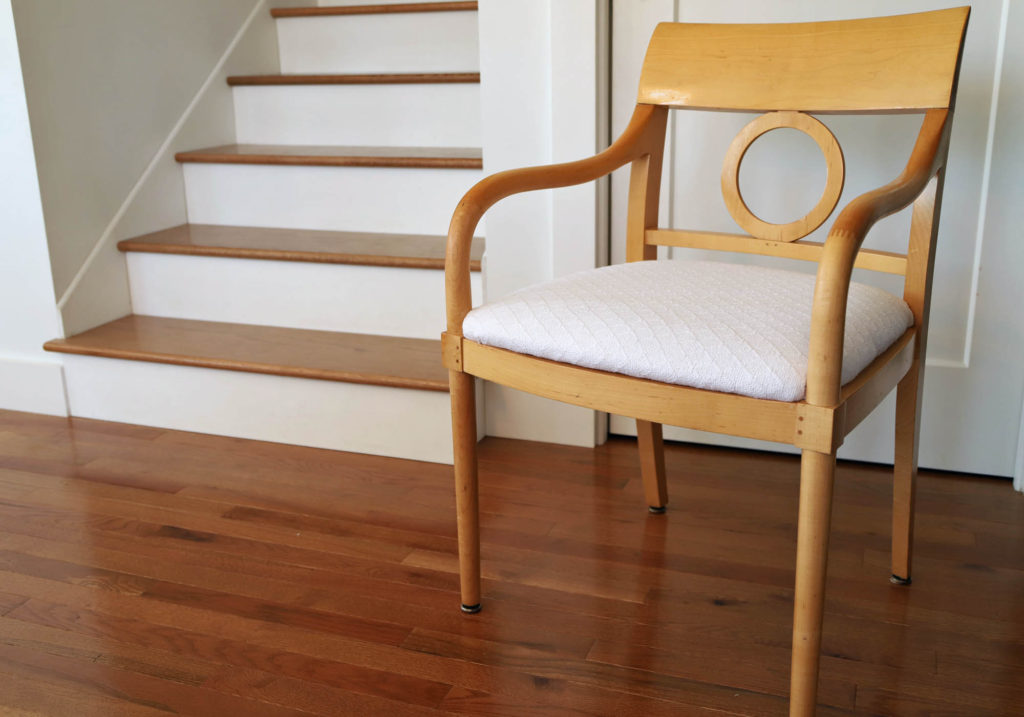
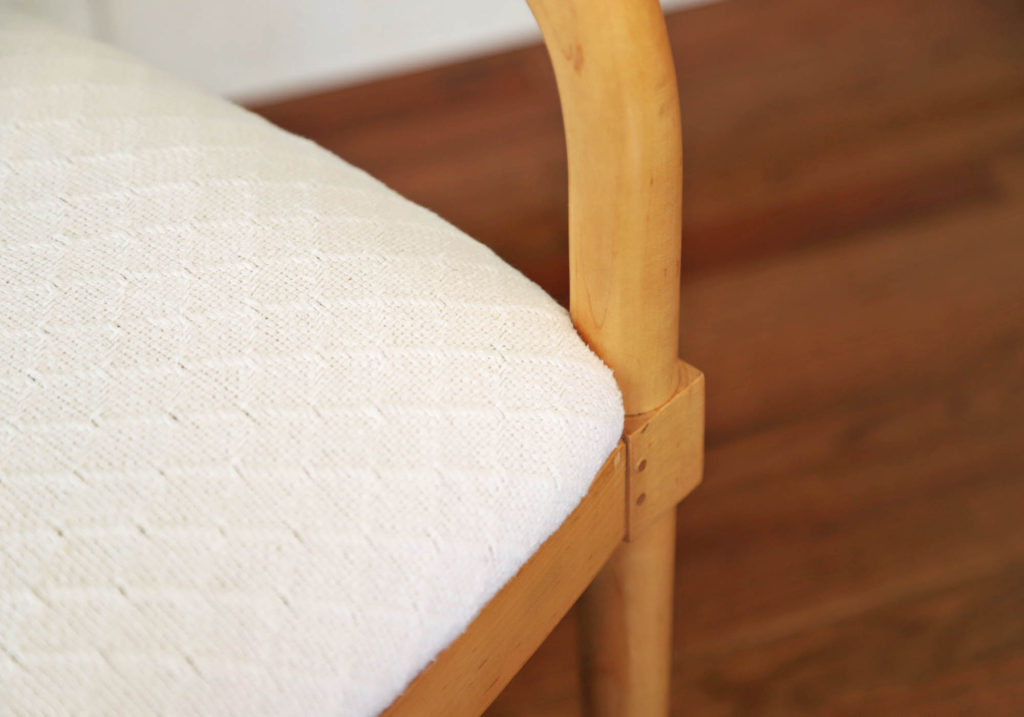
reupholstering a chair

chair reupholstery

Eventually, maybe in another six years, we will likely take the chair apart once again. At that point we will sand the frame down to the bare wood and give it a clear topcoat, and also completely redo the cushion with something more high end.

For now though, I am pleased with the fact that our living room is a nice neutral backdrop. This will allow me to decorate with various colors, textures and accessories throughout each decorating season.
cottage living room

I hope that this quick little DIY project gives you inspiration to tackle something in your own home. Perhaps something you have been putting off for a long time, like I was. Grab those tools and materials and just give it a try! It might be surprising how quickly you can get it done!

If you’d like to watch the entire process of me reupholstering my chair, be sure to watch this video. The commentary itself is worth the watch!
 

CAST IRON SINK RESTORATION | POWDER ROOM

While the crews are hard at work on our house construction, my husband has been busy with a cast iron sink restoration. Read all about his progress and see how the sink looks now!

vintage cast iron sink


It’s been a super busy summer for the construction crews out at our house build site. They are currently finishing up the framing and sealing the exterior. Hopefully, all of that can be finished before the cold Fall weather starts up! In the meantime, We have been cleaning and preparing items that will be used in the new house. Bathroom vanities are getting painted, chairs are being refinished, and the cast iron sinks are getting restored!

We have two vintage cast iron sinks that will be installed in the new house. One is a large, single basin farmhouse sink which will be used in the kitchen. The other is this smaller model 1930’s Kohler wall hung unit, which will be the perfect compliment to our main level powder room.

dirty cast iron sink


HISTORY OF THE CAST IRON SINKS

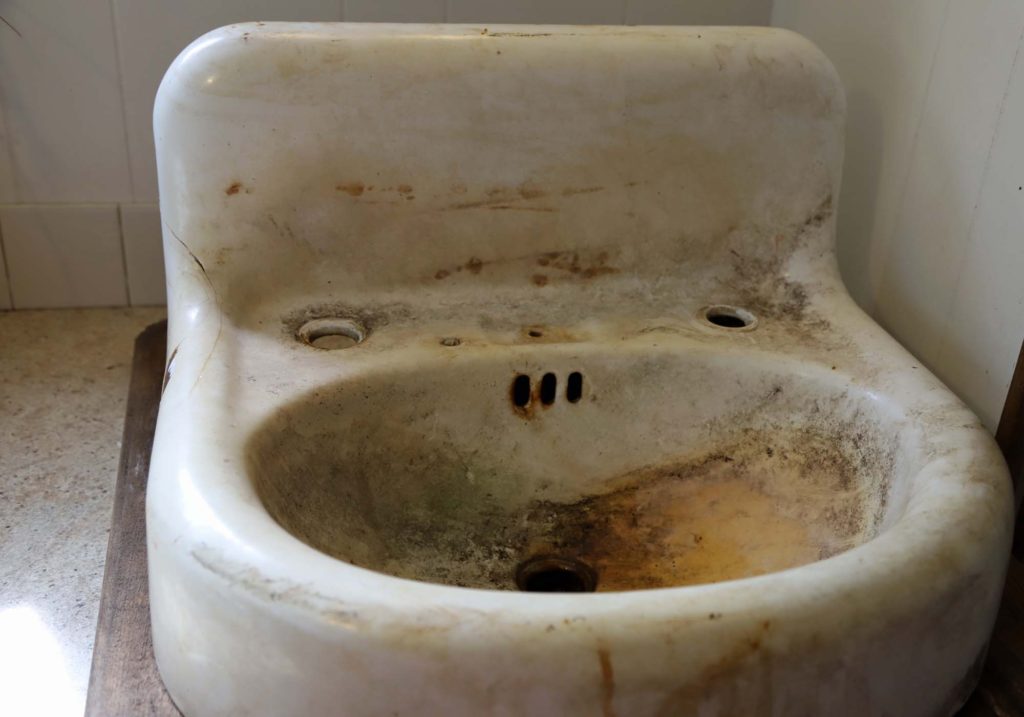
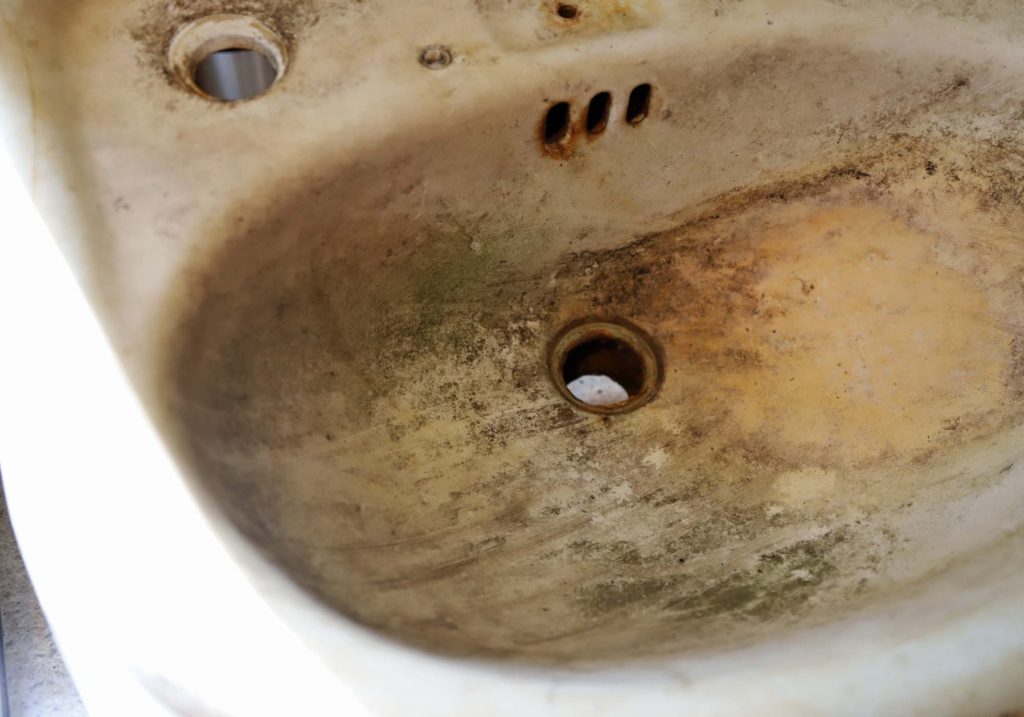
Both sinks were recovered from the property we are currently renting, my husband’s grandparents farmstead. They remodeled their house sometime in the 1960’s, and at that time put the sinks outside. They sat for 50+ years in the woods, covered with leaves and debris. Because of this, the sinks definitely needed some TLC.

We talked about hiring a company to do a complete restore, but decided to test out a DIY version on the smaller sink. Once we knew the results, we figured we would be able to make an informed decision about what to do with the larger one.


CAST IRON SINK CLEANING

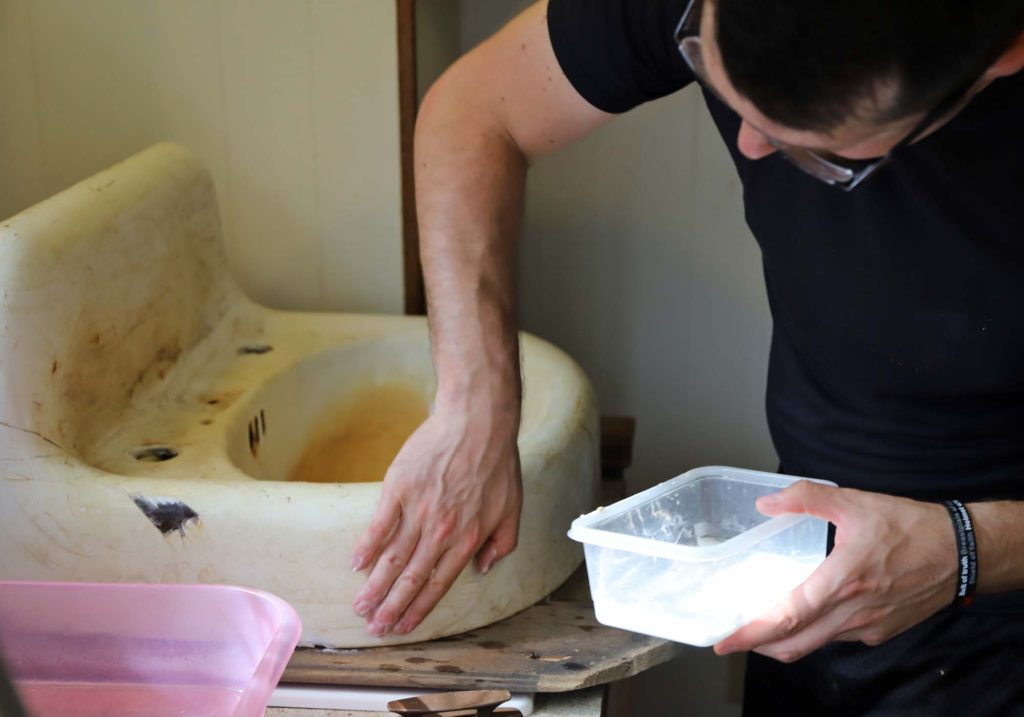
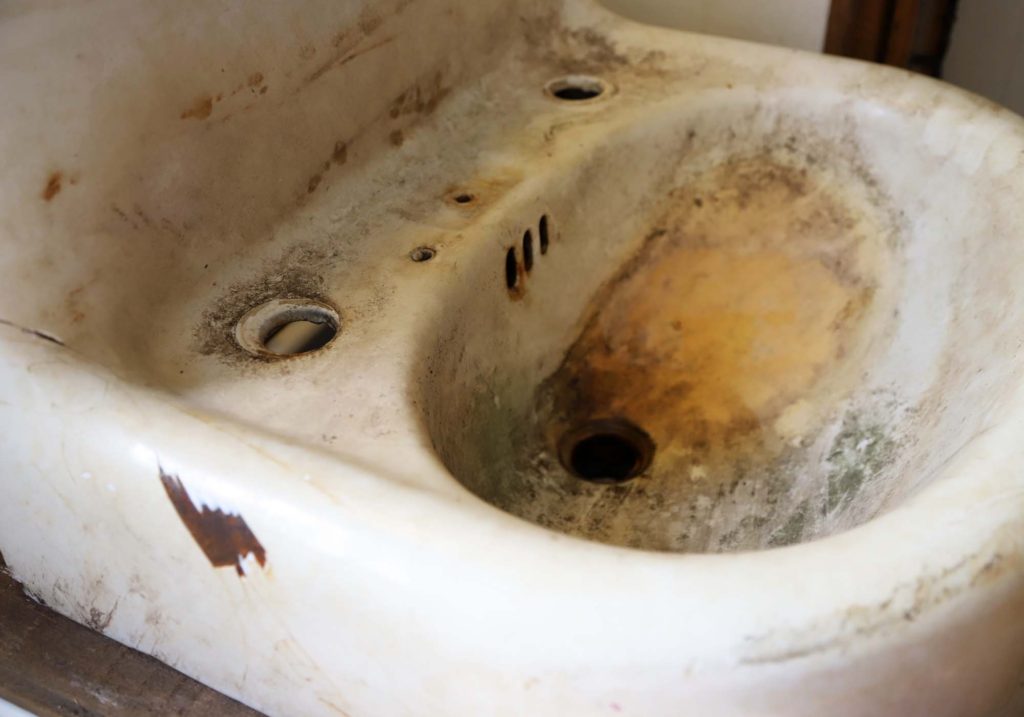
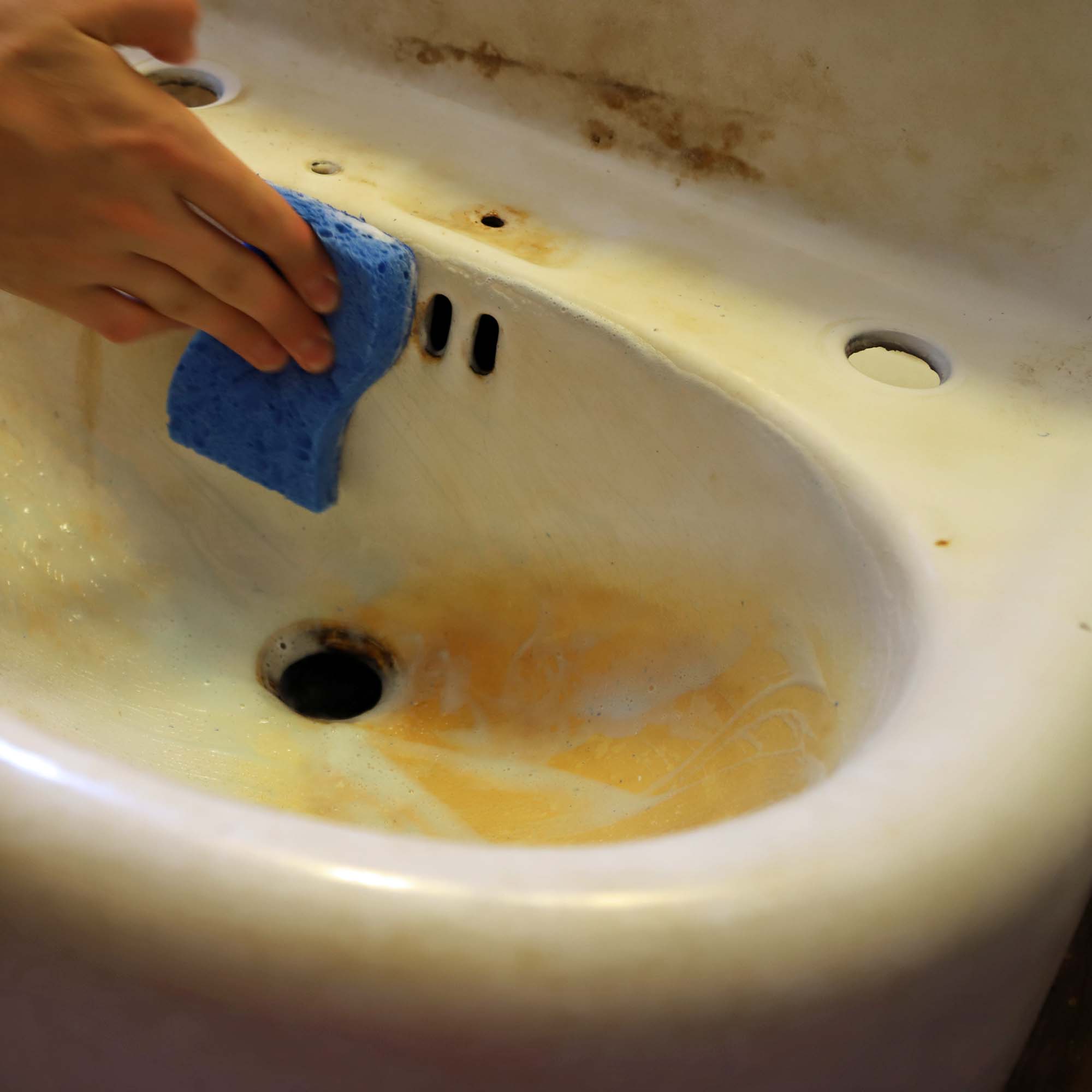
First, the sink needed some good old elbow grease. Craig started with very mild cleansers – such as a baking soda/water mixture. Eventually, he moved to harsher chemical cleaners, including ‘Iron Out’ and ‘Bar Keepers Friend.’ While they did clean the sink somewhat, none of the products were completely removing the rust stains.

cleaning the sink

Craig really wanted to remove the rust, as it could affect the sink’s future integrity if not addressed properly. He ultimately needed to use a wire wheel brush to remove the rust spots.


FIXING THE CHIP

Besides the rust, the biggest issue with this sink was a large chip in the enamel, as well as a hairline crack that ran along the side and up the back splash. They were both cosmetic issues, as they did not cause any problems with the sink being able to hold water.

fixing a chip in enamel of cast iron sink

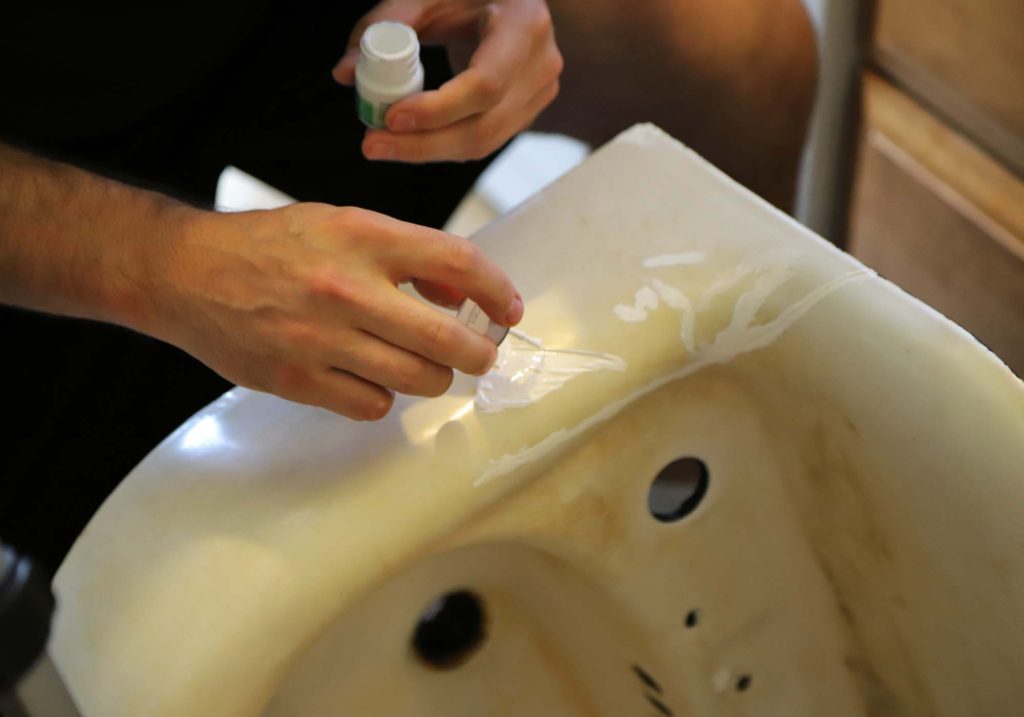
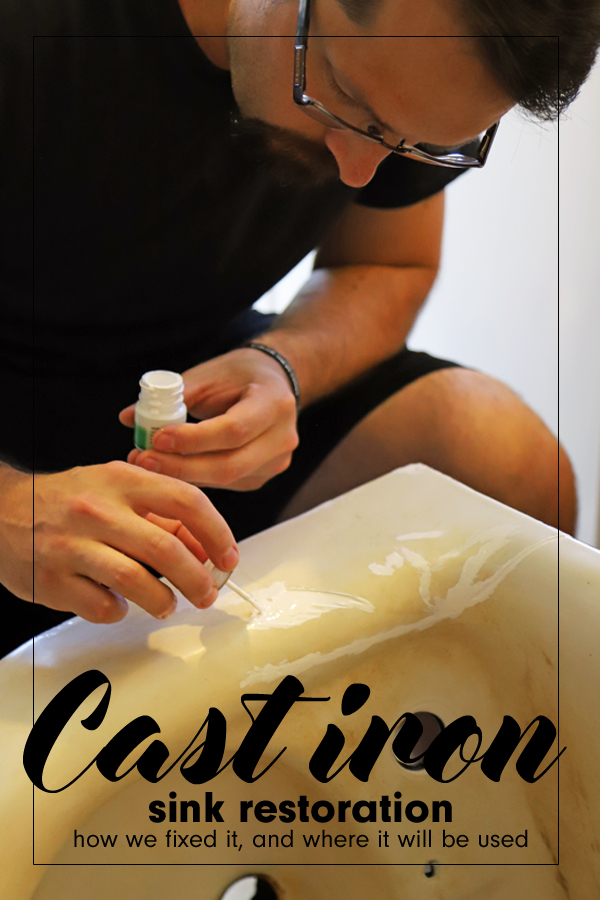
We found an epoxy material that could help fill in the imperfections. Over the course of a day, Craig applied layer after layer, allowing the epoxy to dry between coats. Once the material was above the height of the original enamel, it was left to dry for a few days before sanding.

epoxy material

filling the sink chip with epoxy

This product requires a ‘wet sanding’ technique – to help keep the dust down, and to eliminate scratches on the sink’s surface.


PAINTING THE CAST IRON SINK

We had determined, while cleaning, that the original enamel would need to be covered to get a uniform look. We were in no way looking for perfection, as we understand that this is an old sink. However, the discoloration was pretty bad from the years the sink had sat outdoors.

Once the epoxy had been sanded down smooth, it was time for paint! Craig started by painting the back of the sink with a black ‘rust inhibitor’ paint.

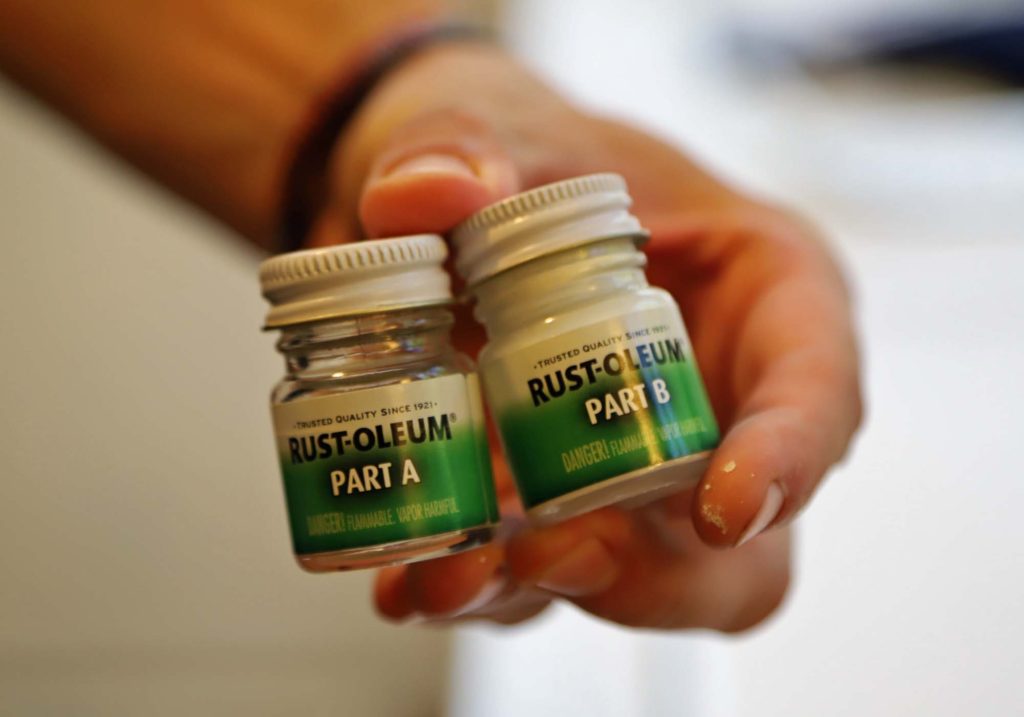
Rustoleum makes a specialty paint product that can be used for bathroom fixtures such as sinks and bathtubs. We decided to give it a try for the front!It goes on about the same as a standard can of spray paint, but the drying time is much longer. This allows the paint to harden.

painted cast iron

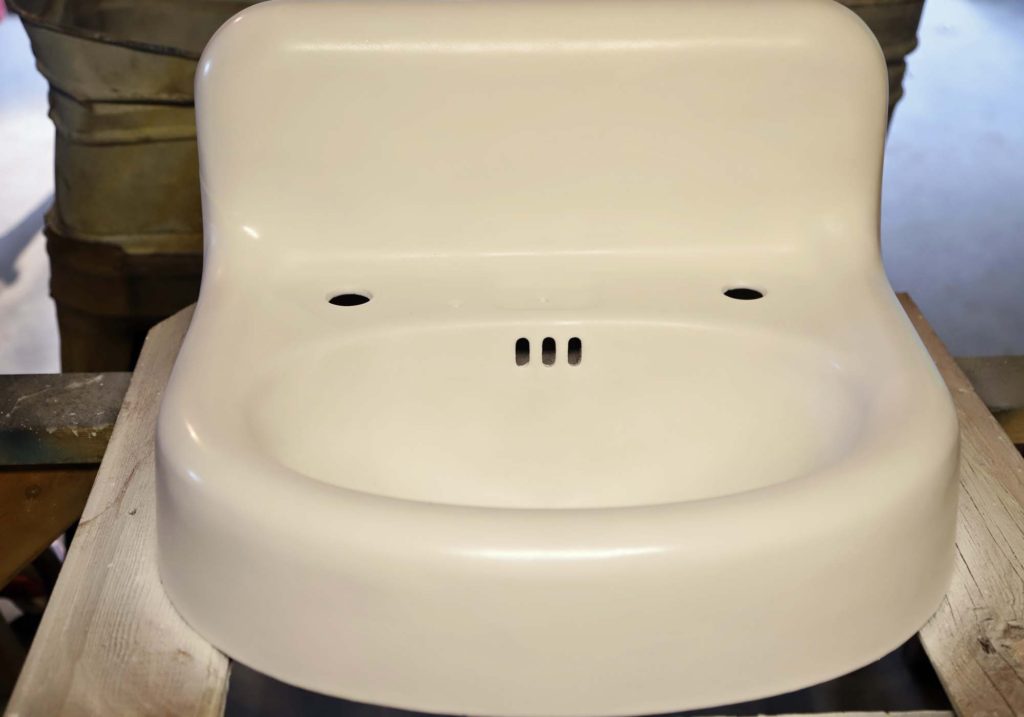
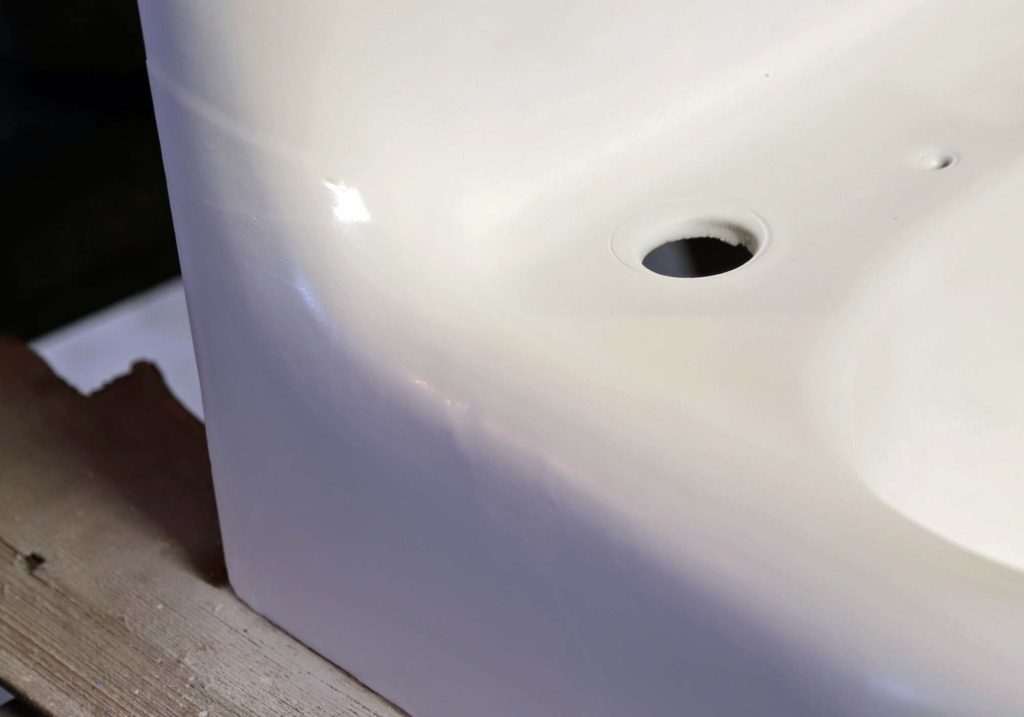
After three coats, the sink is looking great! The finish isn’t quite as shiny as the original enamel, but it is pure white and uniform. All of the rust spots are covered, and you would need to look extremely close to see any sign of the large chip or crack.

vintage sink repair

We are quite pleased with the outcome – especially considering the money we saved by doing it DIY style! Of course, until the sink is in use, we won’t know how this paint will hold up over time. I will try to remember to write an update after we have used the sink for several months.


WATCH THE CAST IRON SINK RESTORATION

For an even closer look at the steps involved in this restoration process, check out the THREE PART SERIES of videos that my husband created for his new YouTube channel, Weirdy Beardy Workshop. He has been busy filming a lot of projects, actually. So, if you want to see some behind the scenes footage, go check out his channel!


PIN THIS POST

how to restore a cast iron sink


PLEATED TABLE RUNNER DIY

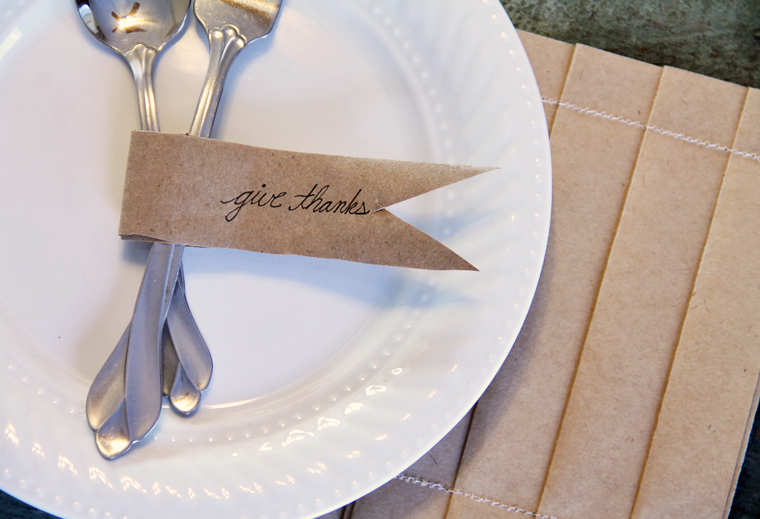
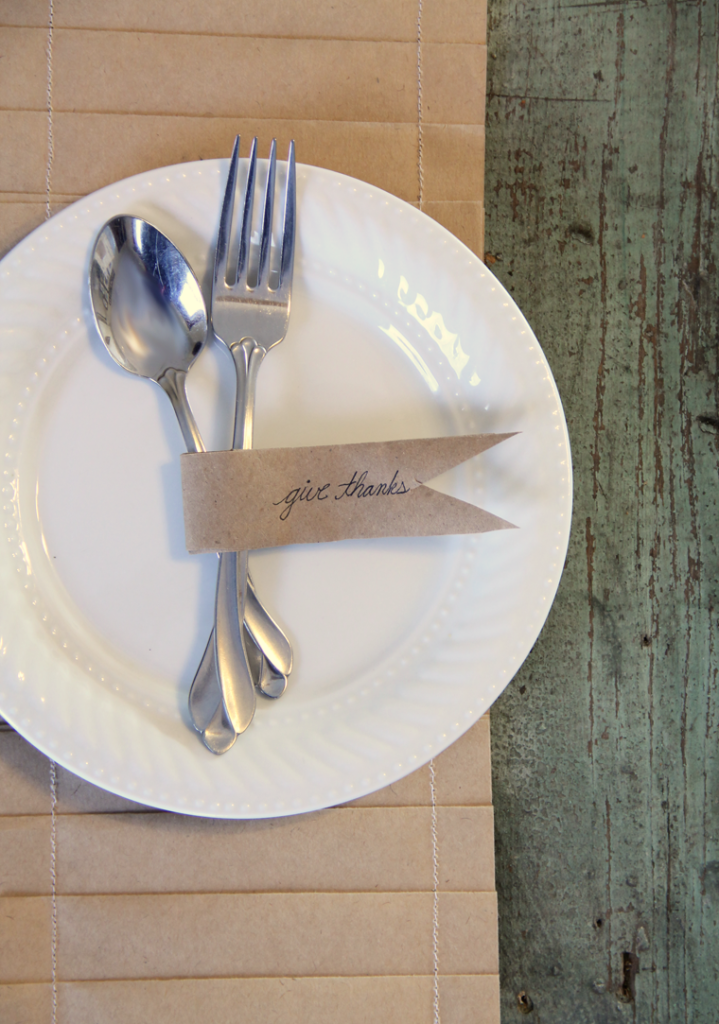
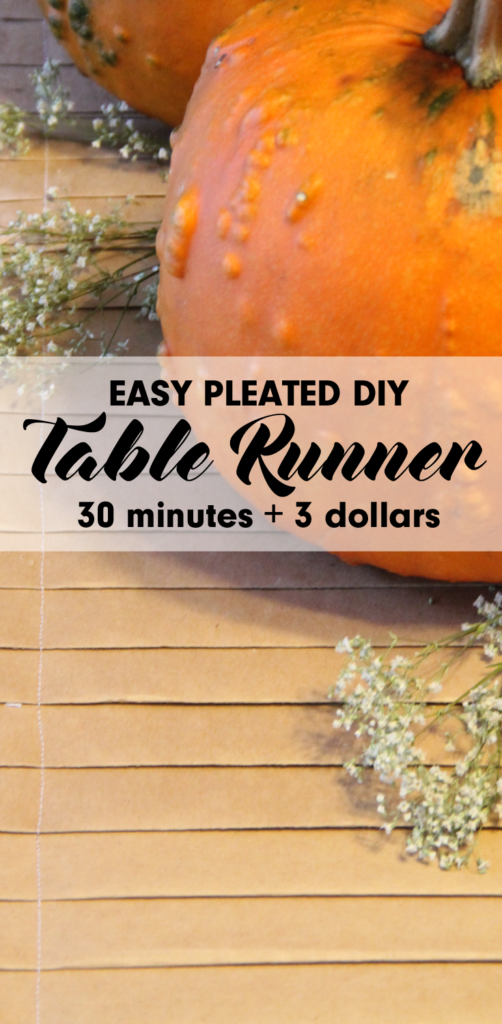
This simple table runner is striking, yet inexpensive and easy to make! If you have 30 minutes and a few dollars, your table can be dressed for success!

pleated table runner

I love staple decorating pieces that can be re-used season after season. To fit that bill for me, they generally need to be neutral and quite basic. But nobody said that basic had to be boring! While this table runner would be the perfect compliment for a Thanksgiving table, it could just as easily dress up a Christmas or Easter table setting.

The best part of this do-it-yourself project is that it can be made inexpensively and quickly!


SUPPLIES YOU WILL NEED

DIY table runner

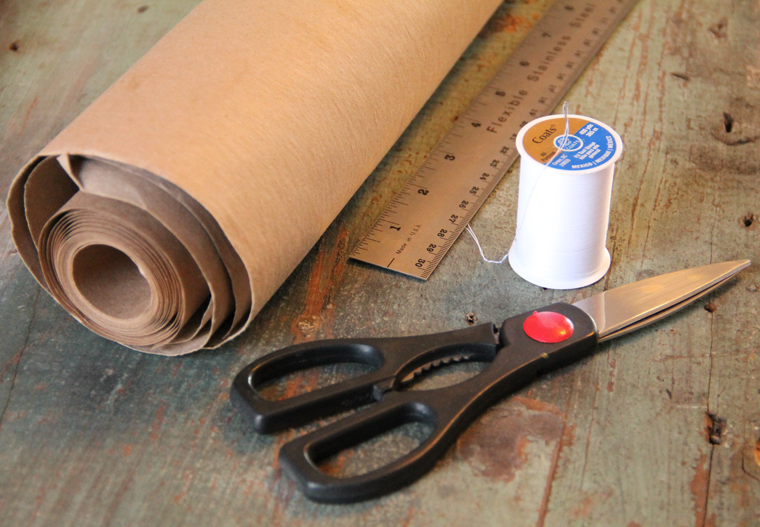
A roll of Kraft brown paper. I used a 30″ wide roll

sharp scissors

pencil

sewing machine / thread

straight pins (optional)


DETERMINE A RUNNER SIZE

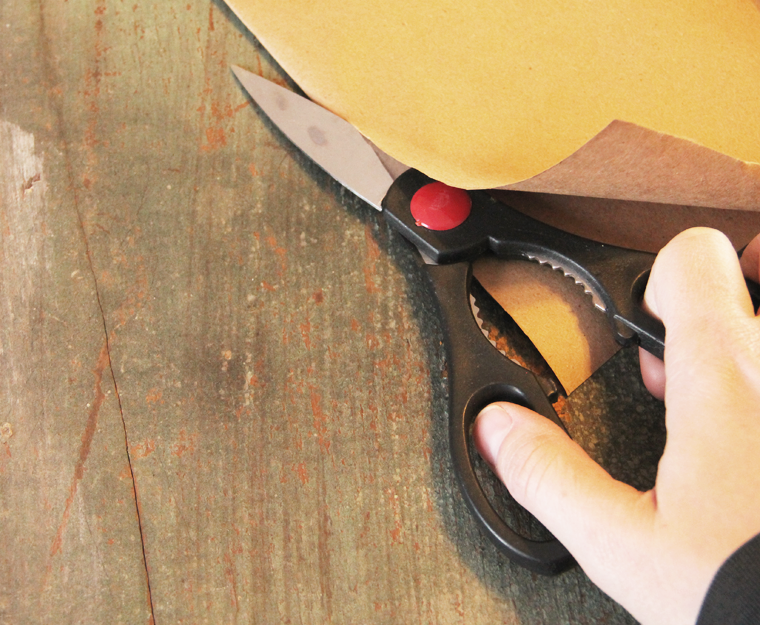
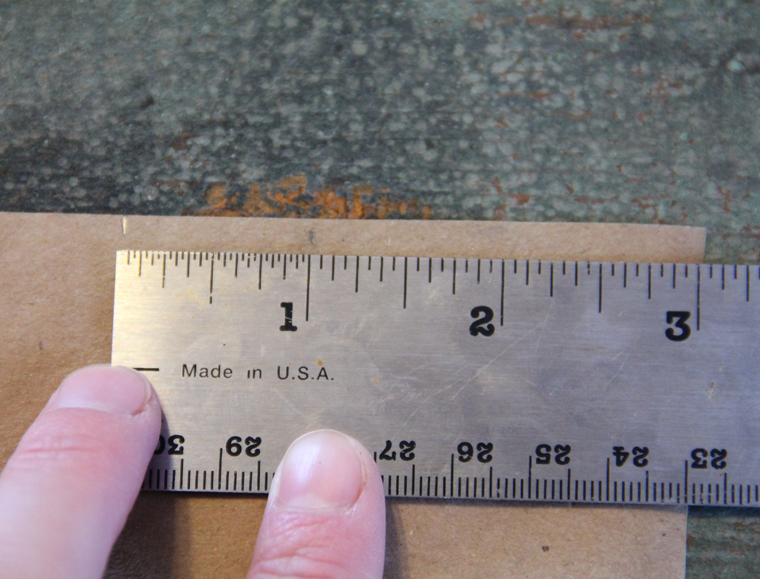
The first step in this project is to determine the width of table runner you will create. Because working with the full 30″ roll of material would be difficult, I decided to cut the kraft paper in half. This left me with a finished table runner that is 15″ wide.

Feel free to play around with the material a bit to determine the size that will work best for you.

If you do decide to cut the material down, try to maintain as straight of an edge as possible. Having a straight edge will be helpful when folding the pleats. Don’t fret if you can’t get the edge perfect though, as any unevenness can be trimmed later.

table runner tutorial

You will also need to think about how long you would like your finished table runner to be. Because of the way that the paper will be folded, you will need 3′ of length for every 1′ of finished runner. For example, if you would like to create a 6′ table runner, you will need the roll of kraft paper to be 18′ long.


CREATE THE PLEATS

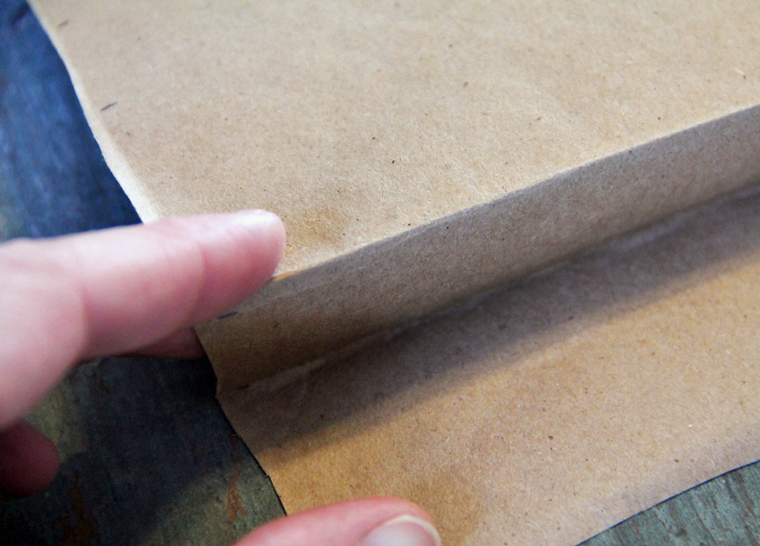
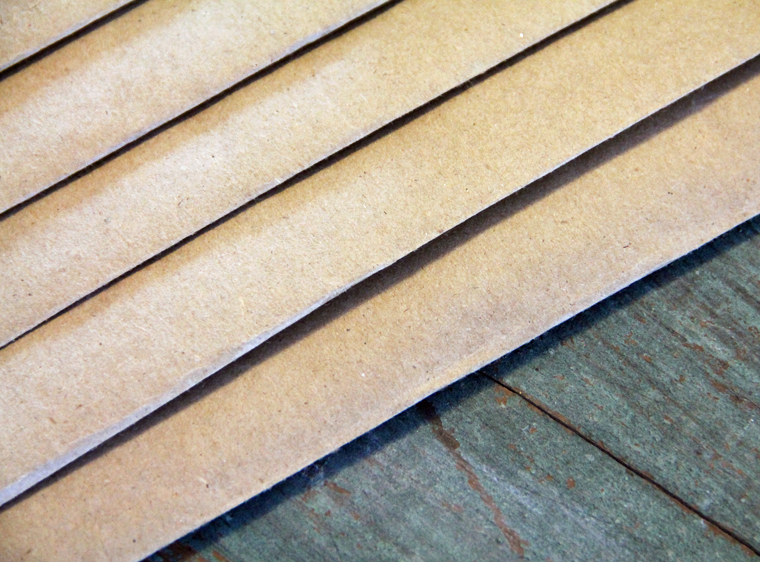
The pleats in this project are accomplished in a very similar fashion to folding a paper fan, with one important difference. The folds used to make a paper fan are ‘accordion folds’ – meaning they are all even. For this project, we will be using what is called a ‘knife fold’. The pleats for this technique are done at a 2:1 ratio. Learn the basics about the knife fold in the first few minutes of this video.

I chose to make my pleats 1″. That meant that the other fold needed to be 2″. If you choose to do a different size of pleating, just be sure to remember the 2:1 ratio. A 2″ pleat would require that every other fold be 4″, for example.

diy table runner tutorial

It helps me when I give myself small guides to work from. You can see in the above photo that I have a mark at 2″, and another 1″ further. I continued this marking pattern all the way to the end of the paper, on both sides.

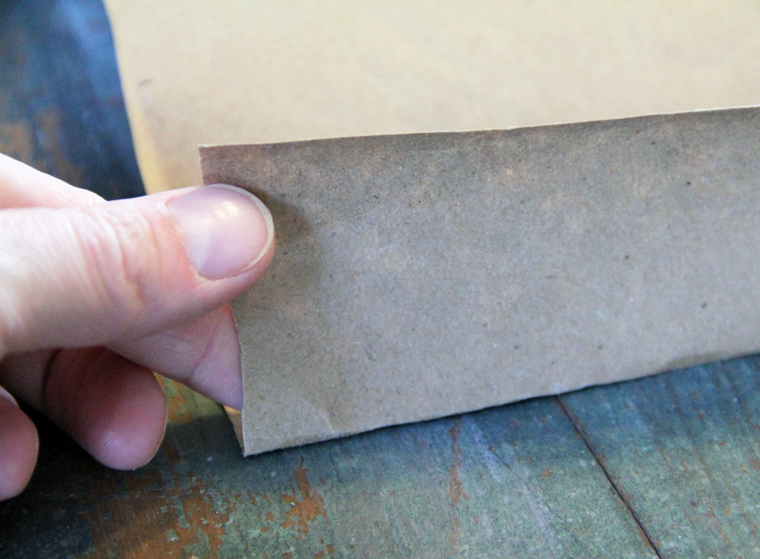
Pinch slightly at the first 2″ markings on either side, then fold upward.

table runner DIY steps

Pinch at the next two markings, and fold downwards. Continue this process, folding up and down alternately.

table runner project


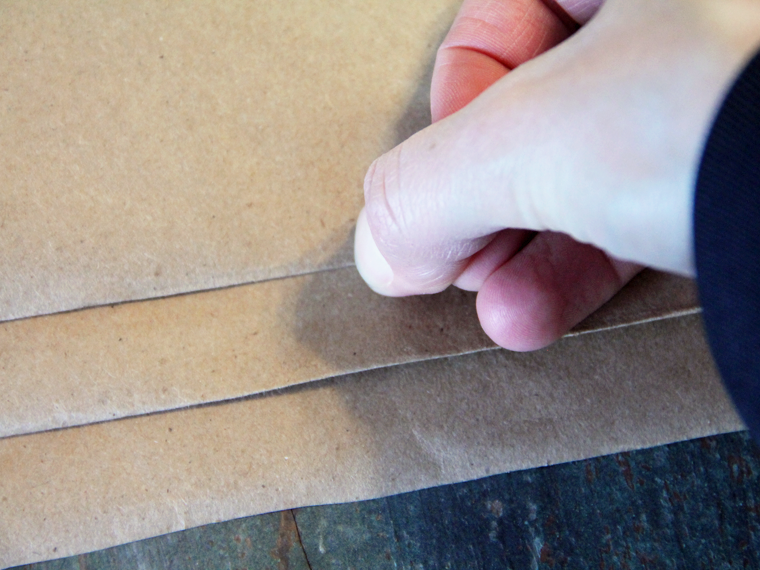
Be sure to make the lines as crisp as possible. I like to use my fingernail to get a nice clean line.

pleated table runner


When you have pleated a few feet of paper, it may become difficult to keep the folds laying flat. At that point, consider placing some temporary straight pins to hold things together. You may instead choose to move onto the next step.

DIY pleated table runner


SEW THE PLEATS TOGETHER

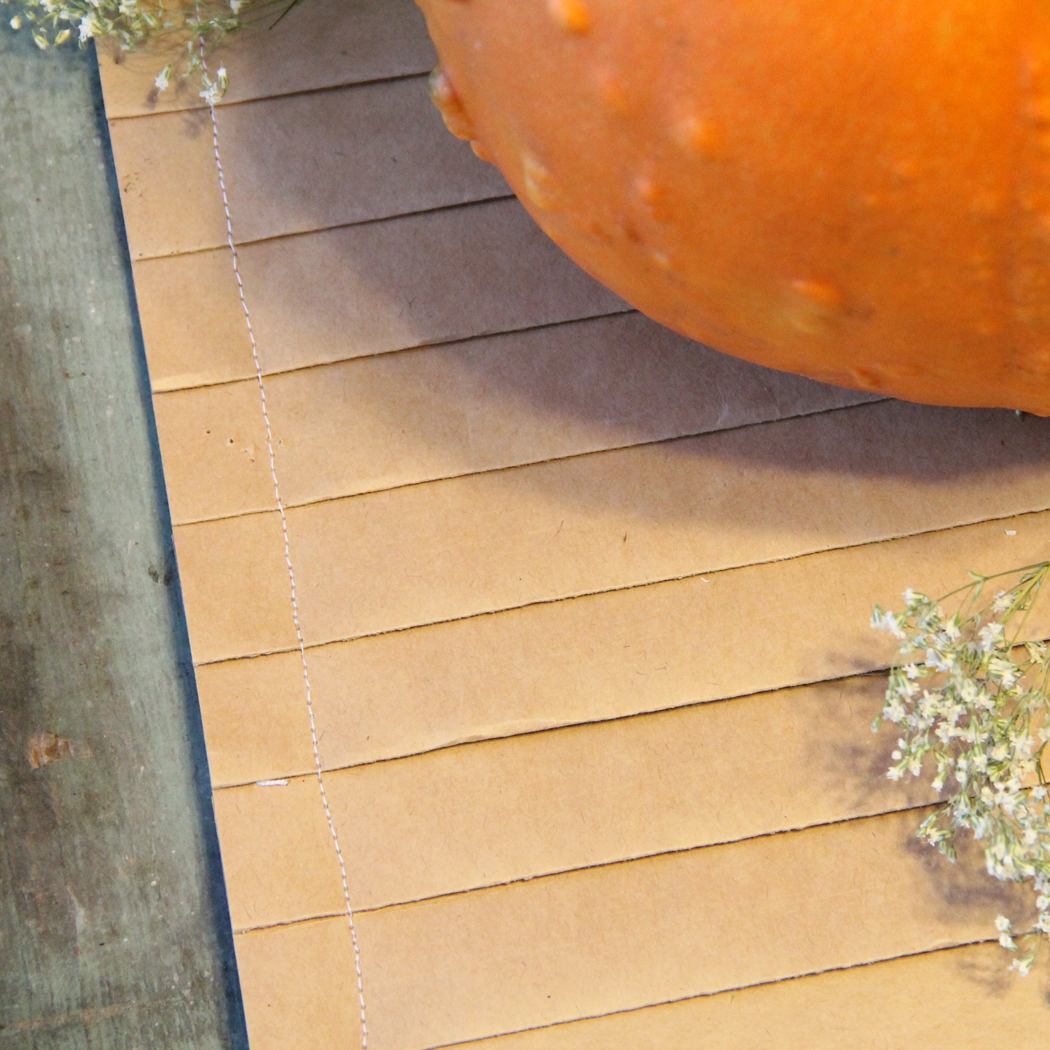
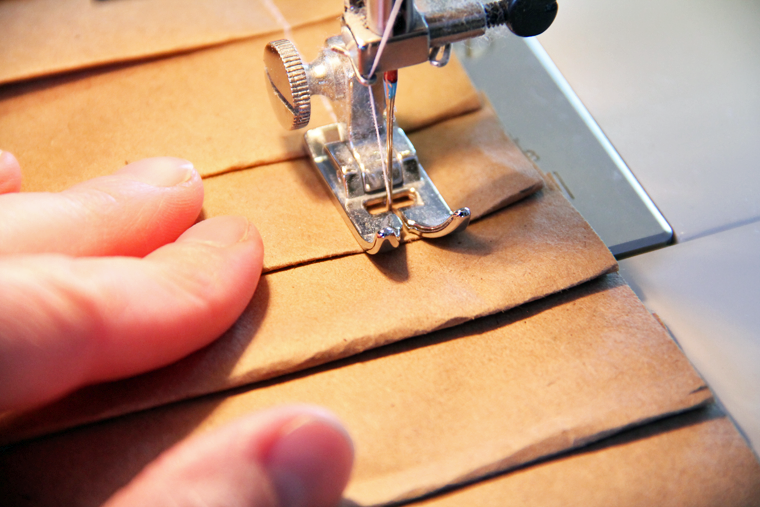
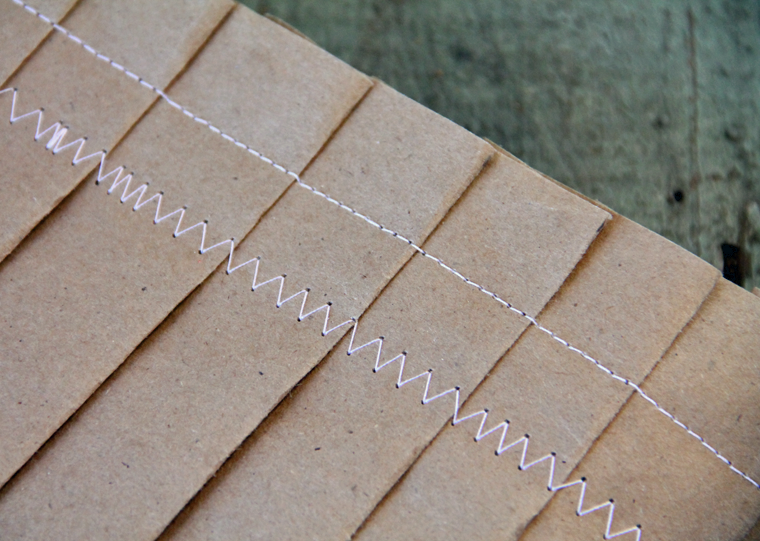
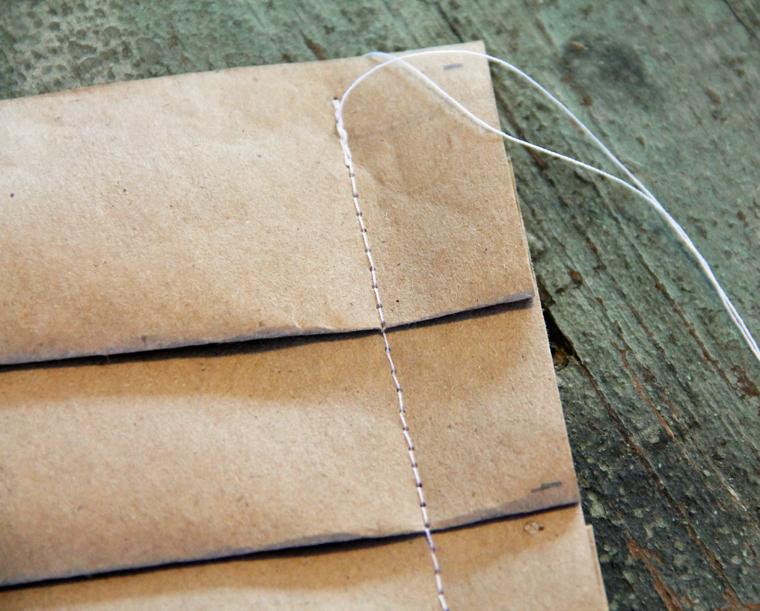
Sewing the pleats down will allow the table runner to stay flat. A simple straight line stitch, set 1″ from the edge, can get the job done.

sewing a diy pleated table runner


Or you may want to play around with the settings on your machine to find a more decorative stitch. This zigzag stitch looked really cute!

stitched pleated table runner


Finish by cutting the extra thread, erasing any visible pencil marks, and cutting the edge if needed.

table runner for holidays


ENJOY THE TABLE RUNNER

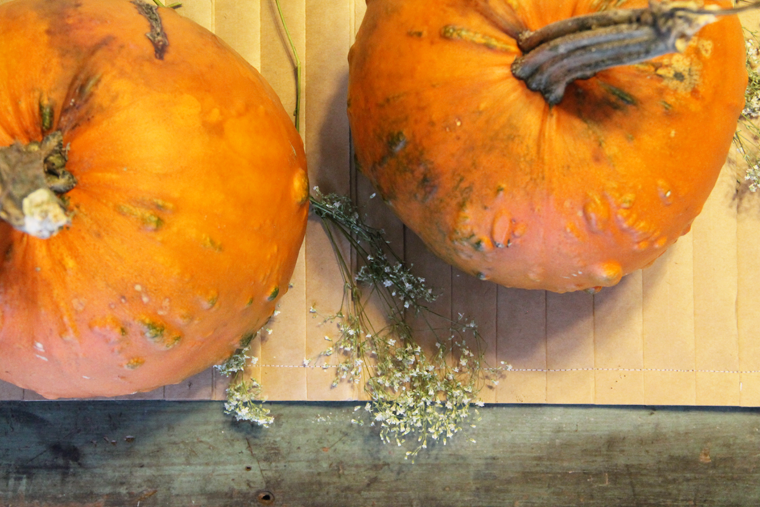
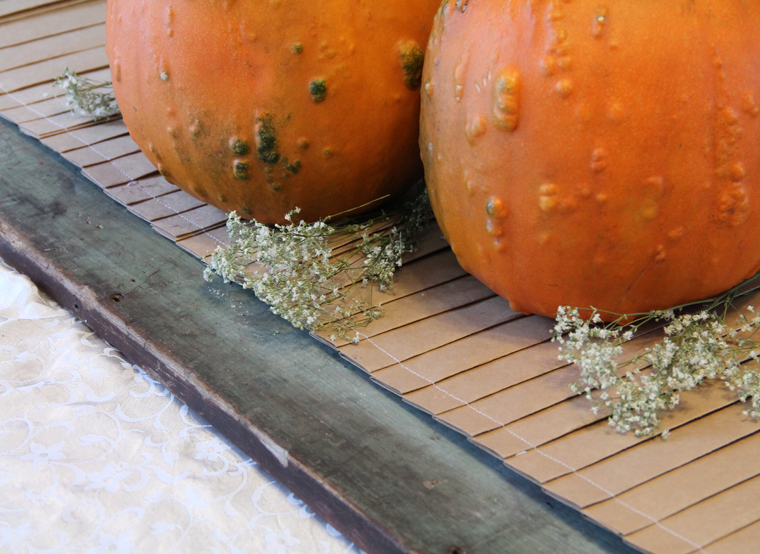
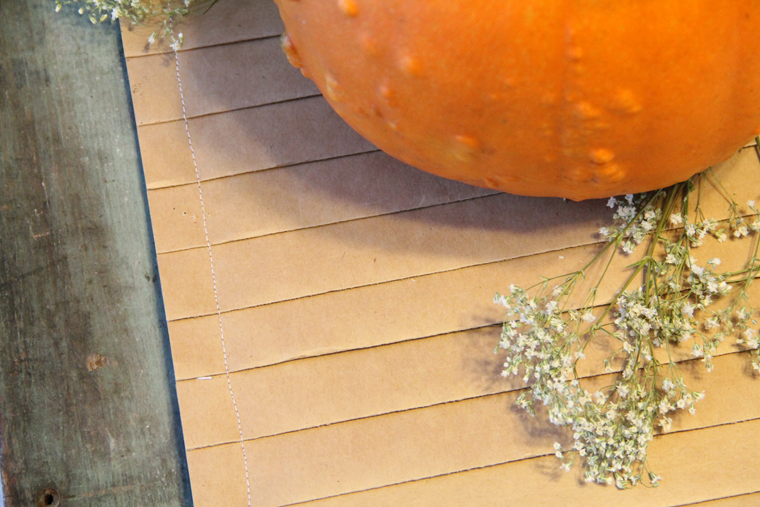
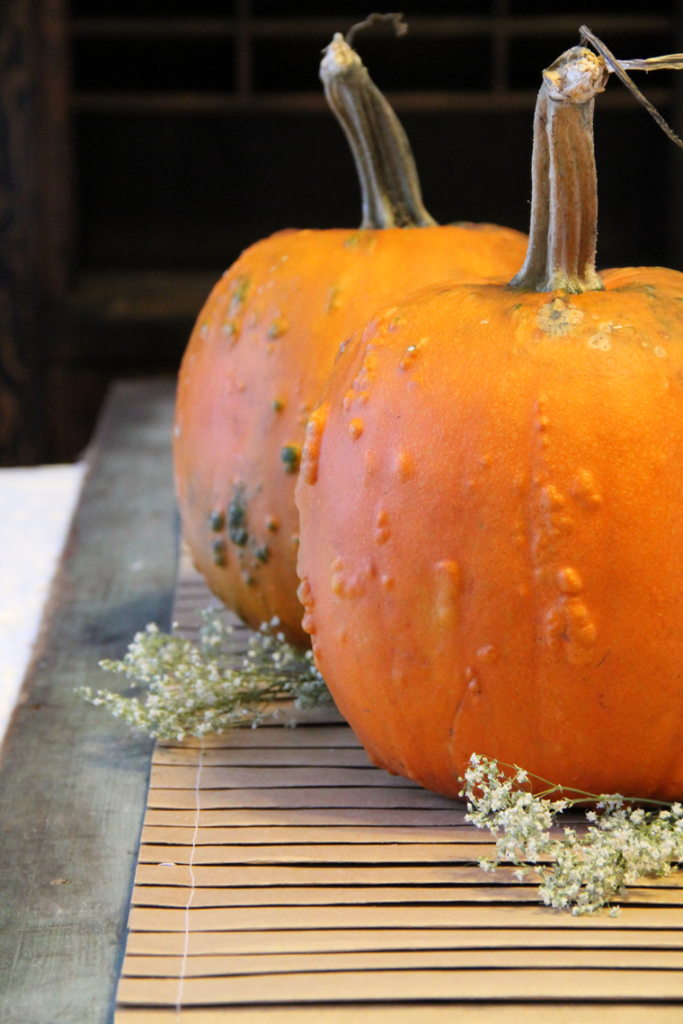
Your neutral pleated table runner is now ready for action! Layer it over a table cloth for extra dimension or place a bit of lace on top for extra texture. Add seasonal decorations for the final touch to a festive tablescape.

neutral pleated table runner


simple homemade table runner


pleated table runner project


ALTERNATE IDEA

If the idea of creating an entire table runner seems overwhelming, consider this alternate. A smaller version can be created with less material and used as place mats.

pleated place mat

Kraft paper place mat


PIN THIS PROJECT FOR LATER

simple diy table runner


ANTIQUE CABINET RESTORATION

In this post, I describe the steps we took during our antique cabinet restoration – taking a beat up old cabinet and making it look new again!

antique cabinet restoration


Last winter, I happened to be driving through a nearby town and noticed an antique store I had never been in. I decided to stop and have a look around.

It was packed with all sorts of treasures, which made it a bit hard to see individual items. I get a little claustrophobic when I am surrounded by things. And so, if i’m honest being honest, I was walking through the shop quickly. Just as I was getting ready to head out, I spotted a pair of antique cabinets in the corner.

They were so wedged in that it was hard for me to determine their condition. I asked the store owner to pull them out a bit so that I could take a look. She did the best she could. However, it was impossible to see all sides of the cabinets without rearranging a ton of items.

She told me about the cabinets history, mentioning they had been salvaged from an old house during a recent remodel. The notches on their sides indicate where they had been built into walls. She also informed me that she would only sell the cabinets as a pair. And that the one in back wasn’t in great shape.


THE CABINETS

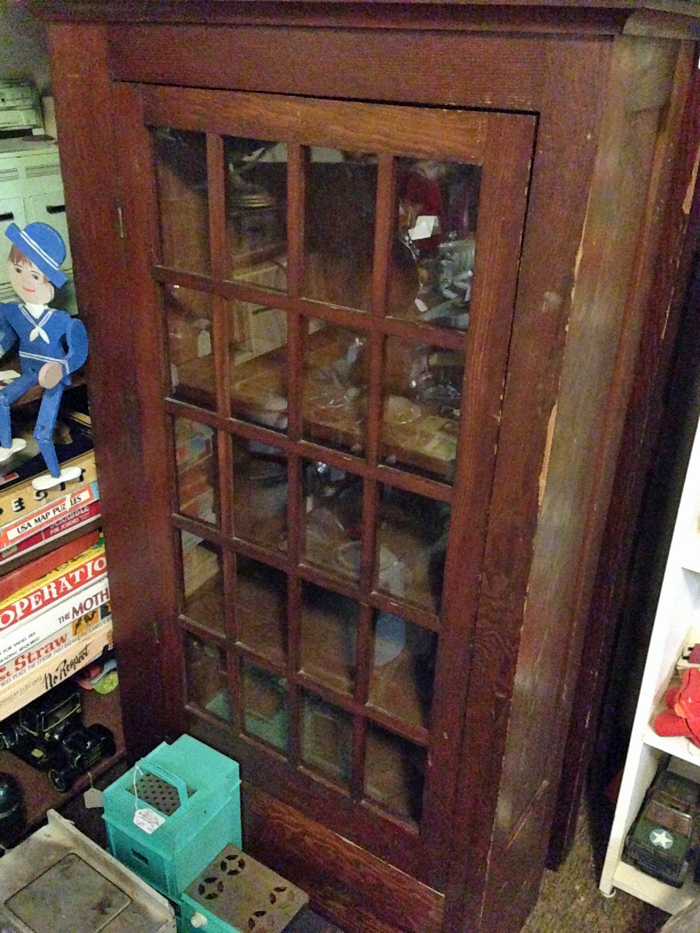
Undeterred, I texted Craig this photo and asked for his consent to purchase. This is the cabinet that was more visible. I loved the glass door, and the size of the cabinet seemed to be good for a variety of purposes

vintage cabinet in an antique store


Though he was skeptical on what we would do with them, he has known me long enough to realize that once I fall for an item, it is pretty hard to shake it from my mind. He agreed that the cabinets could become ours. A couple of weeks later, he went to retrieve them.

Upon arriving home, Craig announced that the second cabinet was basically falling apart, and that it probably wasn’t worth salvaging.

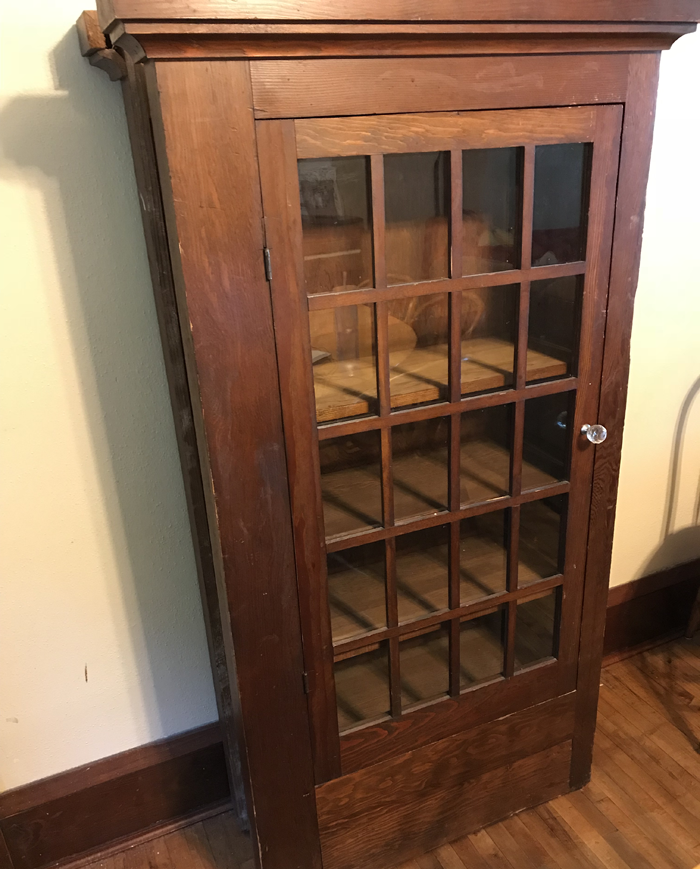
The ‘nice’ cabinet was given a spot in our rental home. The ‘ugly duckling’ cabinet was left in the garage.

vintage cabinet with glass door

the nicer cabinet,  in our dining room


THOUGHTS OF RESTORATION

Sitting in the garage, the cabinet was something we saw every day. Perhaps Craig became annoyed seeing an unfinished project, or perhaps he began to see it’s merit. Either way, he eventually decided to take it on as his personal restoration project.

I was all for it! If he was going to do the work, I certainly wasn’t going to get in his way!

antique cabinet with many scratches and dings


Unfortunately, I didn’t take many good pictures before he started the antique cabinet restoration. I can tell you though, it was in really rough shape. The door was barely hanging on by it’s hinges, the glass was broken, and some of the wooden grilles were missing. There was a large crack on the top, and a broken piece on the side.


ANTIQUE CABINET RESTORATION

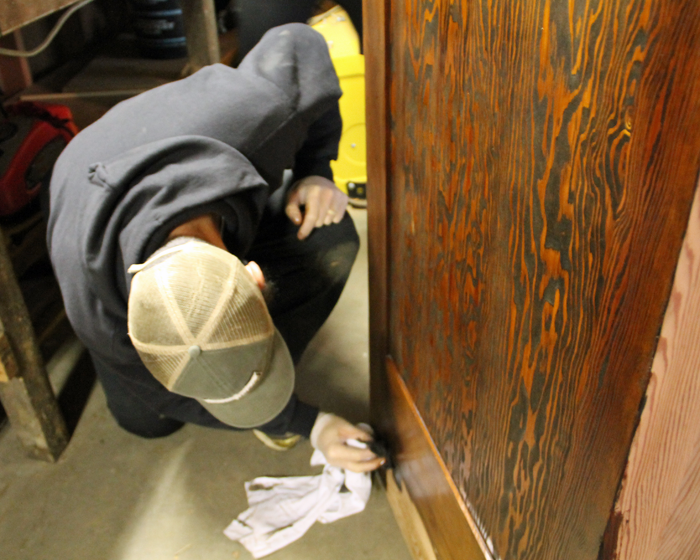
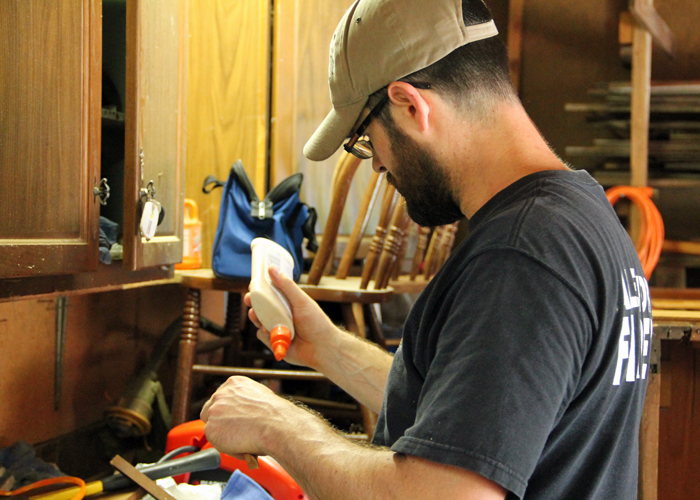
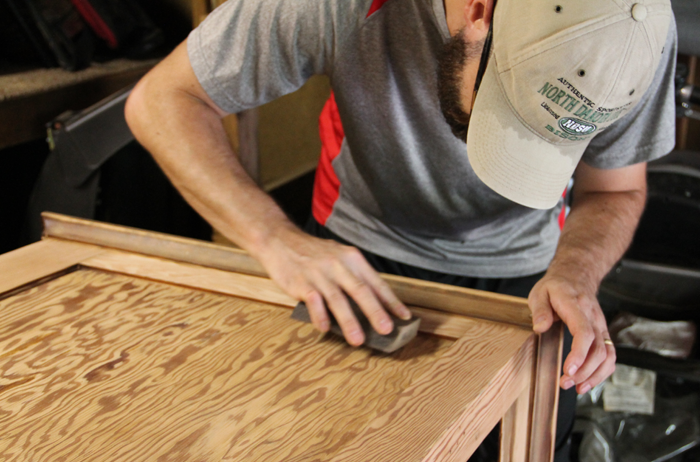
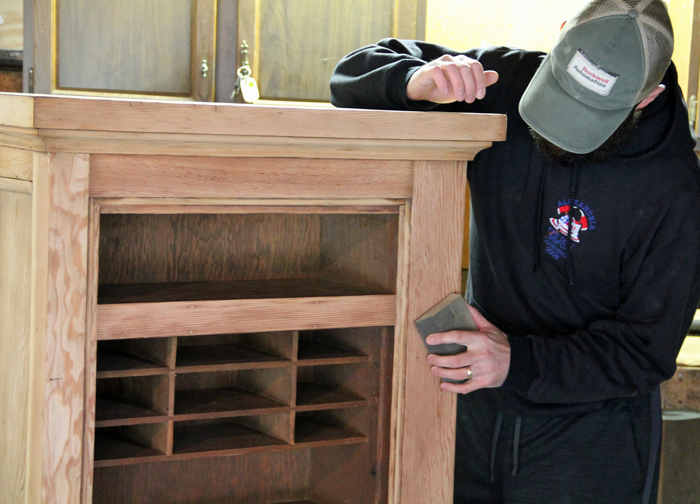
Craig spent many long hours in the garage sanding, gluing, and sanding some more.

antique cabinet restoration steps

making old new again. steps to restoring an antique cabinet

repairing an antique cabinet

There sure was a lot of sanding and gluing to be done! He mostly used an orbital sander with varying grits of paper. For the finest details, he used a sanding block.


broken piece on an antique cabinet

sanding the corners of an antique cabinet so that it can be restored


Craig took pieces of the cabinet apart…

antique cabinet pieces to be repaired


… then put them back together

sanding an antique cabinet


REFINISHING THE ANTIQUE CABINET

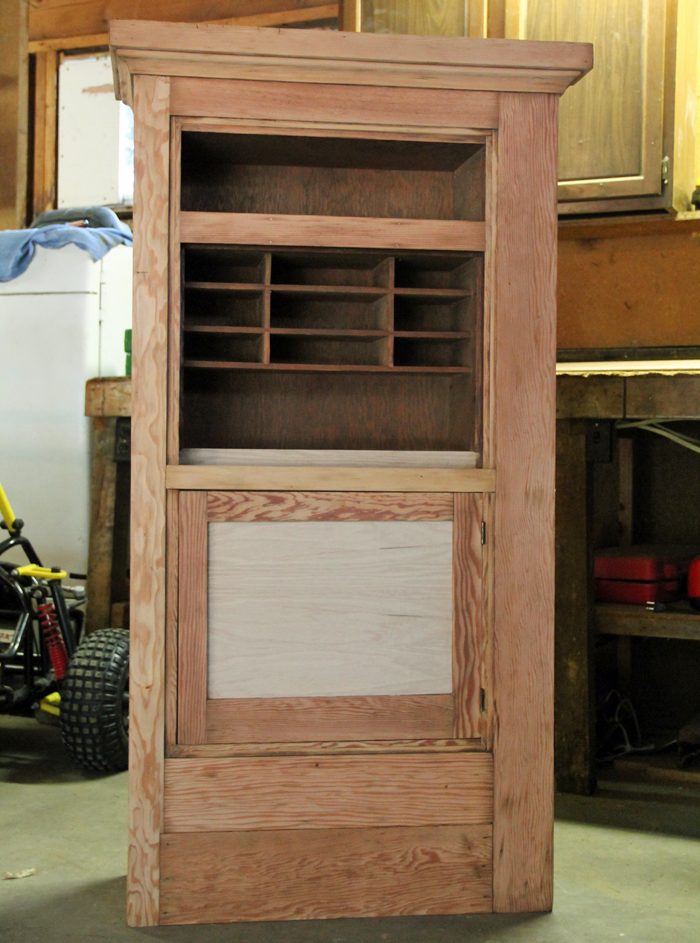
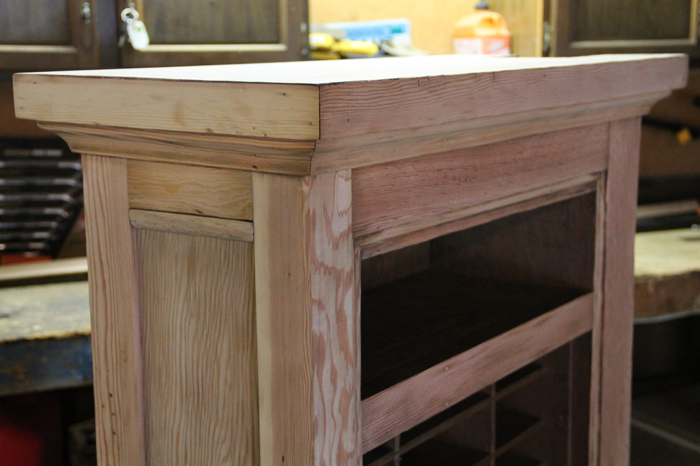
After literal months of very hard work, the cabinet was once again standing tall and ready for it’s finishing. Once the sanding was complete, it was much easier to see all of the beautiful wood grain details.


repairing an old cabinet during an antique cabinet restoration

The lighter wood pieces are replacements. Although they are the same wood species, they are not aged in the way that the rest of the cabinet pieces are.


how to restore an antique cabinet


CHOOSING THE STAIN COLOR

It was a difficult decision on what type and color of stain to use. The cabinet is made of 100% red oak – but some of it has a tighter grain, while other parts a more loose and wavy grain.

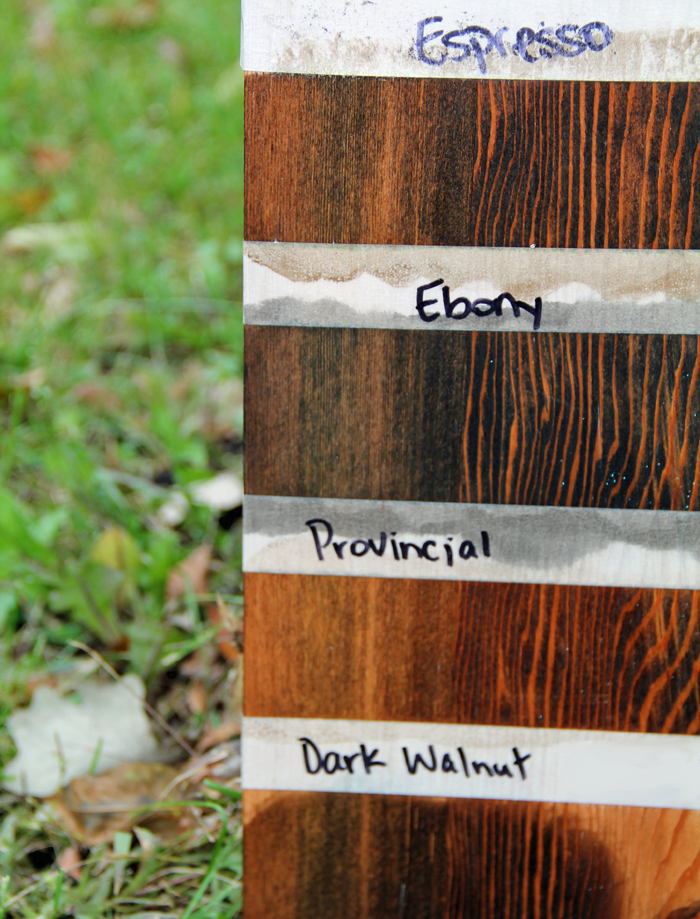
We had some samples made up at a local Sherwin Williams, then brought them back to the house to look at for a while.

stain color options for an antique cabinet


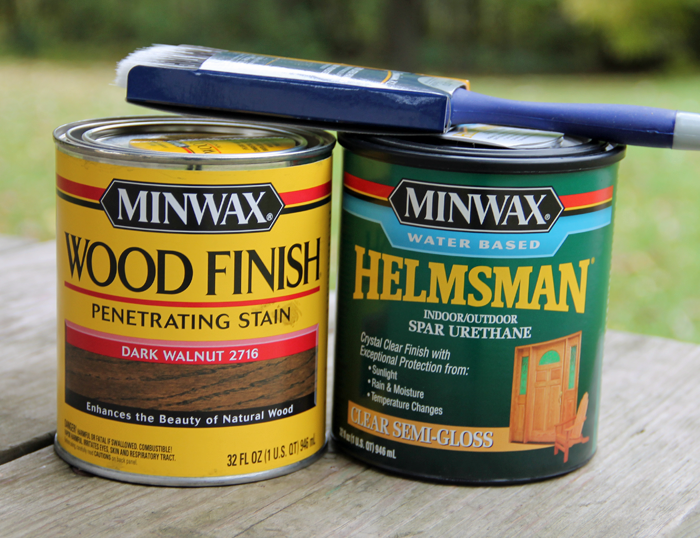
Ultimately, we agreed upon a Minwax stain called ‘Dark Walnut’. We felt that it gave us a nice deep color, which would help to neutralize the grain a bit. The Sherwin Williams associate suggested a Minwax water based urethane in a semi-gloss finish. Popular Woodworking has a great post about how to properly apply stain.

finish for an antique cabinet


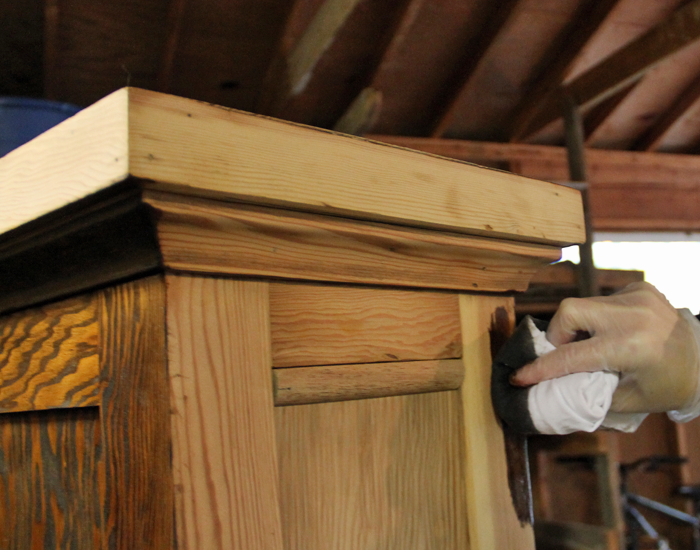
The cabinet absolutely soaked up the stain. The wood looked amazing, but wasn’t quite as dark as I had wanted after the first coating.

Antique cabinet restoration. Applying stain to an antique cabinet


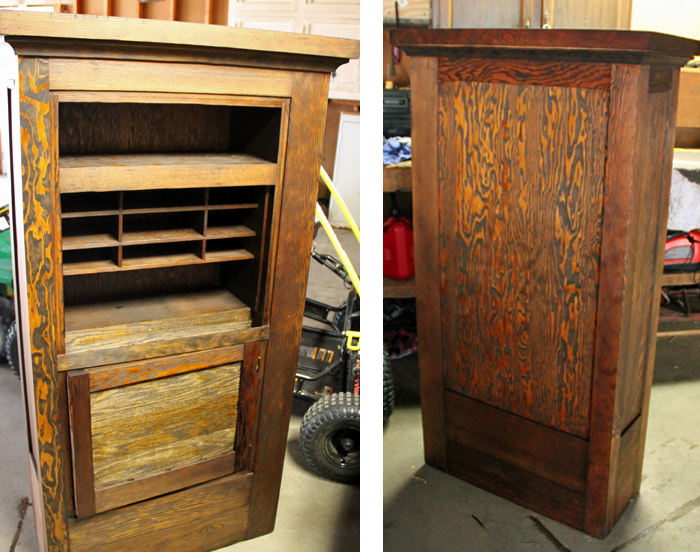
front and back of the restored antique cabinet after one coat of stain

Cabinet after one coat of stain (sitting in the garage)

As you can see in the photos above, the newer wood pieces were still pretty obvious after the first coat. We waited a couple of days, and then applied another stain coating. This time we had success with the color. We brought it indoors to dry for another two days, and then added two coats of the clear semi-gloss finish. The spar urethane really made the cabinet shine, and darkened the color a bit more.

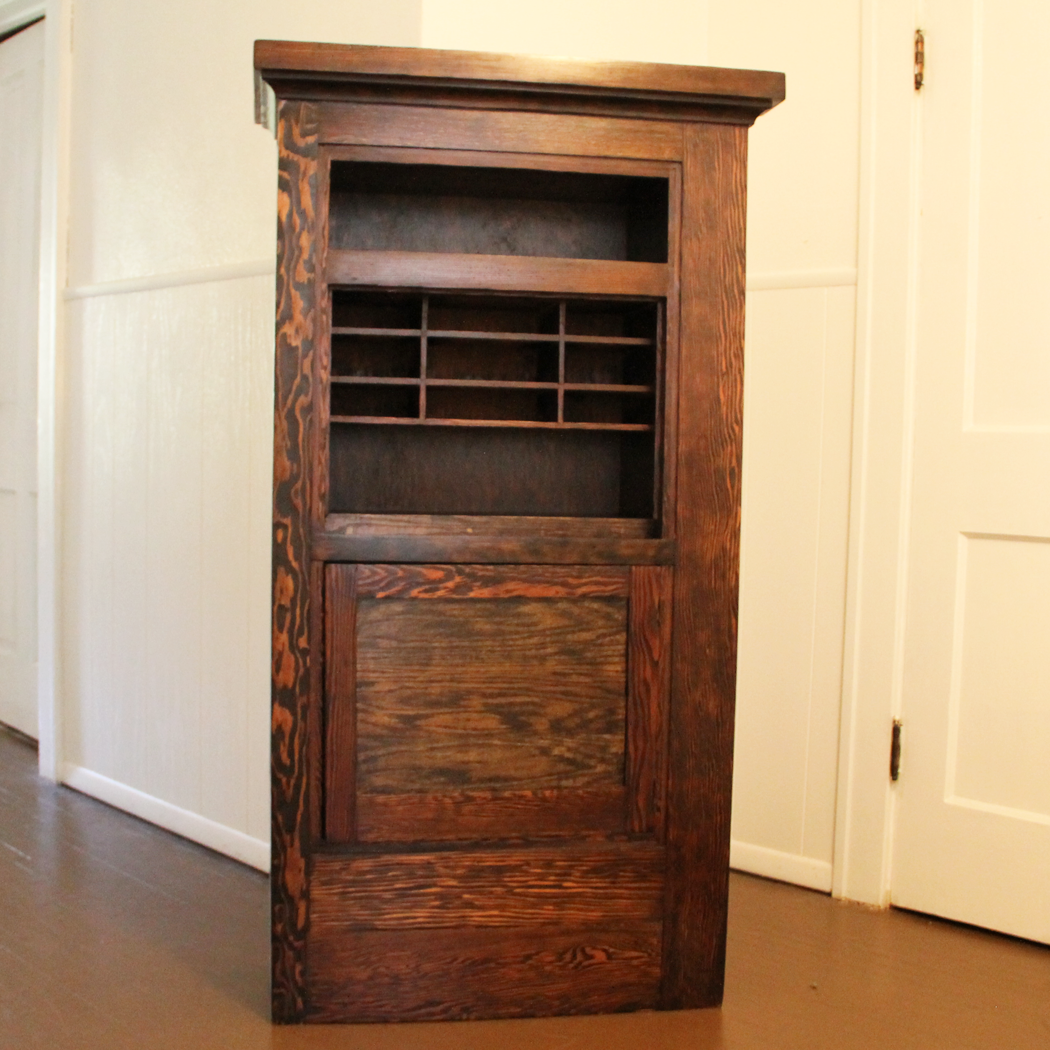
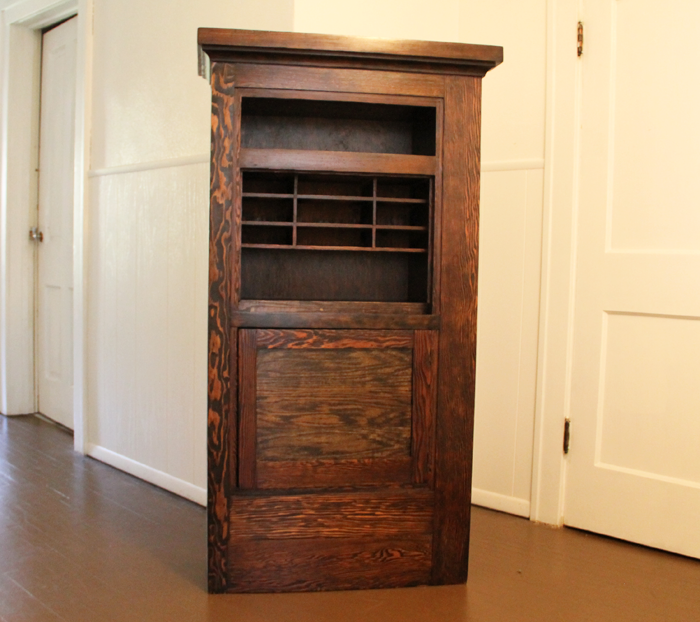
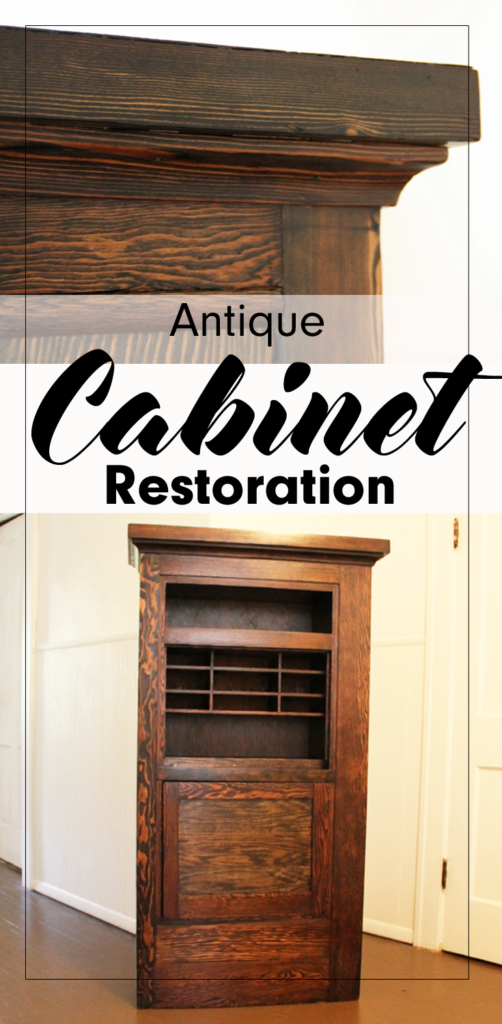
antique cabinet restored. Amazing old cabinet with storage and mail sorting

Finished cabinet with lower door open


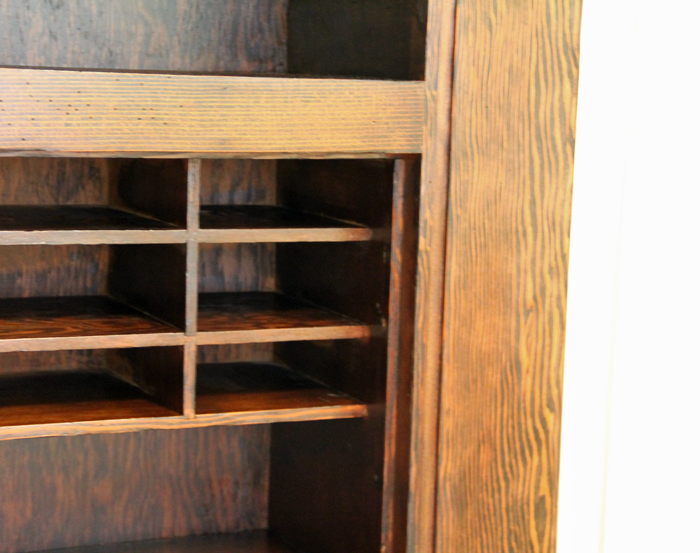
vintage cabinet with mail cubbies - antique cabinet restoration

Detail of cubbies. Might be perfect for sorting mail!


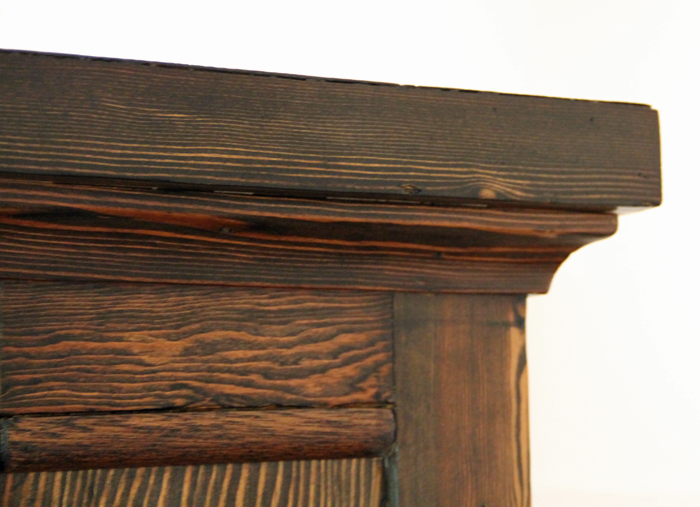
vintage cabinet detail - antique cabinet restoration

Detail of the molding and repaired cabinet top


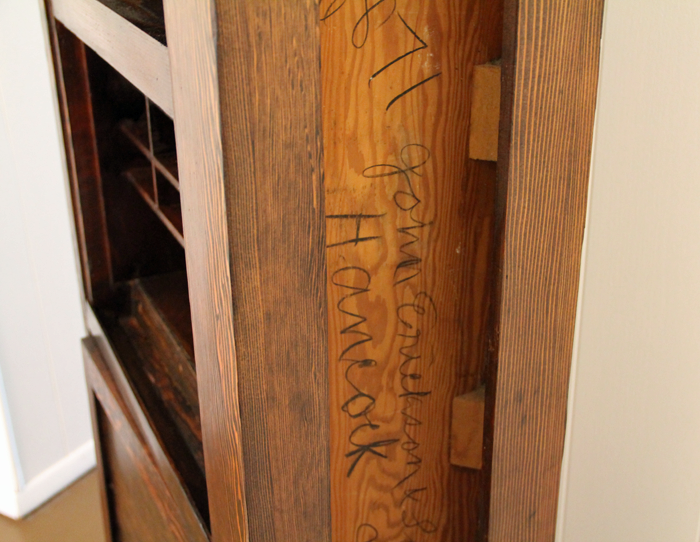
antique built in cabinet with writing showcasing their original location

The original writing on the side of the cabinet – which indicates the part number, and the early 1900’s homeowner. 


restored antique cabinet with new stain and urethane


FUTURE FOR THE ANTIQUE CABINETS

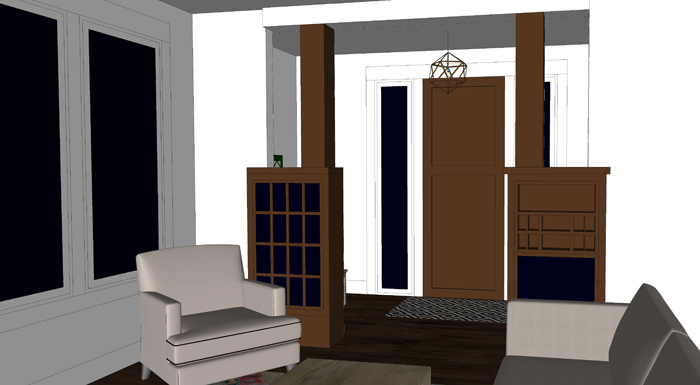
Now that the antique cabinet restoration is complete, we are dreaming about it’s future. We love that this historic piece will be given a prominent spot in Arrow Hill Cottage – to define our entryway from the living room! You can read more about our first floor layout in THIS POST.

antique cabinet restoration - pair of cabinets restored and ready for their spot in a new house


We are also very excited to see how the ‘nicer’ cabinet turns out. And to see BOTH of the cabinets, together once again in the new house, will be such a thrill!


PIN THIS ANTIQUE CABINET RESTORATION

If you enjoyed seeing this old cabinet become new again, be sure to follow this blog to see the other restored!

antique cabinet restoration - steps to move from trash to treasure


REFINISHED DINING CHAIRS IN 6 EASY STEPS

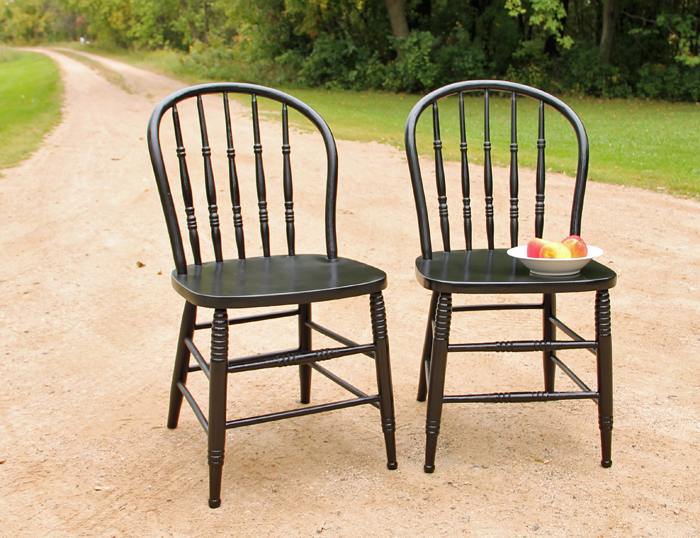
I’m happy to report that another item from my PROJECT BUCKET LIST is well underway. The dining chairs have begun their transformation from brown to black! And I am loving them!

First, a quick recap on what my plans are for these chairs.

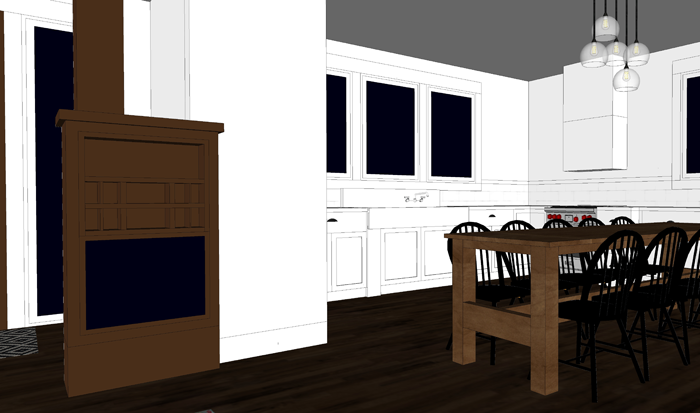
For our future dining space at Arrow Hill Cottage, we are hoping to create a unique harvest table – partially out of lumber harvested from large trees on the property. This will be a long and narrow table, with seating for ten people. We want to make sure that we always have room for guests to dine with us.


Our dining space will be directly off of the kitchen – in an area of about 9′-0″ x 14′-0″. Not a very large space by any means. And so, in order to include seating for ten people, I intentionally searched for chairs that had a small profile.

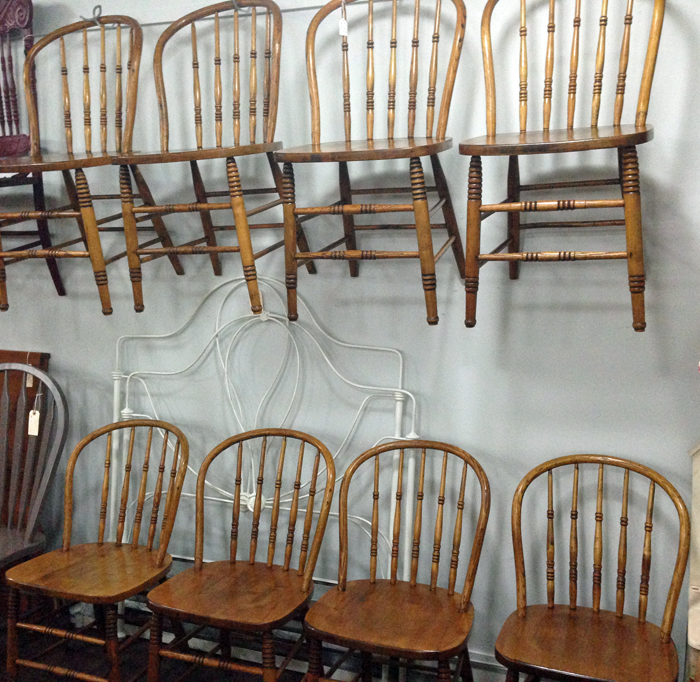
I found the perfect chairs at a local antique store. This set of  8 had been recently refinished with stain.


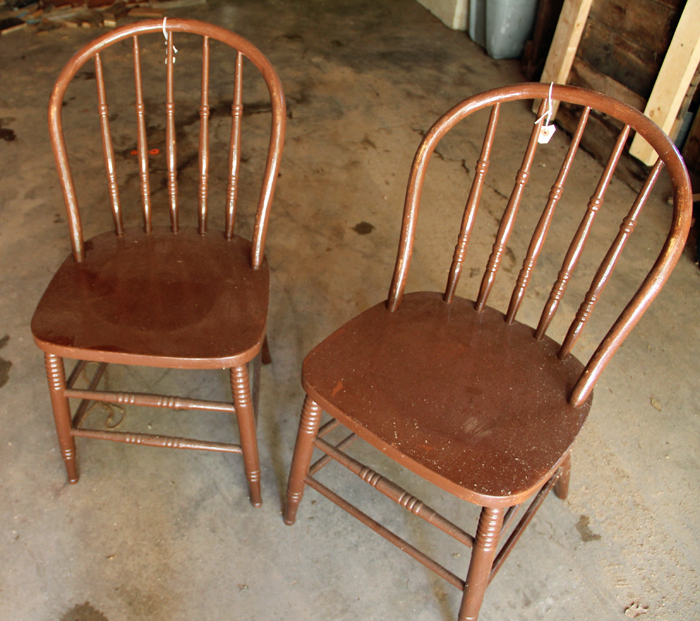
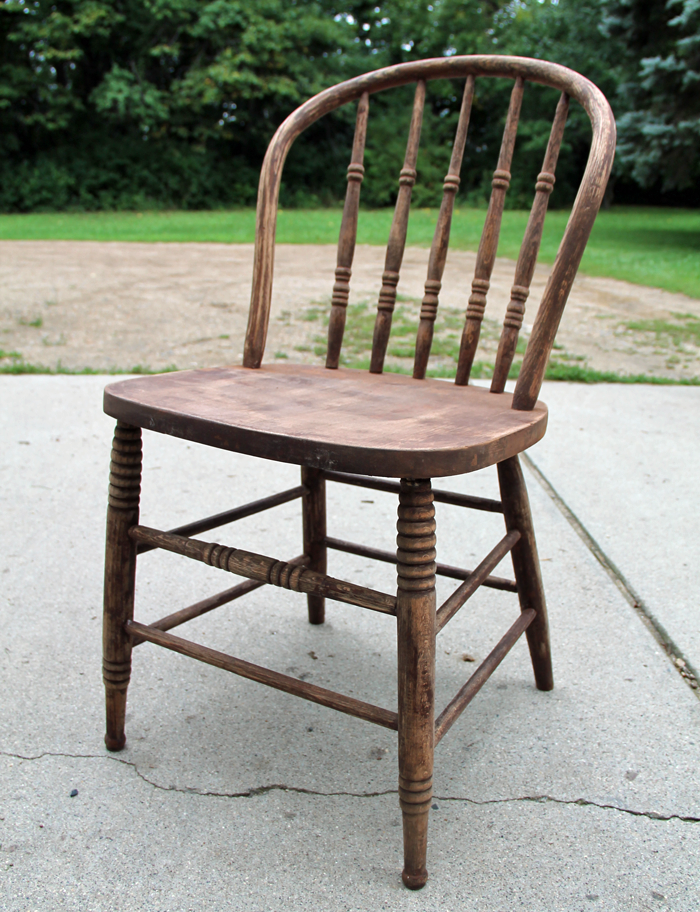
An additional 2 matching chairs were were found at a different antique store. These chairs were not in as good of shape, and were covered in quite a few layers of paint – some of which had already begun to peel off.


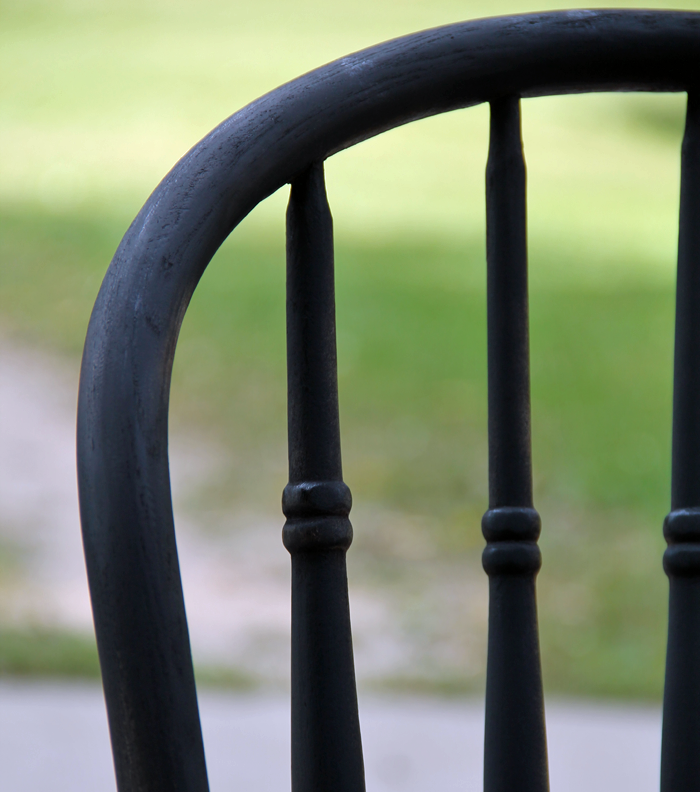
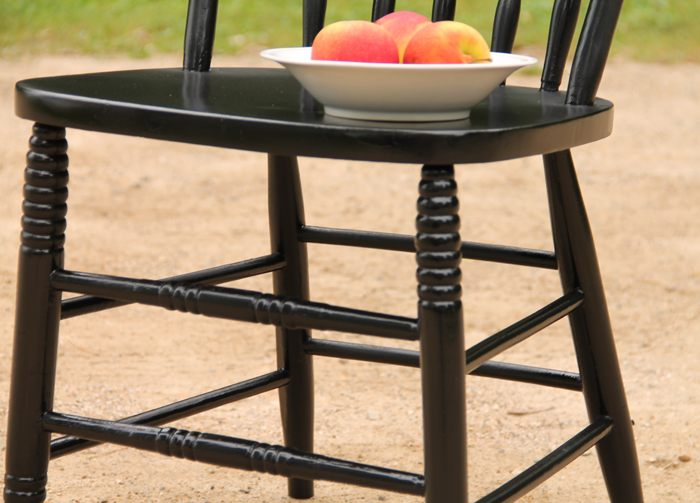
I’ve decided that with a stained wood dining table, and stained hardwood floors – our chairs will look best painted black. I started the transformation process with the two brown painted chairs.

Today I will share the 6 simple steps that I used to refinish the first two chairs. Hopefully this post can serve as a guide to anyone planning a similar project! 


STEP 1: REMOVE EXISTING PAINT LAYERS

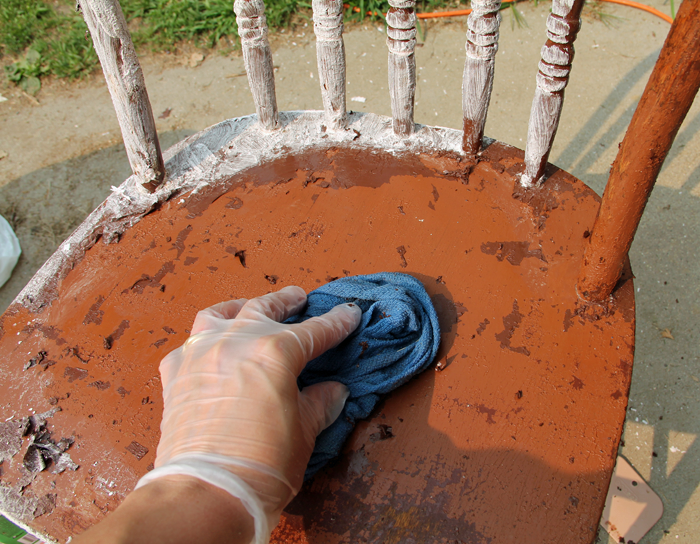
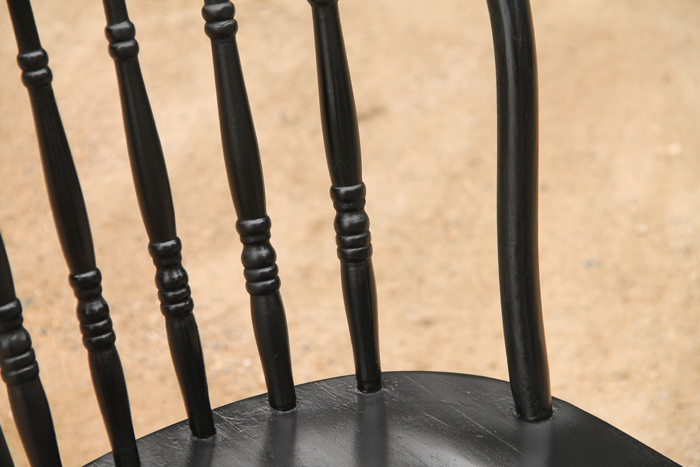
These chairs were covered in many layers of paint. While you might be able to sand some furniture pieces down to the bare wood – that was not be possible with these chairs. A power sander would have changed the shape of the spindles. It also would not have been able to get into the small turned details.


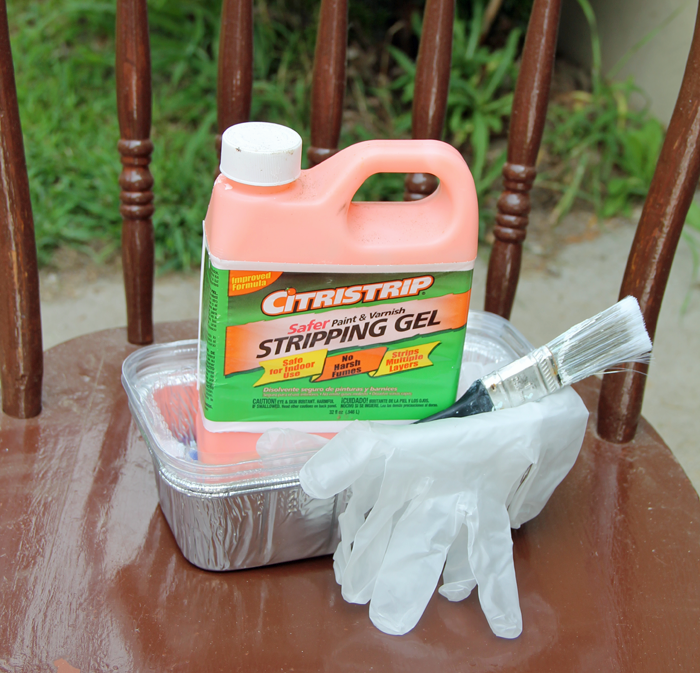
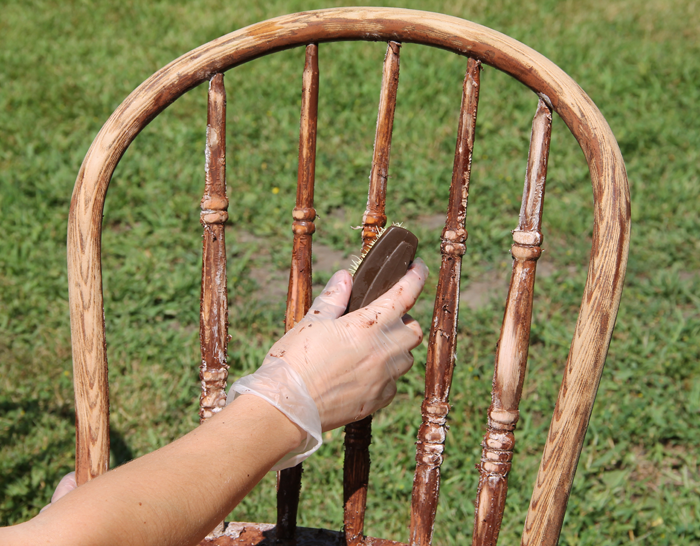
Instead, I decided to use a stripping agent to remove the paint layers. I have had great results with  Citristrip Stripping Gel. It is powerful, but has a smell that isn’t overwhelming. Even still, you want to be sure to wear a face mask or respirator. Other items you will need for this step of the process is an inexpensive paintbrush, a small container to hold the gel, a scraping tool, a stiff scrub brush, a rag, and a bucket of warm soapy water (dish-washing soap works well).

Apply the gel liberally over all areas that need paint removed. Let it sit for approximately 30 minutes and you will notice the paint start to bubble and then turn white. At that time you can begin to scrape. You may want to experiment with different tools to find the right fit for your project. If using a metal scraper, be sure not to gouge into the wood with the sharp edge of the scraper.

In my experience, the paint will be stripped off one layer at a time. You will need to apply multiple applications of the gel to reach bare wood.

As the paint is coming off, I like to take a water/soap soaked rag and clean off the surface. This helps to get the more fine bits of paint that may be stuck between spindles, for example.

Repeat this process until you have reached the bare wood layer. At this point you will want to use your stiff brush to remove all extra debris.

Let the chair dry completely before beginning the next step.


STEP 2: SAND

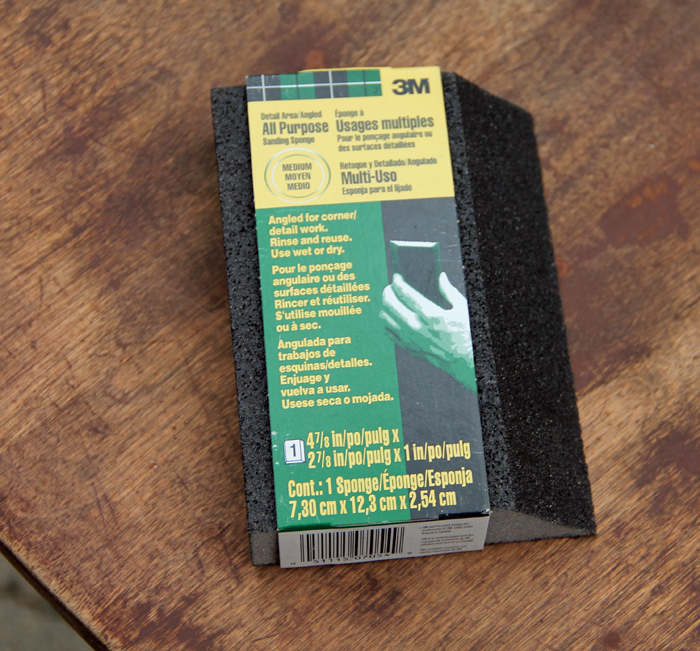
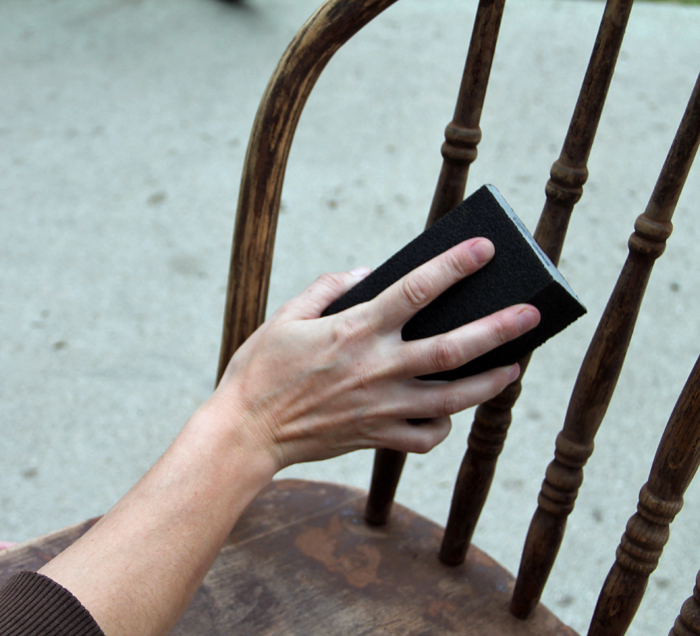
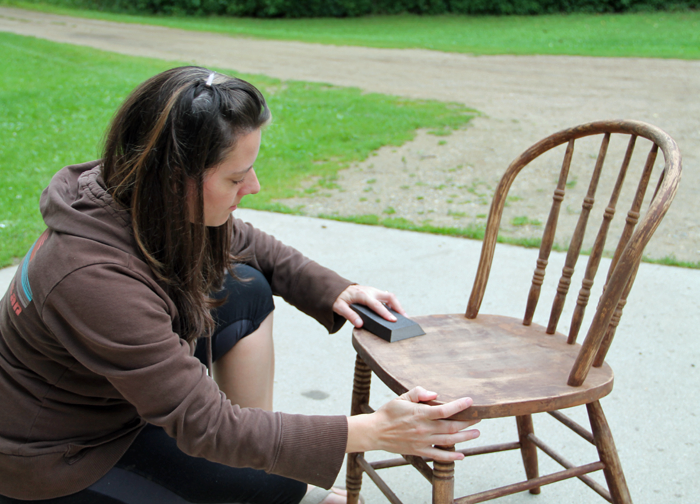
As mentioned previously, it is not a good idea to use an electric sander on fine detailed pieces of furniture. Sanding by hand can be tedious, but it will yield the best results. Instead of using flat sandpaper, I prefer to use 3M sanding sponges. They don’t rip apart like traditional sandpaper sheets – and the beveled edges of the sponge work perfectly for the detailed sanding.

Sanding is pretty straightforward. Be checking to make sure the surfaces are feeling smooth and that the detailed areas are not still filled with paint.


STEP 3: CLEAN

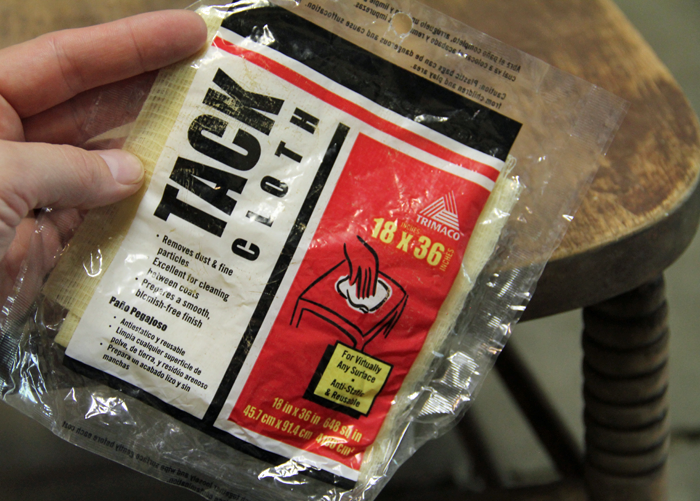
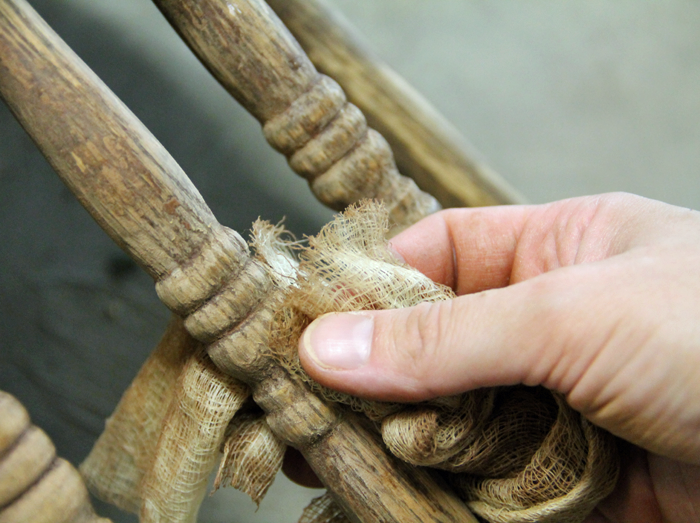
Using a tack cloth, wipe all of the sanding dust off of the chair. Again, be sure to get into all of the detailed areas.

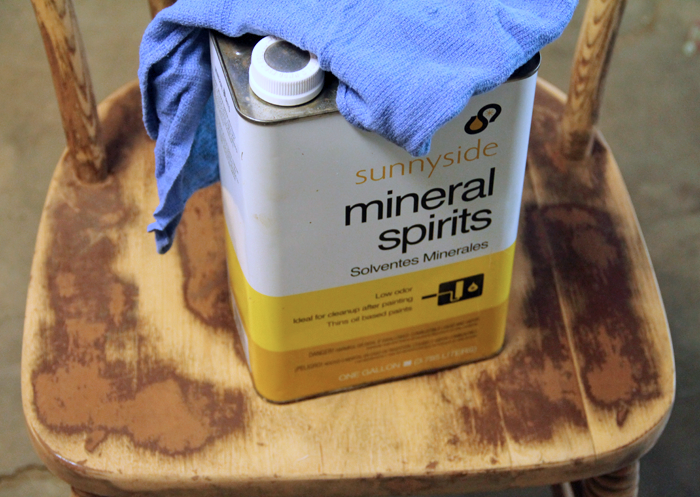
As a final cleaning measure, I like to dab a bit of mineral spirits onto a rag and wipe it over the wood that will be painted. It is a quick and easy task, but will get any last bit of gunk that may be left on the furniture piece.


STEP 4: PRIME

This step is the most often forgotten or eliminated, yet it is absolutely essential! The purpose of the primer is to give the paint the ideal surface to adhere to. Even if the paint you plan on using indicates that it is a paint + primer combo, add a coat of primer first. Wood that is primed before it is painted is much more durable and will hold up better than a piece that is covered only with paint.

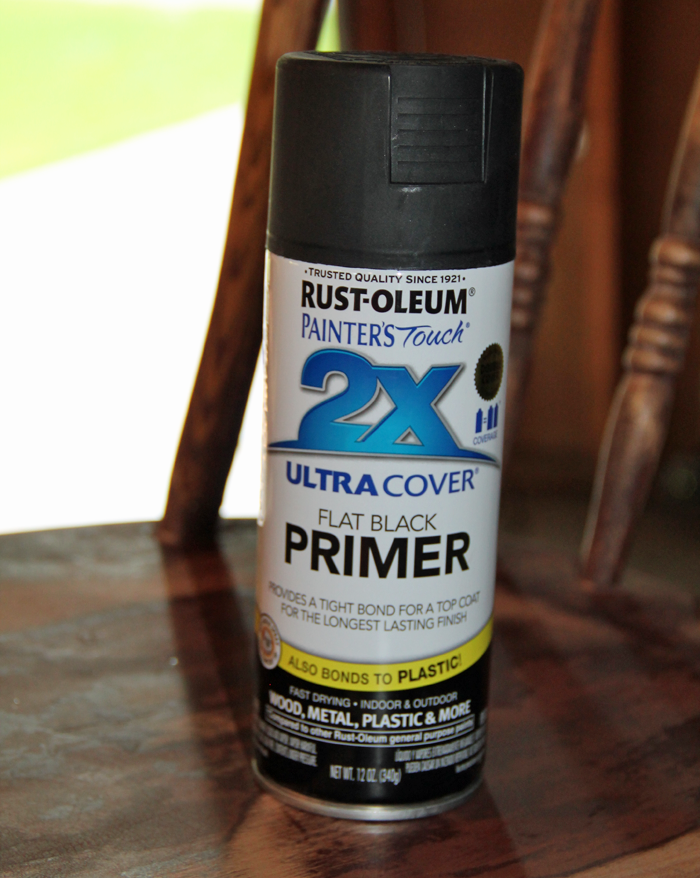
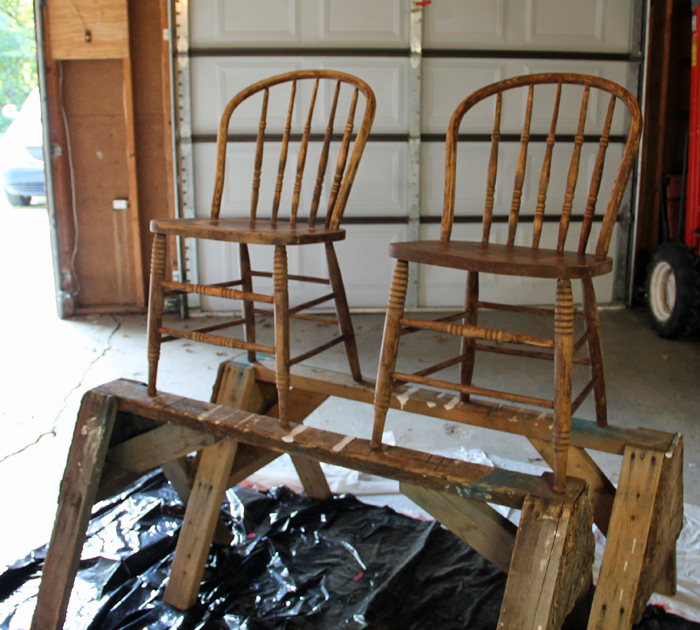
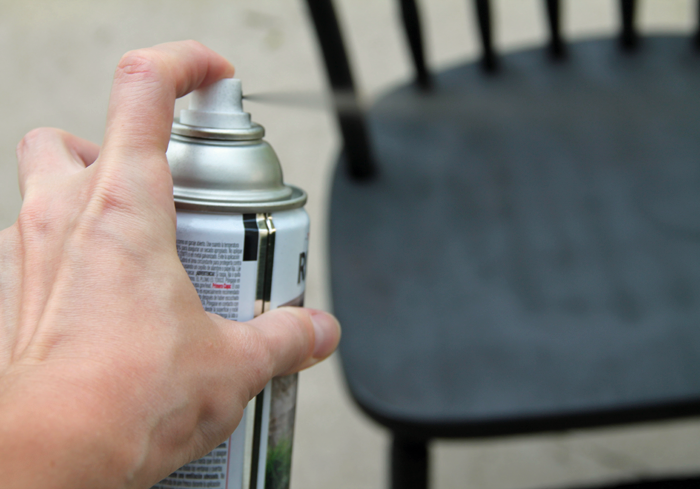
Primer can be brushed on or sprayed. I personally love the ease and simplicity of spray paint. This Rust-Oleum flat black primer went on super smooth and in one coat. One can of primer was enough to cover both of the chairs I worked on. I set my chairs side by side on a set of saw-horses, which allowed me to get access to all parts of the chairs (including the underside) at one time.


Allow the primer to dry according to directions, then lightly sand with a fine grit sandpaper or sanding sponge and clean with a tack cloth before beginning the next step.


STEP 5: PAINT

Of course, this is when the real magic happens! Choose a color that suites your decor style. Again, I used a spray paint product – Rust-Oleum Black, in a Satin finish. I recommend a finish that is either satin, semi-gloss or gloss. A flat finish will showcase every imperfection your piece may have, and is generally not as durable.

Between each layer of paint, you should sand lightly with fine grit sandpaper and clean the dust off with a tack cloth to ensure that the surface is smooth.


STEP 6: SEAL

This final step is optional, but can be important – especially on furniture pieces that will be used on a daily basis. Sealing with a clear coat can give you a surface that more easy to wipe clean should the need arise. It also adds protection from nicks and dings.

If you choose not to add a sealer product, let the piece sit for a minimum of 30 days before use. This will cure the paint to it’s maximum potential. If you are sealing your piece, wait a minimum of 24 hours after the final coat of paint has dried.

I’ll admit that I have yet to complete this step on my chairs, but I will be adding the sealer. Heaven knows that dining chairs + kids = lots and lots of wiping clean!  I will be using a product similar to THIS to get the job done.

After applying the sealing coat, wait approximately 24-48 hours before using the piece.


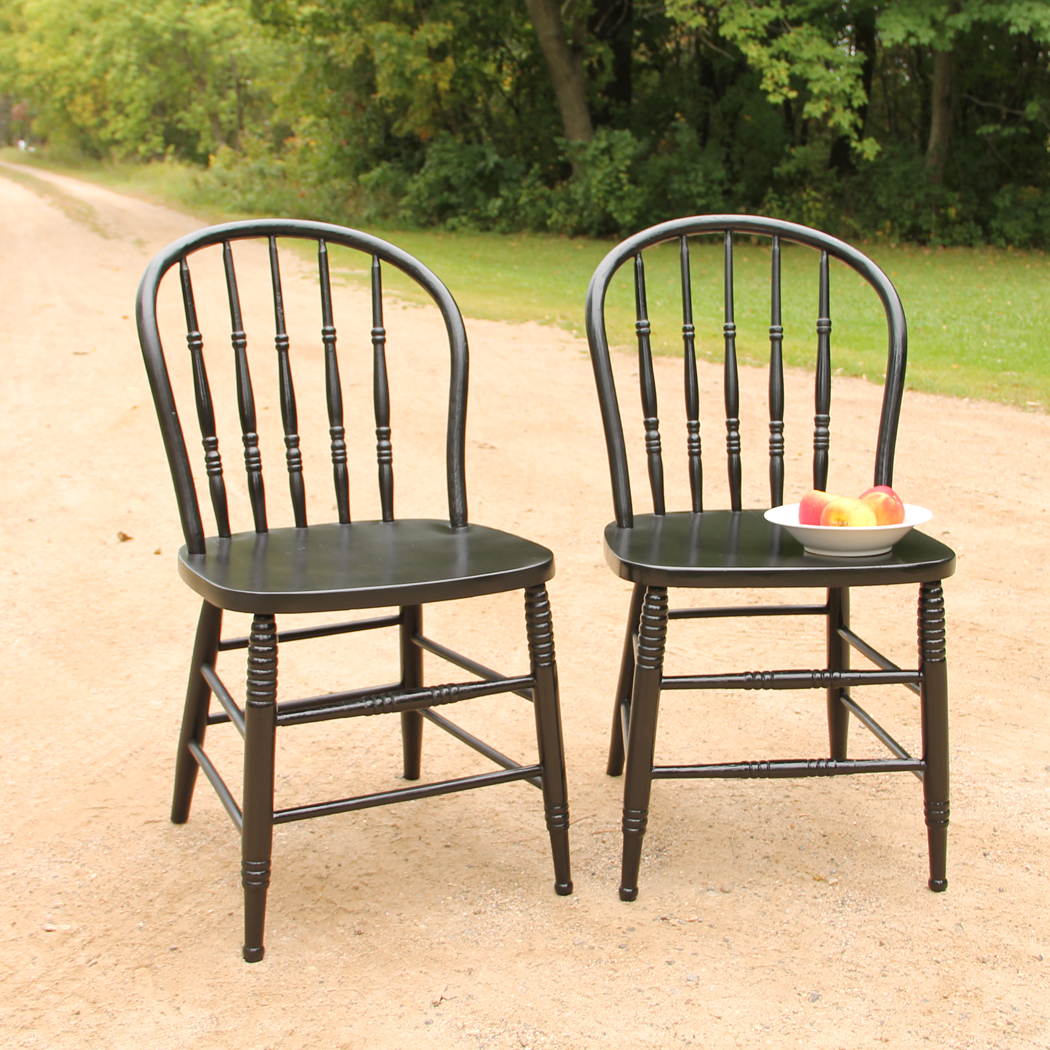
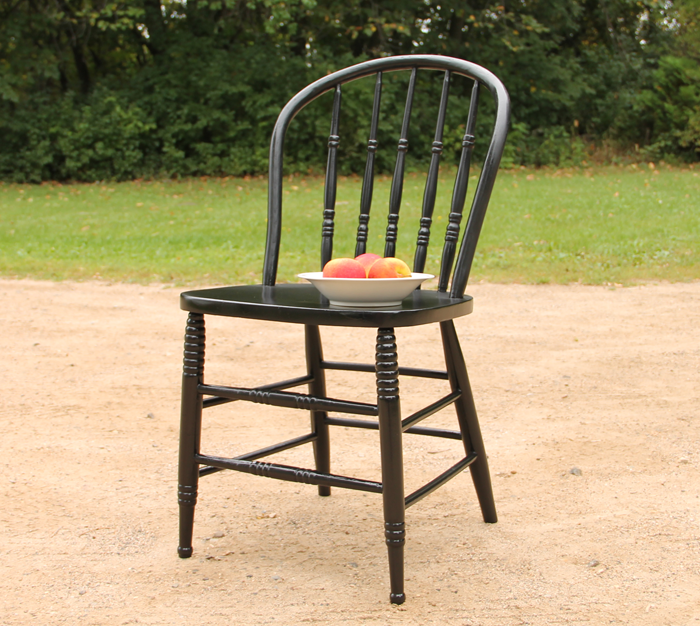
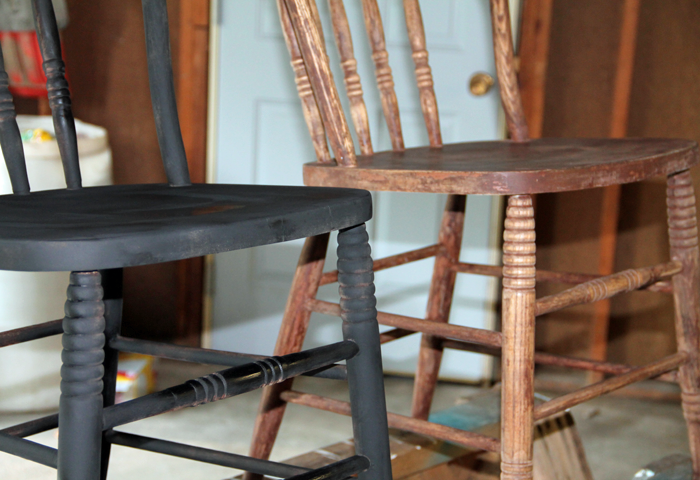
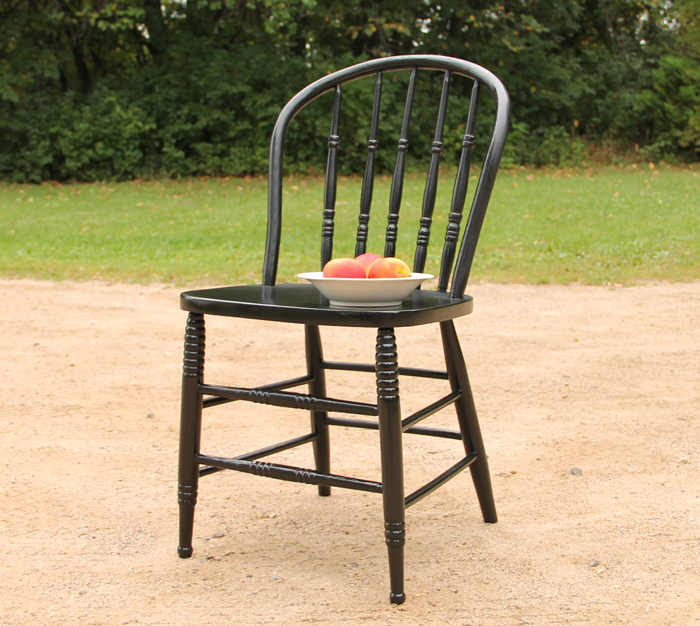
Below are a few pictures of our newly refinished black chairs. They make my heart happy!


Two down and eight to go! I might work on one of the other items on my list first though, to give myself a little painting break.

*this post contains affiliate links*

9 CREATIVE WAYS TO DECORATE WITH BOOKS

There is something so simple, so beautiful about a book. And although the digital age has seen a shift from the printed word to digital media, it doesn’t mean that books have gone out of style completely.

In fact, there are some really unique ways that people have found to keep the love of books alive – through home decor! Check out these nine creative ways to decorate with books.


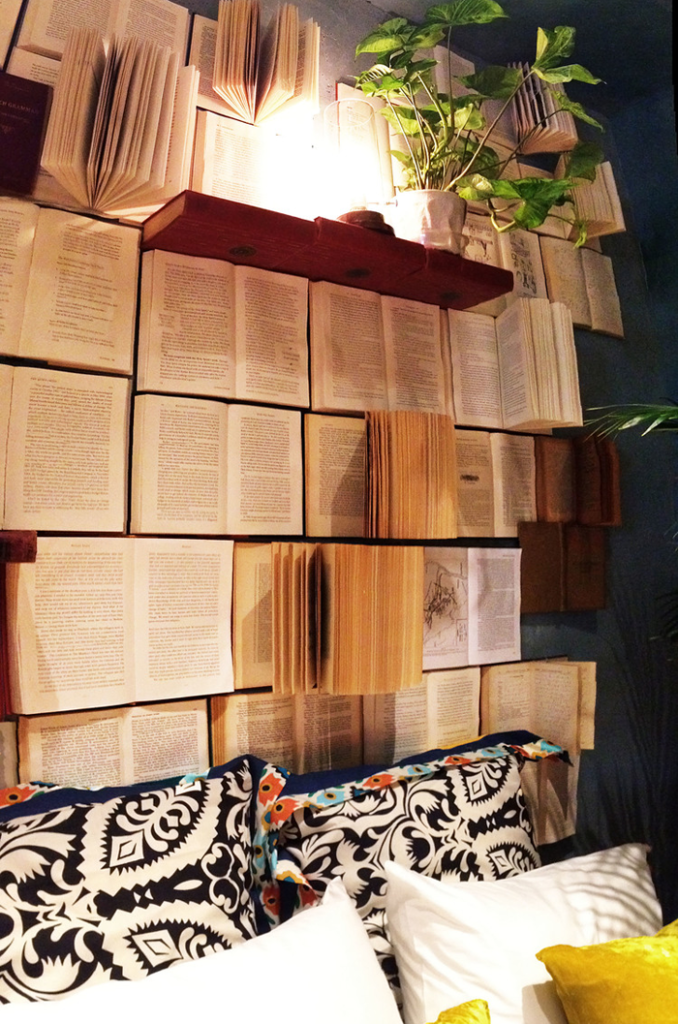
SLEEP NEAR THE STORIES

image via Juvenile Hall Design

This headboard is so creative, and beautiful!

Forget sleeping under the stars… sleep under the stories instead!


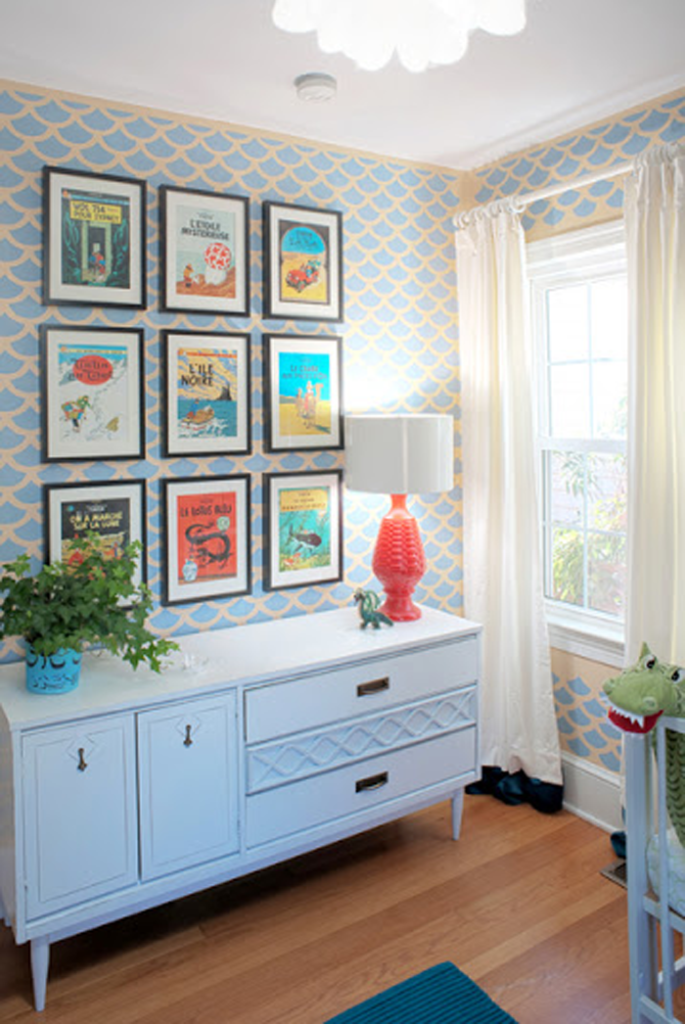
FRAME YOUR FAVORITES

image via Danielle Sigwalt Interiors

Remove the dust jackets from your family favorites. Have them framed, then displayed as a unique gallery wall!


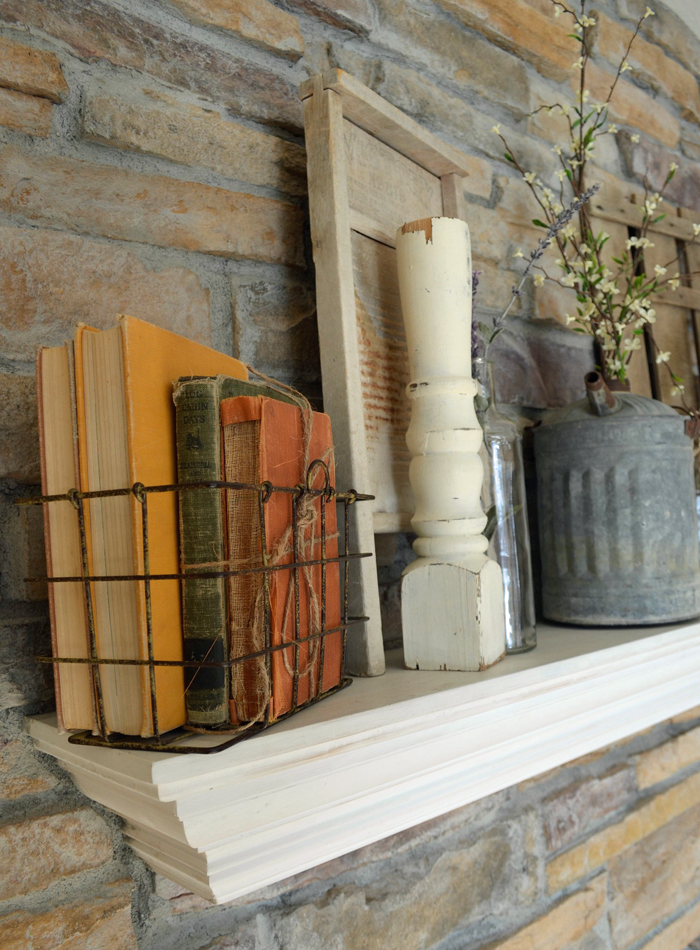
DRESS UP A MANTLE

image via littlevintagenest

Books make a great mantle accessory.

Grouped with other items, the pieces can together tell a story


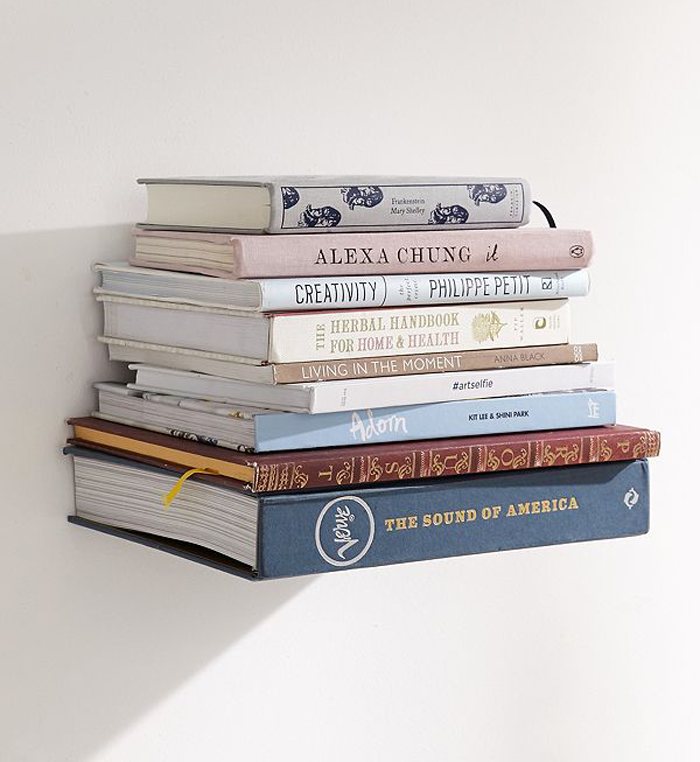
STACK THEM AS SHELVES

image via Urban Outfitters

Talk about a floating shelf! This one has a cool factor like no other!


COLOR CODE CASES

image via sfgirl

This living room gets a happy dose of color from the rainbow collection of books – which are cleverly grouped by color.


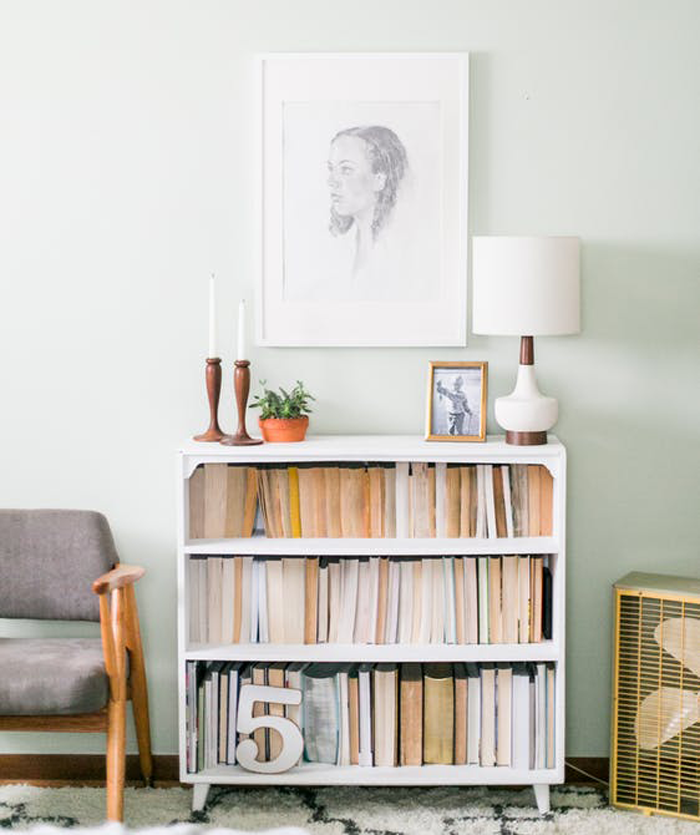
NEUTRALIZE THE LOOK

image via Carrie Coleman Photography

Read how this image sparked a debate on apartment therapy.

Some people love this trend, and others hate it!


PAINT THE PAGES

image via Etsy

This beautiful and simple art piece can be purchased on Etsy – along with many other varieties. Get the look on your own by painting on an old book page.


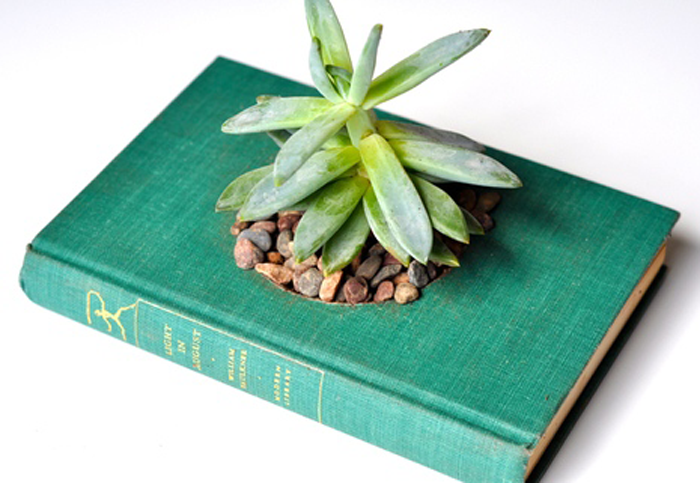
HOLLOW THEM OUT

image via curbly

How creative is this re-purposing idea? Learn how to create a book planter of your own by following the link!


GIVE THEM NEW PURPOSE

image via knick of time

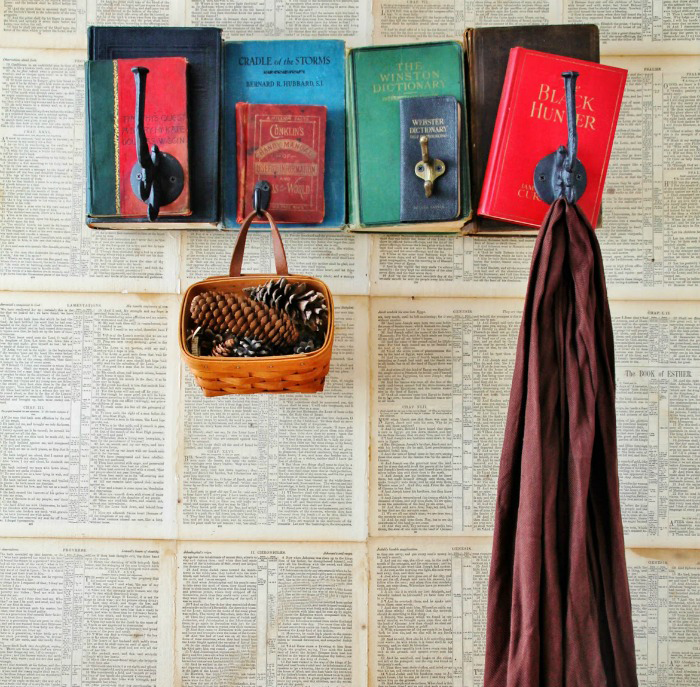
Something tells me that these homeowners feel the urge to read every time they hang up their coats


Which of these creative ideas is your favorite? Would you try any of them in your own home? Pin the image below for future reference.

RESTORING OLD WOOD DOORS

I have to say, I’m pretty proud of myself.  Just two weeks after my big post regarding all the projects I want to accomplish, I was able to check one of them off of the list, and start two more!

There are projects on the list that range from minor to major, and I had a bit of a tough time deciding which to tackle first. Ultimately, I chose to work on the doors for the girl’s future bedroom closet – a project that I felt pretty confident I couldn’t mess up, and that wouldn’t take too long.

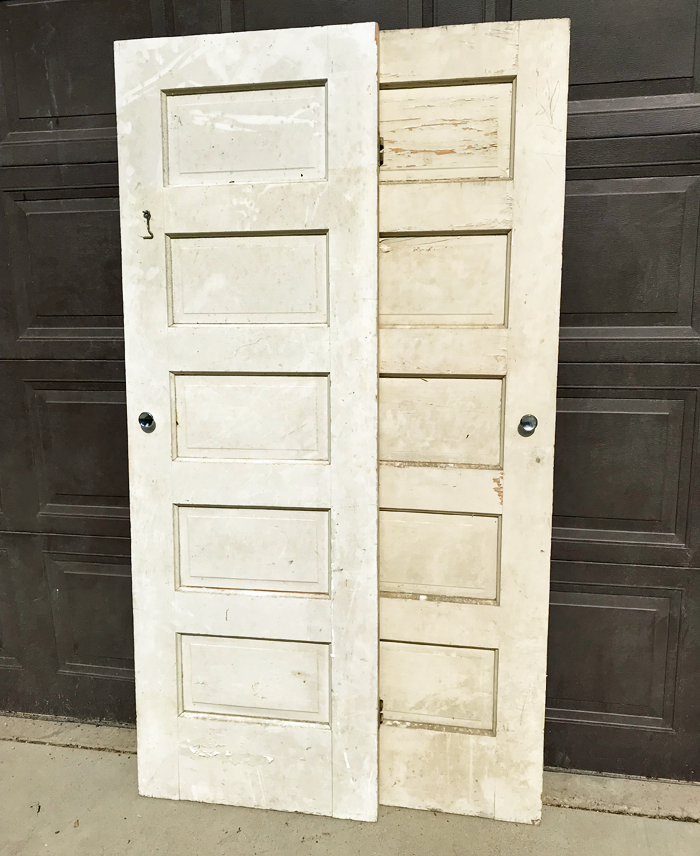
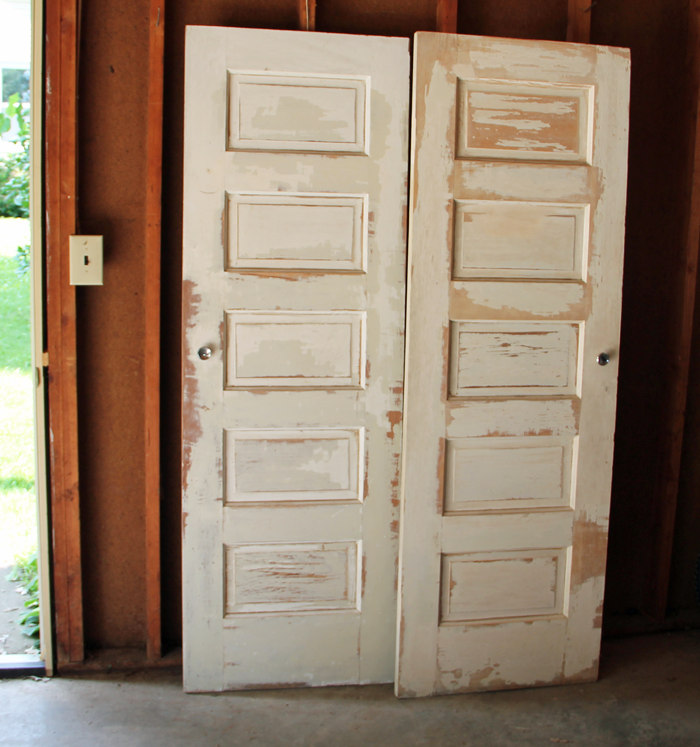
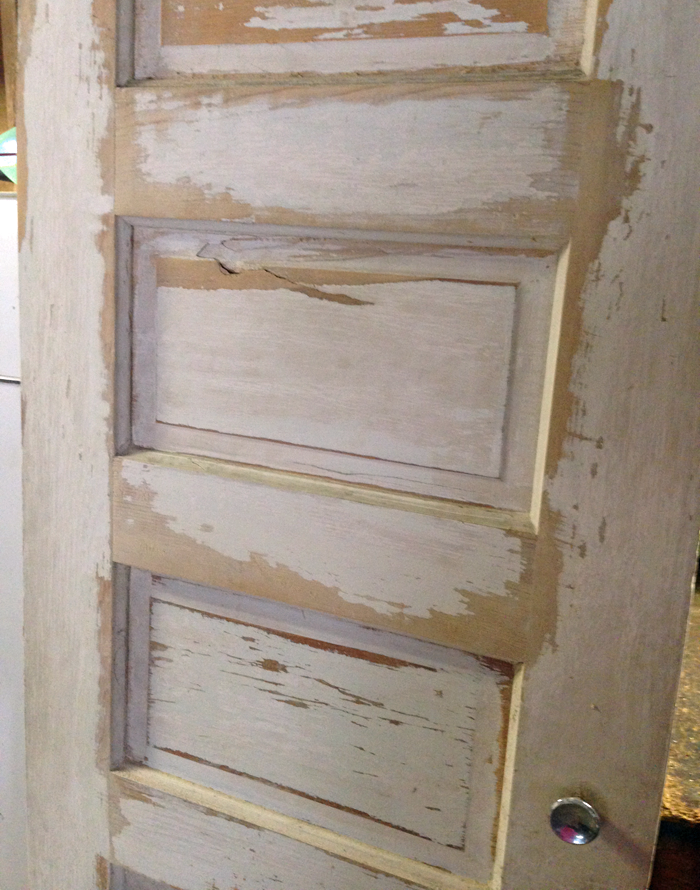
These old five panel doors were found in a barn over 15 years ago, and stored in various garages and sheds ever since. They were looking pretty rough, grungy and with mismatched paint – but for the most part were still solid.


STEP 1: REMOVE PEELING PAINT

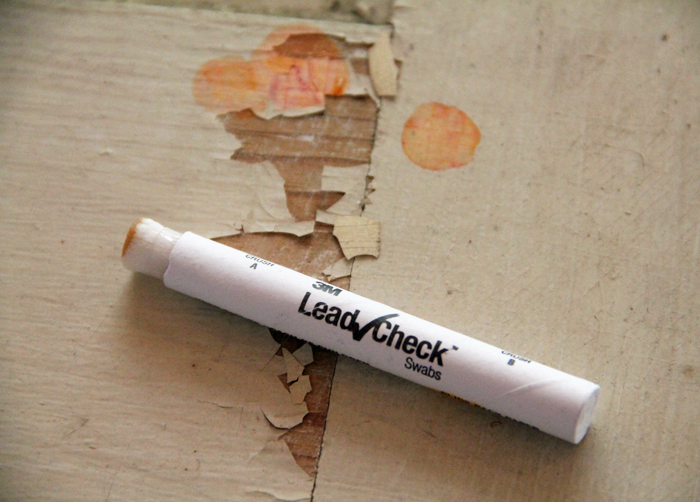
I had a hunch that the doors were covered with lead-based paint. To confirm, I purchased a 3M lead test kit from our home improvement center. Sure enough, the reddish color appeared, indicating that lead was present.


The presence of lead paint isn’t overly alarming. If the application is solid and it is left untouched, it can be harmless. However, lead poisoning can occur if flaking, peeling, or chipping paint is ingested, or through the inhalation of dust created during removal. Because of this, sanding with a power sander is not a safe removal technique.


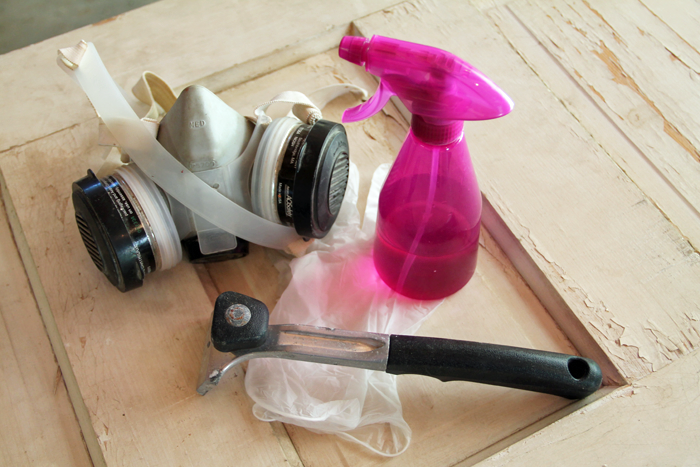
Instead, I found an article by Family Handyman – which outlines the steps needed to properly remove lead paint. I’ll admit that it did feel a bit cumbersome, especially wearing a face mask on a 90 degree + humid afternoon, but it wasn’t overly difficult.

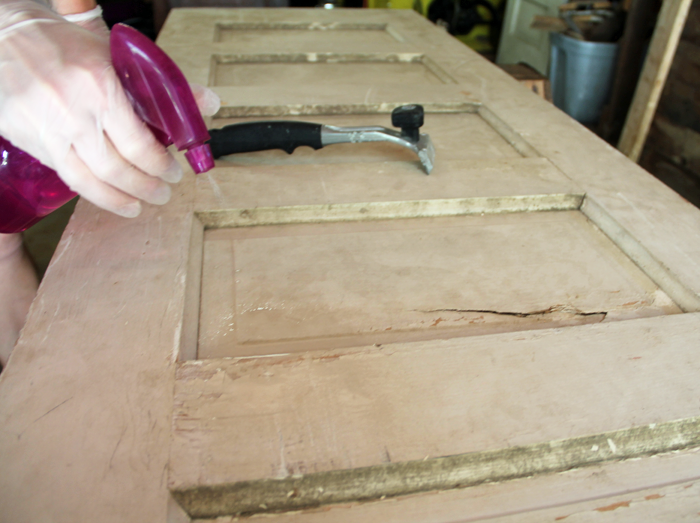
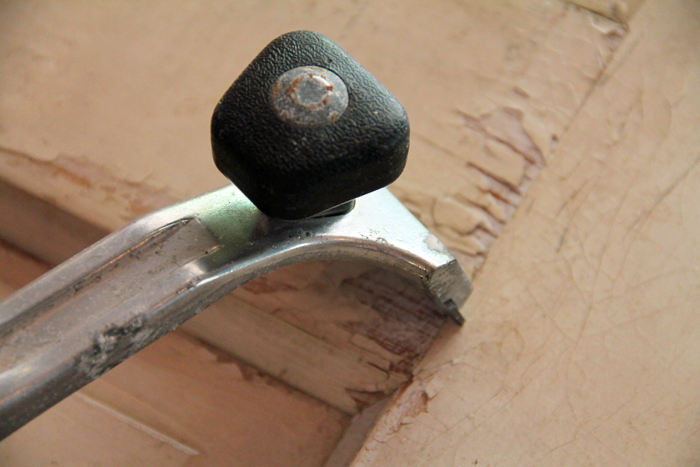
I started with wetting the surface down with water, and then used a scraping tool to remove the paint.


I made sure to wear my face mask and rubber gloves the entire time, and disposed of the paint chips properly. I then cleaned it all really well and let it dry. Because of the intensity of the job, I only removed the paint areas that were flaking or damaged. If I had been able to sand, I may have gone all the way down to bare wood for a completely fresh start.


STEP 2: FILL/REPAIR CRACKS

In some ways, because it was covered only partially in paint, the doors looked more rough after the first step was complete. There was a bit of repair that needed to be completed though, before the new paint could be applied.

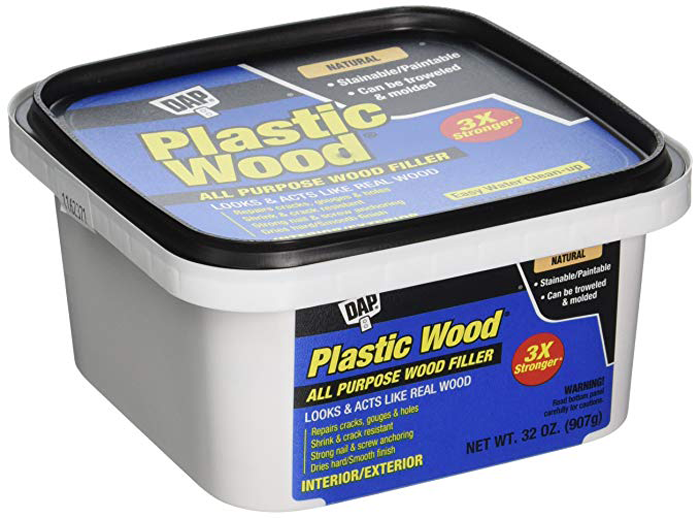
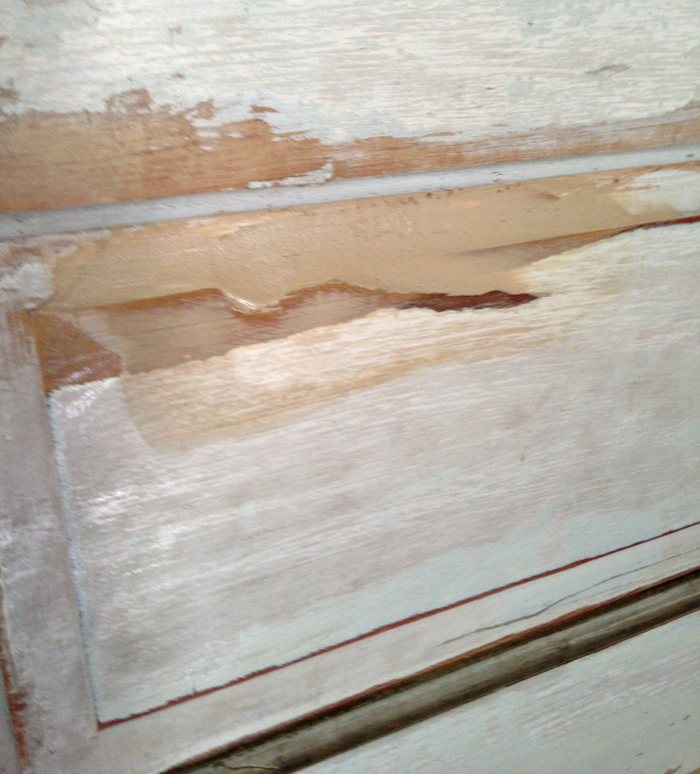
A panel on one of the doors was broken. There wasn’t a hole, but more like a pushed-in crack. Craig and I tried to position the wood back into place, but it wasn’t possible – likely because the area had warped through the years. Instead, I attempted to fill the crack with a product called Plastic Wood.


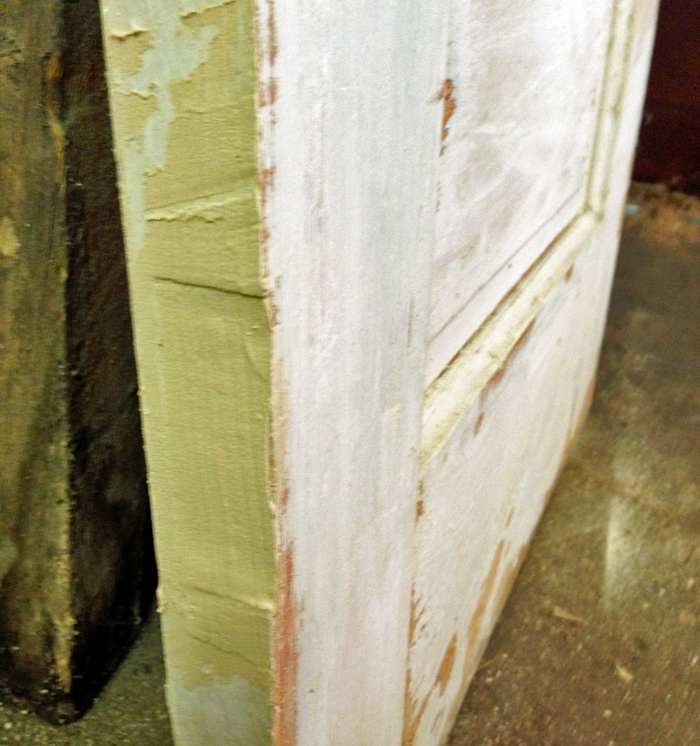
I applied the filler to the cracked panel, allowing it to dry and sanding between applications. I also filled in the areas on the side of the doors that were cut out for the hinges. The hinges were removed earlier in the prep process, because the doors will be hung with barn hardware.

The product did an amazing job of covering up the blemishes. I was super impressed! After another round of cleaning the doors, It was finally time to paint!


STEP 3: PAINT THE DOORS

It’s no secret that I love the clean look of white paint. If you have seen the 3-D renderings I have done for the cottage, you know that we will be using quite a bit of it in our home decor. I have known all along that I want to have white trim, cabinets, and doors. I’m not sure if you’ve researched white paint at all – but, there are about a million shades to choose from. It’s a tad overwhelming!


I caught a lucky break though, when I received the kitchen cabinet samples from Cliq Studios. Their ‘Cloud White’ finish is, to me, the perfect shade of white! Not too creamy or glaring, no grey or yellow tint. Just right. And since it is looking pretty positive that we will use their company for our cabinetry, I figured it would be nice to have doors that coordinated.

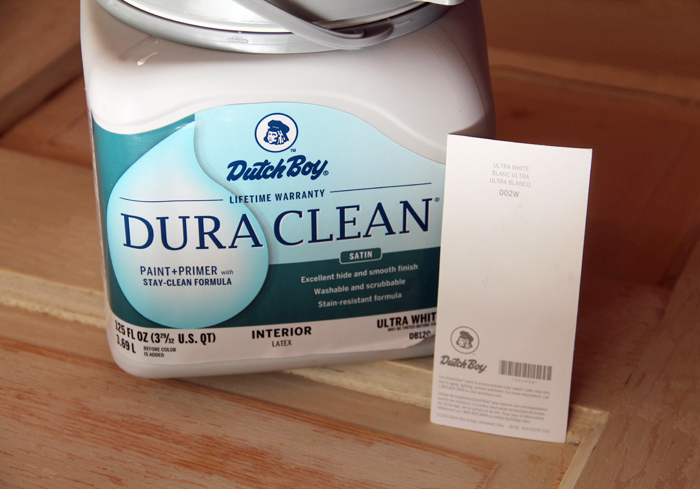
Turns out, Dutch Boy ‘Ultra White’ is a nearly identical match! I bought the DuraClean paint + primer in a satin finish. It went on really smooth!
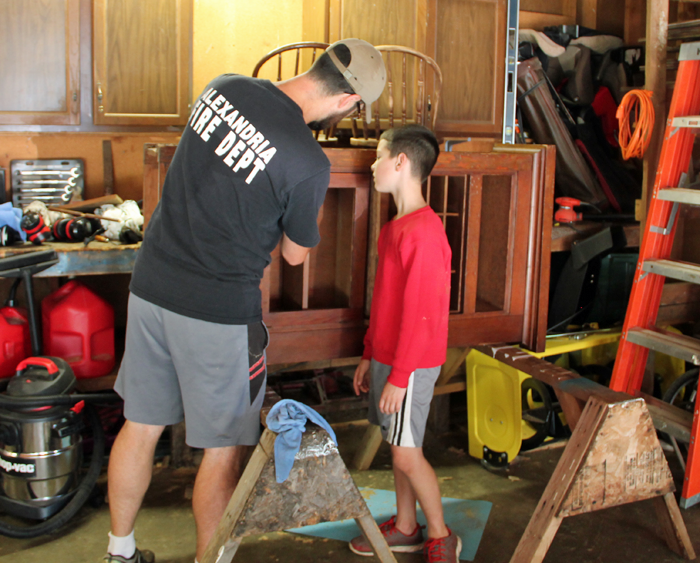


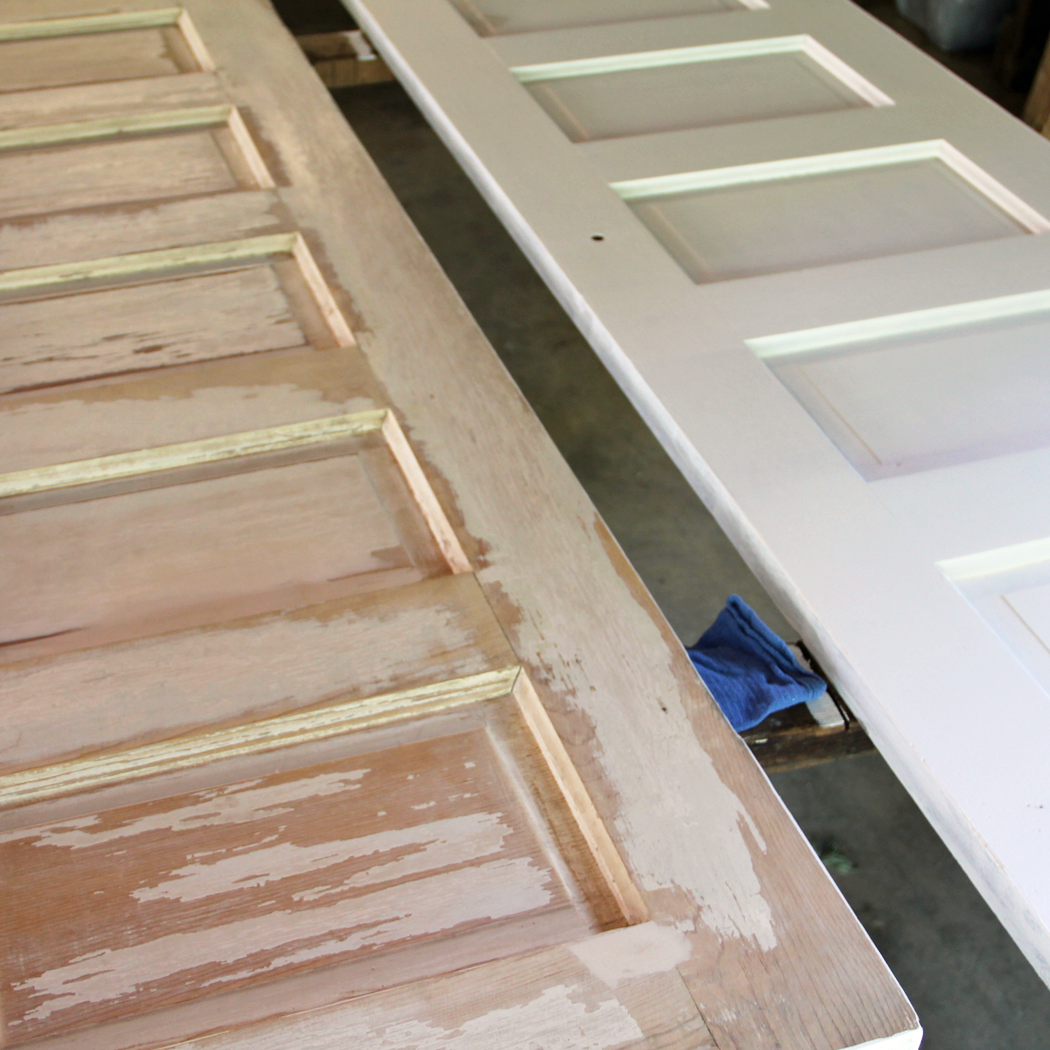
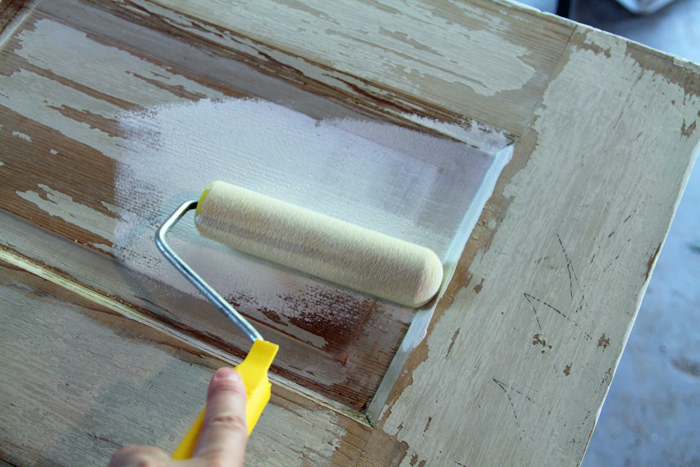
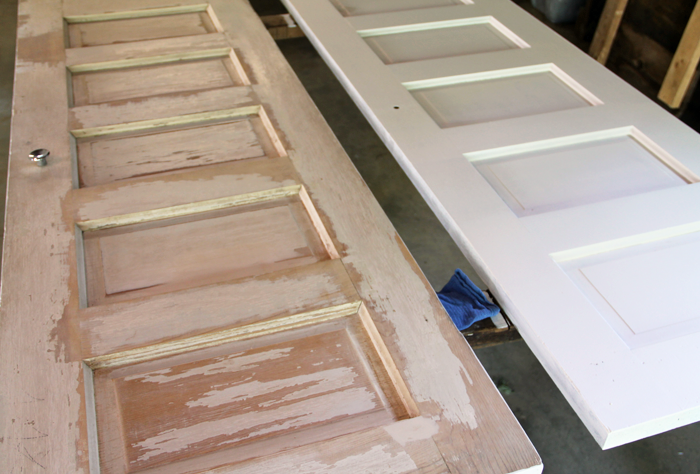
I chose to use a foam roller to apply the paint.  I like using small rollers because I can more easily get into the little corners, using the end of the roller. I also feels like I am able to cover more evenly with a roller. You can see from this side by side picture the difference that even one coat of paint makes. It’s pretty incredible.


After three coats on each side, the doors were officially finished! I am so happy with how they turned out! Once we move into the new house, we will have the doors installed on barn hardware and I will do any touch-ups that are required. I haven’t decided yet if we will keep the silver knobs or not. That’s something else that can wait a while.


As I mentioned at the beginning of this post, I have already started the next two projects from the list. One is sanding down all the wood boards that will go on the ceiling in the master bedroom, the other is sanding down one of the wood chairs in preparation for painting it black. So yes, a whole lot of sanding – which is something I actually love! Sanding gives me a lot of time to think and let my mind wander, to daydream about our future home.

If you’d like to follow along with these projects in real-time, I record short clips on Instagram stories and have them saved as ‘Projects’ under my profile. I hope you can check it out!


*This post contains affiliate links*

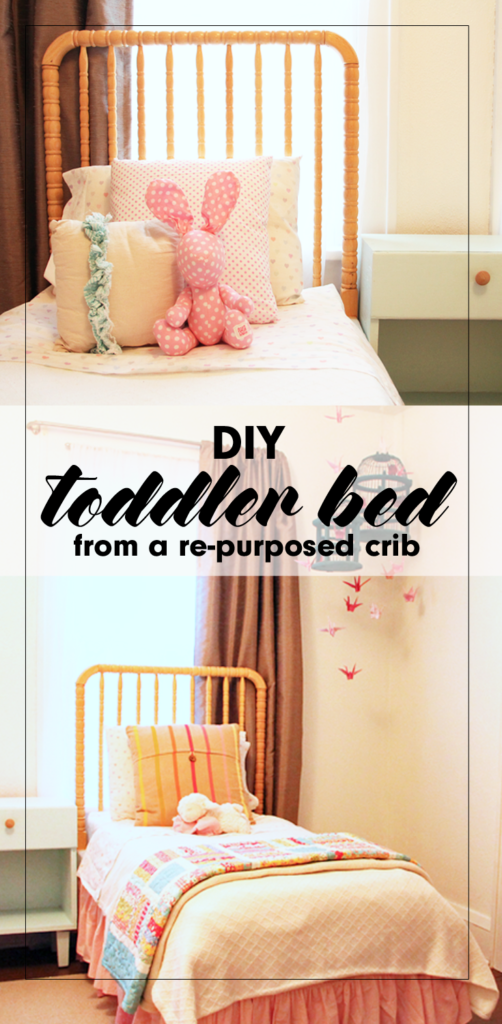
DIY TODDLER BED | RE-PURPOSED CRIB

What should you do when your child outgrows his/her crib? Consider re-purposing it into an adorable DIY toddler bed, using this simple tutorial.


repurposed crib into a toddler bed. Adorable DIY toddler bedNot many moments spark the same amounts of joy and sadness as when the youngest child of the family finally outgrows the crib. With the celebratory occasion of assembling the ‘big boy/girl’ bed comes the equally emotional moment of taking the crib apart.

We were faced with this exact scenario in the months before we took the trip to China to finalize {K}’s adoption. {M} had always loved the security of her crib, the same crib that all three of our sons had also slept in, but at 3 1/2 years old, it was finally time for her to say goodbye as well.

converting an unused crib into an adorable toddler bed

It was at that moment we were faced with a difficult decision. What do we do with the crib? Maybe you are nearing this milestone and have had the same question. Today I am offering a tutorial explaining our personal crib re-purpose DIY project.


THE CRIB BEFORE

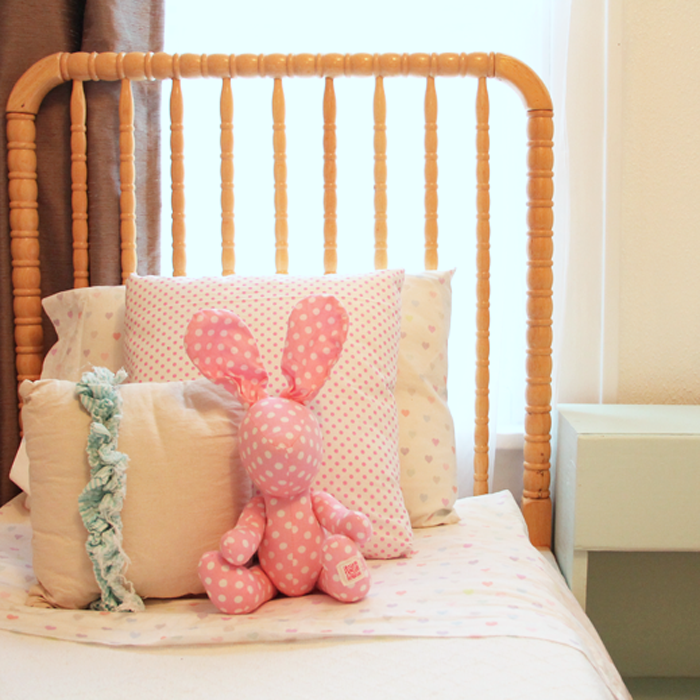
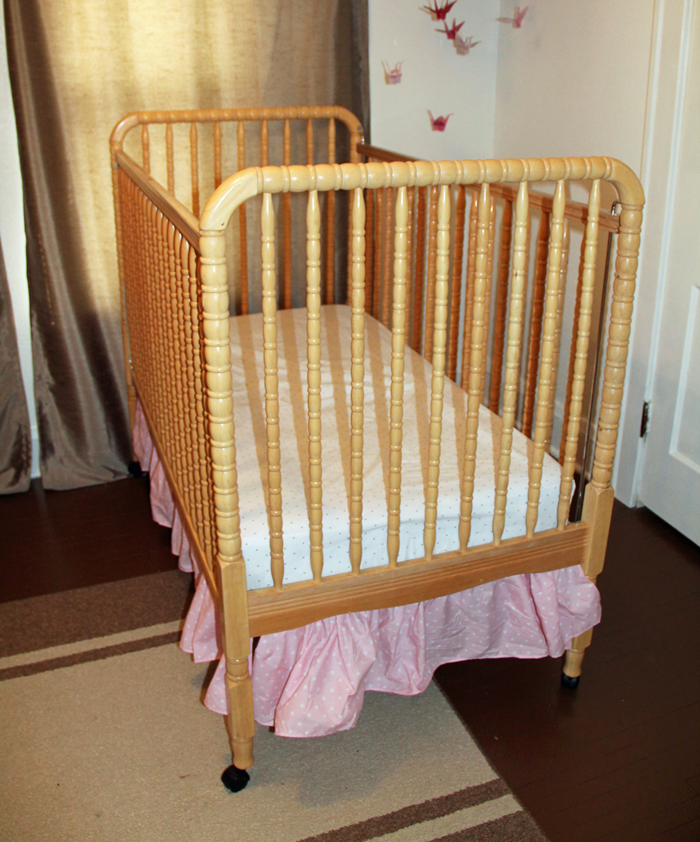
Our simple, Jenny Lind style crib was well loved but it’s natural wood finish and spindle details had a charm that we wanted to preserve.


crib transformed into toddler bed in 5 easy steps

It was given to us as a hand me down before {D} was born, over 11 years ago. Needless to say, it was equipped with the notorious ‘drop side’ – a feature now considered dangerous. We had long ago disabled the drop side, but legally the crib was no longer eligible to sell (or give away). Even still, the crib had a beautiful Jenny Lind style, and the thought of throwing it in the garbage just didn’t sit right with us.

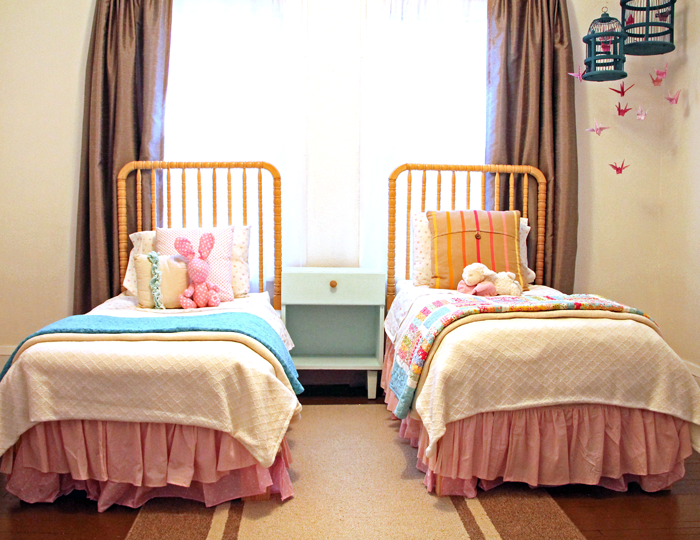
We brainstormed a few different ideas, and eventually decided that the best option for our family was to turn this ONE crib into TWO toddler beds – one for 3 1/2 year old {M} and one for her 6 1/2 year old sister {K}, who has arthrogryposis and is small for her age. We knew they would both fit comfortably in the smaller sized bed for a while, and that the bed DIY project could save us some money as well!


CREATING THE DIY TODDLER BED

I’ll be honest that at the time of the project I wasn’t thinking in terms of getting enough pictures for a tutorial. I only have a few photos, but will try to fill in the gaps with words. If you have any questions about the process we used, feel free to comment below or send me an email!

STEP ONE

My husband Craig disassembled the crib, which actually made {M} very angry! She couldn’t see our ‘vision’ at the time and was just upset that he was breaking the comfy place where she loved to sleep. Essentially, all pieces of the crib were used to create the new beds with the exception of the hardware and the spring mat.

STEP TWO

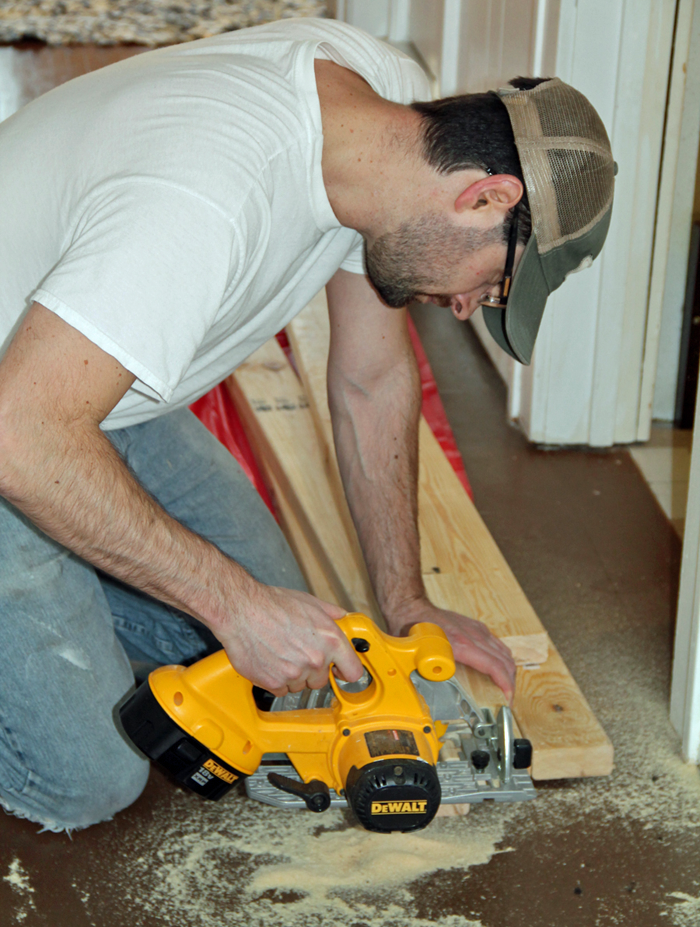
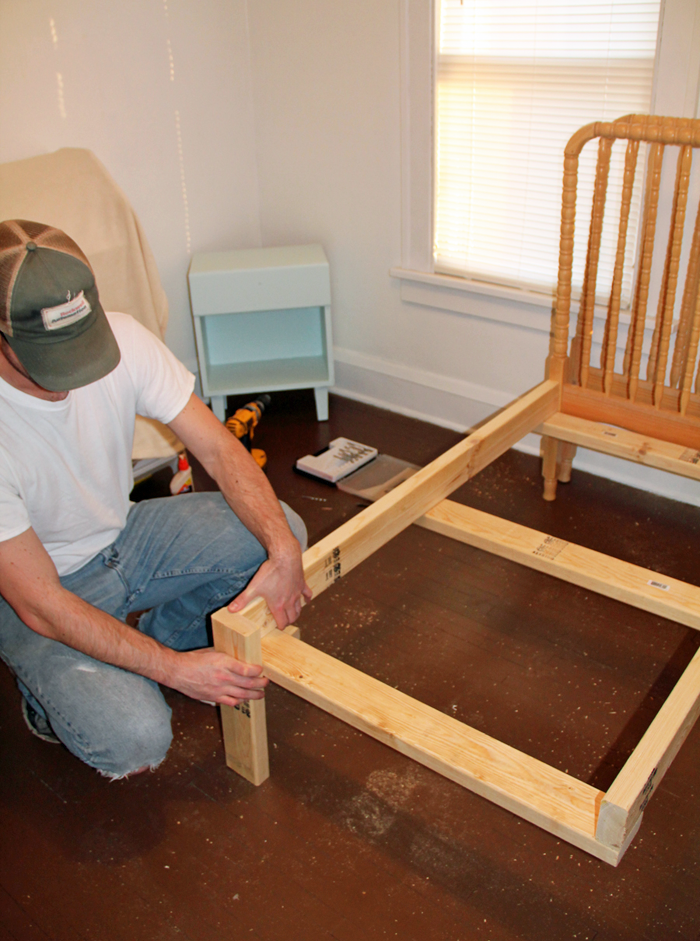
We purchased standard 2×4 material, and Craig cut them to assemble a three sided ‘box’ that would hold the crib mattress. Because we planned to use the two tall sides of the crib as headboards, he only needed to make legs for the end of the box. He reinforced the center with a 2×4 cross base.

creating a diy toddler bed

diy toddler bed framework using crib parts as headboards


STEP THREE

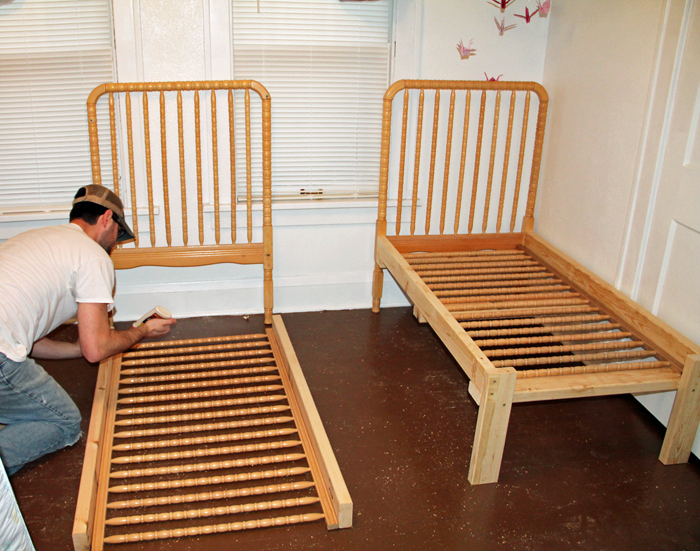
Craig attached the assembled ‘box’ to the headboards, making sure everything was level. He then set one side rail into each of the ‘boxes’. The side rail piece spreads the weight from the mattress out over the 2x4s included in the ‘box’ construction.

using an old crib to make a diy toddler bed

STEP FOUR

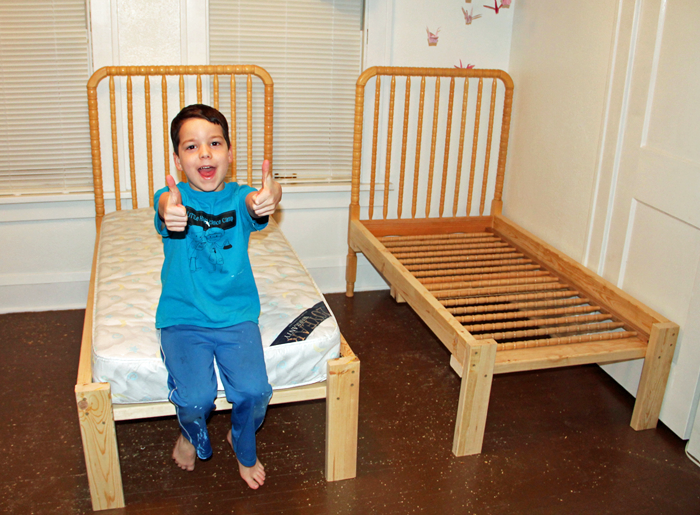
The crib mattresses were then added. They were a perfect fit, as demonstrated by this goofy picture of {L}. Crib mattresses are a standard size, but they can vary slightly. If you try this project you will want to base your dimensions on the crib mattress you have. We happened to have two mattresses, one that was used in the crib and another that we had for a different toddler bed.

building a diy toddler bed


STEP FIVE

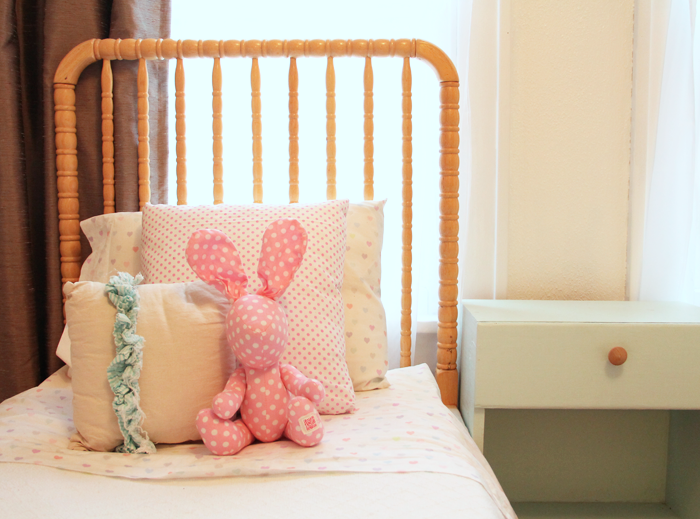
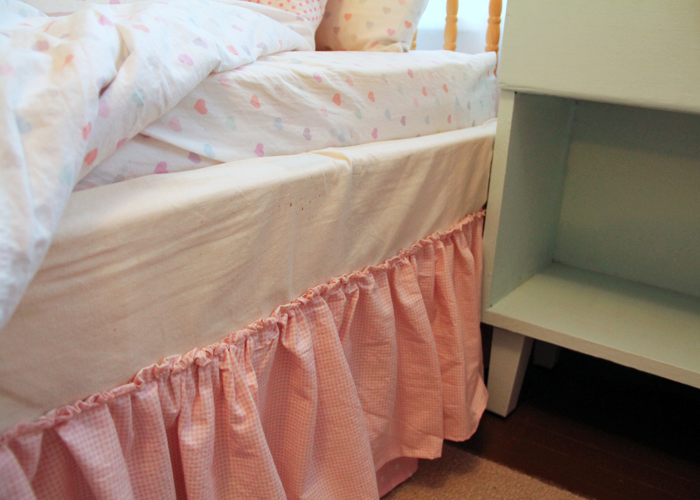
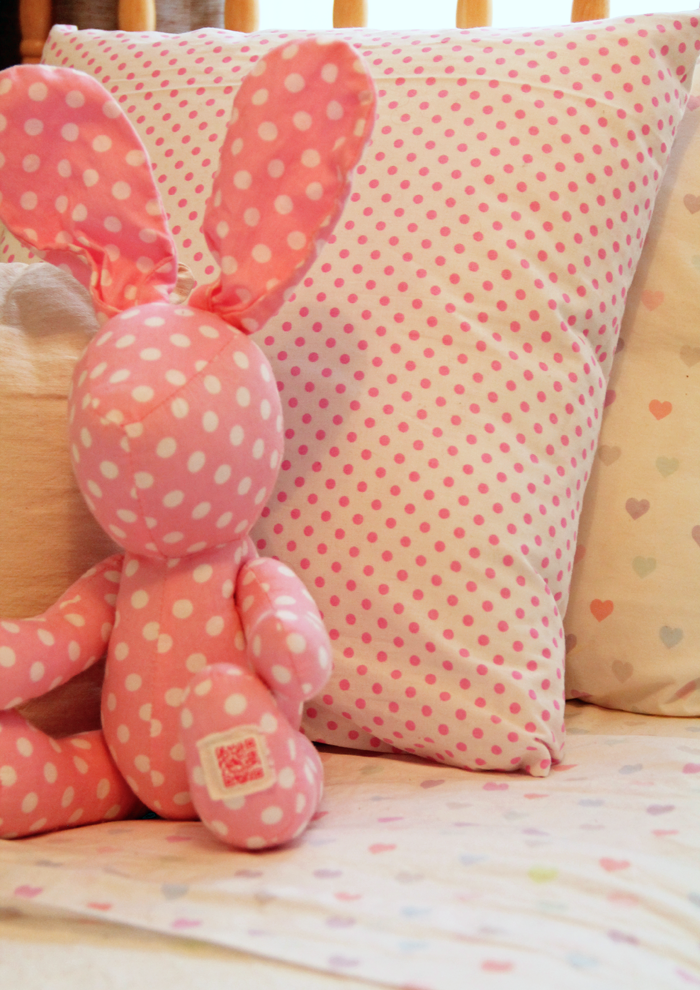
Dress it up! I created pink ruffle bed skirts using this easy tutorial. They really were simple to make, but a bit time consuming! I used muslin fabric to cover up the exposed 2x4s near the mattresses.

toddler bed diy ruffled bed skirt

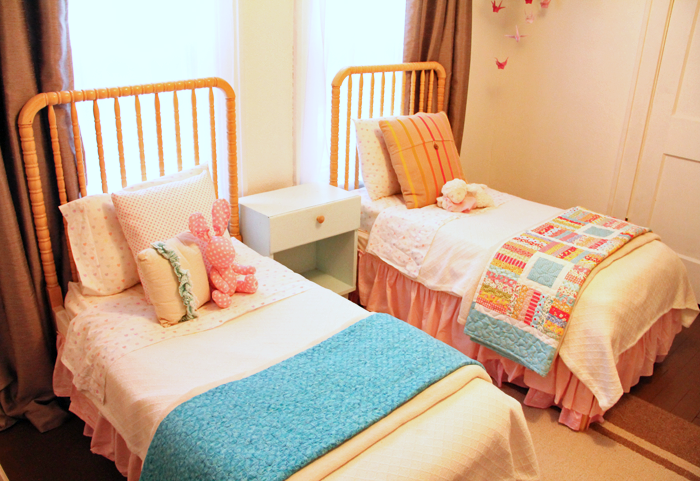
I also found some adorable heart bedding from Pottery Barn Kids. Grandpa and Grandma purchased the bedding as a gift for the girls. A king sized texture blanket was the perfect size to cut in half, allowing me to make two matching comforters. Topped with accent pillows, and comfy colorful quilts, the beds look super cute on each DIY toddler bed!

girl bedroom bedding

repurposed crib turned into diy toddler bed


FINISHED IN THE ROOM

The finished beds look so sweet set up together in the room. I still love walking by and admiring them, over a year later!

old crib turned into two diy toddler beds

The girls really enjoy sharing a room and their little beds fit perfectly into their bright and cheery space. Although I am having fun designing their new shared space for Arrow Hill Cottage, I will be sad when we have to retire (or pass on) these special beds their daddy made them!

simple do it yourself toddler bed from an old crib


MORE SHARED BEDROOM DETAILS

Just for fun, here are a few more details of their shared bedroom.

girl bedroom reading nook

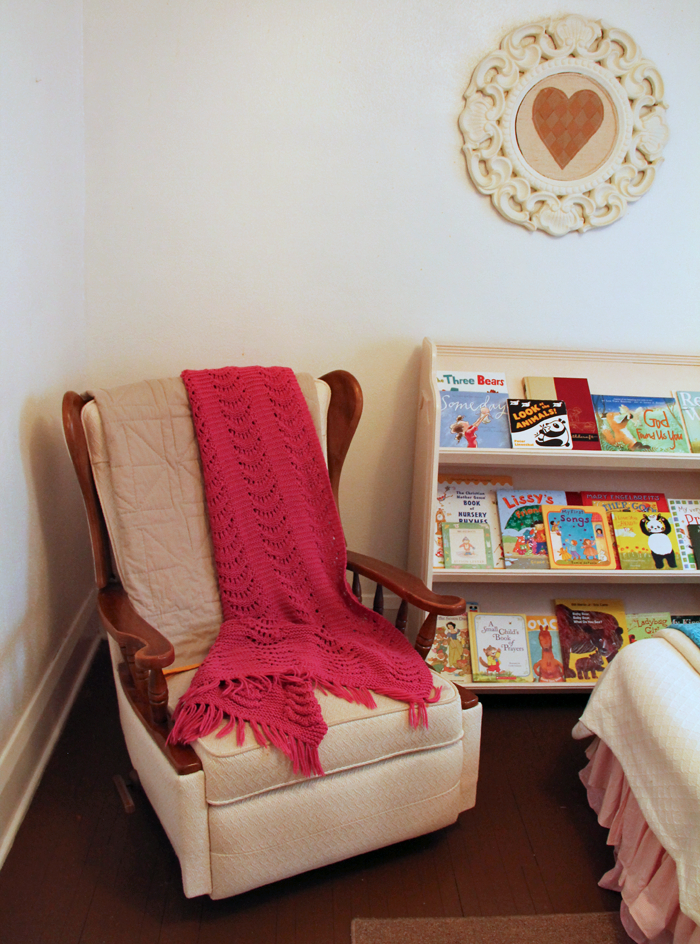
This rocker was Craig’s grandparents. We had it reupholstered before our first child was born, and have used it in the nursery ever since. It is a special piece. Next to it we have a bookshelf, making this the perfect spot for reading.

girl bedroom tour

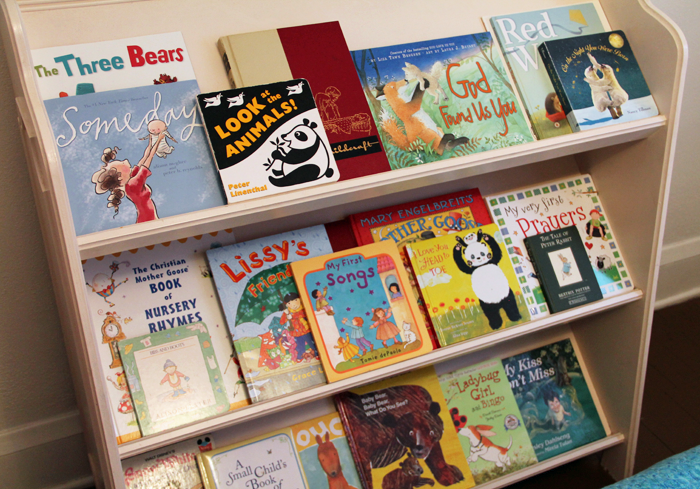
The bookcase itself is a vintage piece from our local Carnegie Library, which is now closed. I love that the girls are able to see the fronts of the books when making their selections.

diy girl bedroom decor

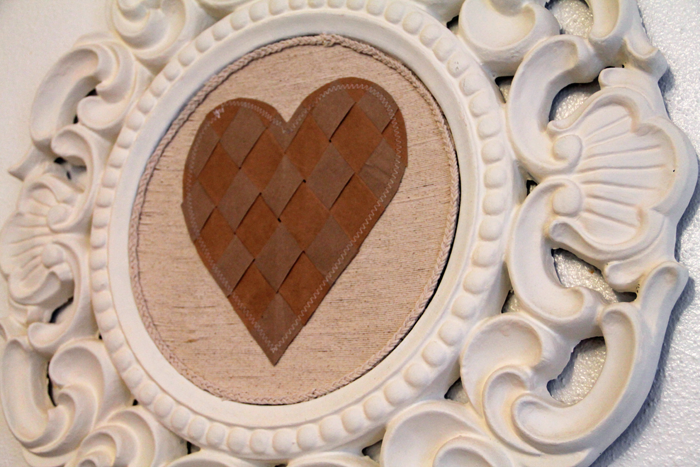
Above the bookcase is a DIY piece that I put together using a mirror frame, which I spray painted white. I covered the mirror with a fabric. It is attached with temporary adhesive, because I imagine in the future the girls may opt to use the mirror itself. The heart was made by weaving strips of paper grocery bags.


girl bedroom decor ideas

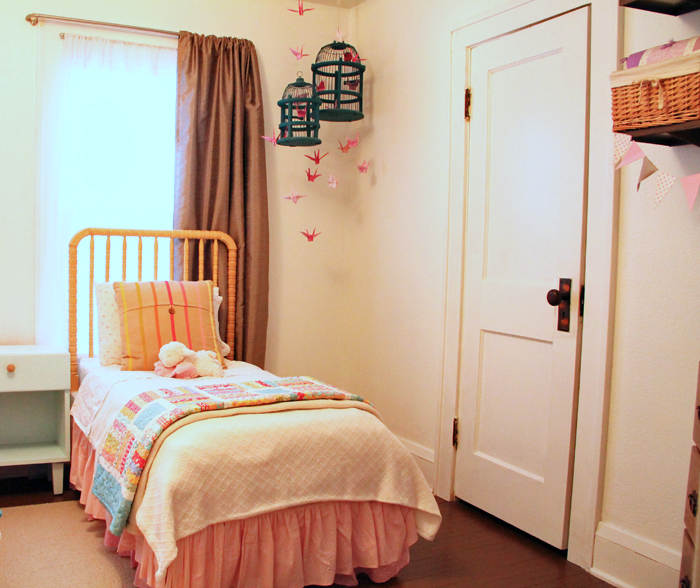
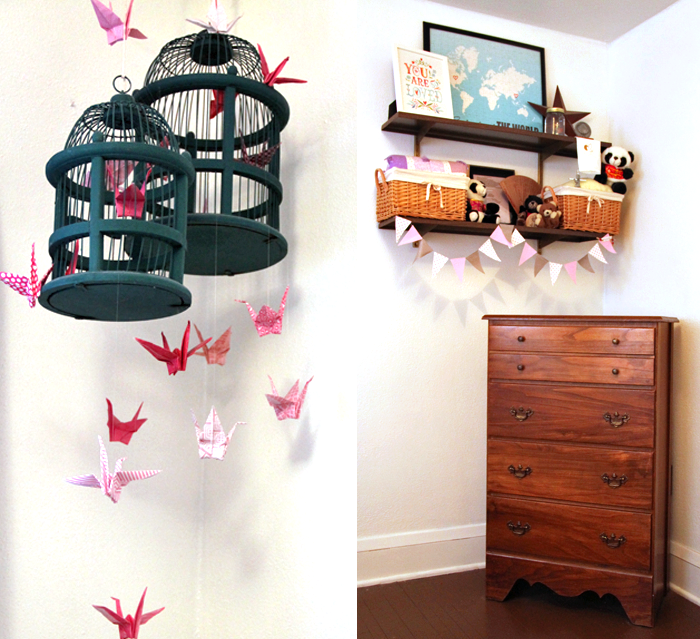
Both of our girls were adopted from China – {M} at the age of two in 2015 and {K} at age six in 2017. We always want them to be aware of their beautiful birth culture. The paper crane bird cage/ mobile symbolizes peace and longevity. I folded each of the cranes by hand using a variety of pink patterned paper. The dresser was mine when I was a little girl. It was a gift to me from my grandpa, and I love that I can pass it down to daughters of my own.

shared girl bedroom ideas

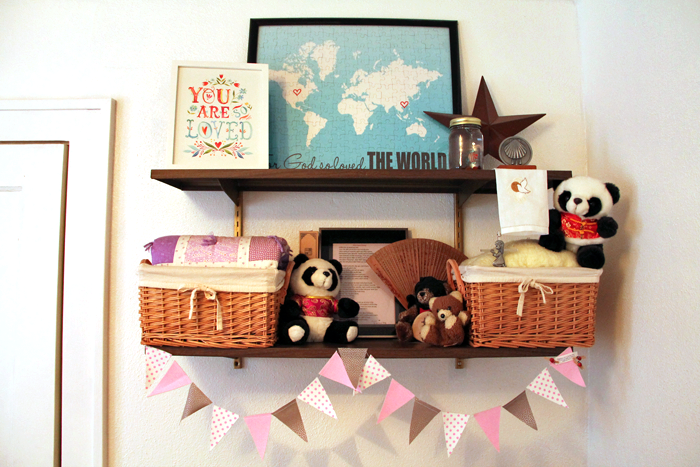
Above the dresser are more symbolic and special pieces, including two panda bears from China – one from each trip.

diy toddler bed

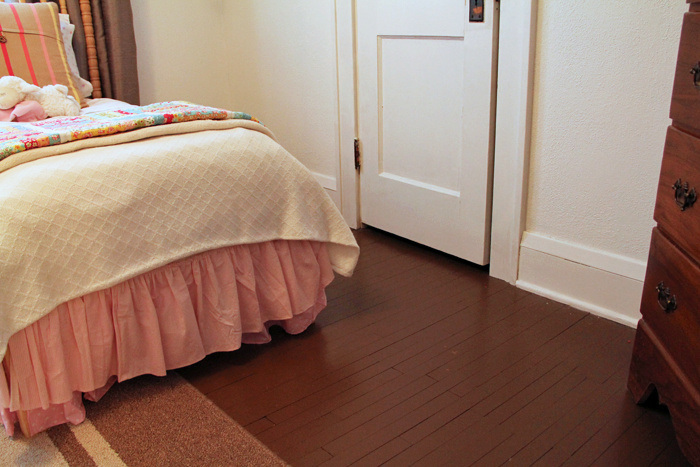
We painted the floor in the girls room, and the entire upstairs of this rental house, a chocolate brown color. It has held up very well and is actually something I am considering for the new house.


PIN THIS DIY TODDLER BED IDEA

I hope you enjoyed this little tutorial and the impromptu room tour! I would love to see the creative ways you have re-purposed a piece into something new!

diy toddler bed from a re-purposed crib


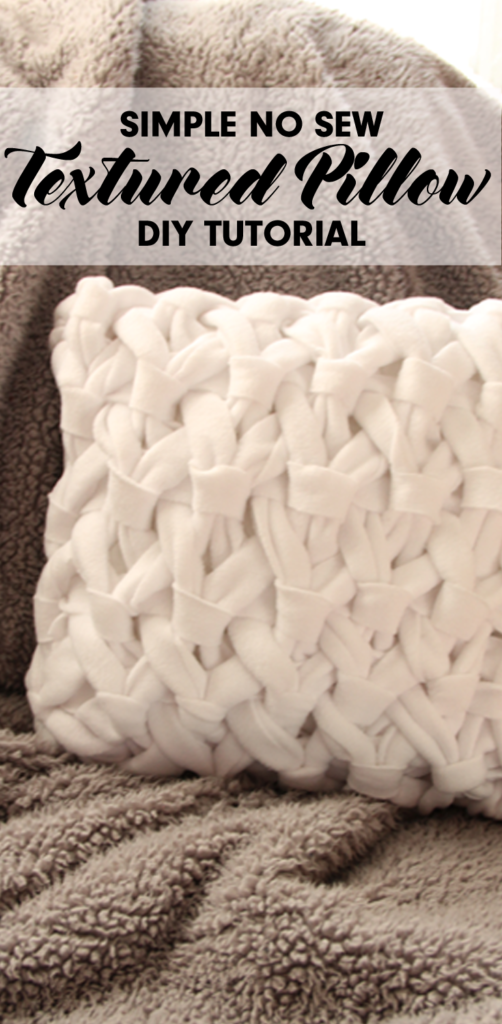
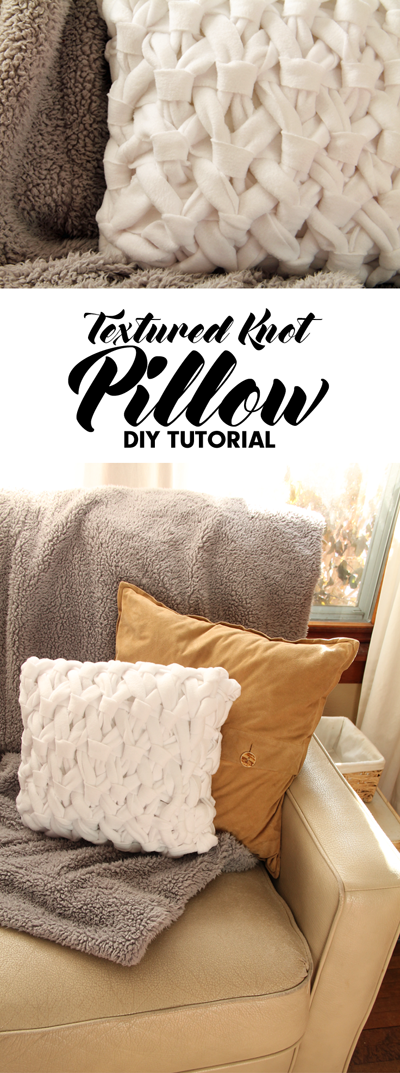
SIMPLE NO SEW TEXTURED PILLOW TUTORIAL

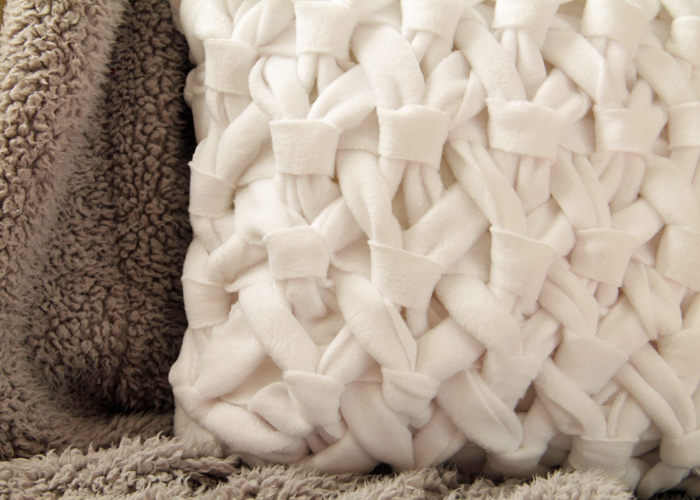
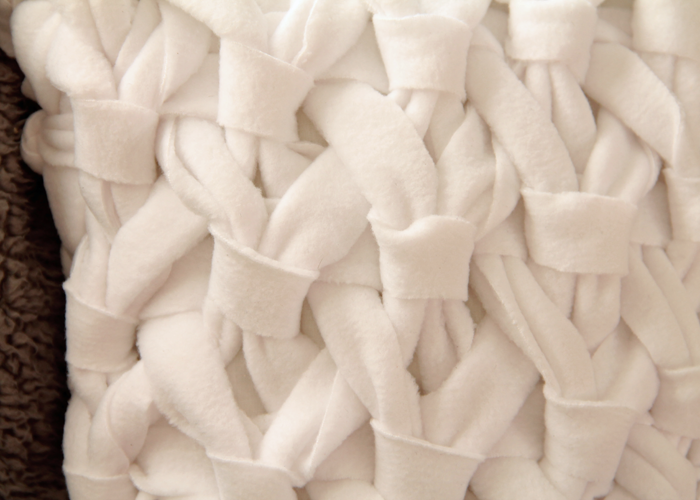
This no sew textured pillow is extremely simple to make and looks great! If you can braid and tie a knot, you can make it. I’ll show you how!


I mentioned this textured pillow in a recent post about our home’s Christmas decorations. The pillow went perfectly with the rest of the festive green and red decorations. I love it so much that it is still gracing our couch this winter.

These cold months are the perfect time to experiment with cozy, chunky textures for the home. I’m excited to share how you can add some to your home easily and affordably, with this do it yourself project!

Though the finished product may appear complicated, I guarantee it isn’t! There is NO sewing NO knitting and NO complicated movements involved. Basically, if you can braid and tie knots, you can do this!


simple no sew pillow


SUPPLIES YOU WILL NEED

Fleece Fabric: 1 1/2 yards of fleece in any solid color. I used a 60″ wide variety, but they come in varying yard widths. Any width over 60 inches will work for this tutorial. My overall fabric size was 54 inches long x 60 inches wide. Fleece is perfect for this project because it does not fray when cut.

Pillow Form: This tutorial uses a 13″ pillow form (13 inches wide x 13 inches tall)

Scissors: Make sure they are sharp!

Ruler: Measure twice and cut once. I share a simple technique for cutting the fabric that will save time.

(2) Rubber Bands: Or some other temporary tying device – I used hair ties!

A clear, flat area, such as a table or the floor will make the initial steps of this project easier. Let’s get started!


STEP 1 : LAY OUT THE FABRIC

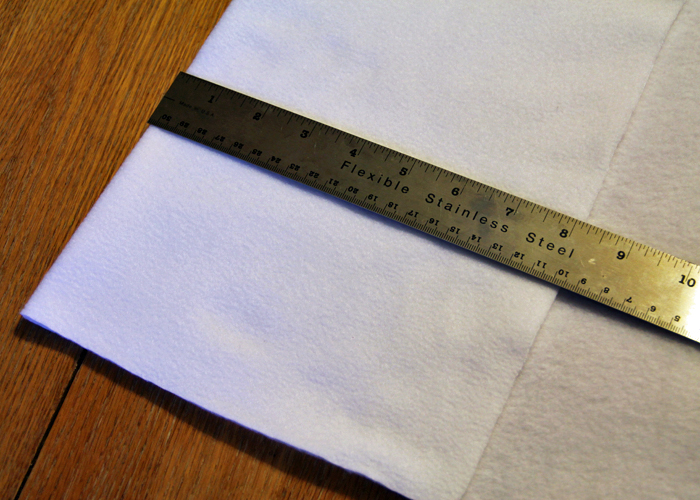
I recommend that you lay the fabric out so that the longest width is laying horizontally in front of you. In my case, the fabric was set out so that there were 60 inches from left to right when I was looking at the table. Fold the left side of the fabric over 8 inches.

textured pillow tutorial


STEP 2: CUT THE FABRIC INTO STRIPS

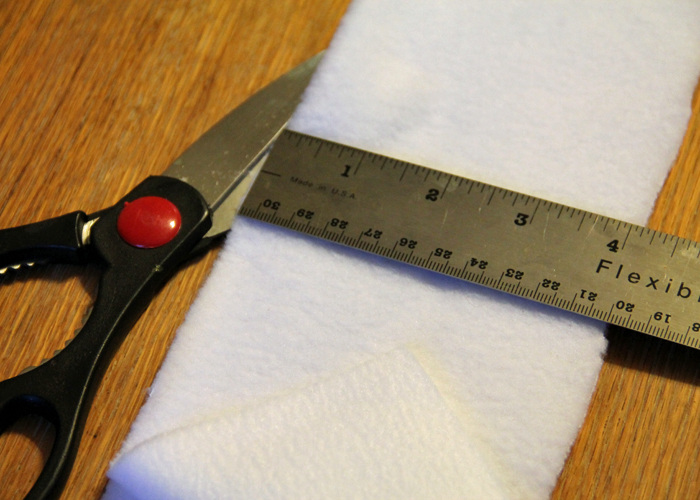
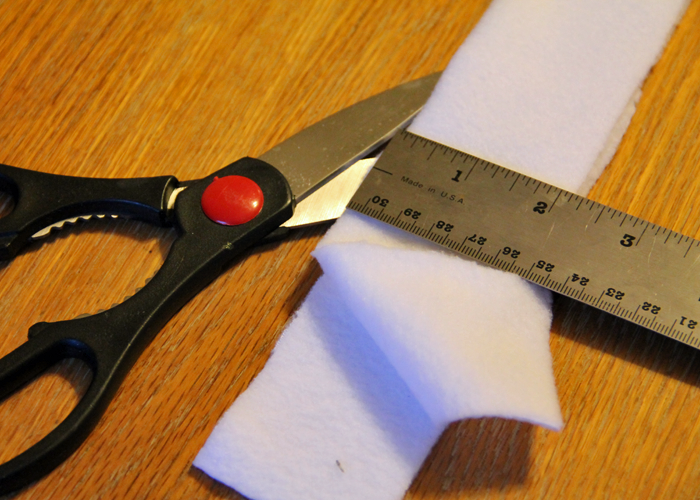
Here is where I introduce my handy little tip for cutting fleece fabric. Instead of marking on the fabric itself, I like to fold the fabric over  – then cut on the ‘looped’ side. First we will cut the loop of the 8″ measured fabric.

simple pillow diy project

While the 8 inch strip is still laying on the large piece of fabric, use it as a guide to cut another 8 inch strip. Continue this process of laying an 8 inch strip above the larger piece of fabric until you have used up the rest of the fabric. For the 60 inch long variety of fleece, that will yield you (7) 8 inch strips + an extra 4 inch strip.

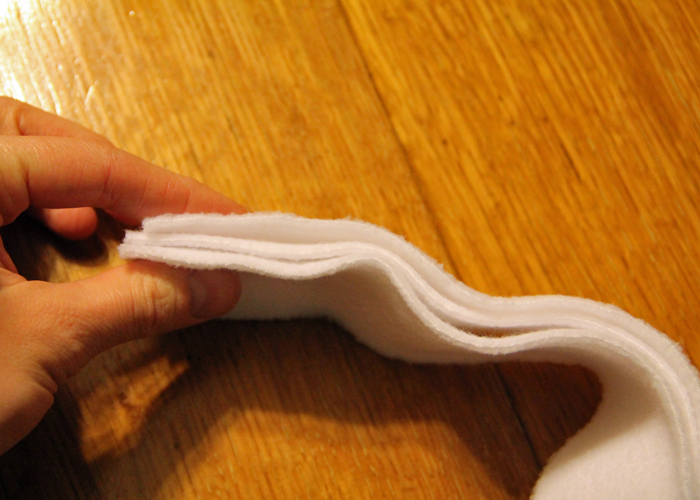
These 8 inch strips will further be folded in half and cut on the ‘loop’. Each 8 inch strip will give you (2) 4 inch strips – by folding and cutting using the same technique.

no sew textured pillow project

And each 4 inch strip will give you (2) 2 inch strips.

textured pillow tutorial for beginners

All told, you will be left with (30) 2 inch strips – which is what you will be using for the next step. If there is a little wobble in the straight line cuts, that is no problem at all!


STEP 3: BRAID THE STRIPS

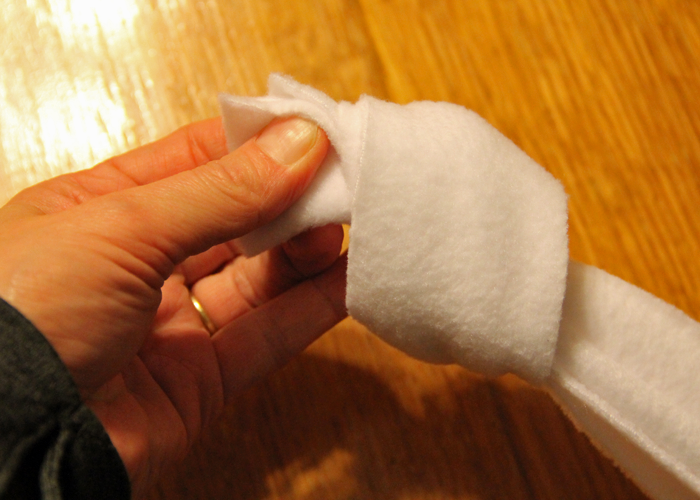
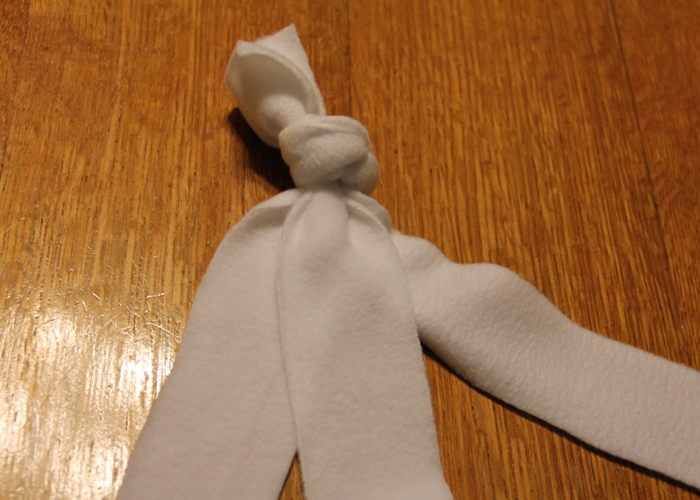
Lay (3) of the 2 inch strips on top of one another. Tie them together with a large knot on top.

textured pillow diy project for beginners

simple textured pillow

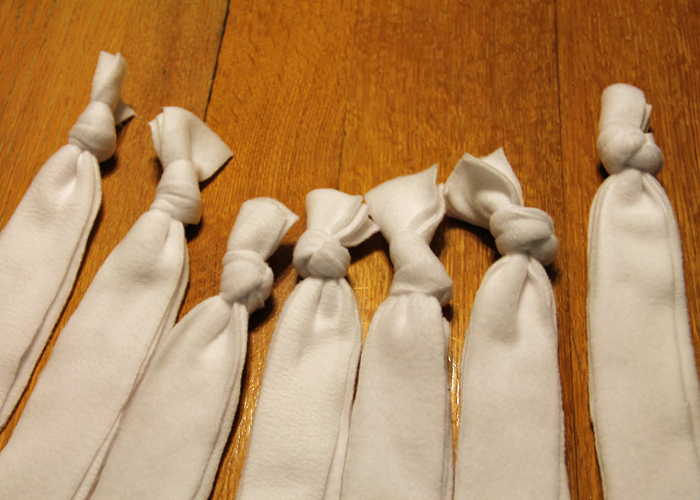
You will be creating 7 braids in total, using (21) of the 2 inch strips.

textured pillow tutorial project

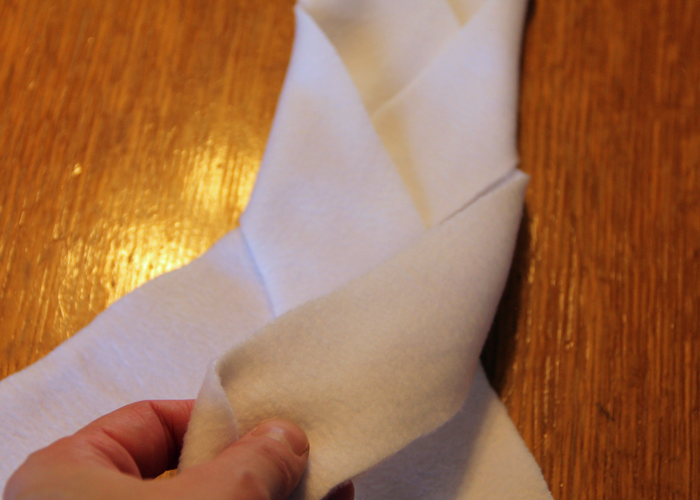
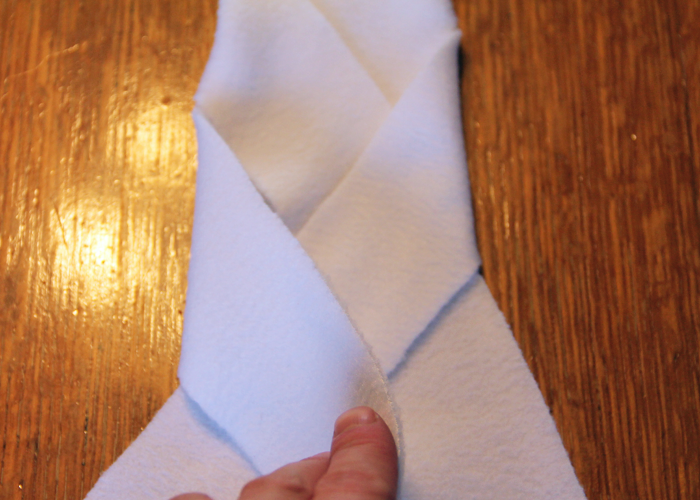
They will be flat/ large braids. One tip that I found to allow them to lay flat is to make sure the top fabric strip becomes the center of the braid.

simple diy pillow project

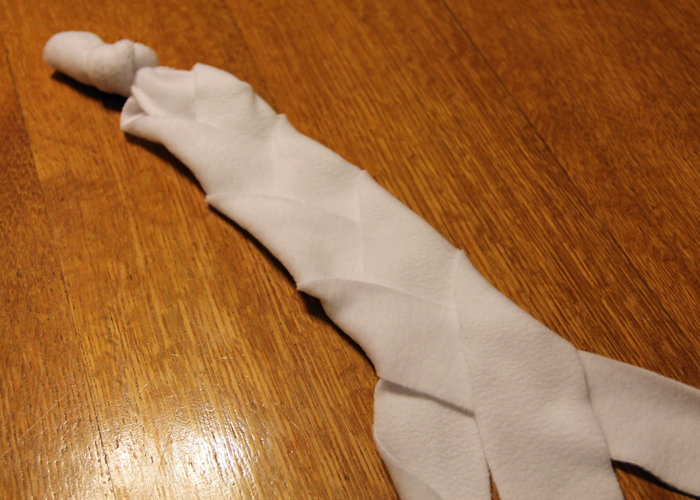
Braid each section. I created a little video of a few portions of this project – linked at the end of this post – if you need a refresher on braiding.

braided textured pillow

textured knot pillow

pillow diy project

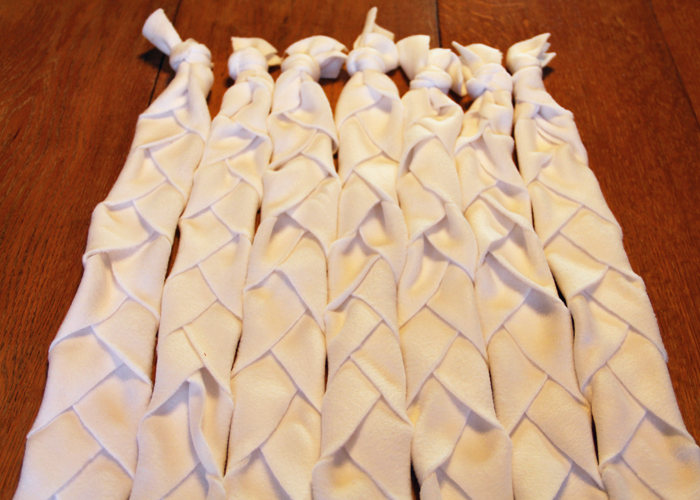
Tie each braid at the end with a knot. It is okay if the end portions of the braid aren’t perfectly flat – as these knots will be removed later in the process. Set the braids side by side so that the knots are at the top and bottom when laid in front of you on the flat surface.

simple diy tutorial

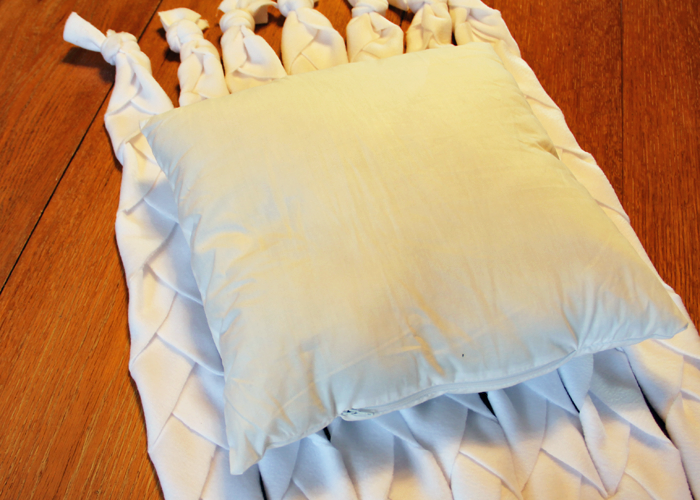
At this point in the process you might want to just double check that your pillow form fits on top of the braids. If you decided to use a pillow form size other than 13″ x 13″ you will need more or less braids, accordingly.

simple textured pillow project

Just make sure there is a little bit of the braid showing on either side of the pillow form, as the following step will tighten things up a bit.


STEP 4: COMBINE THE BRAIDS

I’m going to prep you now by saying that this next step is probably the most tricky. However, once you get the hang of it you will just repeat the process over and over. Pay careful attention to the next photos, and watch the video if you need a bit of extra guidance.

diy pillow instructions

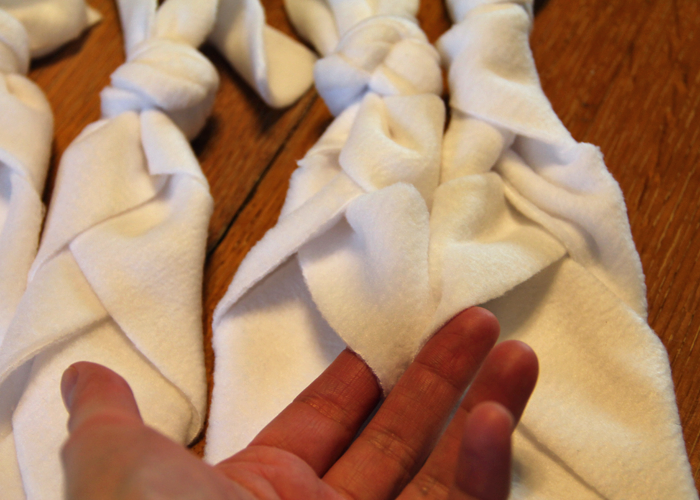
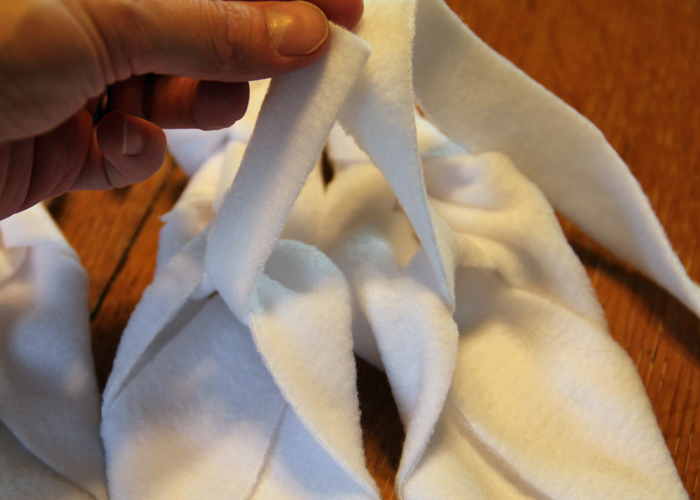
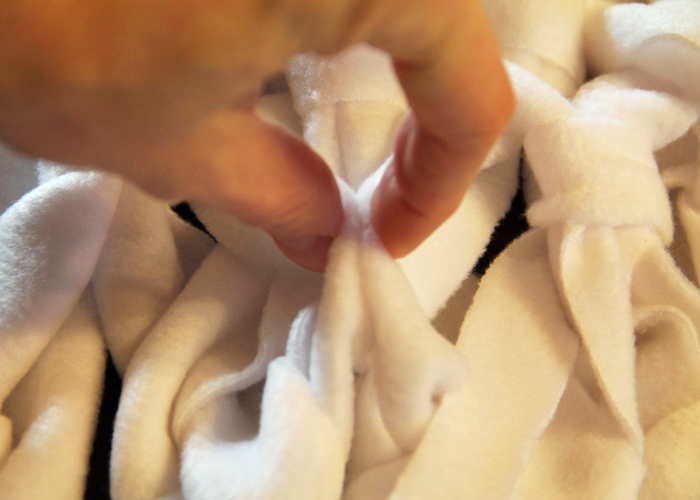
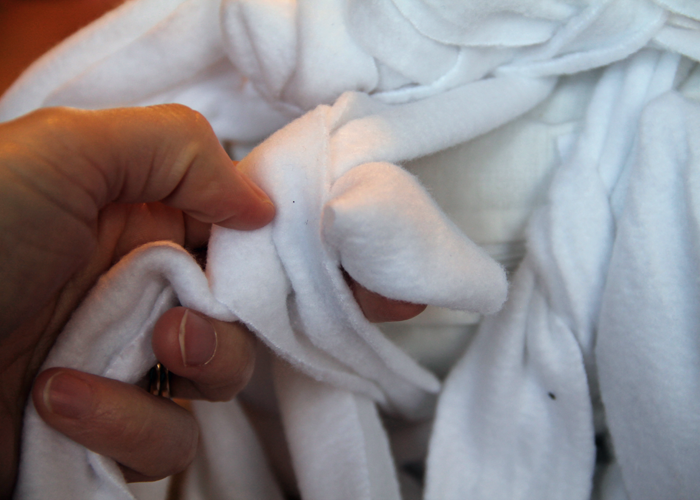
Set two braids side by side and match up the second folds together. I didn’t start at the very top because the knots tend to get in the way a bit. It will be easier to get the hang of this technique when you are a little lower down the braid.

textured pillow diy instructions

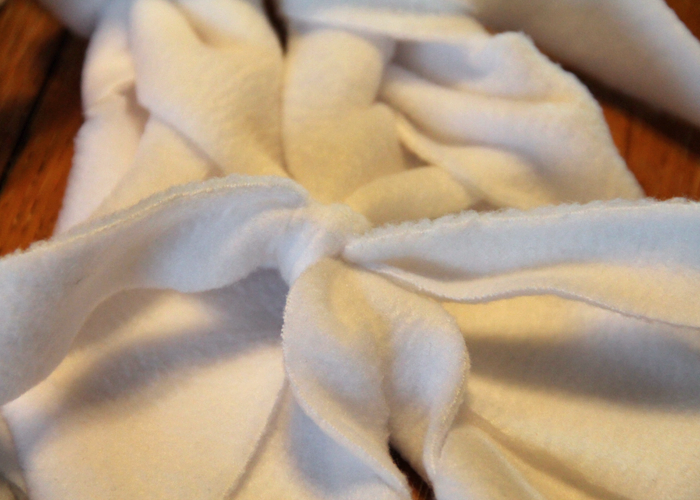
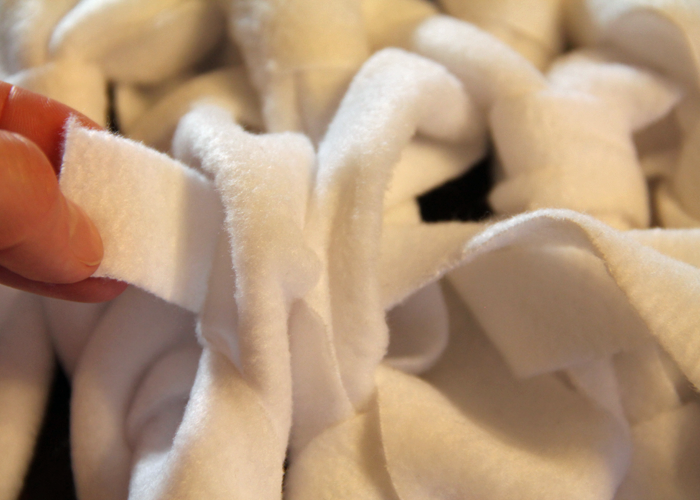
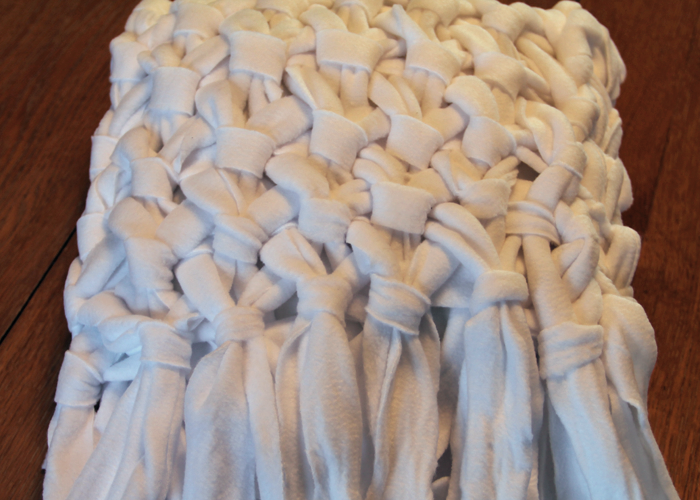
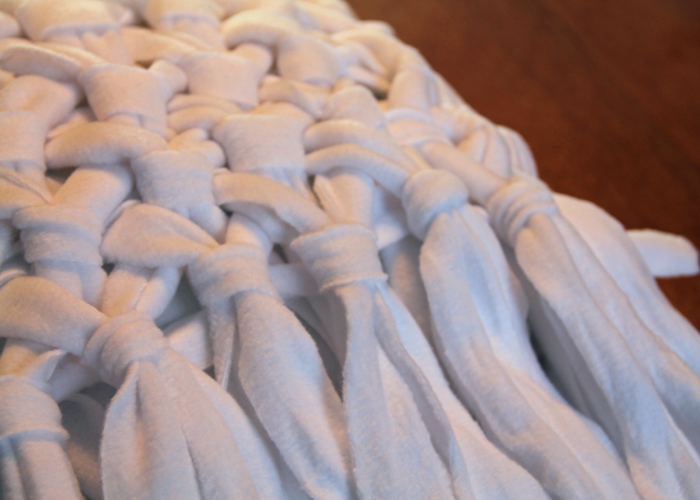
There should be (9) remaining strips of 2 inch wide fabric remaining. These strips will be used to weave together the braids, giving the pillow its signature ‘knot’ look. Lace the fabric under the loops of the folds you are holding.

textured pillow step by step guide

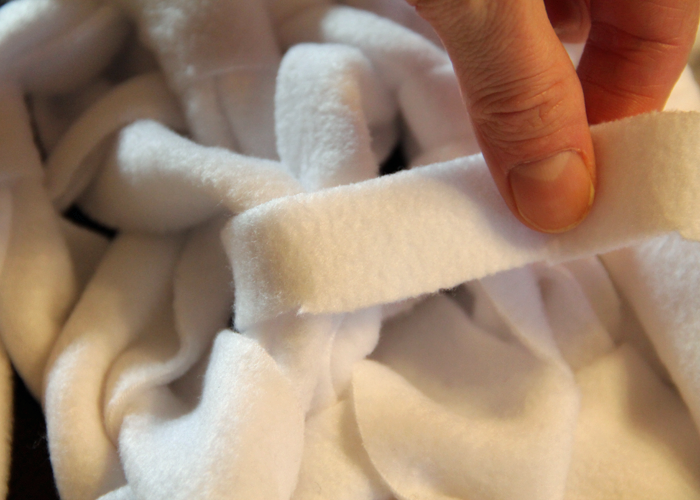
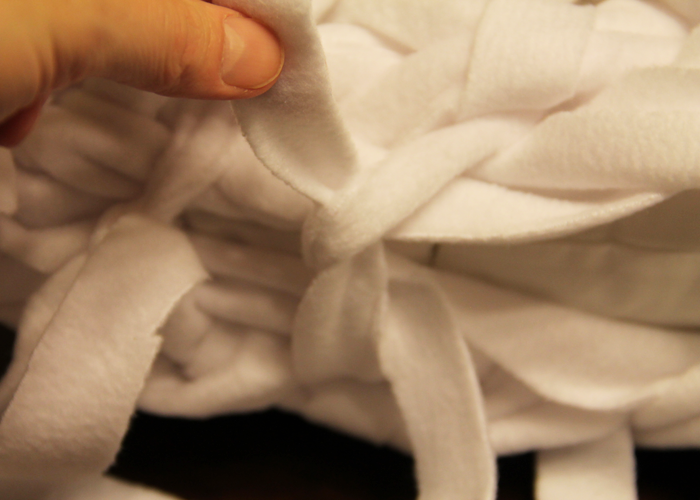
Tie the weave fabric in a knot, allowing at least 3 to 4 inches on the right side of the knot. The remaining length of the fabric strip will be used to create the ‘knots’ through the rest of the braids.

simple no sew pillow instructions

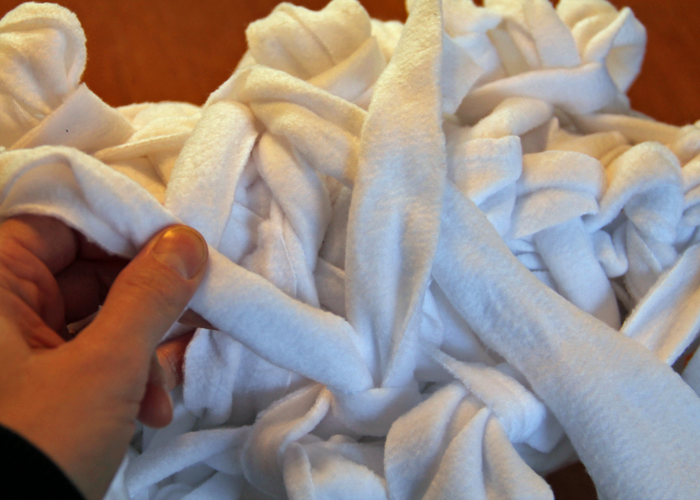
Gather the next lined up ‘fold’ pieces, and repeat the process – only this time instead of applying a knot, wrap the fabric strip over the folds. (this is easily seen in the video)

textured pillow progress

textured pillow diy project

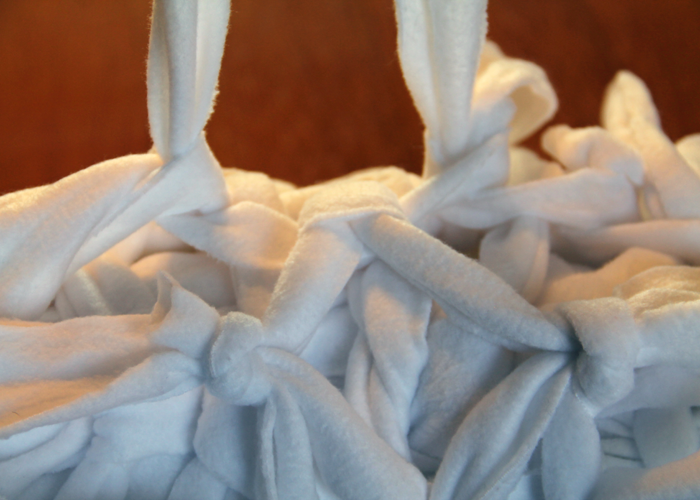
Continue this process until all seven braids are connected. Then move to the next row down and repeat the process. In all, you will use 9 strips of fabric to do the weaving.

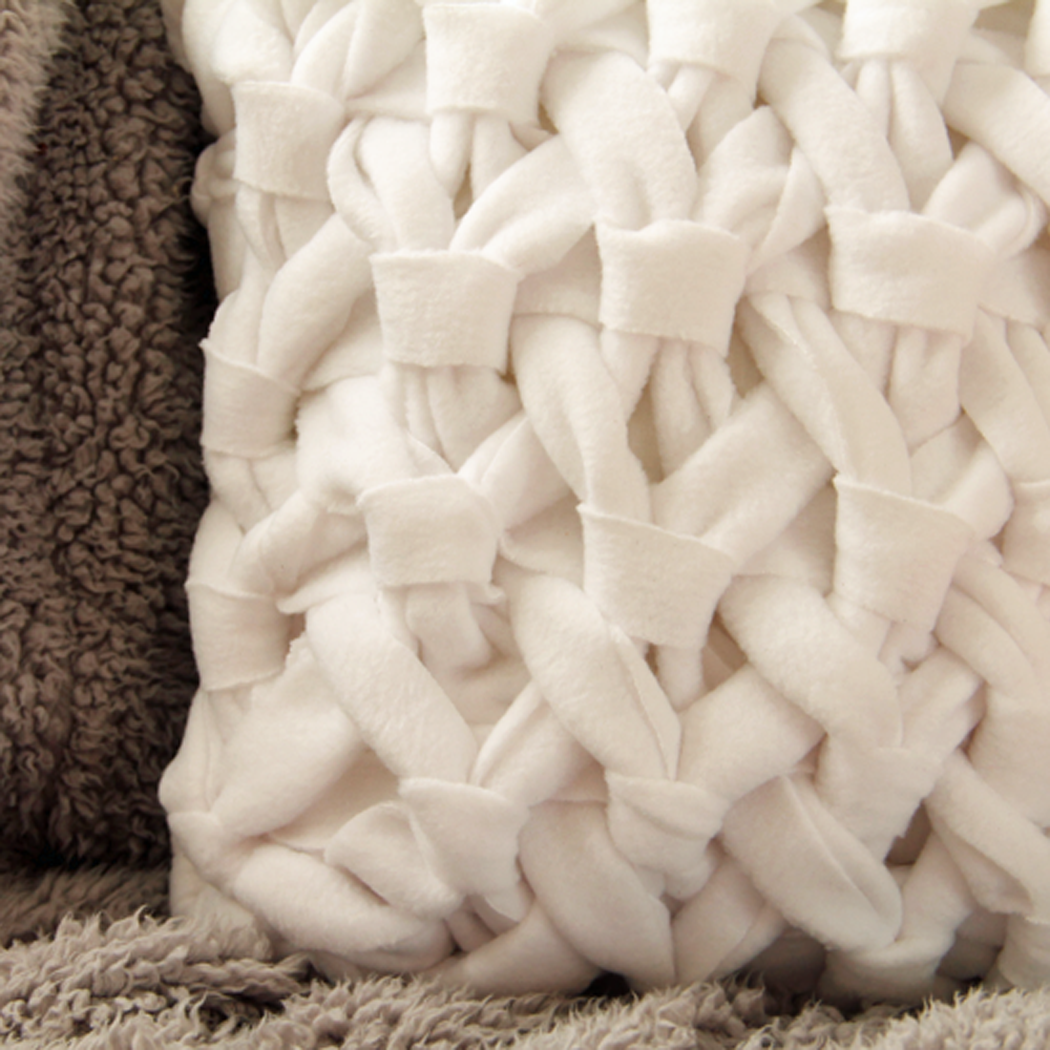
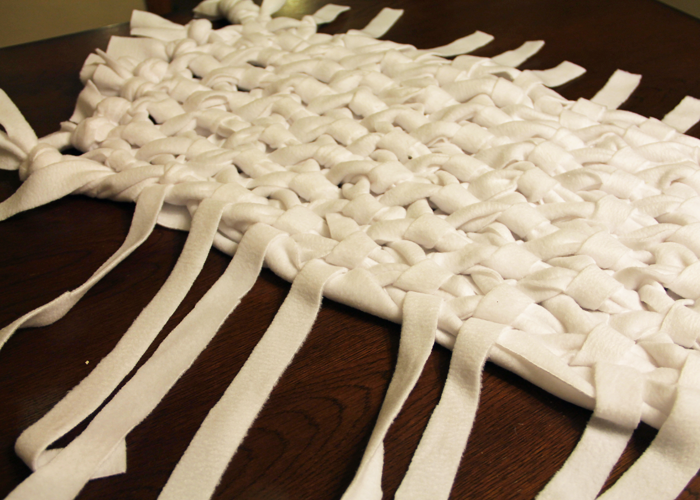
Your finished product will look something like this.

simple diy textured pillow

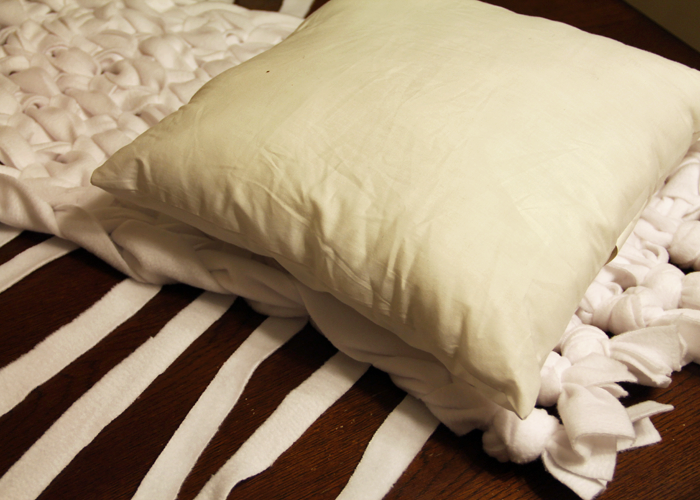
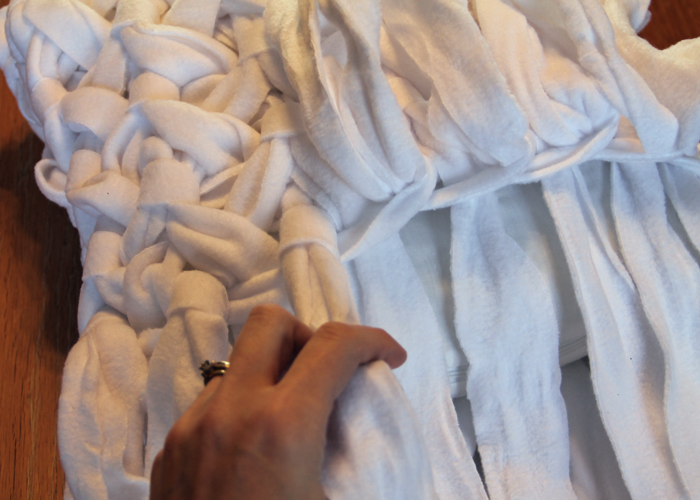
At this point you should flip the braided/woven fabric piece over so that the best looking side is facing out. This may vary from person to person – depending on your preference – just make sure that whichever side you want to be seen for your finished project is laying face DOWN. Then place the pillow form on top – on one end.

textured diy project

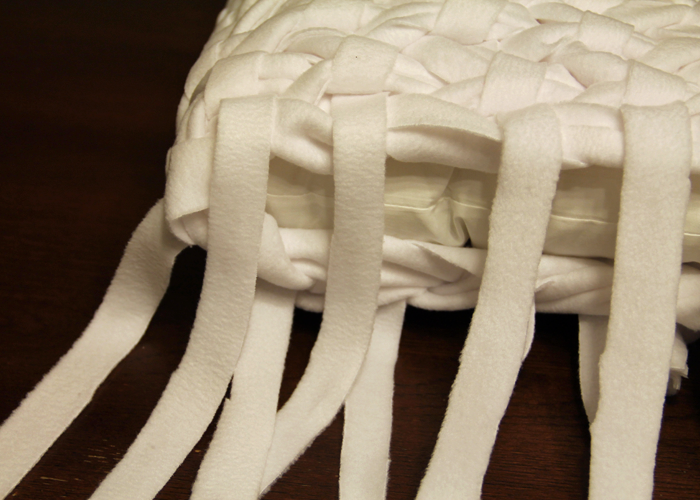
Fold the rest of the woven braids over the top of the pillow form, so that the knots are lined up on top of one another – and you are ready for the final step!

no sew fleece textured pillow


STEP 5: FINISH THE TEXTURED PILLOW

Get ready for more tying! Start with the non-knotted fabric strips. Match the top and bottom strips and tie them into knots.

fleece tie pillow diy

To finish the sides, simply tuck the remaining fabric in – or, if you prefer, cut the ends of the strips a bit and leave them exposed for a fringed look.

simple diy fleece pillow

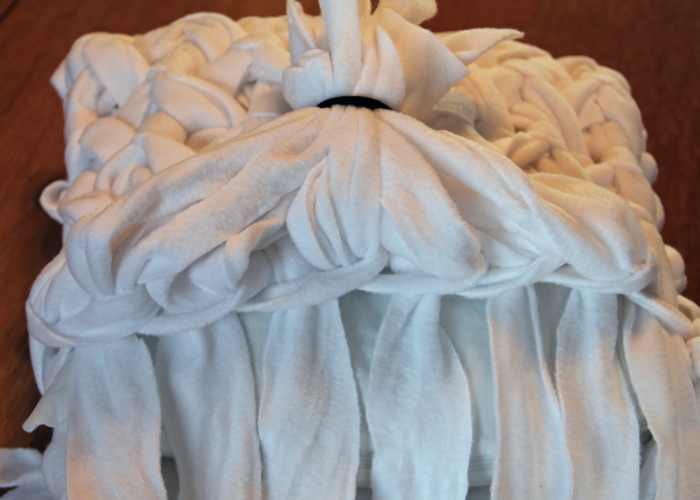
At this stage, it is safe to remove the knots from the bottom of the braids. Once the knots have been untied, lay the strips flat. Cut the extra length of the fabric from the strips so that there are between 6 and 9 inches of fabric loose below the faux ‘knots’ that remain.

textured fleece pillow

You are left with a lot of strips hanging down. Feel free to get creative with how you finish the bottom of the pillow. I initially decided to tie the strips together and leave a bit of a fringe hanging on the bottom; But eventually I decided to give the pillow a bit of a more finished look, and developed the following technique.

textured fleece pillow instructions

Flip the top ‘knotted’ strips up, gather them and tie temporarily. Turn the pillow over and repeat these steps. This will leave exposed strips in the center.

diy fleece pillow

Flip your pillow so that the skinny edge is up and oriented up and down in front of you. Working top to bottom, match up the fabric strips and tie/ loop them together. The extra fabric should be tucked in, the same way you tucked in the sides.

simple textured pillow project

The finished center bottom of the pillow will look something like this. Don’t worry too much about perfection, as this will all be covered soon.

simple fleece pillow

Lay the pillow flat again and untie the bundled portions now. There should be (7) sets of two on the top, and (7) on the bottom. Find the center sets, and position the strips as shown here.

textured pillow diy project

Tie the overlapping pieces together, then once again tuck the remaining fabric into the pillow.

simple textured pillow

You will continue this process working from the middle to the side edges. With the remaining portions, plan to make ‘loops’ instead of knots – as you did in the weaving portion of this project – and continue to tuck in the remaining fabric.

As promised, here is a link to the video showing little clips of the process – including the technique I used to finish the bottom.

Now you have a gorgeous textured pillow ready to cozy up to! It is sure to add style to any space in your home.

diy pillow tutorial

diy cozy textured pillow

I hope you will give this fun project a try! If you do, I would love for you to share with me your finished product! Don’t forget to save the pin below for reference!  Happy Crafting!

simple textured pillow tutorial


HOLIDAY HOME TOUR BLOG HOP

Can you believe we have less than two weeks until Christmas? This time of year is always full of beautiful things; And in honor of that, I’ve teamed up with some amazing fellow bloggers. We’re inviting you into our homes to share our Christmas decor and hopefully give some inspiration!  At the end of this post, I’ve linked to everyone’s posts so you can ‘hop’ on over and check out their homes. We hope you have fun!

Want to see how I have decorated our home for Christmas this year? I’m excited to share!

First, a bit of a disclaimer: We are living in a rental home as we prepare to build Arrow Hill Cottage. Though our rental is a pretty good fit for our family, it is difficult for this design oriented lady to accept some of the finishes. Yes, we have painted paneling. Yes, we have popcorn ceilings. No, the furniture isn’t optimally positioned. No, we can not remove walls. Ha Ha!

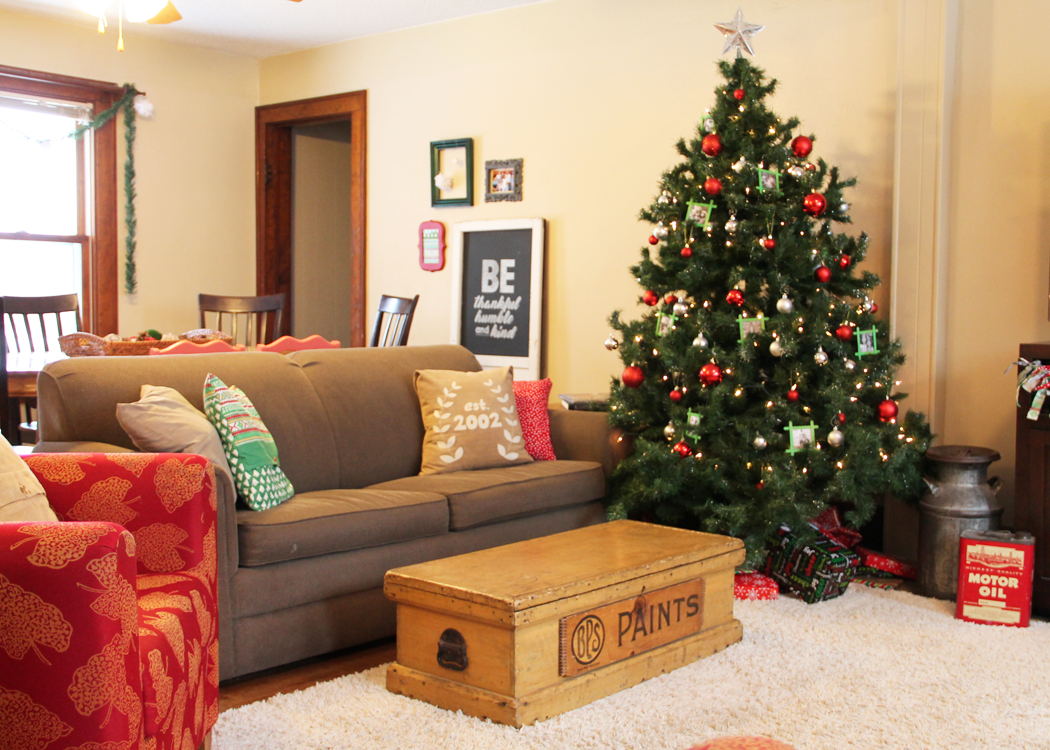
I worked with what I had. This is our family’s moment in time. Christmas 2017  – in the rental house.

We have five young children. They range in age from four to eleven. Old enough to understand the true meaning of Christmas, and young enough to still be excited about festive decorations and wrapped presents under the tree.

This is our daughter {K}’s first Christmas home (you can read about her adoption journey here). I really wanted her first experience of Christmas to be one of happiness, anticipation, and fun – and full of family togetherness. As such, I was sure to include the kids in the decorating festivities. I chose to keep the bulk of the decorating in the main living space, which you will see today.

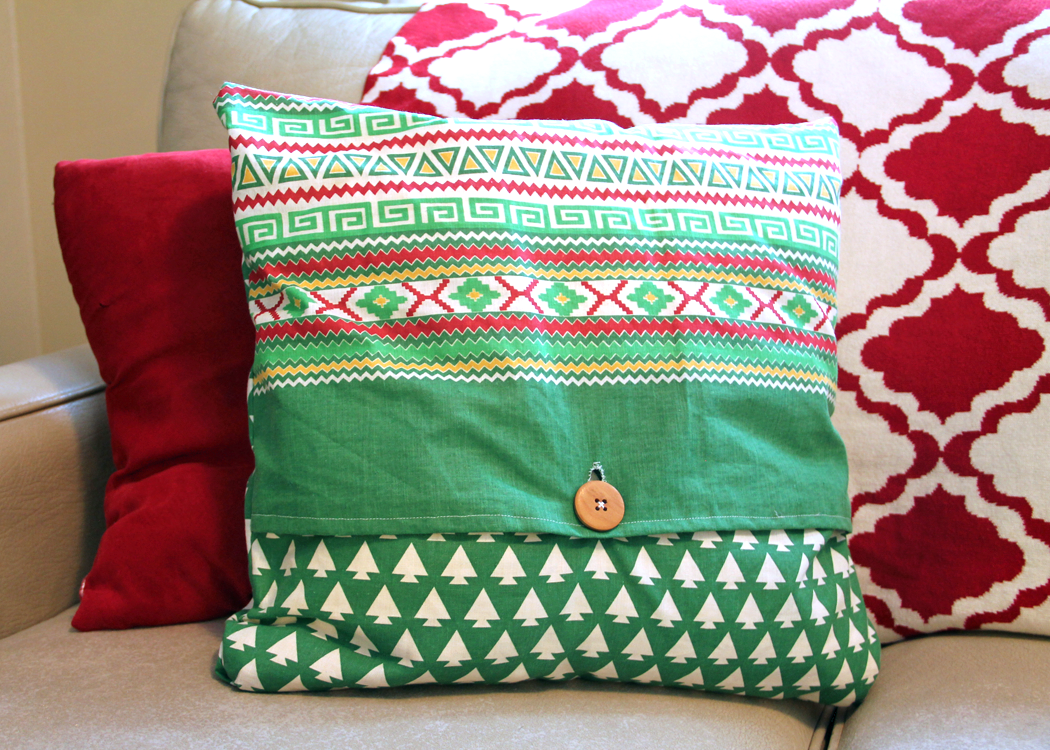
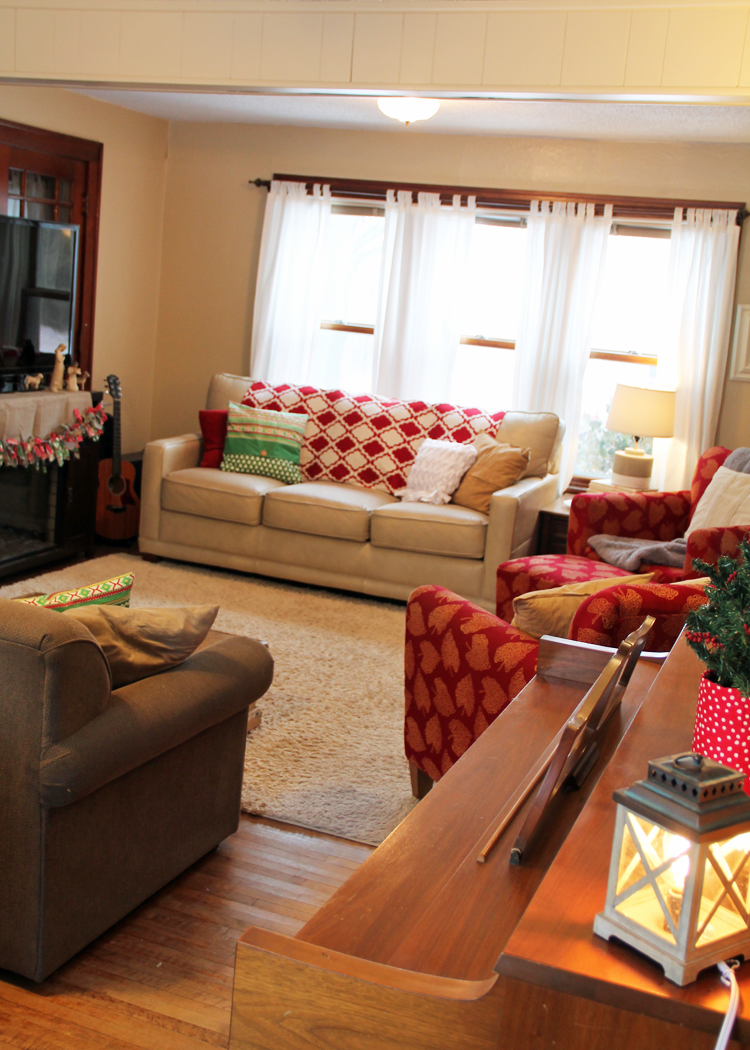
I started with an amazing feed/flour sack that I found at a local antique store. Isn’t this just the most perfect fabric for the season? The bright colors and bold, fun patterns on this fabric were just right for what I was trying to achieve. I turned that one feed sack into two amazing throw pillow covers, complete with wooden buttons.

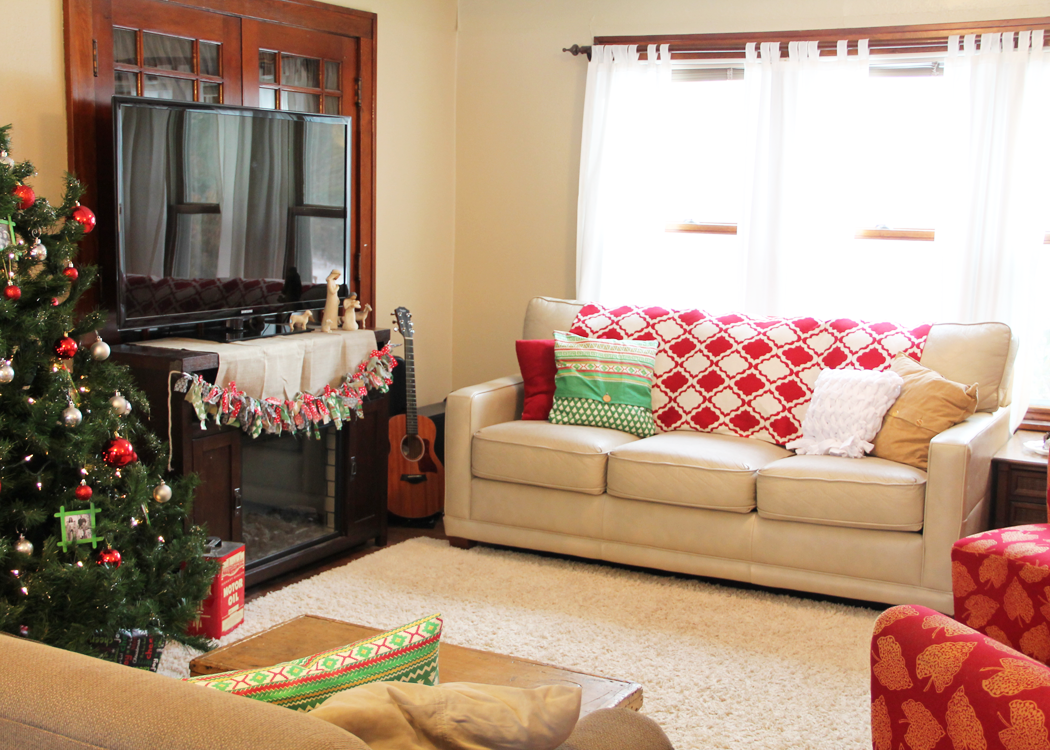
I layered in more texture on the furniture with cozy throw blankets, home made sweater pillows and a sweet DIY fleece knot pillow. Be looking for a tutorial on that coming soon!

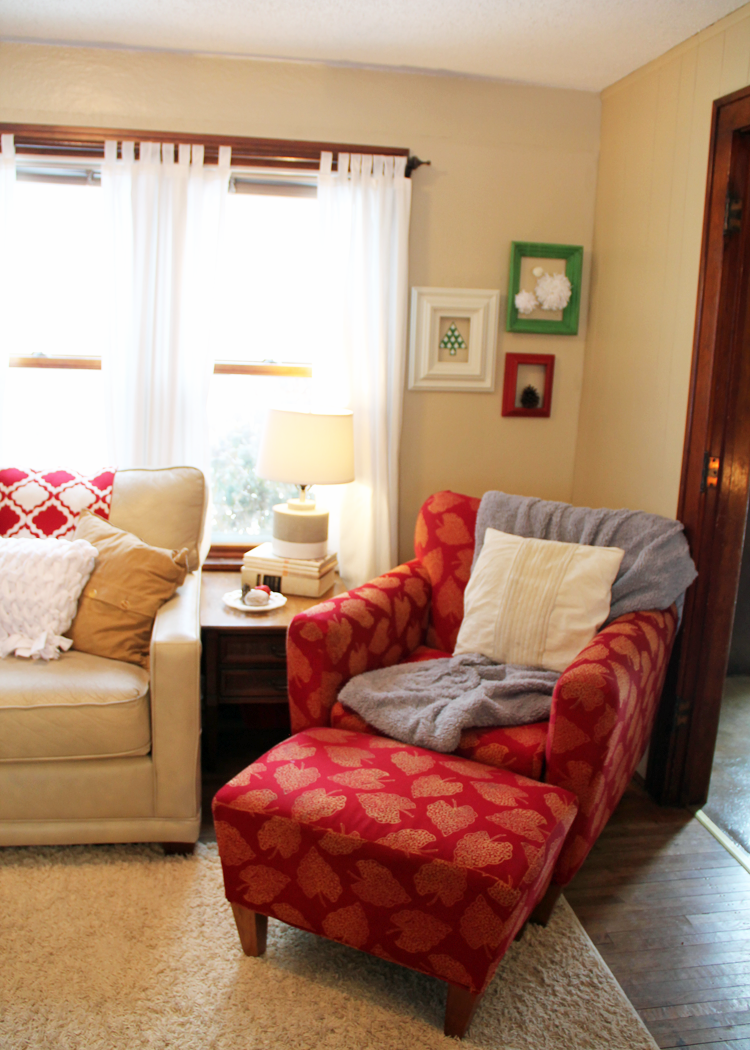
I scored some comfy club chairs + ottomans recently for an absolute steal of a price. The bad news is that they will need to be reupholstered with something a bit less boisterous. The good news is that the fabric is red and I was able to blend it into the Christmas decor. Ha!

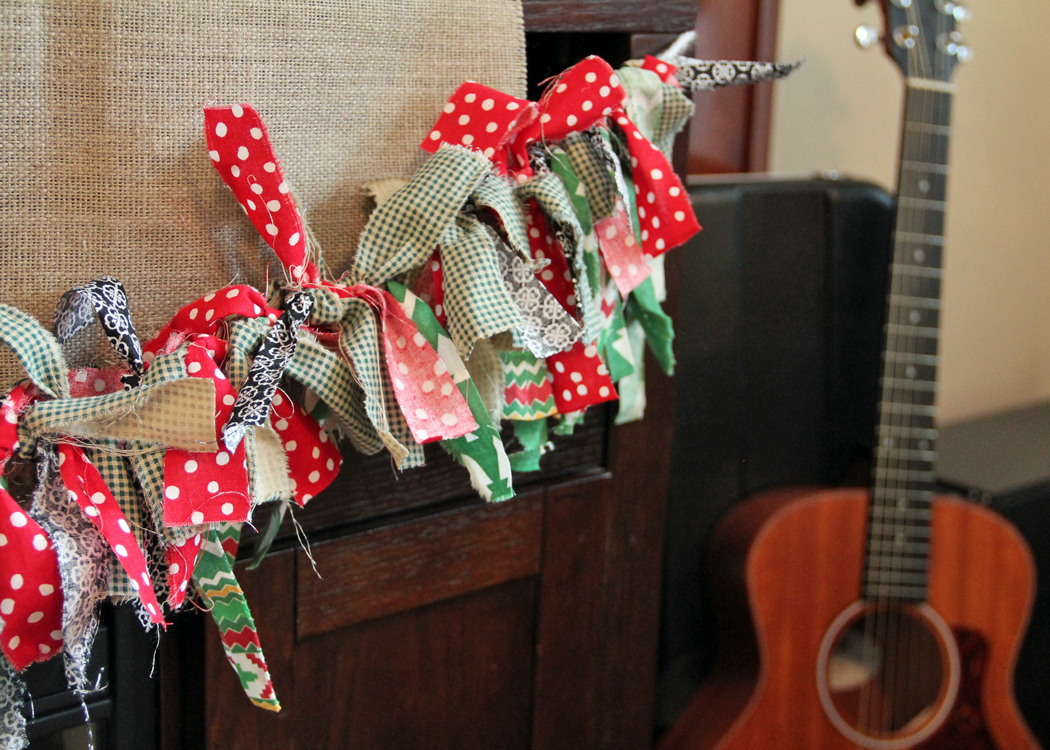
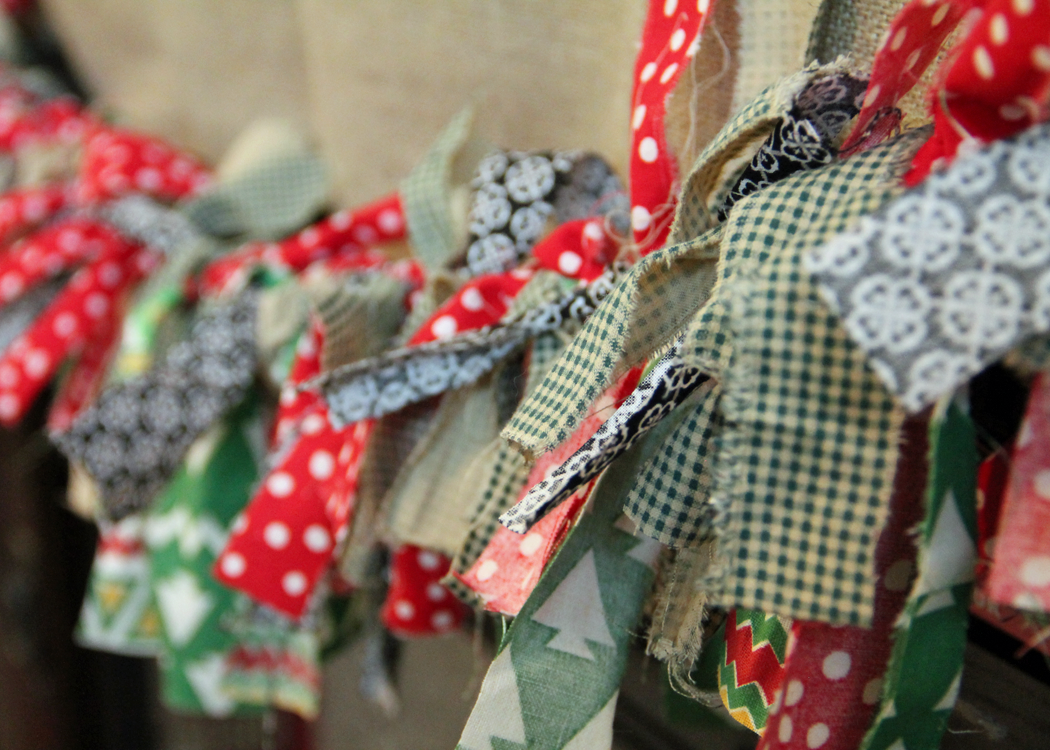
We don’t have a beautiful fireplace or mantle here. I chose instead to decorate our entertainment center. I covered the electronics, besides our massive TV, with burlap linen. I then put together a super colorful rag garland and draped it in front. For this craft, our boys got in on the action of ripping fabric and pretending they were the Incredible Hulk. Ha!

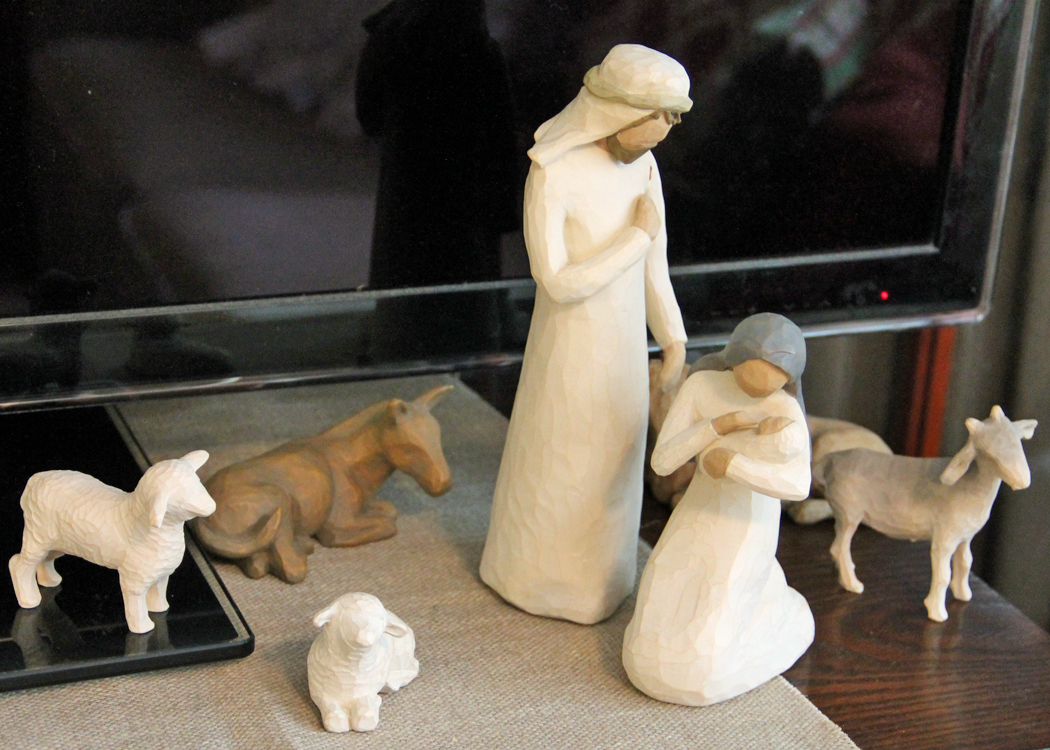
Perched on top of the cabinet are my Willow Tree figurines. I love the simple sentiment of this Nativity display.

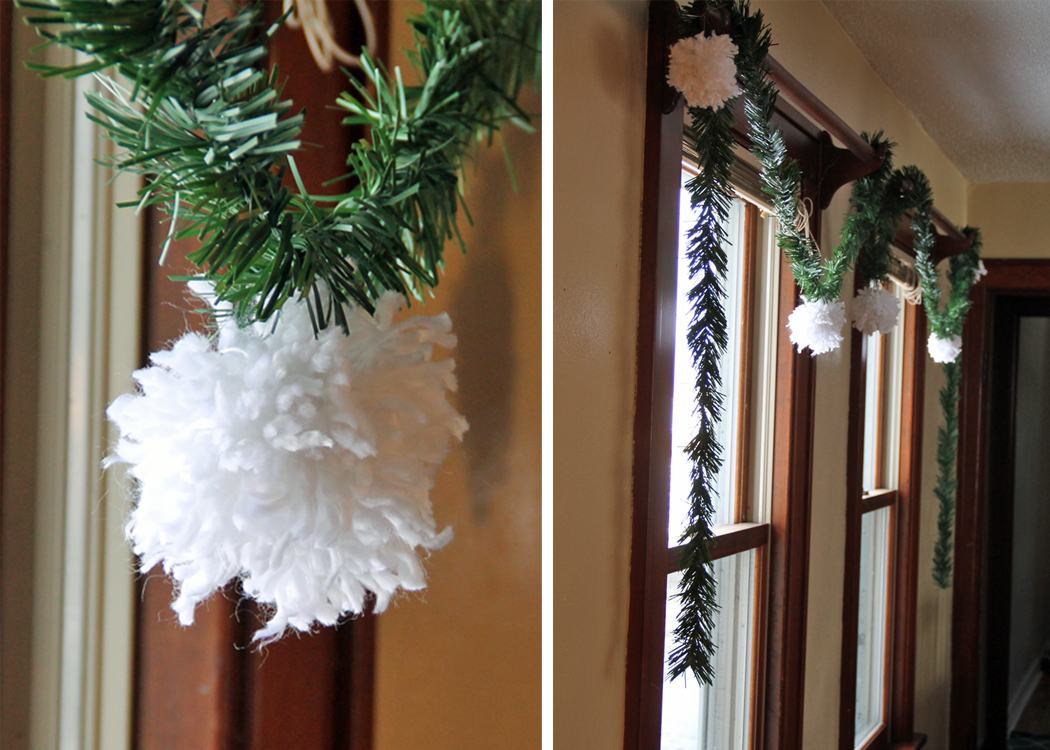
Another simple garland that I created includes DIY pom poms. I had never made them before; but found this well written tutorial that showed me step by step how easy they are to create! The kids joined in the fun of creating these fluffy ‘snowballs’.

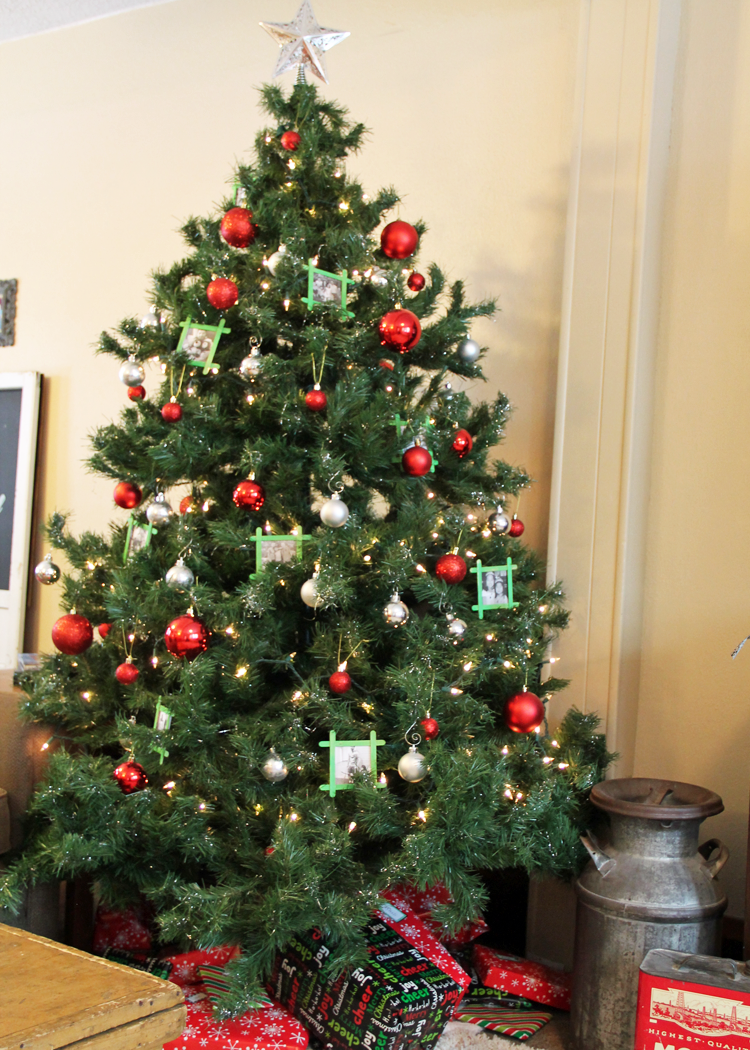
Our Christmas tree is the ultimate of hand-me-downs. Though I love the look (and smell) of a freshly cut evergreen, it is special to me that the tree which now sits in our living room is the same that my Christmas presents were placed under as a child. That’s right. This tree is as old as I am! I’d say she has aged pretty well!

The ornament and light positions were decided by the kids. I had thought of maybe moving them around to balance things a bit, but decided to embrace the quirkiness. They are so proud of their masterpiece.

I love taking photos of day to day life – sometimes though, those pictures tend to be stuffed into yet another computer file. Lately, I have been putting forth more of an effort to showcase the pictures I take. In fact, I started a YouTube channel just for that purpose! Our weekly photo vlogs have been so fun to create. At the end of the year, we plan to sit down with a big batch of popcorn and watch them together.

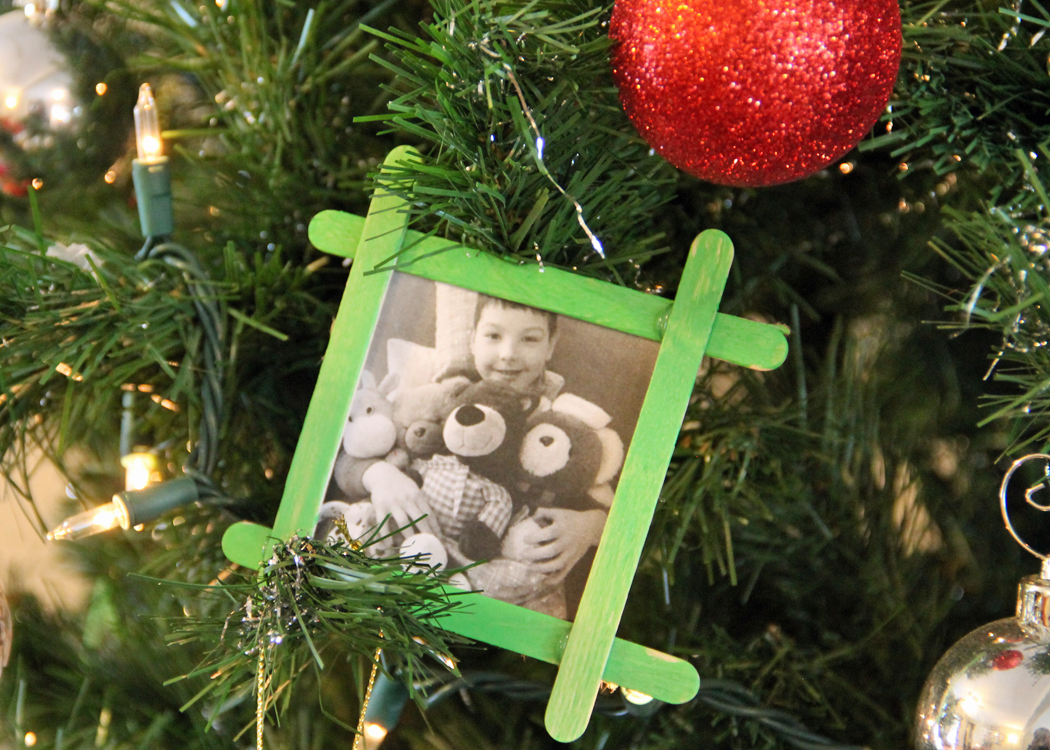
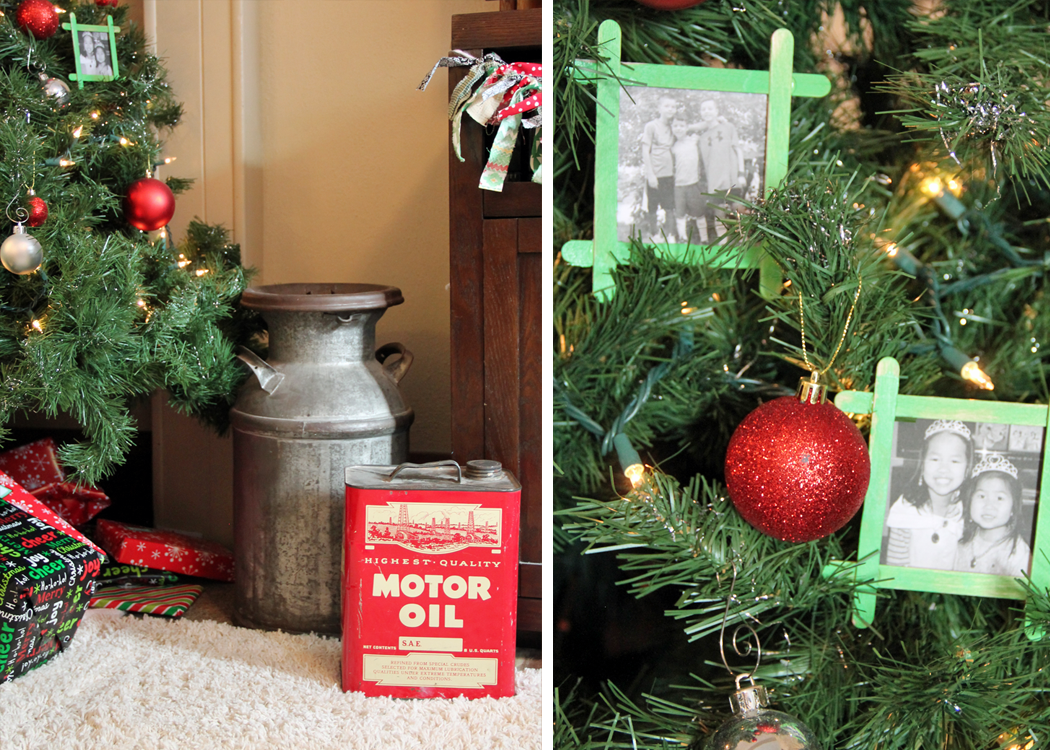
I decided to take one photo from each month and showcase them as part of the Christmas decor. A bit of a yearly time capsule. Each black and white photo is accented by a Popsicle stick frame. The kids helped to paint the sticks a whimsical shade of green and I assembled them.

It is a treat to be able to glance at the tree and be instantly transported back to that moment in time. We really have been through a lot this year! From traveling to China in April, as part of {K}’s adoption trip, to Craig’s knee surgery in August. What a year!

I’m not sure how I did it – but I somehow have managed to finish this year’s Christmas shopping already! I have wrapped the gifts in patterned paper that matches the colors in the rest of the room.

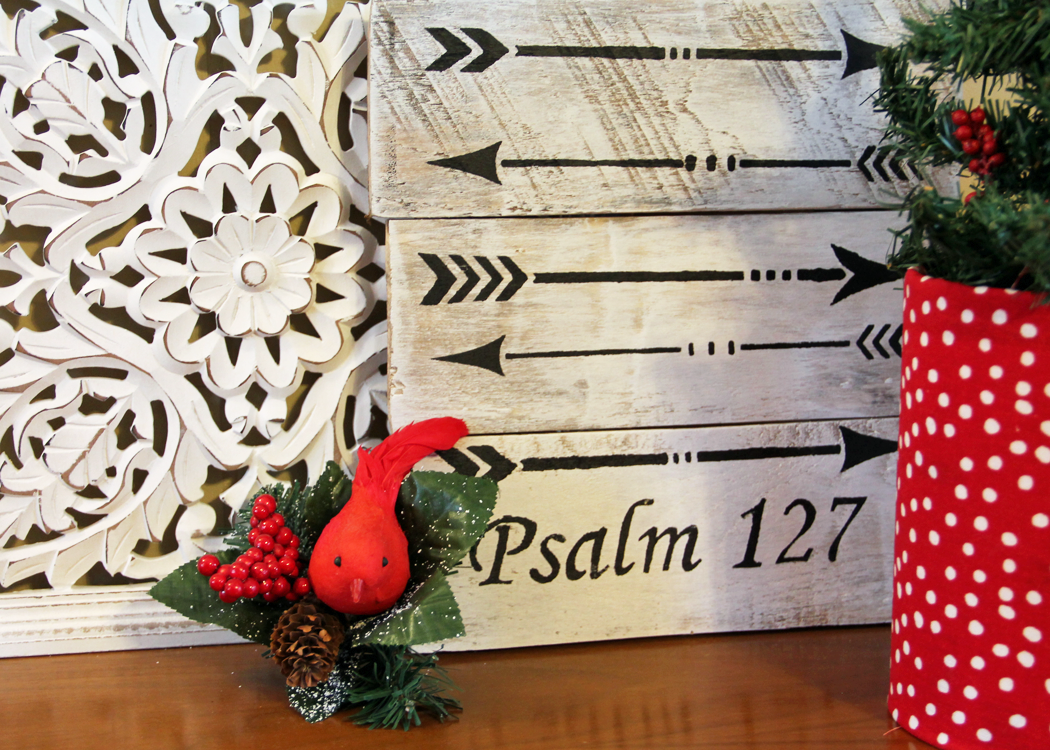
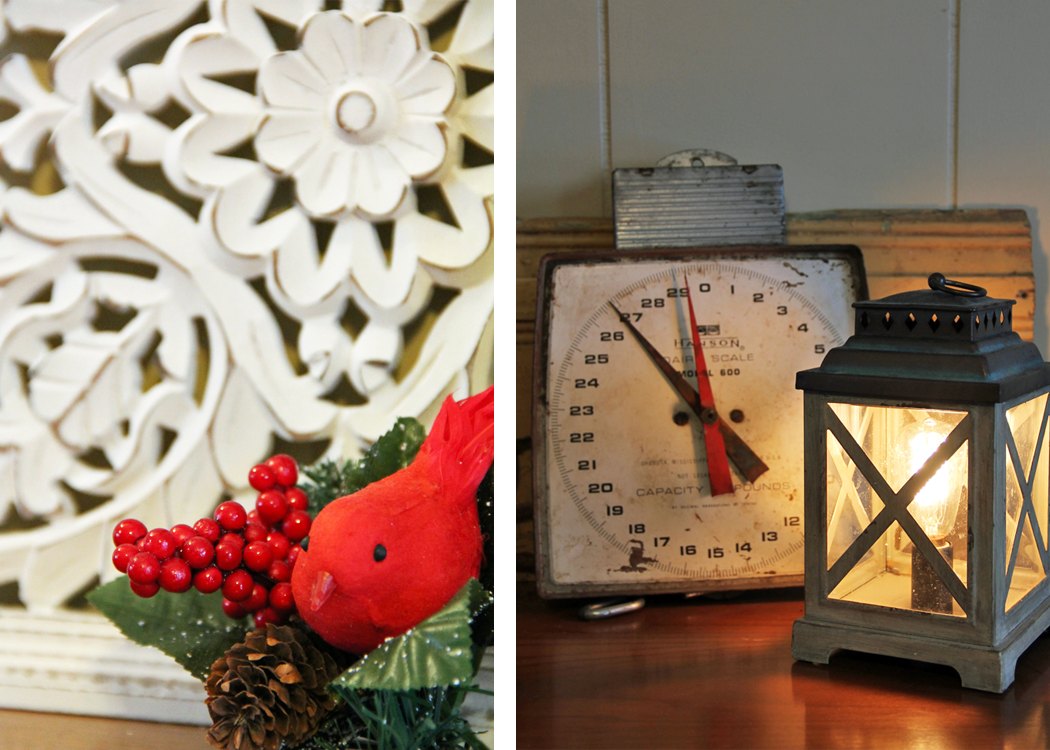
A little red birdie lives on top of the piano – nestled near a small painted wood sign of one of my favorite Bible passages, Psalm 127. I purchased the sign during a friend’s adoption fundraiser. It is a very special piece.

The red and green color scheme continues on the piano top, where a trio of ‘mini trees’ reside. This was another DIY project. The containers were covered in fabric and the trees were made out of a wired garland I had laying around.

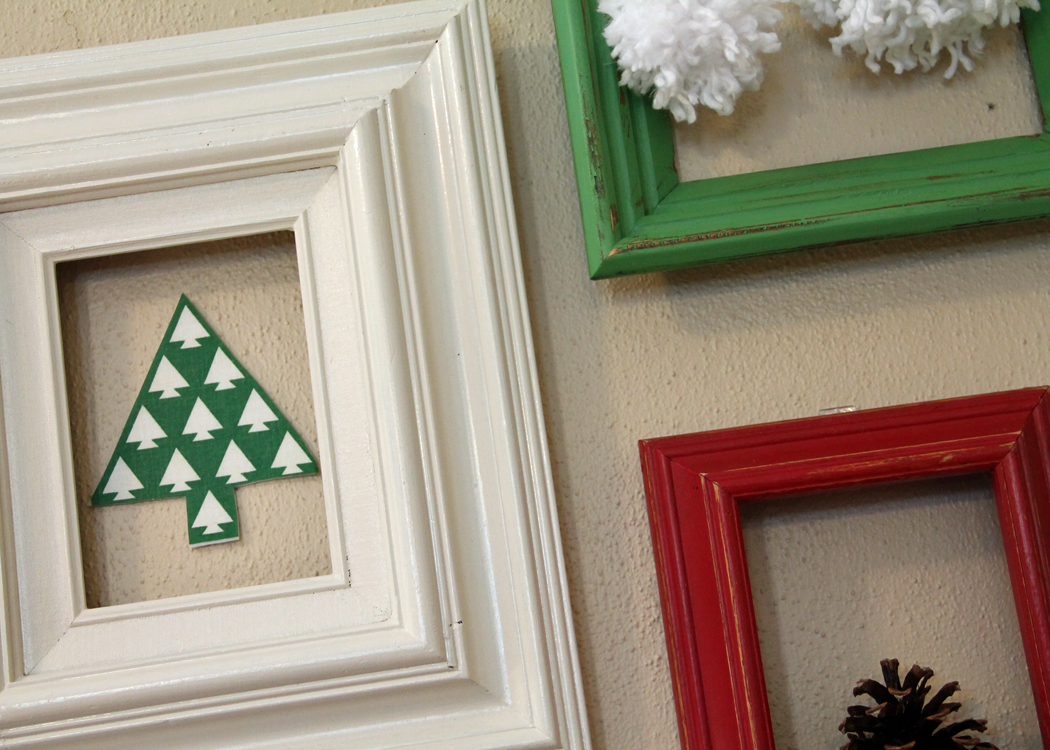
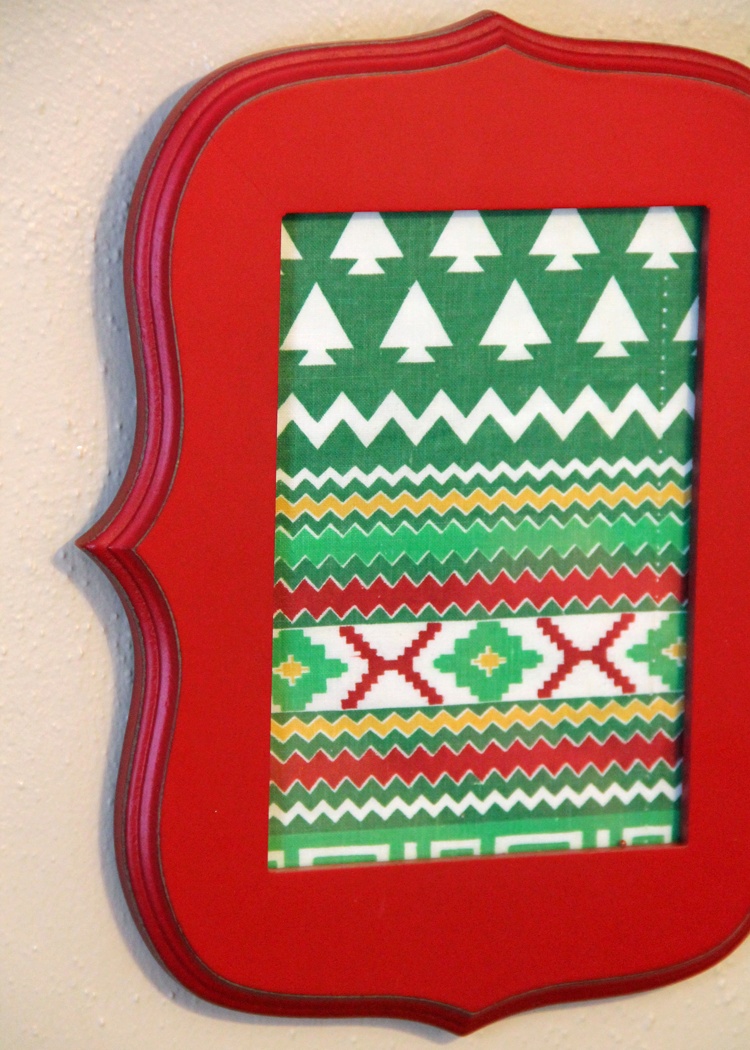
Other whimsical items are spread throughout the room. This gallery of vintage frames adorned with fabric, pom poms and a pine cone was a favorite when I first put it up.

There’s that amazing fabric inspiration again. I was sure to use every last scrap. I love it so much!
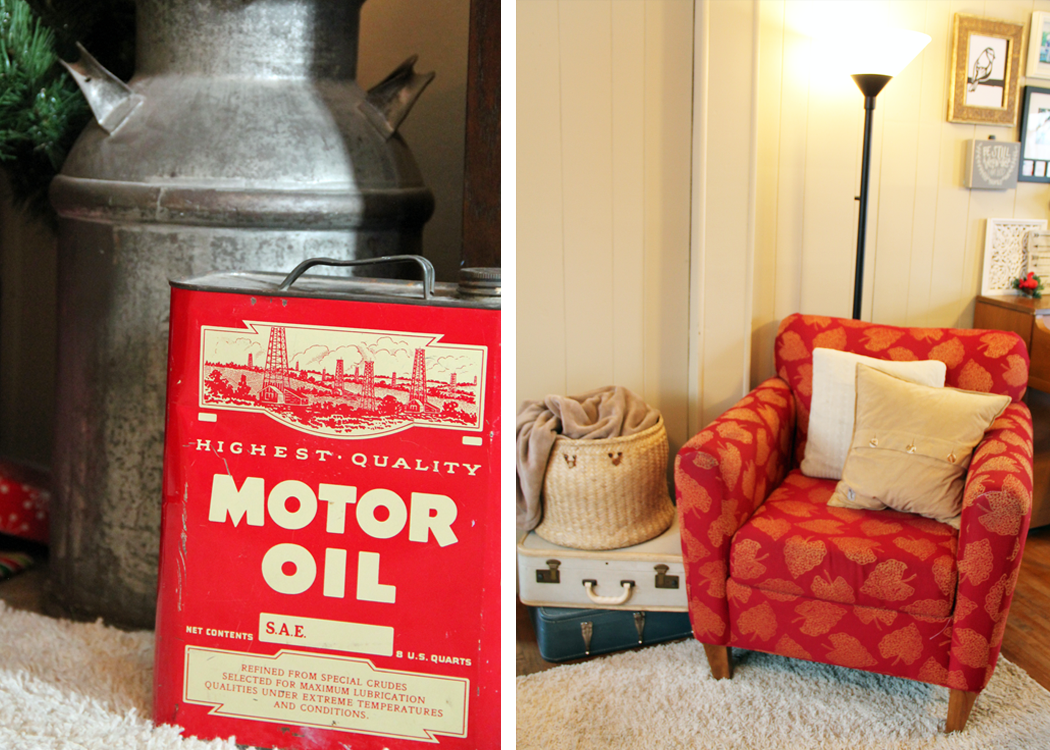
I threw in a few more vintage finds for good measure.

I hope that you will gain a bit of inspiration from the decor our family is enjoying on these cold wintry days. I invite you now to visit these other amazing blogs to be further inspired!
HOLIDAY HOME TOUR

Bless Mama

Slice of Style

Babb Farm Life