CAST IRON SINK RESTORATION | POWDER ROOM

While the crews are hard at work on our house construction, my husband has been busy with a cast iron sink restoration. Read all about his progress and see how the sink looks now!

vintage cast iron sink


It’s been a super busy summer for the construction crews out at our house build site. They are currently finishing up the framing and sealing the exterior. Hopefully, all of that can be finished before the cold Fall weather starts up! In the meantime, We have been cleaning and preparing items that will be used in the new house. Bathroom vanities are getting painted, chairs are being refinished, and the cast iron sinks are getting restored!

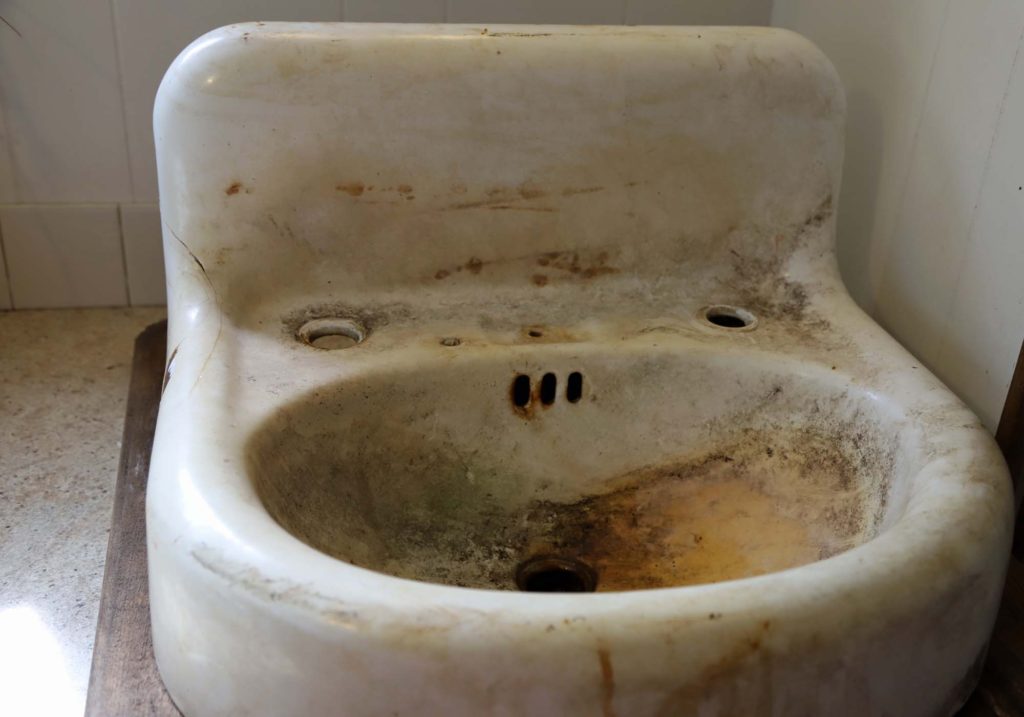
We have two vintage cast iron sinks that will be installed in the new house. One is a large, single basin farmhouse sink which will be used in the kitchen. The other is this smaller model 1930’s Kohler wall hung unit, which will be the perfect compliment to our main level powder room.

dirty cast iron sink


HISTORY OF THE CAST IRON SINKS

Both sinks were recovered from the property we are currently renting, my husband’s grandparents farmstead. They remodeled their house sometime in the 1960’s, and at that time put the sinks outside. They sat for 50+ years in the woods, covered with leaves and debris. Because of this, the sinks definitely needed some TLC.

We talked about hiring a company to do a complete restore, but decided to test out a DIY version on the smaller sink. Once we knew the results, we figured we would be able to make an informed decision about what to do with the larger one.


CAST IRON SINK CLEANING

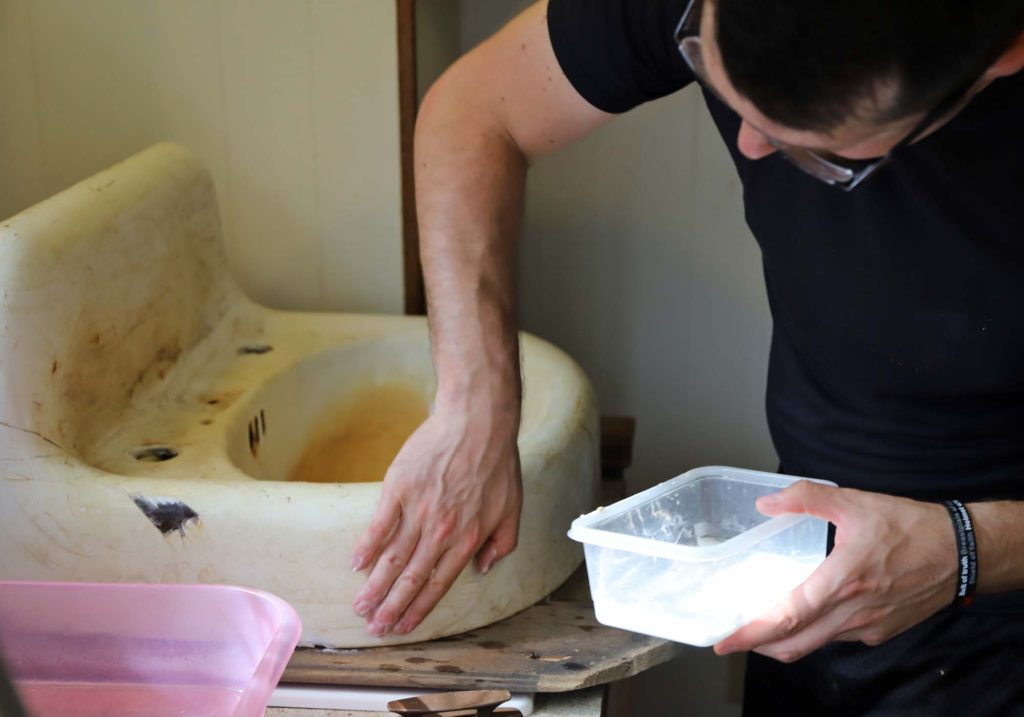
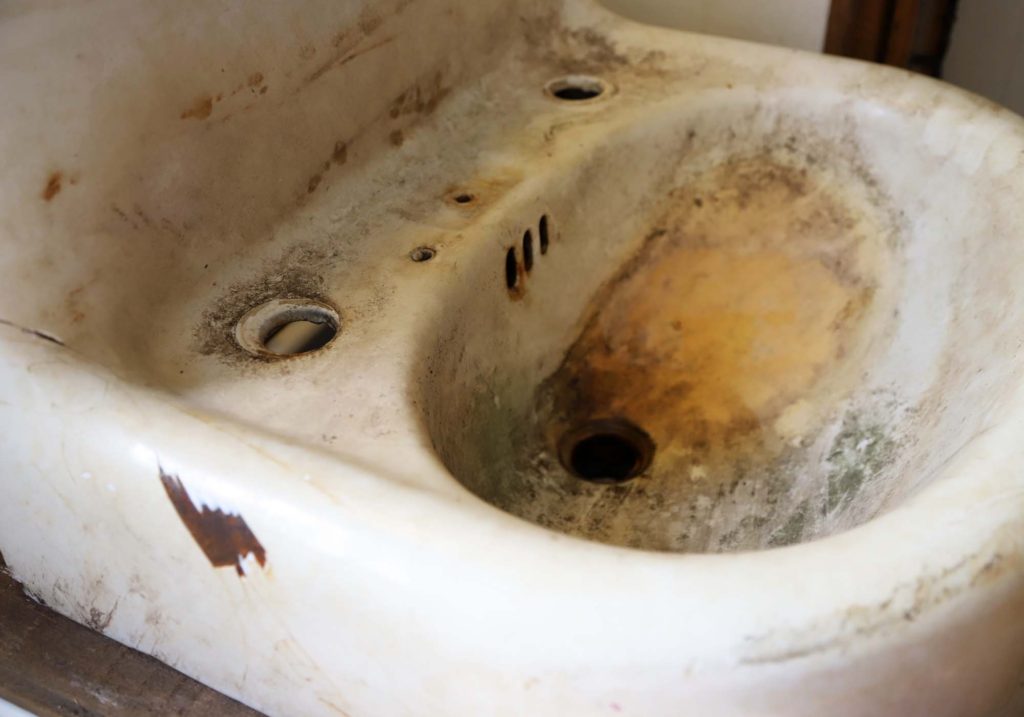
First, the sink needed some good old elbow grease. Craig started with very mild cleansers – such as a baking soda/water mixture. Eventually, he moved to harsher chemical cleaners, including ‘Iron Out’ and ‘Bar Keepers Friend.’ While they did clean the sink somewhat, none of the products were completely removing the rust stains.

cleaning the sink

Craig really wanted to remove the rust, as it could affect the sink’s future integrity if not addressed properly. He ultimately needed to use a wire wheel brush to remove the rust spots.


FIXING THE CHIP

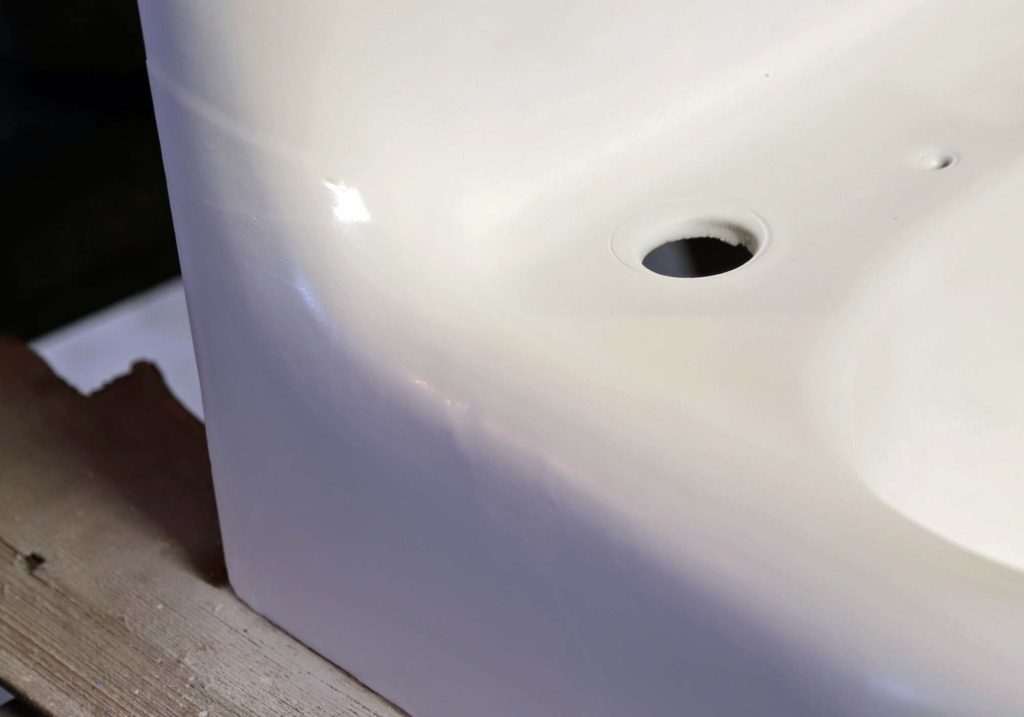
Besides the rust, the biggest issue with this sink was a large chip in the enamel, as well as a hairline crack that ran along the side and up the back splash. They were both cosmetic issues, as they did not cause any problems with the sink being able to hold water.

fixing a chip in enamel of cast iron sink

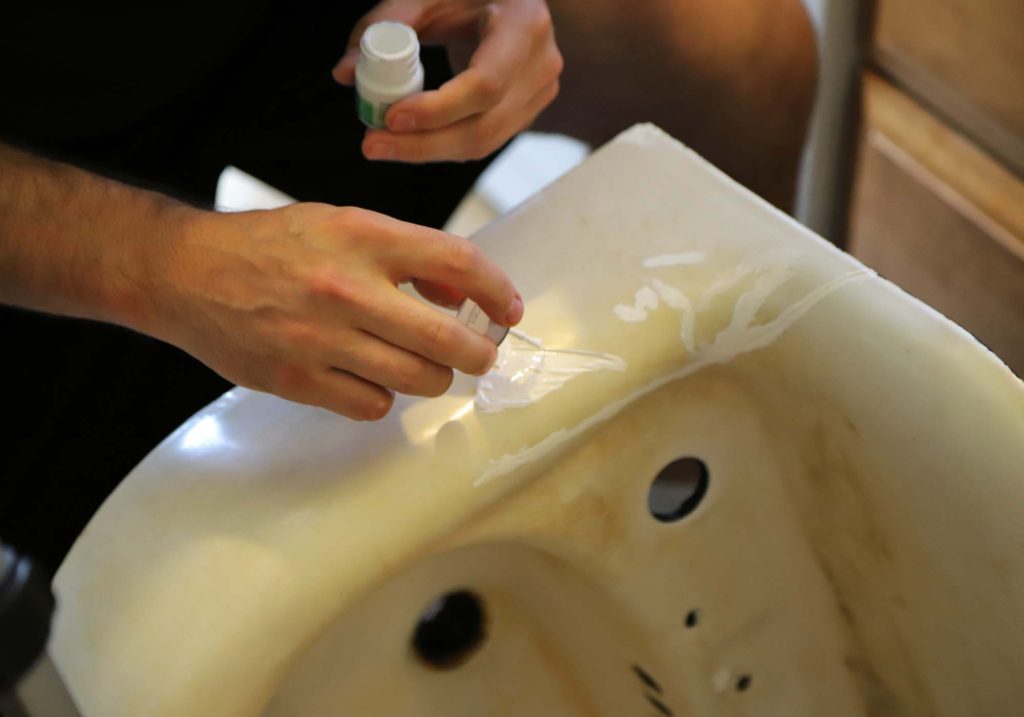
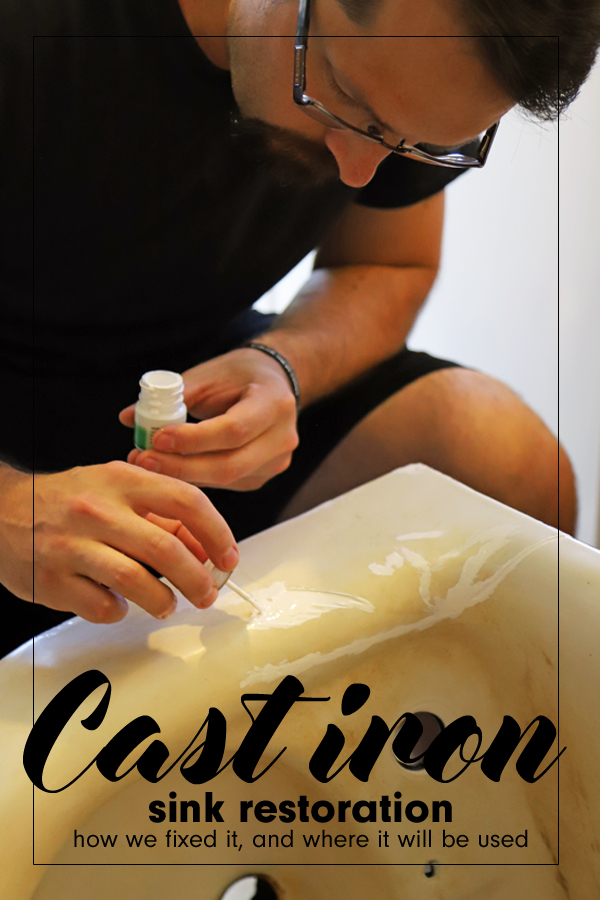
We found an epoxy material that could help fill in the imperfections. Over the course of a day, Craig applied layer after layer, allowing the epoxy to dry between coats. Once the material was above the height of the original enamel, it was left to dry for a few days before sanding.

epoxy material

filling the sink chip with epoxy

This product requires a ‘wet sanding’ technique – to help keep the dust down, and to eliminate scratches on the sink’s surface.


PAINTING THE CAST IRON SINK

We had determined, while cleaning, that the original enamel would need to be covered to get a uniform look. We were in no way looking for perfection, as we understand that this is an old sink. However, the discoloration was pretty bad from the years the sink had sat outdoors.

Once the epoxy had been sanded down smooth, it was time for paint! Craig started by painting the back of the sink with a black ‘rust inhibitor’ paint.

Rustoleum makes a specialty paint product that can be used for bathroom fixtures such as sinks and bathtubs. We decided to give it a try for the front!It goes on about the same as a standard can of spray paint, but the drying time is much longer. This allows the paint to harden.

painted cast iron

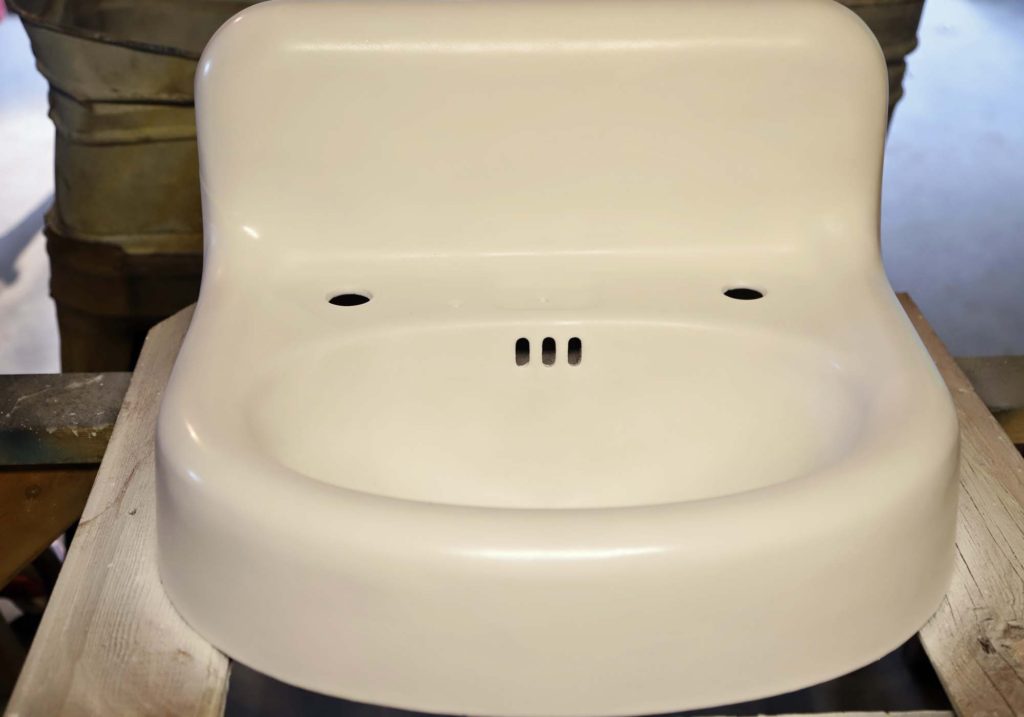
After three coats, the sink is looking great! The finish isn’t quite as shiny as the original enamel, but it is pure white and uniform. All of the rust spots are covered, and you would need to look extremely close to see any sign of the large chip or crack.

vintage sink repair

We are quite pleased with the outcome – especially considering the money we saved by doing it DIY style! Of course, until the sink is in use, we won’t know how this paint will hold up over time. I will try to remember to write an update after we have used the sink for several months.


WATCH THE CAST IRON SINK RESTORATION

For an even closer look at the steps involved in this restoration process, check out the THREE PART SERIES of videos that my husband created for his new YouTube channel, Weirdy Beardy Workshop. He has been busy filming a lot of projects, actually. So, if you want to see some behind the scenes footage, go check out his channel!


PIN THIS POST

how to restore a cast iron sink


FOUNDATION | HOUSE BUILDING UPDATE NO. 4

The foundation for our new house and attached garage/front porch is finished! It has taken a while to gather all of the footage and photos to document this portion of the build, but today I am ready to share with all of you this exciting step!

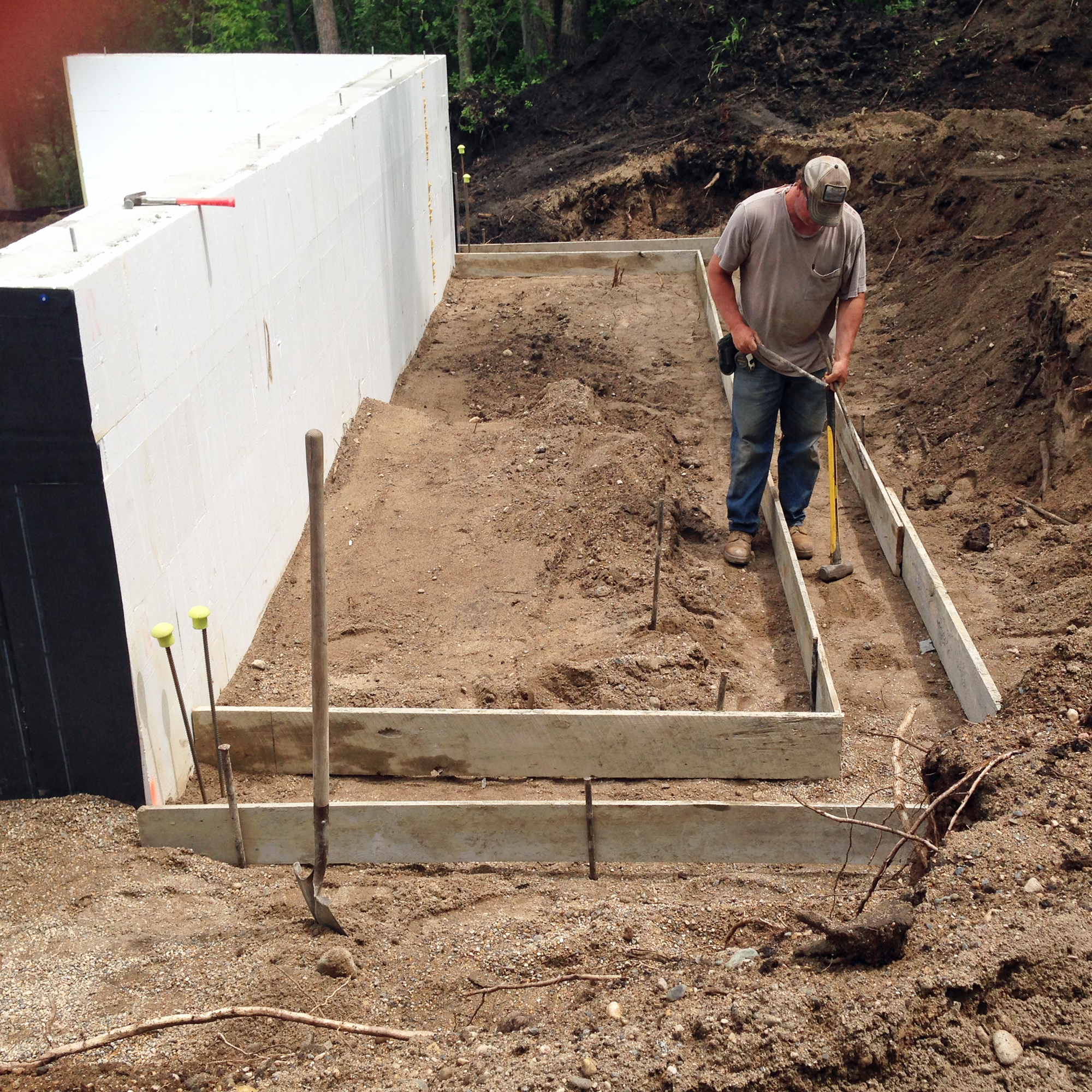
Setting the forms for the footings

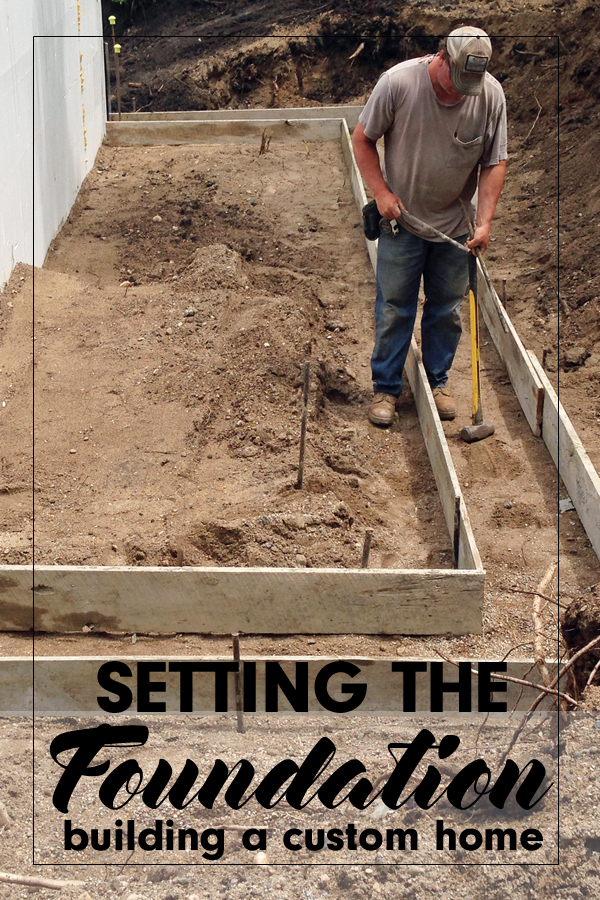
I have heard from those who have gone before us in this building process – that the foundation portion is perhaps the most slow moving. And, so far, that has been the case for us as well. I think it has to do with the fact that the process has to be done in multiple steps. First, the footings. Then, the foundation walls for the basement (if any), and finally the garage and porch foundation.

For our property we had an additional couple of steps because of the walkout portion of the basement.


OUR FOUNDATION

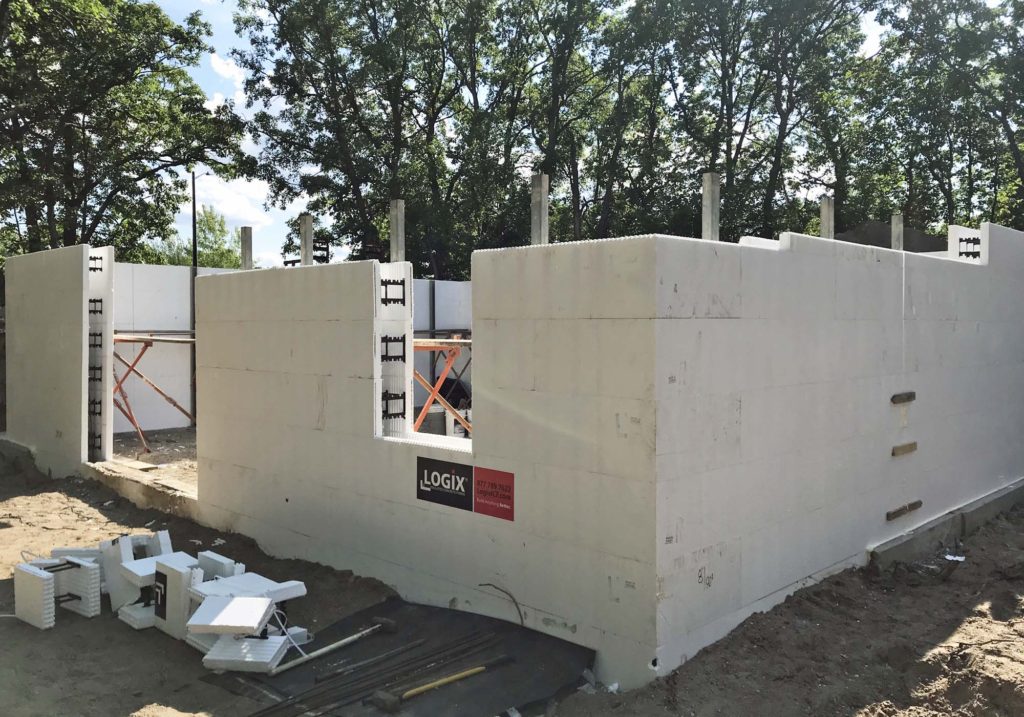
When it comes to foundations, there are a variety of options available. We chose to utilize a somewhat new technique called ICF foundations. Insulated Concrete Forms are becoming more of a standard in home construction. Though they are a bit more costly material wise, but the final product provides a very thick and sturdy foundation wall.

ICF

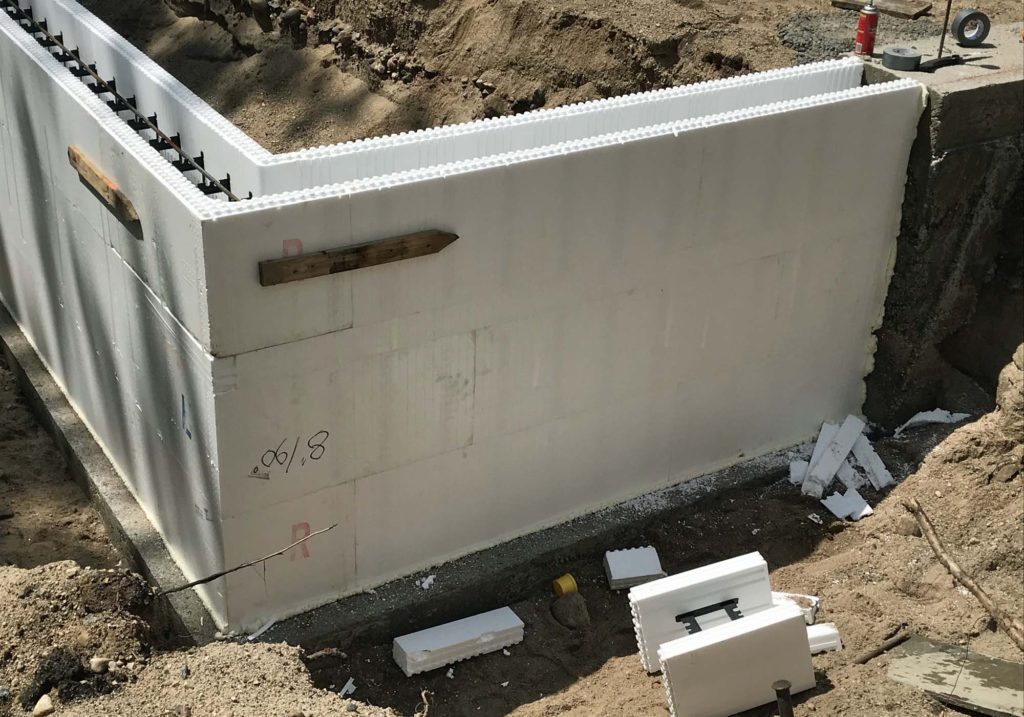
The main difference between an ICF foundation and a traditional poured foundation is that the forms they set before filling with concrete are permanent. They become a part of the foundation itself. With insulation on both sides, there is no need to add any after the fact. You can read more about Insulated Concrete Forms here.


PHOTOS OF THE FOUNDATION PROCESS

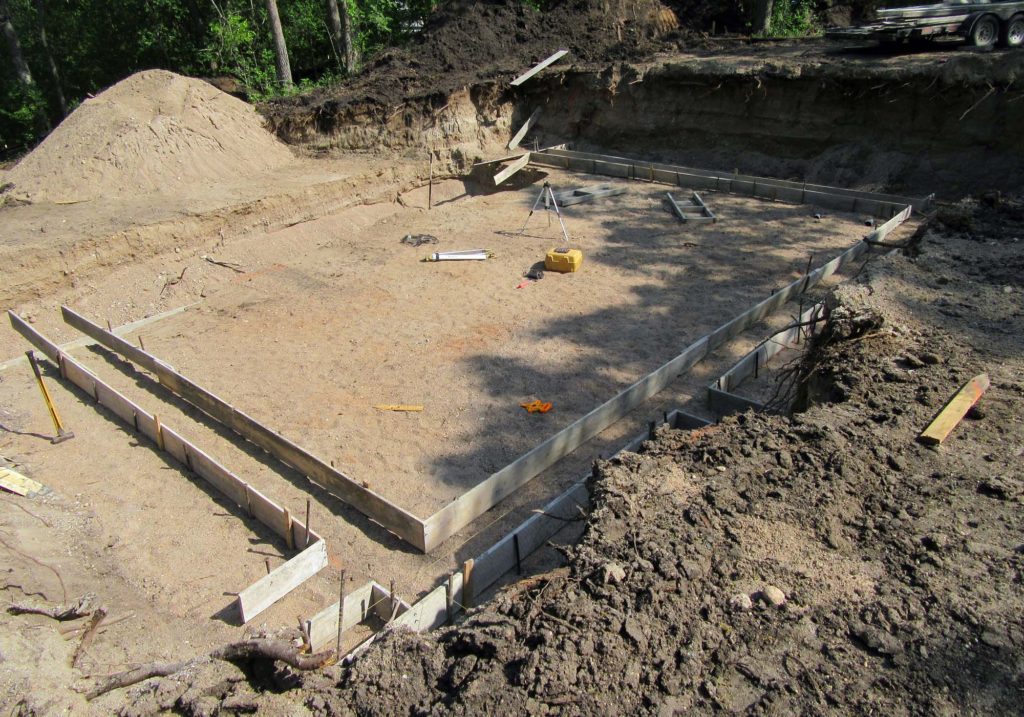
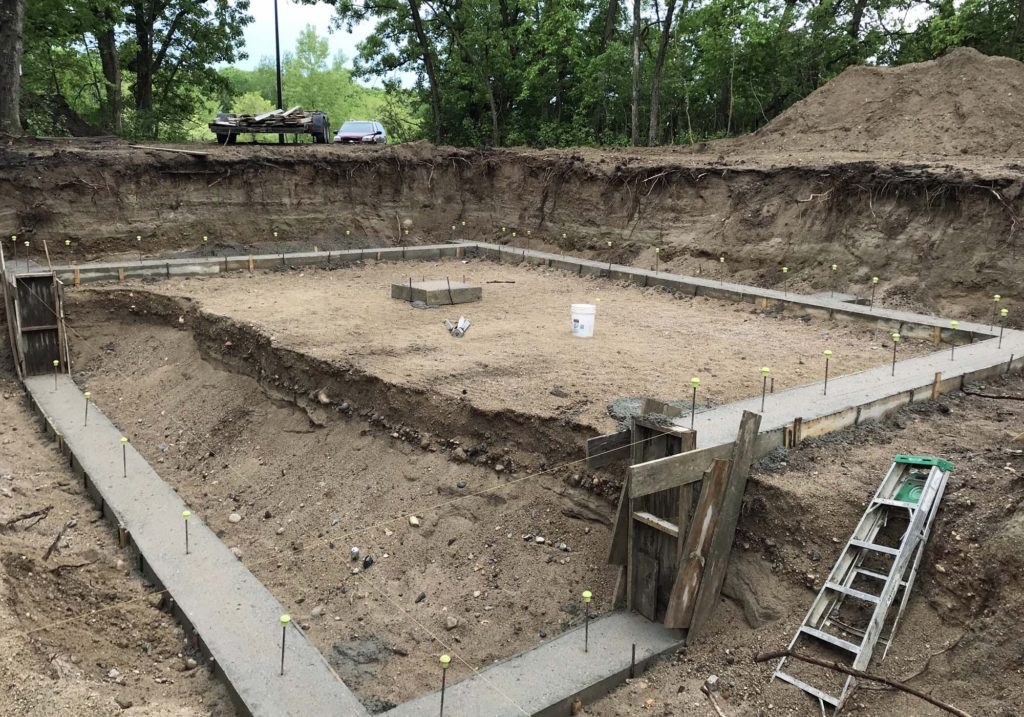
The very first step of foundation work is to set the footings. They are slightly wider than the foundation walls, and need to rest below the frost level. Here in good ol’ Minnesota, that means a minimum of five feet below finished grade. That is one of the reasons that most homes in our area have finished basements. The excavators are already digging so deep, that it isn’t a lot of extra work to add them!

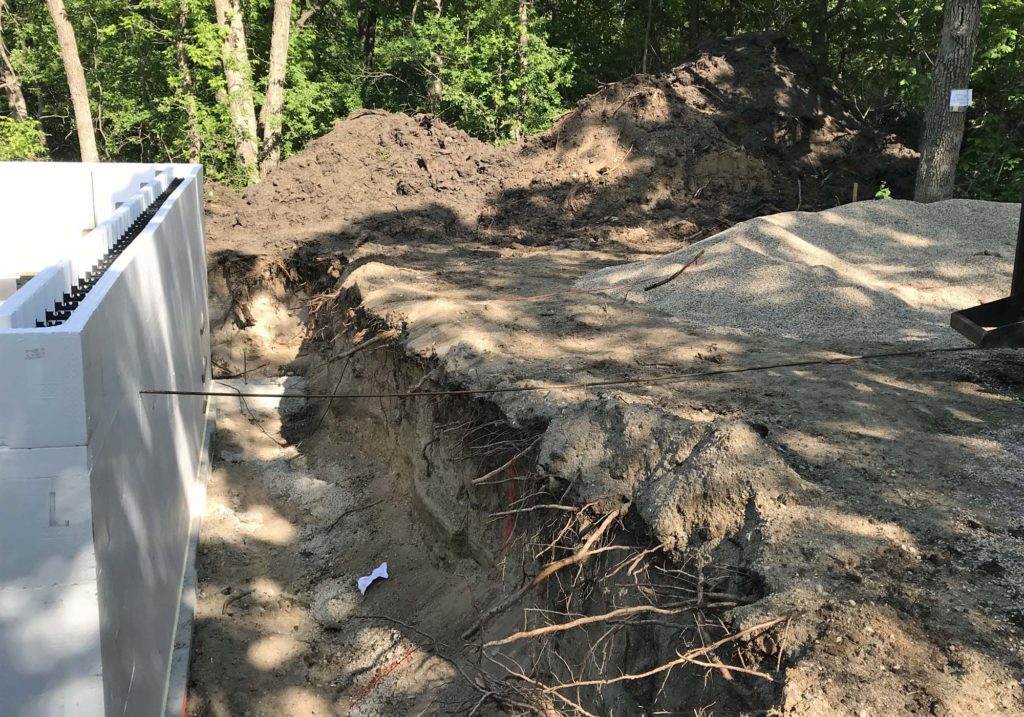
Our basement includes one wall that is a walkout. This will be great for evenings out on the patio, and for the kids when they have friends over. Because the finished grade on the walkout side is lower than the rest of the site, they started the digging there.

Stepped foundation for walkout basement

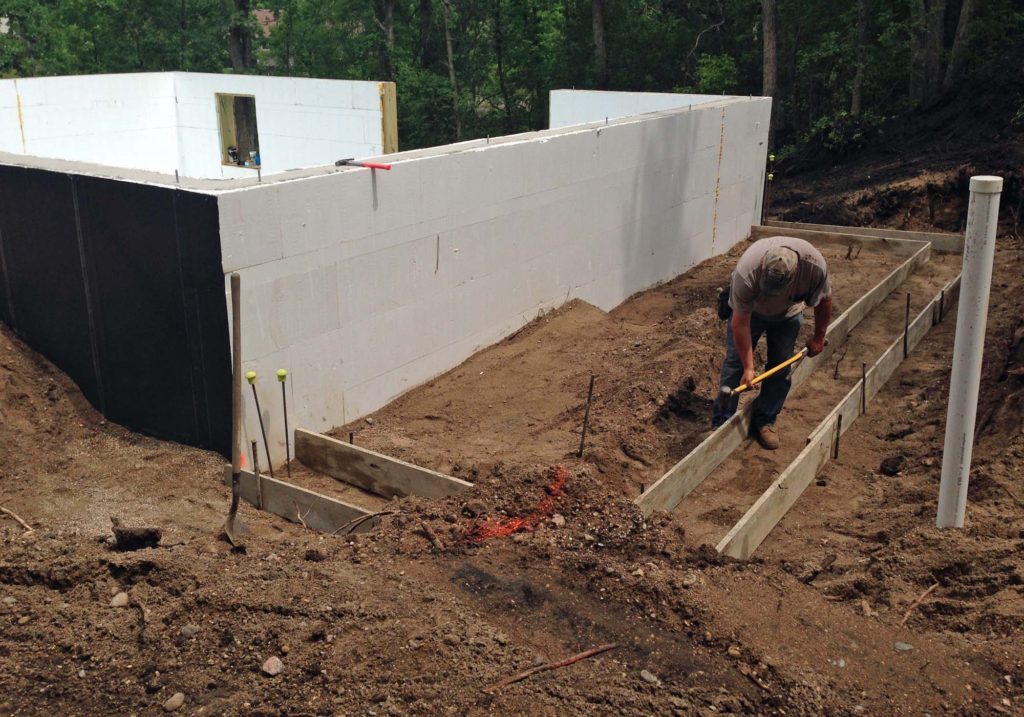
They set the footing forms out of wood, then poured them with rebar inserted. You can see from this picture how the lower level is ‘stepped’ to include the walkout wall.

Walkout level

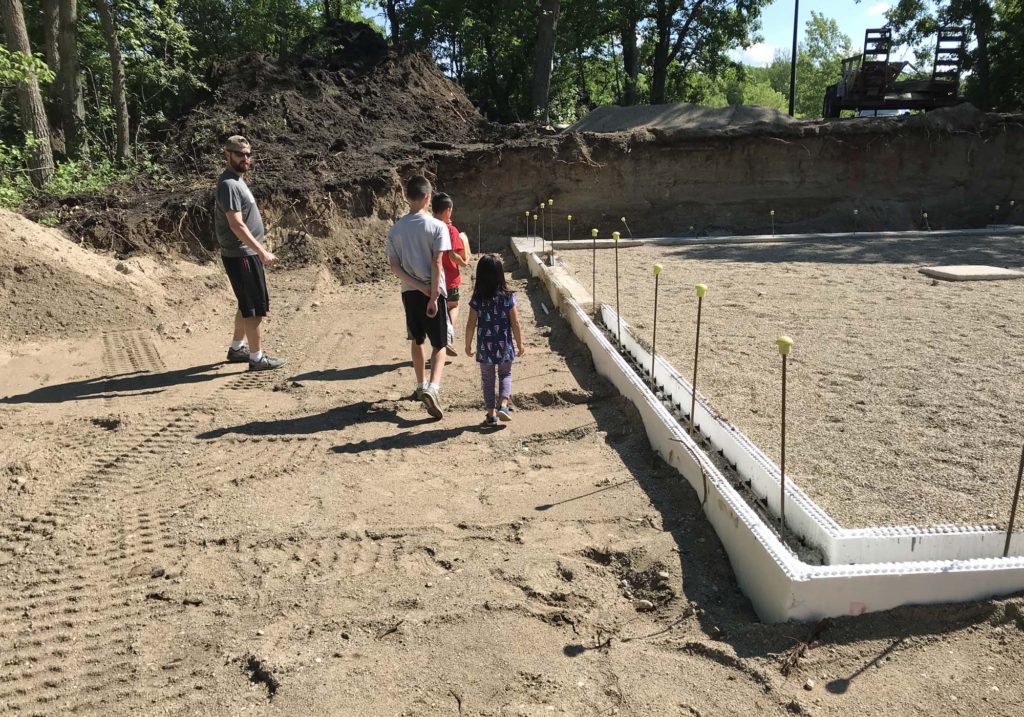
This picture shows the same walkout wall, now poured up to the finished basement floor height, in line with the rest of the basement.

Logix ICF

The walls went up rather quickly using the ICF’s. This is, again, the walkout side of the house. We are really loving the privacy back here!


Viewing the foundation from the street-side though, I had a bit of a panic attack.  One of my goals all along was to minimize the height of the house, to help it blend in with the neighborhood surroundings. And to me, the foundation looked like it was sitting so high out of the ground!

Finished basement wallschecking grade and comparing to foundation height

This happened in part because of our sewer dilemma. In order to avoid needing a sewage lift station in our basement, they raised the entire foundation by six inches. We discussed options to make up for these extra inches, including using shallower floor trusses. Ultimately though, we were reassured that the grading would help everything blend in nicely, and so we decided to just carry on.


BASEMENT PLUMBING

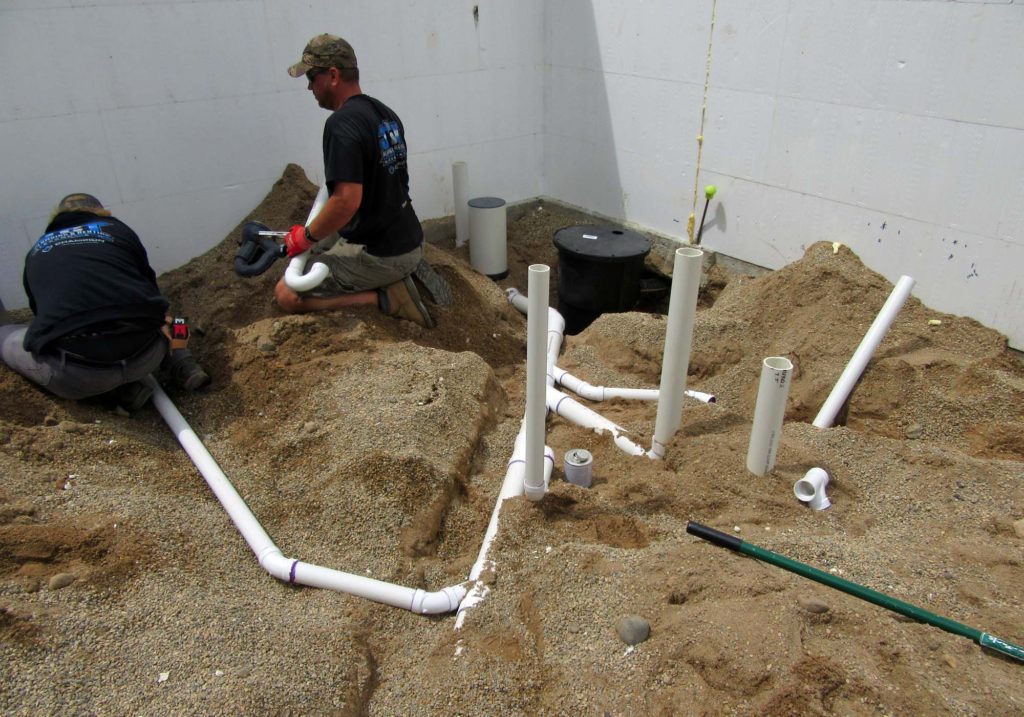
The plumbing crew came in and added the basement connections. They also added a radon mitigation system, which will run from below grade to above the roof. This is a new requirement for residential construction. Essentially it will help to release any radon gas that accumulates below grade, making it a safer place for us to occupy.

basement plumbing

Once that was finished, they also connected the house to the city water and sewer system, which will run under the driveway. This created another freak out moment for me when I noticed a large PVC pipe sticking out of the ground right where the front of the porch would be!

grade from street

Turns out this is the sewer clean-out. I was again reassured that grading would put this pipe at grade, and that it could be disguised with landscaping.


PORCH AND GARAGE FOUNDATION

The crew moved onto the porch and garage footings and foundation. Because there is no lower level below them, they didn’t need to dig quite as deep.

creating forms for footings

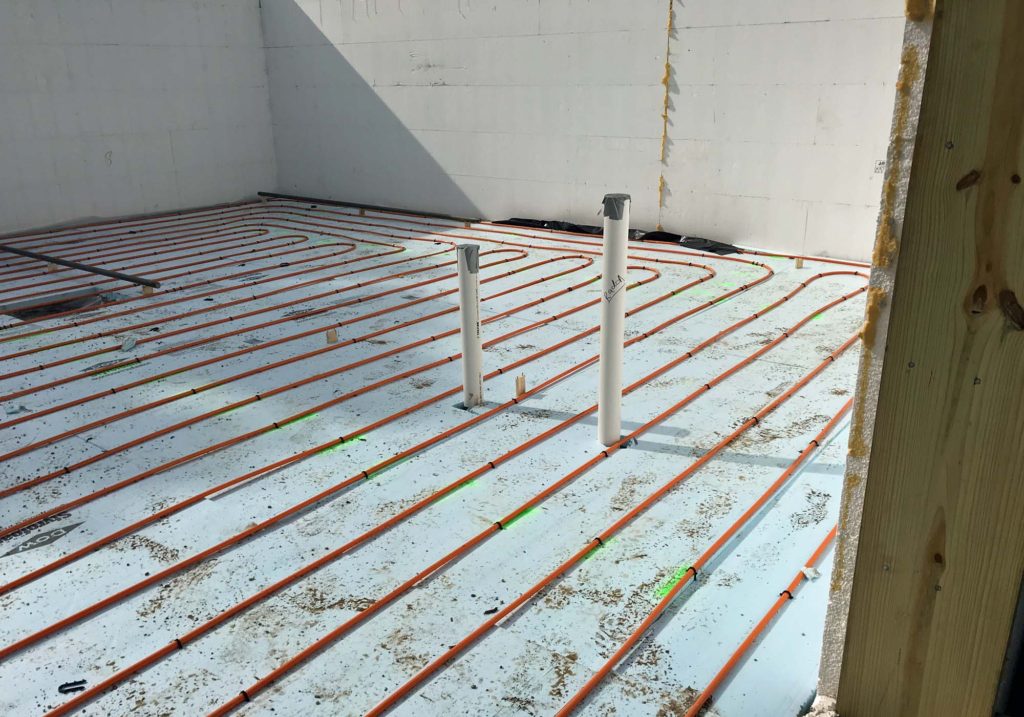
Meanwhile, they prepped the basement level for our in floor heating system. We are very excited to enjoy this feature in the cold winter months!

In floor heat tubing

The crew was able to pour the porch and garage footings and the basement floor on the same day. That was very exciting! They came back the next day to set the foundation walls and poured them soon after.

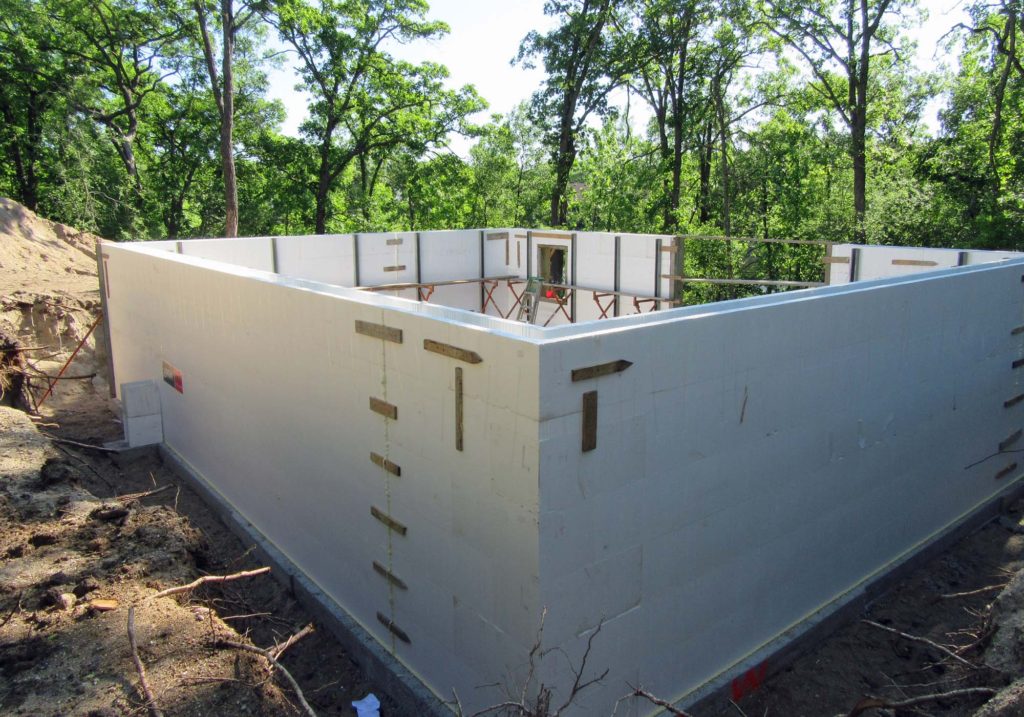
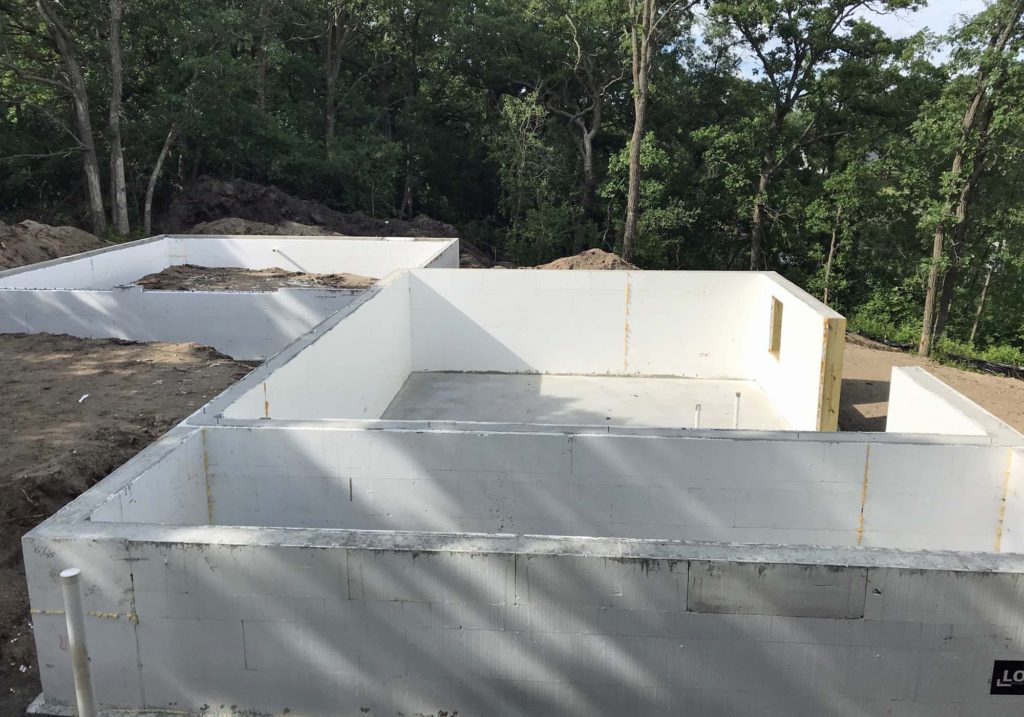
completed ICF foundation

This image shows the finished foundation walls. Standing in front of the porch and looking toward the house. The garage is set back, on the left.


PRELIMINARY GRADING

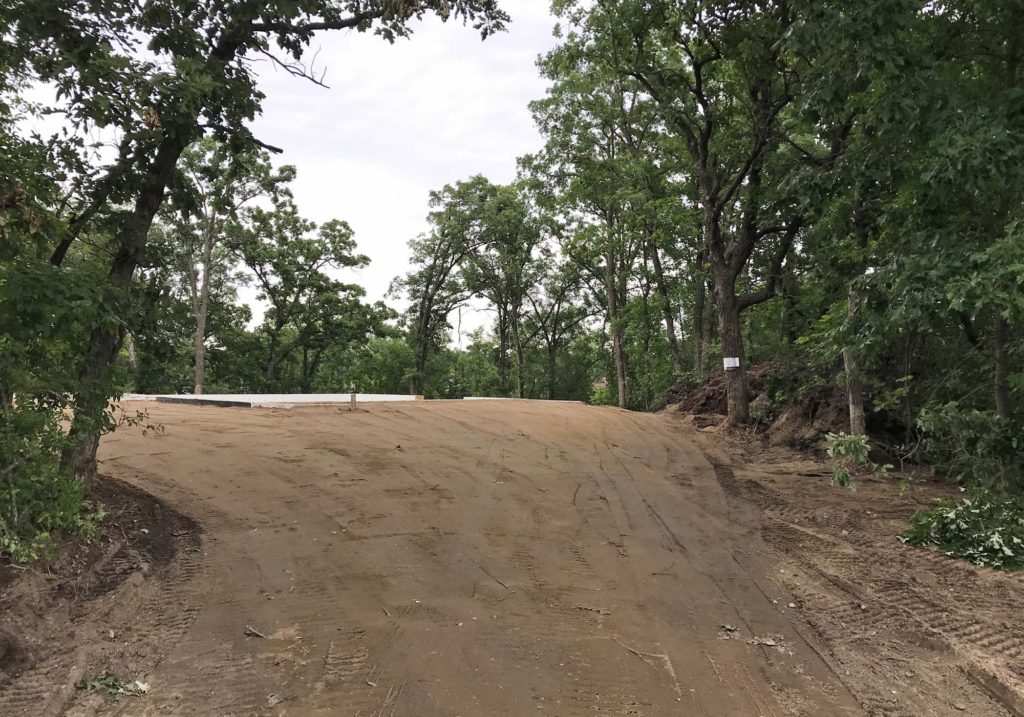
The excavating crew came back to smooth things out and, I have to say, they worked some magic. I was quite pleased to see that the grade did indeed help minimize the height of the foundation. It is still a bit higher than I would have liked, but ultimately there wasn’t much that could have been done. Looking on the bright side – being the highest house in the neighborhood should mean we will never have any water problems!

foundation of custom home set on top of a hill

View from the street/ drive entrance looking toward house. You can use the pipe sticking out of the ground for reference. Watch the video below to see a more panoramic view of our site with the foundation finished.


UPDATE NO. 4 VIDEO

See our property take shape in this video!


That’s all for this update! I hope to be back in just a couple of weeks with the next step in our construction process- wood framing. We are super excited for this step, for a couple of reasons. One, it is supposed to go rather quickly. And two, because things will finally start taking the shape of a house! I know the kids are especially excited to walk around in the house and explore all the nooks and crannies!


PIN THIS UPDATE

custom home construction building update


Site Clearing | House Building Update No. 1

As step one in the construction of our new, custom designed cottage, we are starting site clearing. Our building site is essentially covered with mature trees, some of which are possibly over one hundred years old.


Arrow Hill Cottage Construction | Week 1

For future construction updates, please visit this link

It feels a little surreal to be writing this post documenting the start of a construction process, after ten plus years of dreaming, planning, and calculating. And, in full disclosure, we aren’t even fully sure that everything will be going ahead just yet.

site clearing in preparation for our new house build

We are currently in a holding pattern, waiting on appraisal results. The bank wants to know what the value of our property, with the house we are proposing, will be worth when completed. This appraisal valuation will determine the amount of money they are willing to loan us for the construction.

Ideally, we would not have to go through the bank at all. Yet, as you are probably aware, building a brand new house is quite the investment. Knowing that we are planning to live in this house for hopefully the rest of our lives, we are willing to put more money toward it upfront.

However, as mentioned in a recent post about how to save money, we are a frugal pair. Spending this large sum of money is scary for us, and we want to be sure we are doing things in a financially wise way. Being guided by emotions alone could get us in trouble.

cutting down trees on the building site

So, for now, we wait to hear back. In the meantime, we want to be productive and moving in a forward direction. And so, this past weekend we started clearing the site.


NATURAL FEATURES OF THE SITE

Our building site features over two and a half acres of mature trees. Mainly, species of oak, maple and aspen. The land slopes toward a 6 acre pond. It is an incredible setting, and we absolutely want to be mindful of the unique natural features during construction.

building site with many mature trees

The photo above was taken many years ago, when we first purchased the property. Standing on the frozen pond and looking toward the land, one can get a clear view of the site’s beauty.

You can read about why we chose the name Arrow Hill Cottage for our property in this post. Take a virtual tour of the site by checking out this post.


SITE CLEARING FOR OUR NEW HOUSE

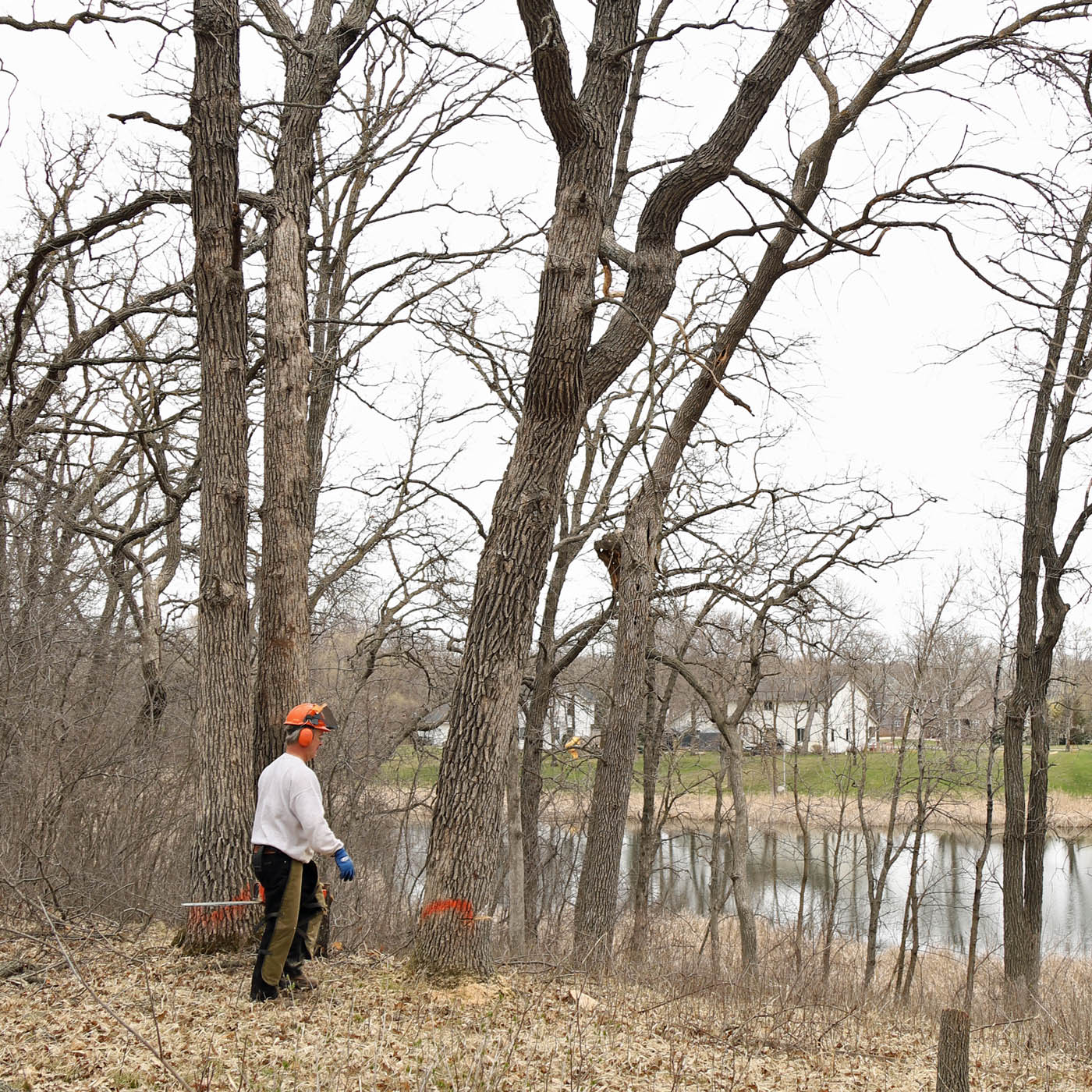
Though it is sad to think of having to take down any tree, removing a hundred year old tree is that much more painful. However, there is simply no way around the fact that some trees will need to be lost in order to build a house on this particular site.

I was very careful, during the design process, to minimize the house footprint. This decision will reduce the number of trees that will need to be removed.

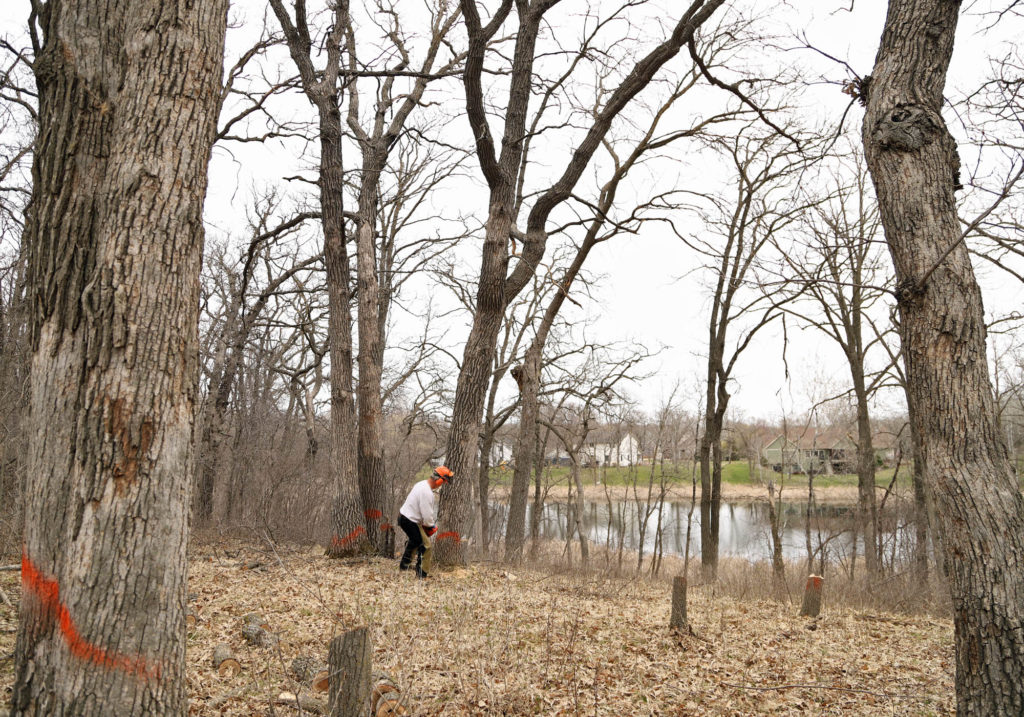
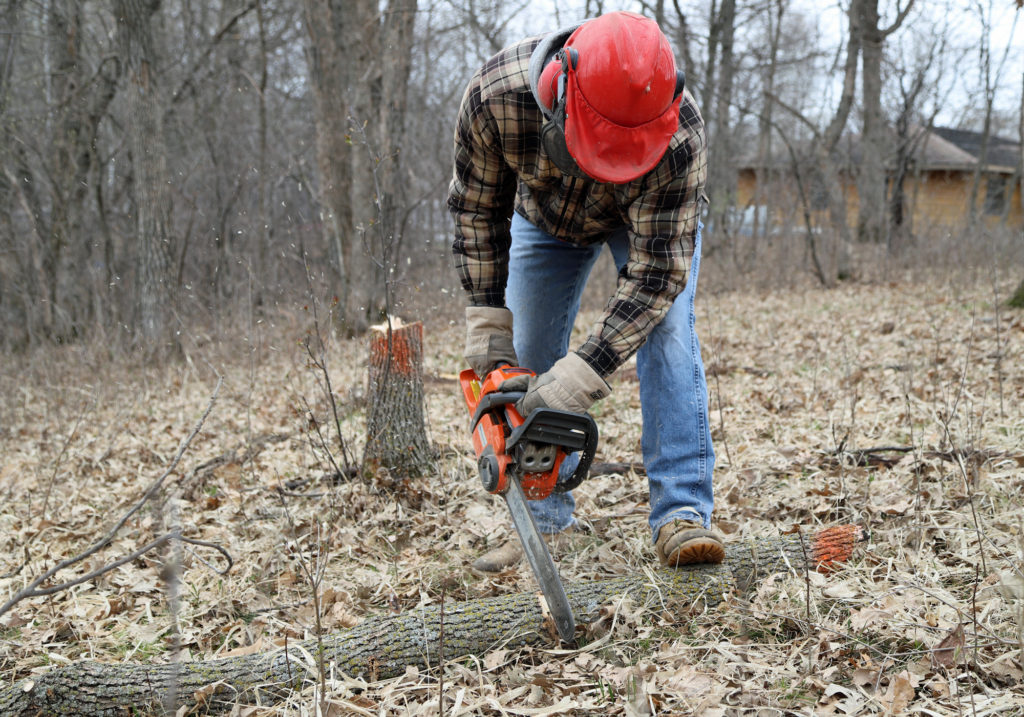
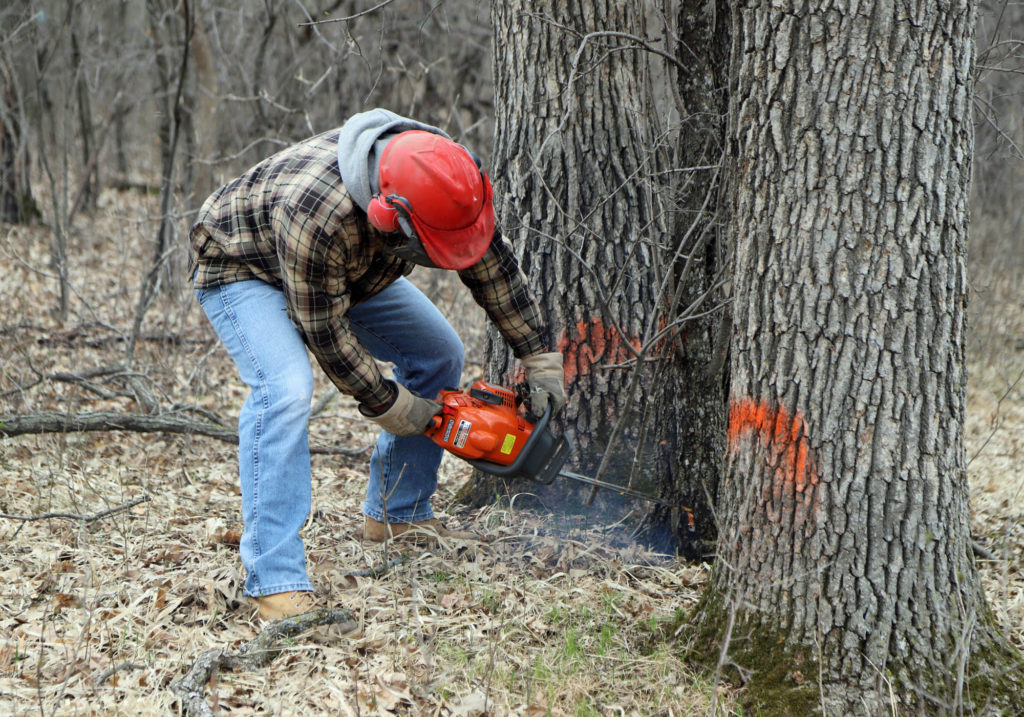
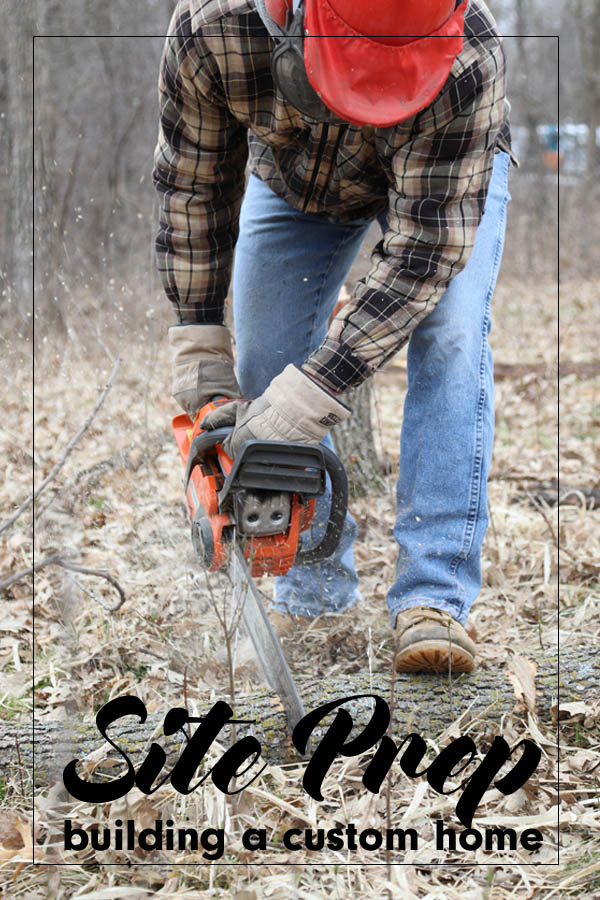
using a chainsaw to clear building site

We walked the property with our contractor and the excavator, to determine a general position for the house. They marked the trees that they felt would be within the footprint, or would be too close to the finished house. Then Craig and his dad set to work.


CUTTING TREES DURING SITE CLEARING

Thankfully, Craig’s dad has a lot of experience with cutting down large trees. Craig’s parents continue to heat their house through the winter by using a wood burning furnace. It definitely isn’t the most convenient method of heating a home, but the warmth is unsurpassed.

Instead of paying a tree removal company to come and cut down the trees, we were able to do a trade of service. By helping us remove the trees, we compensated Craig’s parents with wood that can be used to heat their house. A win for everyone involved.

preparing to build on the property

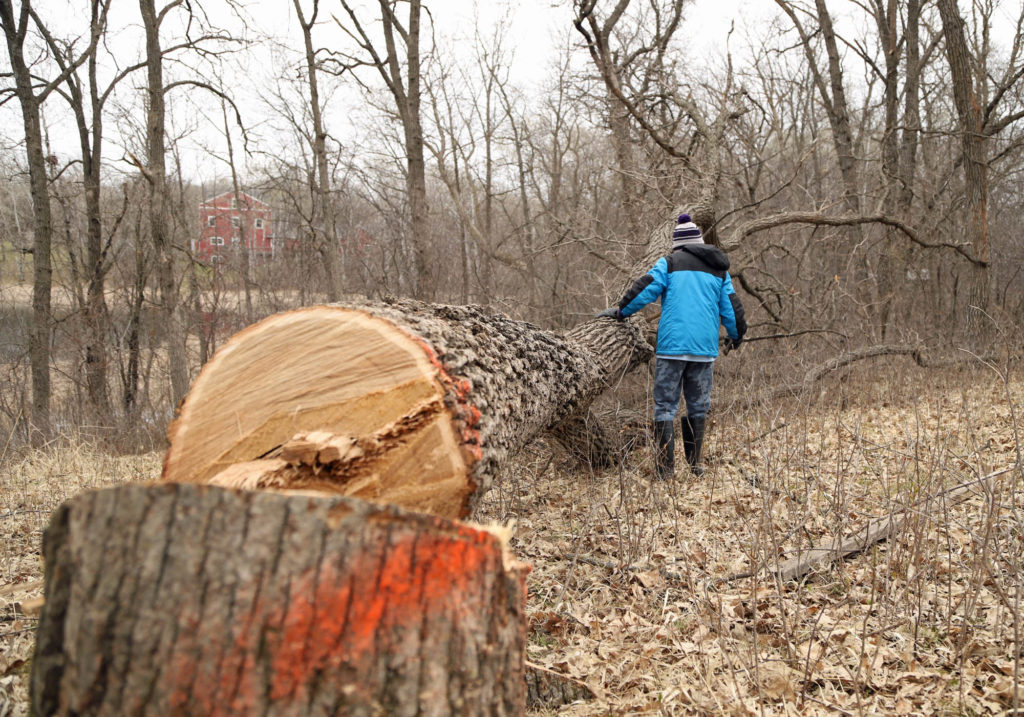
A few of the very large oak trees have long, straight trunks. We hope to find someone who is able to mill these into boards. These boards would then create a very special feature piece for the finished house – a harvest dining table.

one hundred year old oak tree will become a table


CLEARING THE SITE VIDEO

Though it was sad to cut down such large trees, it was an amazing site (and sound) to watch.


GETTING THE KIDS INVOLVED

This process is so special for our family. Our boys especially are very interested in how the house will come together. They want to be involved as much as possible, and clearing the site offered a wonderful opportunity. Our oldest and youngest son joined us this time, while our middle son helped out by watching the girls.

Keeping the kids involved in the building process

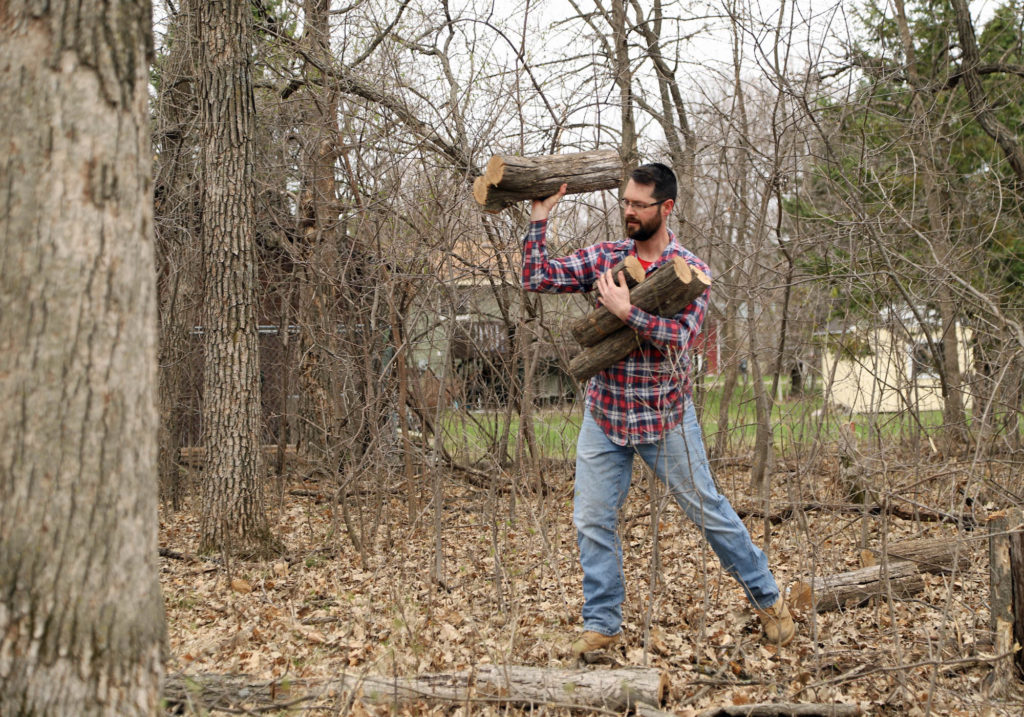
They got a kick out of trying to use semi-dulled axes to cut at a few of the smaller trees. Hauling away the branches and loading the logs into grandpa’s truck were a couple other things that kept them busy while the adults were doing the heavy work.

hot chocolate break

Of course, there is always time for a short hot cocoa break! Showing our children the hard work that is involved in building a house is invaluable. We hope that these memories will stay with them throughout their lives. And I will cherish these photos.


COMING UP NEXT

After a few more trees are cleared, and we are able to mark out the property lines and the setbacks, we will be able to position the house. There is still a bit of a question as to the most suitable angle for the house.

huge oak tree felled from our land

On paper, it made sense to angle the cottage so that the porch was oriented toward the road. When standing on the site, however, there is an argument to be made in favor of rotating it so that the long dimension faces the pond. This would give the best pond view out of the living room window. It would also, according to the excavator, be less expensive when it comes to positioning the walkout and the amount of retaining wall that would need to be used.

site clearing by cutting down large oak trees

The trade off of this rotation is that the view from the kitchen sink wouldn’t be ideal. It’s likely we will end up splitting the difference between both rotations.

The positioning of the cottage is going to be pretty important. It isn’t like a wall color that can be changed in a few years!


OTHER SIMPLE HOUSES BEING BUILT

If you enjoy following people who build their dream homes, consider checking out these fun blogs!

Little House Simple Living

The Sunny Side Up Blog


PIN THIS POST

Keep this post handy, as a shortcut link to our entire building process! It should be a pretty exciting and busy summer!

Preparing the building site for our custom designed cottage


THE SUMMER PROJECT BUCKET LIST

With the building of Arrow Hill Cottage on hold at the moment until at least the Fall, and quite possibly until Spring of 2019, I am finding myself thinking about what CAN be done in the meantime.

I started this bucket list of projects that I hope to tackle in the next couple of months, during Summer break – when the weather is decent for outside work. The list is a doozy! There is so much that can be done. I think it’s time to get to work!


PAINT DINING CHAIRS

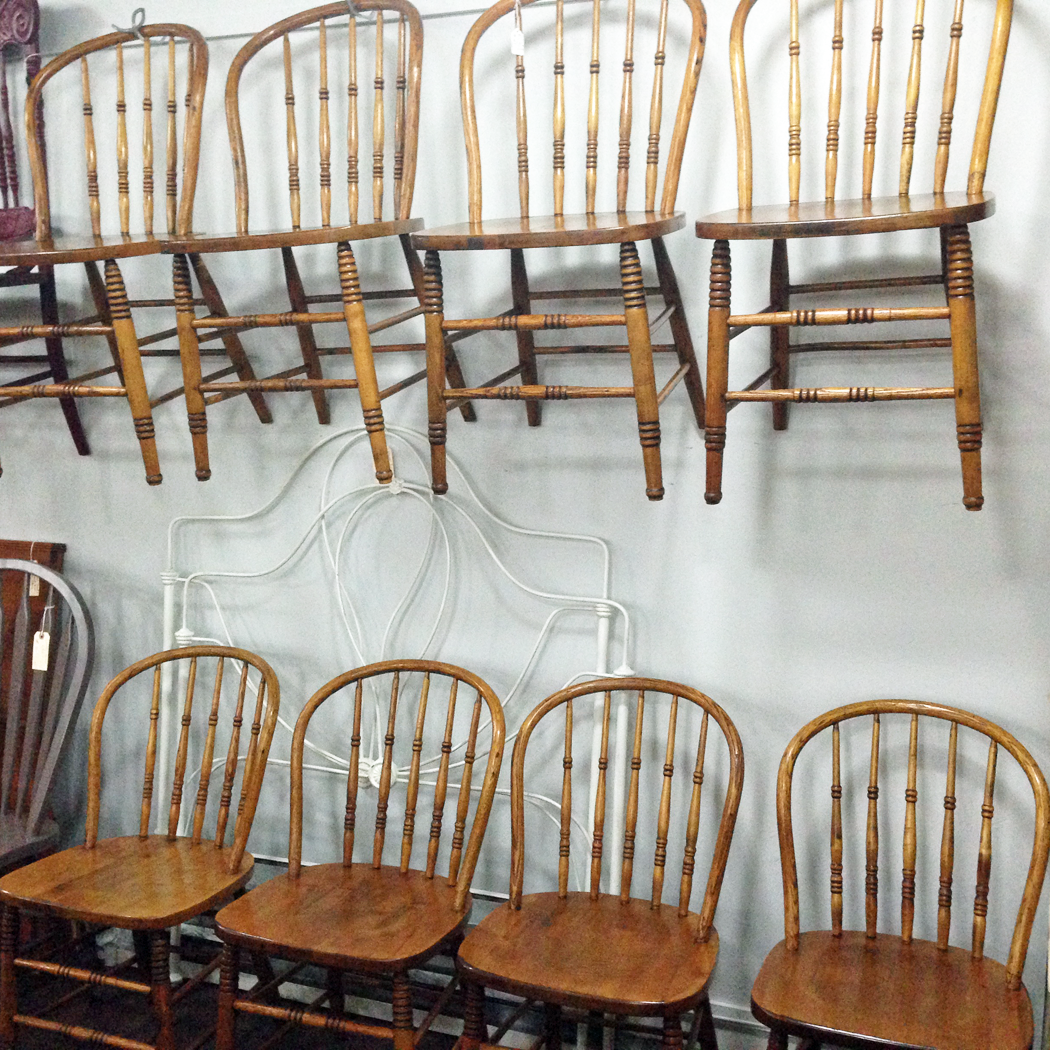
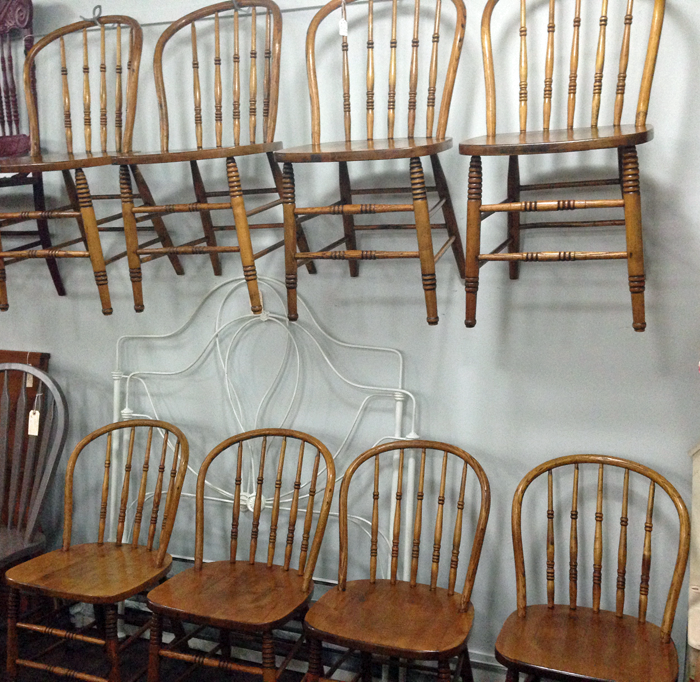
I purchased an amazing set of 8 chairs this past winter at an antique store in town. They had been lovingly stripped of years of paint and stained a beautiful color, and all pieces glued so that they are nice and sturdy. The antique shop owner confirmed what I was suspecting.. that chairs of this age (1940’s) are rarely found in such large sets anymore. Groups of 2 or 4 are much more common.
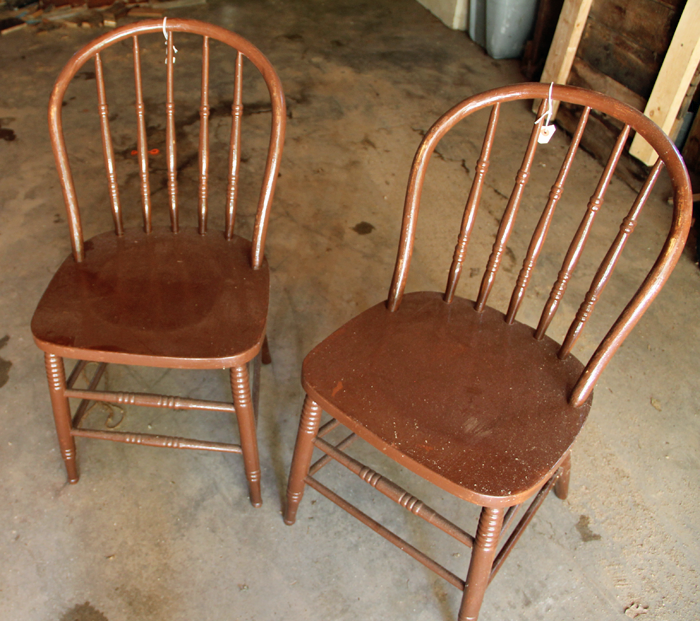
A couple of months later, I found just that – a set of 2 – painted brown. They were offered at a great deal and I decided to purchase them as well – to bring our collection up to 10 matching chairs. I love the spindle details and the curved backs.
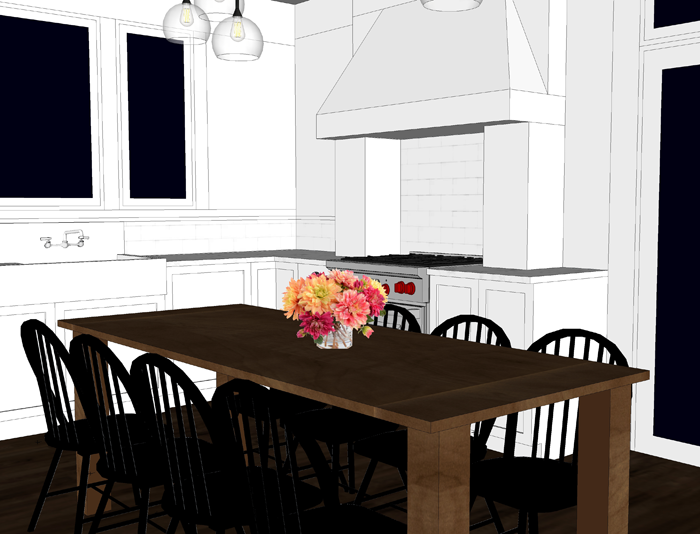
My vision for the kitchen/dining space in the cottage includes these chairs painted black. Although I love the wood grain/stained chairs, I have a feeling that the wood floor, wood chairs, and wood table might be a bit much. I am going to do some testing with the two painted chairs – to determine if I like the look before I paint them all.
 

DETERMINE DESIGN FOR A HARVEST TABLE

Speaking of the kitchen/dining space. If you remember from THIS POST we have made the decision to not use an island in the space, and instead center the dining room table. This will not only save square footage in the overall floor plan, but it will also allow the dining table to be used both for meals and for food prep.

Because the table will be a central feature in the space, we want to make sure it is very well designed and functional. We have said all along that we would like the the large trees that need to be moved from our property to be milled into wood boards. We envision some of these boards being made into a large harvest table.

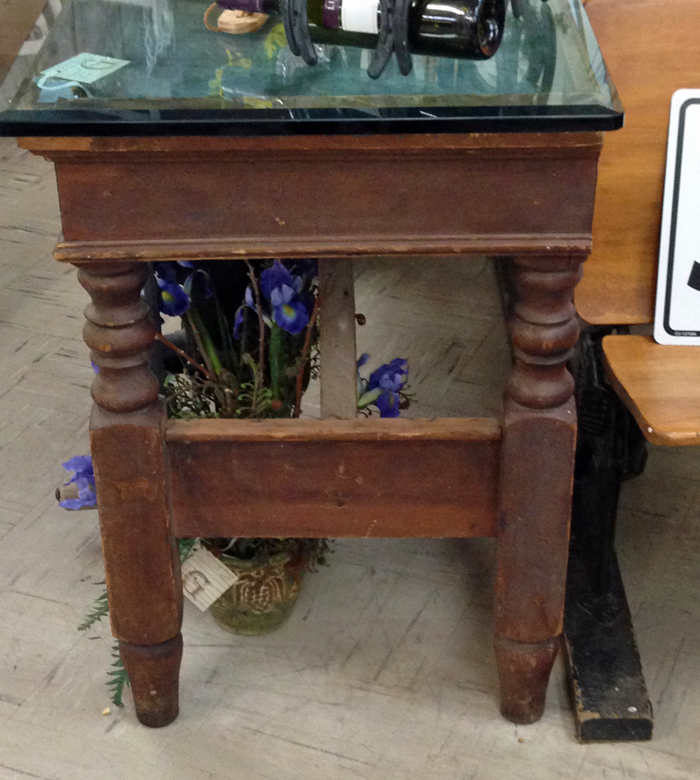
This table base that I saw at an antique store is sort of what I am thinking about.
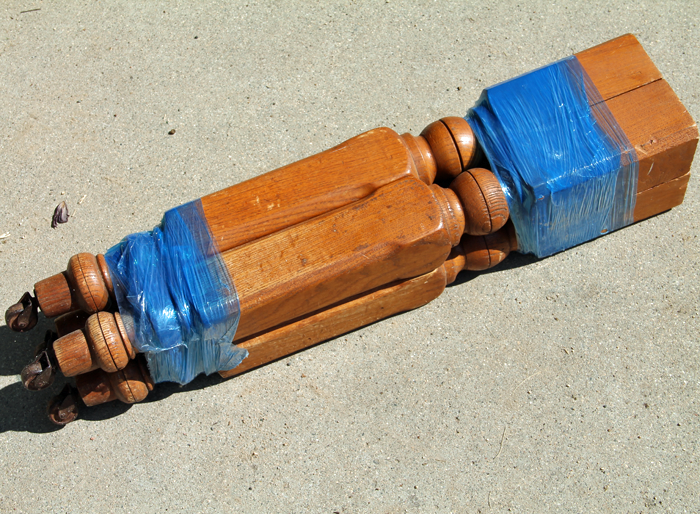
We purchased a set of table legs when on our surprise anniversary trip to Kansas. I love that the sweet memories of that amazing mini-trip will live on in our house. They came to me looking just like this – wrapped in blue. I haven’t even taken the time to unwrap them yet! I suppose that could be considered Step #1.
I will need to take some time to measure, sketch and determine the design for the table itself, and also find someone locally who is able to mill tree trunks into boards.


METAL BED REFINISHING

When thinking about our girl’s shared bedroom, I have always had the vision of identical metal beds. Over the past couple of years I have casually scrolled through websites trying to find the perfect metal bed frames. Those that I found and liked were always just too expensive to pull the trigger on.

Then, just a couple of weeks ago, a friend of mine posted about how her family was clearing out their storage shed and unearthed a whole slew of metal beds that she wanted to find new homes for, free of charge. I asked if she had any that were the same shape and size, and lo and behold she did!
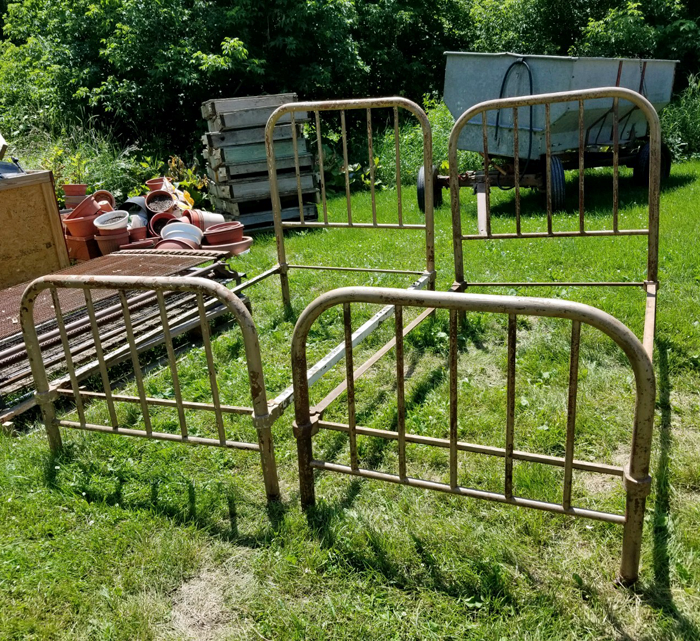
Authentic cast iron, matching farmhouse beds! I about squealed with excitement!  She and her husband were even nice enough to haul the two frames to our house so that I can begin work on them. After a good sanding and spray paint job, they should be good as new!


SINK REPAIR

I dedicated an entire post to the amazing cast iron apron sink that we inherited from Craig’s grandparents. At the moment it is sitting in a storage shed on Craig’s parents property. There are a couple of chips and scratches that will need to be fixed in order to get it ready for install. It’s too delicate of a job for us to take on personally; But I am adding it to my list to find someone locally who can!


FRIDGE CLEANUP

We also have an old fridge that we would like to have cleaned up a bit so that it can be used in the basement family room as the ‘snack fridge’. The fridge is unique in that it is a General MOTORS brand. Yes, before GM locked up a niche in the car industry, they had a focus on appliances. We scored this gem at a yard sale 10 years ago at a home in the historic neighborhood we used to live in. Because we had no truck, we carted it home on a two wheel dolly. Fun times, fun times.
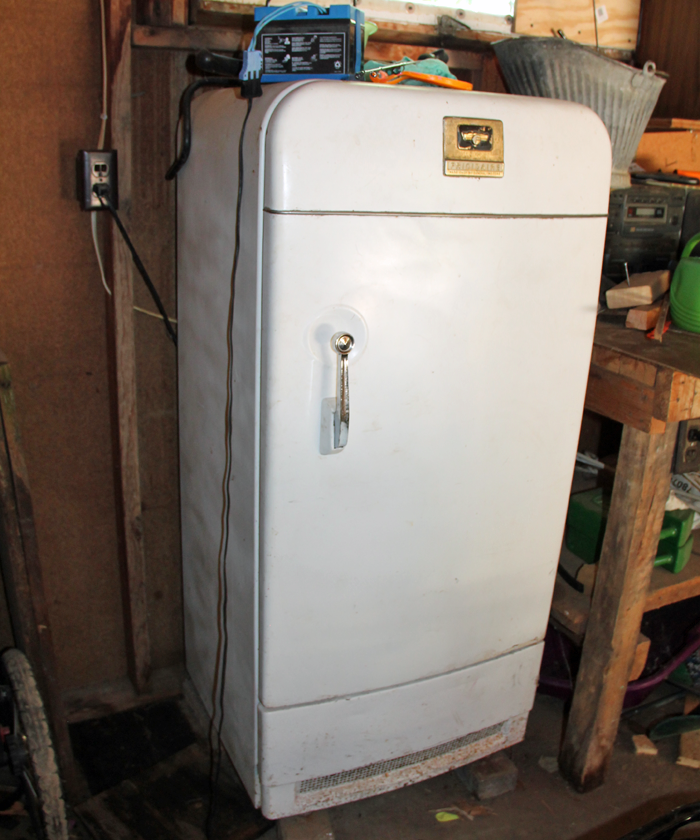
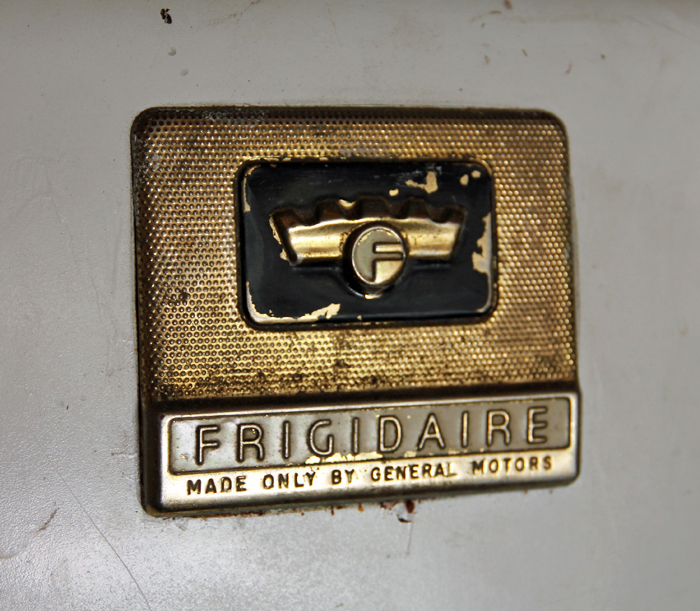
We are excited to see it restored to it’s former glory. It’s possible that the same person who restores the sink could take on this project as well.


SAND + PREP BARNWOOD

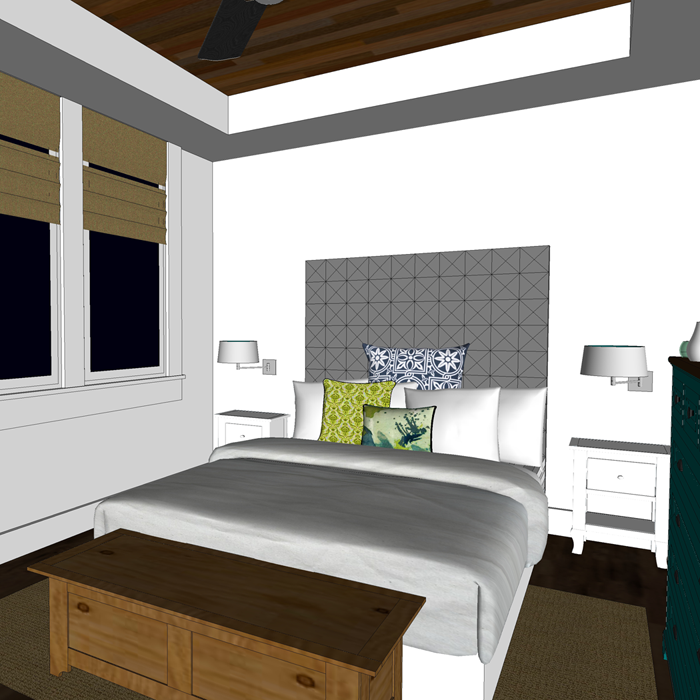
As part of our master bedroom design, I included a tray ceiling that will feature some old barn wood that was removed from a shed on Craig’s parents property. It is really beautiful wood – that is currently stacked up in our garage, covered in years of dust and dried up mud.
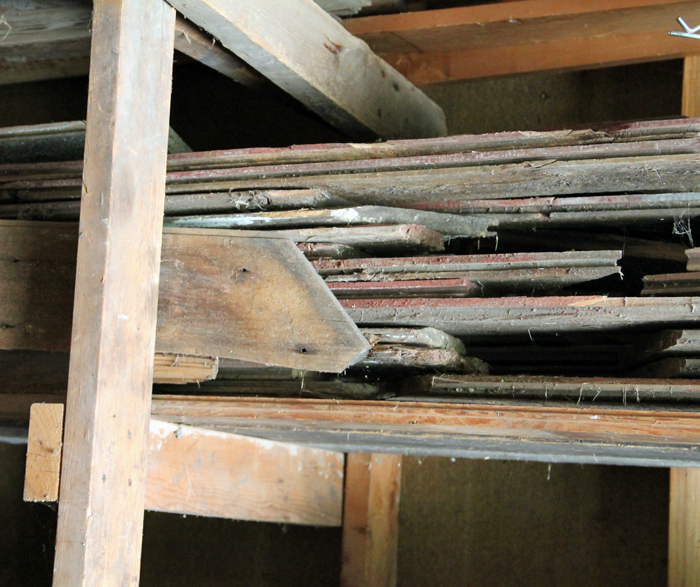
Not only do I want to get it cleaned up – I want to make sure that there is even enough here to get the job done! I am kind of thinking it would be good to get some 5/8″ plywood and cut the sheets into the size of the tray – which is 7’4 x 9’6 – then clean the barn wood and attach it… so that when the time comes to actually install on site, it will be as simple as screwing up a few sheets of plywood. Could save our builder some time I think!
 

CHAIR REFRESH

Another master bedroom project involves this sweet chair that I bought second-hand, about 5 years ago. I absolutely love the shape of it, and think it will make a wonderful accent piece for the room.
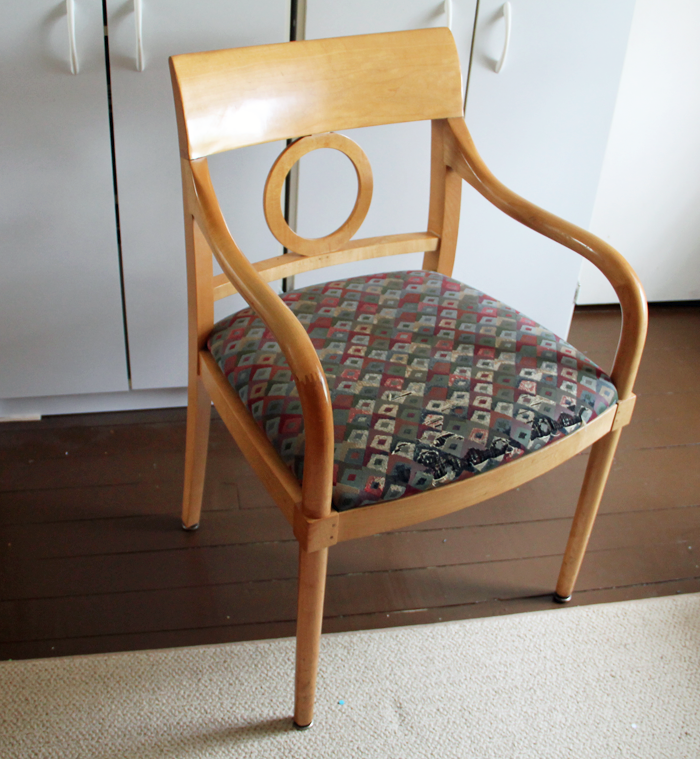
Problem is, it’s run down. Though it is a solid piece, the fabric on the cushion is beginning to fray and the wood portions are stained an odd color. It needs a refresh, and I think the summer will be a perfect time to do that.


TUFTED HEADBOARD

Rounding out the future master bedroom is one of the projects I am most excited for – the tufted headboard!
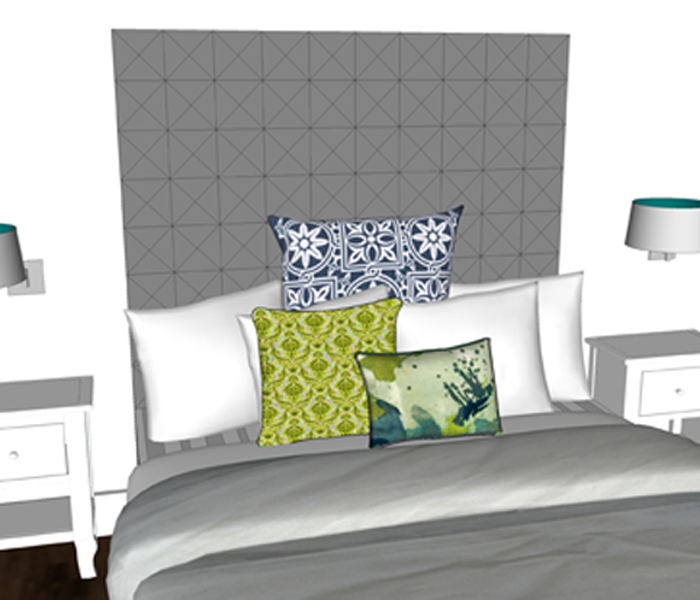
The headboard we currently use for our bed is the very first piece of ‘furniture’ Craig and I ever bought together. We scored it from the bargain bin at the very back of the furniture store. I have an idea to use this dated headboard as the framework for the new version – and add a little height with 1×4’s. I’ve never tufted anything before, but I’m a big fan of the look and the tutorials I’ve seen online make me feel like it isn’t super complicated.


DOORS FOR GIRLS BEDROOM

Way back, a long long time ago, at the very first house we bought together – Craig and I had a backyard ‘mini barn/shed’ that was filled to the brim with corn cobs, electrical components, and a few treasures. Hidden within was a set of cute wooden doors.
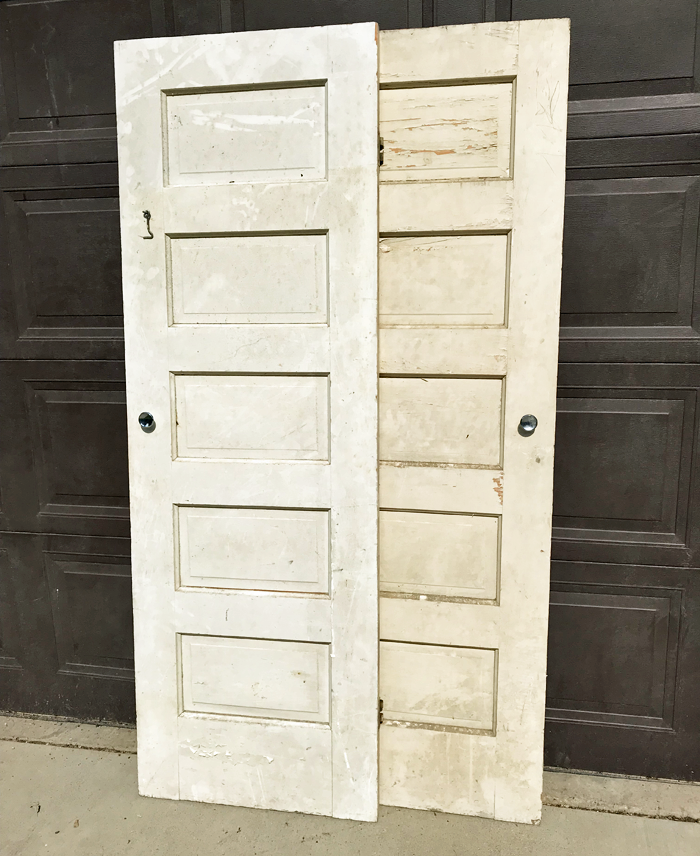
Though I haven’t finished designing the girl’s shared bedroom yet, I have been working on it; And have found the perfect spot for the doors as access to their closet! One of the doors has a bit of wood patching that needs to be done, but for the most part this should be a semi-simple sand and re-paint job. Famous last words, I know.


DOUBLE CHAIRS RE-UPHOLSTERED

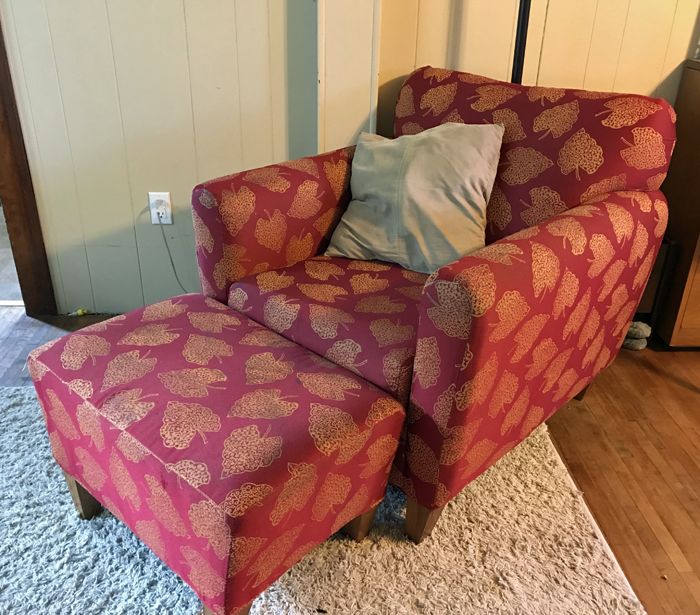
Another of my discount finds were these two overstuffed arm chairs with matching ottomans. I got all 4 pieces for $125 – which is an absolute steal! They are super comfy and sturdy, but ugly as can be. I’ve got to figure out if this is a reupholstering project that I am willing to tackle on my own, or if I need to hire the professionals. Either way, I don’t want these pieces to make their way into Arrow Hill Cottage in their current state.
 

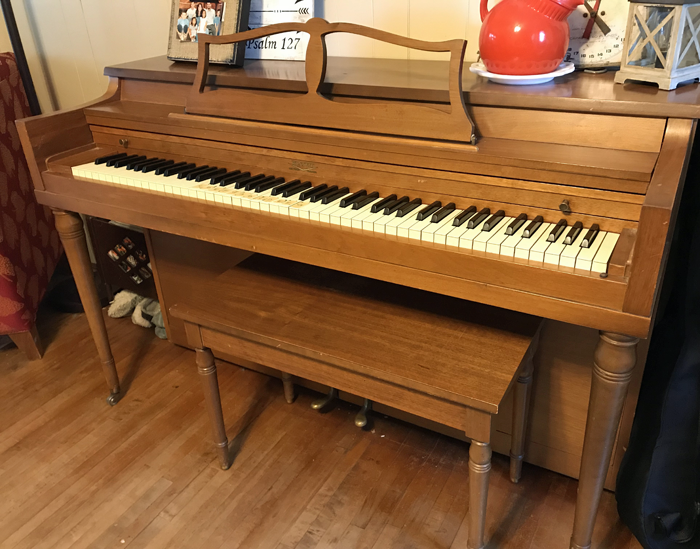
PAINT THE PIANO

Our piano will reside in the entry space of the new house – and I want it to really make a statement. It’s kind of a dull/aged brownish color right now and I think that a fresh coat of paint will make a world of difference. I’ve never painted a piano before though, and I will admit it does make me slightly nervous. The good news is that it isn’t a super fancy baby grand or anything – and we got it for about $100 – so if it does happen to get ‘ruined’ we won’t be out much dough.
 

CABINET REPAIR

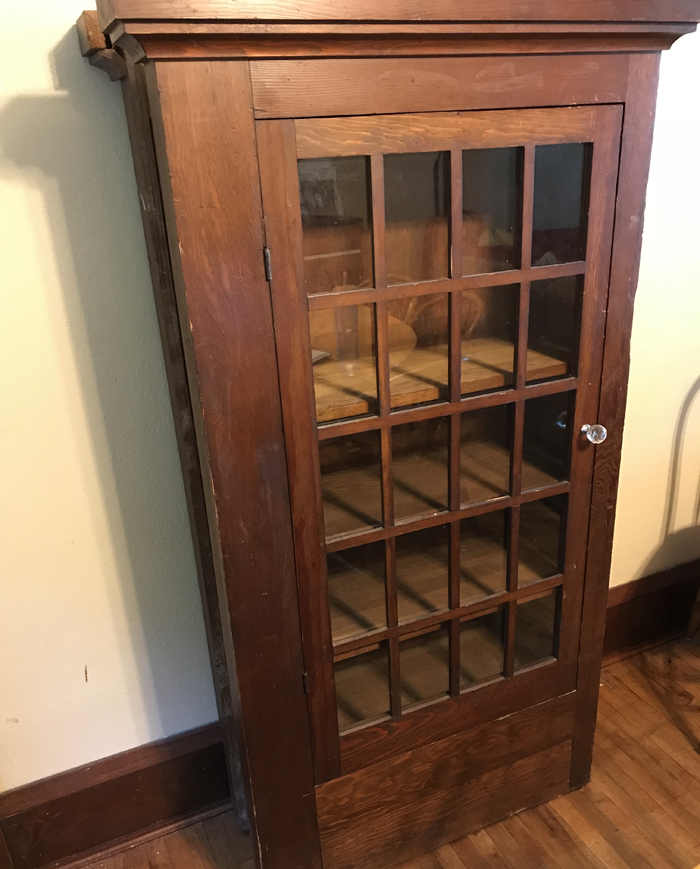
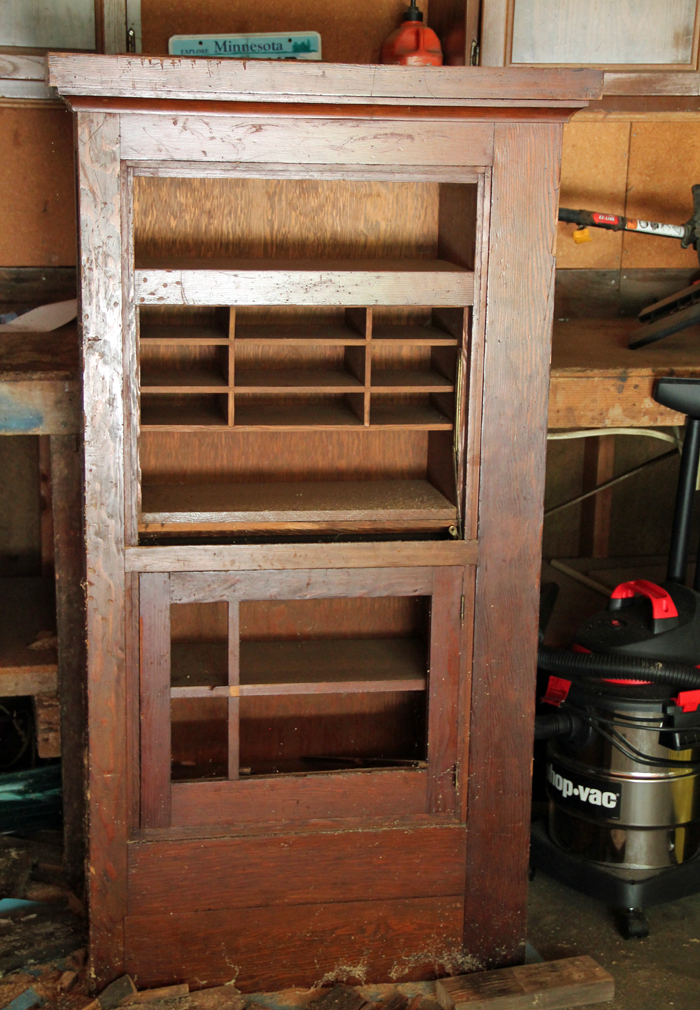
Last on the list, but not least – is this set of semi-matching little cabinets. The antique dealer who sold them to me said they came out of a historic home in which they were installed as built ins. They are each about 5 feet tall, 2 feet wide and 1 foot deep.

One of them has a glass front, and shelving. I think it would look cute as a small linen cabinet in the upstairs hallway
The other is in a bit more rough shape, but has some really neat features. I believe it will make a perfect mail sorting station in the mudroom, and also serve as a spot where we can charge all of our devices. I imagine it as the Family Command Center for the cottage.
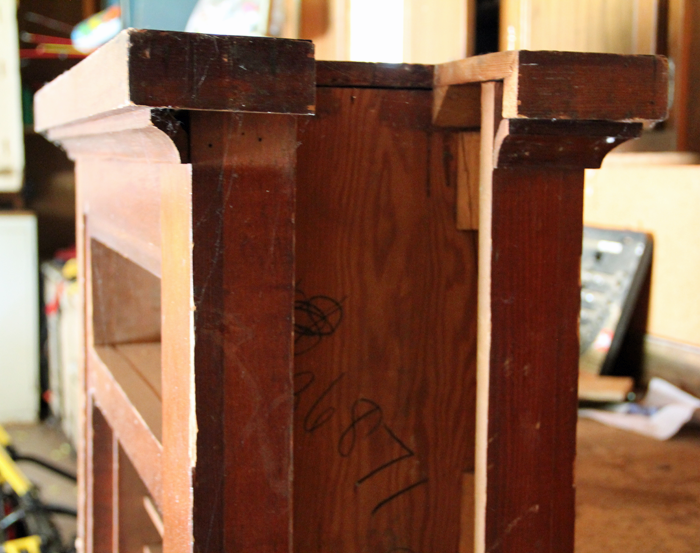
Both cabinets will need some work done on the side faces, where they were previously built into the wall. I might also do a sand and re-stain, although I do adore the patina – especially on the glass front cabinet.


Whew! That is quite the list! And since it’s already mid-July, I had better get in gear if I want to accomplish all (or most) of these items before school starts! What do you think I should tackle first? Leave a comment below!

As I work on these projects, I plan to share them on Instagram Stories. If you aren’t following me over there – here’s the LINK! Have a wonderful weekend!

SATURDAY SKETCHBOOK: POSITIONING THE COTTAGE

The building site where a new home will be constructed is so, so important. Generally, it is recommended that you don’t even begin designing your house until a potential building site has been selected – so that the house can be developed to utilize the best features of the land, and avoid the pitfalls.


We purchased our building site in 2009. You can read more details about how we found and fell in love with our 4.5 acres in this post. Through the years, as I have been sketching ideas for the cottage, I have been careful to keep the lay of the land in mind – at least conceptually. I am now far enough in the design that I need to look more closely at how the cottage will actually be positioned.

This week I spent quite a bit of time fine tuning design details – the garage placement, the driveway configuration, and where the walkout door from the basement will be. Each of these decisions were heavily based on the site.


Our site is super unique, and has some interesting challenges. These are some of the site related issues that have been guiding our design:


SLOPED LAND

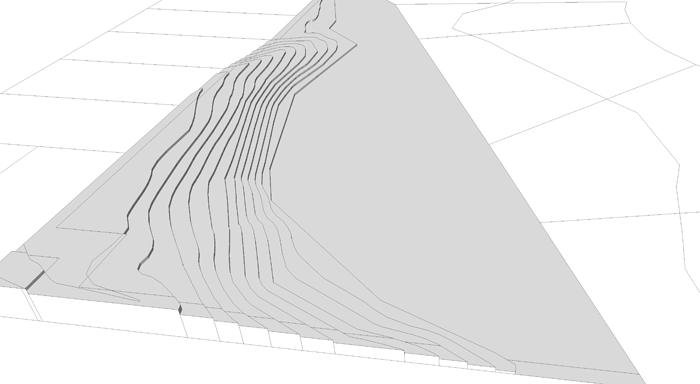
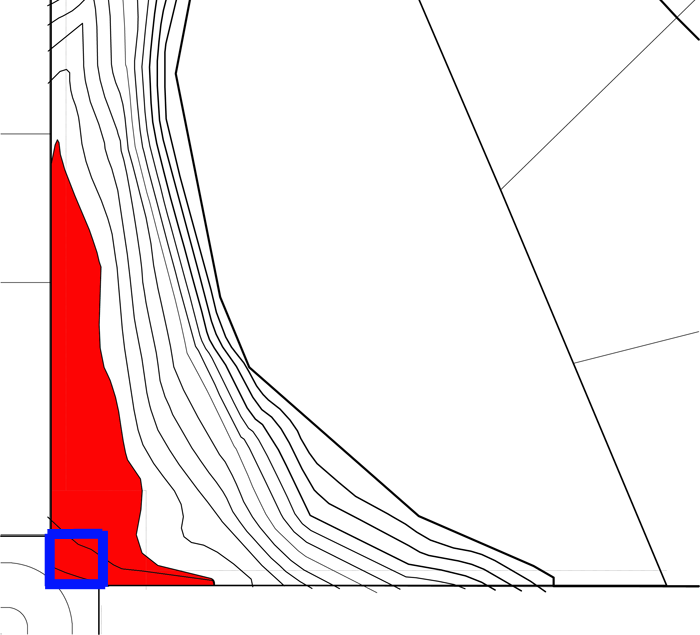
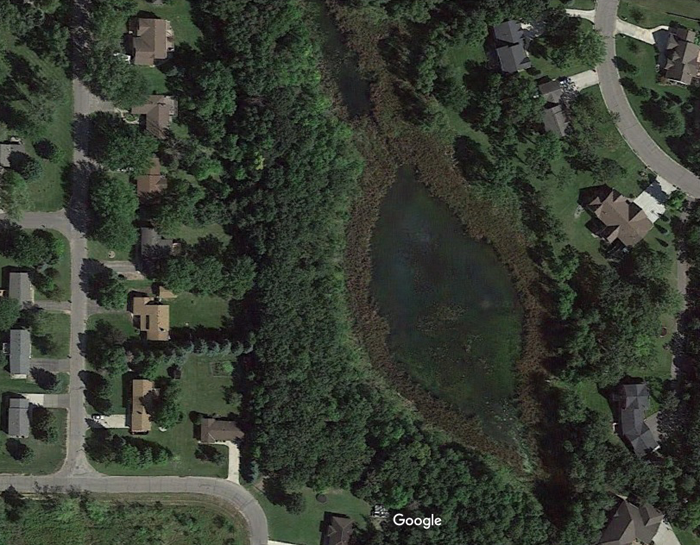
I’m sure that this particular parcel of land was passed over by multiple people solely because of its most dramatic natural feature – the slope. From the roadside there is a bit of flat land, but the slope down to the pond below is quite dramatic.


SETBACKS

The red area shown in the above graphic is the ‘flat’ land. The portion of land closest to the road (shown outlined in blue) is not build-able, because of setbacks and easements. Right from the start, we knew that we would likely have a longer driveway than most because of these setbacks alone.


MANY NEIGHBORS

Our land borders quite a few properties – both on the south and west property lines and, visually, across the pond. 14 parcels border ours. While this could be seen as a major drawback, I have been working strategically on the design so that our privacy within the home is maintained.


DENSE TREES

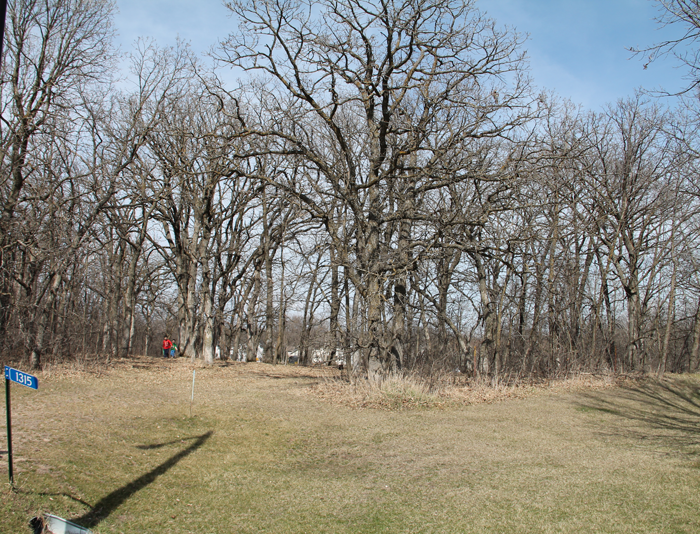
the kids standing by one of the many large trees that will need to be removed (2017)

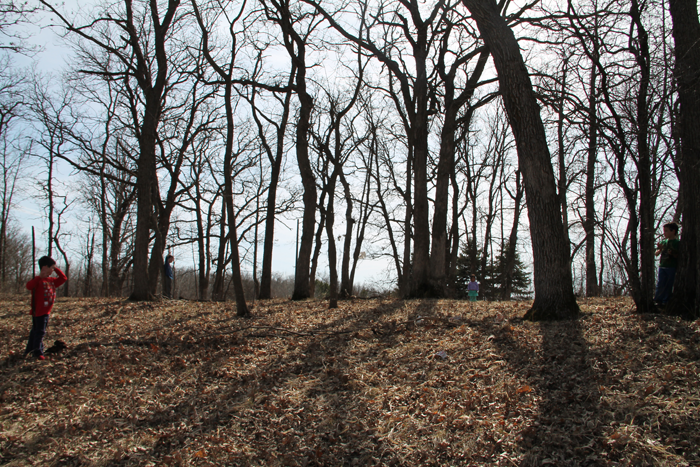
One of the reasons we fell in love with our building site was that it was absolutely FILLED with mature trees: oak, maple, and other varieties. Sadly, there will be tree removal when the time comes to build. There is absolutely no avoiding that fact. By minimizing the overall footprint of the cottage, we hope to remove as few trees as possible.


EXPOSURE TO THE ELEMENTS

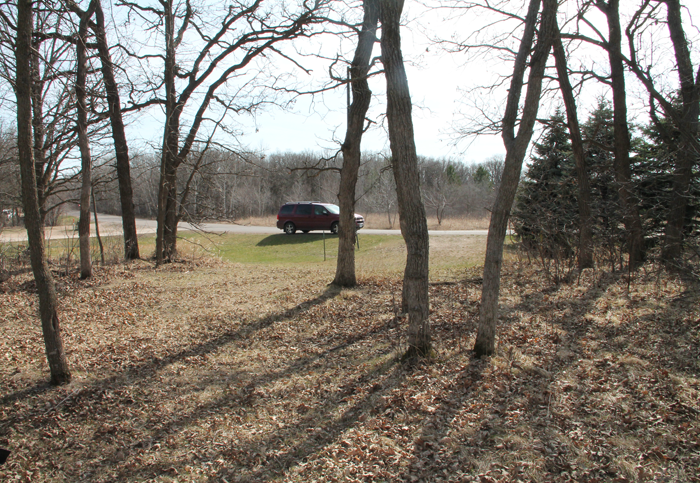
A view from our property, looking south. Our mini van is parked on the curved portion of the road.

An often overlooked, but important aspect of home design is the orientation it has in regard to the sun and wind. Because we live in a Northern climate, our strongest sunshine comes from the south. It is generally advised in this climate that you position your home with windows facing south (both for daylight, and for heating purposes in the winter). Thankfully, once a few trees are removed, we will have quite a bit of southern exposure.

It can get very cold in our state during the winter months – and the prevailing wind direction is from the northwest. I plan to rotate the cottage so that the garage can be used a bit for protection from those strong winds.


THE IDEAL POSITION FOR OUR COTTAGE

With all of these site issues in mind, I have narrowed down the placement of our cottage. I am working on finding the best angle of rotation and also determining how exactly the driveway will function – but we are getting close!


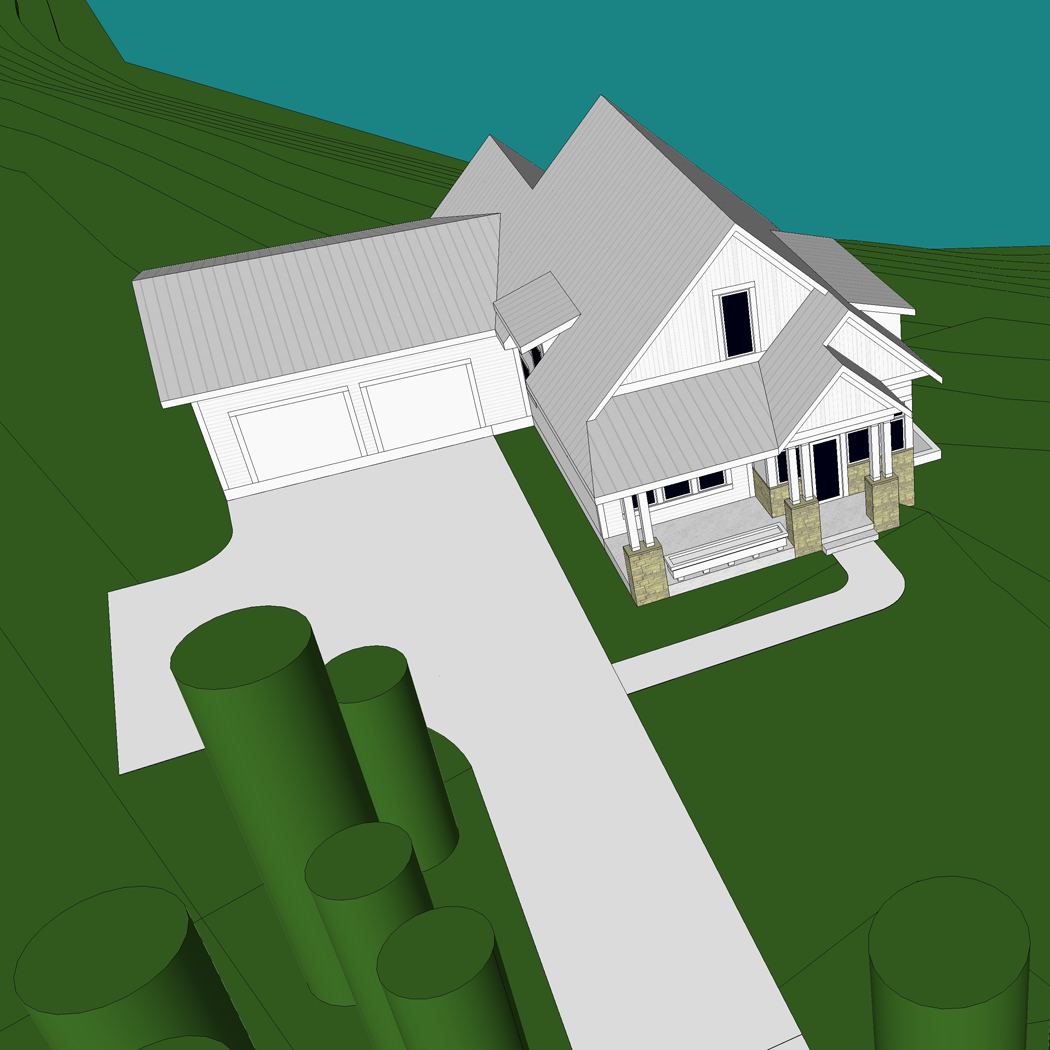
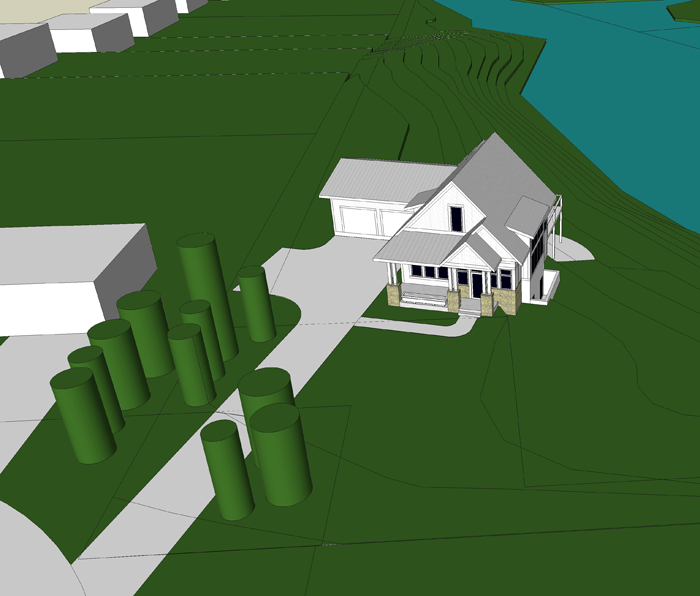
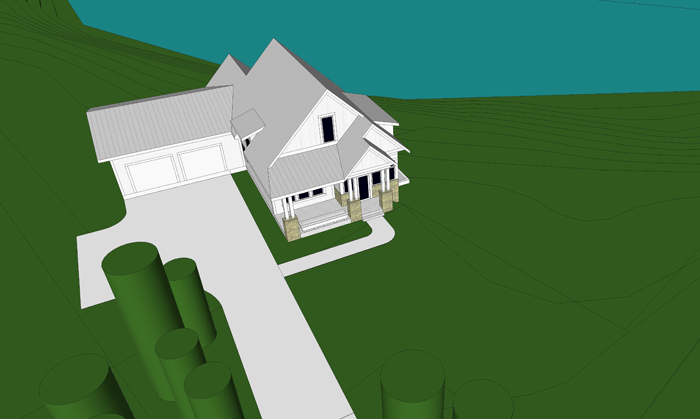
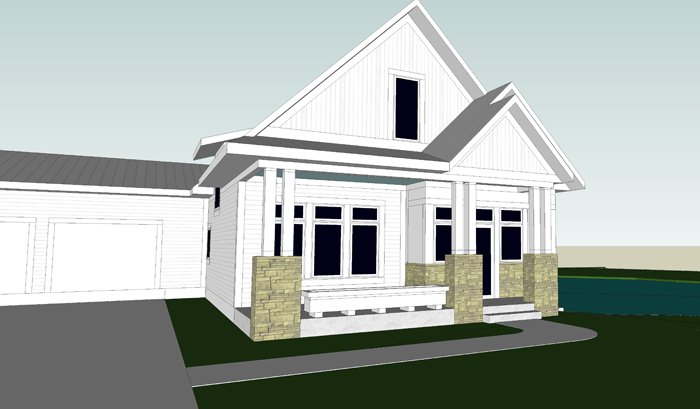
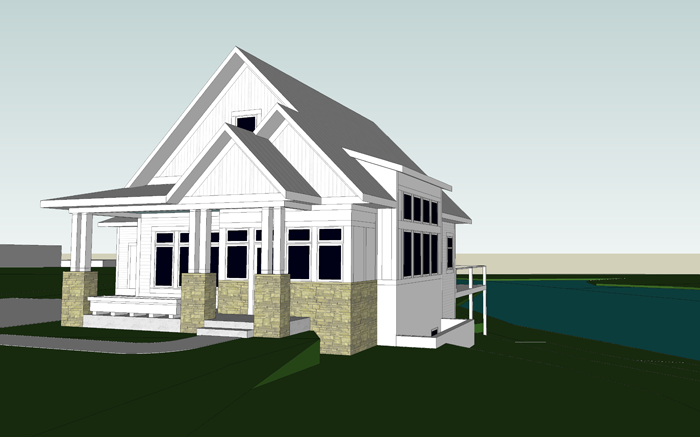
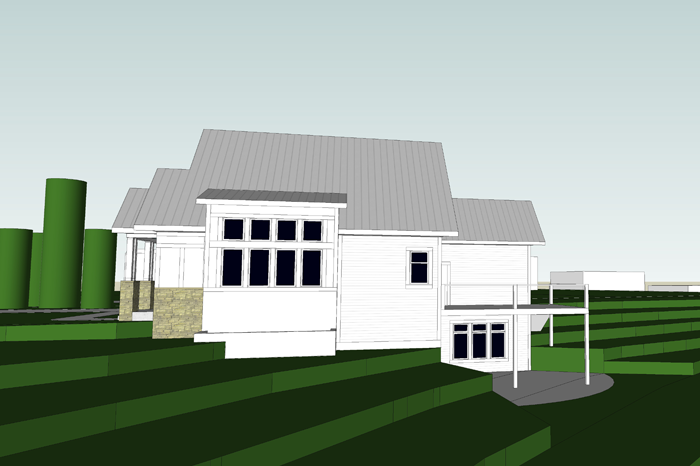
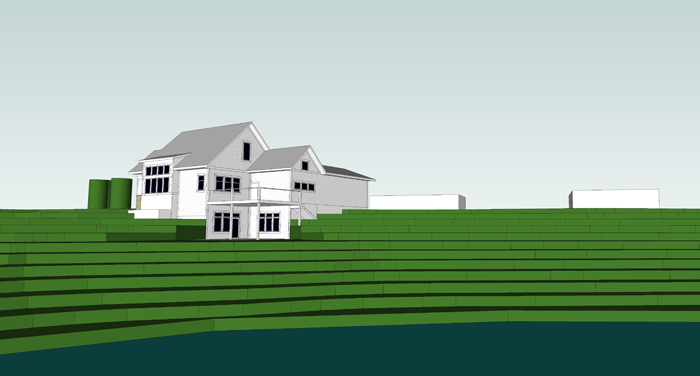
Just for fun, here are a few 3d images showing the cottage positioned on the land.

The cylinders are place holders for privacy trees (some of which are existing, and others that we hope to plant in the future. 


I worked a long time to find an appropriate position for the garage. I was sure that I wanted the garage doors to be set back from the front of the house/porch. For a while I had the garage rotated 90 degrees so that you accessed the doors from the side – but I eventually realized that this would not create ideal conditions for the driveway, making it both awkward and extremely long.  The garage is now accessed head on and set to the very back of the house so that it isn’t visually imposing.


The wall of windows on the southeast elevation will let in a ton of wonderful natural daylight. It is one of my favorite features so far, and never would have happened if we hadn’t talked to our contractor about current building prices – which prompted us to make a major change to the design.


You can see from this image how the cottage interacts with the slope. There will be a bit of excavating and retaining involved in creating the lower level walkout patio.


As the weather warms up, I hope to make a trip to the land again – and maybe stake out the corners or use spray paint to get an even more visual perspective on what we will see out of each window of the cottage.

Exciting times ahead!
 

THE FIVE PHASES OF NEW HOME DESIGN

In the course of designing your new home, you will walk through a variety of phases – each a bit different in nature. Though they tend to flow into each other slightly, there are five general categories of progression: analysis, preliminary design, development, documents, and construction review.

Understanding what to expect in each phase can be a helpful guide for your home design process. If you are considering designing your home solo – or working with an architect or designer – you can prepare early by knowing what is to come.


PROGRAM ANALYSIS

In this phase you will determine what your needs and wants are for your future home. You will be looking at potential building sites and thinking about the number of bedrooms, bathrooms and common spaces your home will have. You will also begin to think about your project budget. To help you answer these program analysis related questions, visit this blog post and complete a series of worksheets.


PRELIMINARY DESIGN

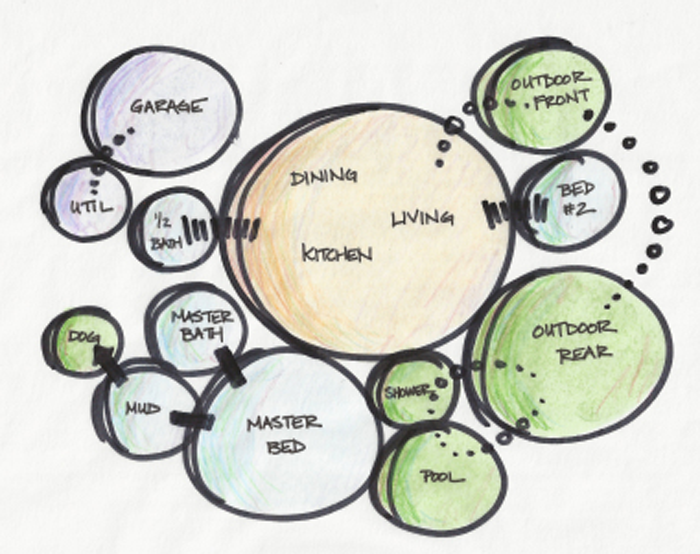
Through this phase you will be determining the desired spacial relationships within your home and also the connections that will be made from indoors to outdoors. The spaces will begin to resemble a floor plan in it’s very basic sense. Drawings will be created in the form of quick basic sketches.

You will also be thinking about the house styles that appeal to you most, and likely searching Pinterest for inspiration photos.


DESIGN DEVELOPMENT

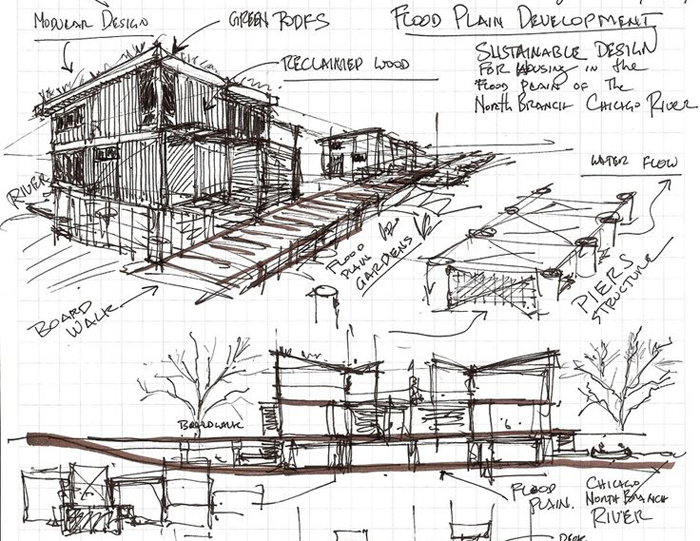
Just as it’s name implies, this phase of home design refines the spaces and their relationships. You will begin thinking about your home in three dimensions – focusing not only on the floor plan but also how the home will feel on the inside and look from the outside.

Near the end of this phase, you will want to get a better idea of what it would cost to build your home project. By obtaining estimates at this point, you will still be in the position to make major changes to the design if needed for budgetary reasons.


CONSTRUCTION DOCUMENTS / BIDDING

This is the phase when things begin to feel very real. Your drawings will include measurements and notes for the construction crew. Specifics on window and door sizes and styles will need to be made, as will finish material selections. Legal and technical information will be gathered and compiled to form the final ‘blueprints’ of your home.

During this step, you will be obtaining solid construction bids and determine who you will be hiring to build your home.


CONSTRUCTION ADMINISTRATION/ REVIEW

Homeowners vary greatly on the amount of involvement they have in this final phase of the process. While some choose to be on site every day to monitor progress, others pass the responsibilities onto their contractors (or architects) completely. I would advise that it is best to have at least some involvement – to build a great relationship with your contractor and design staff. The truth is that no matter how detailed you are able to get on your construction documents, there will inevitably be questions that will arise during construction; And if you put forth all the effort to be involved in the design of your home, you will want to follow through completely and ensure it is built the way you envisioned.


These five phases should work together seamlessly so that your ideas about home function and comfort can be brought to life. Each phase can be demanding, but the hard work will pay off in dividends when you are enjoying your brand new custom designed home.