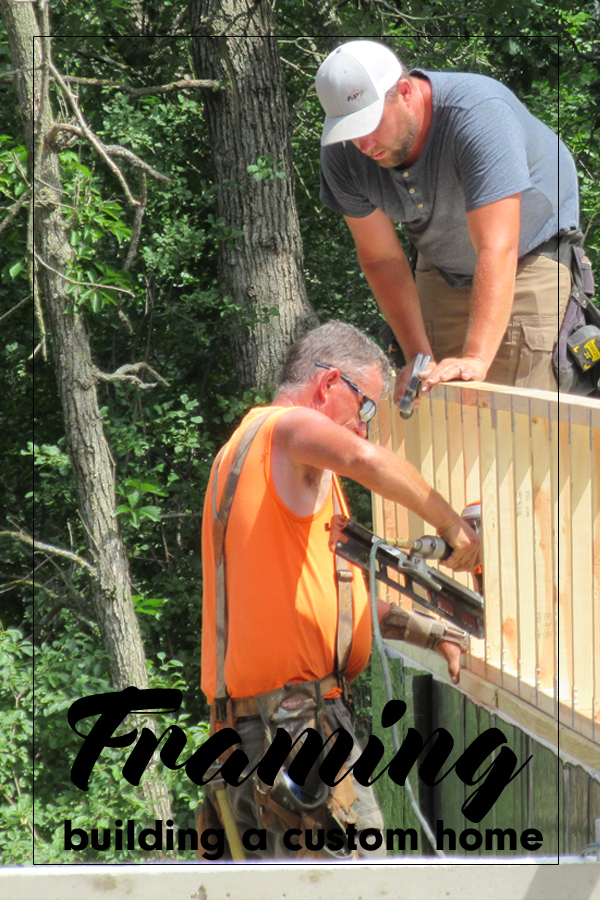
FRAMED HOUSE TOUR | BUILD UPDATE NO. 6

Join me today as I share a full tour of our framed house! So much has happened since I last posted about the progress at the site, and I’m excited to show you everything!

building a simple house

Last we left off, on construction update no. 5, the second floor trusses were just being delivered to the site. Boy have things changed a lot since then!


PROGRESS IMAGES

Here’s a quick photo recap of all the little steps that have happened from then until now.

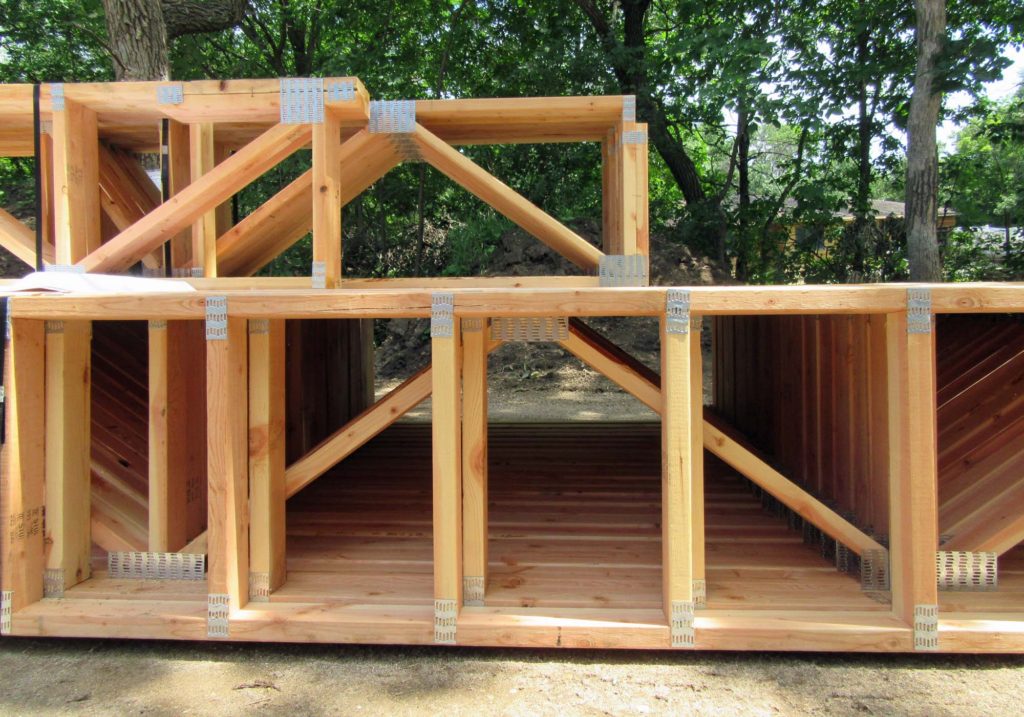
scissor trusses for second level of house

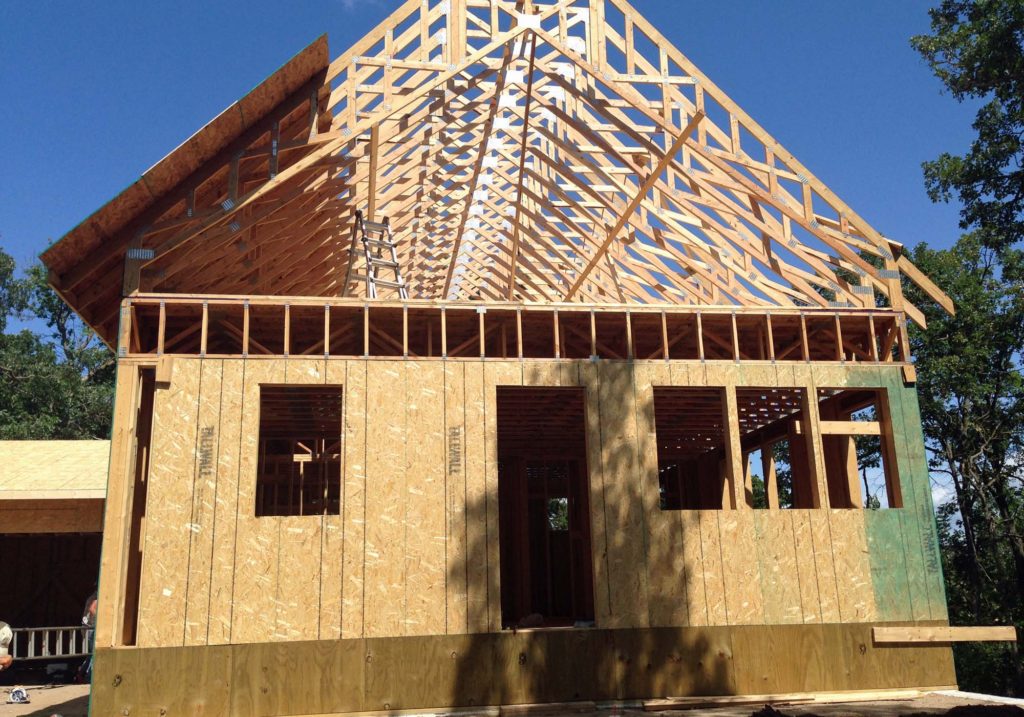
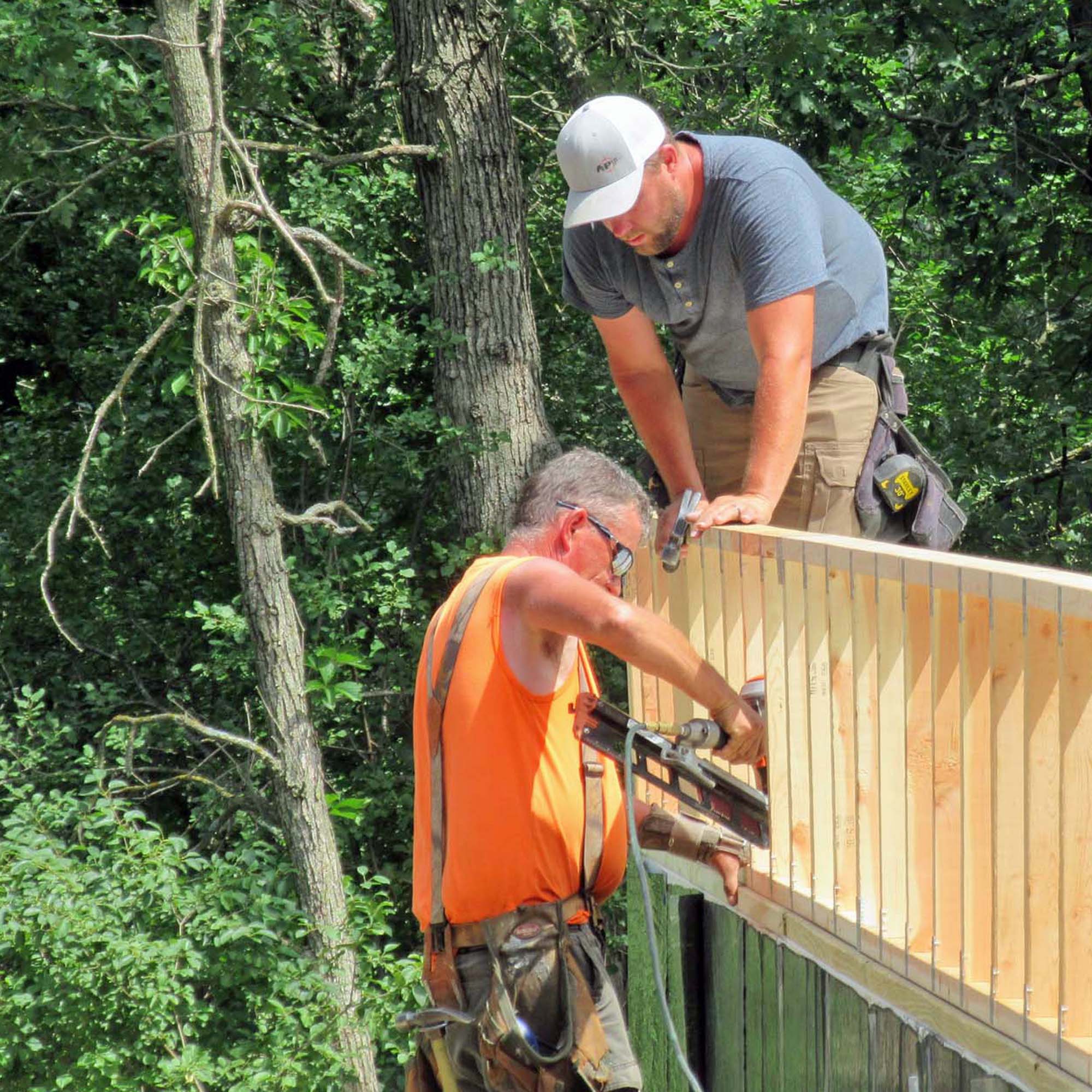
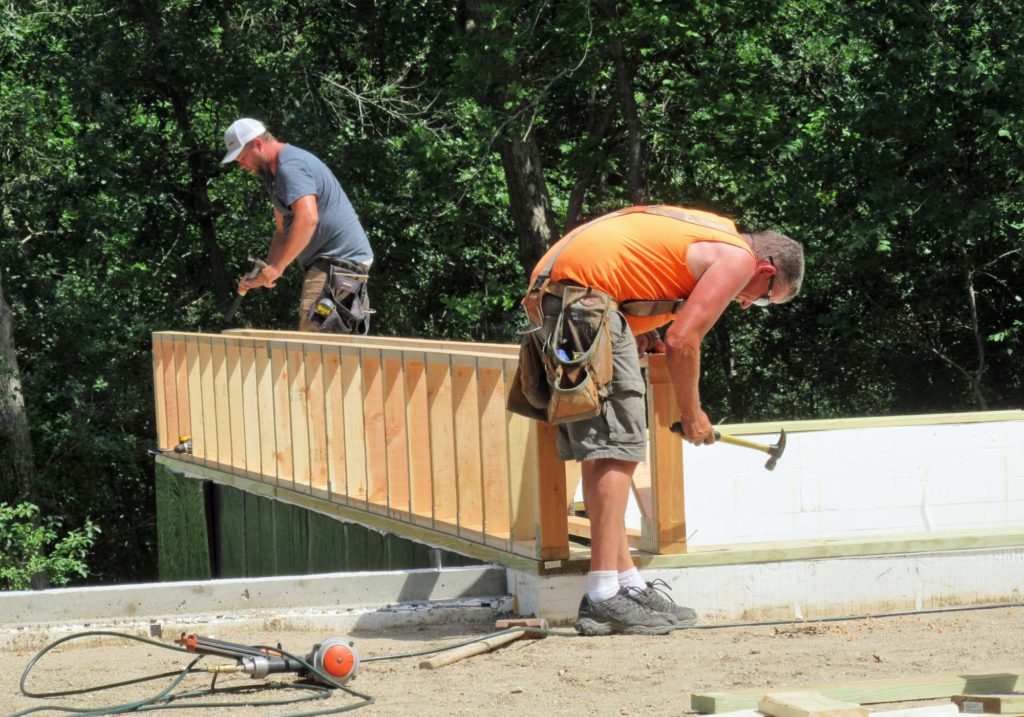
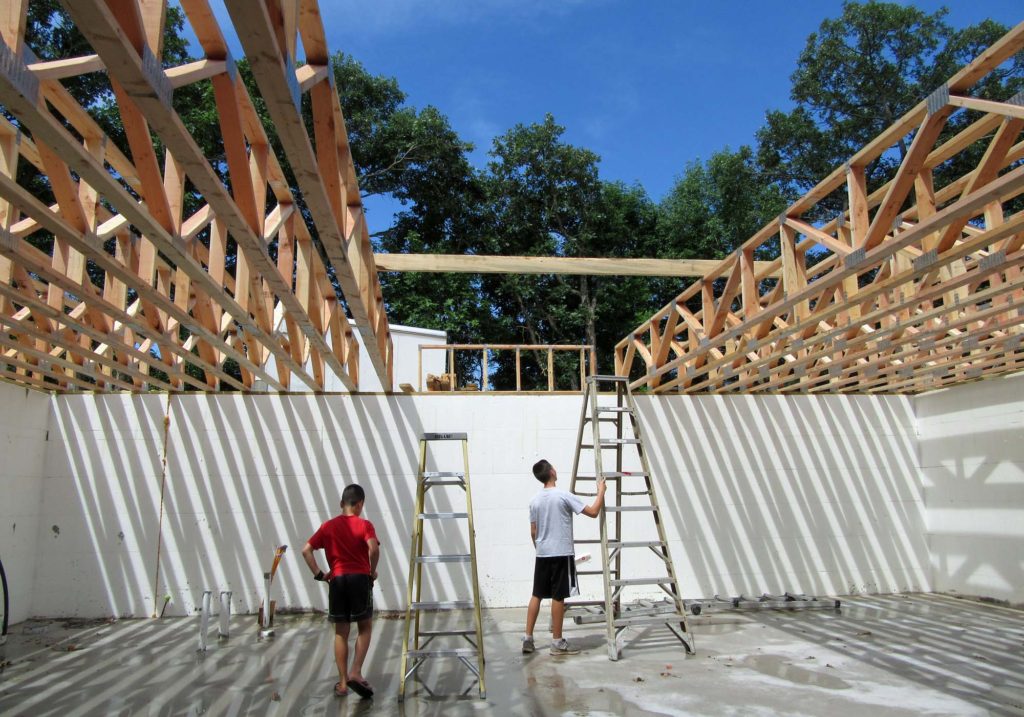
The large scissor trusses for the second floor were delivered. They are massive! With no dormers on the roof, they were able to get everything in place very quickly. In just a few hours they were ready to put on sheathing!

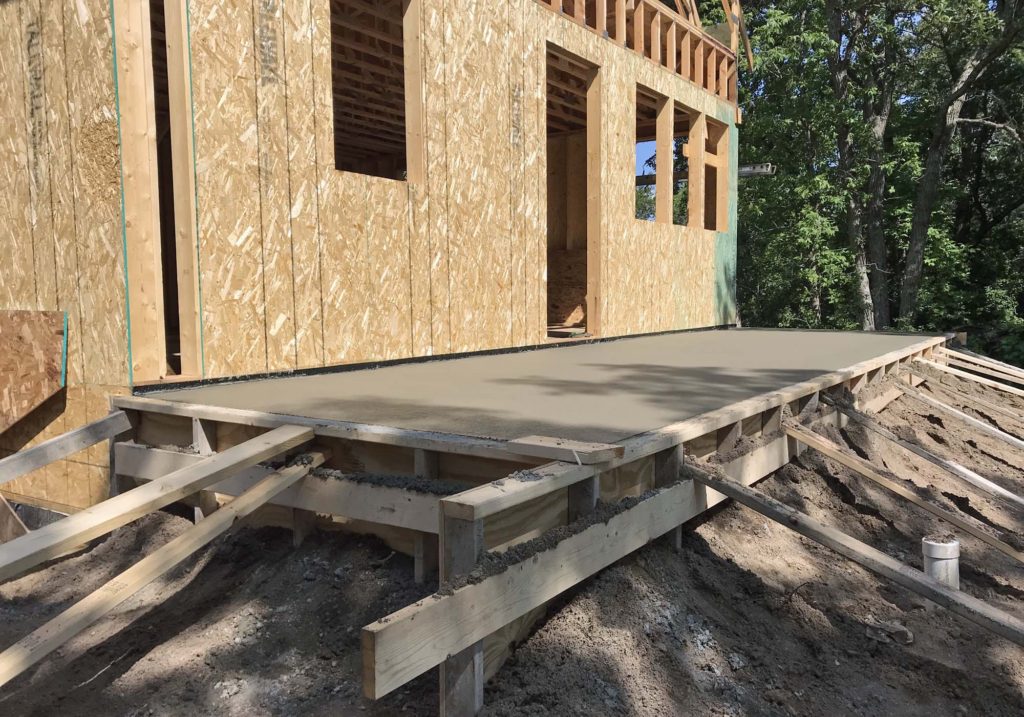
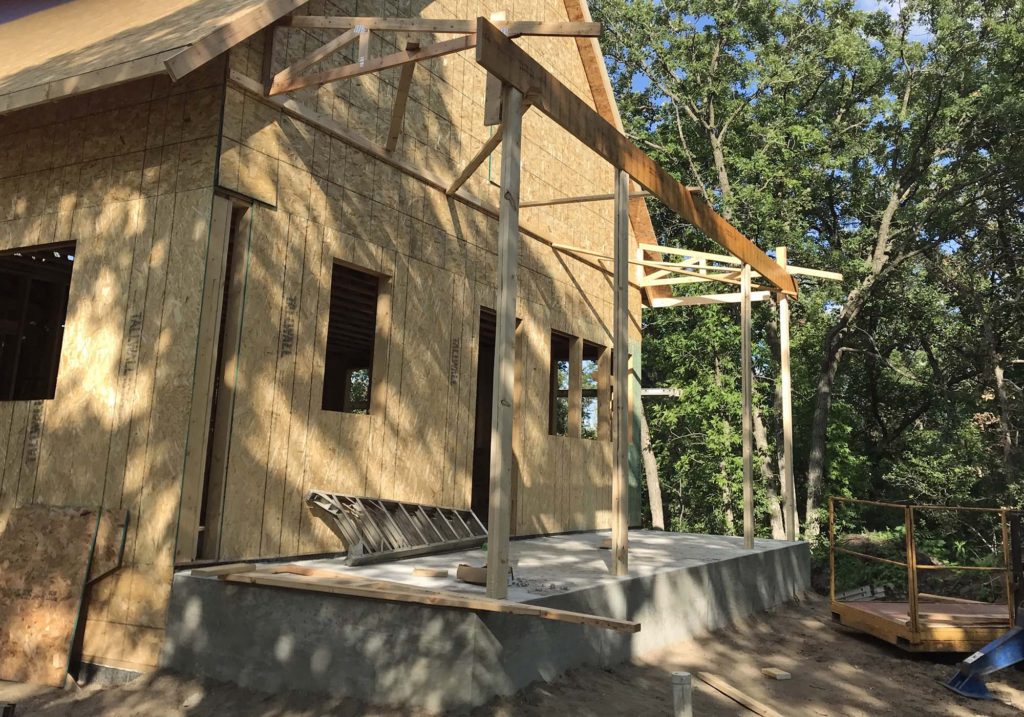
Next, the concrete for the porch was poured. They did beautiful work, and applied a broom finish. Because the posts needed to rest on the concrete, the porch floor needed to cure a bit before the next step.


They finished sheathing the front gable end and began to set up the framework for the front porch. The posts are only temporary, until the thicker cedar posts are ready to be installed.

building a house adding shingles

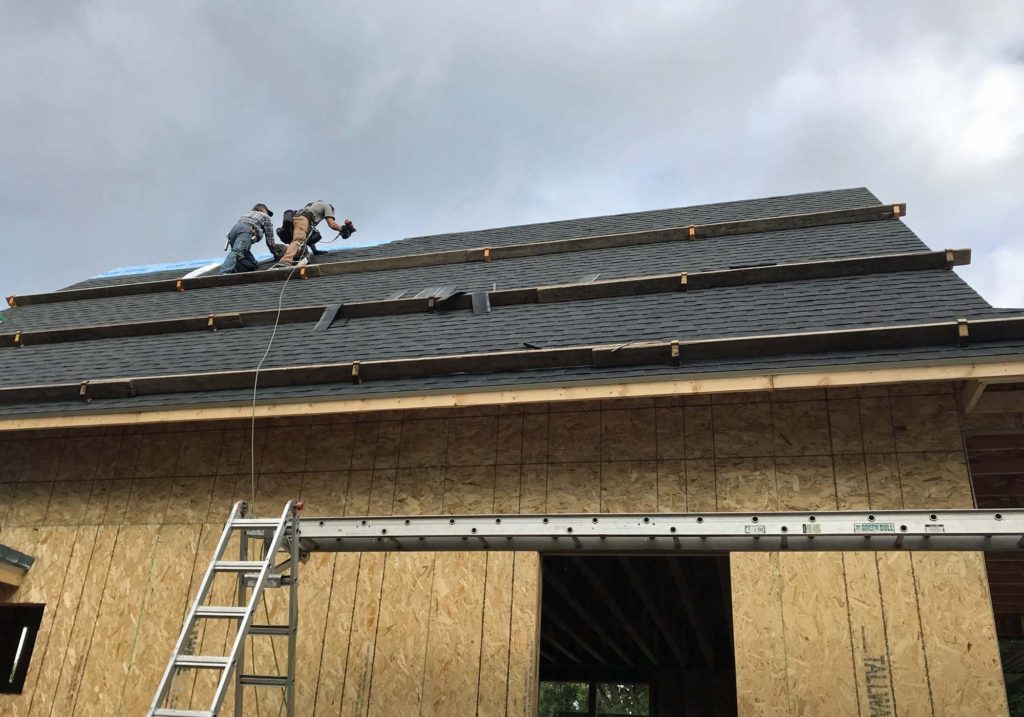
Once the porch roof was on, it was time for the shingles! We were more than excited for this step, as our area has experienced heavy amounts of rain for most of the Fall. It was finally time to get this huge asset of ours protected from the elements!

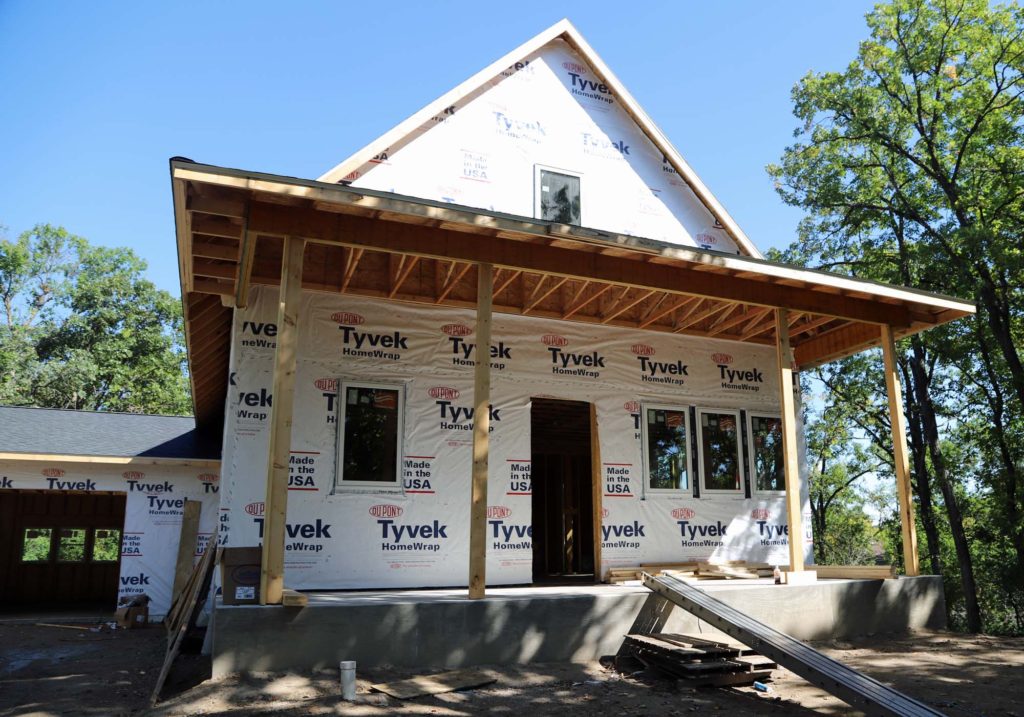
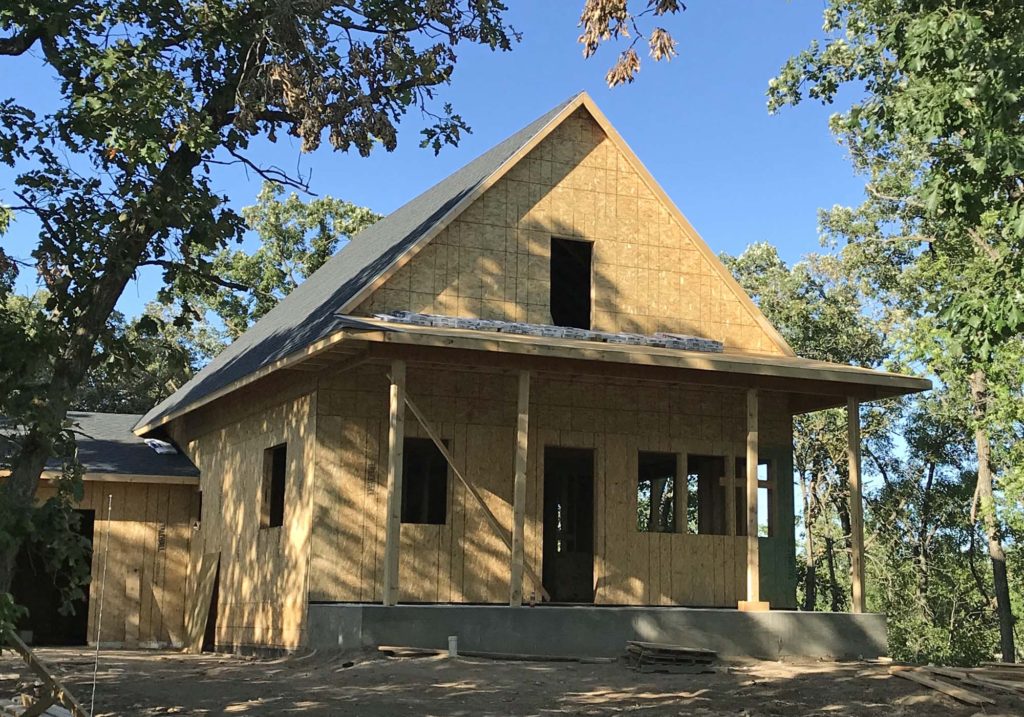
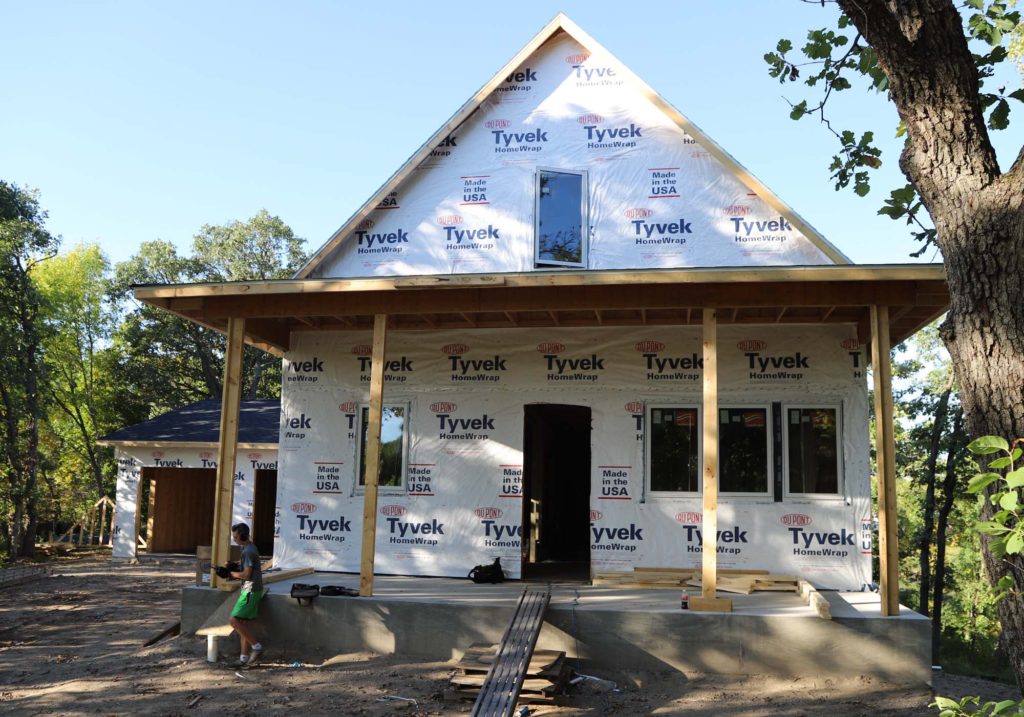
View from the front of the house with the shingles finished, windows framed out, and temporary porch posts. We will be doing some grading so that we don’t have so many steps to the porch.

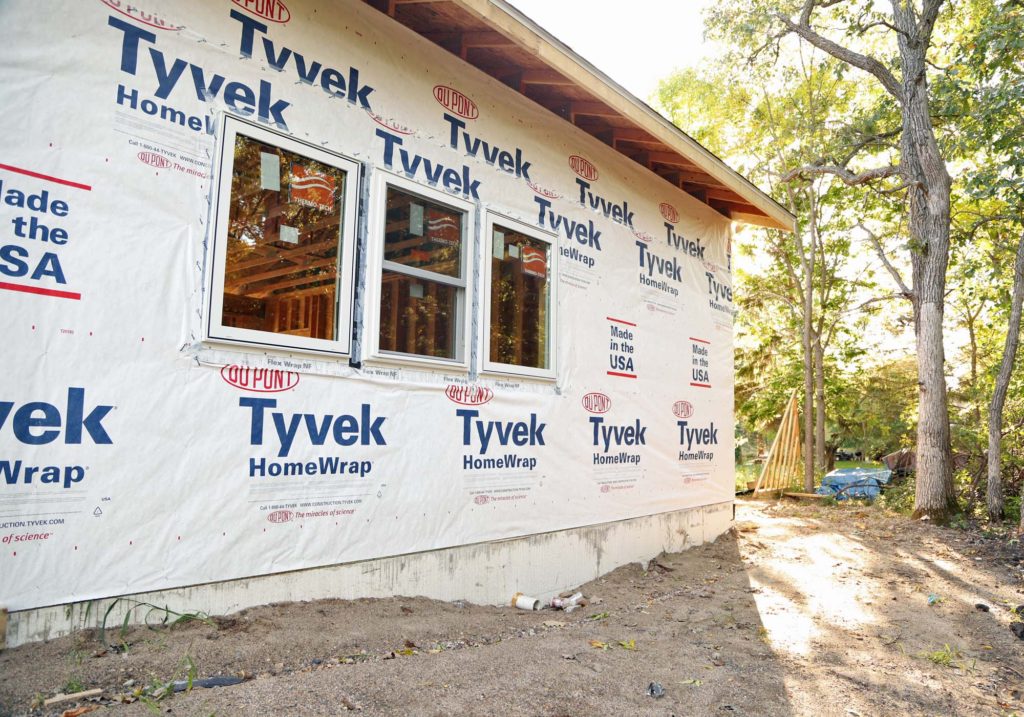
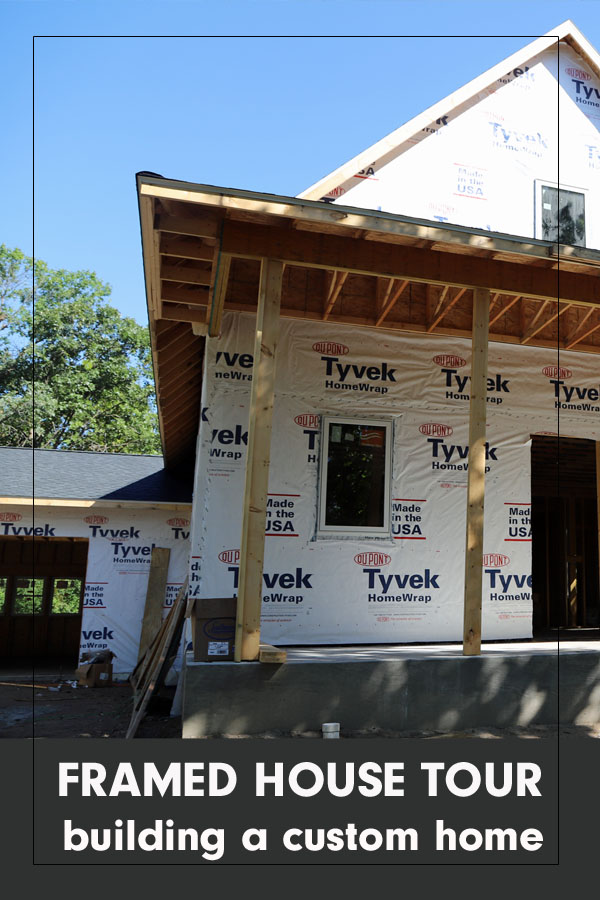
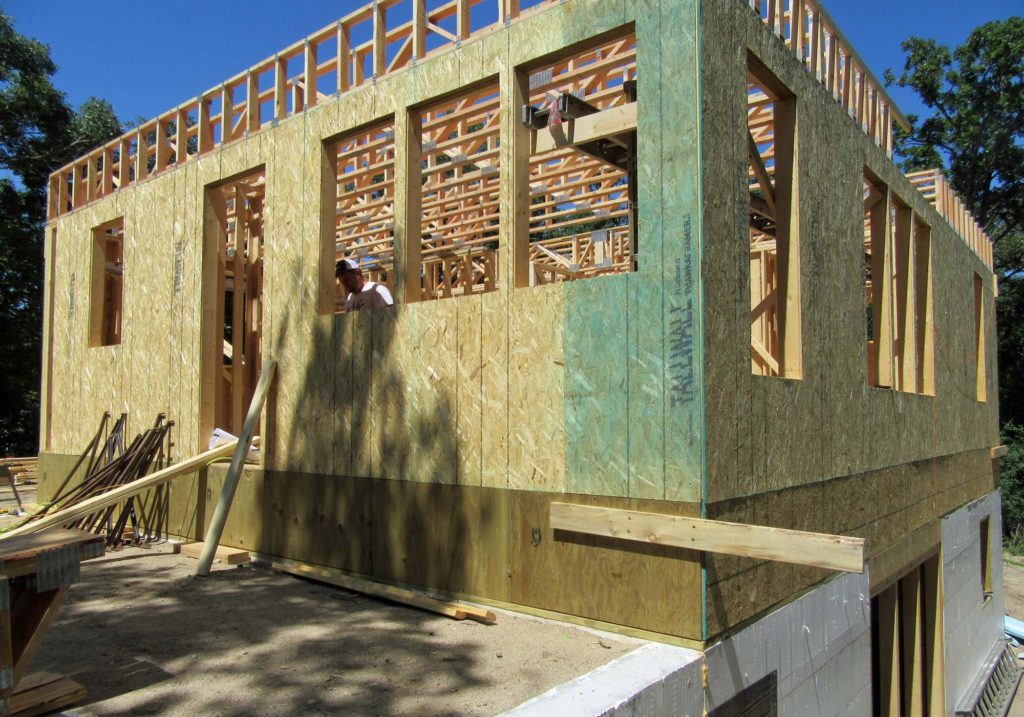
The waterproof wrap was added to the exterior, and the windows installed! This step really helped to brighten up the entire exterior of the house! Since our final siding and trim will all be white, it is fun to see it this way.


FRAMED HOUSE TOUR

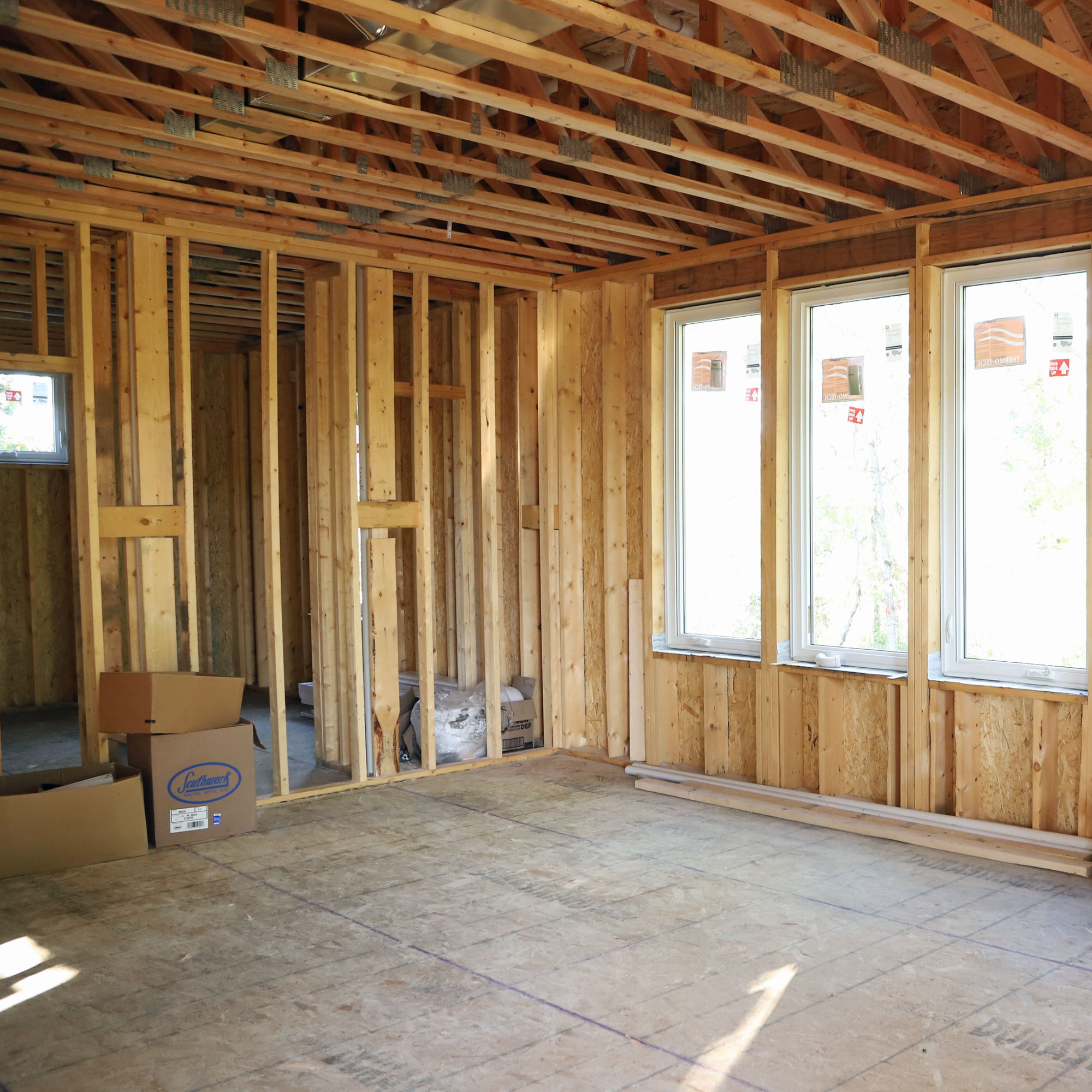
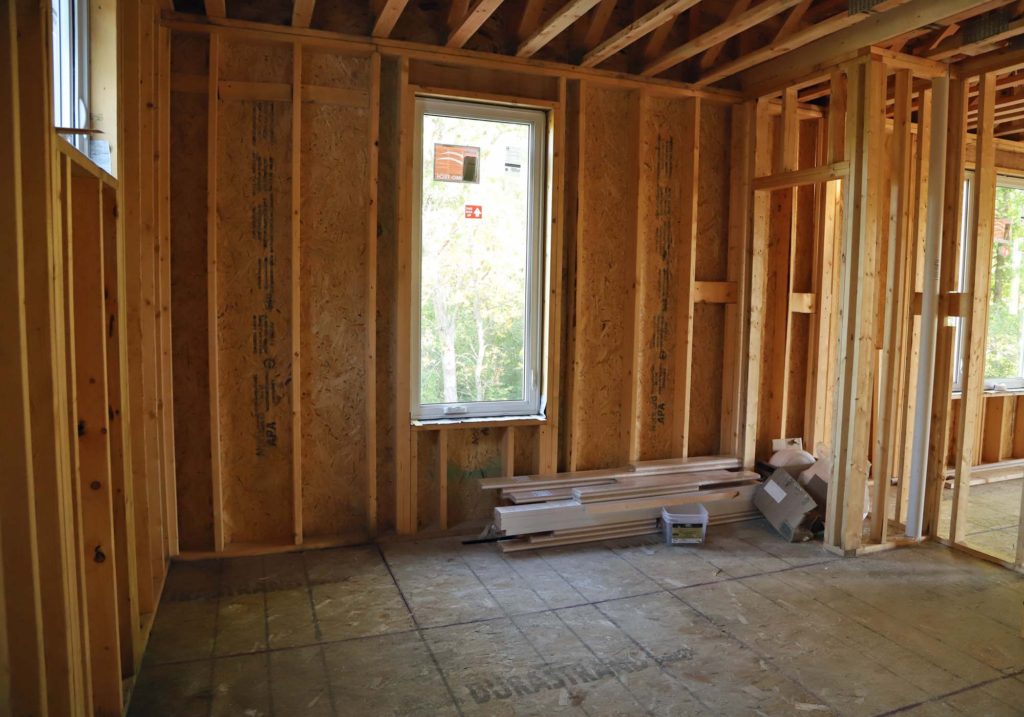
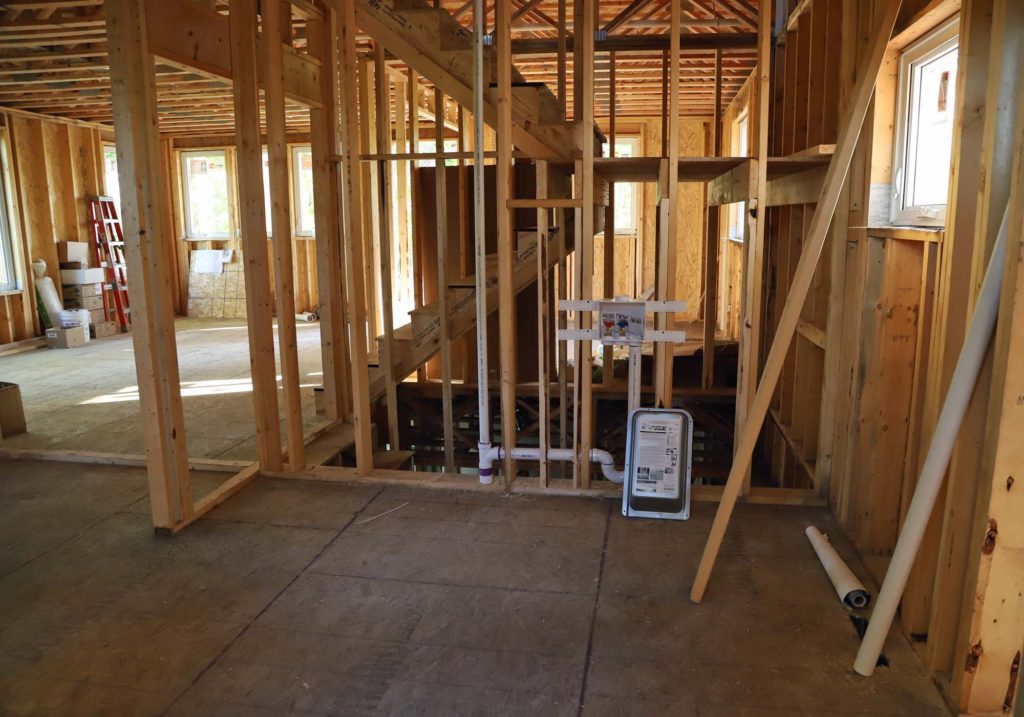
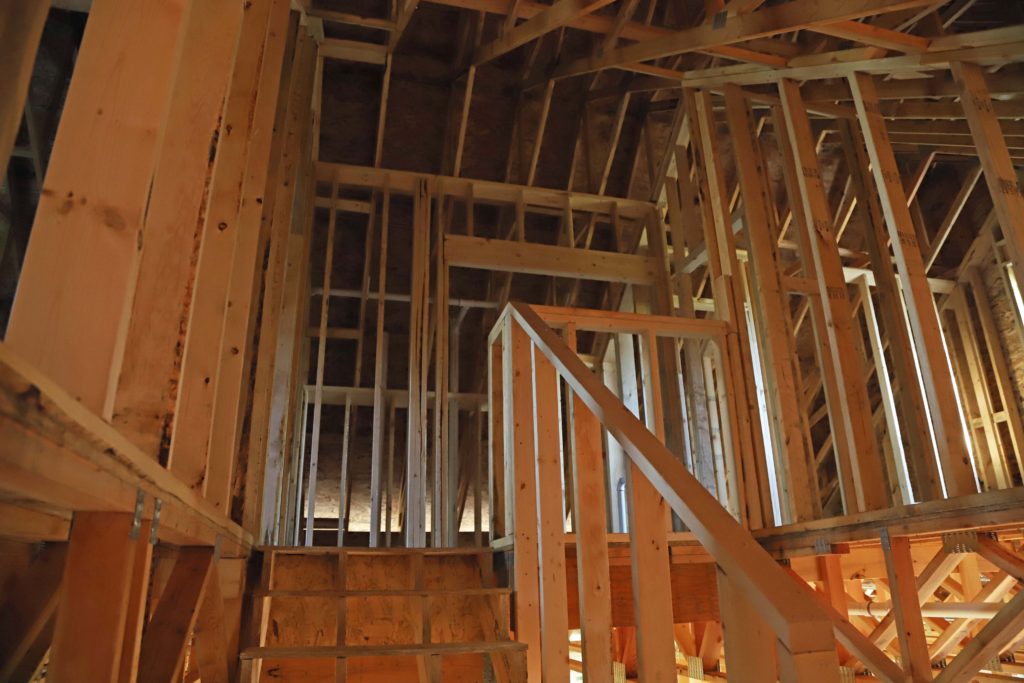
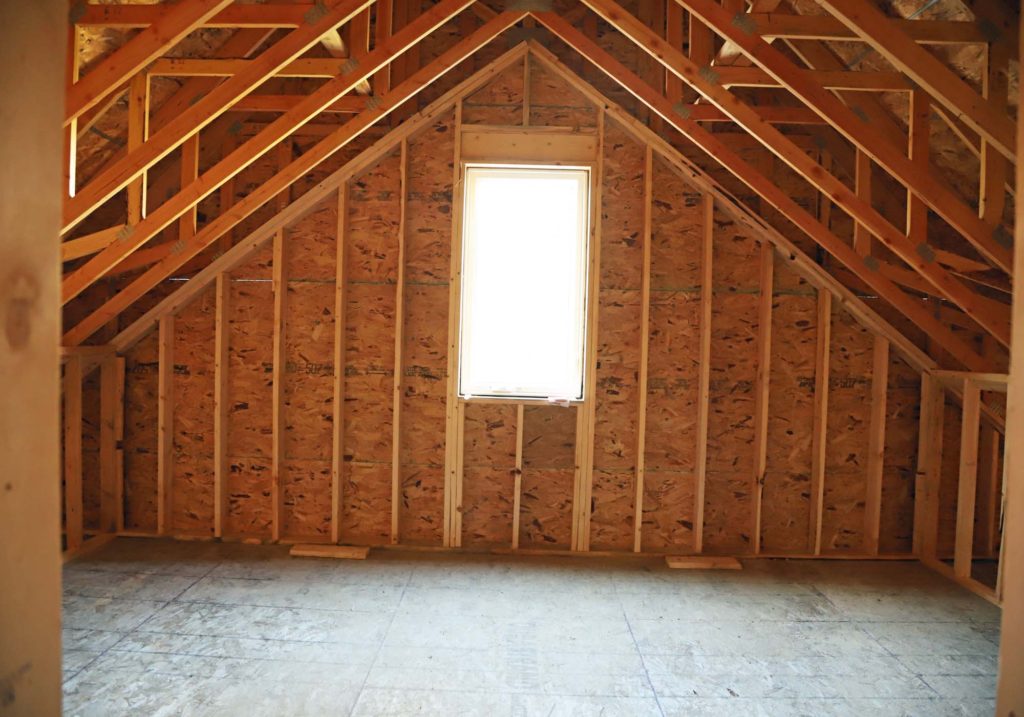
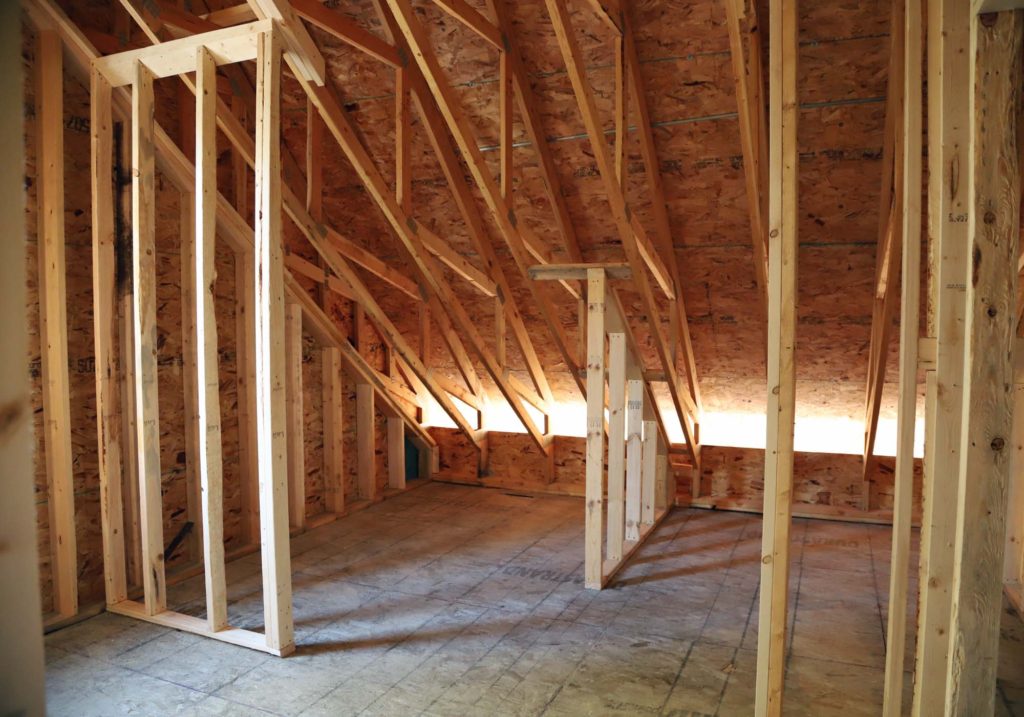
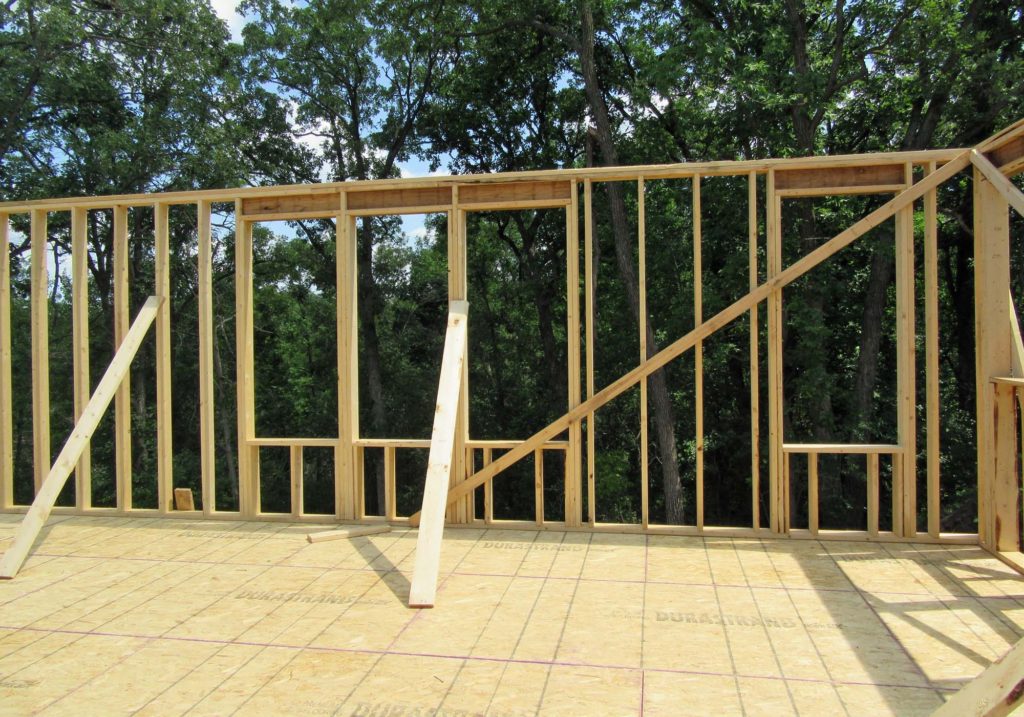
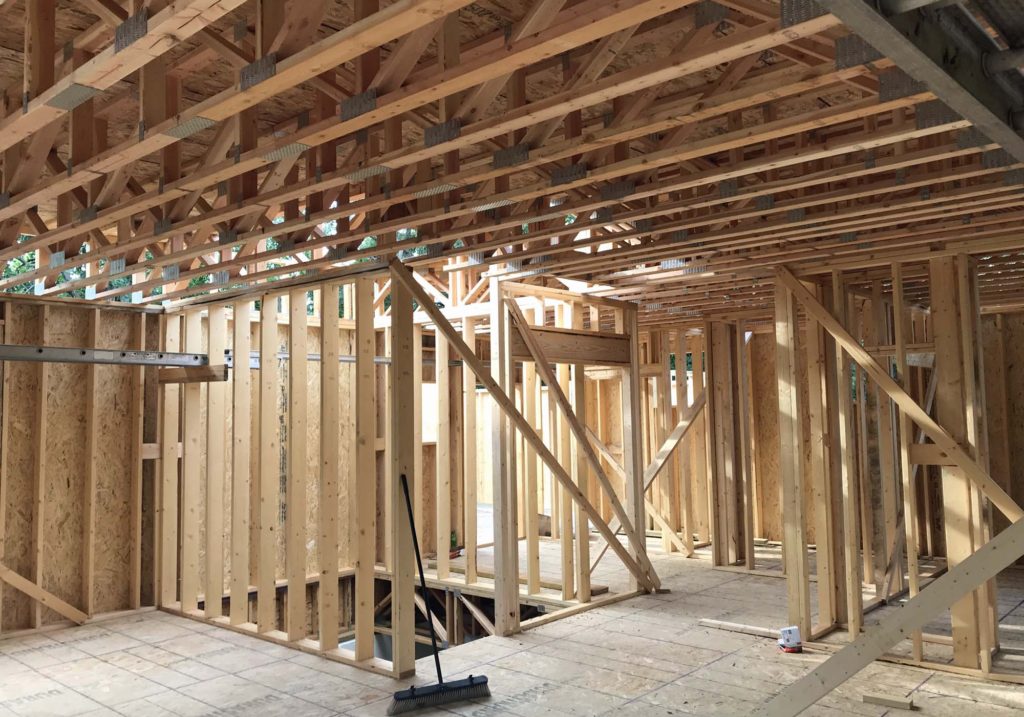
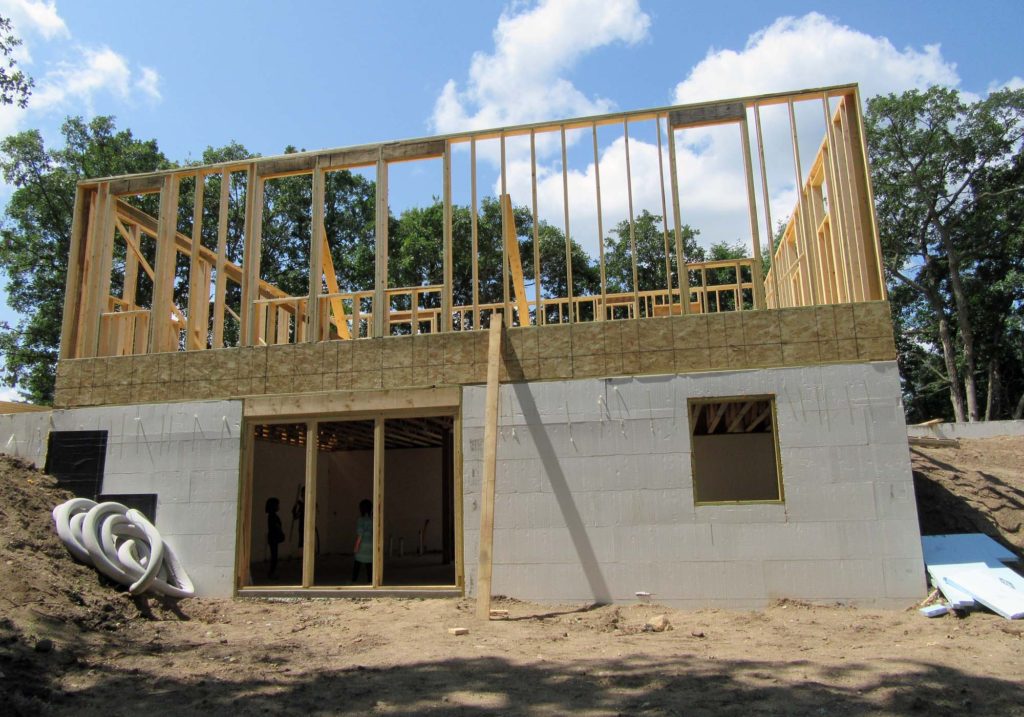
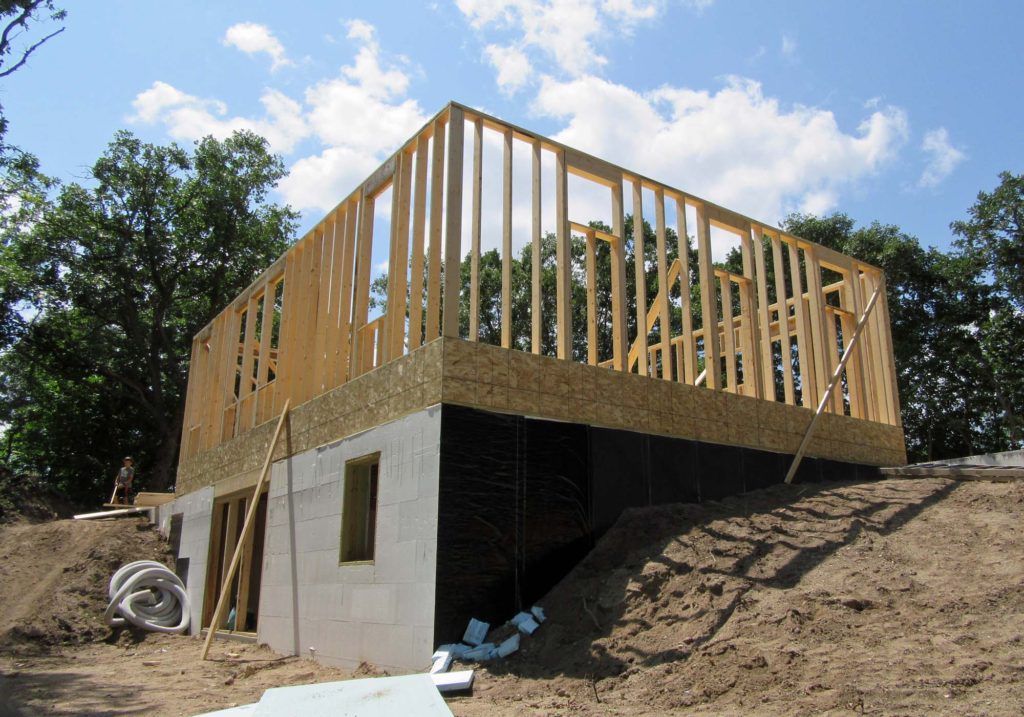
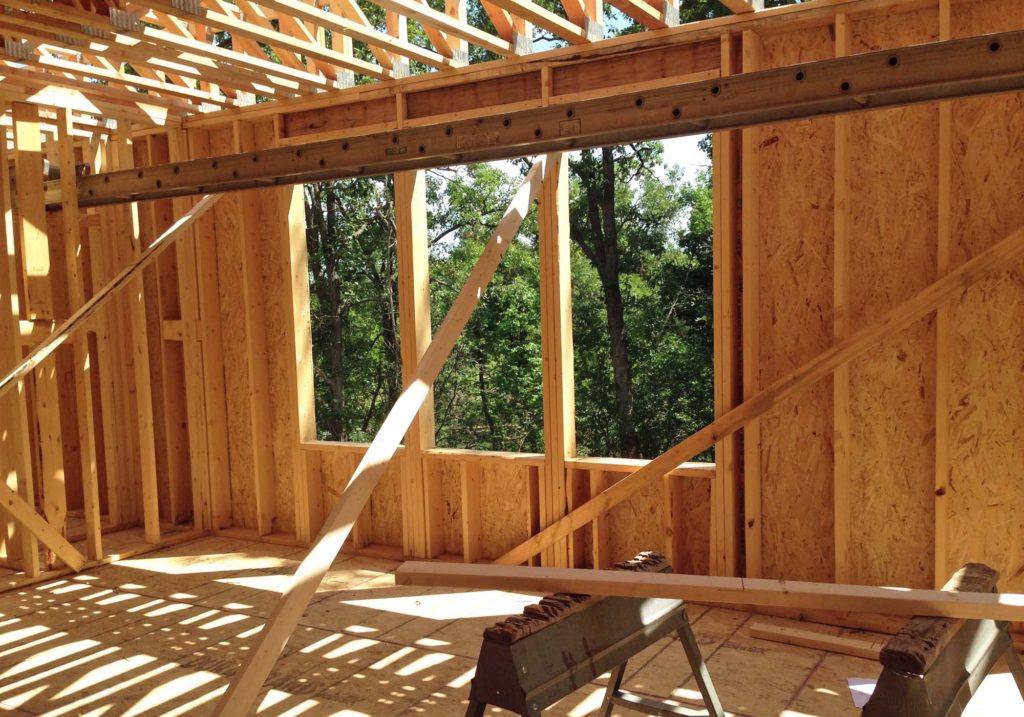
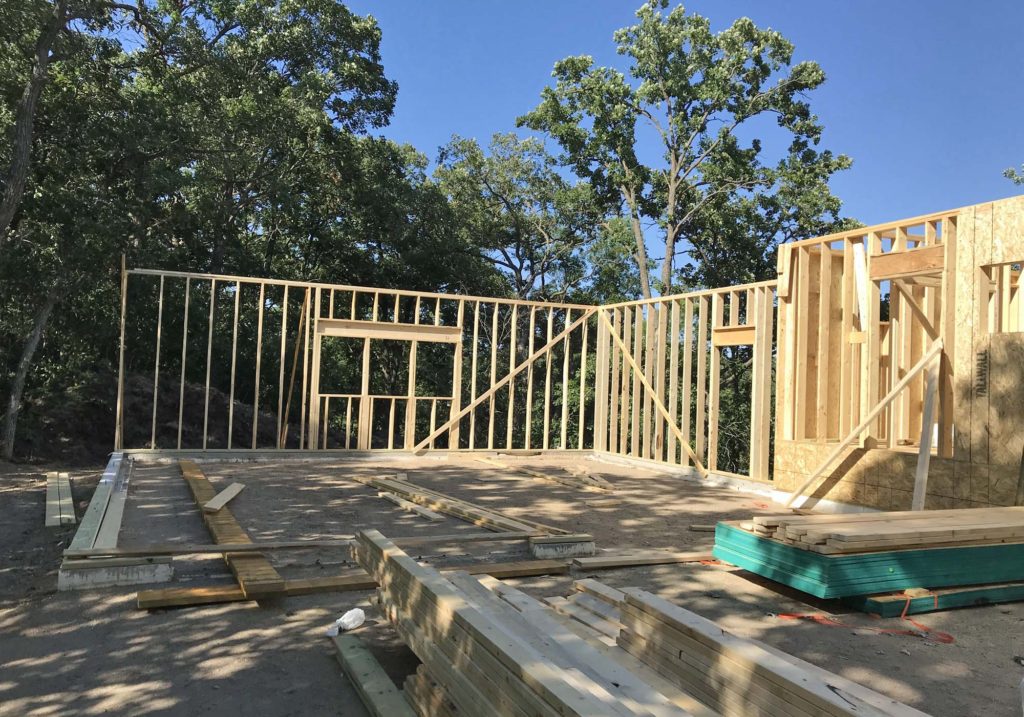
While all this was happening on the outside, a ton was also going on inside the house. In fact, the inside framing process is essentially complete! The HVAC crew has started running ductwork, and the plumbers have been coordinating as well. I thought it might be fun, before all the walls are covered with drywall, to take you on a full house tour!

fully enclosed framed house


Below are a few pictures from the interior of the house. Scroll through to the bottom of this post for a link to the video tour, and see every nook and cranny of our future house!

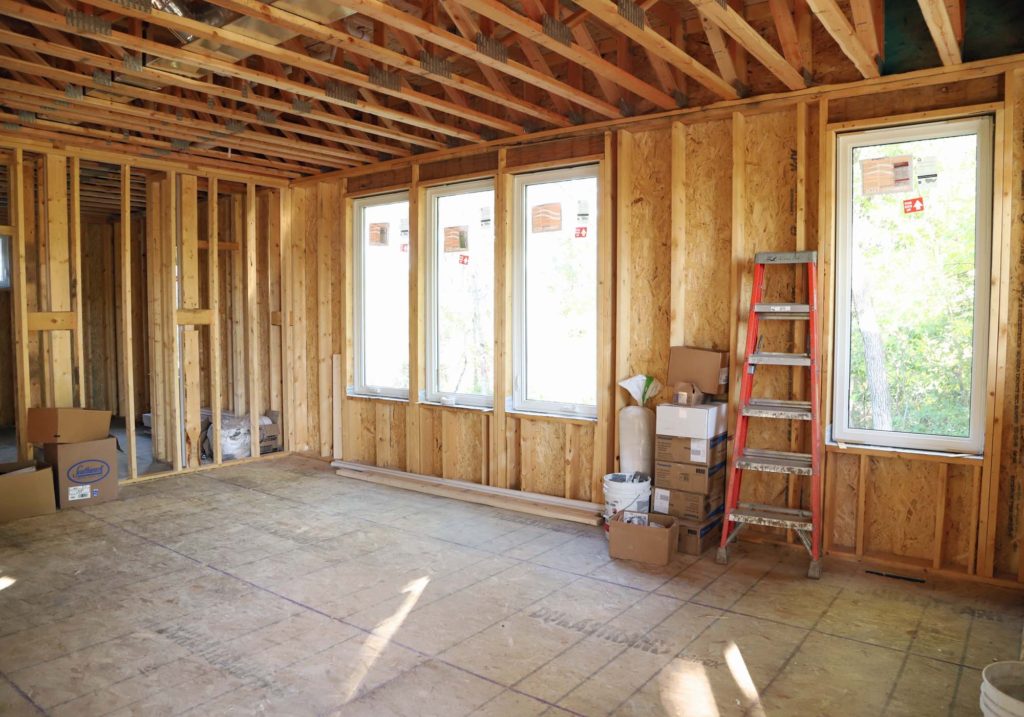
living room framing

View of the living/dining space


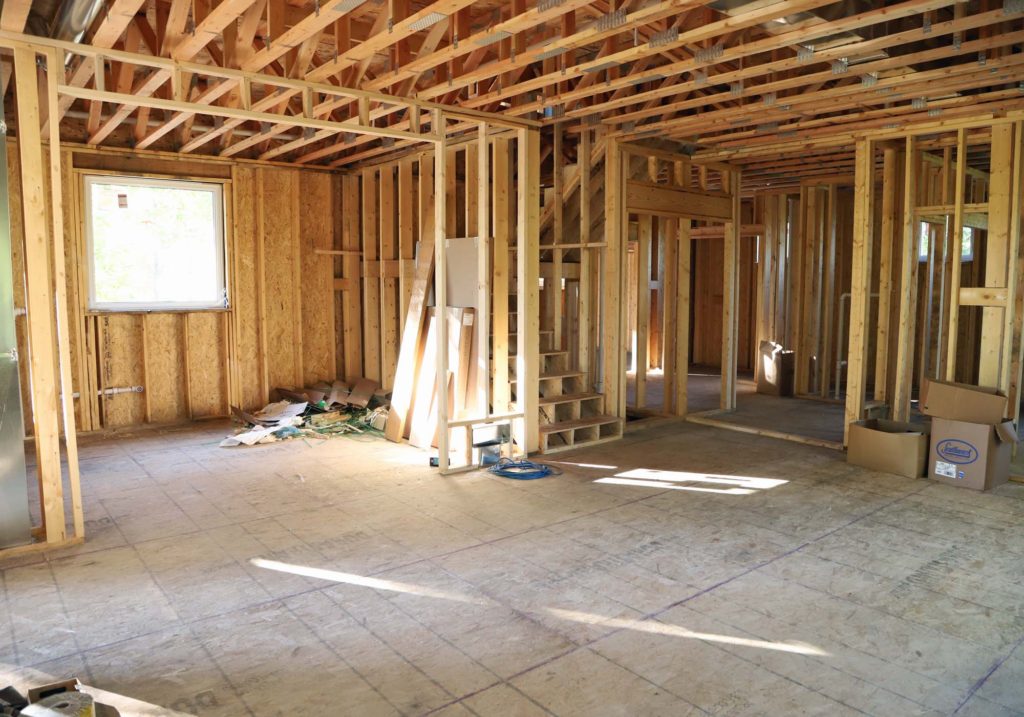
framed kitchen

Looking toward kitchen and stairway, from the living room


master bedroom interior framing

Master bedroom


laundry room space

Mudroom/ laundry room space


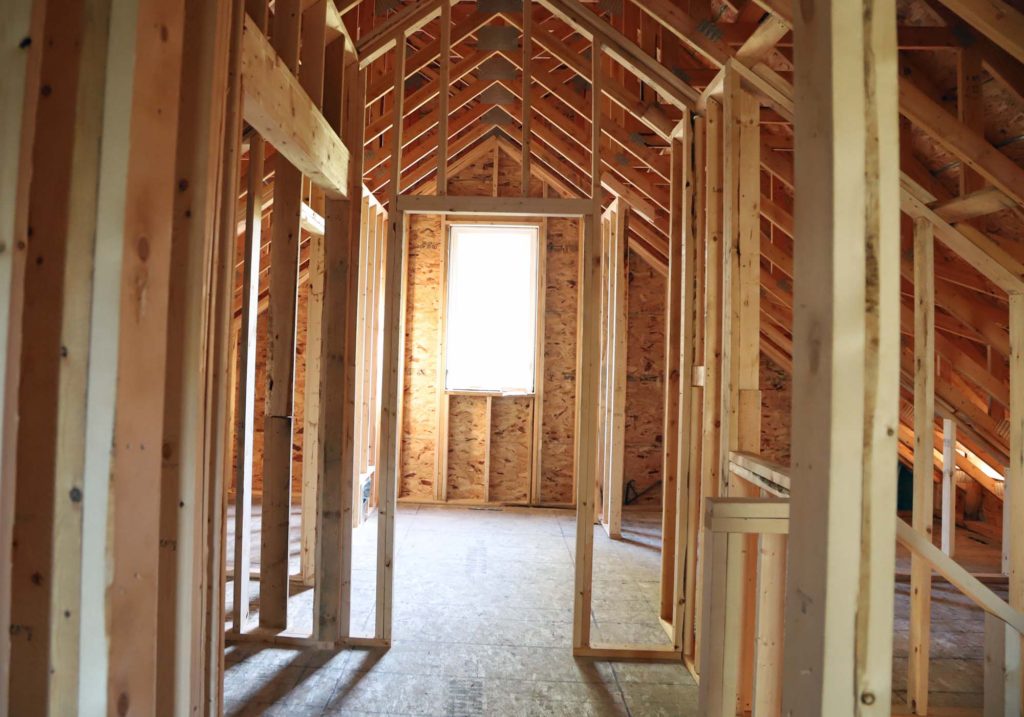
upstairs hallway

View of upstairs hall space and vaulted ceiling


girls bedroom framingGirls bedroom space


Boy bedroom framing | framed house tour

Boys bedroom space


second floor hallway space

View from hallway space into boys bedroom


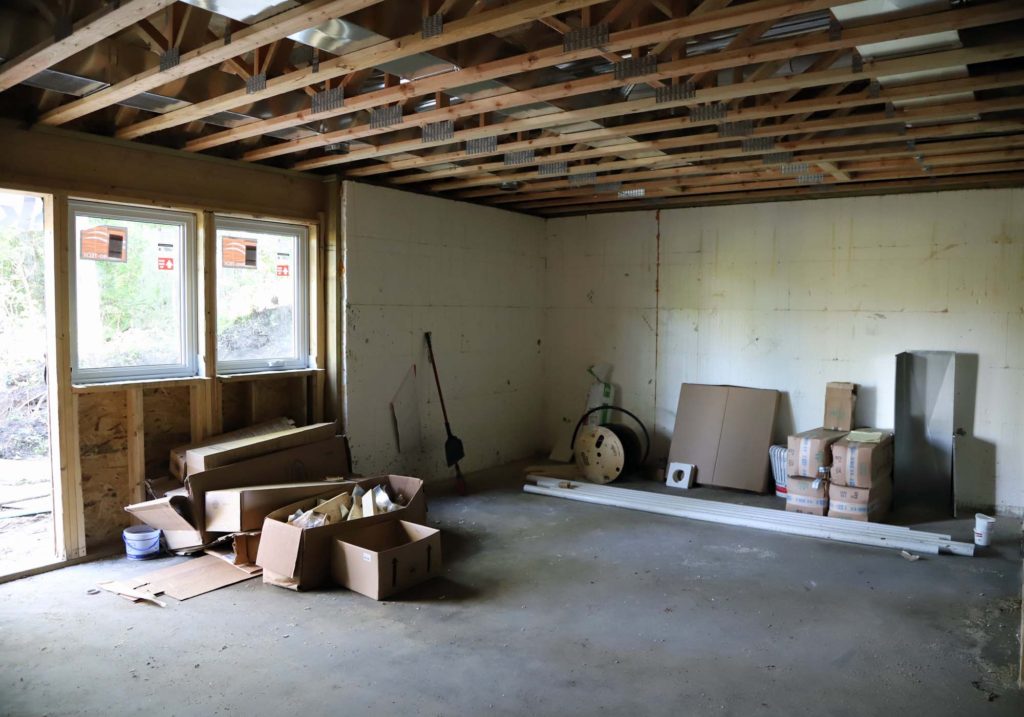
basement family room

Basement family room


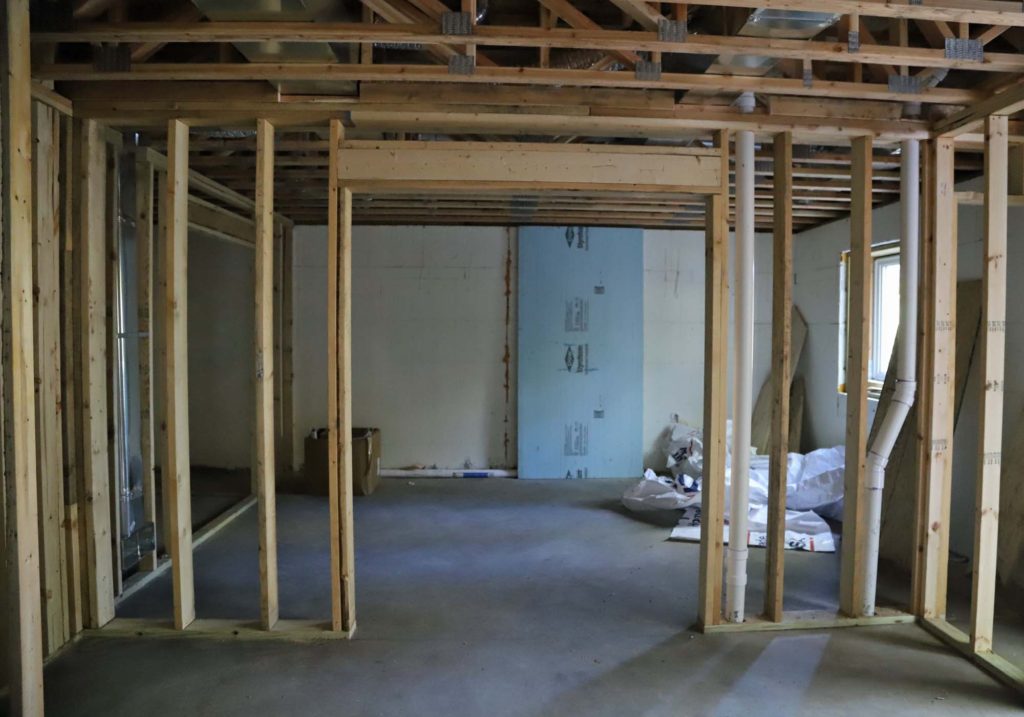
ping pong room

View from family room into the ping pong table space


FRAMED HOUSE VIDEO TOUR

Join me on the first full house tour of Arrow Hill Cottage!


PIN THE PROGRESS

new home construction | framed house tour


WOOD FRAMING | HOUSE BUILD UPDATE NO. 5

Time for another building update! In this week’s update I share all about the wood framing of our custom home build! Though I was hoping to share the entire framing process, things aren’t moving quite as quickly as we had hoped. This post will discuss the portion of framing that has been completed. And I will be sure to update again once the rest is finished.

finished foundation

At the end of Update No. 4 the foundation had just been completed. Essentially we had a very pretty looking hole in the ground, and were ready to begin the wood framing. I mentioned how excited we were for this step, when the building will start to take shape and begin to actually look like the house we had envisioned!


WOOD FRAMING STEP 1 | FLOOR TRUSSES

The first step in the wood framing process is to attach a wooden sill plate to the foundation. The sill plate is anchored to the concrete with large bolts and creates a base for the floor trusses to be tied to.

Floor trusses work essentially the same way as standard 1x member construction, with a few advantages. They allow for longer clear spans, as well as offering space for mechanical duct-work and plumbing. For these reasons, as well as the ease of installation, trusses are favored over traditional hand framing in residential construction today.

floor trusses

To install the floor trusses for our main level, the framers had to do some fancy footwork. The younger of the two was set with the task of almost ‘tightrope’ walking across the walk-out side wall. With a drop of over eight feet, it was a dangerous mission. He admitted to me later that it was a bit un-nerving! They did eventually get all the trusses in place.

wood framing floor trusses

For our family, it was fun to go into the basement and look up at all of the installed trusses since this was the first time that we had a mostly enclosed space to go into. Sensing the personal/ human scale of the project is very important and was something that we hadn’t yet been able to experience, having the spaces open to the great outdoors.

floor trusses from basement


ADDING THE SHEATHING

The next step in the wood framing process was to add the sheathing on top of the installed trusses. Once installed, the sheathing plus trusses work as a monolithic system, providing superior stability.

wood framing supplies

We were sure to take advantage of walking on our main level for the very first time. In fact, we made an evening excursion of it by picking up food from Dairy Queen and having a picnic on the site of our future dining space. The night was ideal, and the first moments we spent at our house together is a memory I will cherish forever.

night at the house site


WOOD FRAMING THE WALLS

Up next came the main floor wall framing. With the window locations set up, it was exciting for us to finally be able to see what the views from each of the rooms will be.

view from living room

It came as no big surprise that the most awesome view of all is from the open living/dining space, overlooking the woods and pond. The western facing kitchen window though displays a great sunset view, which we weren’t expecting.

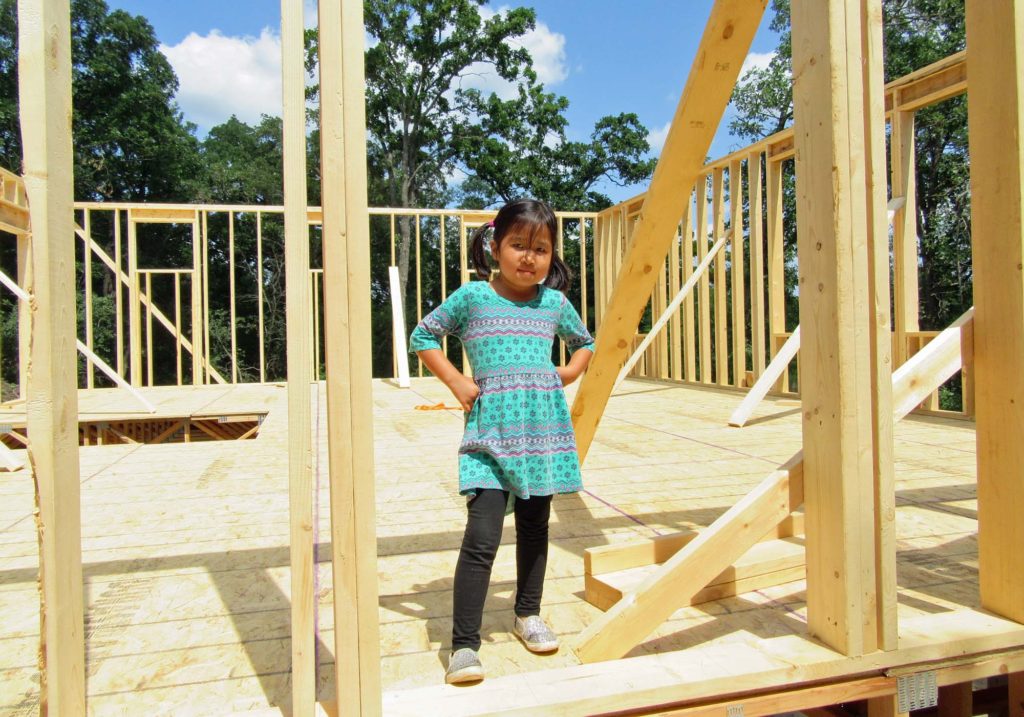
standing in doorway of wood framed house

How cute is she, standing in the location of our future front door!

Walking through the shells of each room on the main level, I couldn’t help but imagine all of the memories that are about to be made here. We feel so blessed that we will soon be calling this place home.

wood framing update

Though I have given a bit of a mini walk through over on Instagram, I do plan to also film an entire ‘under construction’ house tour – once the wood framing is complete. Be watching for it!

view inside the house


CONSTRUCTION SITE VISITS

During the wood framing portion of the construction process, my husband and I settled into a nice site visit routine. I will typically stop by in the early afternoon, while out and about with the kiddos running errands. This is a chance for me to touch base with the crew, and answer any questions they may have. Craig will also swing by after he is done with work for the day. Typically the crew has left the site by that time, which allows him to take in the progress a bit more slowly. He generally takes a bunch of photos, then shares them with me.

wood framing in progress

These site visits help us to take in the day-to-day changes, as well as quickly catch any mistakes in the framing. One day Craig texted me a series of images and I discovered that the back three square windows weren’t centered properly. It’s something I hadn’t noticed earlier in the day, but from his pictures it was very obvious! The middle window should line up with a centered second story window, and it would have looked very goofy if the windows weren’t in alignment.

construction site visit

The center window should be centered on the back wall

And, though we are non-confrontational people, I contacted the framers right away to inform them of the mistake. Thankfully they acknowledged the problem and corrected it right away.


WALL SHEATHING + GARAGE

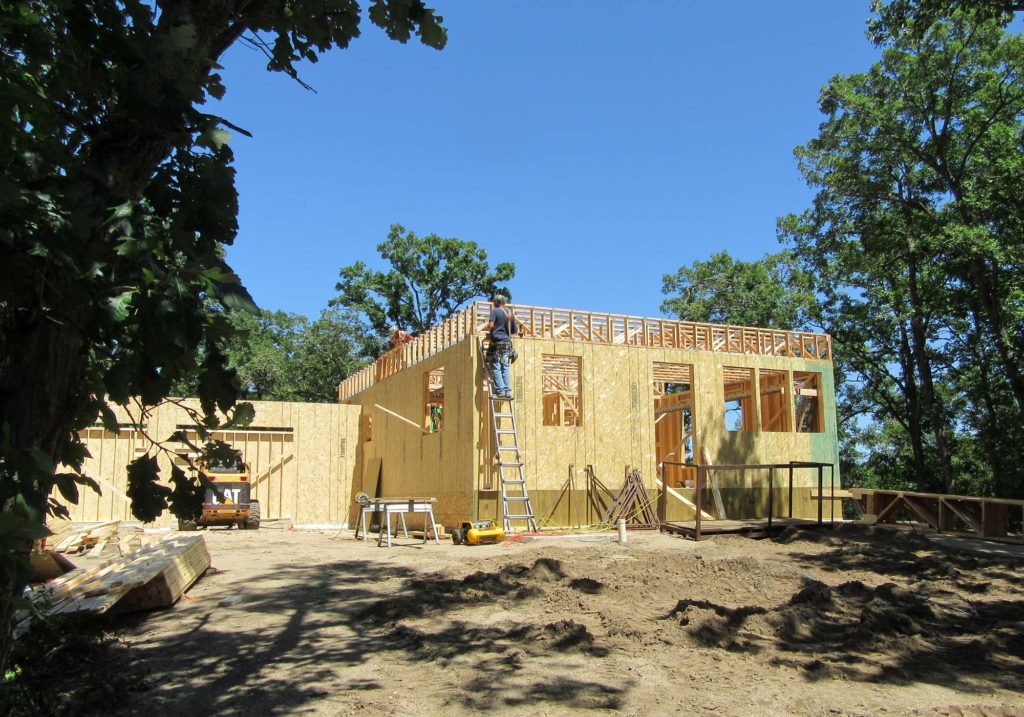
Next came the exterior wall sheathing. Covering the skeleton of wood studs really made the house shape come to life!

view from living room

The garage framing was also put into place. During the construction of the garage we did make a couple of minor modifications. We raised the sidewall approximately six inches, which in turn created enough space for eight foot tall overhead garage doors. Previously we had seven foot tall doors, but figured the extra foot will come in handy if we ever decide to get a larger vehicle for our large family.

garage wood framing

I am over the moon excited for my husband to finally have a fully functional garage, complete with good lighting, plenty of open floor space, and a proper tool bench. He has waited a very long time for this!

We are also anticipating that we will love having an attached garage during the bitterly cold Minnesota winters! Our oldest daughter, who has mobility issues, will be especially appreciative. The icy winter morning walks to our current detached garage have been full of anxiety and frustration!

house exterior


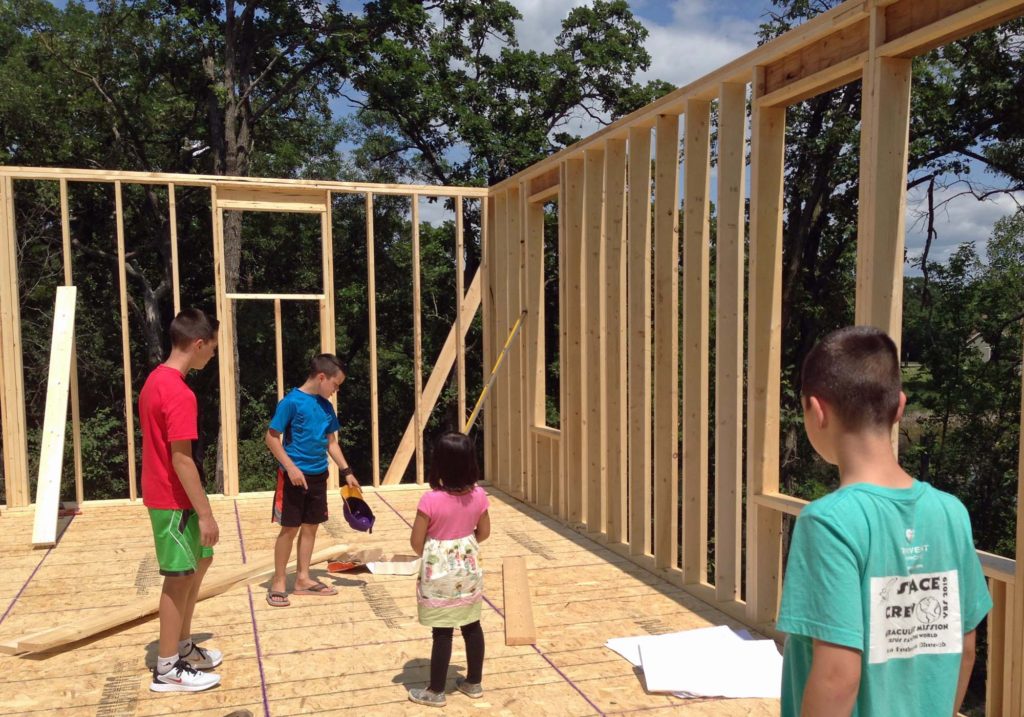
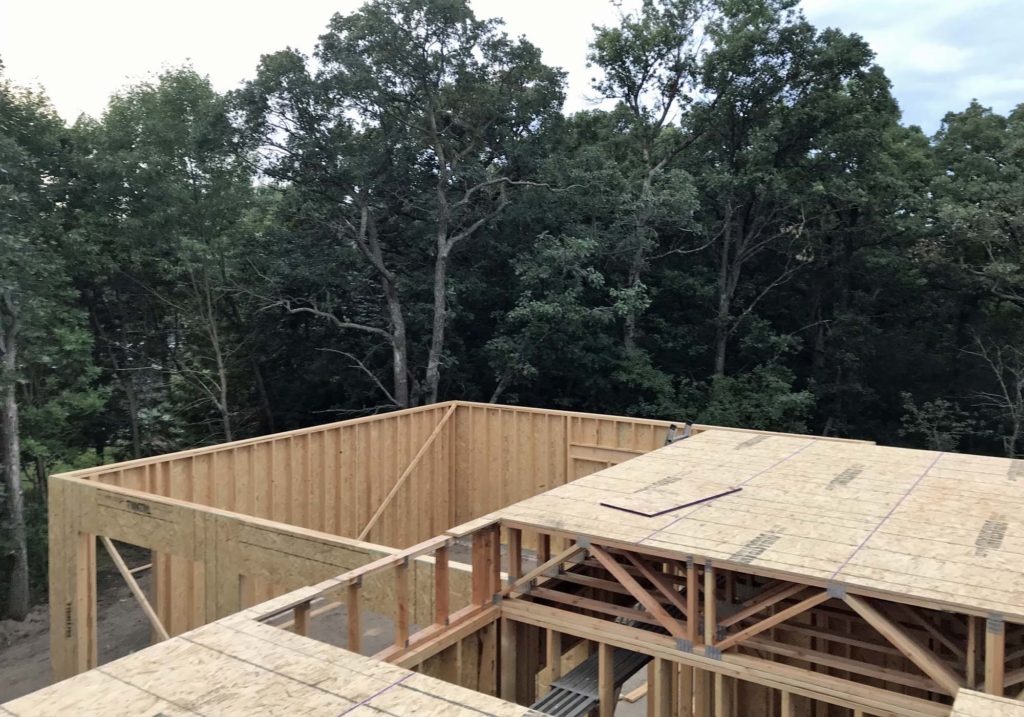
The wood framing continued with the setting of the second floor trusses plus sheathing. Because we were so anxious to see the view from upstairs, one night we took a ladder and climbed up. Without any walls for protection, it felt like we were standing on top of a mountain! It was a mighty sight!

view from second floor

Of course, the view won’t be quite as expansive once the walls are up. There are only two windows upstairs. One in the boys bedroom, which faces the street. And one for the girls, with a spectacular view of the woods.


WOOD FRAMING | NEXT STEPS

This week we had a bit of a standstill on the site. The concrete guy was supposed to be back to form up the porch stoop and have it poured – so that the roof trusses for the house and porch could be set at the same time. Unfortunately, the roof trusses were delivered a day too early. This meant that there wasn’t enough space on the site for a concrete mixer truck to come in and pour.

The new game plan is to install the roof trusses for the house and garage first, starting early next week, then come back to finish the porch and get the roof on that portion.

front porch pour

I am beyond giddy for the roof to go up, and to see the house shape in it’s completion! However, that will have to wait for the next update.

Be sure to stick around to see this little house of ours come to life! Thanks for checking in today!


HOUSE BUILD UPDATE NO. 5 VIDEO


PIN THE PROGRESS

framing our custom home


Site Work | House Building Update No. 3

Though not as glamorous as other portions of the project, site work is an important step in new home construction. Since we now have the okay to build, I plan to write an update every couple of weeks to document this process. I hope that you will follow along from wherever you are reading!

Update number three is all about the site work that has gone into preparing our land for a new home.

preparing the building site


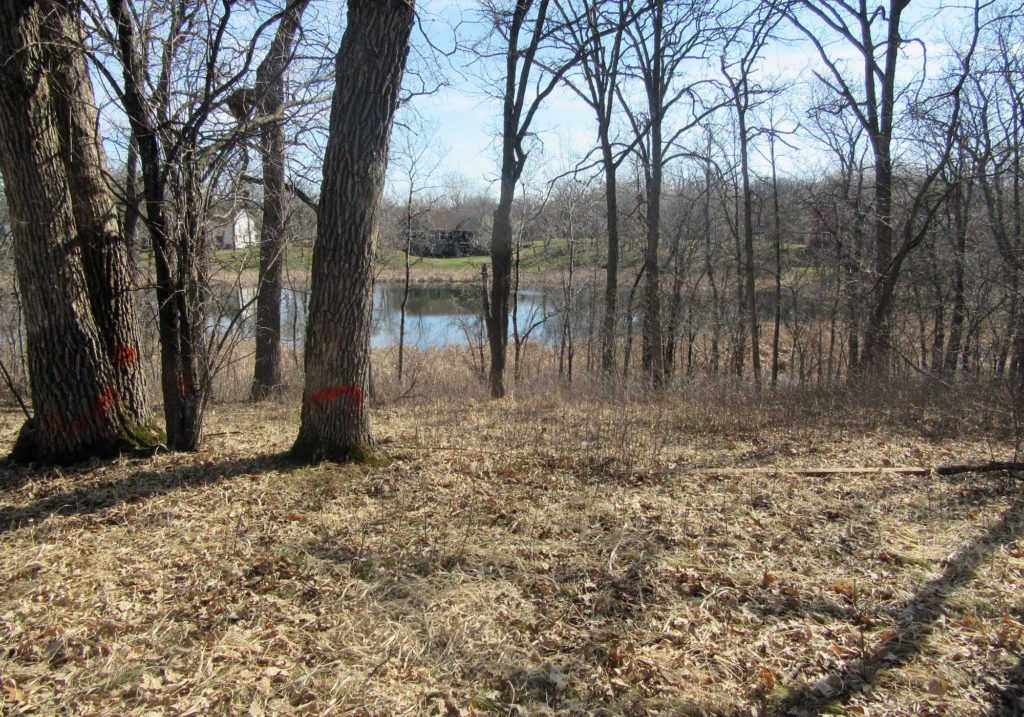
DEALING WITH THE TREES

As I mentioned previously, We had begun the site preparation ourselves by cutting down quite a few of the huge oak trees on our property.  Craig’s parents were willing to help us with the tree removal in trade for firewood, which they use as a winter heat source.

site filled with trees

We reserved quite a few of the straight log pieces. Asking around, we were able to find someone willing to mill them into lumber. With this lumber we hope to add some special accents to our home, including our dining room table.

The man who is going to do the milling for us collected the logs and brought them to his shop. We are hoping to have the kiln dried lumber from him by the end of the summer.


EROSION CONTROL MEASURES

With all the trees removed from the building area, the excavating crew set to work. First, the crew added some environmental protection measures. Our city has in place ordinances to prevent erosion during the construction process.

One measure is to add large gravel rocks to the portion of the driveway closest to the street. Because large trucks are in and out of a seemingly muddy construction site many times per day, these rocks help to loosen the mud before it is tracked onto the road.

Another way to prevent erosion is by adding a temporary silt fence around the portion of the site where the work will take place. In the event that sediment becomes loose on our building site, this fence will stop it from reaching the nearby pond. This will protect the pond’s water quality.


SCRAPING THE SITE

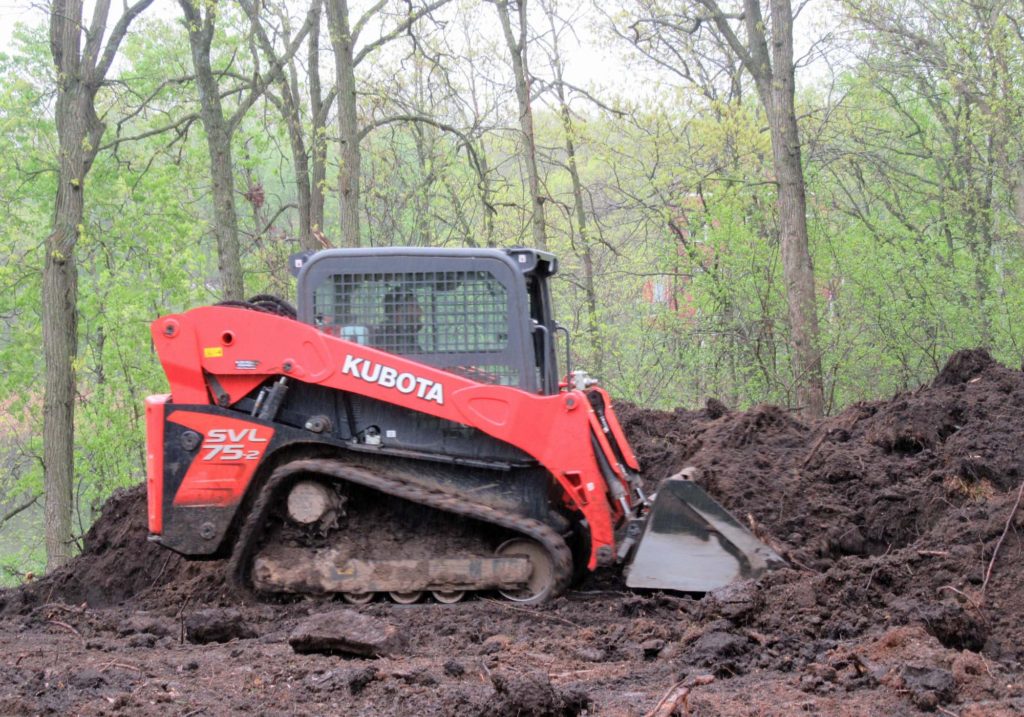
Approximately six inches of topsoil was scraped and pushed aside on the site, for future use. Because this topsoil contains quite a bit of organic material, it is not stable to build on top of. Small plants or brush might grow into the concrete foundation if the topsoil is not removed. In addition, topsoil holds in moisture. If pressed onto a concrete foundation, it may hinder it from curing properly.

removing the topsoil

This soil is, however, a wonderful material that will be spread back into place once the house is finished. It will be the perfect base in which to plant grass seed.


PLANNING THE EXACT HOUSE LOCATION

The excavation crew called me to the site to determine where exactly the house would be positioned. Although we had a basic idea of the location previously, the site looked a lot different with fewer trees. I have to say that, to date, this has been the most stressful part of the building process for me. It just seemed like the first real permanent decision. And that decision can’t be changed further on in the process if we are unhappy.

Our site is not a standard city lot where all houses are facing in the same direction toward the street. Because of this, we had quite a bit more flexibility on how to orient the house. Factors such as natural daylight, slope, views, and sight-lines all came into play and eventually we settled on what we think will be a good location.

determining final house location

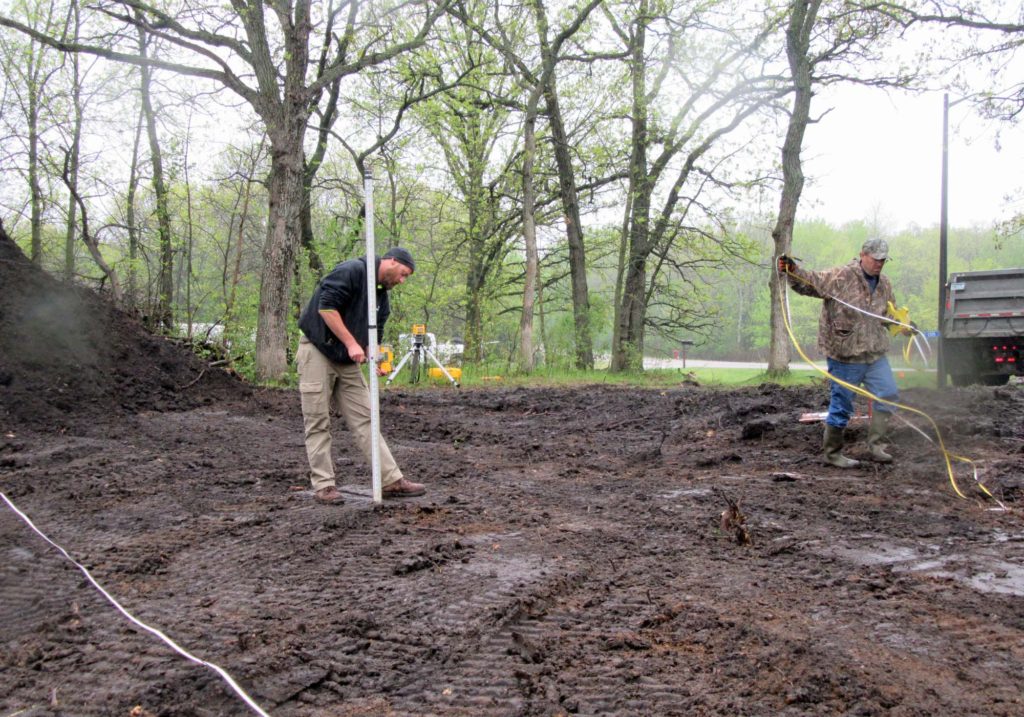
Tape measures were run, laser levels were activated, and the crew was able to stake out the corners of the house and garage. I think it is pretty amazing how these modern day tools speed up the process.


DIGGING THE HOLE

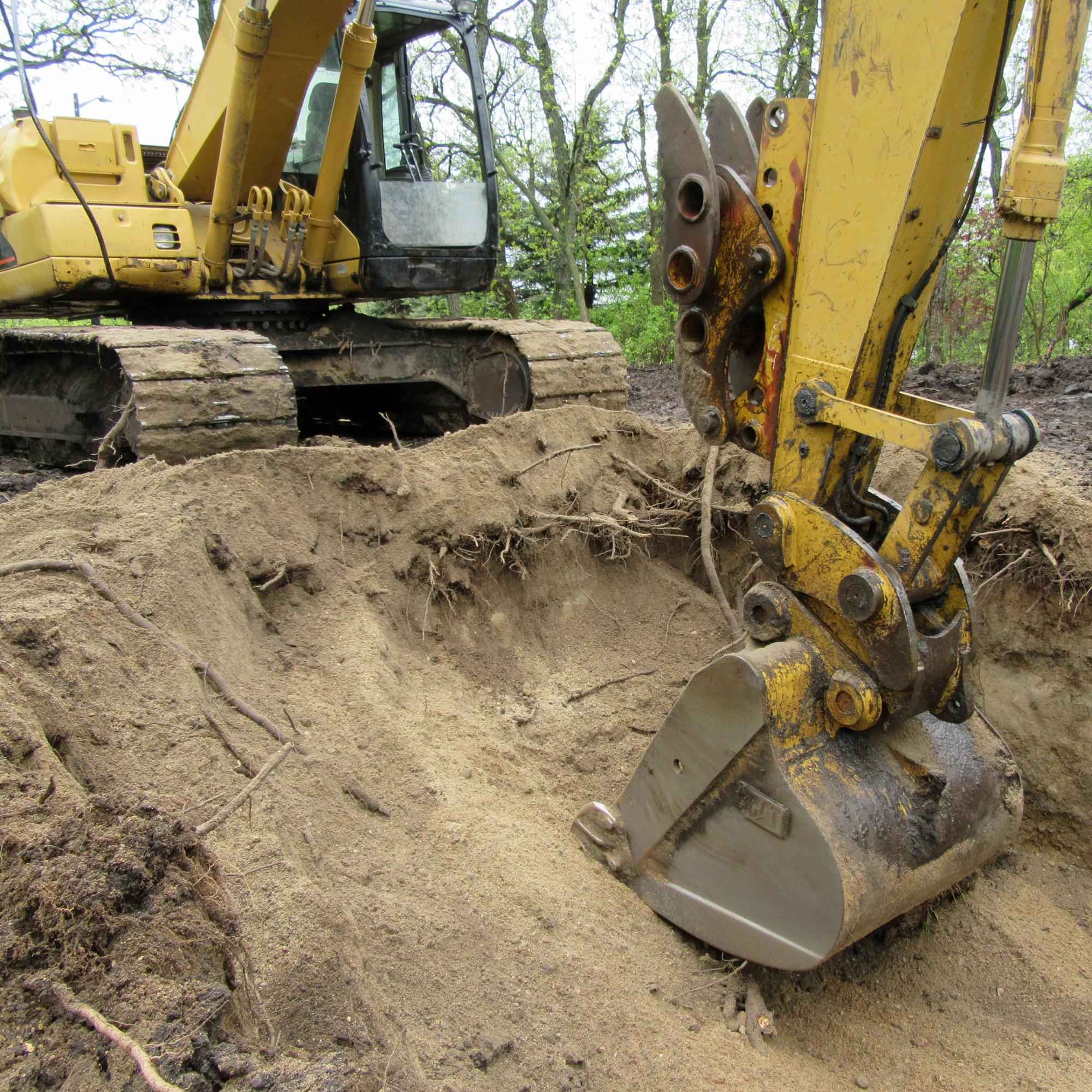
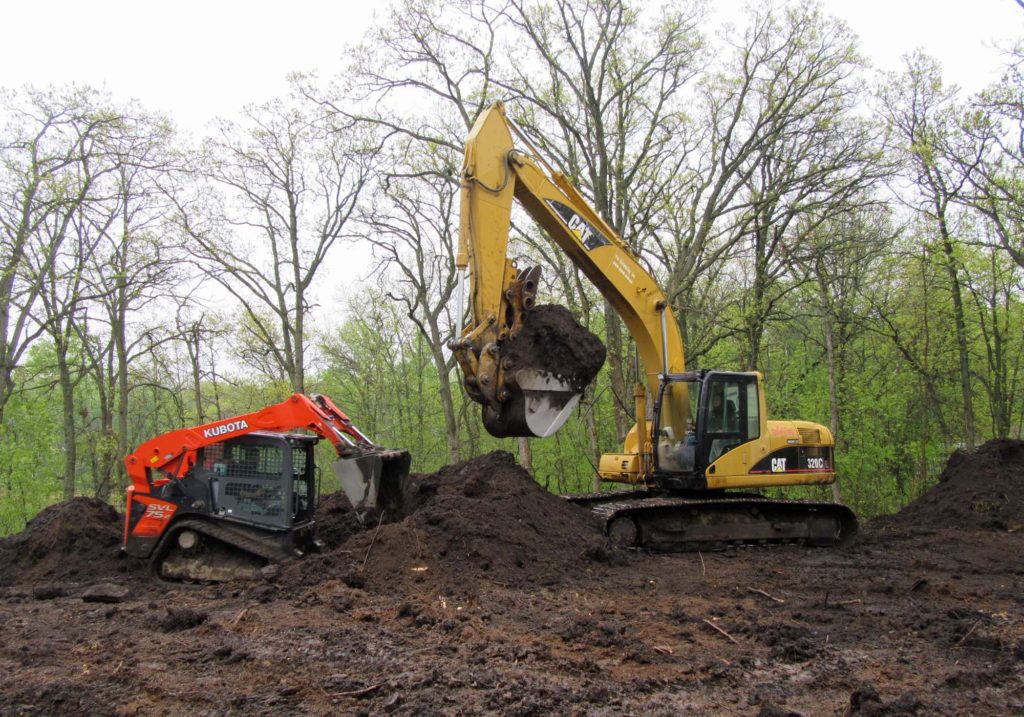
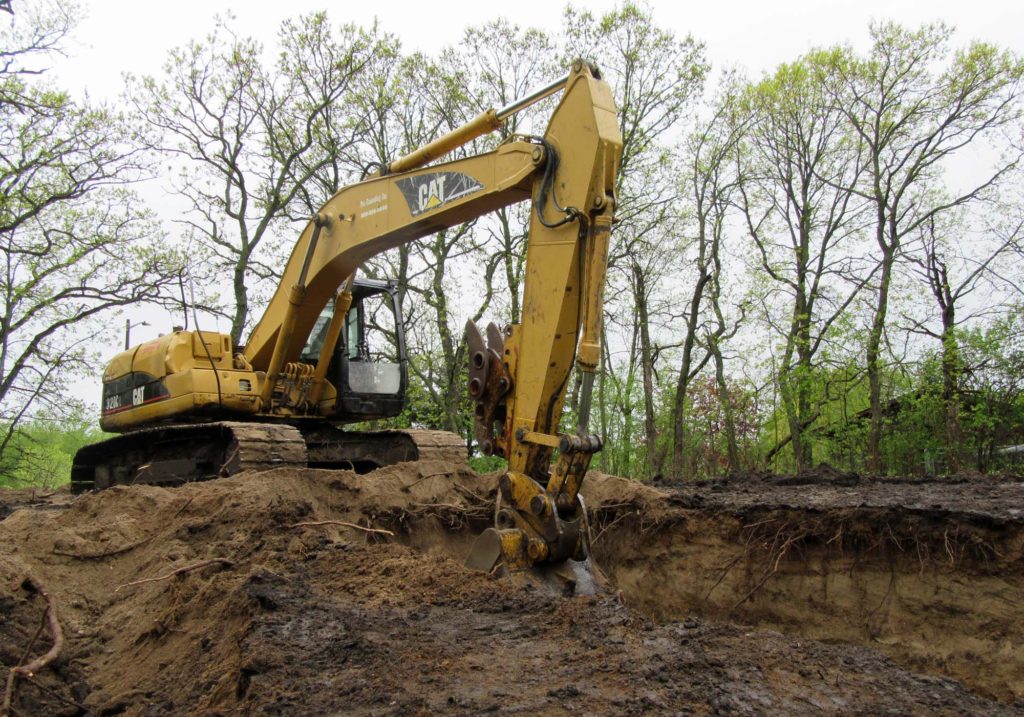
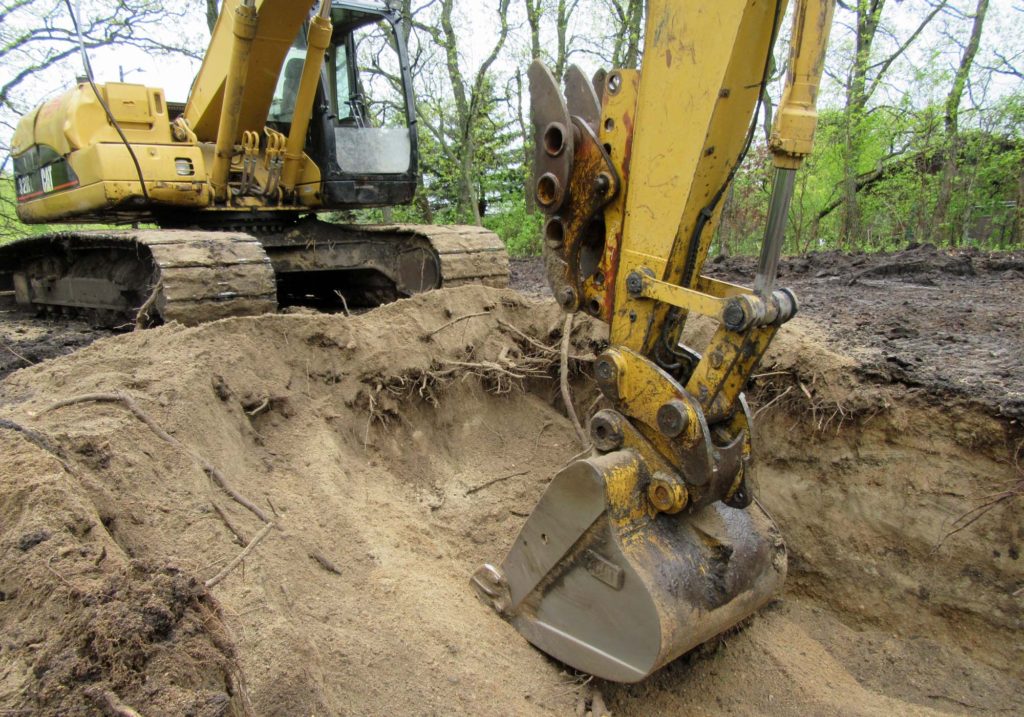
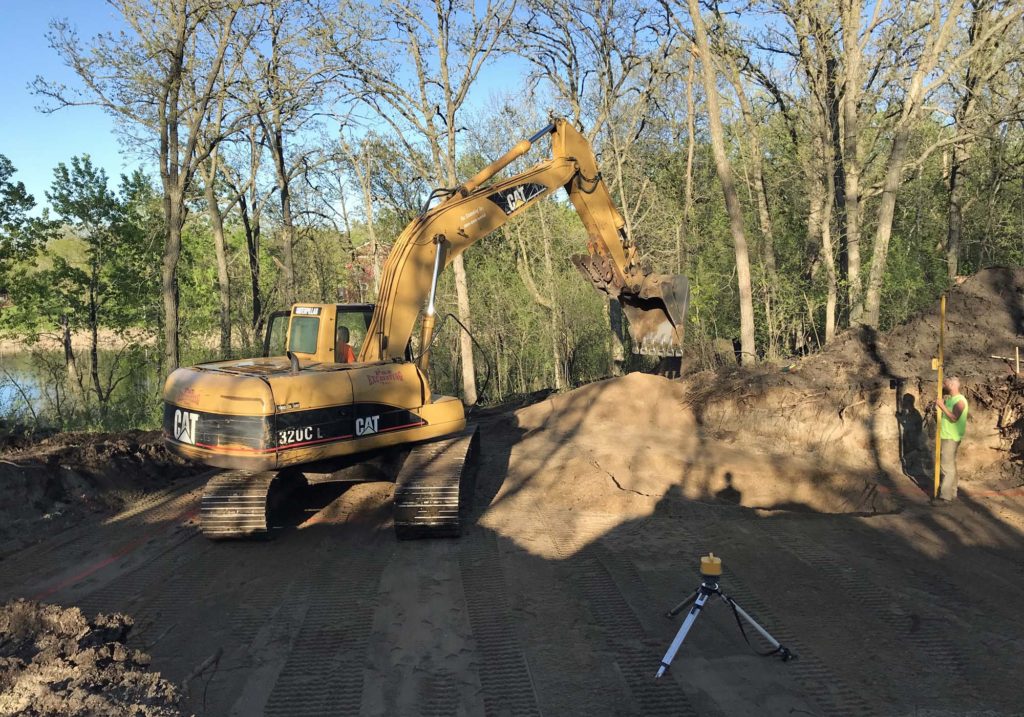
Finally, the entire site was prepared and the crew could begin digging the hole for the basement. Above all, this is the portion of site work that I was most looking forward to. Seeing the large machinery in action was truly incredible.

digging the basement

We found that our site has quite sandy soil, with a bit of gravel content. This is actually favorable for house building. It basically ensures that, as long as the ground is graded properly, we will never have water issues in our basement. Compacted sand also provides a great base to build upon.

sandy soil

A portion of the soil was taken off site. The rest was left, to fill in around the footings and foundation.


SITE WORK COMPLETE

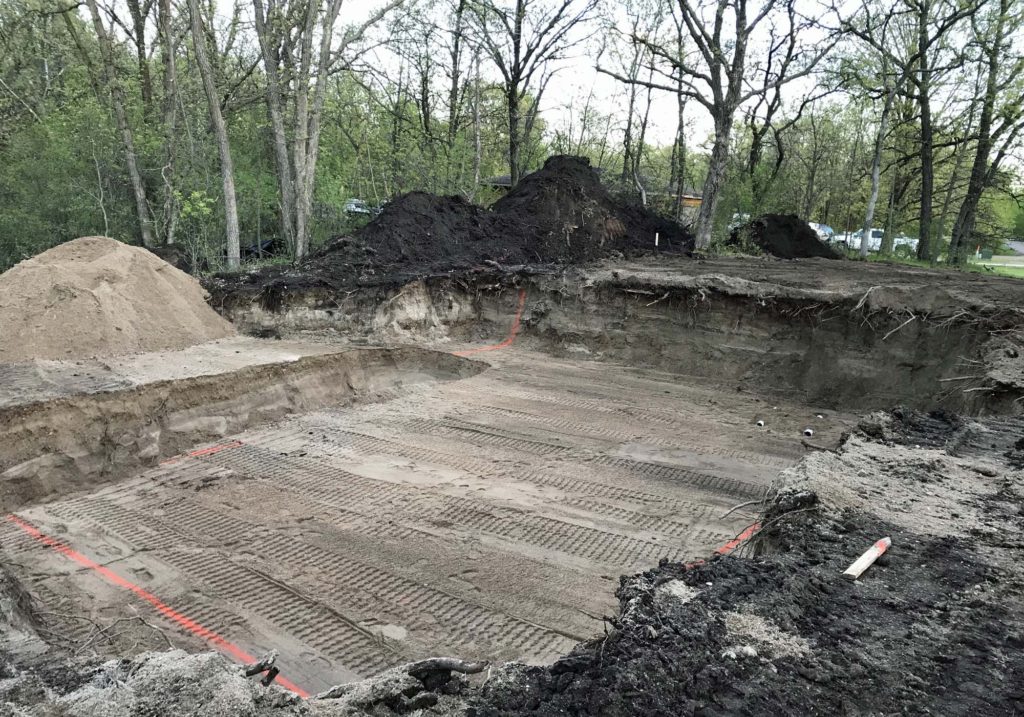
After hours of digging, and packing down the soil, the site started to take shape. And oh was it ever exciting!

level house building site

house outline ready for footings

This picture shows the outline of the house, marked in orange. It will be easier to see once the footings and foundation are set up. We are really excited for that next step! I have heard that once the foundation is complete, the rest of the building process seems to go very quickly!


SITE WORK | HOUSE BUILDING UPDATE NO. 3

This video shows the crew working hard to prepare our site for construction!


It’s pretty excited to finally be seeing a bit more progress, and things will really start to go quickly once the foundation gets started. We hope to be able to share that update next! Be sure to subscribe to the Arrow Hill Cottage YouTube channel, where I will be posting an entire video series on our new house build.


site prep work


Sewer Digging Drama | House Building Update No. 2

It has been a whirlwind to say the least. In the last update I gave you, we were busy clearing trees from the property in the hopes that we would be able to build. We had to wait for our appraisal report, to find out if it would financially make sense to build at this moment in time.

Sorry to leave you hanging like that, but a lot has happened since that point – and I am ready to share all of that with you today!

clearing the trees at the building site of our new home

A seasoned blogger might put their reader in suspense. Maybe make them scroll through the entire post to get to the news that they came for. Lucky for you, I’m not a seasoned blogger. I feel like sharing this news right away!

The answer is…YES!

We are going to be building our simple dream house!


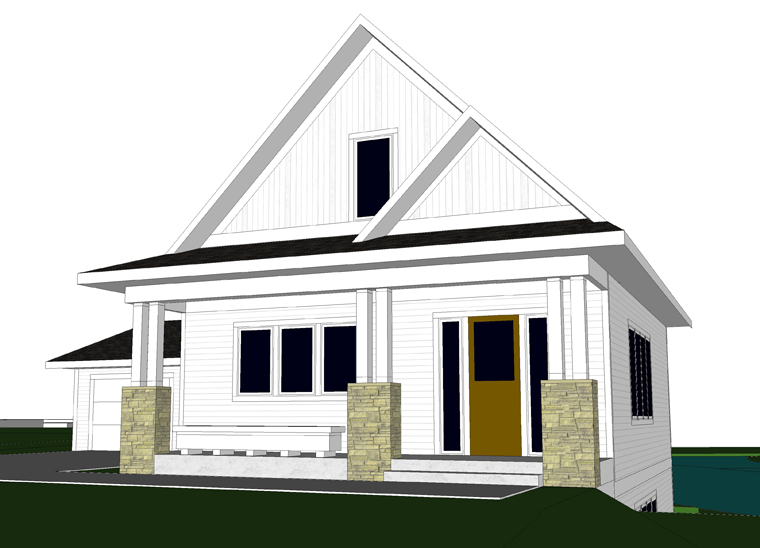
our small dream home, Arrow Hill Cottage


To be honest, I doubted this many times over the past couple of weeks. I questioned our motives. Wondered if we were being foolish or greedy. It isn’t easy to take on a dream that has been in the back of your mind for so many years. You question why that dream came to be in the first place. Lose a bit of your resolve.

But, through many heart felt conversations with family and friends, and silent prayer seeking His truth, we felt hopeful. And just last week it was confirmed.


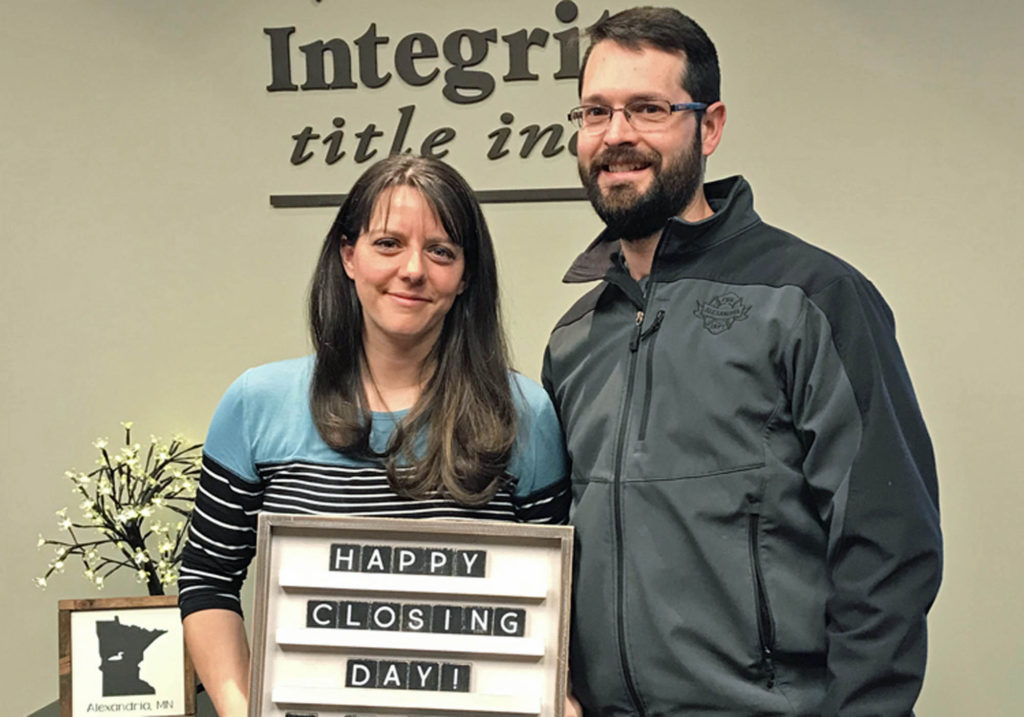
closing on the construction loan


We signed on the dotted line, our intention to make this dream a reality. And we couldn’t be more excited (or nervous) about it.


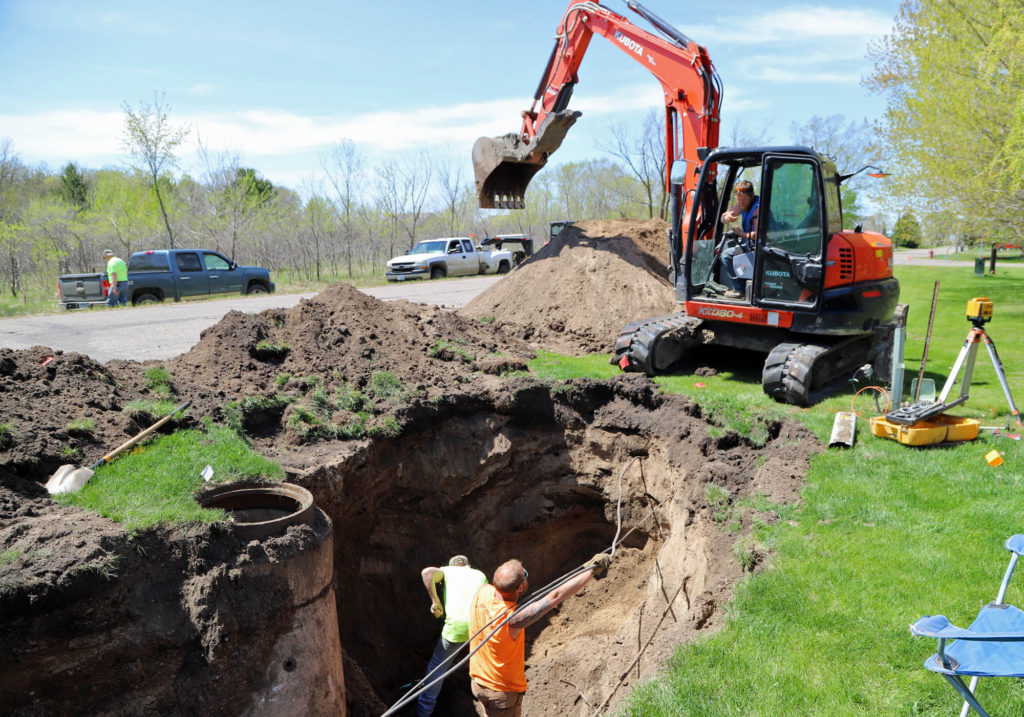
If you think it has been all sunshine and roses since closing day though, think again. In fact there has been a whole lot of drama. Hence the title of today’s update post.

So much has happened in the past coupe of weeks, in fact, that it is hard to explain. I knew it would be much easier for me to sort it out in video format instead of typing every last word. Though the video is a bit long, I encourage you to watch through the entire sixteen minutes, to get up to speed to where we are at! Information given in the video may become relevant in future new home construction updates.


HOUSE BUILDING UPDATE NO.2


Whew! If you watched through the video you know that the roller coaster ride has just begun. We were aware that new home construction presented some drama, I think we just were surprised to see it happening so soon! I hope you will come along for the ride and share all the highs and lows with us!


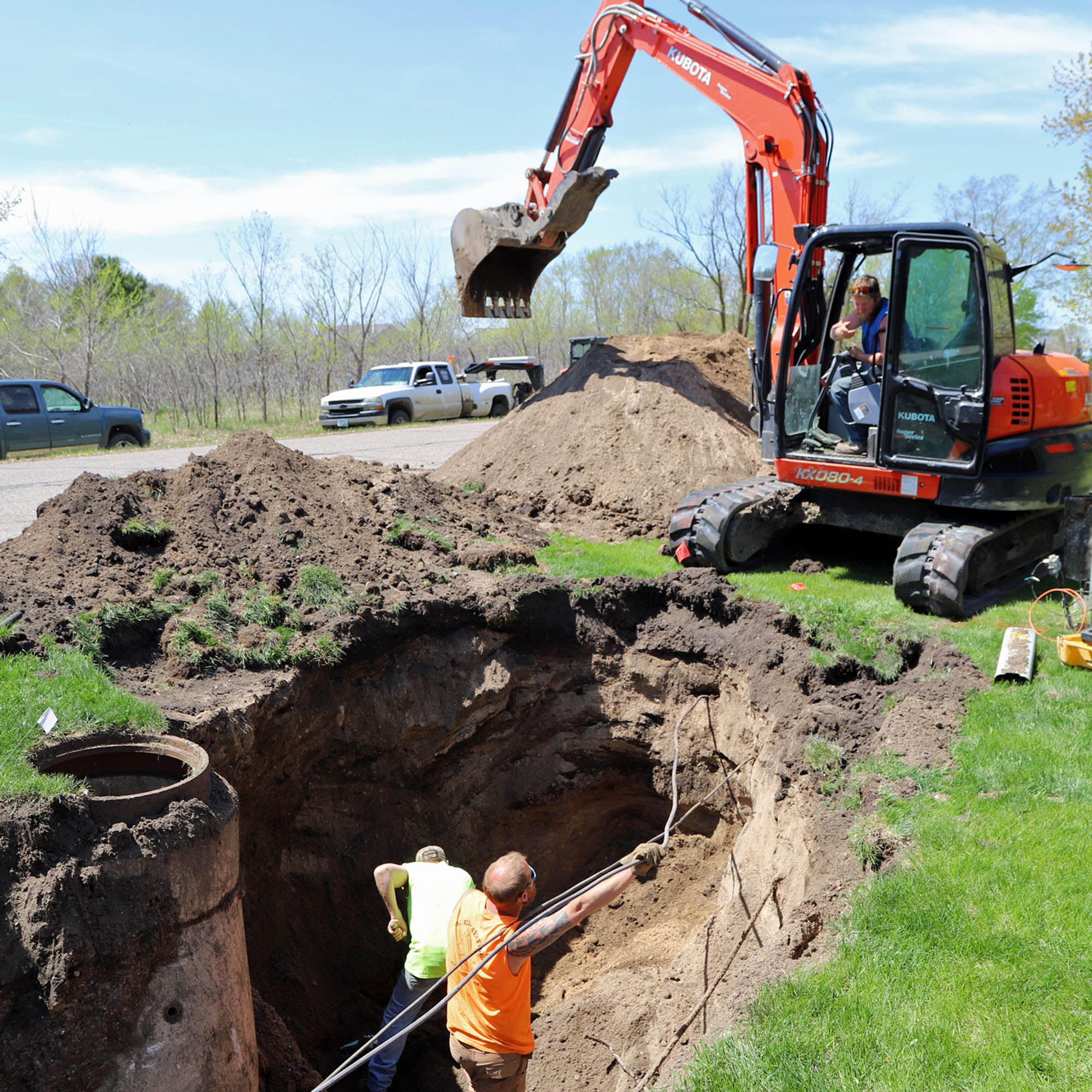
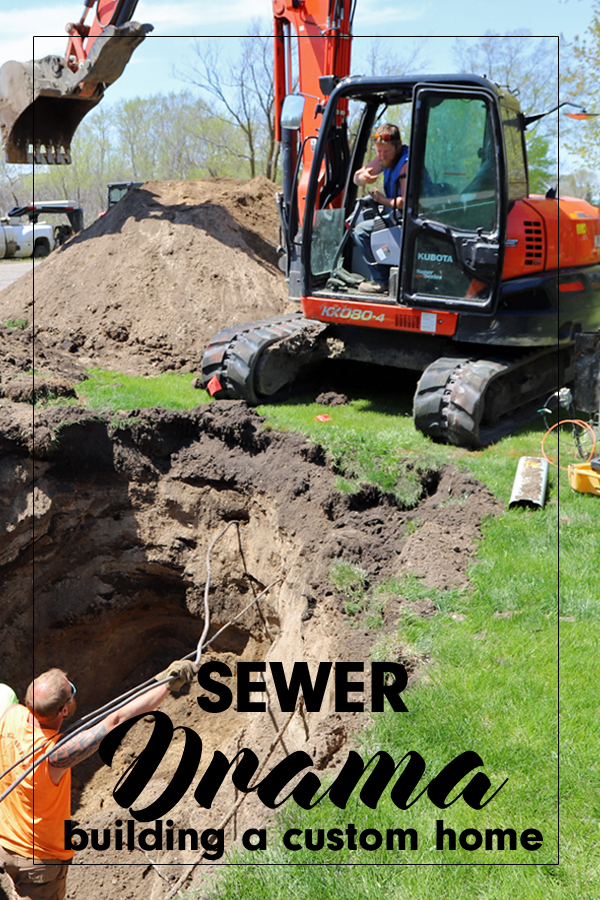
digging to connect to the sewer system

At this point it is my plan to give house building updates at least once every couple of weeks, perhaps once per week if there is enough to share. I also hope to continue blogging about simple living tips and resources, as time allows.

Let’s be honest though, this summer is mainly going to be ALL about the house! Other posts regarding our new home construction can be found HERE.

connecting to the sewer - building a new home


10 THINGS TO CONSIDER WHEN HIRING A CONTRACTOR

Nobody loves your house like you do. Nobody. Even if that house is still lines on a page – it will never bear the same emotional connection to anyone other than you and those who will reside under it’s roof.

Whether you are looking for someone to build your dream house or need an extra hand with a tricky remodel project, there are 10 things you need to know before hiring someone to work on your house.


1. IT’S OKAY TO ASK FOR HELP

It might be tough for you to hand over the reigns. Maybe you have tackled a variety of projects in the past all on your own and have come out successful. You have pride in your work, no doubt. But it is also okay to realize that maybe you can’t do everything on your own.

Whether it is a time constraint issue or just the fact that you do not have the skills to complete the task at hand, don’t feel ashamed. There are people who are specialized in this work, who are just waiting for your phone call.


2. DETERMINE IF YOU NEED A CONTRACTOR

 

Do you need a full blown general contractor, or someone who specializes in one specific area. Are you looking for a ‘jack of all trades’ handyman or a license professional? The size of the project will likely be a deciding factor in this decision.

If a small area of your existing home needs new flooring, for example, hiring a handyman may be perfectly fine. The large and complicated projects – and whole house builds – should be left to the seasoned contractors.


3. ASK TRUSTED FRIENDS FOR RECOMMENDATIONS

 

Who better to get referrals from than the people you know and trust? This is simple, and free word of mouth marketing. It is why contractors are looking to do their best work. They know that their reputation will precede them.

You may also get good results from others living in your same community – by posting on an online message board. You might be surprised to learn that the neighbor next door had the same type of work done on their home recently. If you approach the subject carefully, you may be able to find out what they paid their contractor for their similar project, something that may come in handy when considering the bids you are given.

4. PREPARE A LIST OF QUESTIONS

Call a minimum of two different contractors. Ask them the same questions, and write down their responses. Their answers may give you peace or give you pause. Some of the more common questions to ask include:

How long have you been in business? Obviously, a contractor who has been in the business locally for many years will have the experience and references to back up their work. That doesn’t mean you need to count out the new guy though. They may be hungry to build their business and put forth their best effort.

How many projects like mine have you completed in the last year? It won’t hurt to also ask to see examples of their work.

Do you have a license? The requirement varies from state to state, and also between trades. Check this site for details on state specific licensing requirements.

Can I see your certificate of insurance? Contractors should have both liability insurance and workers’ compensation for the specific job they are doing. Seeing the physical certificates is important.

Who are your main suppliers? Contractors will generally work with supply companies time and time again. Consider them additional references. Go ahead and call the suppliers (tile stores, lumberyards, home improvement stores) and find out if the contractor does reliable work or if they have left a path of unhappy customers. If a contractor is unwilling to offer suppliers names, you can consider he or she has something to hide.

What is the size of your crew? How many people will be working on my project? It is unlikely that the contractor themselves will be doing much, if any of the work on your project. They generally will have a crew, whether that is 2 or 20+ employees. Ask to meet with the foreman who would potentially be heading your project – preferably visiting with him or her on a current job site. You will be working closely with this person, and it is important to determine early in the game if your personalities mesh. Visiting on the job will provide an added bonus of allowing you to witness if their work is running smoothly.

Do you bid estimates or offer fixed prices? If possible, ask the contractor to provide you with a breakdown of how much each portion of the project will cost, including the breakdown of how much will be applied toward materials and labor expenses.
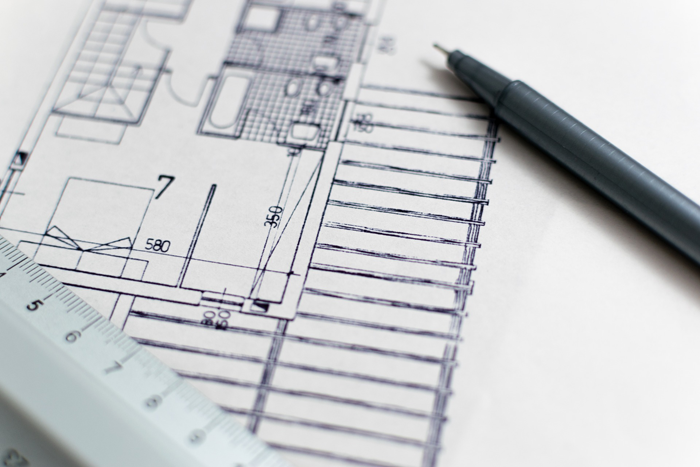
Will you be pulling the permits and scheduling inspections? The answer to this question should be yes. Not only should the contractor be aware of which pieces of the project will require permits and inspections and how to get them, he should also be willing to do the leg work.

What is your timeline for completing my project? Determine when they would be able to start the job. If they are booked up and you have a project that is time sensitive, you may need to move on. Ask the contractor to estimate how long the job may take, and also what factors may delay progress (weather? other jobs they are working on, etc).

What is your typical working day schedule? Determining the core hours your contractor and his crew plan to operate will help you know what to expect. Do they start early in the morning? When are the tools packed up for the night? Also ask what type of noise level can be expected and if they want you to be present at any point during the day.

How will you care for my home during your time there? Find out what the protocol is for storing supplies and tools for projects that span multiple days and learn if you can expect a daily site clean-up. Also be sure to ask what measures will be taken to protect the portion of your home that is not included in the project (if a remodel). For example – will they be sealing off the work zone?

The communication between contractor and homeowner is an important one – and it shouldn’t be a one sided conversation. Before the project is handed to them a good contractor should have some questions for you as well!


5. DETERMINE A PAYMENT PLAN

The Better Business Bureau advises against paying in full upfront for a job that has yet to be completed – but you may have to make an early payment for supplies. From there you will need to discuss how much will need to be paid at what point during the project. Your chosen contractor should be able to give you a reasonable payment schedule.


6. OBTAIN A WRITTEN CONTRACT

Make sure that all the bases are covered and written down. Even if your state does not require a written contract, ask for one. Before signing, make sure it includes all of the following information:

The contractor’s name, address, phone and license number (if required)

Details on the estimated start and completion date

Payment schedule

The contractor’s agreement to obtain necessary permits

Information about how change orders will be handled

A list of materials that will be used – the more detailed the better. Determine who is responsible for choosing the products that will be purchased at a later date, and who is responsible for paying for them (If it is in the budget, know what ‘allowance’ will be given to each item)

A list of what the contractor is or is not responsible for


7. KEEP RECORDS OF COMMUNICATION
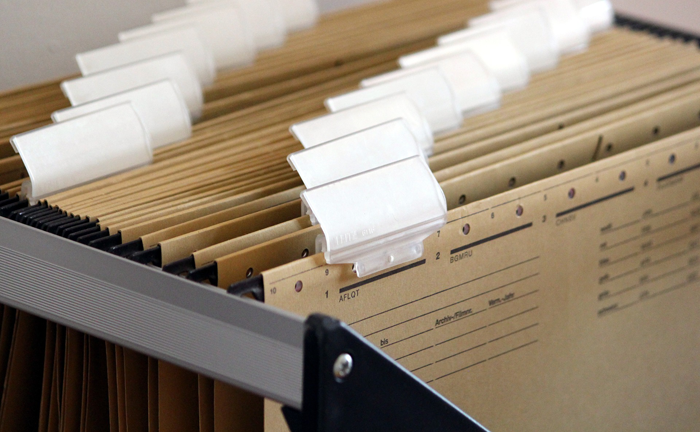
Change orders are quite common during construction. They can be as small as moving the location of a light switch or as large as eliminating an entire portion of the project. Whenever a homeowner and contractor or builder agree on a change, it needs to be documented. Keep notes of these changes in a file, including the date they were made, who discussed the changes with you, and if the monetary impact was discussed.


8. BE PRESENT
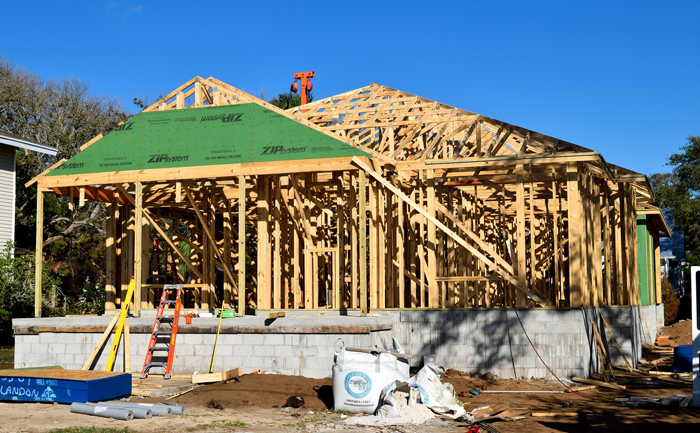
Very rare is the situation where the homeowner shakes hands with their contractor and walks away until the construction is finished. It is understandable that you will want to know what is going on with the project, but it is important to note that a construction zone is a dangerous place to be.

You should discuss with your contractor early in the process how often you plan to drop in to check on things. It is always best that when walking on the construction site you do so with the job foreman – who can give you a tour of what has been completed and point out what is to come. For job site safety tips, check out this post from Construction Dive – which highlights 5 ways to keep the homeowner safe when they visit the job site.


9. FINISH THE JOB WITH A CHECKLIST

Before that final payment is made, check to make sure these things have been done and/or collected:

The work has been completed to the specifications outlined in the contract. As the homeowner, you should inspect the final product to be sure it meets your satisfaction.

Written warranties on products and services, including who will honor them and the expiration date of each

Written proof that all subcontractors and suppliers have been paid in full

The job site has been cleaned of debris and extra construction material


10. BEWARE OF SCAMS

If you have done your research and walked through steps one through nine, chances are number 10 won’t be a problem; But be aware that there are contractor scams out there. You should be wary of any contractor who:
Knocks on your door asking for work and offering you money for the referrals you make

Pressures you to make a decision more quickly than you are ready

Only accepts cash or asks you to pay upfront for the job

Asks you to obtain the building permits

Offers a ‘lifetime warranty’ or long term guarantee

Doesn’t list a telephone number in the local business directory


I hope that this list of 10 things to consider when hiring a contractor is helpful as you prepare for your next house project.