Designing a home can be a pretty overwhelming thought, especially considering there is no right or wrong way to do it. How do you narrow down the decisions when there seem to be endless possibilities of size, style and function?
Sometimes, you know what you like when you see it. You realize which direction to take when you see that someone else has been successful following a similar path. These days, technology gives us inspiration at our fingertips through venues such as Houzz, Pinterest and Instagram. You can search the internet for ideas and tips, but there is just something so comforting and personal about using a book for inspiration.
I have amassed a large collection of Home & Garden + DIY books through my years working in the architecture field, and they are literally referenced ALL.THE.TIME both for personal enjoyment and professional development. The amazing thing is that even with all of this use, each time I flip through their pages, I seem to notice something new. A solution to a problem we have been having at our own home, a simple plan change that might benefit a client, or an inspiring use of materials.
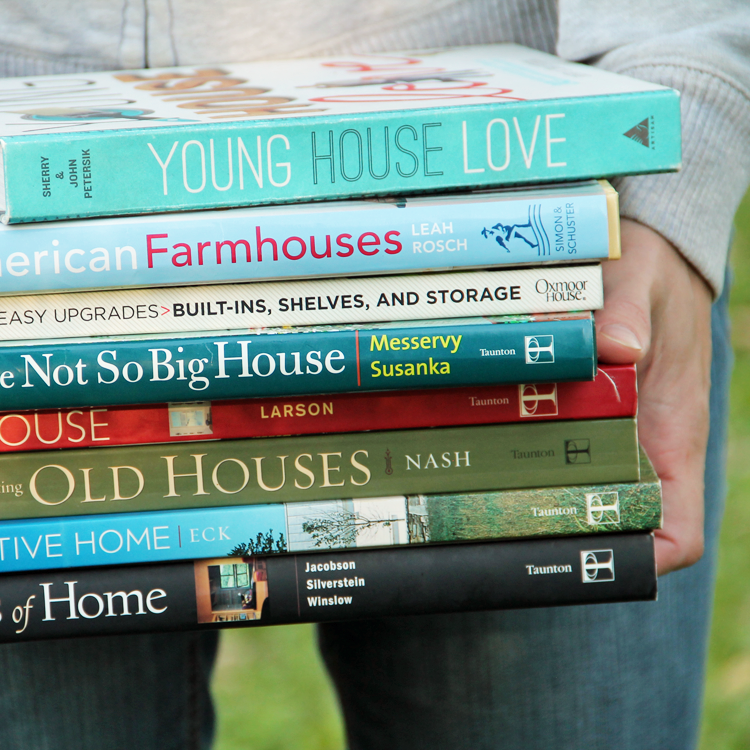
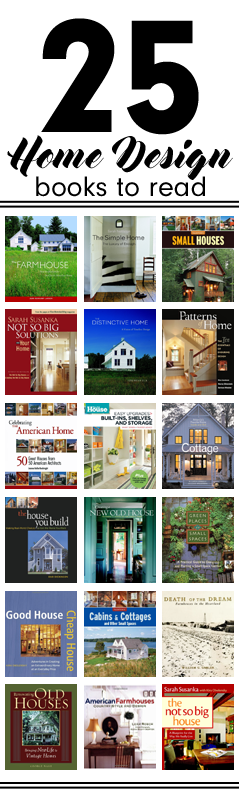
From my personal library, I have curated a collection of 25 Home Design books that are MUST READS – the cream of the crop. The words I use to describe each book in the reviews below are my own thoughts and insights. You can click on the images to learn more about each book, read reviews from other customers, or purchase for yourself.
Happy Reading!
This post contains affiliate links to products for your convenience. If you purchase via my links, I may receive a small commission at no additional cost to you. Thanks for supporting Arrow Hill Cottage!
1. THE NOT SO BIG HOUSE: A BLUEPRINT FOR THE WAY WE REALLY LIVE by Sarah Susanka
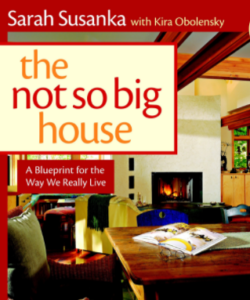
I am starting out the list with one of the classics. Originally released in 1998, this ground-breaker was re-written in 2009 to include 16 additional pages of high class information.
The author, Sarah Susanka, is a renowned architect and leader in the small house movement, giving her readers a simple message – that quality should come before quantity. The book gives homeowners plenty to think about in regards to what is really necessary in a home.
The Not So Big House encourages house design that means more than the total square footage.
2. CREATING THE NOT SO BIG HOUSE: INSIGHT AND IDEAS FOR THE NEW AMERICAN HOME by Sarah Susanka
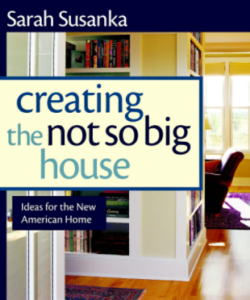
The Not So Big House started a movement to change they way people think about the American home, and this book calls those ideas to action by presenting key design strategies.
As in book one, Sarah gives plenty of examples of how these strategies can help make a smaller home live large.
With plenty of inspiring images to describe the topics presented, this book is easy to follow, and the techniques presented are useful whether you are building new or remodeling your existing home.
3. NOT SO BIG SOLUTIONS FOR YOUR HOME by Sarah Susanka
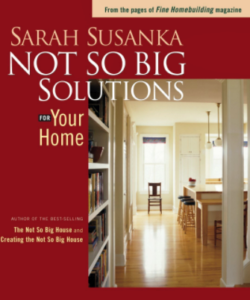
Whereas the first two books in the Not So Big series focused on overall concepts, Not So Big Solutions for Your Home tunes into the small details that can improve how people use their homes. Simple tips are offered to homeowners looking to make their spaces more functional. From positioning a tv in a family room, to designating a mail sorting station, there are ideas to solve all sorts of the common problems that homeowners face.
The concepts in this book are complemented almost entirely with hand drawn sketches, which adds a personal and fun touch.
4. INSIDE THE NOT SO BIG HOUSE: THE DETAILS THAT BRING A HOME TO LIFE by Sarah Susanka and Marc Vassallo
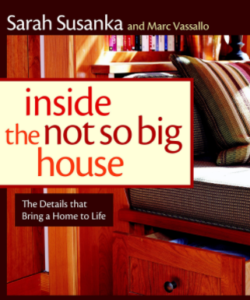
This book is not as much of a ‘How To’ as the others books in the series are. I would describe it more as a collection of homes, each designed with the Not So Big principles, that are presented as case studies of a well designed home.
The pretty pictures serve as evidence that by following the ideas in the previous books you can attain a personalized home to fit your family’s lifestyle.
Home styles from the modest ranch to a Tuscan villa are represented. In that respect, I feel that this book has a little inspiration for everyone’s style.
5. OUTSIDE THE NOT SO BIG HOUSE: CREATING THE LANDSCAPE OF HOME by Julie Moir Messervy & Sarah Susanka
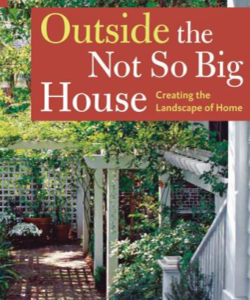
Extend your home beyond its four walls by using the concepts of landscape design presented in this book. Learn how to embrace the site that your home occupies by not only appreciating the elements that nature provides, but finding a link to connect the home’s interior to it’s surroundings.
Concepts discussed include discovering privacy in your yard, using variety in plantings, and living lightly on the land. The twenty homes/landscapes presented in this book each utilize these concepts in an interesting and thoughtful way.
6. NOT SO BIG REMODELING: TAILORING YOUR HOME FOR THE WAY YOU REALLY LIVE by Sarah Susanka and Marc Vassallo
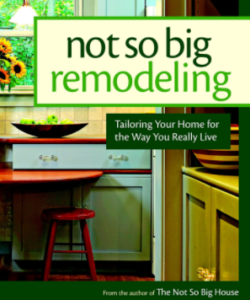 Through the pages, authors Sarah Susanka and Marc Vassallo provide simple but clever ideas that can have a big impact on how the space in your home is used. Many of their ideas work within the existing footprint of the home, though they also show examples that involve adding on just a little. No major home overhauls are tackled.
Not So Big Remodeling does a wonderful job of showcasing basic remodeling solutions for virtually any room your home may have – from bathrooms to home offices, even basements!
7. SMALL HOUSES by the Editors of Fine Homebuilding
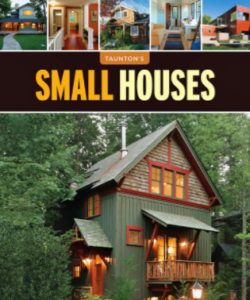
One of my favorite things about this book is the way it is laid out. It is broken into sections based on house size, from those under 1,200 square feet all the way up to homes as large as 2,250 square feet. This varied range of scale proves that ‘small’ is a relative term.
If building new, Small Houses provides a list of ten techniques to keep the size down, including the use of multipurpose space and using varying scale to elongate the feeling of expanse. The book also provides examples of homes that were improved with small additions over time.
8. COTTAGE: AMERICA’S FAVORITE HOME INSIDE & OUT by M. Caren Connolly & Louis Wasserman
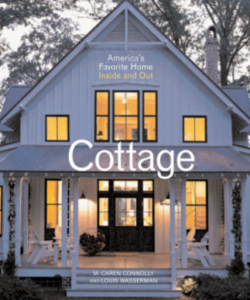
You can probably guess from the name of our future property (and this website) Arrow Hill Cottage, that I have a fondness for this particular home style. What appeals to me about cottages is their personally scaled size, cozy intimate interiors and deep connection to their surroundings.
The authors of this book feature 24 unique cottages through beautiful photography and amazing watercolor drawings – including mini floor plans of each. The text is also well thought out and informative – providing insight into site planning, the use of vernacular building materials, and current and future trends in cottage design.
9. THE FARMHOUSE: NEW INSPIRATION FOR THE CLASSIC AMERICAN HOME by Jean Renkamp Larson
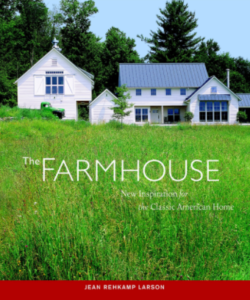
There is just something about a farmhouse. It is an iconic symbol of a more simple era. Farmhouses aren’t pretentious or showy, yet they are timeless and well loved by many.
This book presents a collection of newly built and remodeled homes, each that use the classic farmhouse as a model for design. The examples of homes throughout its pages prove that the hearty form and basic shapes of the style is highly adaptable for modern day living. Jean Renkamp Larson did a wonderful job showcasing the simplistic beauty of today’s interpretation of this classic home style.
10. PATTERNS OF HOME: THE TEN ESSENTIALS OF ENDURING DESIGN by Max Jacobson, Murray Silverstein & Barbara Winslow
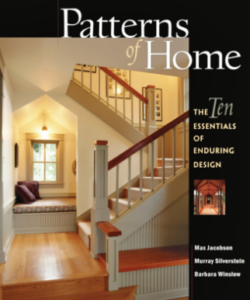
The three architects who authored this book present what they consider to be the ten essential elements that make a home timeless.
The book is clearly written, with wonderful photographs of houses from all over the country used to showcase the patterns – including the composition of building materials, the way light is captured, and the flow between rooms. The concepts laid out in this book, if executed properly, can really make a difference between a purely functional home and one that inspires it’s inhabitants.
11. DEATH OF THE DREAM: FARMHOUSES IN THE HEARTLAND by William G. Gabler
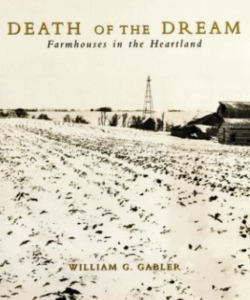
This book is unlike any other on this list, in that it is more of a history lesson than a tutorial of design. It is also regional specific, focusing the attention on farmhouses built in the Minnesota prairie.
The author is an amazing story teller and photographer and he beautifully illustrates how pioneer farm families, mainly immigrants from Europe, settled on government provided free land with the dream of starting a new life. He explains how these homes were designed in an evolutionary way, by the people who inhabited them, based primarily on the immediate environmental conditions that presented.
12. THE SIMPLE HOME: THE LUXURY OF ENOUGH by Sarah Nettleton
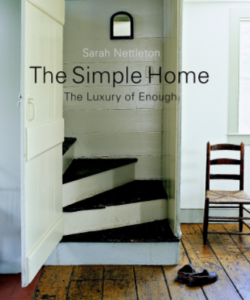
The Simple Home encourages you to think about the sounds, feelings, and movement that allow you connect to life itself – thinking less about what you want in a home and more about who you are and what you need to be fulfilled – then translating them into elements of your home.
The author of this book contends that less is more, and that by eliminating non-essentials, you can design a simple home that will help you and your family appreciate the simple pleasures of living. The book is laid out with six main concepts to keep in mind. Simple is: Enough, Flexible, Thrifty, Timeless, Sustainable, and Resolved Complexity.
13. THE HOUSE YOU BUILD: MAKING REAL WORLD CHOICES TO GET THE HOME YOU WANT by Duo Dickinson
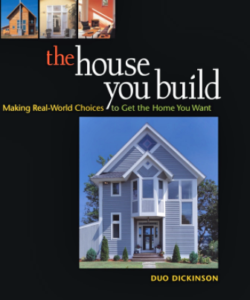
The house is the largest purchase most Americans will ever make. Why then, the author questions, aren’t more people living in the home of their dreams? The budget seems to be a stumbling block for many, and Duo Dickinson sets out in this book to encourage the readers that it doesn’t have to be.
20 homes are presented and the cost to build each is listed, which I believe was a wonderful decision on the author’s part. By adding this little bit of information, left out of nearly every other home design book I have read, Mr. Dickinson immediately brings the homes to a relate-able level to his readers. They are real world examples, homes built by people of all walks of life.
14. GREEN PLACES IN SMALL SPACES: A PRACTICAL GUIDE TO DESIGNING & PLANTING A SMALL SPACE GARDEN by Kerwin Fischer
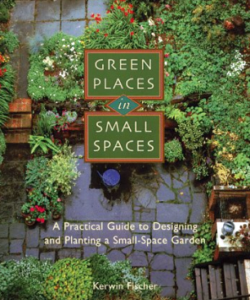
This book does a wonderful job explaining gardening in simple layman terms so that even people like me, who don’t posses a green thumb, can feel confident trying their hand at growing their own plants and flowers.
Kerwin Fischer, the author, starts at the basics of how to select a spot to make ‘green’, by evaluating aspects such as light levels, protection from wind, and access to water.
Further in the book, he thoroughly describes which flowers bloom during which seasons, and also explains how to prep flower beds or pots for their dormant seasons.
15. YOUNG HOUSE LOVE: 243 WAYS TO PAINT, CRAFT, UPDATE AND SHOW YOUR HOME SOME LOVE by Sherry & John Petersik
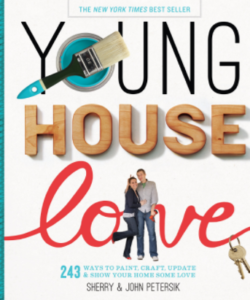
I have been following the Young House Love blog for years, so when they released their first book – with the same title – I was super pumped! The book does not disappoint and is written in the same personable voice that John and Sherry Petersik are known for. And just like the blog, the book is a treasure trove of creative ideas. From learning how to style a bed, to creating coasters – there is a project for every skill level, and by tackling them, you are sure to add some whimsy and personality to your home.
I consider this book to be more of a home DECOR book, but included it in this list because sometimes a simple spruce up is all the inspiration you need.
16. CREATING A NEW OLD HOUSE: YESTERDAYS CHARACTER FOR TODAY’S HOME by Russell Versaci
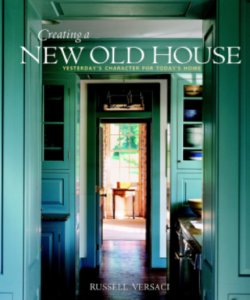
Perhaps you love the charm of historic houses, but don’t feel like signing up for all of the upkeep that they require. This book shows that it is possible to craft a new home with the familiar forms and harmonious proportions of these traditional structures, while providing the amenities necessary for modern day living.
Mr. Versaci lays out what he calls the Eight Pillars of Traditional Design, which are techniques that should be used to create new houses with traditional qualities. They include using authentic details, crafting with natural materials, and respecting the character of place by complementing the lay of the land.
17. THE DISTINCTIVE HOME: A VISION OF TIMELESS DESIGN by Jeremiah Eck
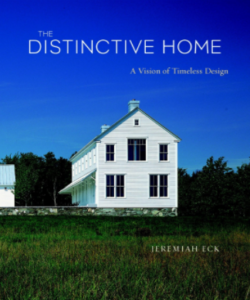
The author of this book has a theory that for a home to be distinctive, or timeless, it needs to have a balance of site, floorplan, and exterior and interior detailing. He provides multiple house examples, and lays out how each of them excels in each of these four categories.
The book is well organized and easy to understand and also includes small reference floor plans for many of the homes, which is personally one of my favorite things about home design books! The Distinctive Home will probably be most useful for people who are looking to design a brand new home, and not those that are remodeling a historic one.
18. CELEBRATING THE AMERICAN HOME: 50 GREAT HOUSES FROM 50 AMERICAN ARCHITECTS by Joanne Kellar Bouknight
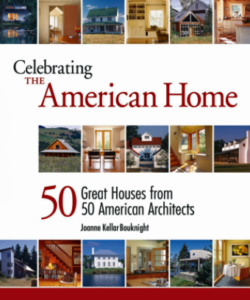
The title of this book really describes what it is all about! All 50 homes were selected by a panel of distinguished residential architects, who chose them based on how well they illustrate great residential design – including five important qualities: a great response to the site they occupy, a comfortable scale both inside and out, livability that accommodates both everyday life and special occasions, a deep respect for craft, and a distinctiveness that transcends the ordinary.
A wide variety of home styles are represented in the selection, from a humble cabin by the lake to a modern townhouse in the heart of the city.
19. GOOD HOUSE CHEAP HOUSE: ADVENTURES IN CREATING AN EXTRAORDINARY HOME AT AN EVERYDAY PRICE by Kira Obolensky
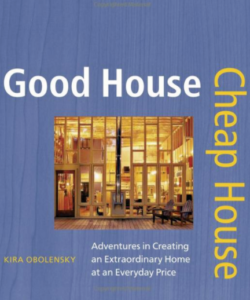
Want to design and build your own home, but fear that finances won’t allow it? This book seeks to prove that a good house does not need to cost a fortune.
The author presents three main aspects that can help you save money when designing and building your own home.
There are 27 homes featured in the book, and each of them brings something unique to the table. A house on stilts. An owner who poured concrete counter tops for his kitchen. A structure inspired by music. Each home perfect for its owners.
20. FLEA MARKET STYLE: DECORATING.DISPLAYING.COLLECTING by Better Homes and Gardens
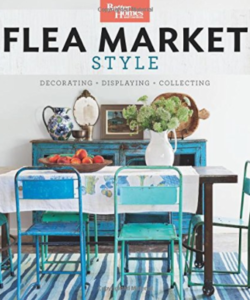
Another home decorating book to make my list, Flea Market Style has such amazing images that portray a variety of house interiors – including bohemian, cottage and country styles – proof that style is personal.
Decorating with found treasures, whether collected by thrifting, rummaging or antique shopping, is a favorite of homeowners. This book shares practical tips and advice for shopping and lays out concepts on how to display your finds without giving your house a cluttered look.
The last section of the book reveals ideas on how to re-purpose your finds into unique home decor items.
21. CABINS & COTTAGES AND OTHER SMALL SPACES by the Editors of Fine Homebuilding
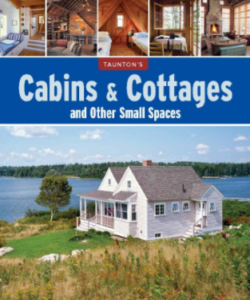
I’m just going to go ahead and say it. I love this book!
As a big fan of houses that are scaled to fit its occupants, I was impressed to see such a wide variety of examples presented – even a house boat example is included! The photos and sketches are beautiful to look at. Truly inspiring.
Readers will also appreciate that most designs list the total square footage and the general cost per square foot. This information is helpful in understanding what a new home might cost to build in the real world. These examples seem attainable, without being bland and boring.
22. AMERICAN FARMHOUSES: COUNTRY STYLE & DESIGN by Leah Rosch
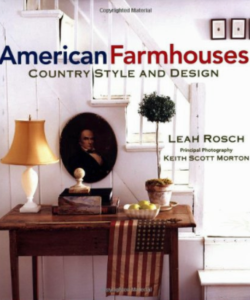
This book explores the individualism and heritage of the charming farmhouse look, which is still one of the most popular decorating styles in America today.
Leah Rosch chose to use photographs by Keith Scott Morton to illustrate the beauty and charm of the homes presented in the book, rather than using much written word. The last pages include a detailed list of manufacturers, craftsmen, and architectural antiques dealers nationwide – which, although potentially somewhat dated, can serve as an amazing resource to those looking to bring the classic look and detailing of these country homes to their interiors.
23. EASY UPGRADES: BUILT-INS, SHELVES, AND STORAGE by This Old House
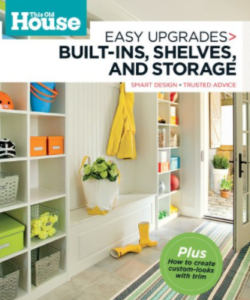
Get the most out of your home by making each square inch useful. One of the best ways to do this is through the use of built-ins. This book offers built-in solutions for every room and many situations, including window seats and under the stair storage.
This book is a great idea generator and in true This Old House fashion, it contains colorful and clear inspiration images and encourages its readers to tackle a few of the projects on their own – with detailed instructions and steps.
24. A FIELD GUIDE TO AMERICAN HOUSES: THE DEFINITIVE GUIDE TO IDENTIFYING AND UNDERSTANDING AMERICA’S DOMESTIC ARCHITECTURE by Virginia Savage McAlester
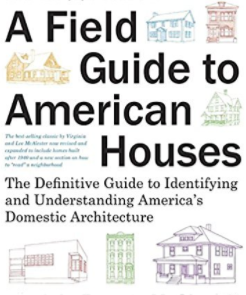
I would definitely recommend that you pick up this book. It is filled with incredible vignette sketches that clearly describe all of the hallmarks of each style of American domestic architecture – from the early Native American dwellings, to historic folk houses, all the way to the modern day home.
It is truly an essential guide to understanding the beauty and diversity of houses built for American families.
25. RENOVATING OLD HOUSES: BRINGING NEW LIFE TO VINTAGE HOMES by George Nash
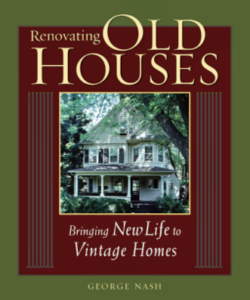
This book is a must have if you own a historic home. These homes were built to last, but they can surely throw curve balls when it comes to maintaining and renovating them!
The author, who is also a seasoned contractor, obviously loves homes of an older generation and wants to see them cared for properly. In his writing, he clearly lays out how to do so in a professional way. He walks through every step, including how to evaluate if a house is a candidate for renovation, and provides tips on adding modern conveniences without stepping on the character of the home.
I hope you feel inspired to pick up a book or two from this list, I promise you won’t regret it! Which are you going to read first?
Do you know someone else who could use this information? Share it with them by clicking on the icons below!