HOME MAINTENANCE BUDGET TIPS

Anyone who owns a home knows for certain one fact: THINGS WILL BREAK. And unlike renters, homeowners need to be able to pay for the repairs out of their own pockets. Because of this, it is wise to have a home maintenance budget in place.

home maintenance budget ideas

Issues may be a minor patch jobs that can be done over a weekend. Or there may be extensive damage that requires the expertise of a seasoned professional. The tricky thing is, you never know which kind will pop up, and/or how much these fixes may cost.

It is very wise to be prepared upfront, but starting a home maintenance budget. The following tips can help you determine how much to save, and where to keep the funds for the inevitable ‘rainy day’ when they will be needed.


TIP #1: THE ONE PERCENT RULE

budgeting for home maintenance

If you have just moved into your home, and have yet to repair anything, you may want to start with this rule. Use the purchase price of your home as a guide, and save 1% of that figure for repairs. If you purchased your home for $250,000, for example, expect to save $2,500 per year for maintenance.


TIP #2: THE SQUARE FOOTAGE RULE

home maintenance

Another easy calculation is to save $1 per square foot per year. If your home is 1,500 square feet – that would equate to $1,500 available for repairs each year.


TIP #3: CONSIDER THE AGE OF THE HOUSE

home maintenance budget amounts

Obviously, a newer home should need less maintenance than one that is older. In the first 5-10 years after a home is built, there should be only minor repair needs. Between 10 and 20 years, common maintenance includes re-painting, window replacement, and flooring removal/replacement. Homes that are over 30 years are more of a challenge. Major systems such as the roofing, electrical, and plumbing-  may begin to fail.

A graduated savings plan might be a good idea. Save a smaller amount of money each year for the first 10 years and increasing the amount put into the account as the house ages. Any money that isn’t used in the early years can be applied to the more costly repair items that inflict a home in it’s later years.


TIP #4: CONSIDER THE CLIMATE THE HOUSE RESIDES IN

amount to save for home maintenance budget

Houses located in areas of the country that receive freezing temperatures, large amounts of snowfall, and ice storms are more susceptible to exterior damage.

Houses located in areas that receive heavy annual rainfall and humid summer months can be subject to termite damage, which can weaken the wooden structure.

If you live in one of these areas, it is a good idea to pad your savings a bit.


TIP #5: CONSIDER PRIOR  + FUTURE MAINTENANCE

maintenance and repair budgeting

Small problems will become larger ones if left unattended. It is important to keep on top of the small issues as soon as they are discovered.  If you aren’t the first owner of your house, you may have inherited unresolved issues that are beginning to turn into big problems. A house that has had poor past maintenance is going to require a heftier savings for repairs.

On the flip side, the previous owners may have done a great job keeping the house maintained. If this is the case, you will be able to primarily focus on future repairs.

Not all repair and maintenance items are surprises. Be sure to consider what ELECTIVE projects you plan to tackle in the future. Do you dream of a brand new kitchen or hardwood floors throughout? Go ahead and beef up your fund to reflect these improvements.


TIP #6: KEEP THE MONEY LIQUID

home maintenance budget tips

Once you determine the amount you will be saving for your home maintenance and repair, you need to decide where to put the funds.

The primary thought is that this money should be available, yet forgotten about. For example, keeping the funds in the standard checking account might not be the best idea. They will be more susceptible to being used for not house-related items.  Converting the cash into savings bonds is also not ideal, as they can be more difficult to access when the need arises.

A money market account may be able to get you a bit of interest over time, but also has the disadvantage of losing value if the money needs to be pulled out at a low point in the market.

The best approach is to set up a separate savings or checking account that can be linked to your primary checking. When maintenance costs are incurred, you can easily move funds from savings to checking in order to pay the bills.


Use these tips to determine how much money to save, then be diligent to do just that! Having a home maintenance + repair budget isn’t the most glamorous thing you can imagine doing with your money, but it will give your family a sense of peace knowing that if a problem arises it can be easily taken care of, without a financial burden.


PIN THESE IDEAS FOR LATER

home maintenance budgeting tips


THOUGHTS ON ENOUGH

I mentioned in a previous post that I have been reading the book ‘Enough‘ by Will Davis Jr. The author explores what it means to have more, or less than, enough – and how our perspective on this is shaped by our lives and what we deem as valuable. It is quite eye opening.

If someone asked me if my own family has more or less than enough, I can say with complete certainty that we have definitely been blessed with MORE than we need.

What though, is ENOUGH? Just right? No more than necessary?


That seems to be the more difficult question to answer. There seems to be two ends to the ‘enough’ spectrum:

One is the idea of stark/ extreme minimalism. The thought that you should clear out all of your belongings, save a few items of clothing and basic household necessities. An extreme minimalist’s home is clean and sleek – and can sometimes be seen by those who aren’t following the principles, as cold, stoic and depressing.


On the opposite end of the spectrum is something resembling the show Hoarders. The thought that everything is important and special – people who cling onto earthly goods so tightly, they find it difficult to throw even a small piece of trash away.


That isn’t to say that people have to fall in one camp or the other. In fact, There are minimalists who have very comfortable homes, and avid collectors who don’t become hoarders. I would venture to say that the majority of the American population falls somewhere between these poles. But where? And why?

I’ve been thinking about this quite a bit, and have come to my own personal conclusion that it has to do with the amount of rules and regulations we put on ourselves.

Both extremes have a tight set of rules. The minimalist has strict about what can be kept (very little), and the hoarder- rules about what can be thrown (basically, nothing).


The rest of us though?

It seems to me that most of us just go on in life, with little to no rules about ‘stuff’. Simply put, we just don’t think much about our accumulation, or disposal of it. And when we aren’t paying attention, items slowly begin to creep in.

We pick up the freebies, the items that are on clearance because they are ‘such a good deal’, and take hand me downs without hesitation. Suddenly our Tupperware drawers are overflowing and we have duplicates of things, because we had forgotten we already had one, and then brought home another.


Psychologists have long studied the relationship between humans and our possessions. It is becoming more apparent, especially in modern day America, that consumerism is a sort of mask that covers up other emotions – a way to fill a void that we may have.


In short, many of us have tied our sense of belonging to our BELONGINGS… without even realizing it.


So, perhaps it is up to each of us and our own families to determine the rules and parameters we want to follow regarding what to keep and what to pass up – to decide what is ‘enough’. Rules that can help us to be mindful of every item that enters and exits our home.


Rules though, that are not made just for the sake of making them – but are instead pointed directly to the WHY


I should get rid of this item –

WHY?

Because my family means MORE to me than these THINGS that are surrounding me.


WHY?

Because when I have fewer things, I appreciate those I do have even more.


I should keep this item –

WHY?

Because this item enriches the lives of my family.


WHY?
Because this item holds valuable, irreplaceable memories.


We’ve begun the process of determining our own family rules regarding ‘things’ recently.

Besides the project bucket list I have been tackling this summer, I have had a bit of a side gig going. De-cluttering. It’s an ongoing battle, especially in a house with five kids; But I really wanted to dig deeper into the ‘stuff’ and really think about the items we choose to keep around.


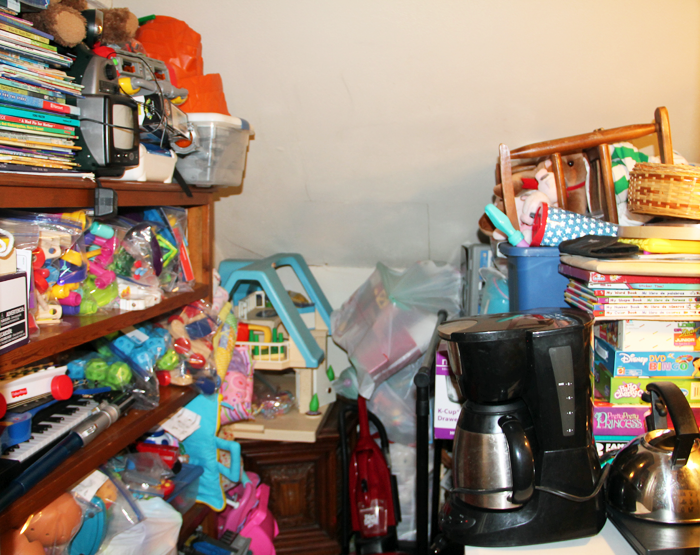
I have mentioned before that when we move into Arrow Hill Cottage, hopefully one year from now, we plan to only bring with us the items that are truly useful or bring us joy. In an effort to get a head start on making those decisions, we cleaned out one of the large hall closets in our rental house and deemed it the ‘sell room’. Items that do not have a place in our new home will be stored here, and sold at a large garage sale the end of next summer – before we make the big move.

I figured that we would have enough things to eventually fill this room, but had no idea that in just a couple of months – after only sorting through toys, clothes and a few household items, that it would be as packed as it already is! I will show you a picture of the room, but you need to promise not to gasp.


These are things that we don’t need – don’t wear, don’t read, don’t play with, don’t use. So. much. more than enough.


With every item that is added to this space, I am finding myself conflicted with emotions. On one hand, it feels freeing to cut out the extras – and on the other, I feel guilt that we have been living with this much excess for as long as we have.


This process of deciding what truly is ‘enough’ will be a journey for our family – but one we are excited to take.


What is your ‘enough’?


HOW TO CREATE A COMFORTABLE OUTDOOR ROOM

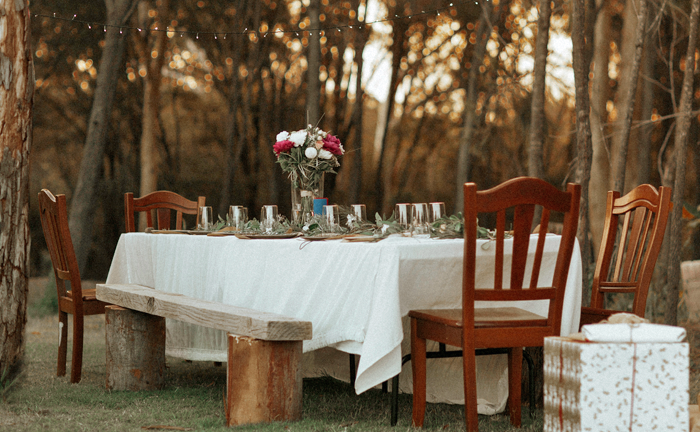
With Summer right around the corner, you may be anticipating enjoying the outdoors – listening to the birds sing, sipping lemonade on the porch or grilling steaks on the patio. You may be wondering what steps to take to make the perfect summer outdoor space of your own.

The truth is that not all rooms in nature are created equal. There are six key elements that will help you make an outdoor room as pulled together and comfortable as possible – one that you, and your potential party guests, will want to linger in all summer long.


1. DEFINE A SPACE, AND MAKE IT PRIVATE

How to Create a Comfortable Outdoor Room

Intimate spaces are inviting spaces. Instead of trying to figure out a way to make your entire yard an oasis, start small. Begin by locating a portion of your yard that is relatively convenient in relation to your home. A spot directly outside a dining room or kitchen, for example, might be a good choice.

Defining a space could be as simple as building a fence around the area, or changing the ground cover. Patios made of bricks or slabs of stone are popular, as are wooden decks. This defined space will be even more enjoyable if it is hidden from public view. Potted plants of varied heights could make a natural ‘green wall’ or a privacy screen might be created with chicken wire and vines.

Fun privacy ideas for your outdoor room:  1 | 2 | 3


2. BRING THE INDOORS OUT

You’ve heard of bringing the outdoors in – now think about that concept in reverse. Make it feel like an extension of the home you love, by drawing elements from the inside – outdoors. Perhaps there is a certain color or theme that your interior is decorated with. Using those same elements outdoors will create a unified look.


3. ADD CONVENIENCE

For an outdoor room to be comfortable, it also needs to be functional – so that once you are in the space, you won’t need to leave it to grab a convenience item.

If you have a grill in your space, make sure that all the grilling tools are handy. If it is a place you plan to nap in, have pillows and blankets nearby. A cart to hold beverages and snacks would be welcome in just about any outdoor room!

These conveniences are clever and useful! 1 | 2 |


4. PROVIDE VARIED SEATING

Think about your outdoor room being used by various group sizes. You may want enough seating to accommodate small group conversation, a place to dine, or even a one person seat – such as a hammock.  You can include multiple seating options, which can be rearranged as needed.

Various seating options for outdoor rooms: 1 | 2 | 3


5. KEEP IT SHADY AND PROTECTED

A shady and protected outdoor room is essential for use in the warm summer months. Shade options can range from a simple draped canvas overhead, to a detailed pergola. A full roof will offer a more protected feel, and possibly a longer season of use for your outdoor room.

If you want to extend the use of your space into the cooler months, you may consider adding operable screens/ windows and a heating source such as an outdoor gas fireplace or wood burning fire pit.


6. LAYER THE AMBIANCE 

Your outdoor room will come to life if you consider all five senses, and how they can be connected to nature, when pulling it together.

Sight: What will you see when you are in your outdoor room? A pleasant view will allow you to relax and let your other senses to be engaged. At night, solar lights or strands of lights above create a magical feeling that will make you and your guests want to stay up past bedtime.

Smell: This sense can make or break an outdoor room. Take care to ensure that items which could produce unpleasant smells, such as a garbage can, aren’t close by. Using flowers and other sweet foliage can help you connect with nature. A fire feature can also create ambiance and a pleasant, familiar smell that is sure to be enjoyed.

Hearing: Often this sense is overlooked, yet it has a huge impact on the enjoyment of a space – especially outside. If your home is in a loud neighborhood, consider a white noise machine to cancel out some of the noise. Add in pleasant sounds, such as a water feature, for comfort and tranquility.

Taste: The pleasure of preparing food outdoors is multiplied when you can pick fresh food and spices. The installation of a raised-bed garden nearby, or pots with herbs, adds an interactive element to an outdoor room.

Touch: Tactile elements such as pillows, rugs, and even the furniture that is selected to fill your outdoor room can engage the user of the space in a way that no other sense can. Take care to ensure that these items are not only pleasant, but interesting to touch.


By following these six key elements of design, you can create an outdoor room that is not only comfortable – but also engaging and interesting. Put them to work for you, then sit back, relax, and enjoy the summer!


Pin this for later:


THOUGHTS ON PERSPECTIVE

I began this week feeling out of sorts

The weather was yucky, the kids had cabin fever (as did the parents for that matter), and I was working feverishly on getting the plan set for Arrow Hill Cottage fine tuned and ready to submit to local contractors for bids. Just all around a stressful time.

I love designing houses – with an absolute PASSION. And to be able to design a home for my family has been very special; But the stress of knowing that it will ultimately be our pocketbook that will be paying for this design? That has taken a bit of the excitement away. This is real life, and we are just average people who need to work within a realistic and manageable budget. Essentially, every decision that I make while fine-tuning the design of the cottage has to be filtered through the bottom line of what it will cost.


And, this week, the filter took away some of the design elements I was really looking forward to implementing 


I have been working on these rooms for months now – first as lines on paper, and eventually through 3D visualization. I have written about how 3D modeling can give you a fresh perspective on a space; And this week, I got a new perspective on LIFE as well.

This same week has brought severe darkness to a couple of my friends whom I know through the adoption community.

One, a mother of ten, whose husband has been diagnosed with terminal stage 4 brain cancer, with an estimated 6-18 months to live.  Another whose sweet six year old daughter is on life support with a grim prognosis- her little body fighting.

And through it all, both of these ladies have remained SO very faithful to God. Singing His praises and relying on Him for peace, comfort, and guidance. I have so much to learn from them.

While I was fretting about how many windows the living room in my brand new home might have, what type of beautiful flooring I might choose, or which contractor is most qualified to get the job done – these women are wondering how much longer they will have their loved one here on Earth.


This thought hit me like a punch to the gut. Perspective.


Life is always changing and there is no person who can plan their life into perfection. Each of us is dealt circumstances that stretch and shape us. We experience unexpected happy moments and find that some dreams will never be realized. And through it all, we take each day as they come – one at a time.

This process of designing, and eventually building our family home is a blessing. Truly, it is a dream that we have been chasing for many years. But even this we need to take one day at a time. There will be days that will be more difficult than others, and I want to be mindful always to remember that this process is something we have wished for.

I wish to remain grateful in this journey.

THOUGHTS ON BUILDING

Today is ‘National Walk Out Of School Day‘. It is an event that is part protest and part memorial – a way to acknowledge and mourn the loss of the 17 victims killed in the most recent, though sadly no longer uncommon, mass school shooting.

As you might imagine, this post is not at all about the building of our new house, but something altogether entirely different.

The building of our children

When I was a junior in high school, I remember filling out the job quality worksheet for the counselor. It was used as a way to direct the students who weren’t sure what path they would be taking after high school – College? Working in a trade? What industry? I’m sure there were plenty of my classmates who found the results of this worksheet useful, but I didn’t need any direction. I knew EXACTLY what I wanted to be. An architect.


I wanted to design buildings and watch them be built

And I did just that. I studied diligently for five years and received a Bachelor of Architecture degree and a final GPA of 3.99. I dare say that I was near the top of my graduating class. I loved everything about architecture and was ready to start putting my education to practice. I easily landed a job in my desired community and set to work.


Two years later, I got pregnant

Craig and I had agreed that when our first child arrived, I would become a stay at home mom. I remember how nervous I was to tell my boss. By all accounts, I was on track to reach my ultimate goal of becoming an architect – and suddenly, that plan was being derailed. Regret was filling my mind. Am I throwing away my career? What will my colleagues think about this decision? Is being a stay at home parent really important?

The months leading up to the birth of {D} were full of mixed emotions; And the day we left the hospital with him snuggled in the car-seat next to me – I sobbed. My life had done a literal 180.

Over the course of the next 11 years, we added 4 more bundles of love to our family – both through birth and the beauty of adoption. I found a good balance of being able to meet our children’s needs and to feed my passion for design – working from home for various architecture firms, on a very part time basis.


Here, 11 years later – I can reflect on that major decision

Was it worth it? I would say absolutely. I didn’t realize it then, but I was making a shift from the building of structures to the building of my children.

Children need parents to guide them, shape them, teach them right from wrong. They need someone there to pick them up if they fall, to catch the warning signs of depression or violent behavior. To provide them with a moral compass.

Sadly, I feel that too many children today are thrown into the waters of life and told to swim on their own – to find their own way in the dark. Parents are busy with their careers and in many cases are working hard to provide their children with every opportunity – Sport instruction, music lessons, the newest video game. In reality, what children need is time with their parents. Presence over presents.

What has been happening in schools is tragic. It’s political. It’s senseless. I don’t plan on getting into any sort of debate on the topic except for this one statement I think we can all agree on: It shouldn’t be this way.

Each time one of these heinous crimes is committed, we sit and wait for the media to report what we know will surely be the case – these are people, kids, whose warning signs were missed. They were troubled and ignored. Their emotional and mental needs were not met.


In response to today’s walk out – there is an additional movement.

WALK UP

Walk up to someone who is considered an outcast and let them know they have a friend. Walk up to the person sitting alone and start a conversation. Walk up to the person you have been arguing with and agree to resolve your differences. Walk up – and as a society we can wake up. We are all in this together.

Walk up to your children and hug them. Tell them you love them. Encourage your children. Speak life to them. Give them the building blocks to become a productive member of community. It all starts at home.


I understand that being a stay at home parent isn’t a path that is necessarily available (or desirable) for everyone; But personally, I will forever be grateful that it is the direction our family chose. And even though I may not be designing award winning structures, I feel that my contributions are equally important.

Long after the sky scrapers and monuments crumble and decay, humanity will continue on. It is built of stronger things.


EVERYTHING YOU NEED TO KNOW ABOUT RAIN GUTTERS

It’s that time of year again. The leaves are turning beautiful shades of yellow, orange and red. Before you know it, the temps will drop; And sadly, so will the leaves. It is a beautiful, magical sight; But if you own a house that has rain gutters, you need to know that those small, colorful leaves could turn into big problems if left unattended too long.

Everything you need to know about rain gutters. This post discusses the reasons why rain gutters are important, the various styles that are available, how to install and maintain them, and what you can use as alternative if rain gutters just aren't your thing. Useful home maintenance tips are included.Though the topic can be a bit dull, the importance is well worth a talk. And so, to help you maintain your home, I give you this post – which includes everything you need to know about rain gutters.

I’m going to start off by saying that rain gutters are not an absolute must have. If your house has an appropriate amount of slope away from the foundation, and the level of rainfall in your region is minimal, your house will likely be just fine without them. Not every house has rain gutters or needs them, but many do. Let’s talk about why.


WHY DOES MY HOUSE NEED RAIN GUTTERS?

It is no secret that rain gutters are set in place to handle precipitation. Insurance adjusters have reported that approximately 10% of all home claims can be linked to damage from rainfall. You may also be interested to know that only 1 inch of rainfall equals 600 gallons of water flowing off of the roof of a typical residential home. That’s a whole lot of water that needs to find a place to go! There are 4 main reasons rain gutters are recommended:

  1. Prevent basement flooding.  This may be the most familiar homeowner complaint related to rainfall. Whether you’ve been woken from a deep sleep to the sound of a sump pump alarm, or your socks have been soaked by a standing water surprise, the feeling is the same. Headache. If you find water in your basement not only will the cleanup be a massive chore, you will also need to keep a close eye on the drying out process to ensure that mold doesn’t develop.
  2. Protect the foundation. The foundation holds up your house. It’s kind of a big deal. And while some settling of a foundation is natural, if it settles too quickly you may notice warped floors, and cracks in your walls and ceilings. Foundation reconstruction is arguably the most costly repair a homeowner can face, and finding a way to avoid expensive repairs is just plain common sense.
  3. Avoid erosion.  Though houses are supposed to be built on a slight slope that guides rainfall away from the foundation, sadly this isn’t always the case.  Without rain gutters, the water will drop from the roof edge in a forceful way, and wash a little more soil away each time there is rainfall. Eventually the ground will slope toward the foundation which, as we just covered, is a giant no no. Too much water can also wreak havoc on planting beds and landscaping, by flooding the flowers and shrubs.
  4. Slow the deterioration of the vertical elements of your home, such as siding and windows. When gutters aren’t used, the rainfall will drip onto the siding. The water can then easily pool at the tops of door and window frames and on window sills, which over time will cause deterioration and rot. Mildew and mold are likely to develop on wet siding, which means even more cleaning and maintenance.

As you can see, gutters can be mighty important.  But even the best tool won’t work well if it isn’t installed properly. That brings us to the next point.  Installation.


WHERE AND HOW ARE RAIN GUTTERS INSTALLED?

There is a wide variety of gutter styles, shapes and colors on the market today – which means you should be able to find a type that fits seamlessly with the design of your home.  Houselogic has an extensive article about the various looks and price points of gutters you have to choose from.

Once the choice is made, you will need to review the basics about where and how to install the rain gutters so that they function properly.

Simply speaking, the gutters should be positioned at the roofs lowest point, just below the eaves, as demonstrated in the photo below. This arrangement allows for gravity to do its job – with the collection happening just before the rainwater would leave the roof had the gutters not been in place.

Beautiful copper rain gutters. Installing rain gutters to fit the style of your home. Rain gutter maintenance. Rain gutters on a house. Gutter and downspout maintenance.

(photo credit)

A properly built rain gutter system includes the horizontal gutters, which are connected together with ‘joiner pieces’. The horizontal gutter pieces then connect, via a drop outlet, to a vertical downspout, which carries the rainfall safely toward the ground. The final portion of downspout should slope with the grade of the land, away from the foundation.  Many times a splash block will be placed where the water exits the downspout, to allow for an even more smooth distribution.

Each type of gutter will require slightly different installation techniques, so it is important that you read the manufacturer’s instructions if installing on your own, or hire a professional to get the job done.

So, great.  You’ve realized the importance of gutters and have had them installed properly.  Now you can just sit back and not worry at all when those downpours come, right? Wrong! One of the biggest complaints homeowners have about rain gutters is that they have a tendency to get clogged with leaves, and debris from the roof. The good news is that as long as you keep on top of inspecting and cleaning your rain gutters they should be able to provide you all the previously listed benefits for many years.

WHAT IS THE TECHNIQUE FOR INSPECTING & CLEANING RAIN GUTTERS?

At a bare minimum your rain gutters should get a thorough look over once per year. If your yard has many overhanging trees or if you live in an area that receives a higher level of rainfall, you should check them twice per year – once in the early Spring and once in late Fall. It is also a good idea to make sure the gutters are all clear after large storms.


(photo credit)

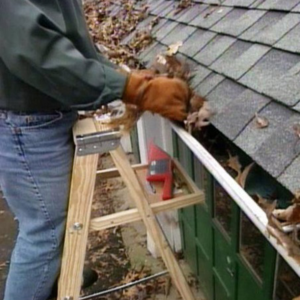
Put on a long sleeved shirt, work gloves and goggles, and a pair of non slip shoes.  Grab a good tall step ladder and place it on level ground. Remember to never stand on the top of the ladder, as you could easily lose your balance. Working in sections, use a plastic gutter scoop or garden trowel to remove the gunk and leaves. Place the debris in a bucket or allow it to fall on a drop cloth you previously positioned on the ground below.

Once the bulk of the debris and leaves have been removed, use a pressure washer or a garden hose with a high pressure hose nozzle , and spray the gutter – working toward the downspout. Use a stiff brush to remove any debris that has hardened, then spray again. At this point the water should be flowing freely out of the downspout.  If not, it is likely that a clog still exists in the vertical portion of the downspout.  You may need to use a plumbing auger to dislodge the material.

If you would like more detailed instructions on how to clean your rain gutters, check out this in depth article from HomeTips.com

Nice work! Now that your gutters are cleaned out, you can check that off of your seasonal To-Do list! Are you now looking at your house wondering what other chores you should tackle before winter?  I have that list already prepared, as a free resource in the library.  Click HERE for access.

HOW CAN I GET OUT OF CLEANING MY RAIN GUTTERS?

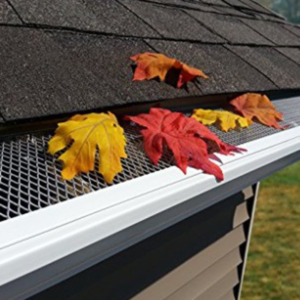
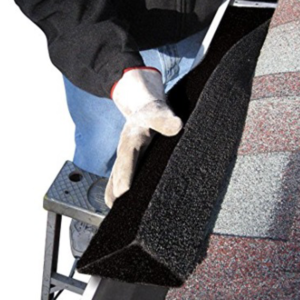
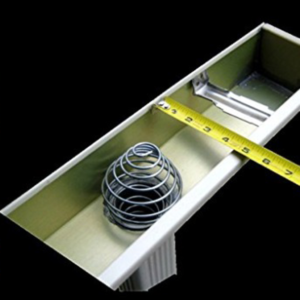
Ok. I get it.  Time is precious and those moments spent on the ladder could be allocated in a variety of other ways. Marketers realize this and have come up with quite a few solutions to help you out. Click below for more detailed information on each product.


Gutter Covers


Foam Gutter Filter Inserts


Gutter Strainers

If these tools don’t do the trick, you can always hire a professional. Yes, there are people out there who have the desire and expertise to tackle this chore for you. Check your local Angie’s List to get quotes from professionals in your area.  The average expense will be between $50 and $200, depending on the size of your house.

It’s important to note that even with these additional measures, sediment will still develop in your gutters over time – albeit much more slowly.


IS THERE A  RAIN GUTTER ALTERNATIVE?

If you really don’t want to deal with rain gutter maintenance or if you are concerned that the look of gutters will distract from the overall style and curb appeal of your house, there is a way you can avoid them all-together. Fine Homebuilding has written an interesting article on in-ground gutters that is worth a read.


I hope this post has given you insight into the usefulness of rain gutters, how to properly maintain and clean them, and what you can use as an alternative if they are not an option for your house. With this information, you are taking a big step in protecting your largest asset – your home.


This post contains affiliate links.  To learn more about my website disclosures, click here.

WEEK 1 {WHOLE30 INSPIRED RECIPES FOR FAMILIES}

You guys… this is it!  The final week in the 4 week meal rotation!  And, it is very possible that I’ve saved the best for last.  If you haven’t checked out the other weeks yet, find them here:  Week 2, Week 3, Week 4

Let’s dig in.

Links to printable menu and recipes below + descriptions and some photos after

WEEK 1 MENU

PRINTABLE WEEK 1 RECIPES

{Monday}

Kid’s Choice

We call this the ‘kid’s choice’ night, because Craig has fire department meetings every Monday evening and eats at the fire station.  The kids will usually ask for spaghetti or PB&J.  Typically I will eat a salad or leftovers from a previous meal.

{Tuesday}

Chicken & Steak Fajitas + pineapple, avocado slices, black beans

Continuing with the ‘Taco Tuesday’ theme, but wanting to add in a bit of variety, we have fajitas every other week.  The beauty of fajitas is that they can easily be eaten without tortillas for a healthier option.  Just mix the meat and veggies together and top with some beans and avocado slices and you’ve got yourself a tasty and filling meal.

{Wednesday}

Grain Free Italian Meatballs + mashed potatoes, steamed asparagus, cheese

Hands down this is the favorite recipe of all 4 weeks for both my husband and the kids.  I agree with them that it is delicious, but the Cashew Chicken (week 4) still gets my vote!  Craig and I both have a vested interest in this meal because we worked so hard to perfect the meatball consistency & ingredients.  Though based on a recipe I found on the internet, it has now become ‘ours’.  As a parent, I have to say I am pretty satisfied with the amount of veggies that we are able to ‘hide’ in the meatballs.  Even our kids who say they don’t like mushrooms eat these up and ask for more. Try this recipe.  Just do it.

{Thursday}

Baked Chicken (OR) Almond Crusted Fish + whole grain noodles, yellow squash

Both of these options are light yet filling.  When you get to a meal on the rotation that has two choices, simply choose which you are craving most at that moment in time.  I’ll admit that the chicken dish gets chosen over the fish most often, but both are so yummy.

{Friday}

Oven Baked Ham + roasted garlic green beans, apple slices

This meal is proof that you don’t need to work hard to prepare a healthy and filling meal.  Though generally apples are thought of as snacks, they pair perfectly with ham and serve as a super easy side!  Cooking up a large ham on Week 1 of the rotation means that the leftovers can be cubed and frozen for use in future recipes – saving even more time in the kitchen.  Score!

{Saturday}

Lunch: Big Salads (adults) / Chicken Nuggets (kids)

Our Saturdays are usually pretty busy, so we keep the afternoon meal simple and the same each week.  Our ‘big salads’ consist of romaine lettuce and maybe some spinach, topped with a variety of veggies + chunks of chicken or ham and maybe a bit of blue cheese crumbles.  We love the Newman’s Own Olive Oil & Vinegar dressing.

Dinner: Grilled hamburgers (no buns) + french fries, pickles, orange slices

This meal doesn’t need a lot of discussion.  We have been going ‘bunless’ around here for a few months now, and nobody even asks about them anymore.  You can make your own french fries from potatoes if you’re feeling ambitious. I’m usually not.

{Sunday}

Lunch:  Gas House Eggs + bacon, blueberries & bananas

I admit that I had never heard of these before I met Craig, but they have become a family favorite and needed to stay on the rotation.  We have one meal per week that is more carb-heavy, and this is one of them!

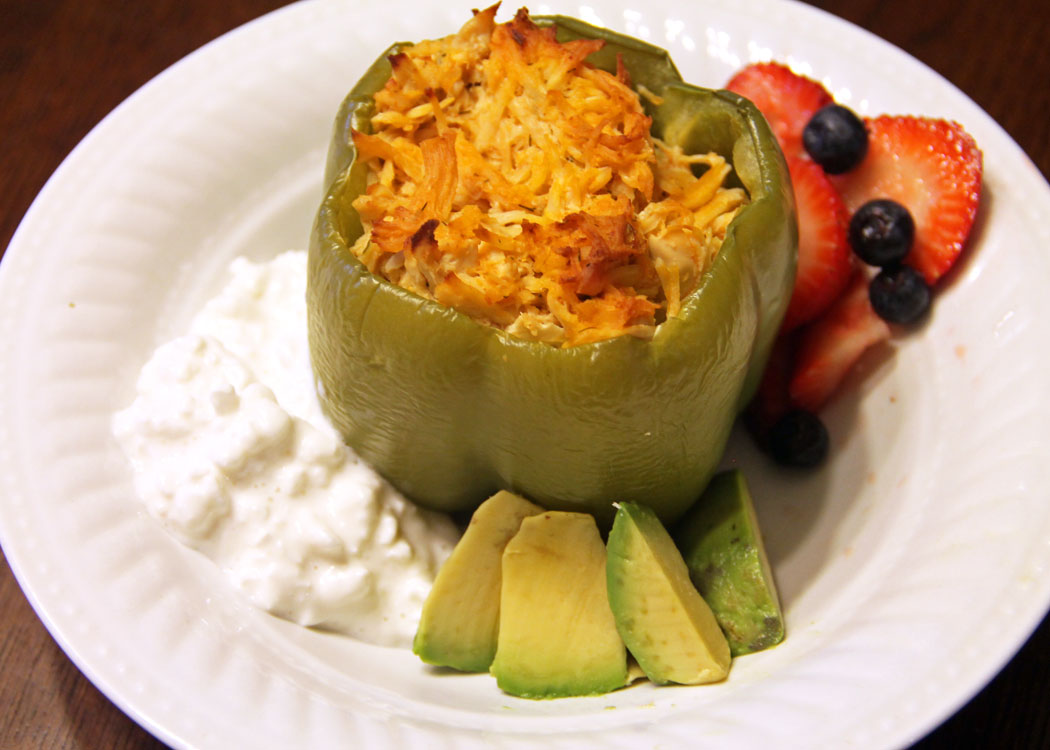
Dinner: Buffalo Chicken Stuffed Peppers + cauliflower rice, strawberries

Once, when I purchased groceries for this week of meals, I had the cashier ask me “What are you going to do with all of those green peppers?”  I don’t know what she was expecting my answer would be, or why she even cared… but we only plan to EAT the food we buy.  Some people are surprised to hear that each and every one of our five kids enjoy eating peppers.  I know that they aren’t typically considered a kid friendly food, and I certainly wasn’t digging them when I was younger.  But this recipe is just so much fun.  Everyone gets their own green pepper ‘bowl’ filled with delicious chicken.  What’s not to love?


For those of you interested in simplifying your grocery shopping for these specific recipes, just click on the link below for a complete shopping list which includes everything you will need to make this week of healthy meals for your family.

GROCERY LIST WEEK 1

Remember, this is a reverse shopping list – if you already have the item in your kitchen, just cross it off!

And there you have it!  4 weeks of healthy, family friendly meals!  If some of these recipes appeal to you more than others, consider adding some of your own family favorites to the mix and making your own rotation / coordinating shopping lists.  I promise you, once you try it you will never want to go back to the aimless grocery store wandering. Less time in the grocery store and kitchen means MORE time to do other fun things!

Happy Cooking & Shopping everyone!


PS:  See those cute little buttons below this post?  Go ahead and click on them to share with a friend who might find this information useful!

WEEK 4 {WHOLE30 INSPIRED RECIPES FOR FAMILIES}

Who is ready for more tasty meals?

If you missed the other recipe posts in this series, you can find them here

WEEK 1

WEEK 2

WEEK 3

We are now up to Week 4 on the meal rotation – and it is full of family friendly meals that are not only easy to make but healthy!

Links to printable menu and recipes below + descriptions and some photos after

WEEK 4 MENU

PRINTABLE WEEK 4 RECIPES

{Monday}

Kid’s Choice

We call this the ‘kid’s choice’ night, because Craig has fire department meetings every Monday evening and eats at the fire station.  The kids will usually ask for spaghetti or PB&J.  Typically I will eat a salad or leftovers from a previous meal.

{Tuesday}

Tacos + watermelon and salsa with chips

When we started meal planning, Craig was quick to point out that he could ‘eat tacos every night’, and that would be fine with him.  We negotiated and came up with Taco Tuesday instead (though we rotate every other week from tacos to fajitas, and we switch up the sides).  Either way, it is a family favorite night.

{Wednesday}

Pork Chops + seasoned potato wedges, applesauce and cheese

The simple marinade can be left to soak on the chops for anywhere from 1-24 hours.  The longer it sits, the richer the flavor.  These are perfect either grilled or pan fried and are complimented so well with the seasoned potatoes and applesauce!

{Thursday}

Cashew Chicken + cauliflower rice and strawberries

If you try even ONE recipe from these 4 weeks, let it be the Cashew Chicken.  Truly.  The flavor is so amazing and the recipe is ‘dump and heat’ easy.

{Friday}

Zoodle Greek Salad (OR) Tuna Salad

Both of these salads have a clean, crisp taste that is perfect for hot summer nights – no side dishes necessary!  Make up a big batch and store in individual containers for quick & fresh lunches throughout the busy work week.  Pictured above is the Zoodle Greek Salad.

{Saturday}

Lunch: Big Salads (adults) / chicken nuggets (kids)

Our Saturdays are usually pretty busy, so we keep the afternoon meal simple and the same each week.  Our ‘big salads’ consist of romaine lettuce and maybe some spinach, topped with a variety of veggies + chunks of chicken and maybe a bit of crumbled blue cheese on top. We love the Newman’s Own Olive Oil & Vinegar dressing to pull it all together.

Dinner:  Grilled Brats + tater tots and grapes

Another easy grilling meal.  There are a ton of healthy brat & sausage options to choose from these days.

{Sunday}

Lunch: Waffles + eggs and ‘monkey salad’

This meal is the ‘cheater’ for the week.  We just did not have the heart to tell the kids that we would never be having waffles, pancakes or french toast – and so we have a big syrupy ‘dough meal’ once every 4 weeks, and it is magical.  The eggs and simple ‘monkey salad’ balance it all out.

Dinner: Choice of Soup (chicken wild rice, potato bacon, golden cauliflower) + fresh bread

You just can’t go wrong with soup.  At the beginning of Week #4, we choose which of these three soups we would like to eat.  They are all Whole30 compliant and all equally good in their own unique way.  Pictured is the Golden Cauliflower variety.  Add some fresh bread or simple sandwiches, if you desire.


For those of you interested in simplifying your grocery shopping for these specific recipes, just click on the link below for a complete shopping list which includes everything you will need to make this week of healthy meals for your family.

GROCERY LIST WEEK 4

And remember, this is a reverse shopping list – if you already have the item in your kitchen, just cross it off!

Next week I will finish up this series with Week #1 recipes!  Happy cooking everyone!

In the meantime, see those cute little buttons below this post?  Go ahead and click on them to share with a friend who might find this information useful!

WEEK 3 {Whole30 inspired recipes for families}

I’m back with more recipes!

If you missed the first post in this series, click HERE to catch up.  I detail the reasons why we started the 4 week meal rotation and how it has benefited our family, not only health-wise but also in the simplification of meal prep and grocery shopping. You’ll want to read it for my disclaimers too, and info on how much we spend each week.

Remember, I began last week with Week 2 meals – so now I am on to Week 3 and have quite a bit of deliciousness in store for all of you!

Links to printable items directly below + short descriptions and some photos after.

WEEK 3 MENU

PRINTABLE WEEK 3 RECIPES

{Monday}

AFD/ KID NIGHT

We call this ‘kid’s choice’ night, because Craig has fire department meetings every Monday evening and eats at the fire station.  The kids will usually ask for spaghetti or PB&J.  Typically I will eat a salad or leftovers from a previous meal.

{Tuesday}

Chicken & Steak Fajitas + pineapple, avocado slices and black beans

Continuing with the ‘Taco Tuesday’ theme, but wanting to add in a bit of variety, we have fajitas every other week.  The beauty of fajitas is that they can easily be eaten without tortillas for a healthier option.  Just mix the meat and veggies together and top with some beans and avocado slices and you’ve got yourself a tasty and filling meal.

{Wednesday}

Meatloaf + mashed potatoes and honey glazed carrots

I know that meatloaf sometimes gets a bad rep – but around our house, it is a favorite.  This version is super simple to make and ultra healthy without the bread crumbs and thick glaze.  It has a lighter quality which pairs great with the potatoes and simple honey glazed carrots.

{Thursday}

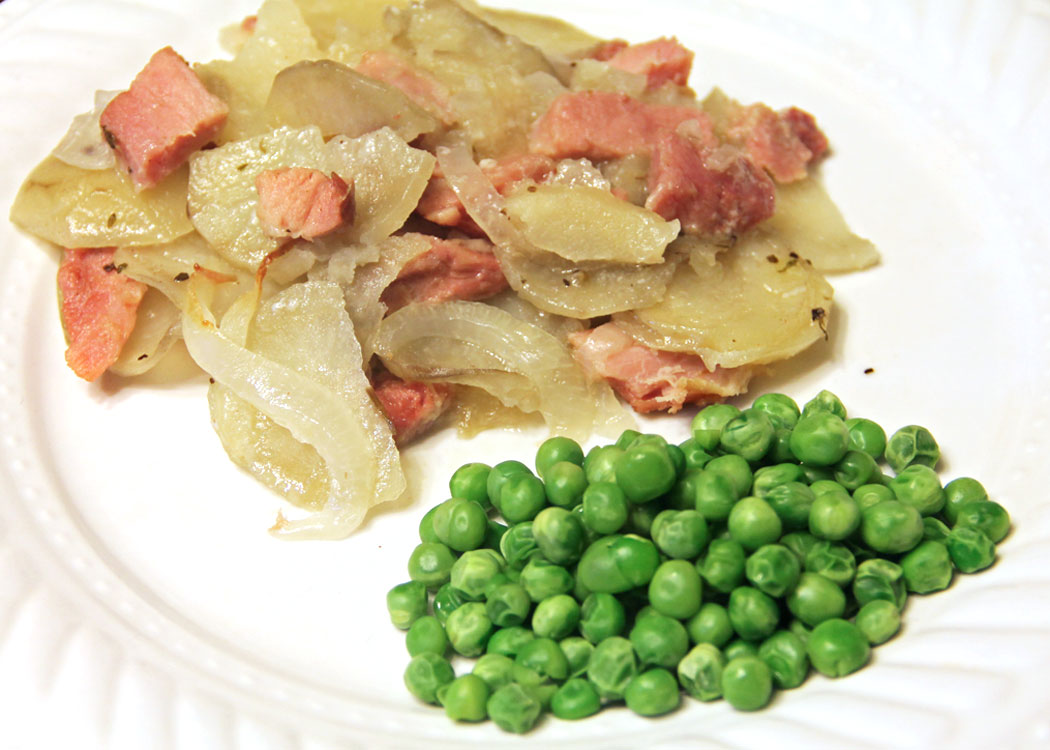
Scalloped Potatoes & Ham + peas and cantaloupe

Our kids kept coming home from school saying how much they LOVED the scalloped potatoes & ham on the lunch menu, and it came to my realization that I had never made that meal for them before!  Of course, while looking into recipes I found that many of them were loaded with butter, cream and flour.  Then I spied this version online and tweaked it a bit to fit our taste.  It’s just as delicious as the original in my opinion!

{Friday}

Pizza Night!

This day on the rotation is considered a treat night.  We love us some pizza around here, and didn’t want to give it up completely. Now we look forward to the one night every four weeks when we can indulge – and either go for some home made goodness or stop in and pick up a Papa Murphy thin crust option.  Yum!

{Saturday}

Lunch: Big Salads (adults) / chicken nuggets (kids)

Our Saturdays are usually pretty busy, so we keep the afternoon meal simple and the same each week.  Our ‘big salads’ consist of romaine lettuce and maybe some spinach, topped with a variety of veggies + chunks of chicken or ham and maybe a bit of blue cheese crumbles.  We love the Newman’s Own Olive Oil & Vinegar dressing.

Dinner:  BBQ Pork Ribs + sweet potato fries, broccoli and cheese

Our middle son loves ribs.  I mean LOVES them.  When creating the meal rotation, we asked each of the kids what type of foods they would like added and of course ribs made the list.  This recipe has a great flavor to it, though it is on the mild side.  If you like a spicy or super barbecue flavor, you may want to look into some sauce options to add after the meat is cooked.

{Sunday}

Lunch:  Sausage, Egg & Broccoli Casserole + 4 ingredient granola bars

The casserole tastes sort of like a quiche – and is super simple to make.  The beauty of this recipe is that you can easily divide it into 24 muffin tins, then freeze them to use as a quick breakfast during the busy work week.

The granola bars are SO GOOD.  And although they are no-bake, they do require a bit of prep work.  I would recommend making them up the night before you plan to eat them.

Dinner:  Shredded Mexican Chicken + baked potatoes, corn on the cob, and strawberries

Another Mexican style meal that our family loves.  Craig isn’t a huge fan of baked potatoes, and he sometimes prefers to just eat the chicken mixture by itself.  The mixture would also taste awesome over rice or in tortillas!


For those of you interested in simplifying your grocery shopping for these specific recipes, just click on the link below for a complete shopping list that includes everything you need to make this week of healthy meals for your family.

GROCERY LIST WEEK 3

I will be back sometime next week with the menu, recipes and shopping list for week #4.  Happy cooking everyone!

In the meantime, see those cute little buttons below this post?  If you hover over them you can see that they give you multiple options for sharing the content from this blog.  Know a friend who has been asking about meal planning? Email this blog post directly to their inbox or share with them on Facebook!

SIMPLIFIED MEAL PLANNING & SHOPPING FOR BIG FAMILIES

This post could also be titled ‘Our Big Family’s Epic Eating Solution’ – but I thought that might be a bit too dramatic. It IS bound to create an epically long blog post though, so buckle up!

You’ve probably heard it said that in order to raise a large family you need to have one of two personality types:  super organized or super laid back.  I have never been accused of being spontaneous.  In fact, I’m probably about as ‘go with the flow’ as an anchor.  I most definitely fall into the organized category.  And though it is a skill I possessed as a little girl who would keep her bedroom neat and tidy at all times, it has developed through the years and even more so as each child has been added to our family.  Organizing our family’s day, and keeping myself on task to ensure that things run smoothly, is something I take pride in doing.

I personally have a ‘one big chore a day’ mentality – meaning that instead of doing a little bit of the same type of chore multiple days a week, I prefer to do the big chores (laundry, yard work, bathroom cleaning, grocery shopping, etc) only one day a week.  It seems to streamline things for me. When I am done with that big chore, I don’t need to think about it again the rest of the week.  Lately our growing kids (the boys especially) have been eating like they are enrolled in a contest.  If I didn’t have a plan to keep the fridge and cupboards stocked with healthy choices, I’m sure that I would be running to the grocery store every other day.  And time spent in the grocery store is time that could have been used for more important things – like designing. I want to go to the grocery store only once per week MAX.

And so, trying to make eating (and shopping) as efficient as possible, I developed a 4 WEEK MEAL ROTATION system.  Essentially, the rotation is filled with family friendly and healthy meals – meals that I am fairly confident won’t produce any (or many) complaints and will be eaten fully, without waste. Nothing is more deflating than a frowning kid who says ‘I don’t like this!’ to a meal you labored over for what felt like hours.  This system has kind of revolutionized the way I feel about cooking for my crew, and it has made creating the grocery shopping lists SO much easier.

So what exactly is in OUR family’s meal rotation?  Let me tell you…

Our eating philosophy shifted a couple of years ago when Craig and I tried the Whole30.  Though skeptical before we began, and just wanting to shed a few pounds and/or inches, we became hooked during the 30 days. We had more energy, felt in control of our health, and the extra pounds came off.  It just seemed like a common sense way to eat healthy; However, we didn’t feel that eating from such a restricted list of foods would be sustainable over a long period of time.  Sure, we could give up cheese for 30 days… but, forever?  We also weren’t sure it would be safe to incorporate such a strict meal plan for our growing children. And I definitely did NOT want to create two different meals for our family (one for the adults, another for the kids).

I set to work using some of the recipes we had enjoyed during those 30 days and tweaked things here and there to allow for SOME grains and SOME dairy.  I also worked hard to fit in a great variety of meats and produce, to give ourselves and our children the vitamins and minerals we need without the use of supplements.

One of the absolute best things about having a meal rotation is that you only need to make 4 grocery lists!  Using the recipes as a guide, I typed a list of ingredients needed (1 list per week) and broke them down into categories such as dairy, produce, frozen, etc.   These lists were then placed into clear plastic sleeves, and the night before my weekly shopping trip I simply take out the list needed for the following week and use my dry erase marker to cross off the items we already have on hand.

It’s like a REVERSE shopping list!  You already have 2 tsp of basil?  cross it off!  Cupboard already contains a can of black olives?  off it goes!  That list gets whittled down to only the items that you NEED to buy.  No more wandering aimlessly in the aisles wondering ‘Did that recipe call for garlic powder or garlic salt?’ or ‘Do I have apples at home?’ This little tip has actually saved us quite a bit of time and money.

There are a few blank lines at the end of each category to add to the list, and in the space marked ‘other’ I write in any additional items we may need that aren’t part of our evening meals (such as cereal), or misc. non food items, such as lotion.  When I go to the store, I walk around each section with my list and dry erase marker in hand and simply cross off items as they are placed in the cart.  When I come home, I wipe off the plastic sleeve and set it aside until that week’s list is needed again. Easy!

Today I am starting this series with WEEK 2 of our meal rotation.  I know, it’s a weird place to start.  But we just finished up eating WEEK 2 meals and I was able to photograph some of the dishes and double check the recipes and shopping lists for accuracy before sharing them with all of you.  I will plan to share a new week of recipes each week until I have shared them all, and then will do one giant post or link that has everything all together.

Couple things to keep in mind:

1. I am not a master cook.  Cooking is not my favorite thing to do.  In fact, I try to spend as little time in the kitchen as humanly possible.  These recipes were adapted from various sites around the internet.  Sadly, I no longer have the web addresses to link to.  Most recipes have been doubled to adapt to feeding our large family.

2. These are recipes for our evening dinner ONLY during the work week, and lunch + dinner on the weekends.

3. Typically there will be enough left over from our evening meals to give Craig lunches for his work days, and the rest of us eat simple meals for breakfast and lunch during the week (sandwiches, salads, etc.)  The kids also eat school lunch a couple times a week during the school year and every day during the summer.

4. These recipes feed our family of 7.  We have 3 boys (currently 6, 8 and 10) who are big eaters and 2 girls (age 3 and 6) who also eat well.  If you have a smaller family or a family who doesn’t eat as much as ours, you may be able to freeze the leftovers and get 8 weeks of meals out of these 4 weeks of recipes (not having to cook much the second go-round, which would be awesome).

5. Our grocery bill each week is right around the $200 mark.  We buy everything at our local grocery store.  As we fine tune this system, we may end up buying meat in bulk from a butcher or grow veggies from a garden (eventually) which could significantly bring this cost/week down.

6. You can use this model to create a meal rotation that works for your own family.  Simply choose meals that everyone enjoys with ingredients that are affordable.

Ok, here we go.  Links to printable items directly below + short descriptions and some photos after.

WEEK 2 MENU

PRINTABLE WEEK 2 RECIPES

{Monday}  

AFD/ Kid night

I call this ‘kids choice’ night, because Craig has fire department meetings every Monday evening.  They will usually go for spaghetti or even PB&J.  I typically eat a salad or leftovers from a previous meal.

{Tuesday}

Tacos + watermelon, rice, and avocado slices 

When we started meal planning, Craig was quick to point out that he could ‘eat tacos every night’, and that would be fine with him.  We negotiated and came up with Taco Tuesday instead (though we rotate every other week from tacos to fajitas, and we switch up the sides).  Either way, it is a family favorite night.

{Wednesday}  

Steakhouse Veggies (or) Beef & Cabbage Stir Fry + cottage cheese and peaches

This is one of the days where we have an option.  It gives us a little more variety in our meals.  This past week we chose the stir fry, and it was yummy!  We all now prefer cauliflower rice over the standard variety.

{Thursday}  

Spaghetti Squash Pizza Pie + side salad, grapes, and cheese

This dish sort of tastes like a mix between spaghetti and lasagna and is very filling.  It is very dense and freezes beautifully if there happen to be any leftovers.  Freeze in individual servings for easy meal prep in the future.

{Friday}

Roast Beef (or) Beef Stew + roasted butternut squash and fresh bread + treat night!

We made sure to schedule in some treat nights here and there, so that we could look forward to them.  This past week we chose the roast beef meal option.  It literally melts in your mouth!

{Saturday} 

Lunch: Big Salads (adults) / chicken nuggets (kids)

Our Saturdays are usually pretty busy, so we keep the afternoon meal simple and the same each week.  Our ‘big salads’ consist of romaine lettuce and maybe some spinach, topped with any variety of veggies + chunks of chicken and maybe a bit of blue cheese crumbles.  We love the Newman’s Own Olive Oil & Vinegar dressing.

Dinner: Avocado Garlic Shrimp Pasta + hard boiled eggs and strawberries
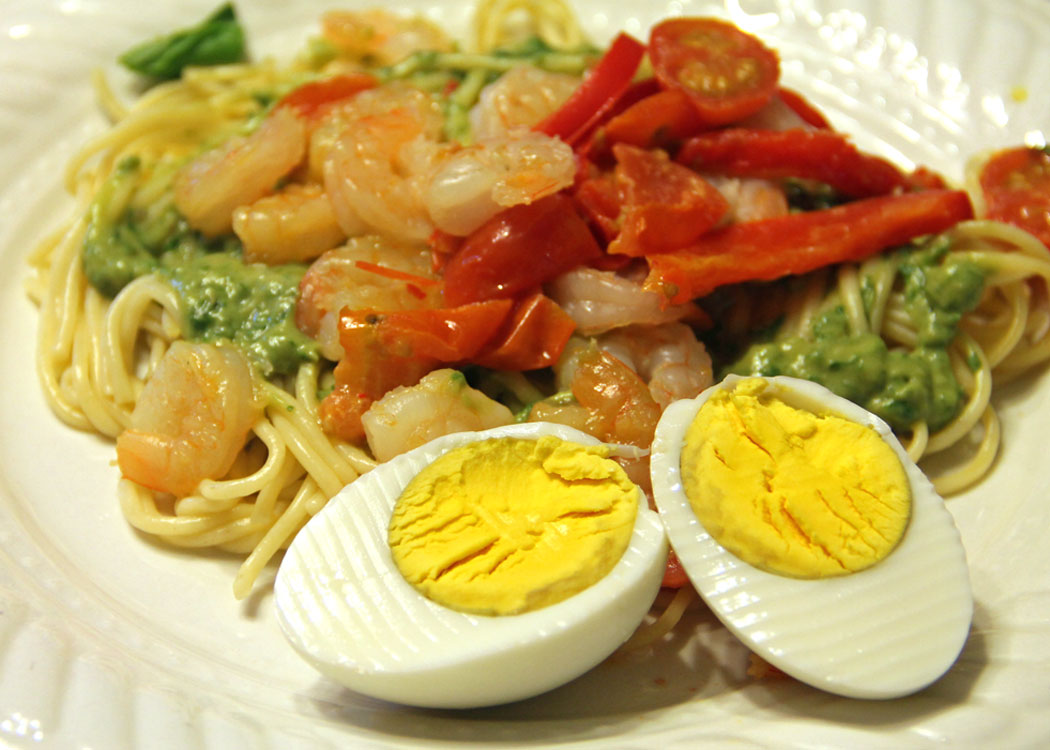
This shrimp pasta is one of my favorites on the rotation, though admittedly it is not a front runner for the kids. I do make some concessions for them when this meal comes up, by allowing them to eat the pasta plain with a little ghee and Parmesan cheese instead of the avocado sauce.  And I let them choose if they would like shrimp or chicken instead.

{Sunday}

Lunch: Hash Brown Bake + cottage cheese and cherries

This is a super simple recipe that is perfect for a Sunday brunch.  Happy campers all around.

Dinner: Chili + criss cross potatoes

Another family favorite, our crew is fine eating this hot meal all year round – even in the dead of summer!  The criss cross potatoes add the perfect side dish as a replacement for bread.

Whew!  This post is making me mighty hungry!

For those of you interested in simplifying your grocery shopping for these specific recipes, just click on the link below for a complete shopping list that includes everything you need to make this week of healthy meals for your family.

GROCERY LIST WEEK 2

I will be back sometime next week with the menu, recipes and shopping list from week #3.  Happy cooking everyone!

In the meantime, see those cute little buttons below this post?  If you hover over them you can see that they give you multiple options for sharing the content from this blog.  Know a friend who has been asking about meal planning? Email this blog post directly to their inbox or share with them on Facebook!